Gabbeh
329 × 247 cm
3.750 €


3.750 €
Incl. VAT
In Stock · Ready to Ship
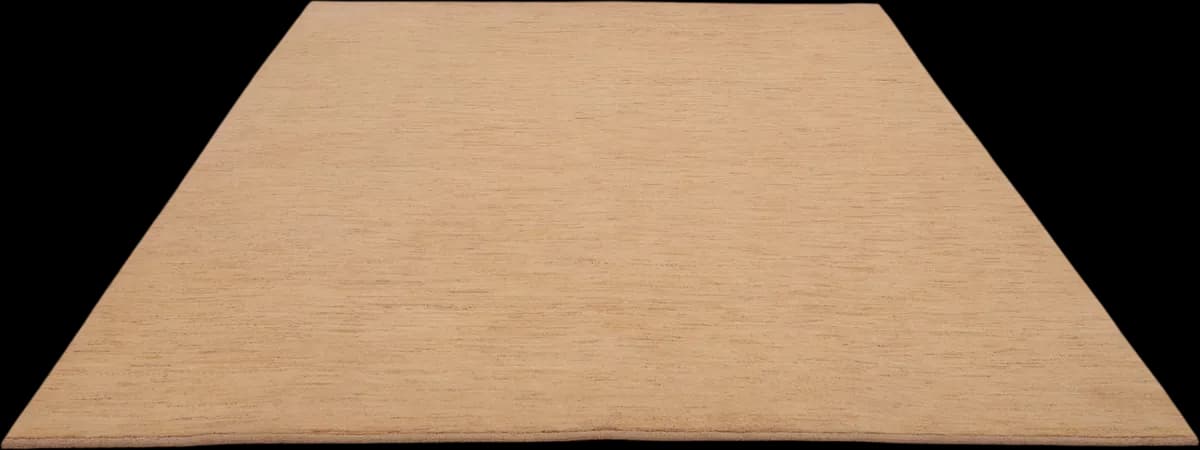
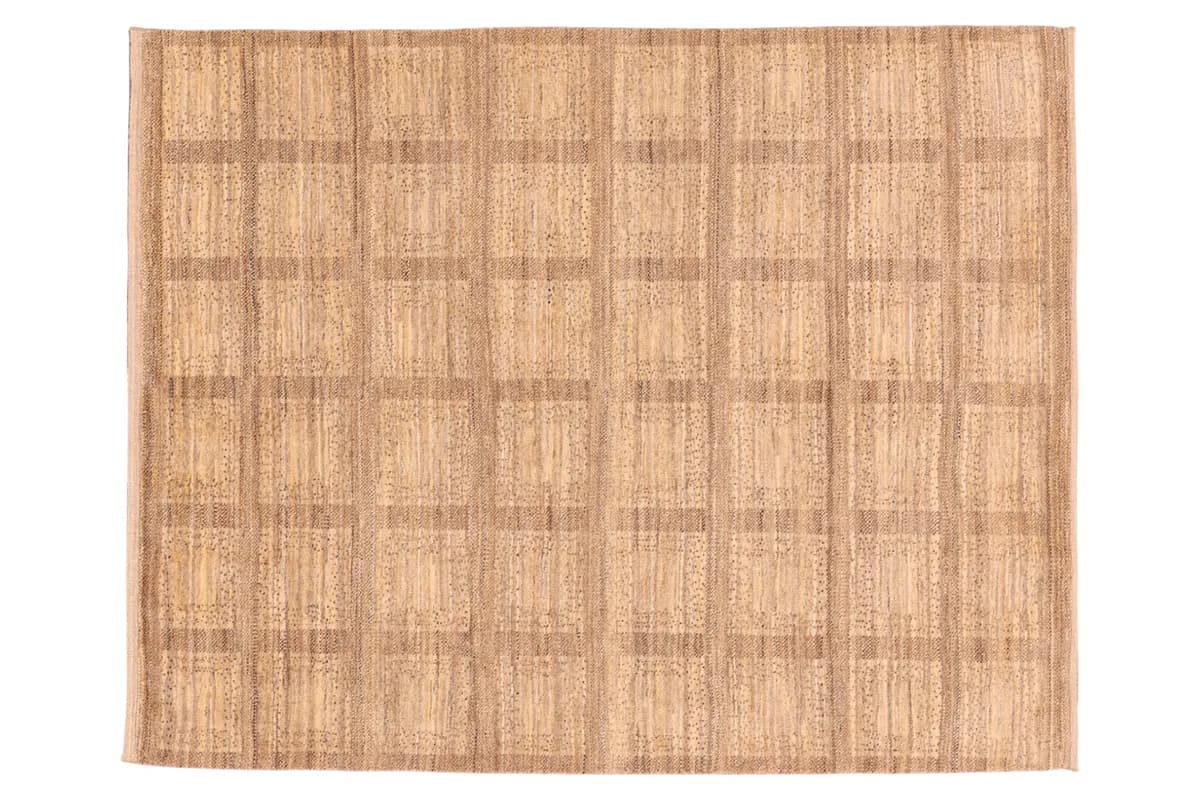
A Lori-Pars rug from the Zagros mountains of Iran, 289 x 201 cm (9'6" x 6'7"). Lori weavers — the name is also written Luri — worked from memory on portable looms, producing rugs known for their confident colour and bold, simplified geometry. This piece is quieter than that reputation suggests, and it is the quiet that makes it worth pausing over.
The field is a warm sand beige, laid out as a grid of cream squares, each held inside a narrow taupe frame, so the whole surface reads as a checkerboard of soft windows rather than a conventional pattern. It has an almost architectural regularity, the kind of order you do not expect from a nomadic hand. Looking closer, faint vertical striations run within each square, small shifts of tone that keep the grid from feeling mechanical. The border is barely a border at all, a plain beige band only a shade lighter than the field, so the eye stays on the lattice rather than its edge.
The wool here was spun by hand before it was knotted, and hand-spun yarn never comes out perfectly even — thicker in places, thinner in others, catching dye slightly differently along its length. That is what gives each square its quiet striation, a trace of the spinning hand rather than a fault in the weaving. At 201,000 to 250,000 knots per square metre and an 11 mm pile, the rug is close and substantial underfoot without the fineness of a city workshop piece, which suits a design built on flat, even squares rather than fine curves.
A rug this size sits naturally under a dining table or in front of a sofa, in a living or dining room where people spend real time. The sand and taupe warm a pale floor and hold their own against dark wood without competing for attention. The pile is dense enough for daily use, soft enough to be pleasant underfoot, and as the light moves across the room through the day, the striations within each square quietly shift, so the grid never looks quite the same twice.
More on Lori-Pars rugs: origin, making and how to recognise a genuine piece
Fine quality weave
At 289 × 201 cm (5.81 m²) this is a large rug. It sits under a seating group with the front legs of sofa and chairs on it, or under a dining table for four. A table for six wants about 80 cm of clearance all round, and needs more.
Yes, knotted by hand — knot by knot on a loom, not machine-made. The density is 201,000 to 250,000 knots per square metre; across 5.81 m² that is roughly 1.2 to 1.5 million individual knots, every one of them tied by hand.
Hand-spun wool still carries its own lanolin, which keeps liquid sitting on the surface for a moment: blot quickly, with clear water and a light cloth, working inwards and without rubbing. Otherwise regular vacuuming along the pile is enough. Turn the rug once or twice a year so light and footfall reach it evenly.
We are in the Hamburg Speicherstadt. Come and see this rug in daylight, or write to us — a person answers.
Certificate included verifying origin, materials, and craftsmanship.
Ref: 136043