Loribaft | Indian
200 × 142 cm
1.740 €
4.200 €
Incl. VAT
In Stock · Ready to Ship
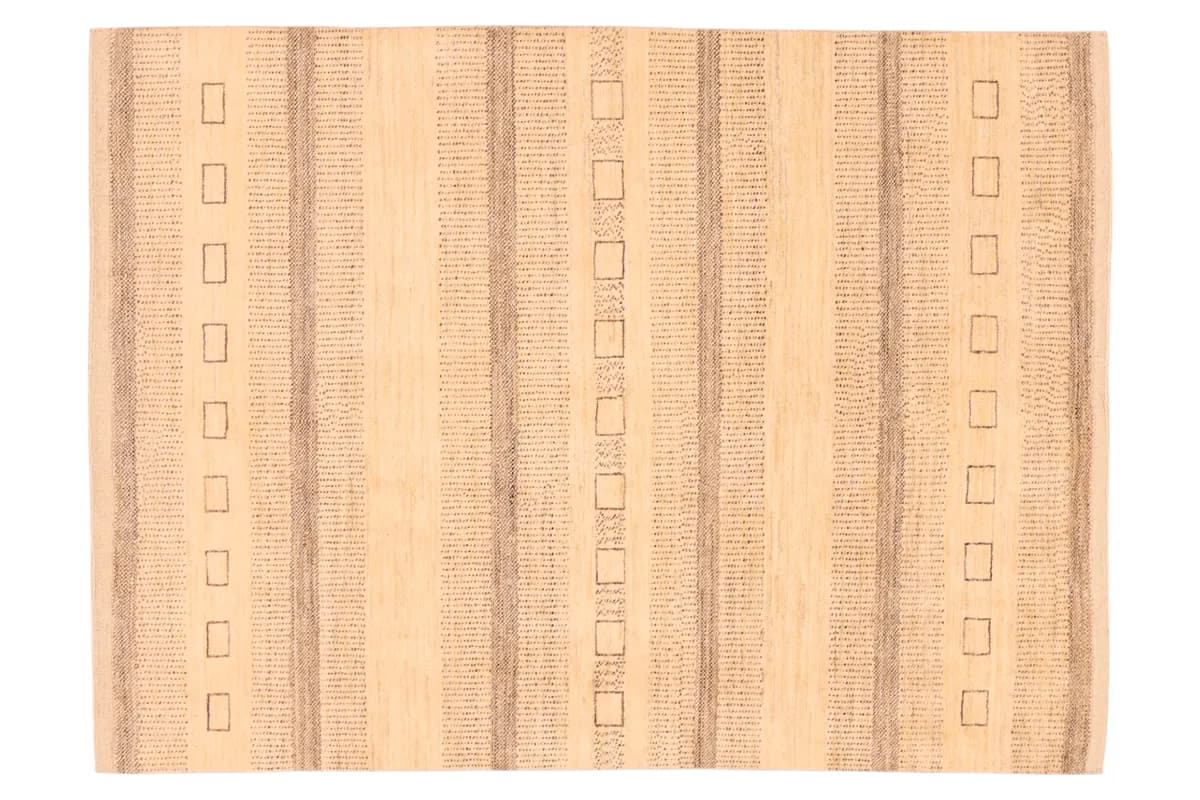
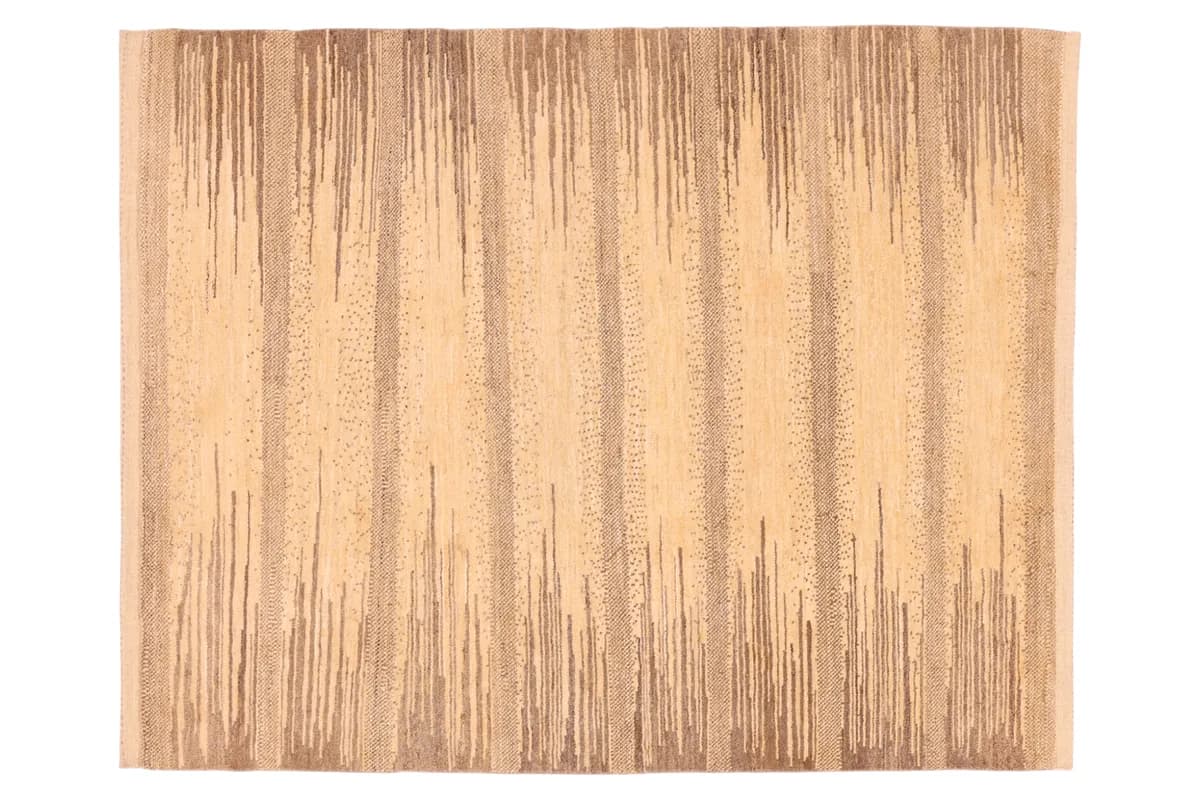
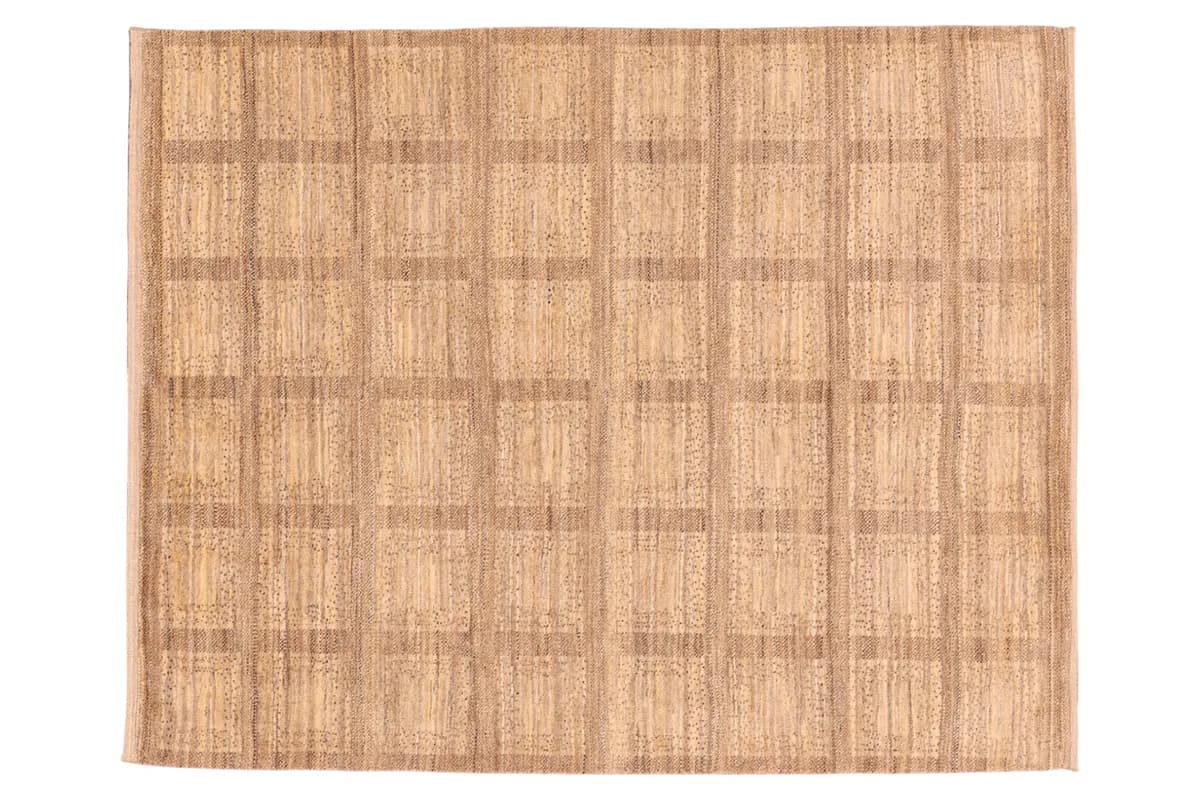
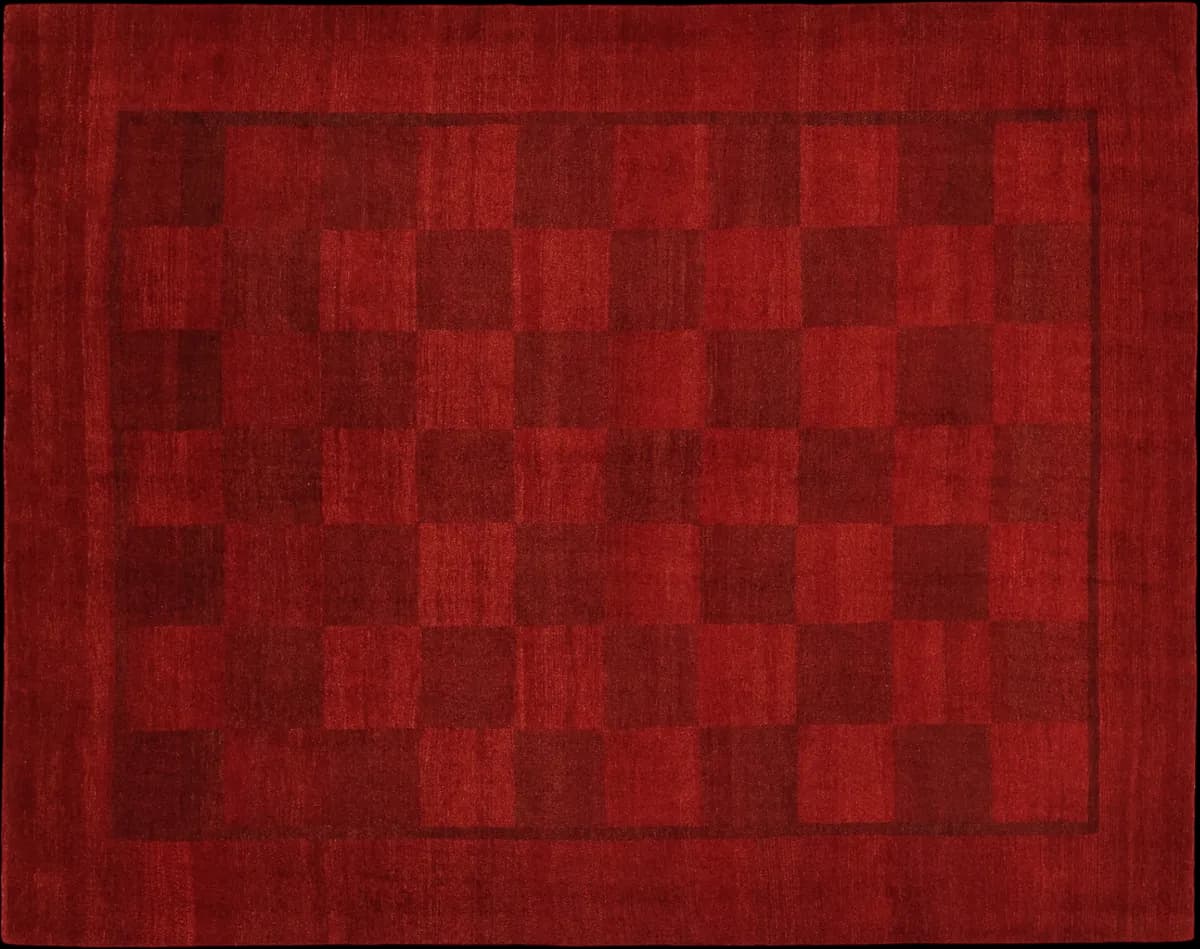
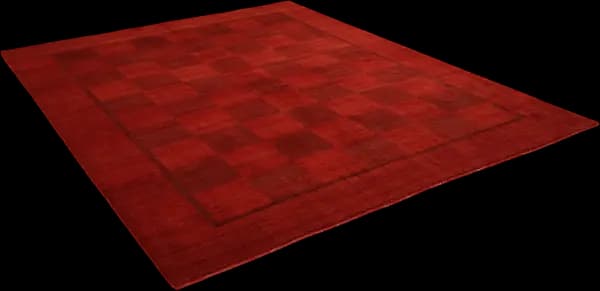
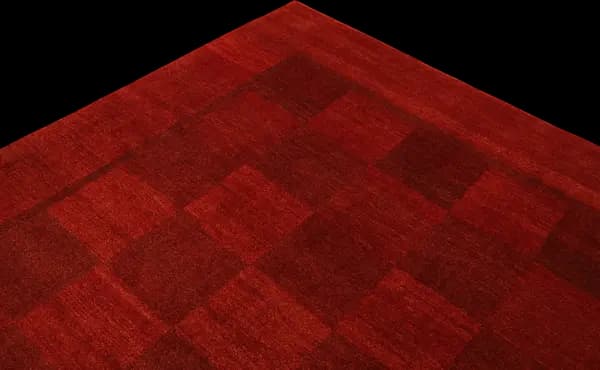
This is a Gabbeh, hand-knotted by nomadic weavers in the Zagros mountains of Iran, measuring 327 x 259 cm (10'9" x 8'6"). Gabbeh weaving is known above all for bold, simplified motifs and a thick, soft pile, spun by hand rather than drawn from a workshop pattern. Where most Gabbeh designs scatter a single figure or animal across a plain ground, this one takes the tradition somewhere more architectural: a grid.
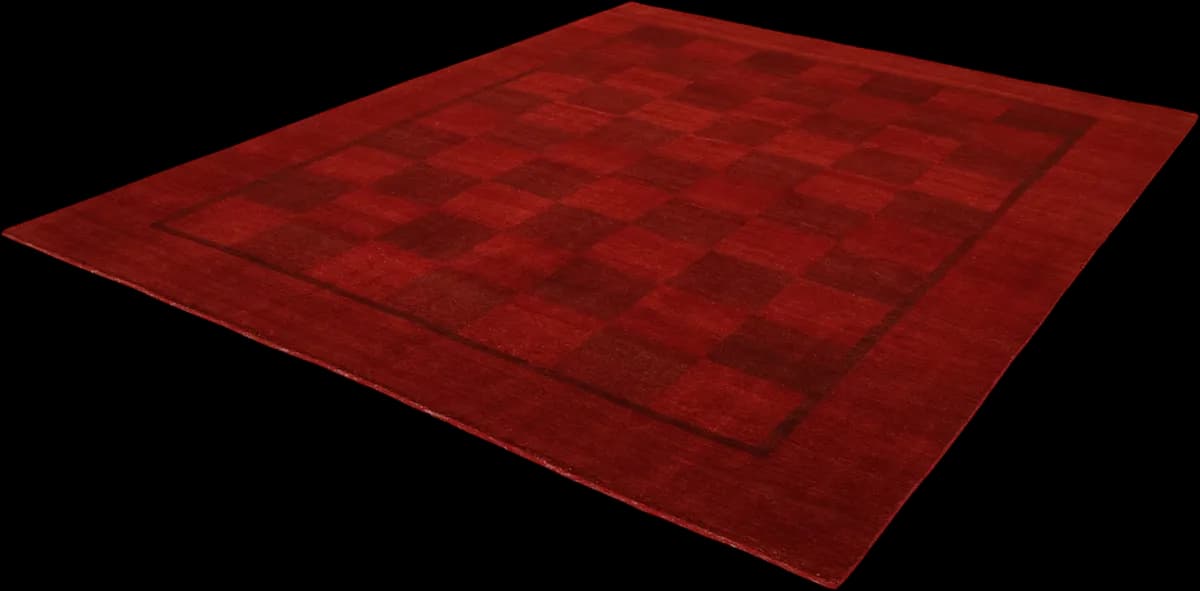
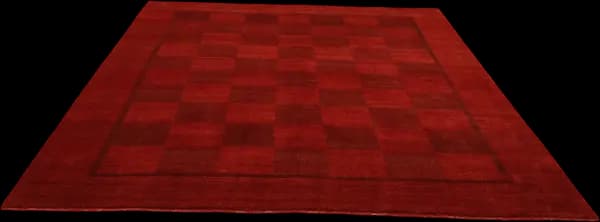
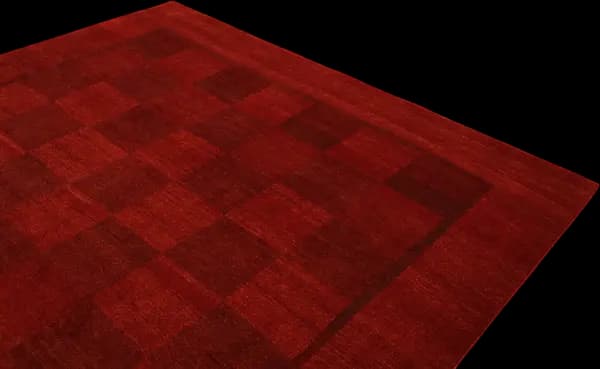
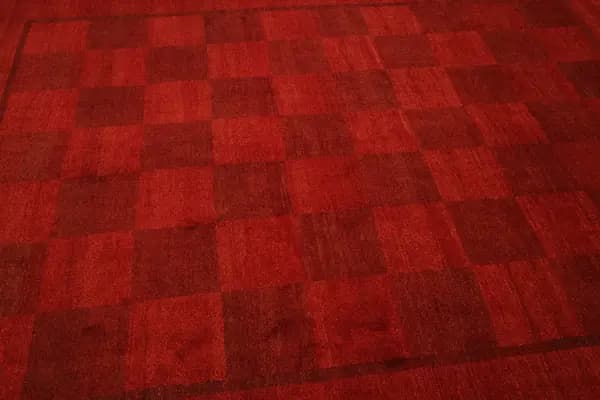
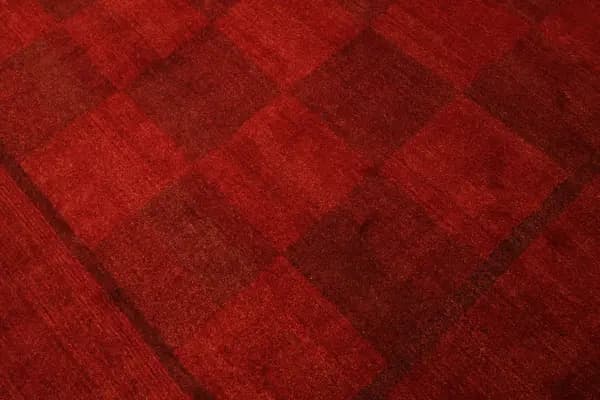
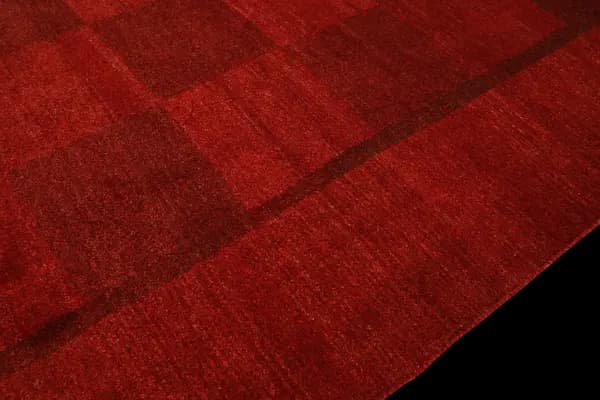
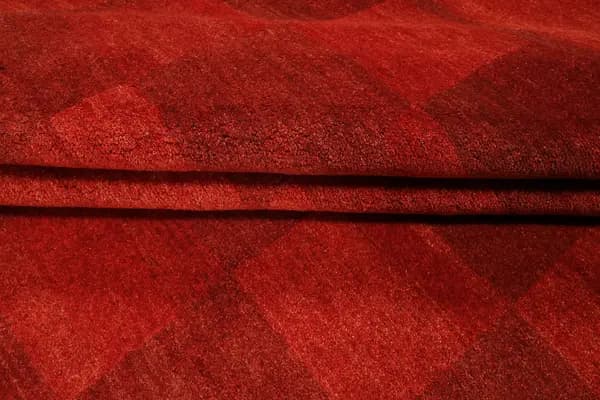
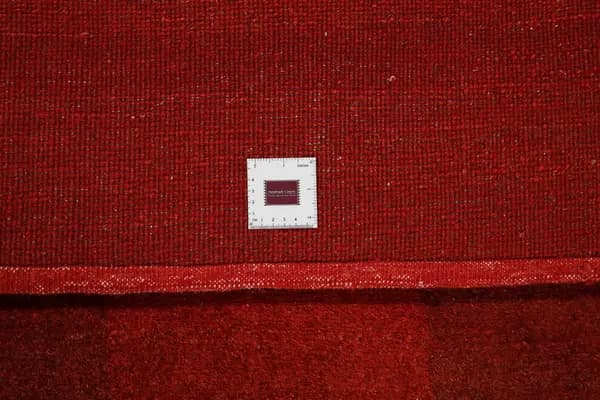
The first impression is a field of deep brick red, broken into large squares that shift gently from one shade to the next, some verging toward oxblood, so the whole surface reads as a tone-on-tone checkerboard rather than a flat colour. There is no medallion and no scattered figure to draw the eye to one point; the pattern is even across the entire field, closer to a patchwork than to a classical rug layout. A plain red border, only a shade darker than the field, closes the composition, with a thin maroon line marking its outer edge. Up close the surface shows the faint vertical striations of hand-spun wool, matte throughout, with no sheen to catch the light.
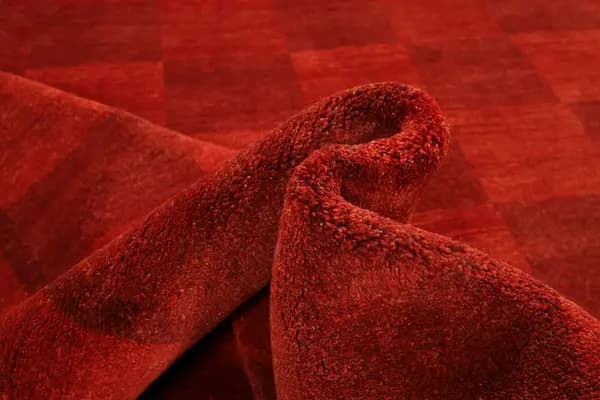
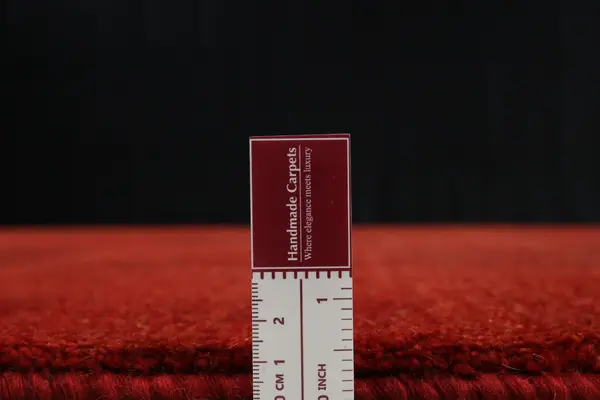
That patchwork effect is not decoration added afterwards; it comes directly from the way the wool was dyed and spun. Hand-spun yarn takes natural mountain dyes unevenly from batch to batch, so each square, knotted in its own small run of wool, settles into a very slightly different depth of red. At a density of 72,000 to 90,000 knots per square metre, well below a workshop weave, the knot itself sits thicker and the weaver can build a pile 18 millimetres deep, soft and substantial underfoot rather than fine and flat.
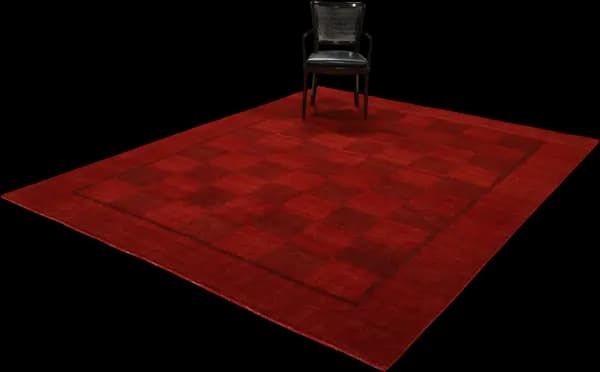
A rug this size suits a living room or dining room, laid under a seating group or a table where its scale can register as one continuous field rather than a rug glimpsed at the edges. Against dark furniture the red holds its ground; on a pale floor it becomes the warmest thing in the room. Underfoot it is dense and cushioned, built for a room that is actually lived in rather than kept for best. As daylight moves across it through the day, the shifts between squares soften and sharpen in turn, so the grid never looks quite the same twice.
More on Gabbeh rugs: origin, making and how to recognise a genuine piece
Artisan crafted
At 327 × 259 cm (8.47 m²) this is a very large rug. It carries a whole seating group with every furniture leg on it, or a dining table with the chairs pushed back. In a small room it becomes the floor rather than a rug.
Yes, knotted by hand — knot by knot on a loom, not machine-made. The density is 72,000 to 90,000 knots per square metre; across 8.47 m² that is roughly 610,000 to 760,000 individual knots, every one of them tied by hand.
Hand-spun wool still carries its own lanolin, which keeps liquid sitting on the surface for a moment: blot quickly, with clear water and a light cloth, working inwards and without rubbing. Otherwise regular vacuuming along the pile is enough. Turn the rug once or twice a year so light and footfall reach it evenly.
We are in the Hamburg Speicherstadt. Come and see this rug in daylight, or write to us — a person answers.
Certificate included verifying origin, materials, and craftsmanship.
Ref: 151323