Loribaft
194 × 148 cm
2.220 €
2.340 €
Incl. VAT
In Stock · Ready to Ship
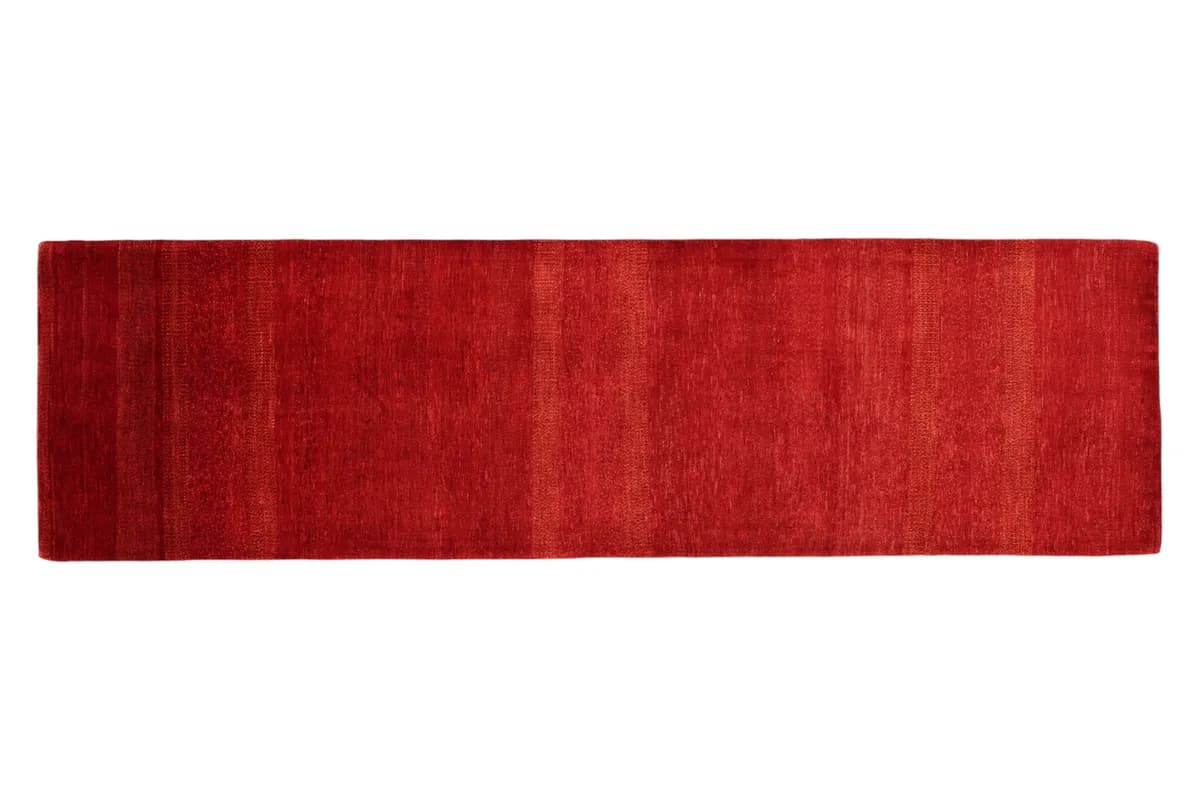
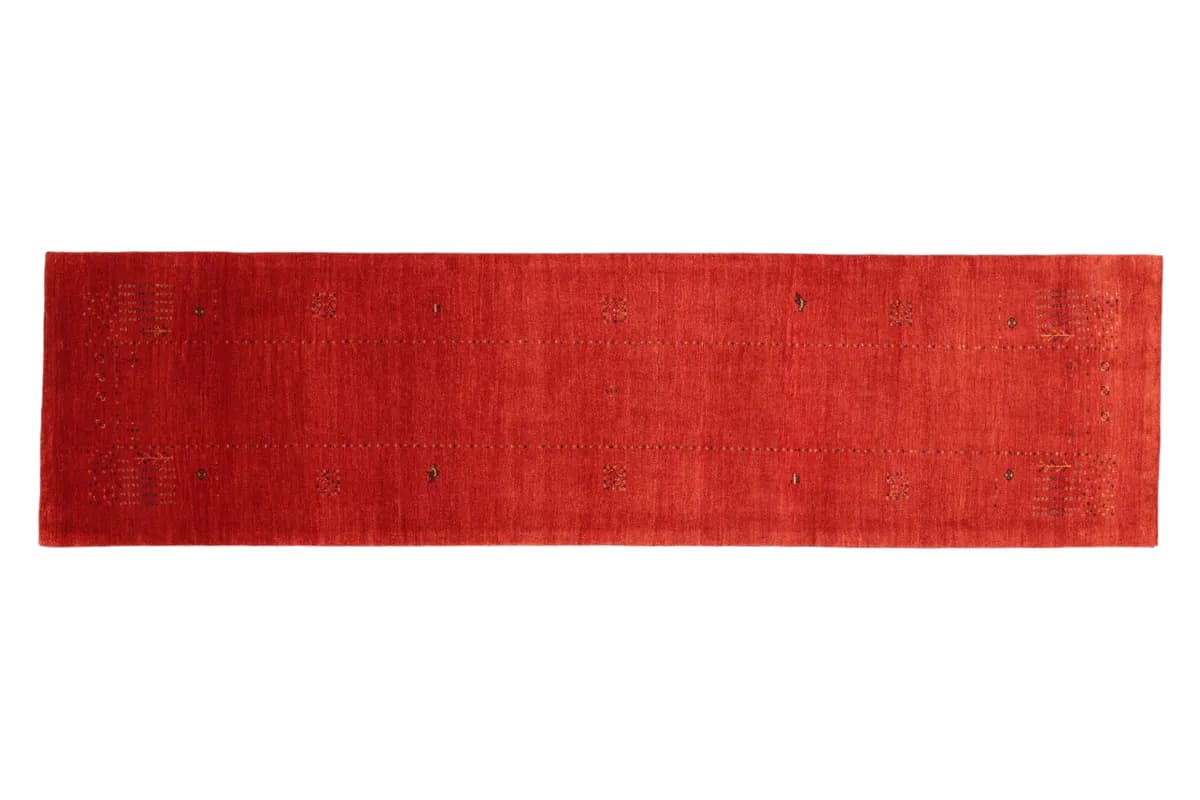
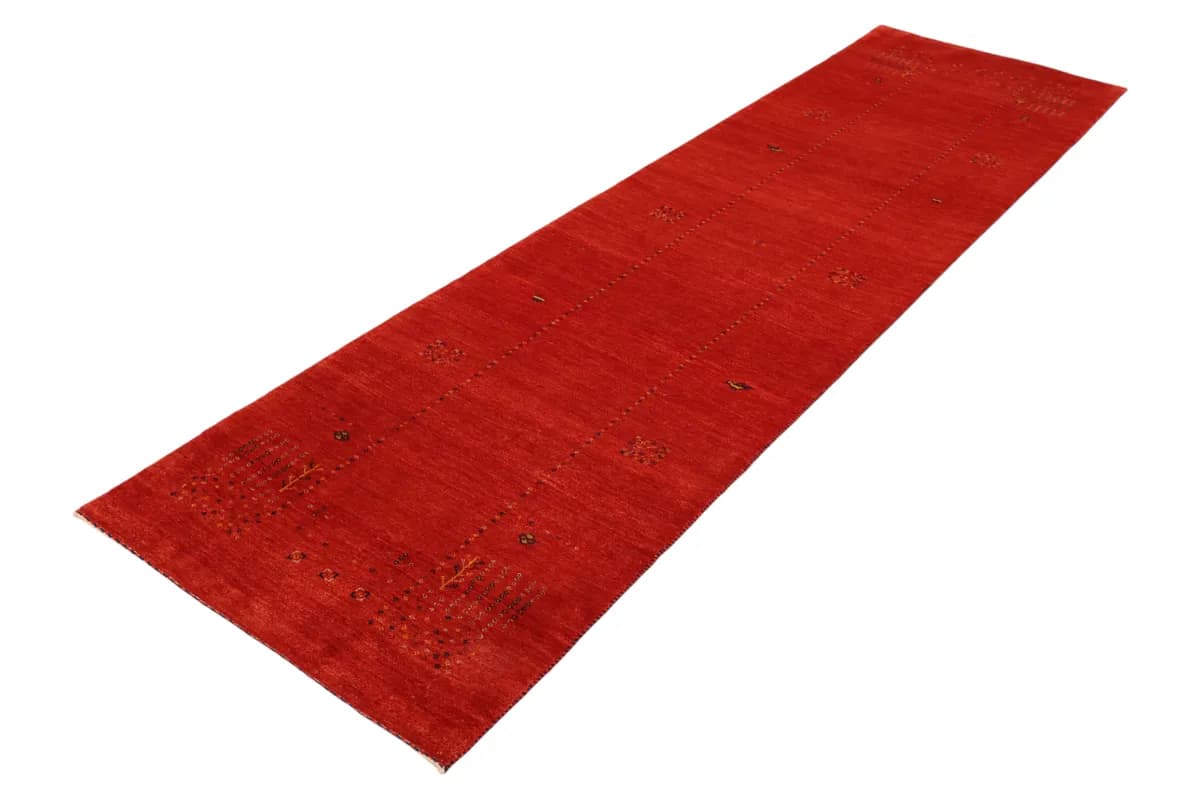
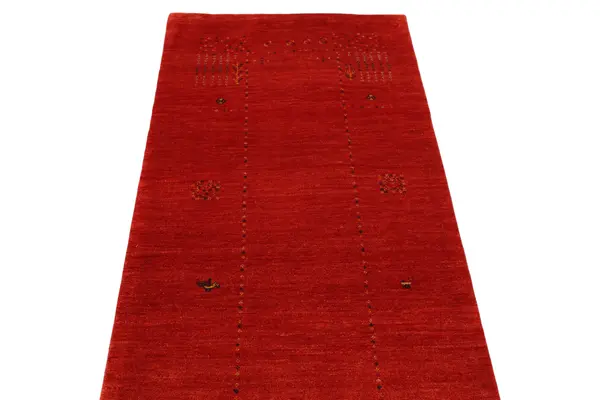
The rug in front of you is a runner, 305 x 79 cm (10'0" x 2'7"), and it belongs to the Kashkuli group of the Qashqai confederation in southern Iran — the branch of Qashqai weaving generally reckoned the finest, prized for unusually fine knotting and a design sense that carries tribal work close to something collectors call elegant. Kashkuli pieces are known for dense, curvilinear medallion patterns in harmonious colour. This one takes that reputation and does almost the opposite with it.
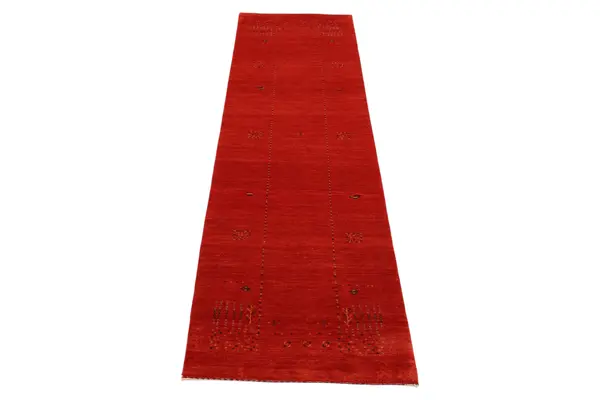
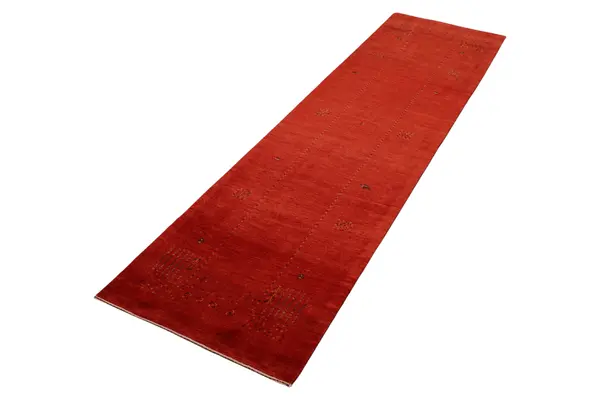
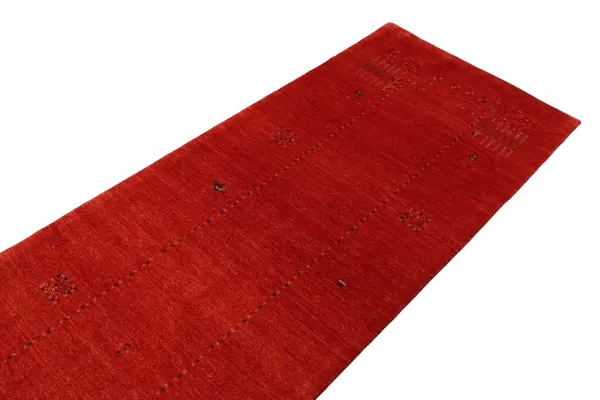
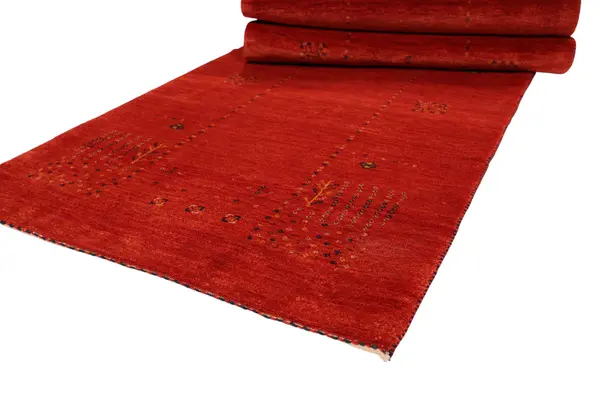
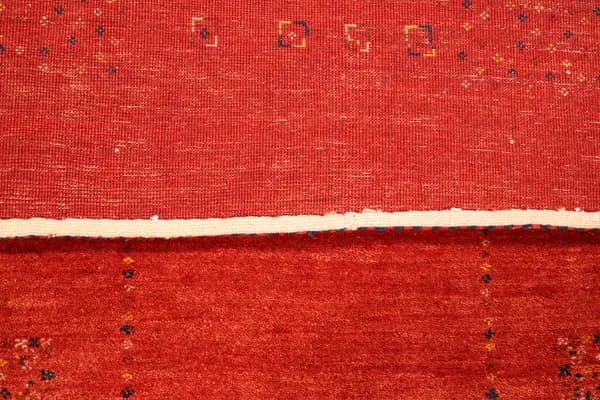
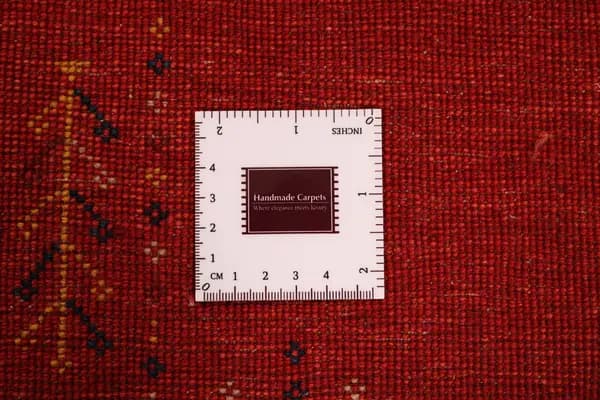
The first impression is a long run of deep brick red, warmed by a rust undertone, with faint vertical streaking where the dye has taken unevenly across the wool. Rather than filling that field with pattern, the weaver has left most of it plain, gathering the decoration into small clusters at the corners — tiny florets in navy, ivory and mustard-gold, and a stylised tree shape worked in dark brown, with a few dotted guard-lines drifting along the length between them. There is no separate border stripe; the red simply runs out to the selvage, so the eye travels the whole runner before it meets anything to stop it.
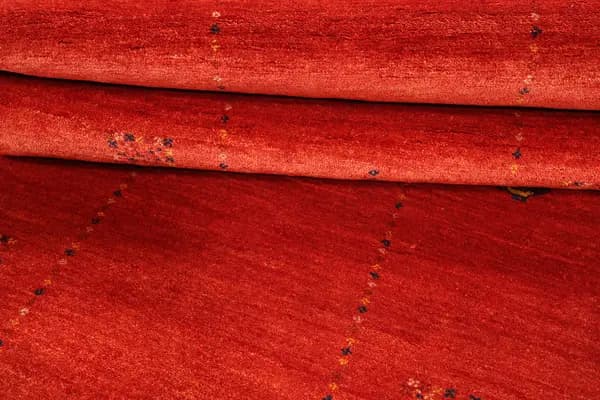
The wool is hand-spun, which is what gives the field its slight unevenness of colour rather than a flat, printed red — a mark of the hand rather than a flaw in it. This is a nomadic weaving, knotted from memory on a portable loom without a drawn plan, and at 201,000 to 250,000 knots per square metre the density is genuine tribal work, fine enough to hold the small corner motifs crisply while leaving the weaver free to choose how much of the field to fill. Here she chose almost none of it, a quiet decision inside a tradition usually known for the opposite.
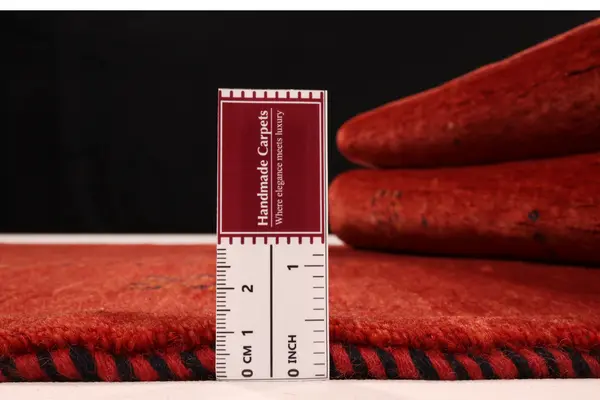
A runner of this length and this restraint is built for a hallway or a landing, somewhere the eye travels its whole length rather than settling on one point. The plain red carries a dim corridor without needing daylight to read it, and the sparse corner motifs give it a rhythm rather than a repeat, so it never feels busy underfoot in a space people pass through rather than sit in. At 12 mm the pile is low, dense and firm, wool spun for wear rather than display, entirely at home being walked on daily. Morning or lamp light along its length catches the streaking in the red and turns a plain field into something that never looks quite flat.
More on Lori-Kashkouli rugs: origin, making and how to recognise a genuine piece
Fine quality weave
At 305 × 79 cm (2.41 m²) this is a runner. It belongs in a hallway, an entrance, on a landing or lengthways beside a bed. It is too narrow for the middle of a room.
Yes, knotted by hand — knot by knot on a loom, not machine-made. The density is 201,000 to 250,000 knots per square metre; across 2.41 m² that is roughly 480,000 to 600,000 individual knots, every one of them tied by hand.
Hand-spun wool still carries its own lanolin, which keeps liquid sitting on the surface for a moment: blot quickly, with clear water and a light cloth, working inwards and without rubbing. Otherwise regular vacuuming along the pile is enough. Turn the rug once or twice a year so light and footfall reach it evenly.
We are in the Hamburg Speicherstadt. Come and see this rug in daylight, or write to us — a person answers.
Certificate included verifying origin, materials, and craftsmanship.
Ref: 294694