Belutsch
215 × 111 cm
681 €
406 €
Incl. VAT
In Stock · Ready to Ship
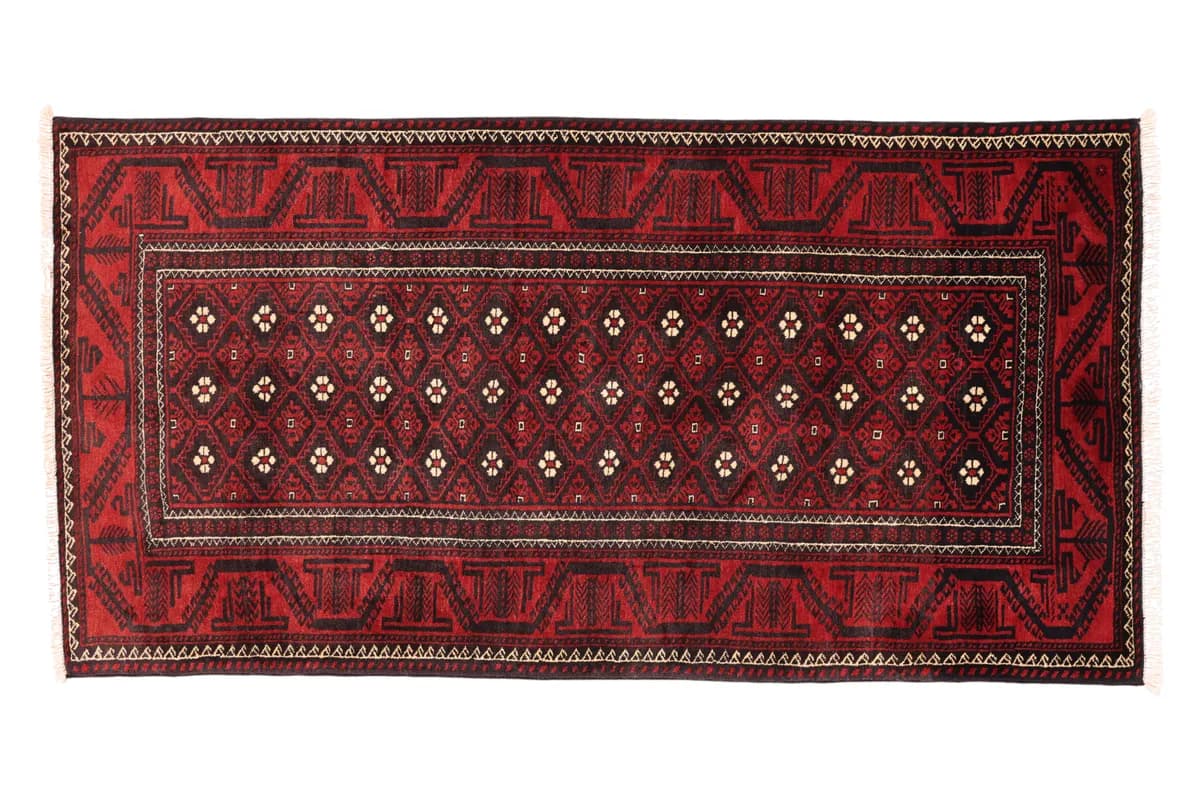
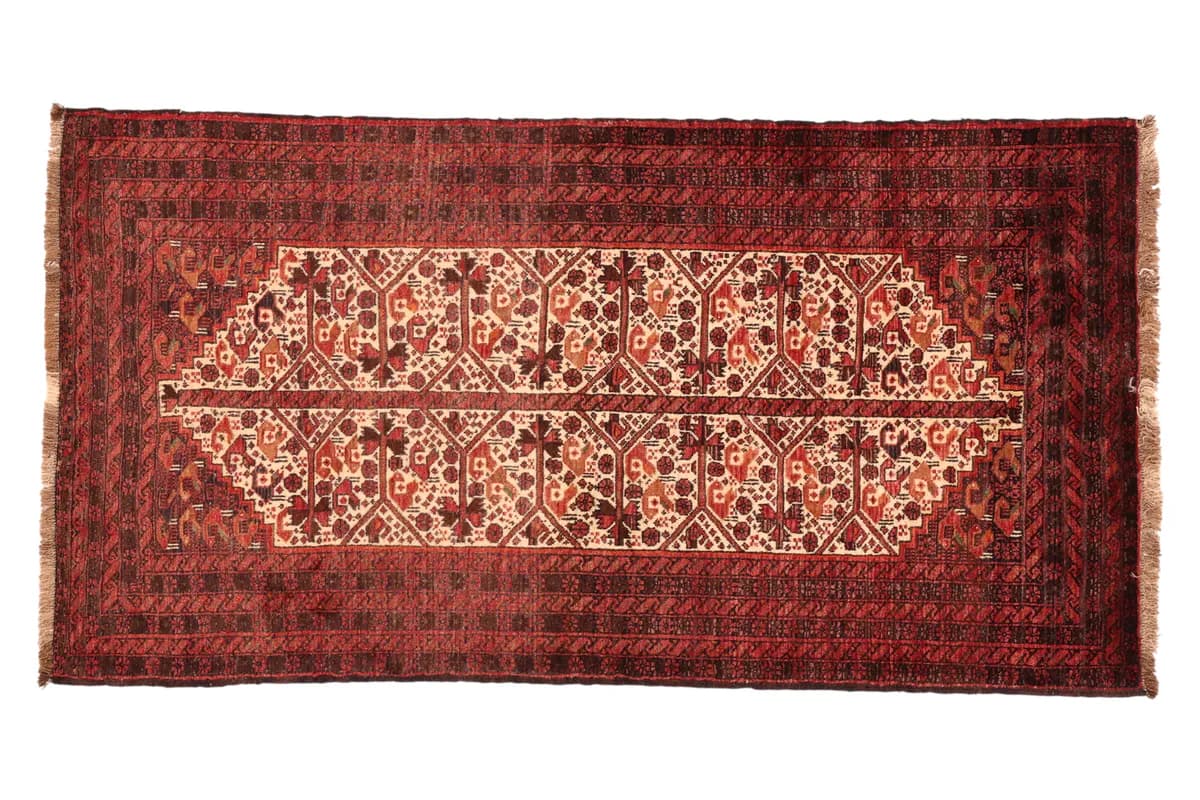
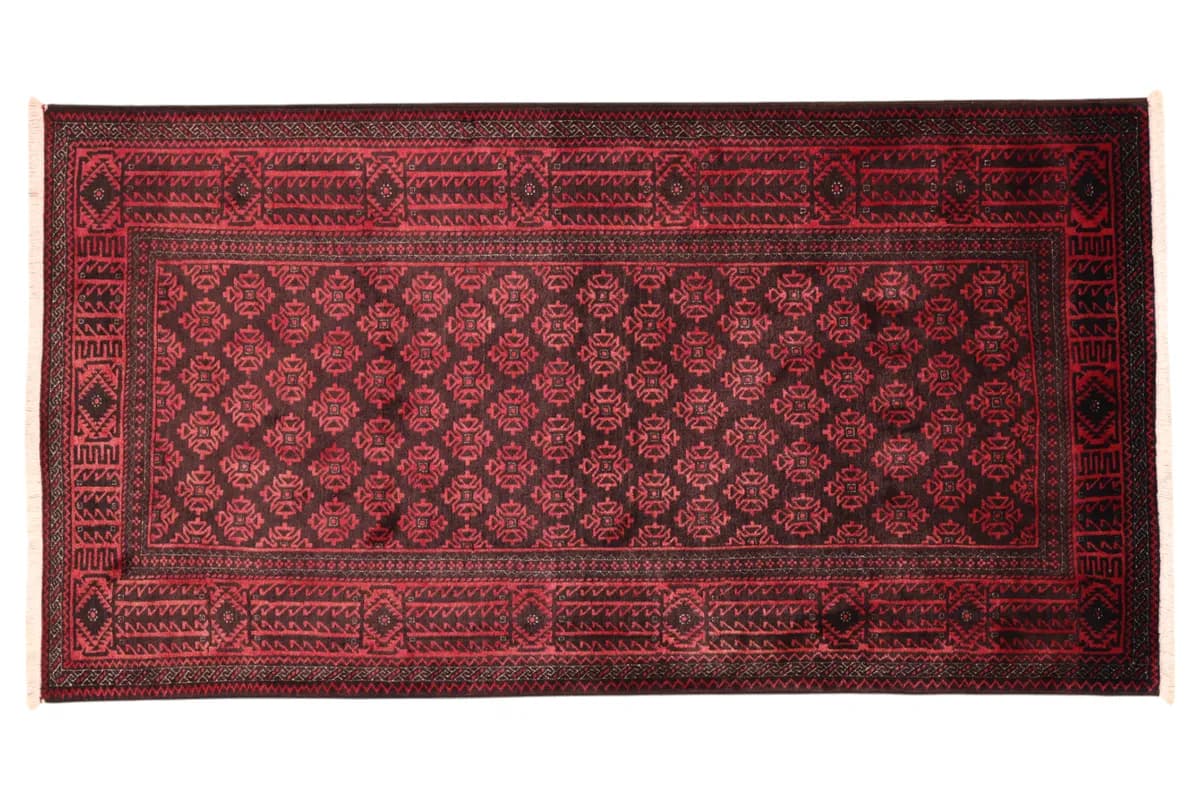
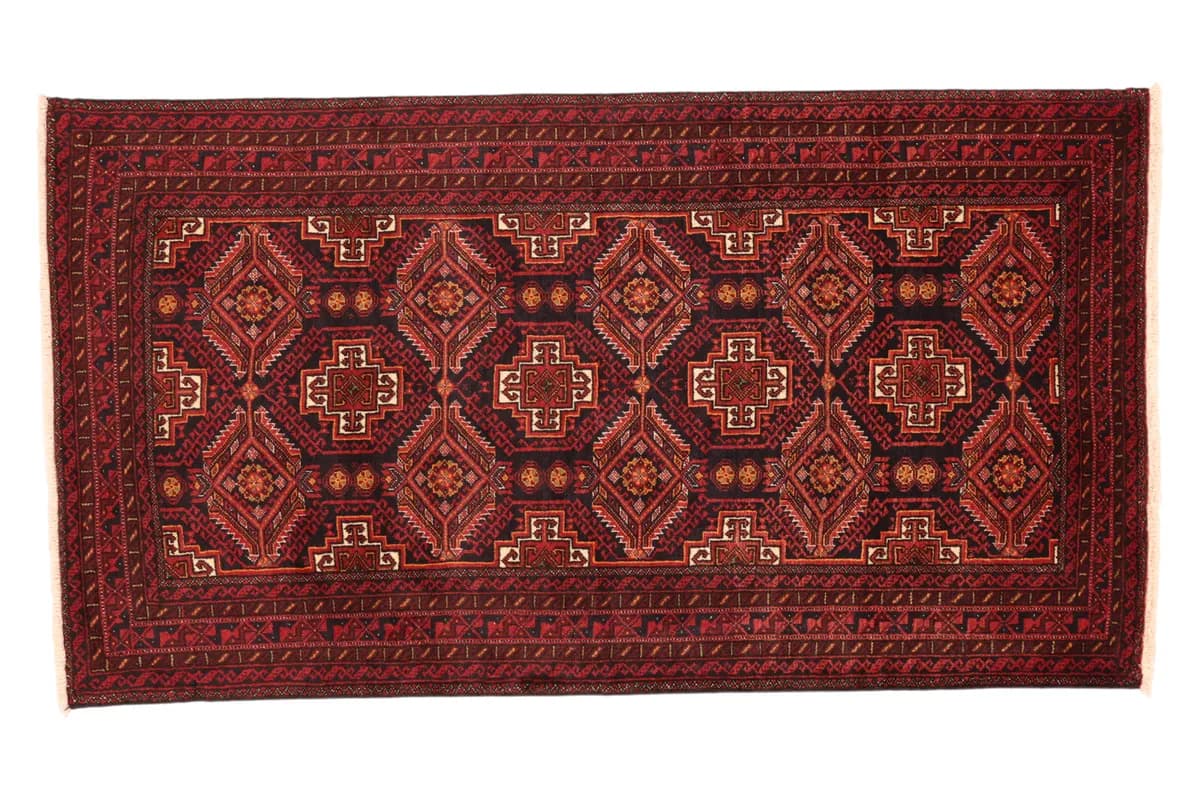
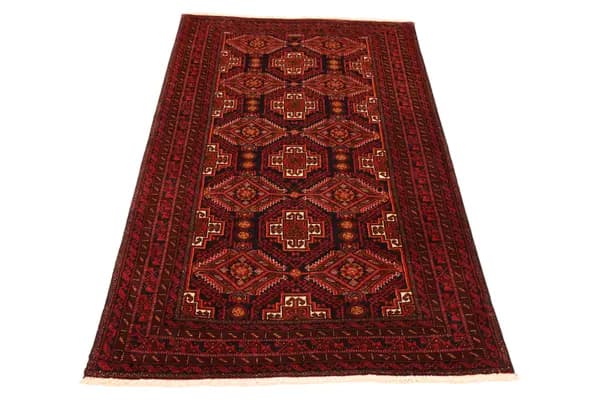
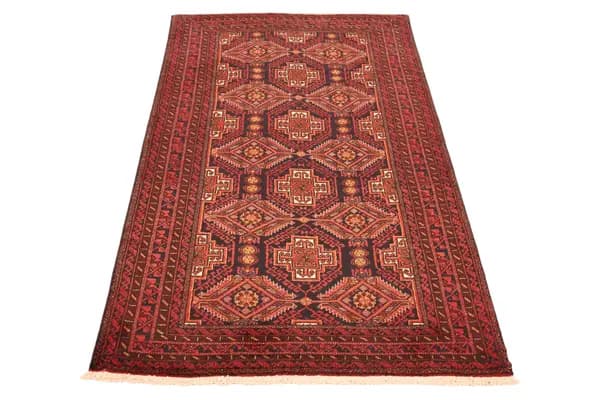
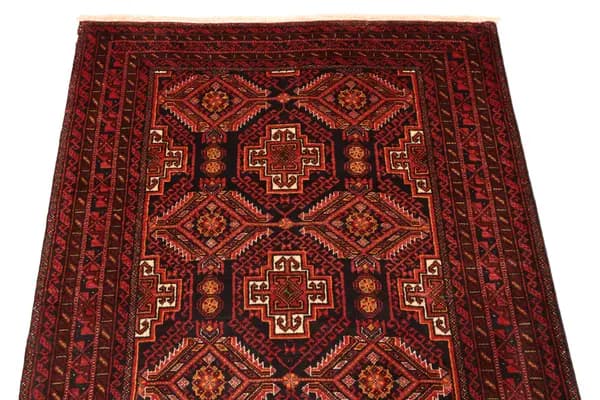
A Baluch rug, a tribal weaving from the borderlands of southeastern Iran, 172 x 95 cm (5'8" x 3'1"). These are pieces knotted from memory on a portable loom, one weaver working over months rather than a workshop following a drawn plan, and they are known above all for deep, earthy reds and indigo carried in bold, angular geometry. Many classic Baluch pieces take the form of a prayer niche; this one instead builds its whole field from repeating diamonds, a variation within the same tradition rather than a departure from it.
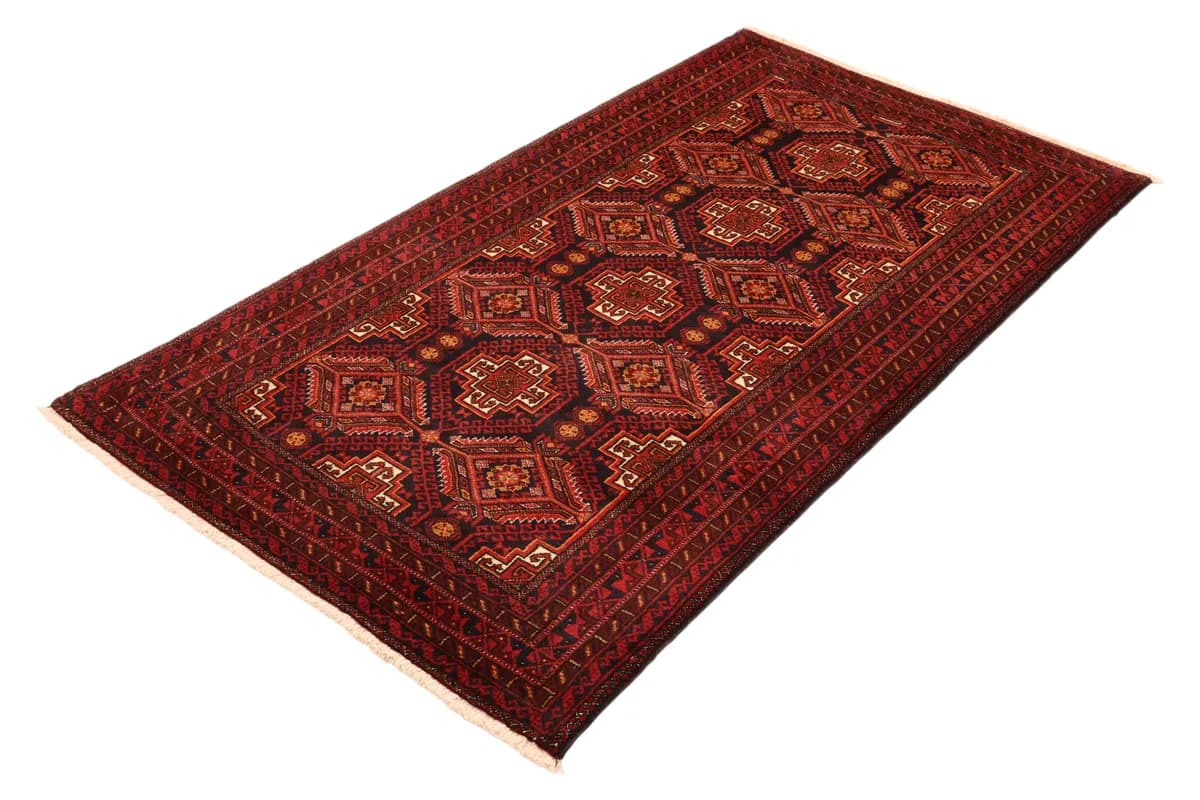
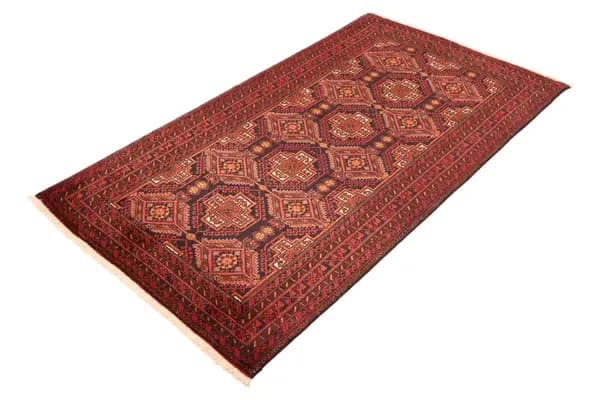
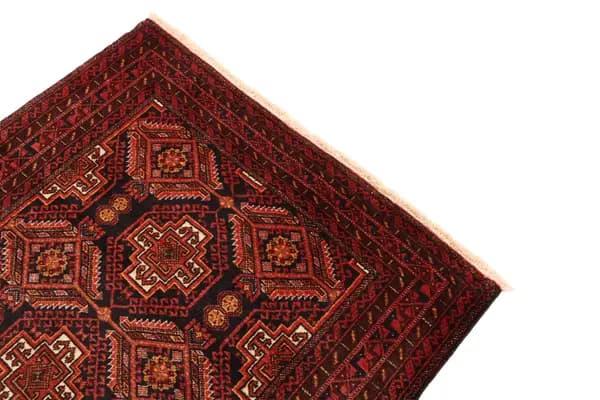
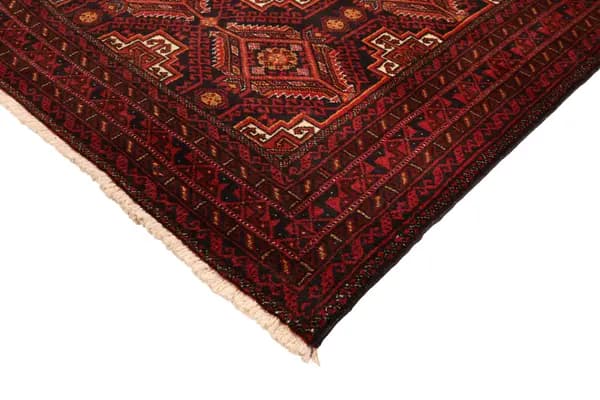
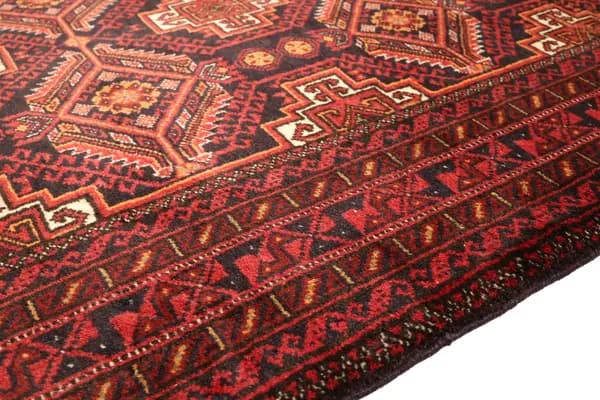
The field is a deep brick red, and across it runs a dense lattice of hooked diamonds, each one outlined in ivory and centred on a small mustard-gold rosette, with a warm rust-red ground filling the gaps between. What sets this piece apart is how evenly that lattice repeats: rather than the scattered, loosely varied medallions typical of the type, here each diamond carries an almost identical miniature cross-shape, tiling the field with a rhythm that is more graphic and more exact than a Baluch weaving usually allows. A wide multi-band border, close to a fifth of the rug's width, closes the field with guard stripes of red and ivory on a dark ground, each carrying small reciprocal zigzags and darts.
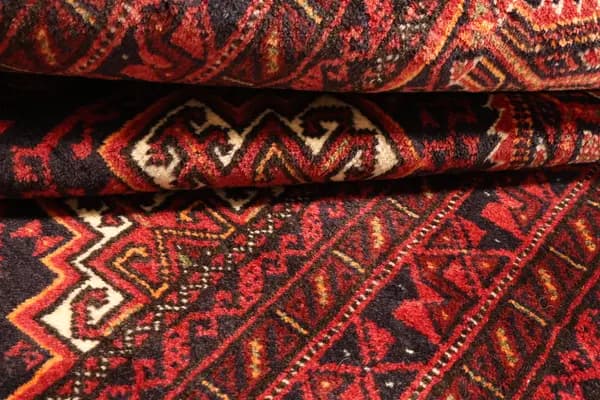
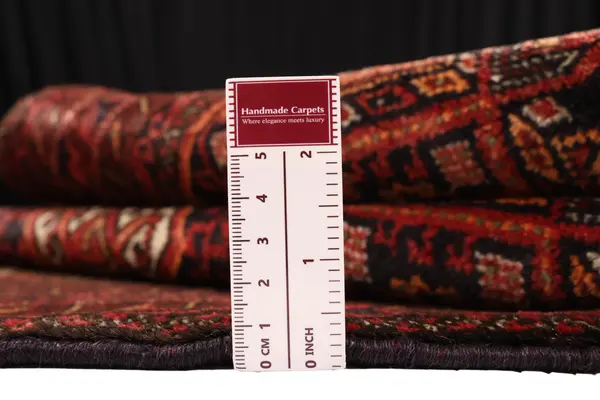
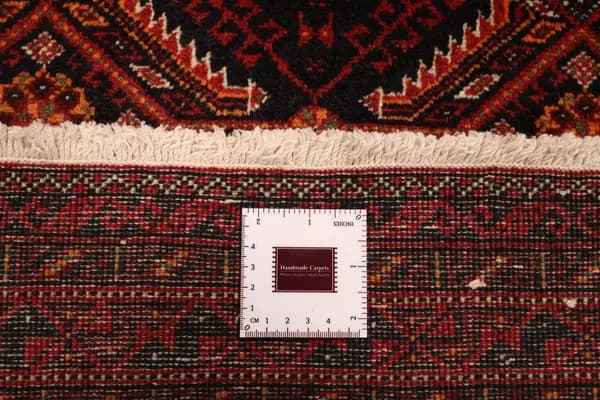
That regularity was achieved by eye, not by cartoon. The wool is hand-spun, which gives the surface its faintly ribbed, matt texture rather than an even sheen, and the pile is knotted at 128,000 to 160,000 knots per square metre, dense enough for a firm, flat surface but not so fine as to soften the geometry. Holding a repeating diamond grid this consistent, from memory, on a portable loom, over many months, is a considerable feat of discipline for a weaving of this kind.
At this size the rug suits a hallway, a landing, or the floor beside a bed, somewhere it is seen daily rather than only from a distance. The brick red holds its own in a dim hallway and warms a pale floor equally well, while the ivory and mustard keep the pattern legible rather than heavy. Underfoot it is dense, flat and slightly textured, firm enough for a well-used passage rather than a room kept for best. In low light the matt wool takes on a soft, even glow, and the small rosettes catch the eye again each time you pass.
More on Baluch rugs: origin, making and how to recognise a genuine piece
Traditional weave
At 172 × 95 cm (1.63 m²) this is a small rug. It works beside a bed, in a reading corner, in front of a fireplace or as a mat by a door. It does not furnish a room; it makes a point in one.
Yes, knotted by hand — knot by knot on a loom, not machine-made. The density is 128,000 to 160,000 knots per square metre; across 1.63 m² that is roughly 210,000 to 260,000 individual knots, every one of them tied by hand.
Hand-spun wool still carries its own lanolin, which keeps liquid sitting on the surface for a moment: blot quickly, with clear water and a light cloth, working inwards and without rubbing. Otherwise regular vacuuming along the pile is enough. Turn the rug once or twice a year so light and footfall reach it evenly.
We are in the Hamburg Speicherstadt. Come and see this rug in daylight, or write to us — a person answers.
Certificate included verifying origin, materials, and craftsmanship.
Ref: 534478