Belutsch
182 × 95 cm
597 €







484 €
Incl. VAT
In Stock · Ready to Ship
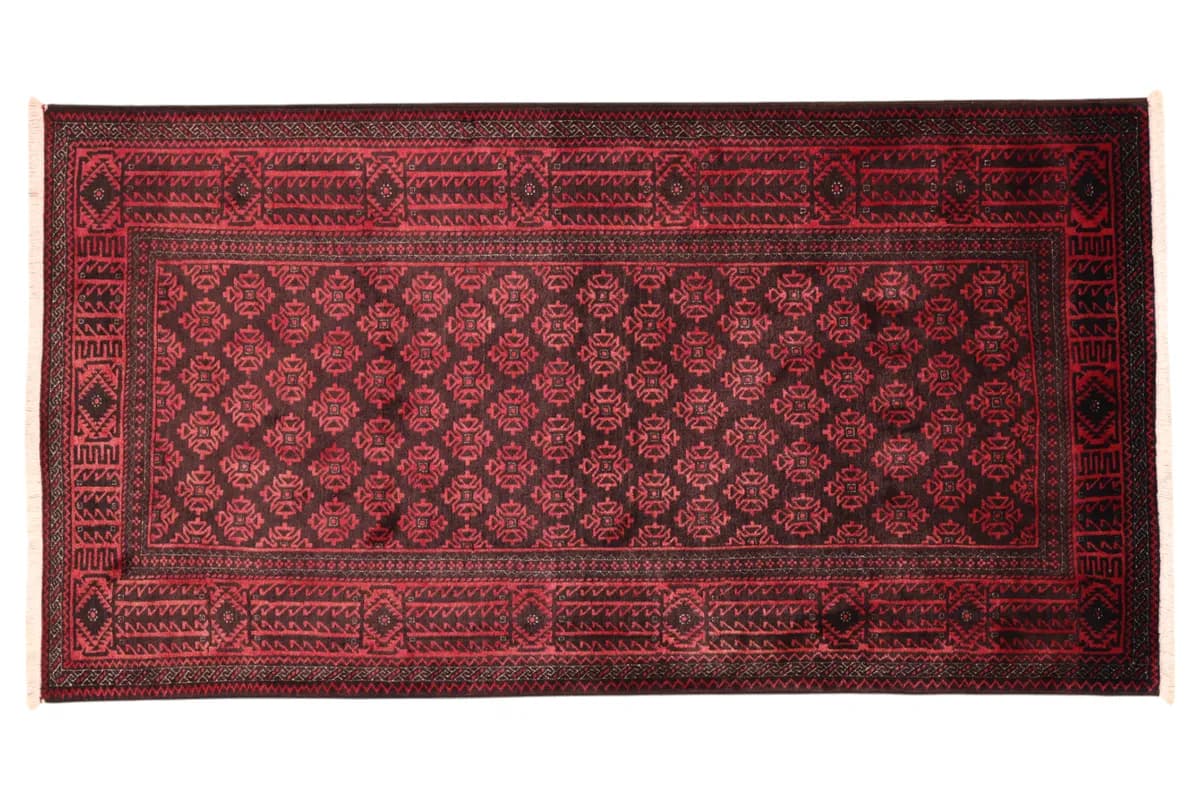
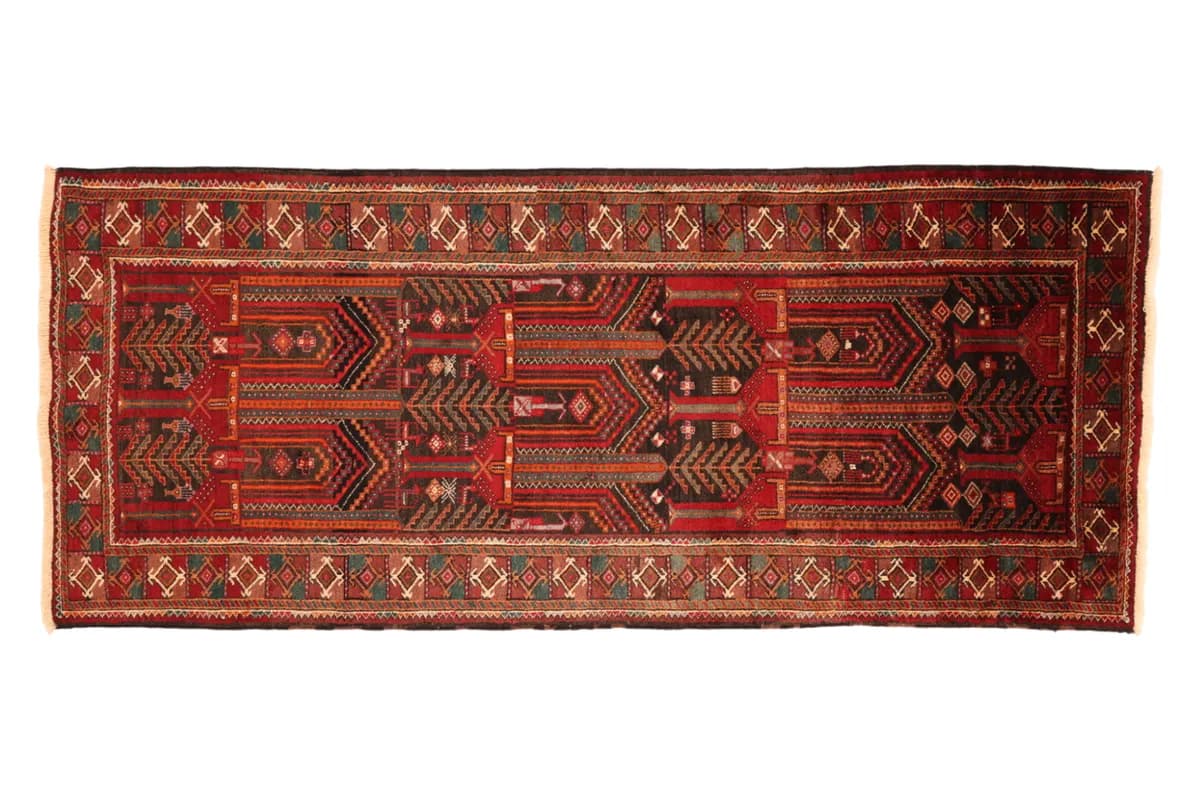
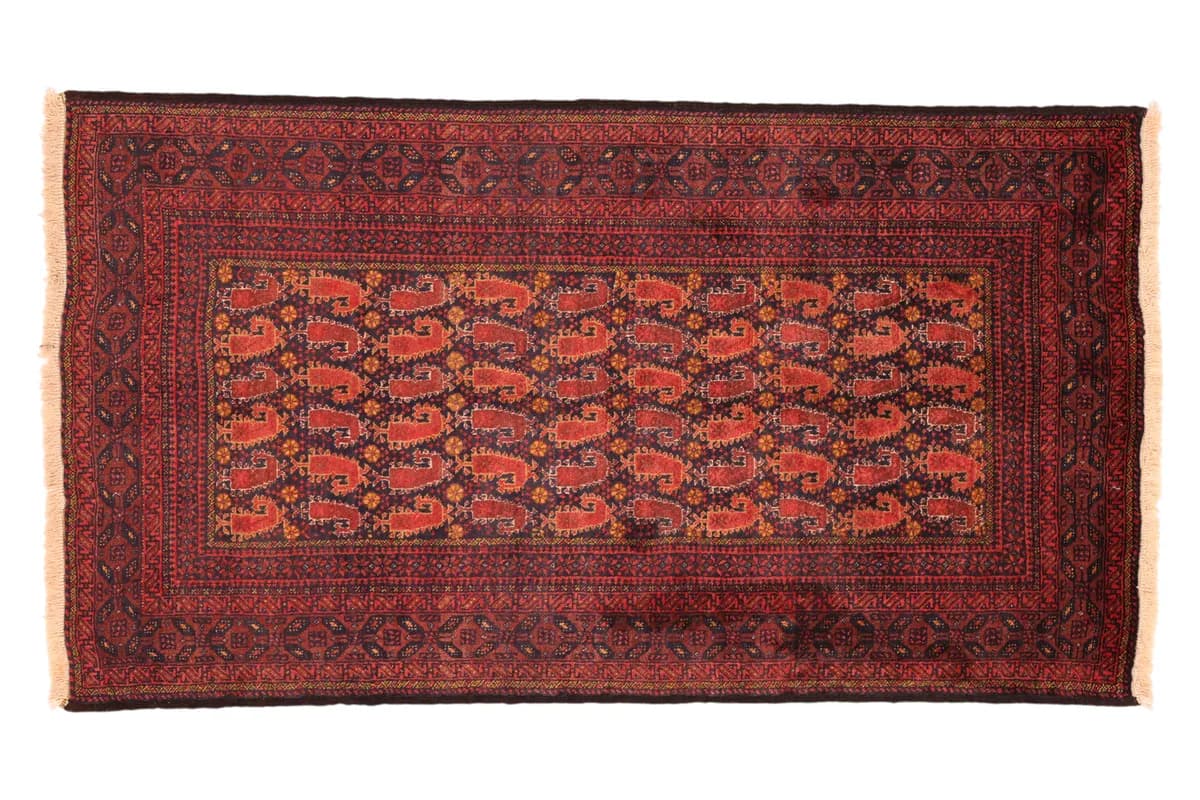
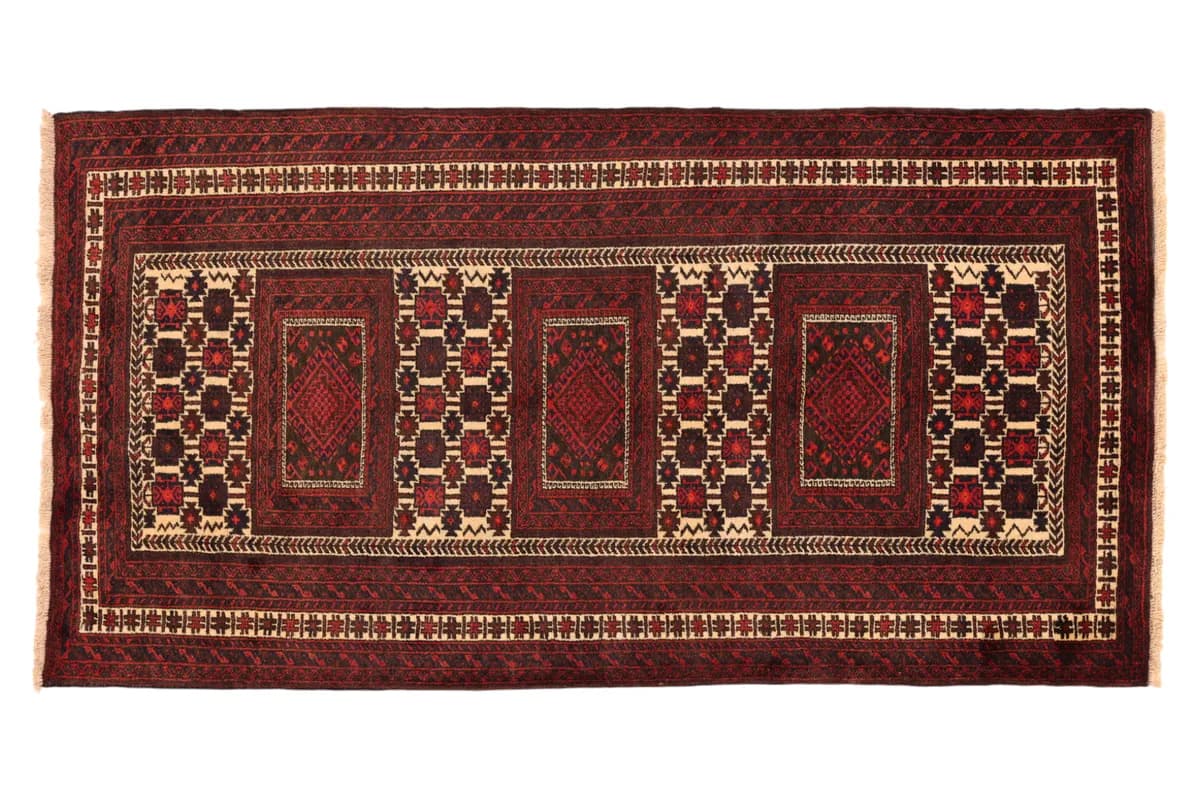
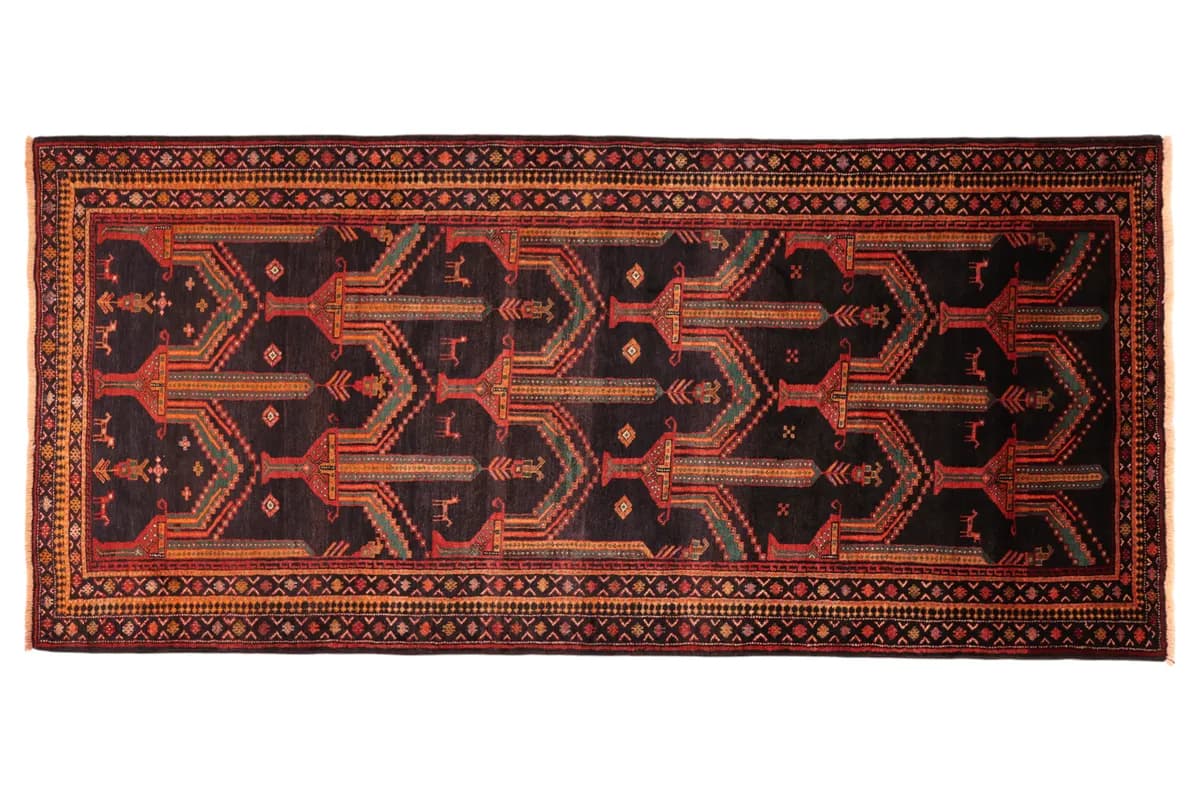
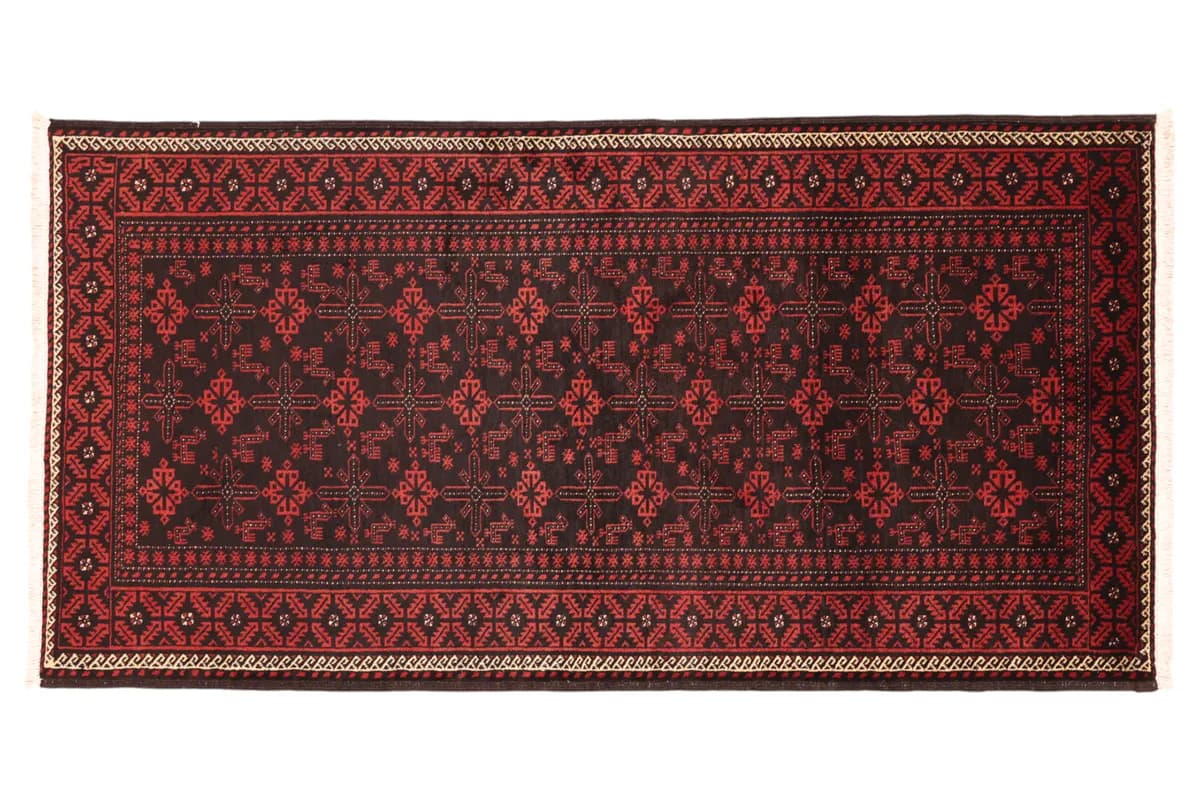
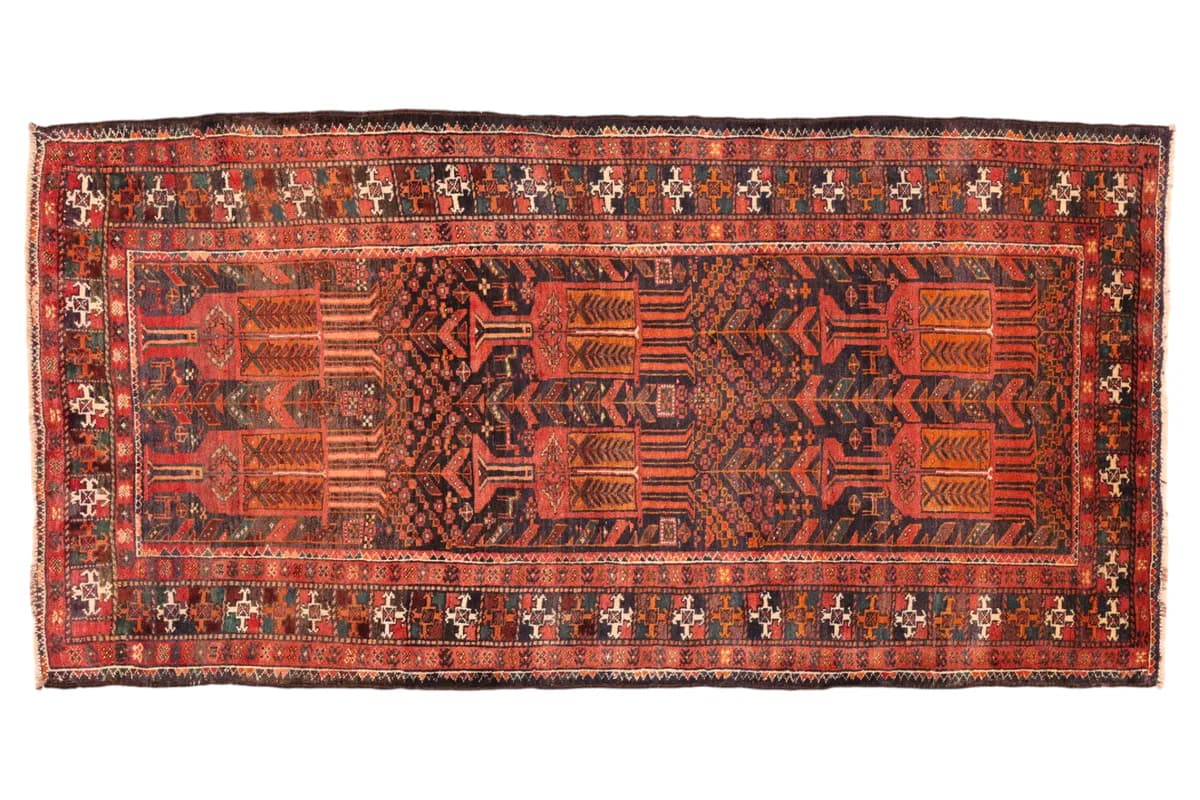
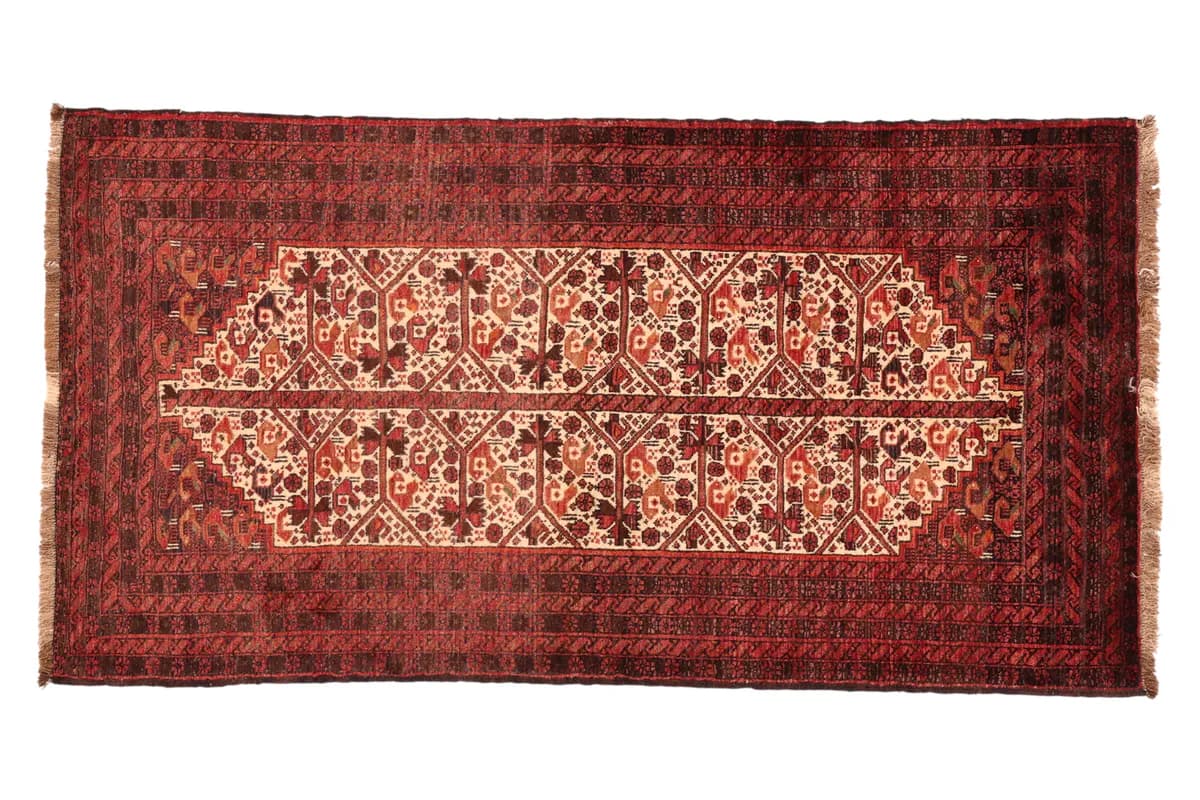
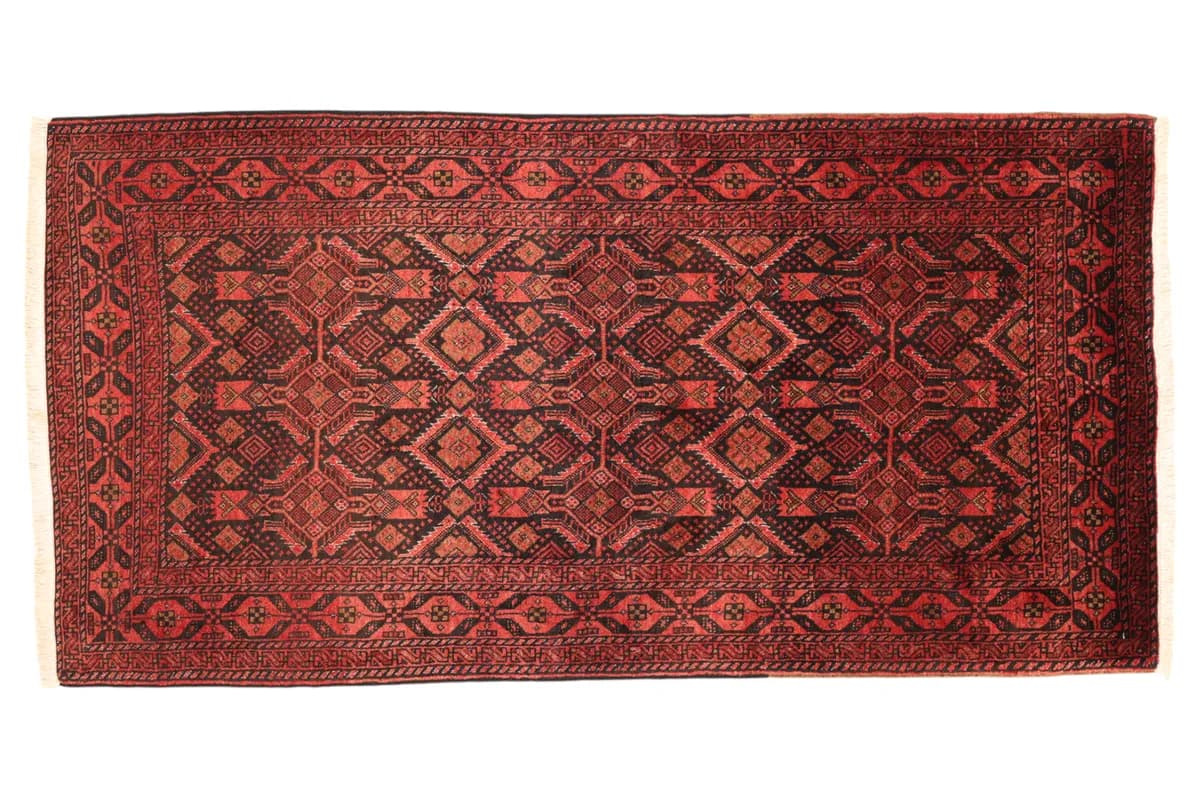
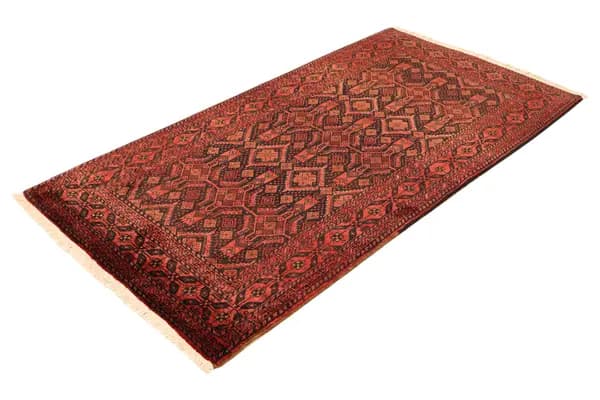
This is a Baluch runner, also written Belouch, a tribal weaving from the borderlands of southeastern Iran, 205 x 105 cm (6'9" x 3'5"). Baluch weavers are known for deep reds and indigo set against dark grounds, often gathered into a single prayer-niche medallion. Here the weaver chose something else: a running column of diamonds, one linked to the next, the length of the runner.
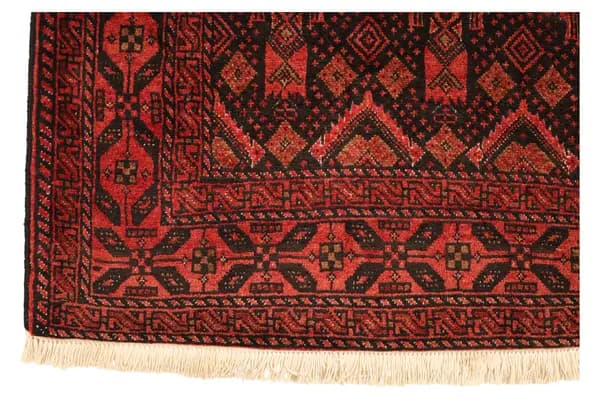
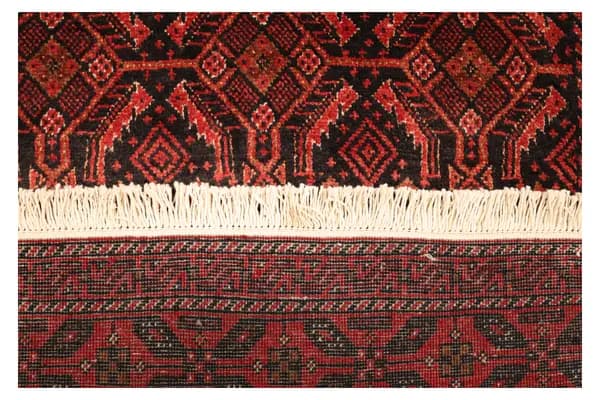
A deep brick red, almost brown in places, carries the field, broken by very dark brown-black compartments where each diamond sits. Down the centre runs that column of medallion-like diamonds in rust, gold and dark brown, outlined in ivory, gathered around no single point. Two-thirds along, the ground lightens slightly, the kind of shift that comes when one hand-spun dye lot runs out and another takes its place. A wide rust-red border closes the field on both sides, carrying a repeating hook-and-diamond pattern in dark brown and cream that holds the whole length together.
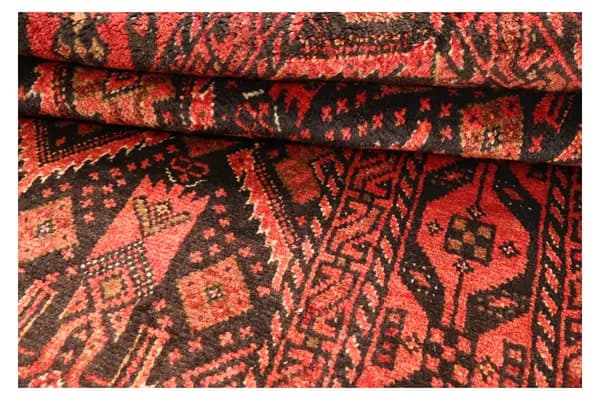
The runner is hand-knotted on a cotton warp, its pile hand-spun wool rather than machine-spun, which is what gives the surface its slightly uneven, ribbed feel along the diagonals of each diamond. At 128,000 to 160,000 knots per square metre it sits at the density typical of a Baluch loom, worked from memory on a portable frame rather than from a drawn plan, exact enough to hold small compartments and hooked forms without letting them blur. The colour shift two-thirds along the field is the same hand at work over time, a new batch of dyed wool picked up and carried on without a pause in the pattern.
A runner of this size belongs in a hallway or along a landing, somewhere a rug is seen in passing rather than sat on. The brick red and dark brown hold their own with no daylight to help them, warming a corridor that would otherwise read flat underfoot. Twenty to forty years have already settled the pile flat and firm, dense enough for the kind of foot traffic a hallway gives it rather than something to be protected. What stays with you is the rhythm: diamond after diamond running the length of the room, with no single point where the eye is told to stop.
More on Baluch rugs: origin, making and how to recognise a genuine piece
Traditional weave
At 205 × 105 cm (2.15 m²) this is a small rug. It works beside a bed, in a reading corner, in front of a fireplace or as a mat by a door. It does not furnish a room; it makes a point in one.
Yes, knotted by hand — knot by knot on a loom, not machine-made. The density is 128,000 to 160,000 knots per square metre; across 2.15 m² that is roughly 280,000 to 340,000 individual knots, every one of them tied by hand.
Hand-spun wool still carries its own lanolin, which keeps liquid sitting on the surface for a moment: blot quickly, with clear water and a light cloth, working inwards and without rubbing. Otherwise regular vacuuming along the pile is enough. Turn the rug once or twice a year so light and footfall reach it evenly.
We are in the Hamburg Speicherstadt. Come and see this rug in daylight, or write to us — a person answers.
Certificate included verifying origin, materials, and craftsmanship.
Ref: 565424