Belutsch
205 × 105 cm
484 €






486 €
Incl. VAT
In Stock · Ready to Ship
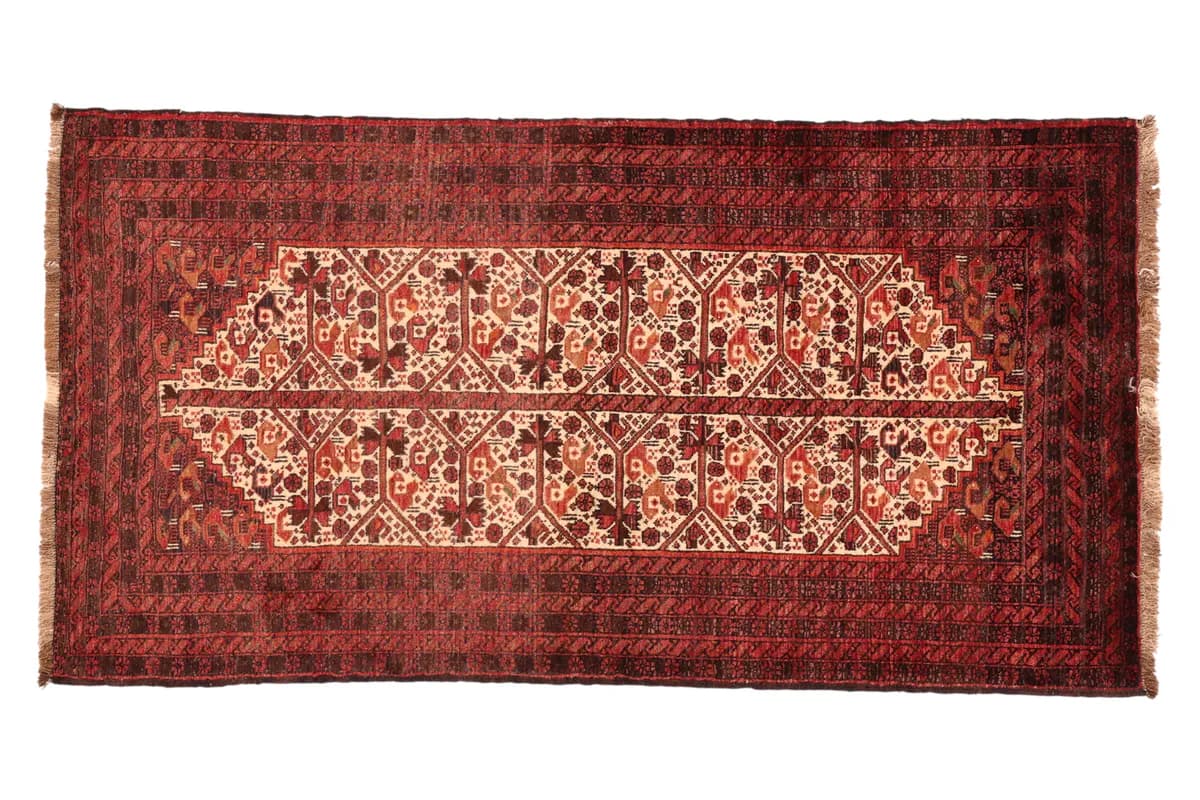
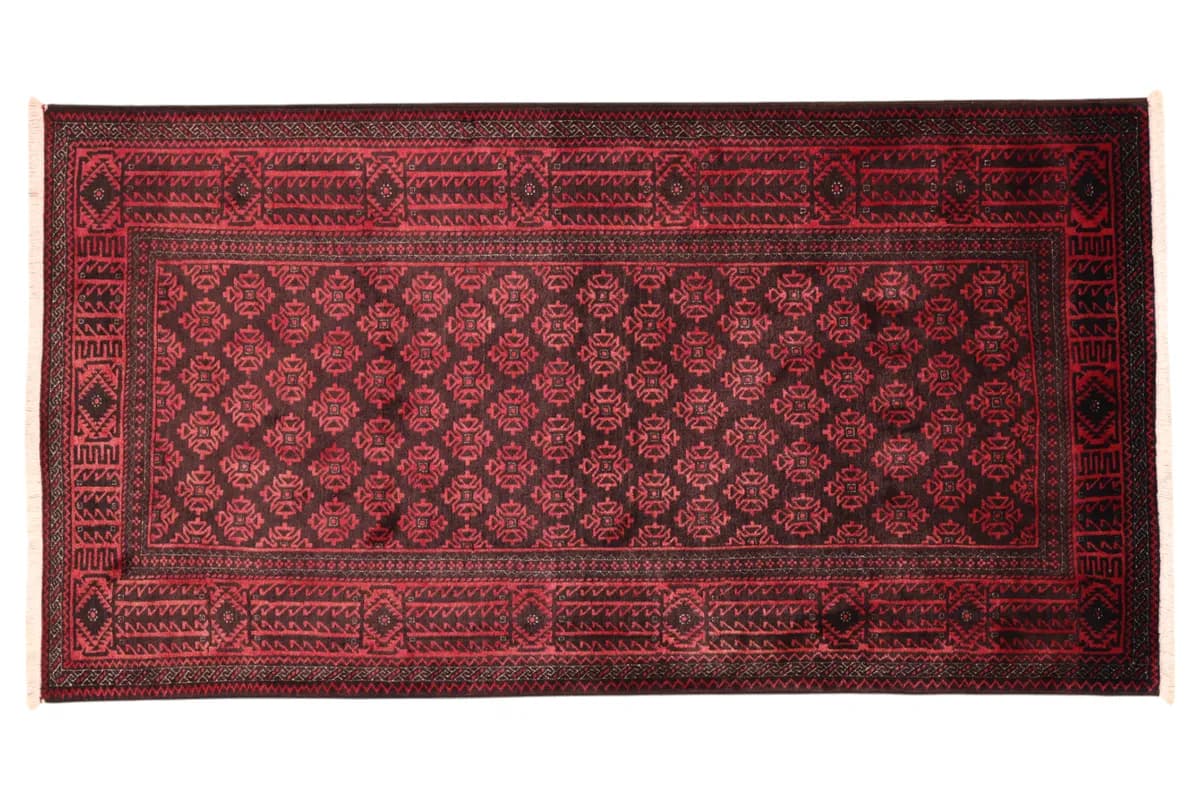
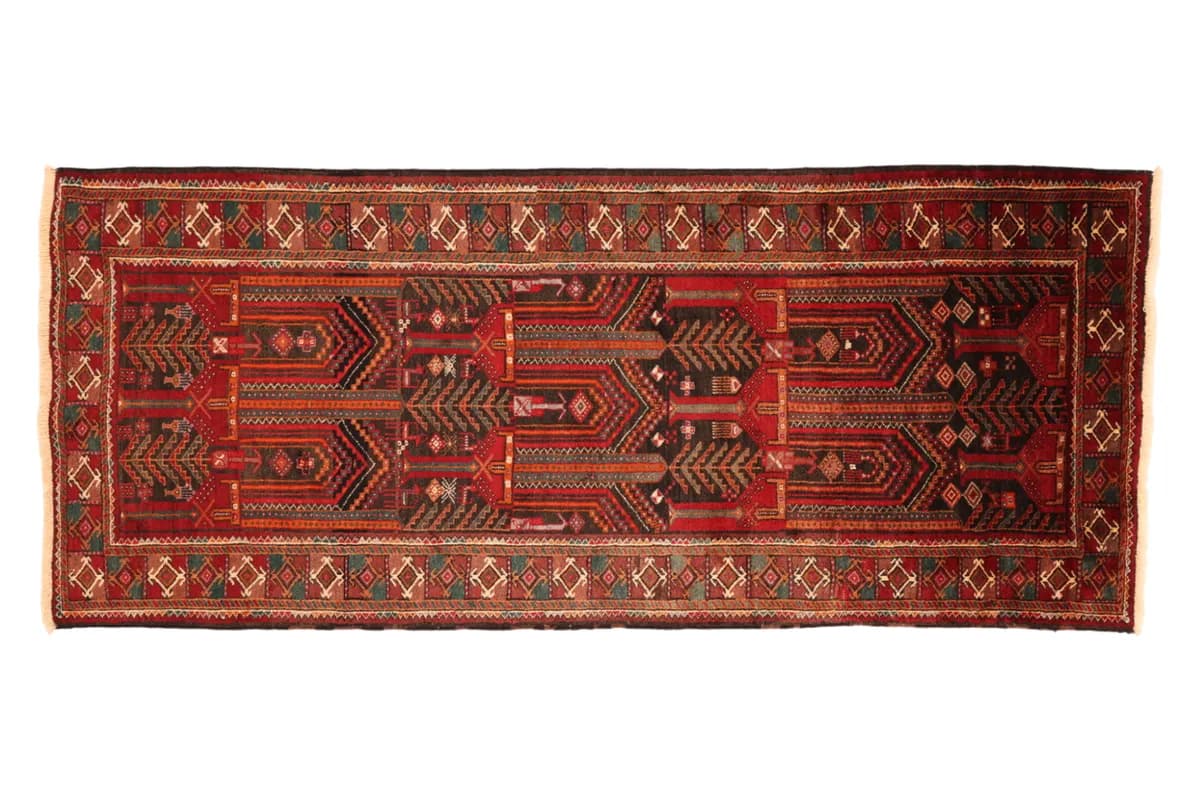
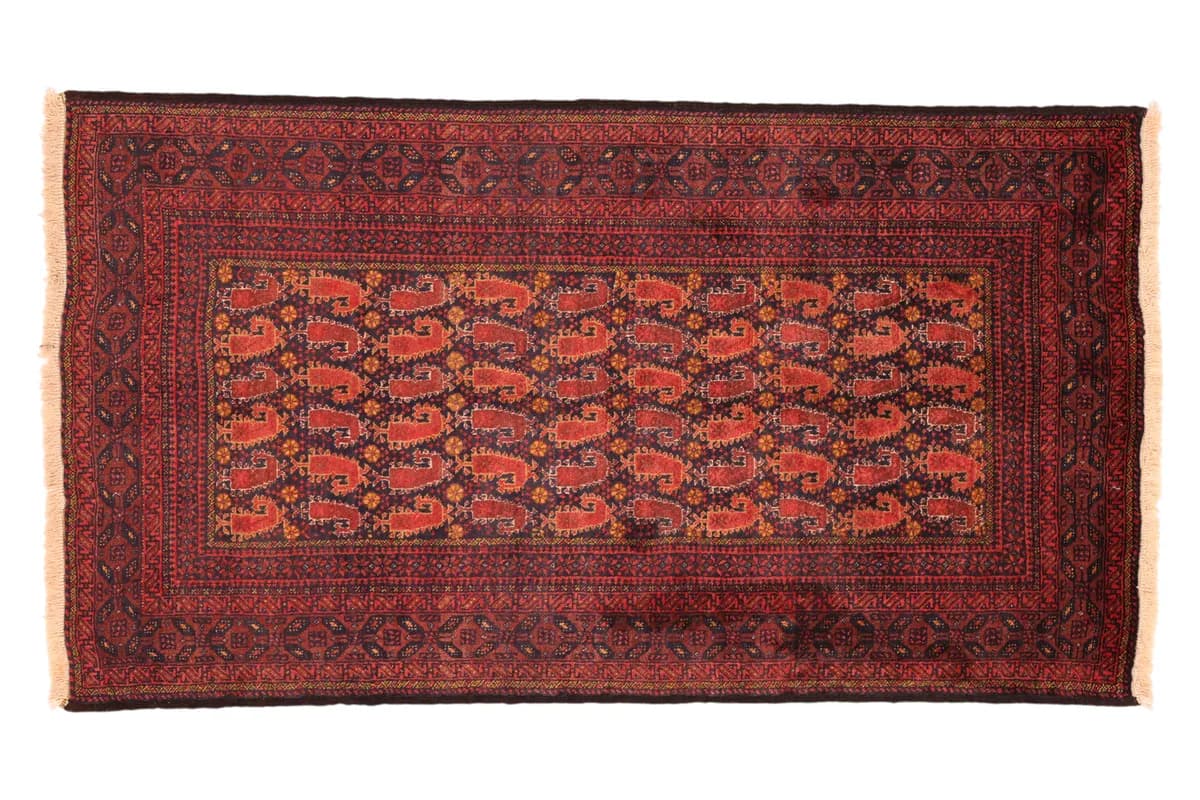
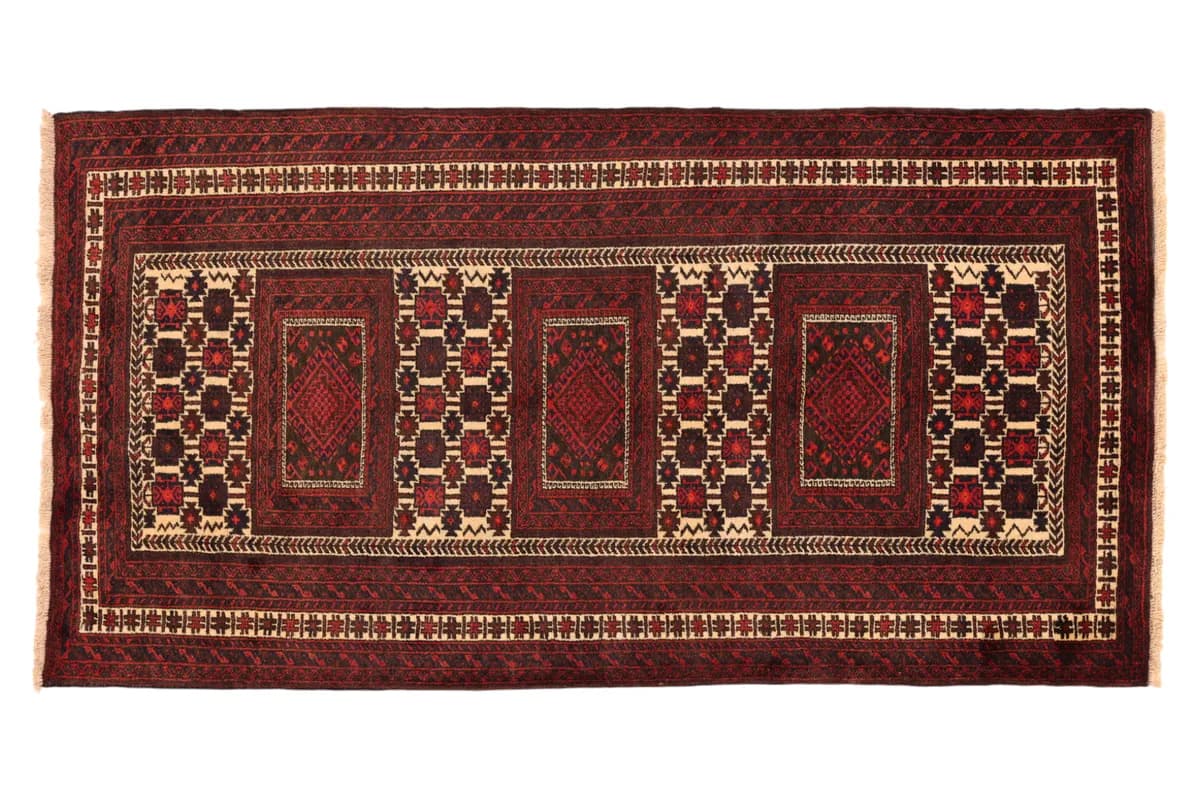
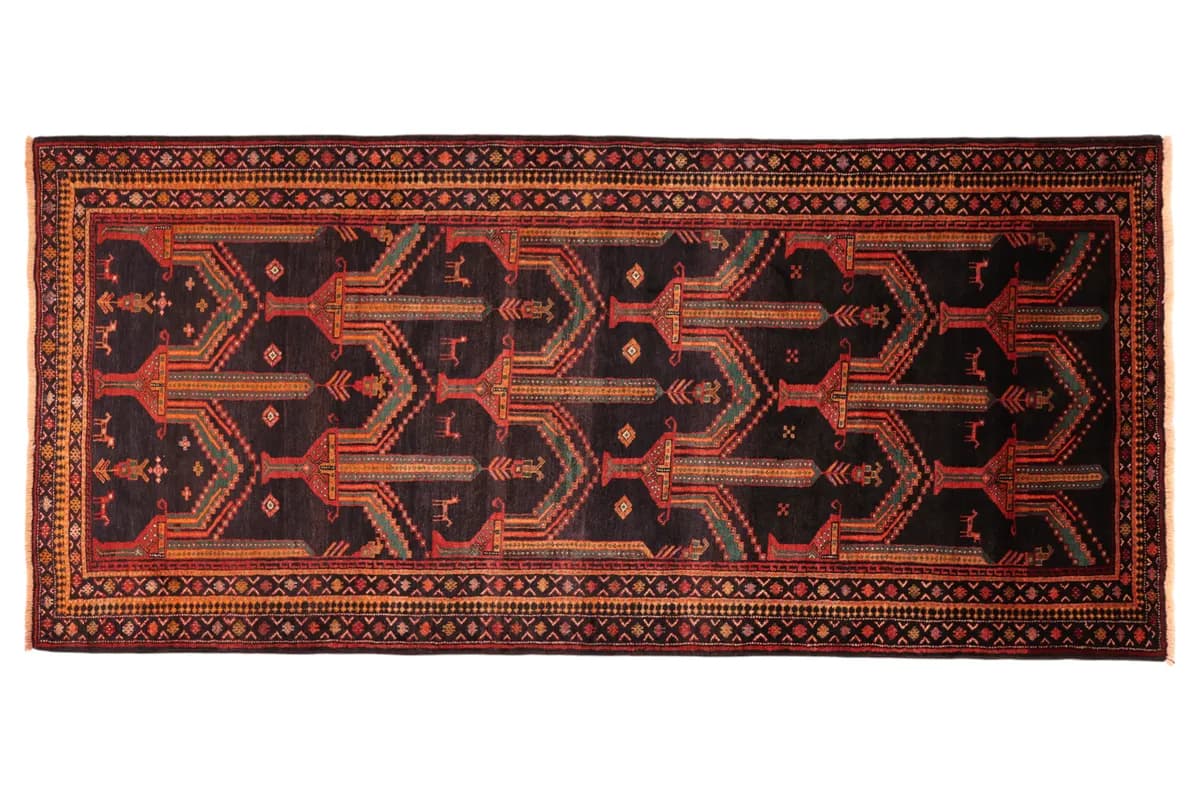
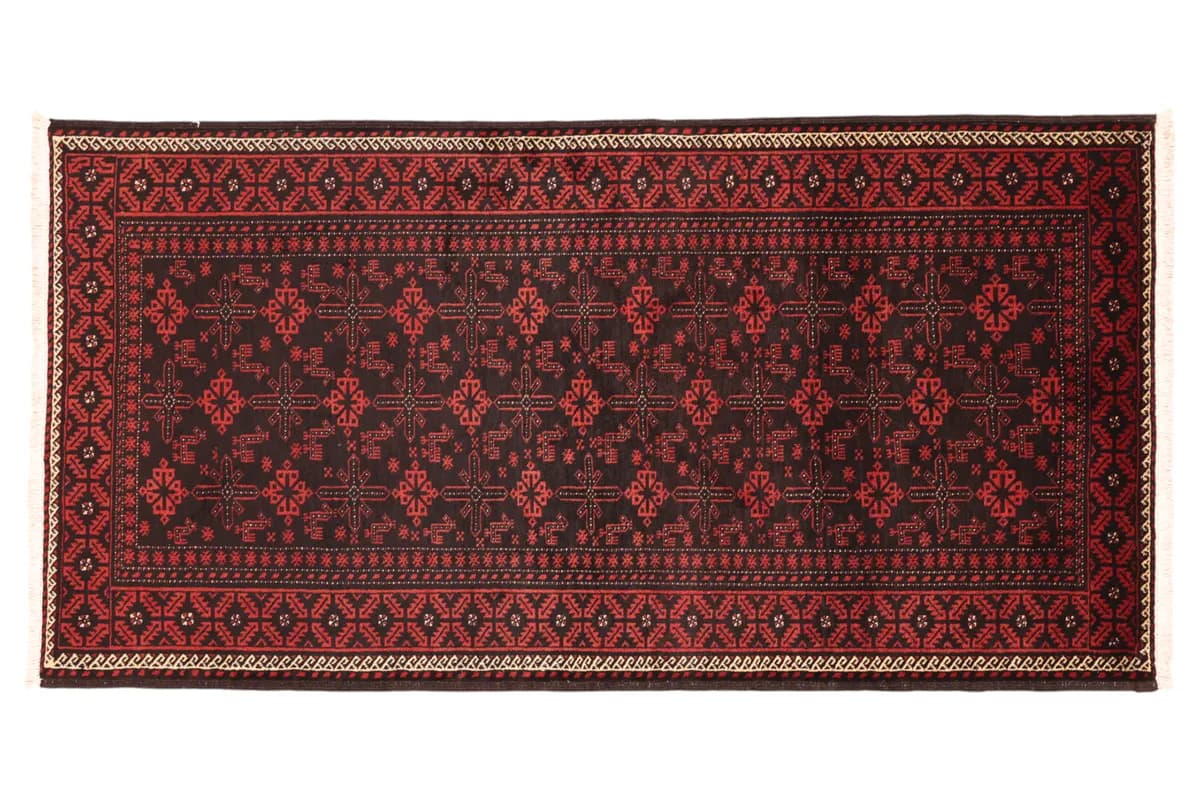
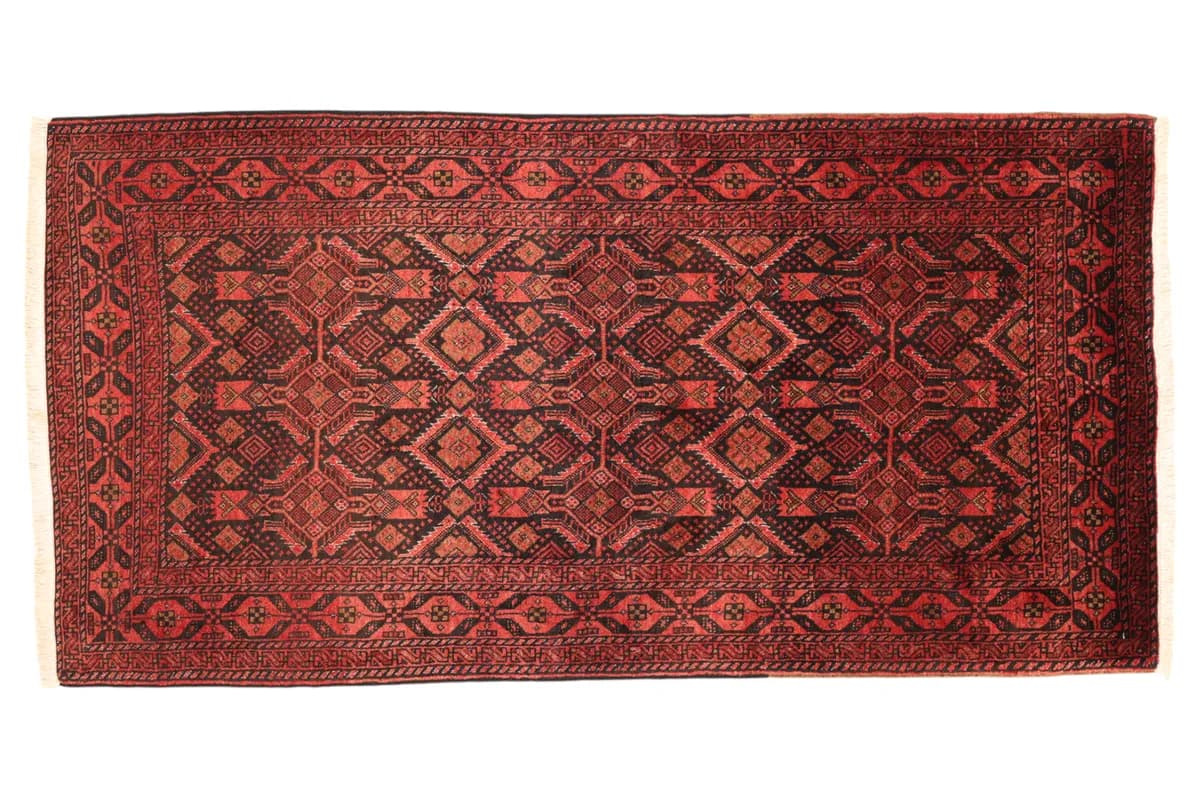
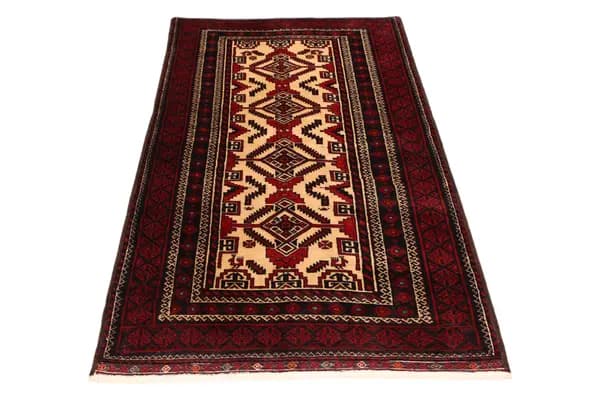
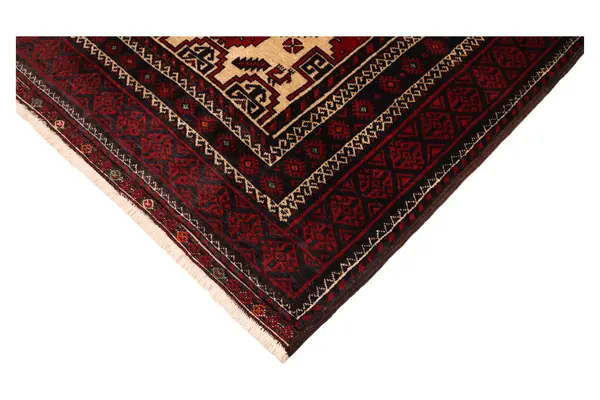
This is a Baluch rug — also written Belouch — a tribal weaving from the borderlands of southeastern Iran, measuring 197 x 99 cm (6'6" x 3'3"). Baluch weavings are known for deep, earthy reds and indigo blues, and for bold geometric pattern knotted from memory rather than from a drawn plan. Here that customary darkness is set aside: the field is ivory.
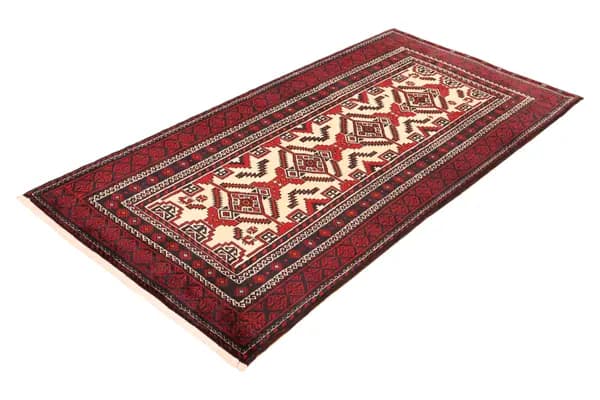
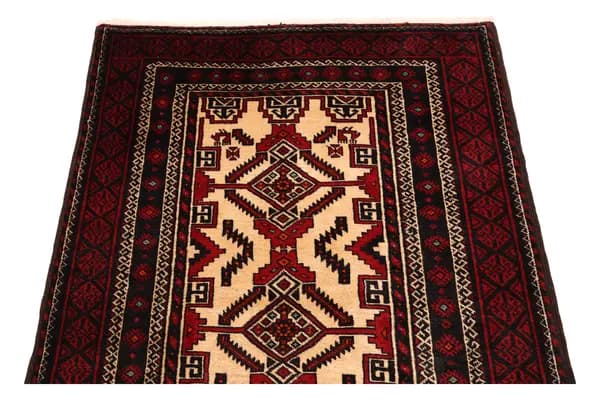
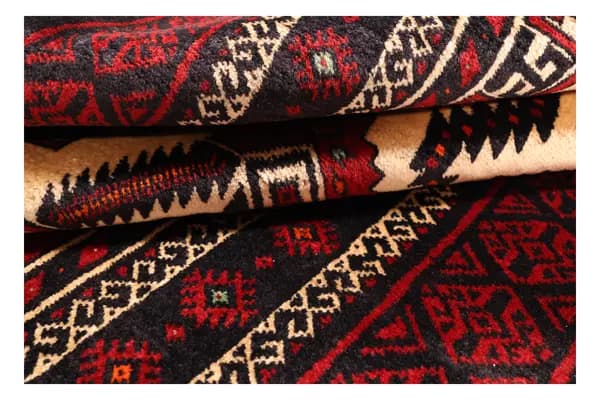
Against that pale ground, four diamond medallions run in a single column, linked head to tail, each one built from deep brick red and dark navy-black. Small angular figures sit at the corners of the field, birds or animals reduced to a few sharp lines, and the ground between is filled with jagged, serrated hooks, a restless texture under the calm of the medallions. Touches of orange, teal and mustard appear inside the medallions, small enough to catch the eye without ever competing with the ivory around them.
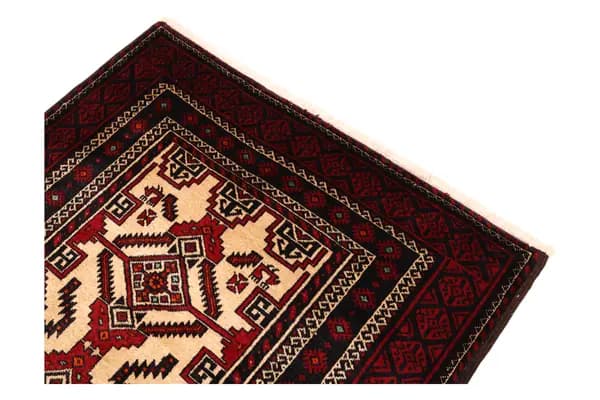
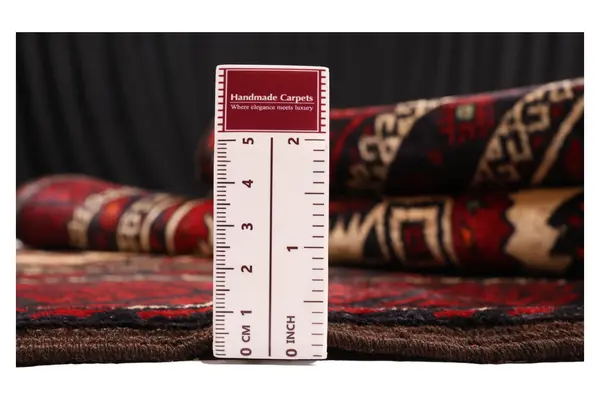
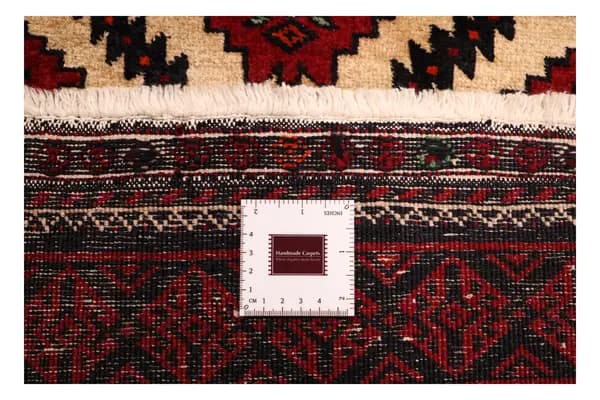
The wool was spun by hand before dyeing and knotting, and its uneven thickness gives the diamond outlines their slight ribbed texture rather than a flat, machine-even one. Knotted from memory on a portable loom at around 128,000 to 160,000 knots per square metre, the weave holds the sharp angles of the diamonds and jagged hooks without softening into curves. The pile, some 6 mm of wool over a cotton warp, carries a matt, quiet sheen that lets the ivory ground stay pale.
This is a narrow piece, suited to a hallway, a landing, or the floor beside a bed, seen up close rather than crossed at a distance. Against pale boards the ivory ground holds its warmth; against a darker floor it becomes the lift, brightening a dim corridor. Underfoot the wool is dense and slightly springy, sound for daily footsteps rather than a piece to protect. Passing light catches the ribbed diamond outlines, so the pattern seems to shift slightly with each crossing.
More on Baluch rugs: origin, making and how to recognise a genuine piece
Traditional weave
At 197 × 99 cm (1.95 m²) this is a small rug. It works beside a bed, in a reading corner, in front of a fireplace or as a mat by a door. It does not furnish a room; it makes a point in one.
Yes, knotted by hand — knot by knot on a loom, not machine-made. The density is 128,000 to 160,000 knots per square metre; across 1.95 m² that is roughly 250,000 to 310,000 individual knots, every one of them tied by hand.
Hand-spun wool still carries its own lanolin, which keeps liquid sitting on the surface for a moment: blot quickly, with clear water and a light cloth, working inwards and without rubbing. Otherwise regular vacuuming along the pile is enough. Turn the rug once or twice a year so light and footfall reach it evenly.
We are in the Hamburg Speicherstadt. Come and see this rug in daylight, or write to us — a person answers.
Certificate included verifying origin, materials, and craftsmanship.
Ref: 560507