

Nanadj
345 × 258 cm
5.850 €
5.100 €
Incl. VAT
In Stock · Ready to Ship
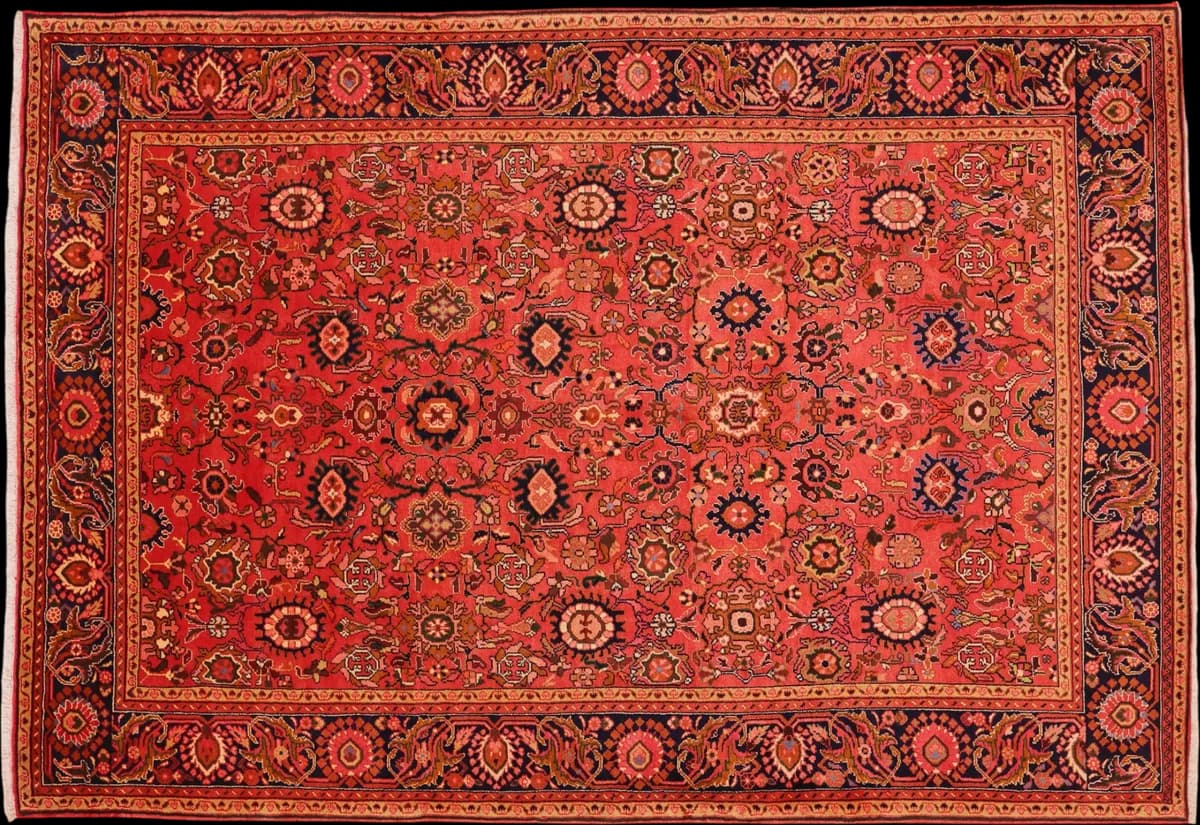
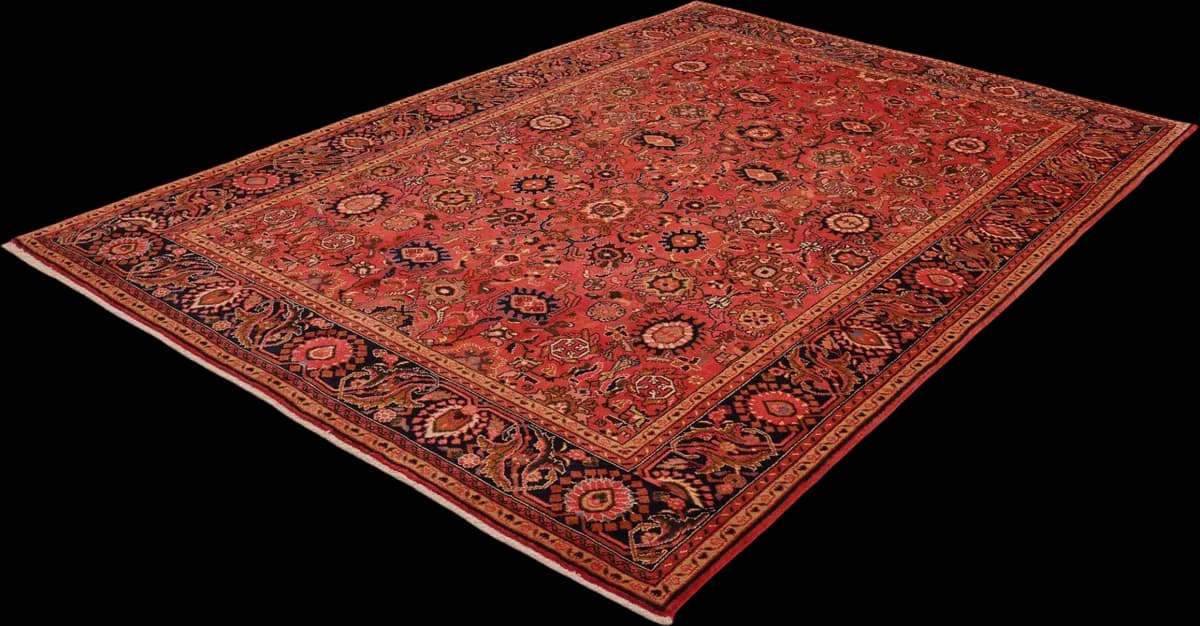
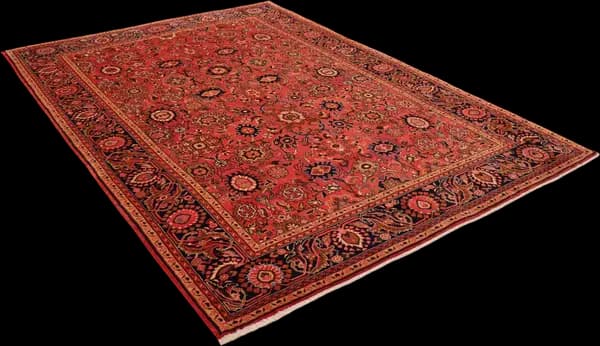
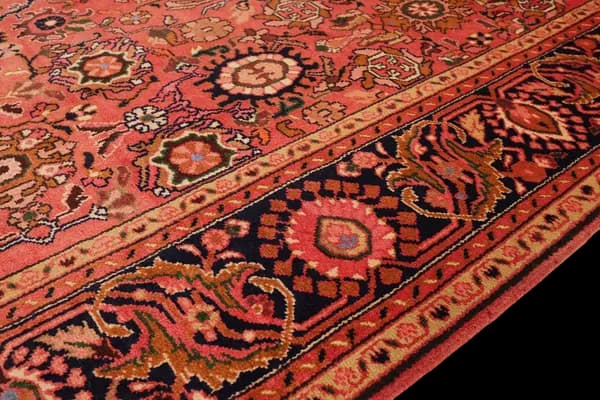
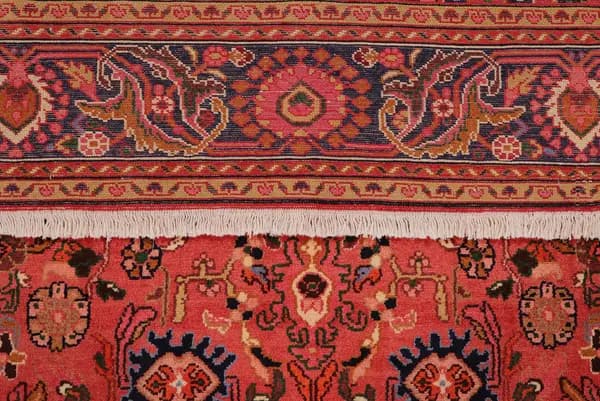
A Nanaj rug, a Kurdish village weaving from the Hamadan region of Iran, 300 x 210 cm (9'10" x 6'11"). Known in the antique trade since the early twentieth century, these rugs are woven using the single-wefted Sennah Baft technique typical of the whole Hamadan area, their patterns drawn with a bold, independent hand somewhere between workshop discipline and nomadic freedom. This one is set in a coral red noticeably lighter and warmer than the deeper rust tone the pattern usually carries.
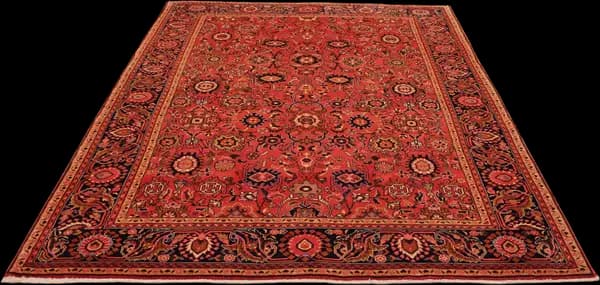
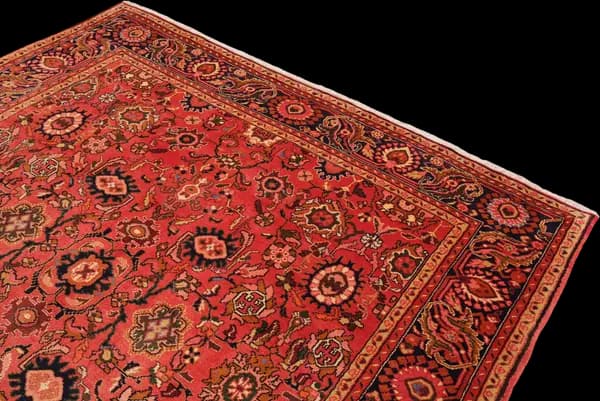
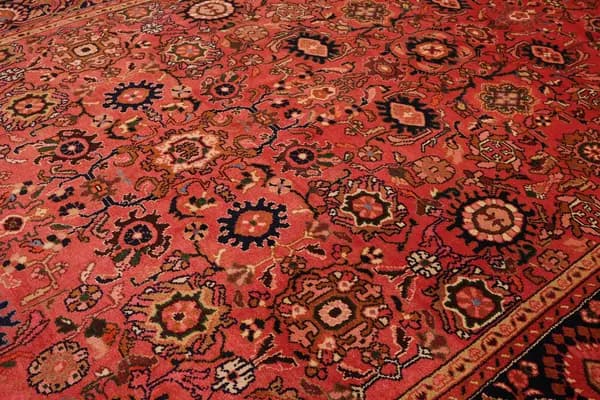
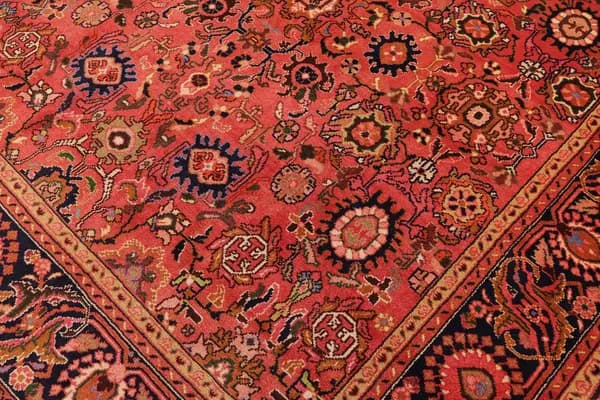
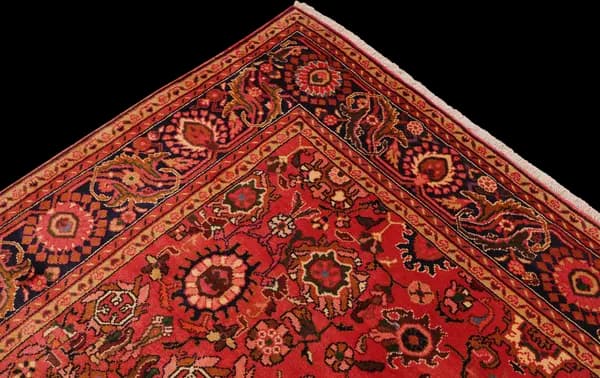
The field opens in that coral, filled edge to edge with small rosettes and curling, serrated leaves in the classic Mahi repeat, with no central medallion to interrupt it. Navy motifs surface here and there through the field, and rust-brown, olive green and dusty pink sit inside the rosettes alongside touches of ivory. Camel and gold guard stripes lead into a wide navy-blue border carrying its own running palmette-and-vine scroll, taking up about a sixth of the rug's width and holding the paler field firmly in place.
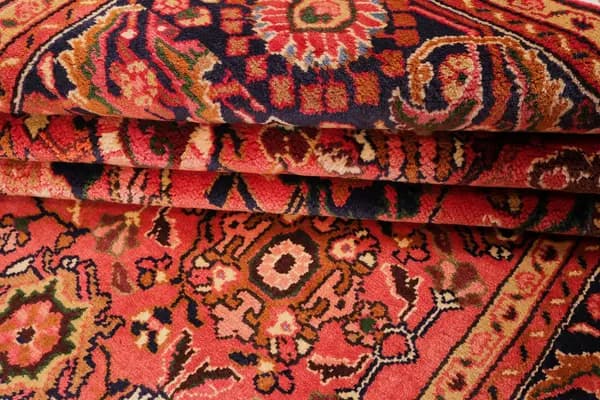
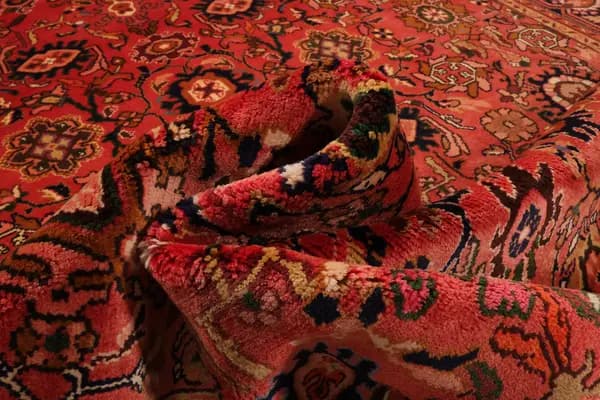
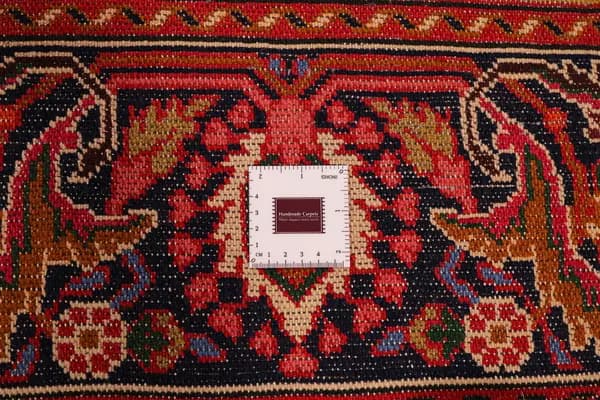
The wool was hand-spun from the weaver's own sheep, then knotted over a cotton warp at 201,000 to 250,000 knots per square metre, a density fine enough to keep the small rosettes crisp and legible without losing the loose, village hand behind the drawing. That same hand-spun wool carries a slight natural sheen, which is part of why the coral ground reads as bright and alive rather than flat. At twenty to forty years old, the pile has settled into itself without dulling, and a 12mm depth still gives real substance underfoot.
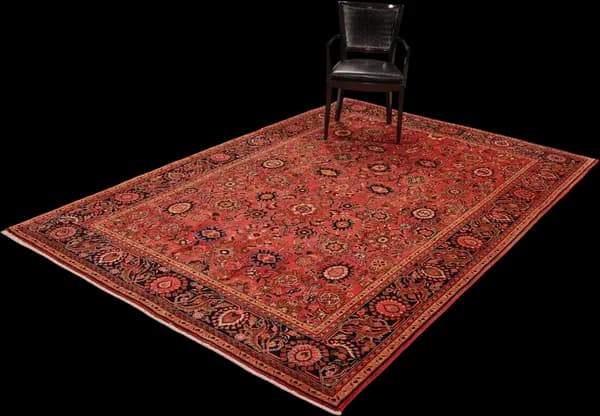
A rug this size sits comfortably under a dining table or in front of a sofa group in a living or dining room, and that bright coral does real work on a pale floor, warming the whole space rather than just decorating it. Underfoot it is dense and even, built for a room that gets used rather than one kept for best. As daylight moves across it through the day, the rosettes catch and lose that faint wool sheen in turn, and the coral never quite sits still.
Nanaj rugs come from a village in the northern part of Hamadan Province, western Iran. Like all Hamadan-region rugs, they are woven with the symmetrical (Turkish) knot on cotton foundations with the characteristic single-weft construction, one row of weft between each row of knots, creating a firm handle and distinctive ribbed appearance on the reverse.
The Herati pattern predominates, rendered in a classic palette of red and blue from natural madder root and indigo. Hand-spun wool produces a durable, practical carpet with clear graphic design language suited for both traditional and curated modern interiors.
Fine quality weave
At 300 × 210 cm (6.30 m²) this is a large rug. It sits under a seating group with the front legs of sofa and chairs on it, or under a dining table for four. A table for six wants about 80 cm of clearance all round, and needs more.
Yes, knotted by hand — knot by knot on a loom, not machine-made. The density is 201,000 to 250,000 knots per square metre; across 6.30 m² that is roughly 1.3 to 1.6 million individual knots, every one of them tied by hand.
Hand-spun wool still carries its own lanolin, which keeps liquid sitting on the surface for a moment: blot quickly, with clear water and a light cloth, working inwards and without rubbing. Otherwise regular vacuuming along the pile is enough. Turn the rug once or twice a year so light and footfall reach it evenly.
We are in the Hamburg Speicherstadt. Come and see this rug in daylight, or write to us — a person answers.
Certificate included verifying origin, materials, and craftsmanship.
Ref: 547198


