Kashan
274 × 199 cm
2.861 €
9.600 €
Incl. VAT
In Stock · Ready to Ship
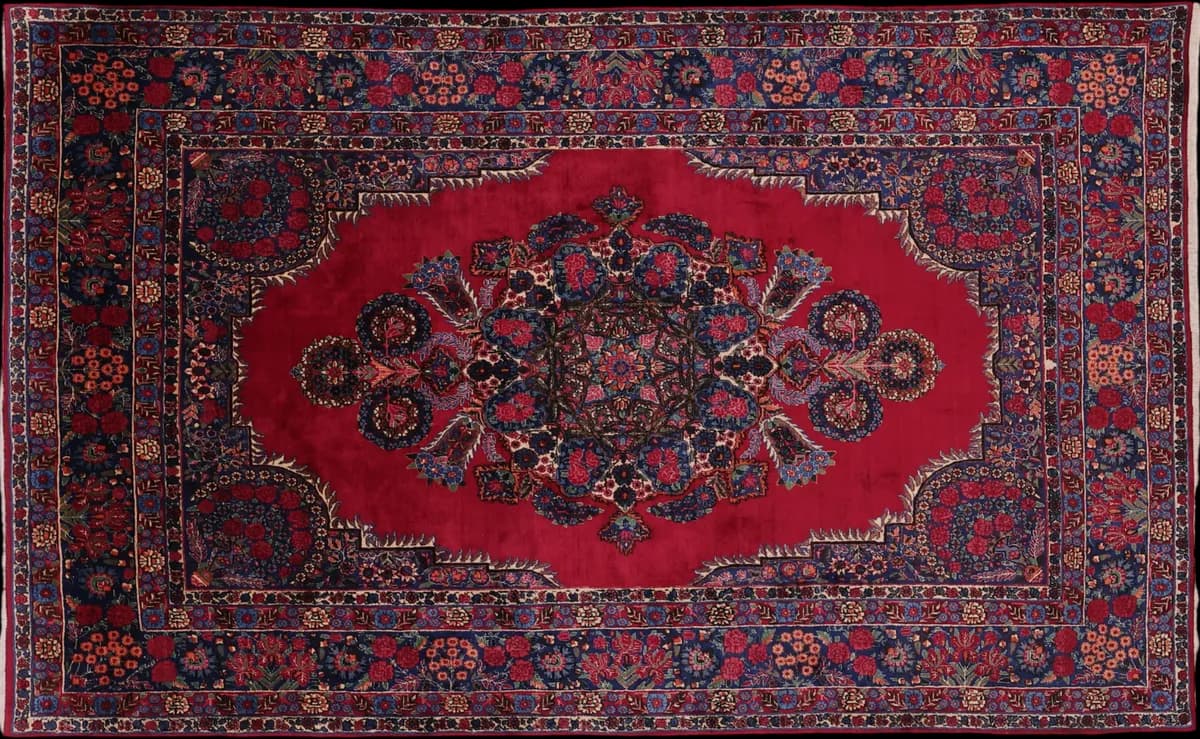
Yazd, also written Yezd, is one of Iran's oldest cities, a walled desert settlement raised in mudbrick and cooled by its famous wind towers, long the centre of a UNESCO-listed old town. Its workshops have woven fine city rugs for generations, known for medallion and arabesque designs in a cultivated, considered palette. This example measures 336 x 207 cm (11'0" x 6'9") and carries the workshop's signature in the field.
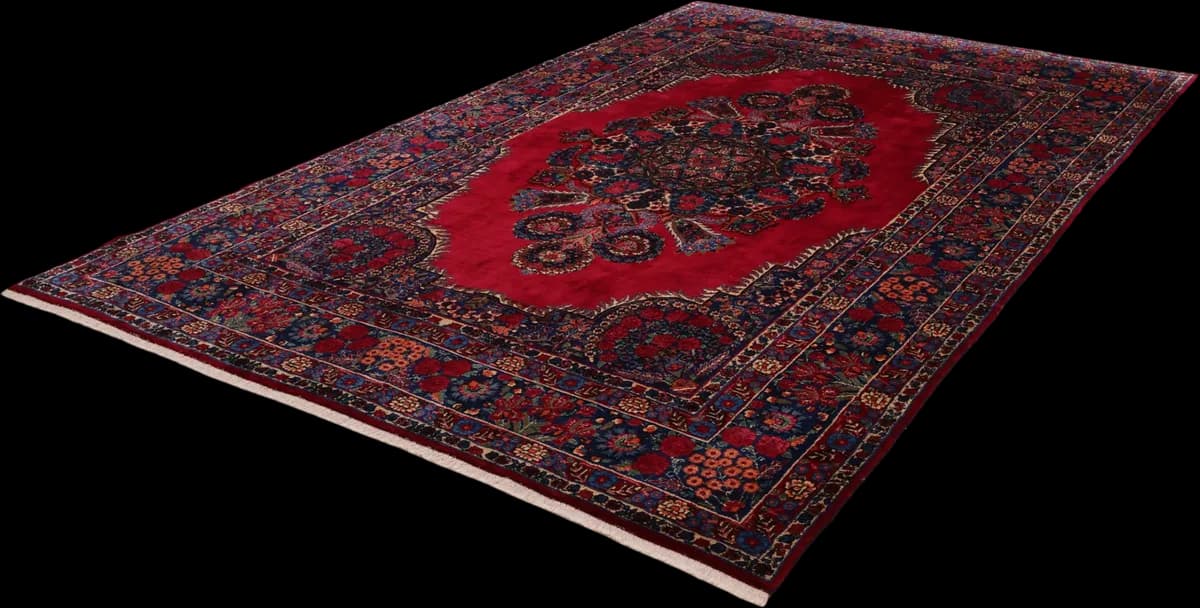
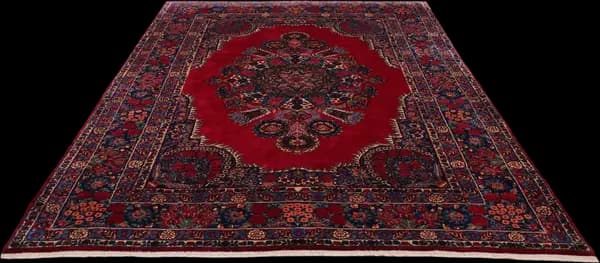
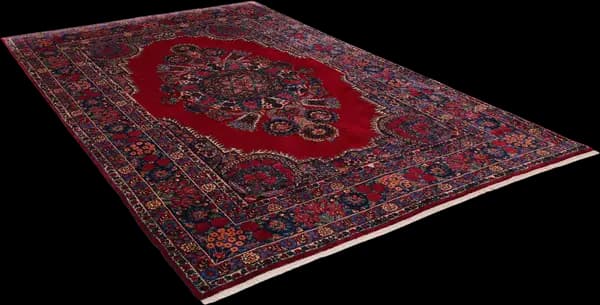
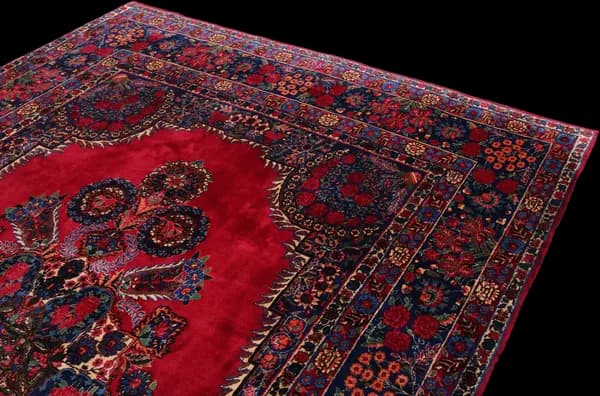
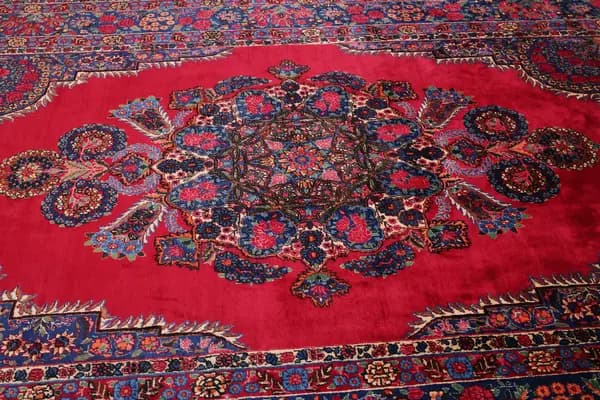
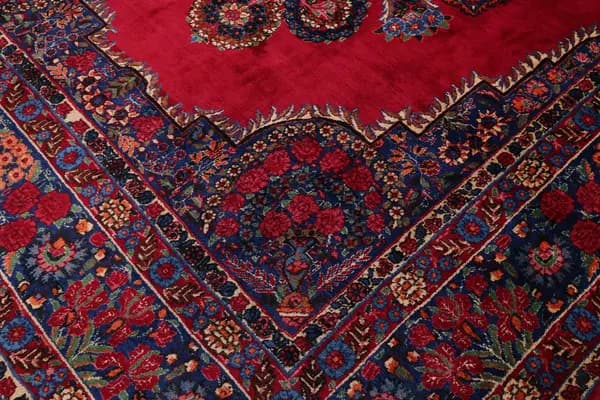
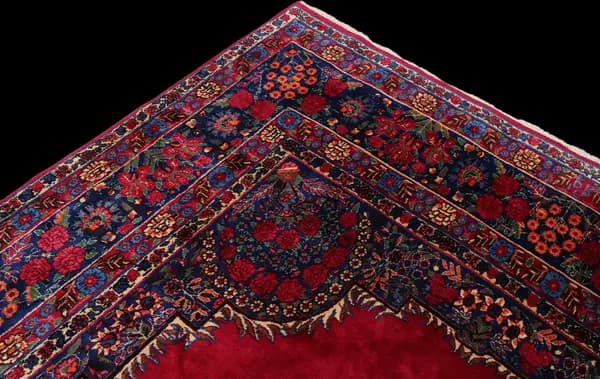
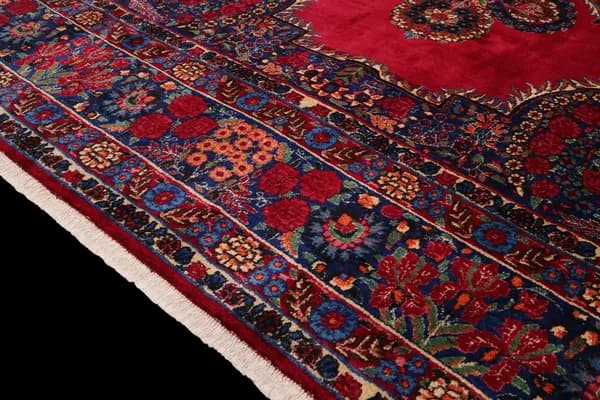
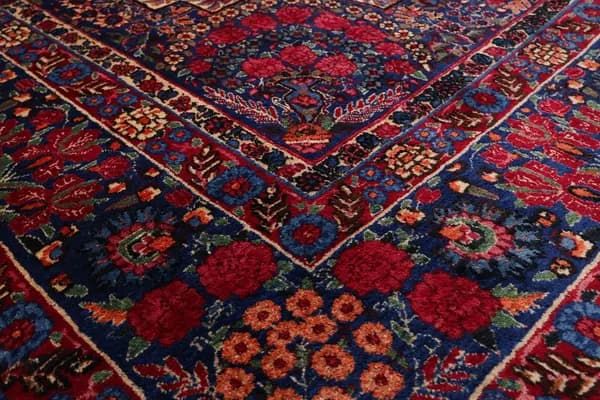
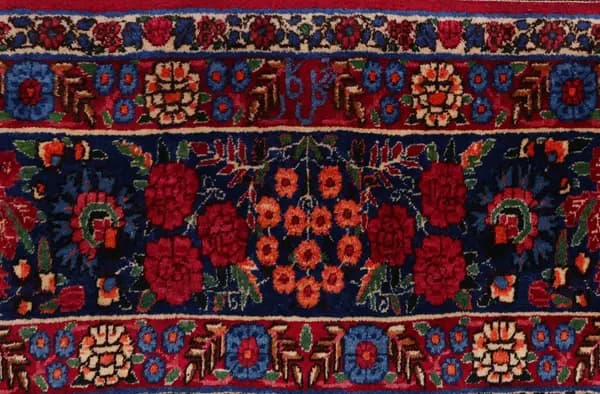
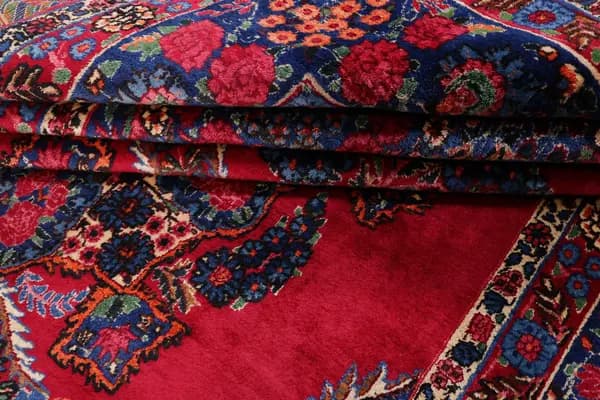
The first impression is a bold medallion in ivory and navy, floating on an almost bare field of deep crimson red. That medallion is stepped and built from a ring of small floral cartouches, alternating cream and navy grounds, so it reads less like a single flat shape and more like a piece of jewellery set onto the rug. Cream spandrels anchor the four corners, echoing its colours, while a wide navy border, filled with polychrome floral bouquets in rust, sage and rose, closes the composition without ever competing with the calm of the red field around the medallion.
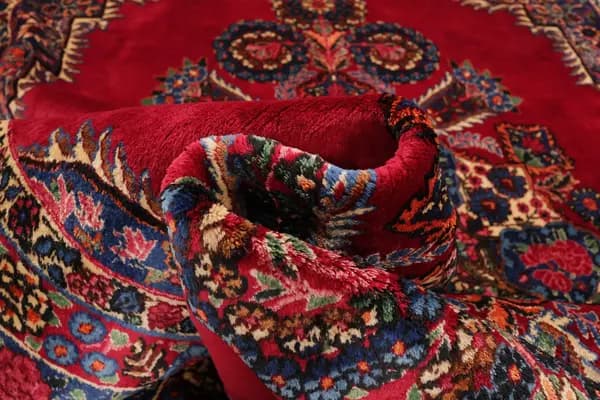
A rug like this begins on a drawn cartoon, and the weaver follows it knot by knot rather than working from memory, which is why the medallion sits so precisely on its axis and the spandrels answer each other so exactly. Here the workshop, Gholkar, knotted hand-spun wool onto a cotton foundation at a density of 201,000 to 250,000 knots per square metre, fine enough to carry the small florals of the medallion cleanly at a 12 mm pile height. That density also explains the slight sheen gathered in the medallion itself, against the flatter, matte red of the open field.
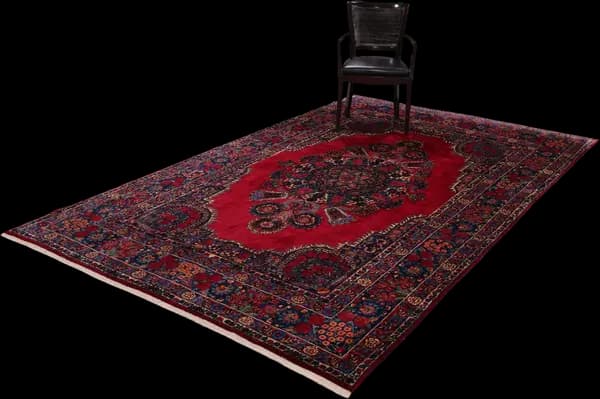
At 336 x 207 cm this is a rug for a dining table or a sofa group in a living or dining room, large enough to sit the whole arrangement on it. The crimson field will hold its own against dark wood furniture and warm a pale floor considerably, while leaving the room enough quiet for the medallion to stay the point of focus rather than one pattern among many. Underfoot the pile is dense, smooth and even, sound for a room in daily use rather than one kept for best. As the light moves across it through the day, it is the medallion's ivory and navy florals that catch first, the sheen shifting gently while the red around them stays still.
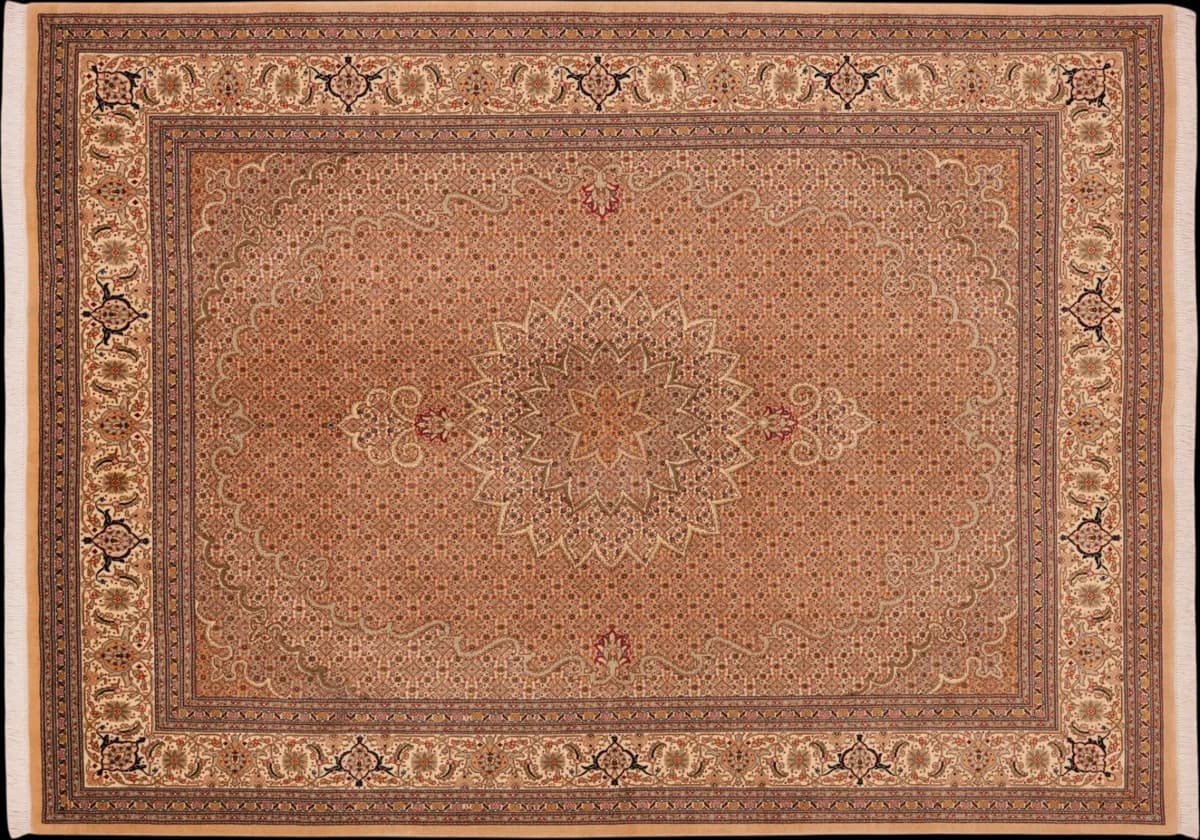
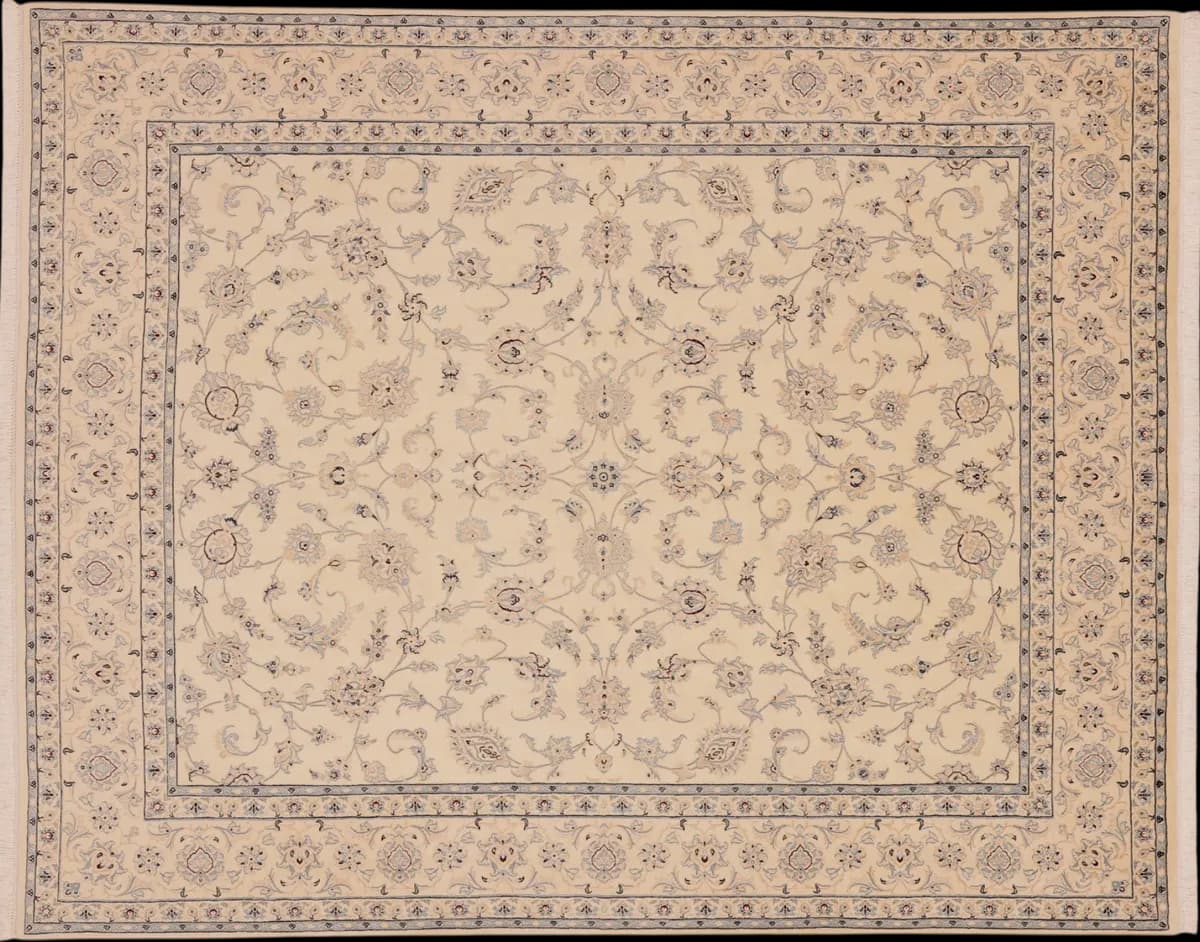
Kashan rugs originate from the city of Kashan in Isfahan Province, central Iran, one of the oldest Persian weaving centres with roots in the Safavid era. Knotted with the asymmetrical (Persian) knot on a cotton foundation, they are celebrated for their poised medallion layouts, lyrical florals, and rich, warm colour palette dominated by deep reds, blues, and ivory.
The neatly clipped, velvety pile gives Kashan rugs a crisp, finished appearance. Shah Abbas palmettes, flowing arabesques, and intricate floral borders are executed with precision. From classic workshop pieces to collectible Mohtasham styles, Kashan remains a symbol of Persian elegance. The master weaver has signed this piece, a mark of exceptional quality and pride in their craft.
Fine quality weave
At 336 × 207 cm (6.96 m²) this is a large rug. It sits under a seating group with the front legs of sofa and chairs on it, or under a dining table for four. A table for six wants about 80 cm of clearance all round, and needs more.
Yes, knotted by hand — knot by knot on a loom, not machine-made. The density is 201,000 to 250,000 knots per square metre; across 6.96 m² that is roughly 1.4 to 1.7 million individual knots, every one of them tied by hand.
Hand-spun wool still carries its own lanolin, which keeps liquid sitting on the surface for a moment: blot quickly, with clear water and a light cloth, working inwards and without rubbing. Otherwise regular vacuuming along the pile is enough. Turn the rug once or twice a year so light and footfall reach it evenly.
We are in the Hamburg Speicherstadt. Come and see this rug in daylight, or write to us — a person answers.
Certificate included verifying origin, materials, and craftsmanship.
Ref: 613459