Sarough
303 × 219 cm
7.200 €
638 €
Incl. VAT
In Stock · Ready to Ship
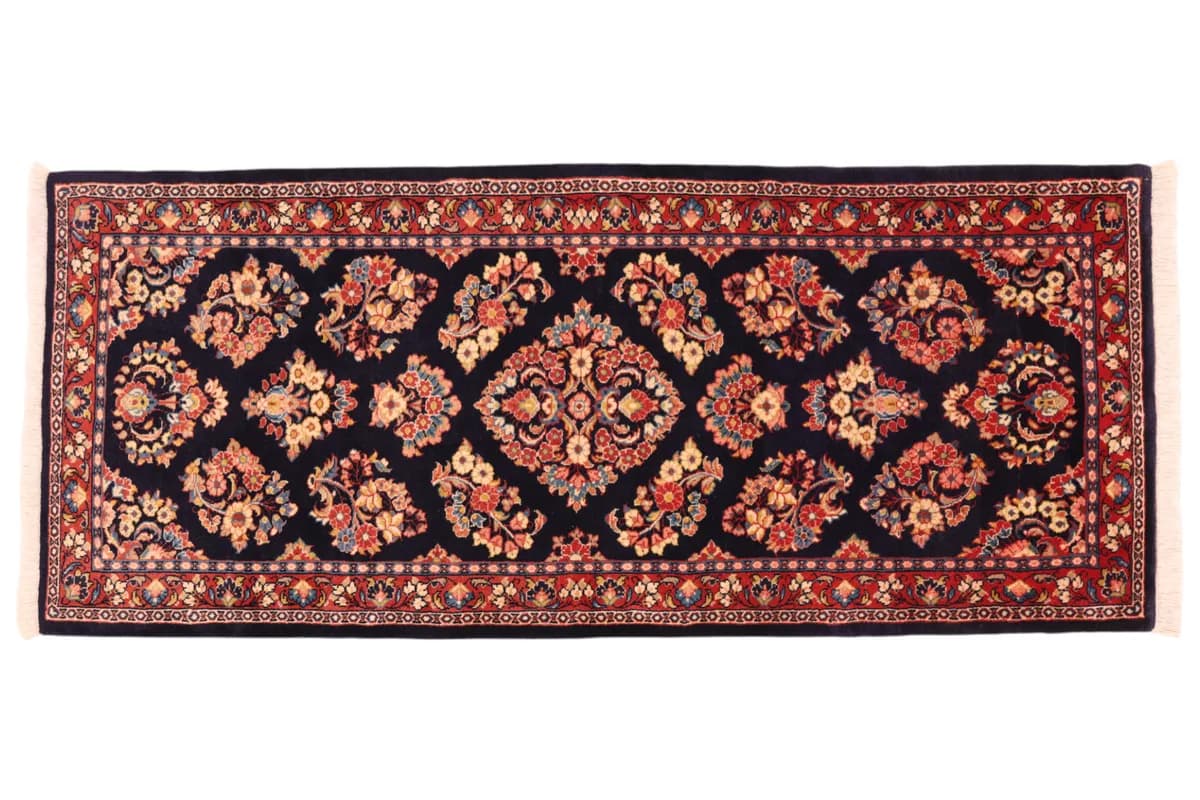
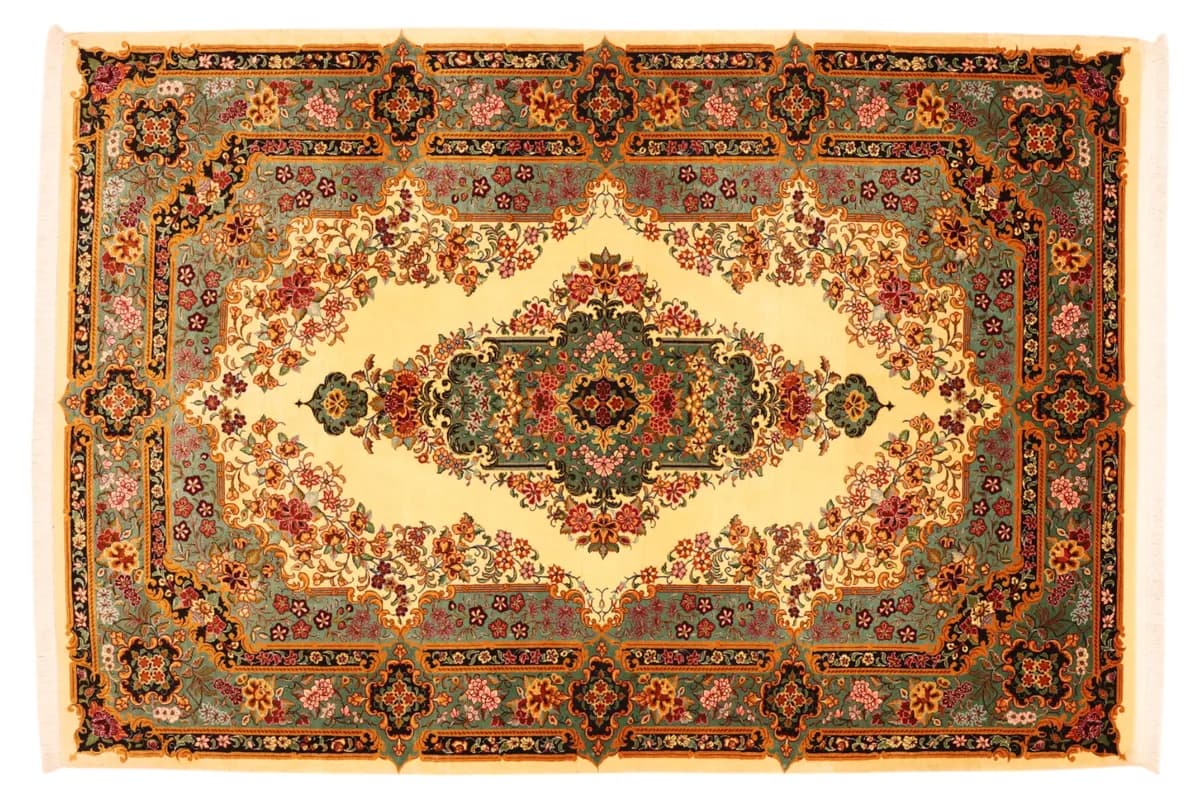
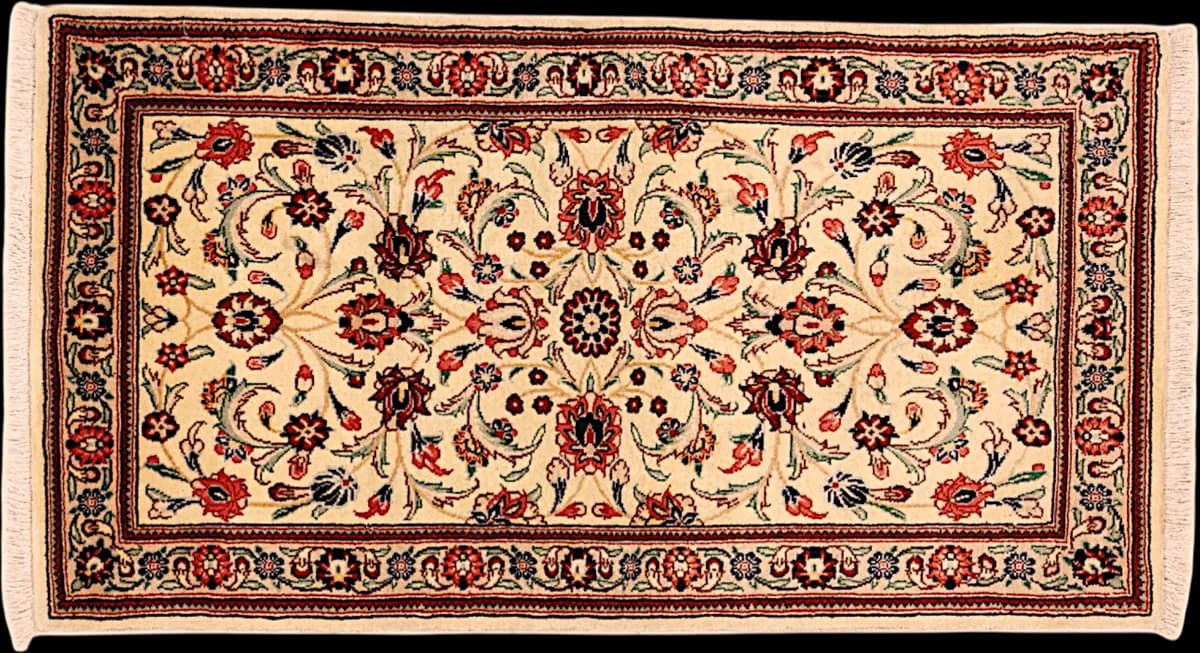
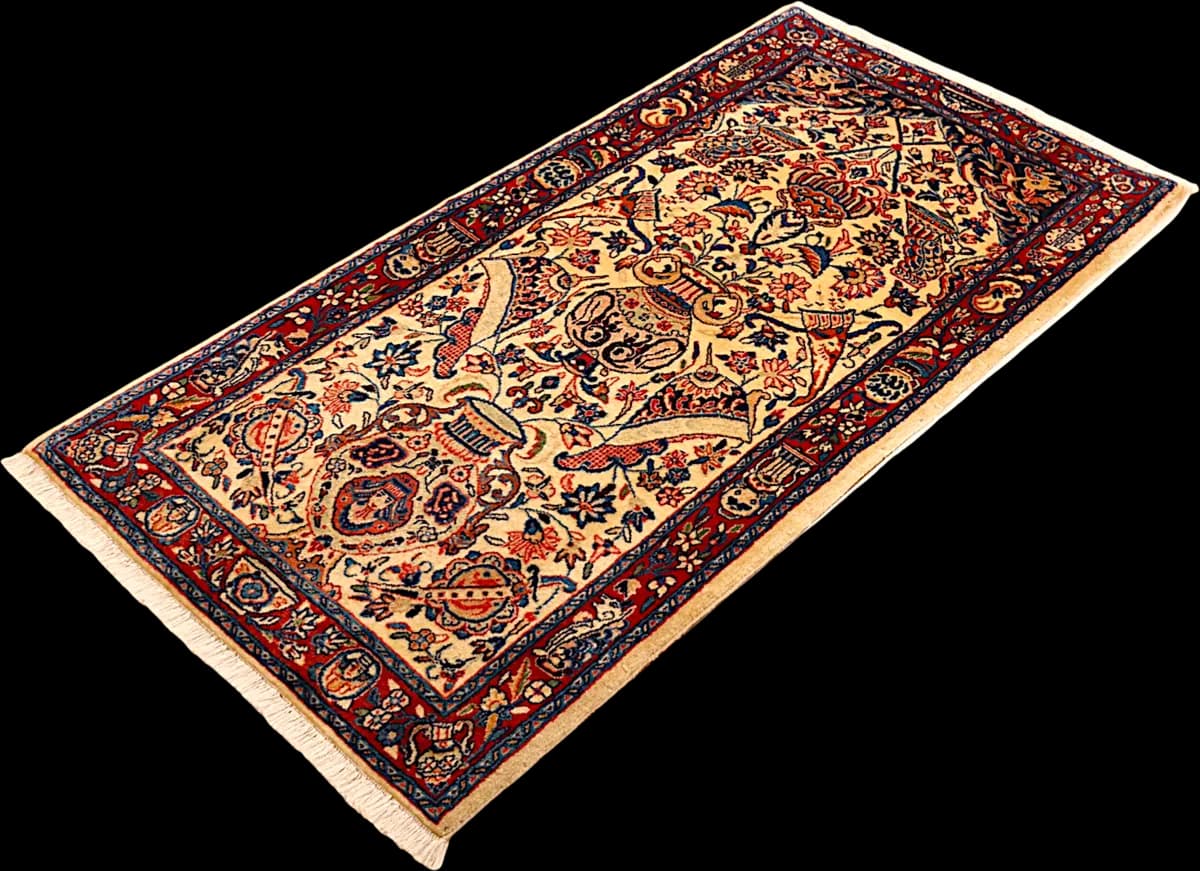
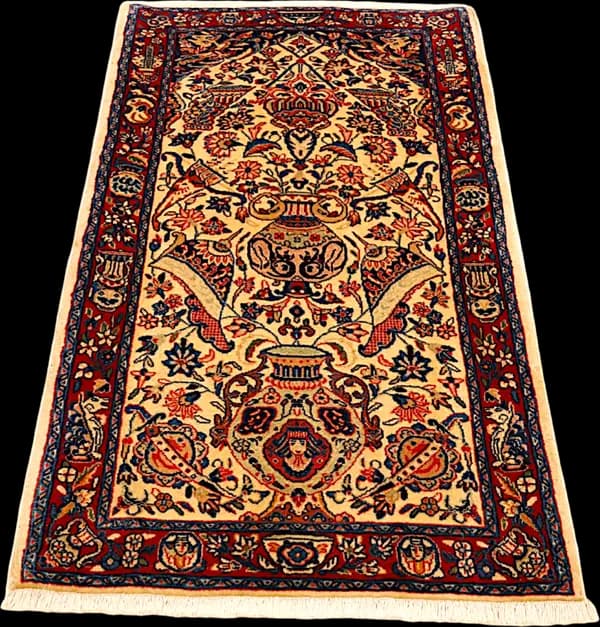
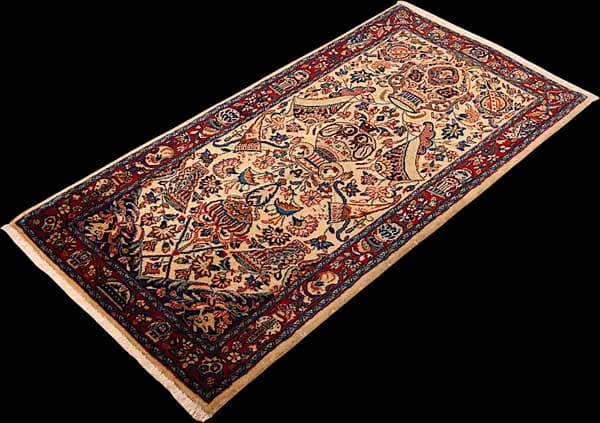
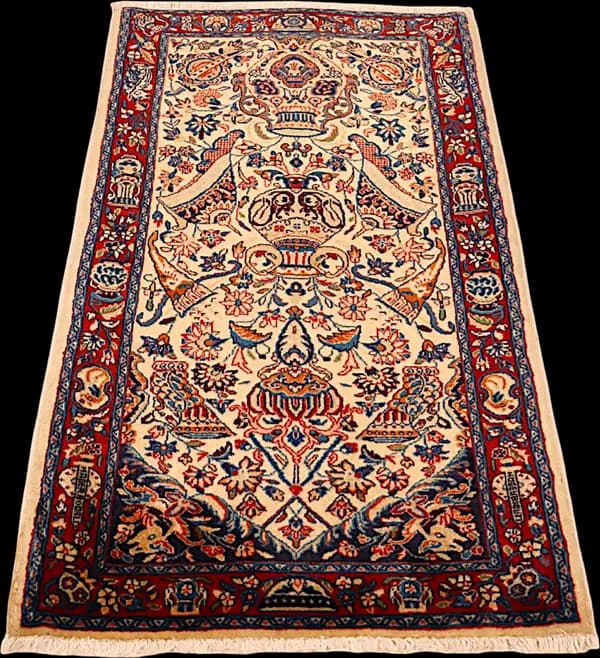
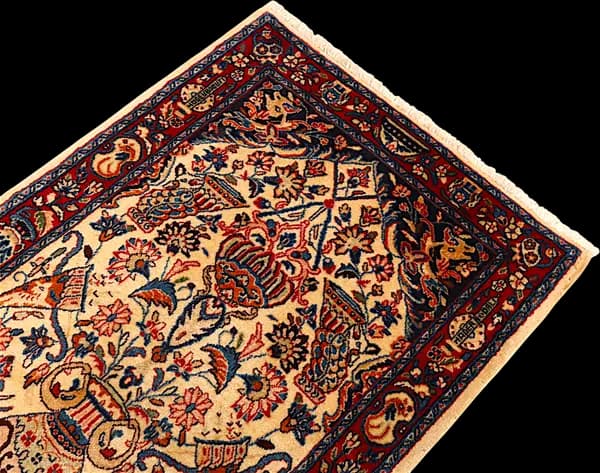
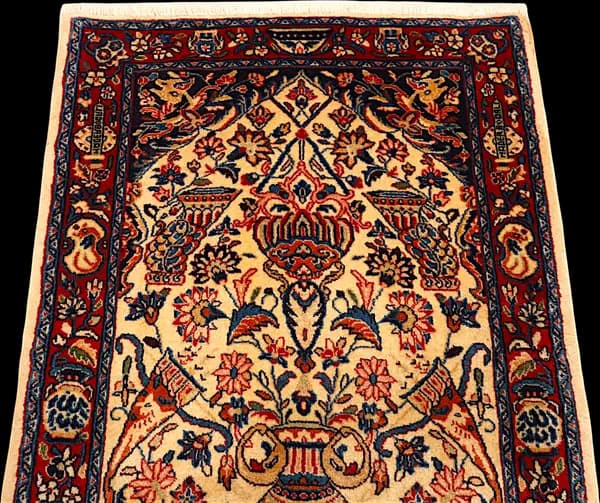
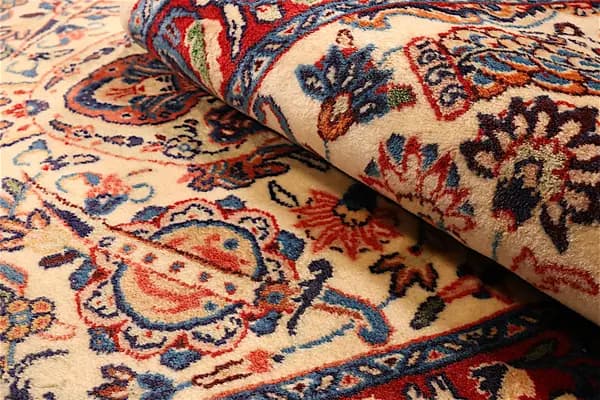
A Sarough, hand-knotted in the Arak region of west-central Iran, 129 x 66 cm (4'3" x 2'2"). The type is best known for its deep, saturated "Persian red" ground and its dense, disciplined floral drawing, the design that furnished the finest American houses in the early twentieth century. This piece keeps the drawing but not the ground: the field here is ivory, the red held to the border, which makes it an unusual example within its own tradition.
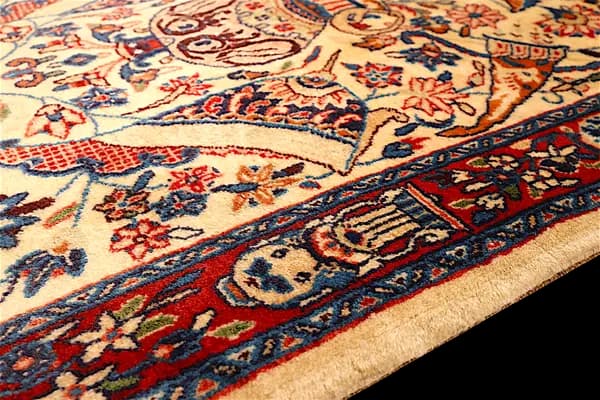
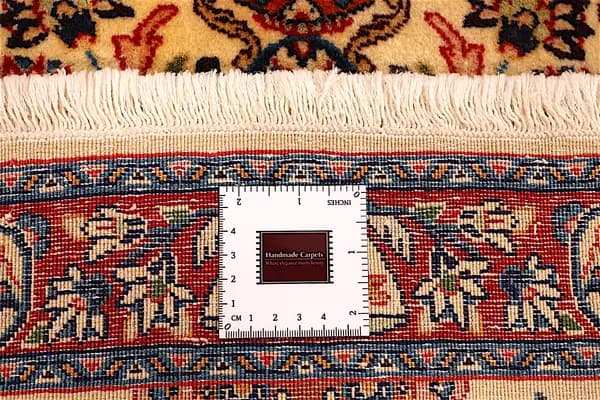
The eye lands first on that pale field, crowded but not crowded out by a dense scroll of red, navy, pink, sage and mustard vine work. Rather than the round medallion Sarough is usually built around, the centre is a mirrored pair of large scrolls flanking a pale pink oval, with vase-like forms answering each other on either side, a garden laid out in two matching halves. The deep red border carries its own floral meander, held in by narrow navy guard stripes set with small rosettes, and in the corners sit small reversed cartouches, worked in like a signature, though the lettering itself resists a clear reading.
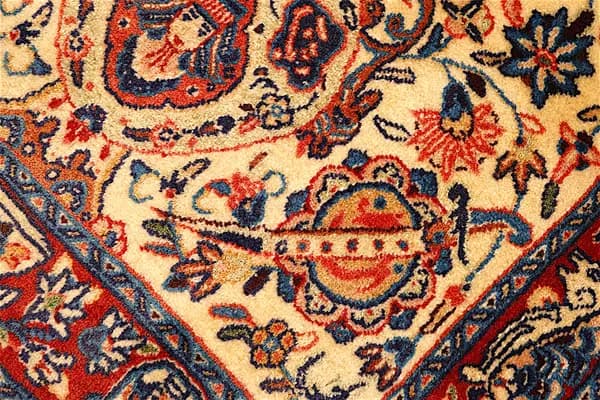
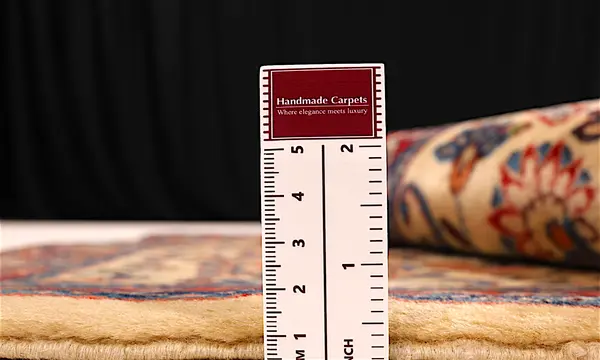
At 128,000 to 160,000 knots per square metre, the knotting is fine enough to hold that mirrored scrollwork in true symmetry rather than letting it blur, which is exactly what a design built on matching halves needs. The pile is handspun wool on a cotton warp, twelve millimetres deep, giving a soft, even matte surface with only the faintest lift of sheen rather than the crisp shine of shorter urban weaves. Cotton keeps the warp stable under a pattern this precise; the wool itself, hand-spun rather than machine-spun, is what gives the surface its gentle, slightly irregular softness underfoot.
At this size the rug is made for a hallway, a landing, or the floor beside a bed, somewhere it is seen close and often rather than crossed at a distance. The ivory ground lifts a dark hallway with no daylight of its own, while the red border keeps it from ever looking pale or washed out. Underfoot it is dense and firm despite its softness, built to take the daily traffic of a doorway rather than sit as something precious. Morning or lamp light catches the pale medallion first, then draws the eye out along the scrollwork toward the red, a small piece that rewards a second, closer look every time you pass it.
More on Sarough rugs: origin, making and how to recognise a genuine piece
Traditional weave
At 129 × 66 cm (0.85 m²) this is a small rug. It works beside a bed, in a reading corner, in front of a fireplace or as a mat by a door. It does not furnish a room; it makes a point in one.
Yes, knotted by hand — knot by knot on a loom, not machine-made. The density is 128,000 to 160,000 knots per square metre; across 0.85 m² that is roughly 110,000 to 140,000 individual knots, every one of them tied by hand.
Hand-spun wool still carries its own lanolin, which keeps liquid sitting on the surface for a moment: blot quickly, with clear water and a light cloth, working inwards and without rubbing. Otherwise regular vacuuming along the pile is enough. Turn the rug once or twice a year so light and footfall reach it evenly.
We are in the Hamburg Speicherstadt. Come and see this rug in daylight, or write to us — a person answers.
Certificate included verifying origin, materials, and craftsmanship.
Ref: 719956