ExclusiveSigned
Kashan | Silk Warpwith silk
207 × 145 cm
11.850 €







6.300 €
Incl. VAT
In Stock · Ready to Ship
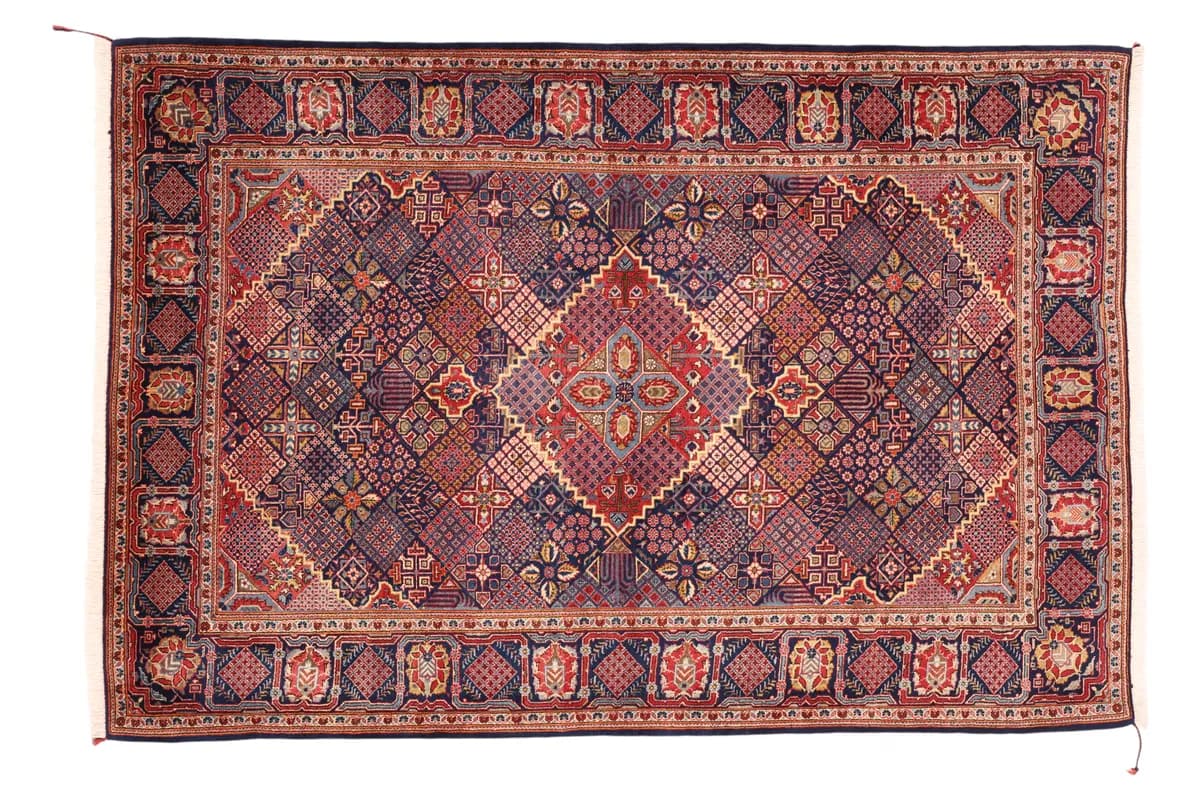
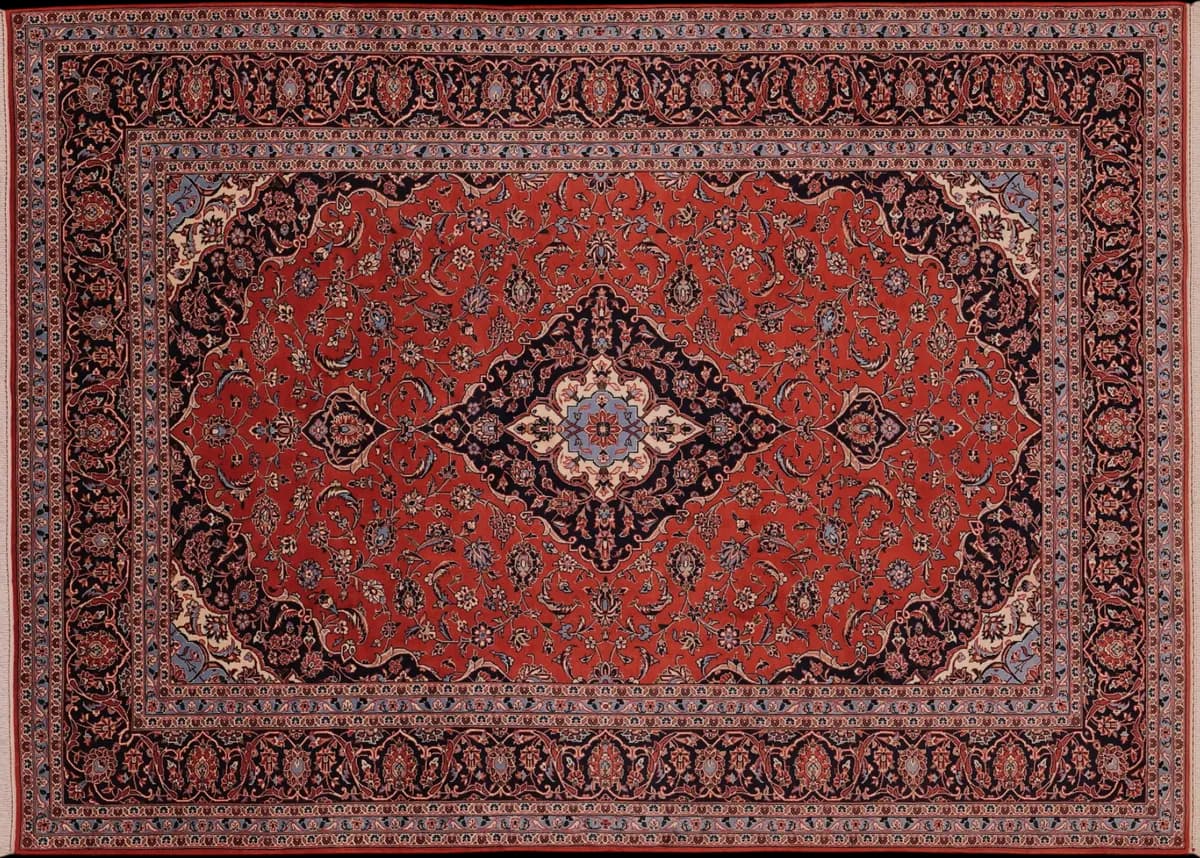
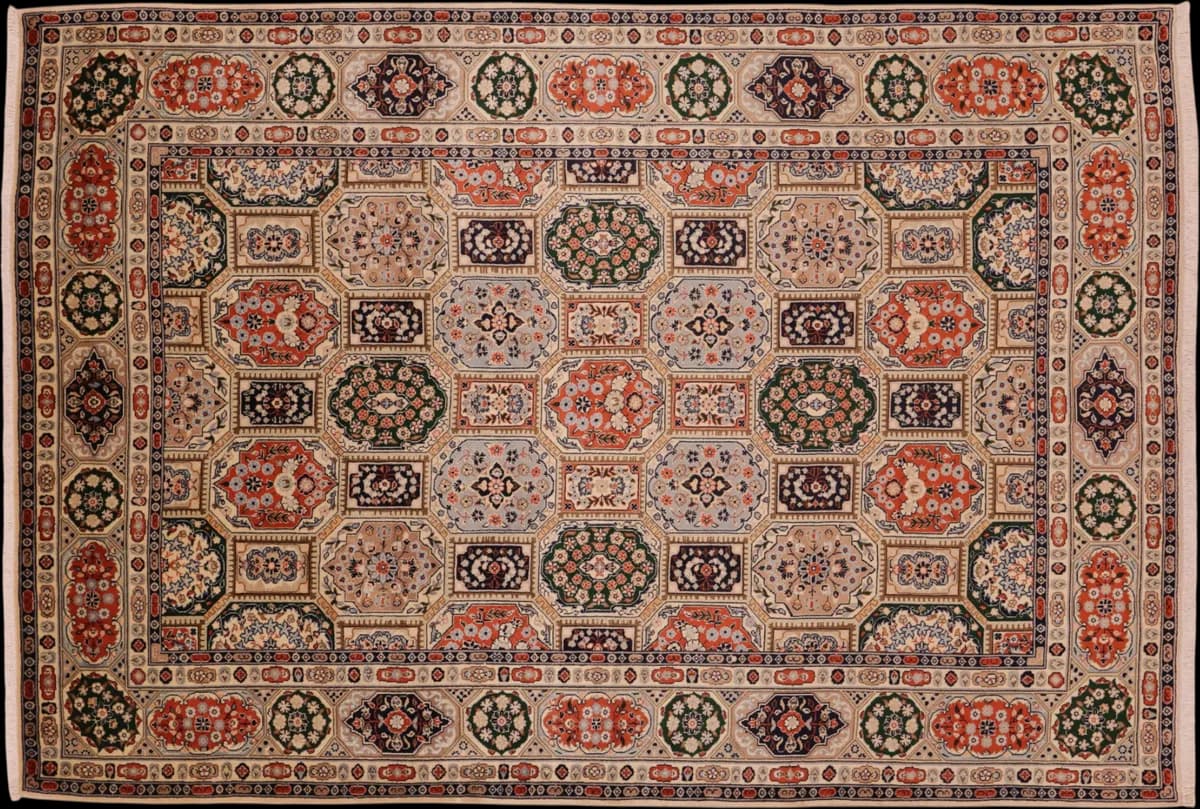
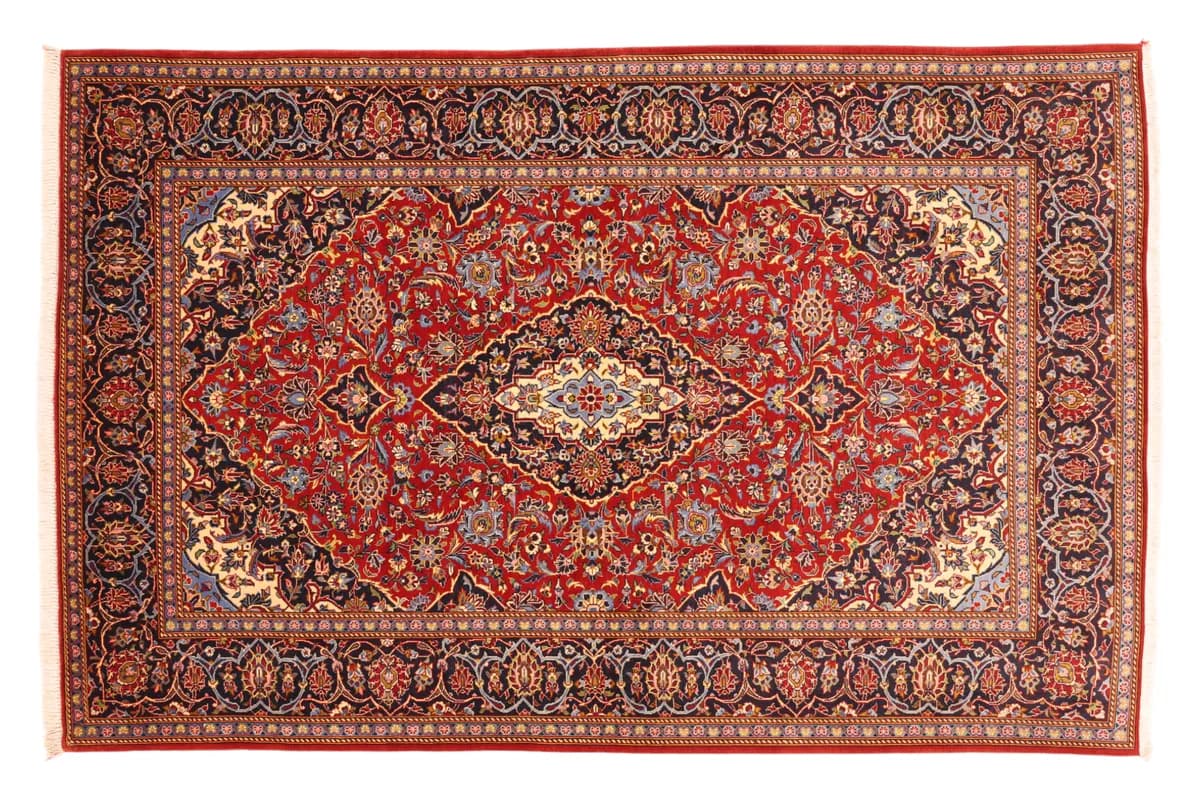
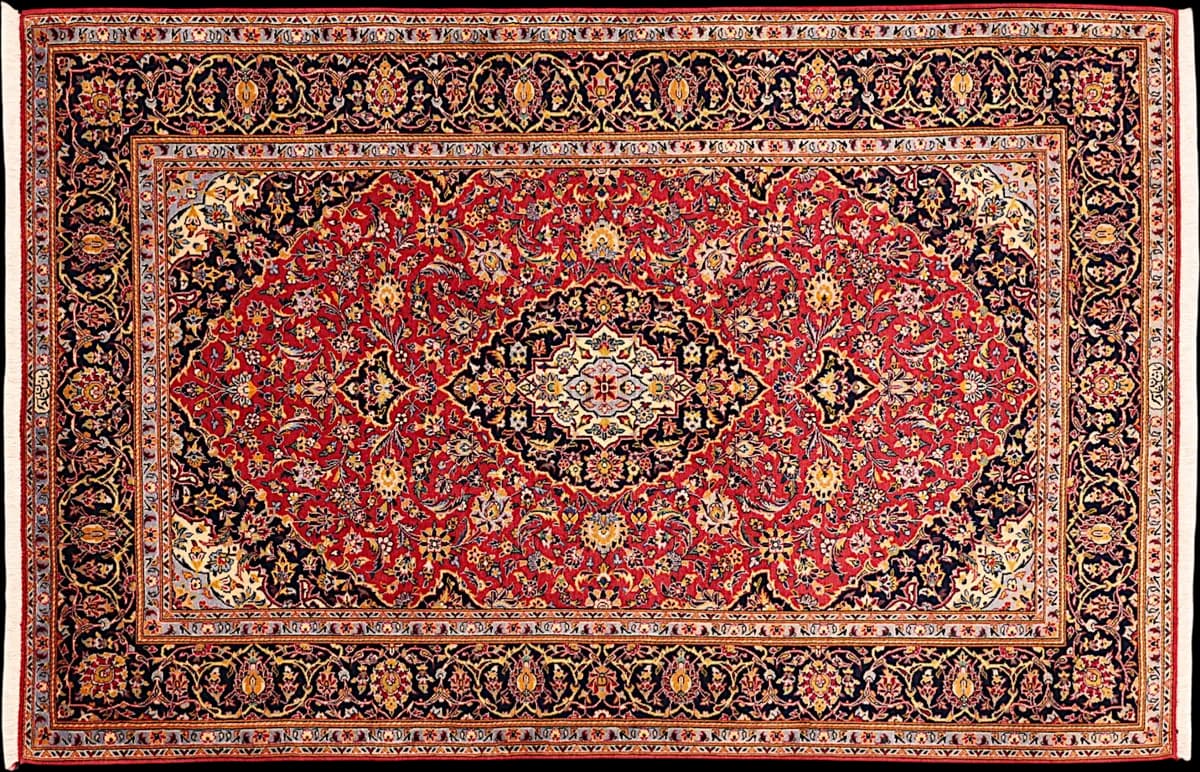
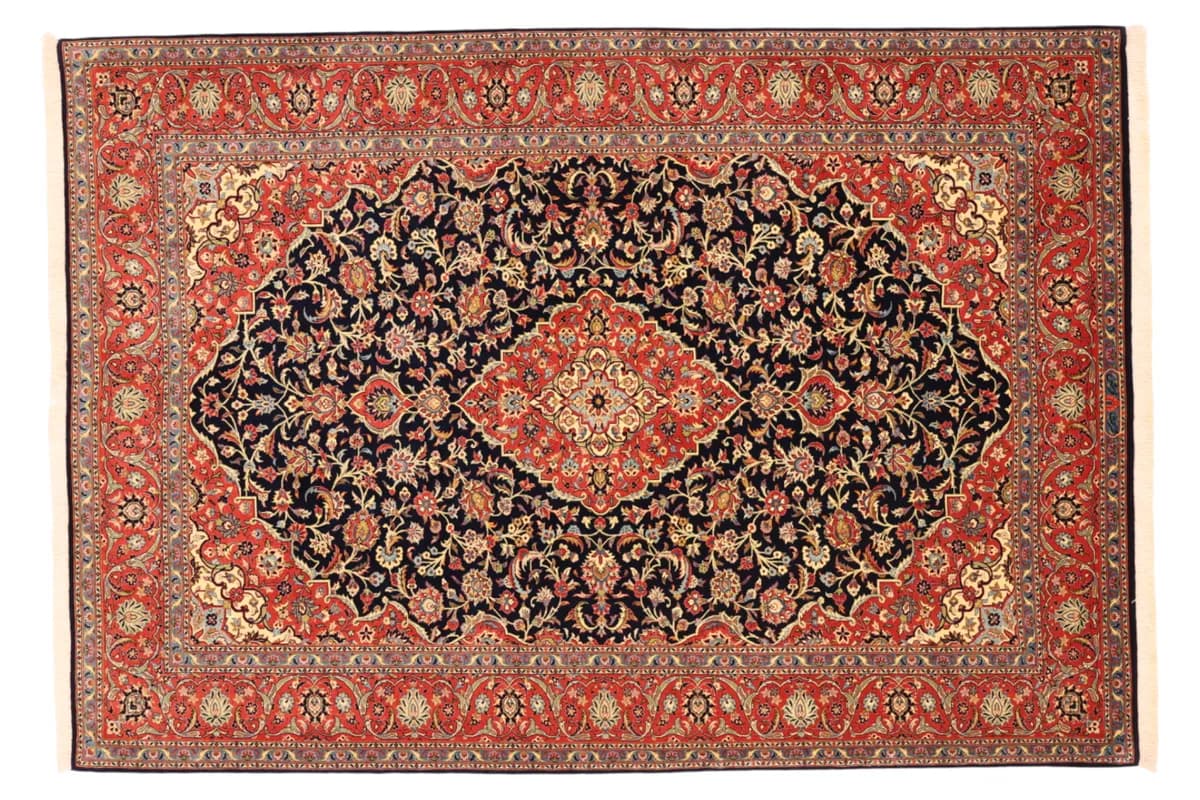
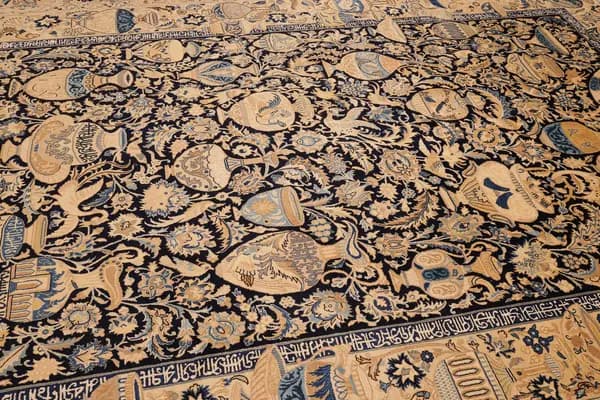
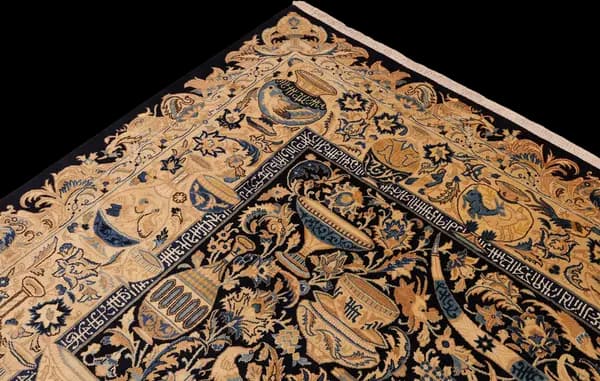
Khorasan rugs come from the vast weaving region of northeastern Iran, encompassing Razavi, North, and South Khorasan provinces, with Mashhad as the main trade centre. Knotted with the asymmetrical (Persian) knot on cotton foundations, they are known for curvilinear floral designs, Herati patterns, and a distinctive palette of deep crimson reds and indigo blues.
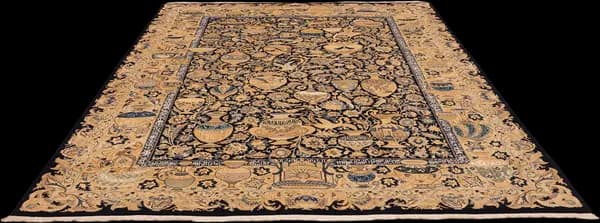
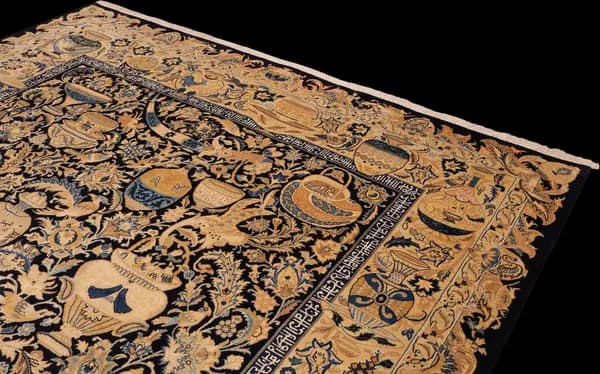
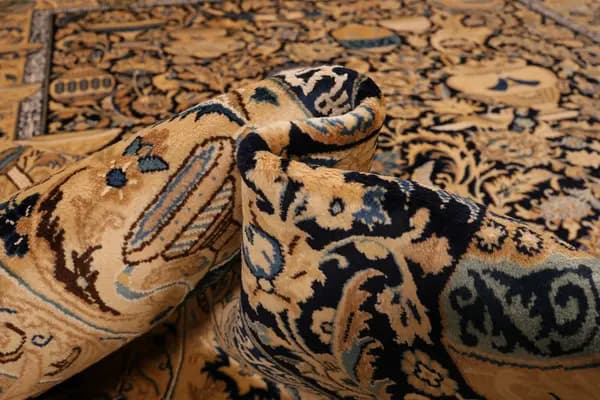
Many Khorasan pieces feature thick, plush pile and often large formats suited for generous living spaces. The classic palette balances strong reds with substantial blues, creating a deep, atmospheric warmth. High-quality local wool, sometimes with silk highlights, produces a soft, resilient surface. This particular piece has been enhanced with luxurious silk accents, lending the rug a subtle luminescence and exceptional tactile quality.
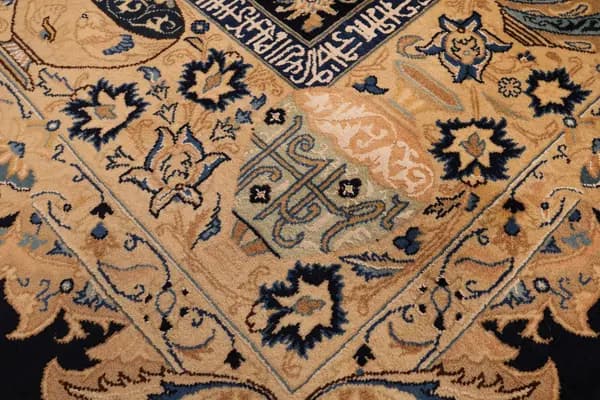
Measuring 339 × 240 cm, with an area of 8.14 m², crafted from Wool with Silk, Hand-knotted, this piece is a testament to masterful craftsmanship. The knot density of 321,000 – 380,000 / m² speaks to the extraordinary care woven into every inch.
Preserved in perfect condition, spacious, grand, and deeply atmospheric, khorasan rugs are made for rooms that deserve presence.
Superior craftsmanship
At 339 × 240 cm (8.14 m²) this is a very large rug. It carries a whole seating group with every furniture leg on it, or a dining table with the chairs pushed back. In a small room it becomes the floor rather than a rug.
Yes, knotted by hand — knot by knot on a loom, not machine-made. The density is 321,000 to 380,000 knots per square metre; across 8.14 m² that is roughly 2.6 to 3.1 million individual knots, every one of them tied by hand.
This pile contains silk and is more delicate than pure wool. Vacuum without a rotating brush and along the pile, do not beat it, and keep it out of permanent direct sun. Blot spills at once with a light cloth, never rub. For a proper clean a silk-blend rug belongs in expert hands — we handle that for pieces bought from us.
We are in the Hamburg Speicherstadt. Come and see this rug in daylight, or write to us — a person answers.
Certificate included verifying origin, materials, and craftsmanship.
Ref: 903240