Turkaman
137 × 102 cm
672 €
643 €
Incl. VAT
In Stock · Ready to Ship
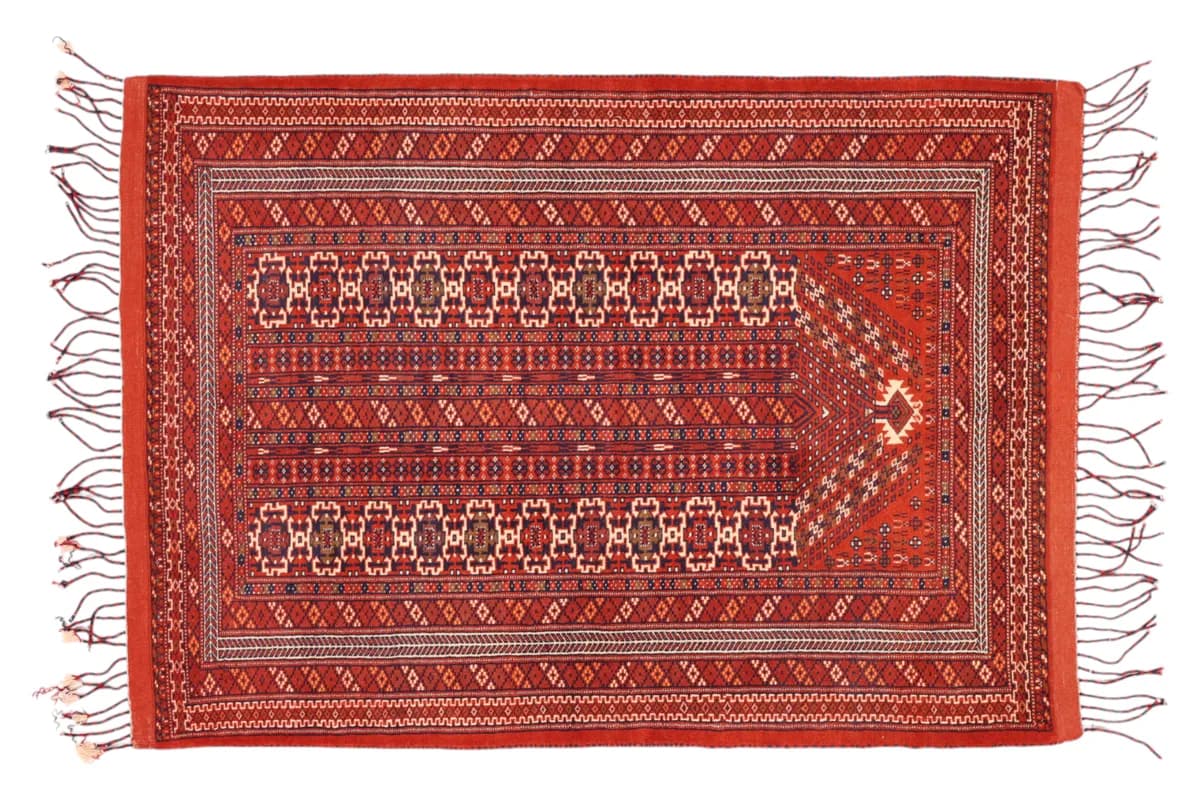
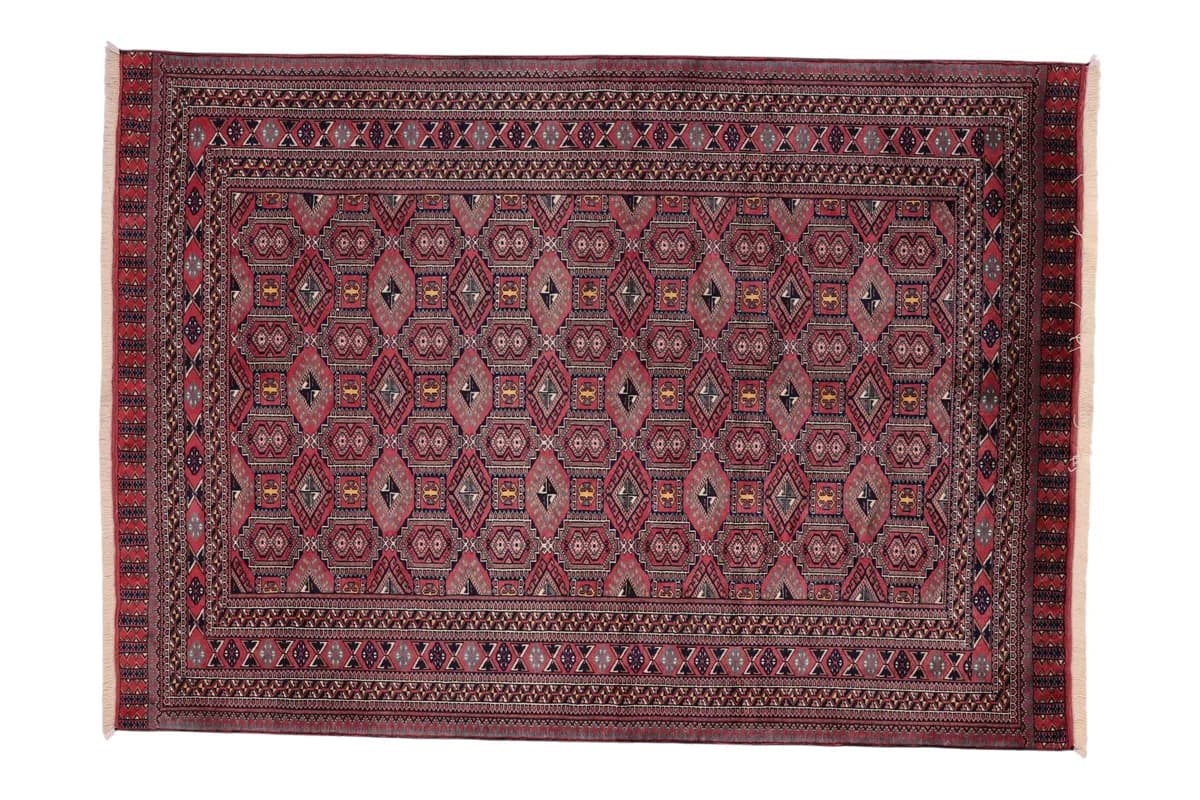
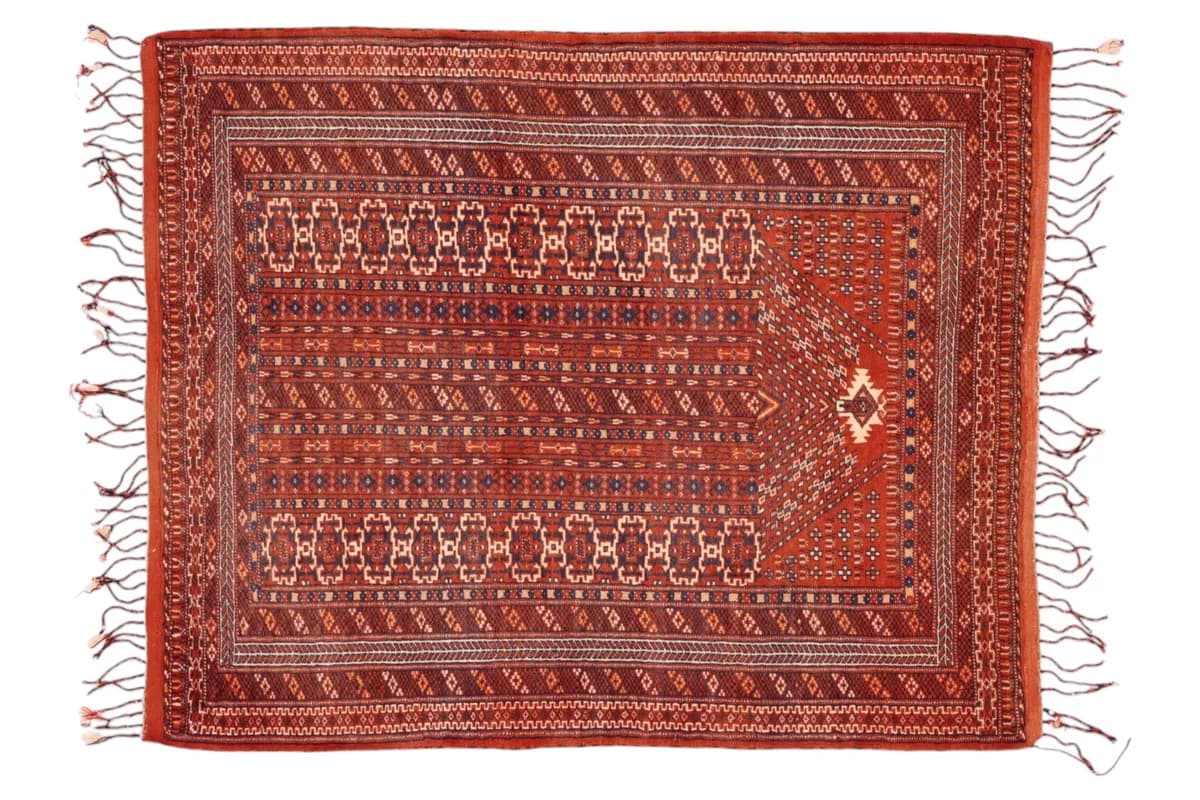
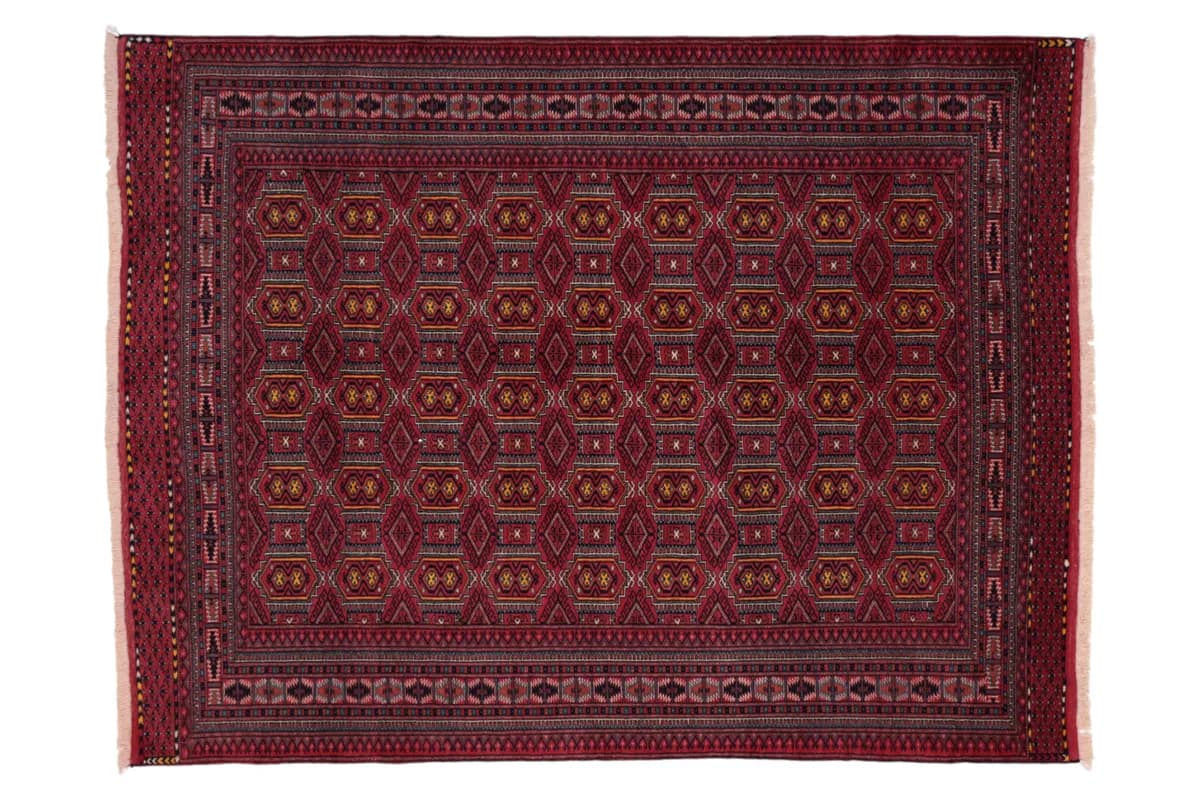
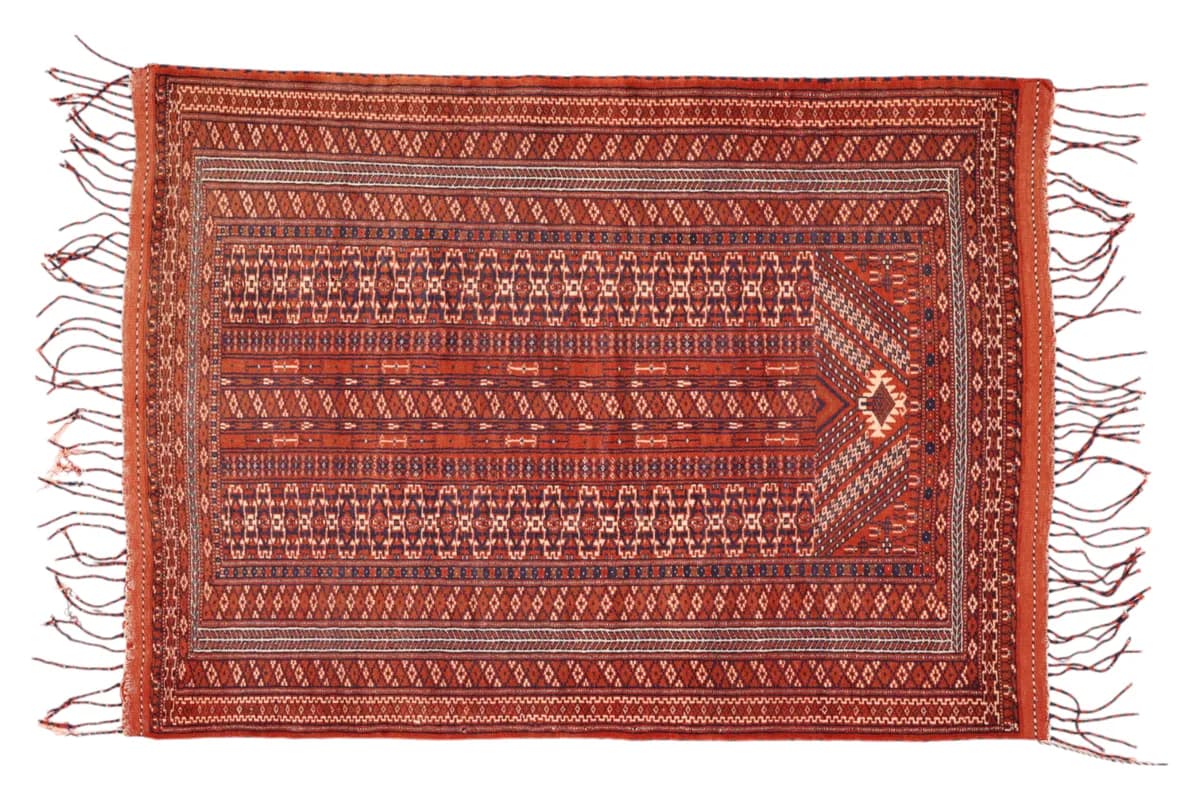
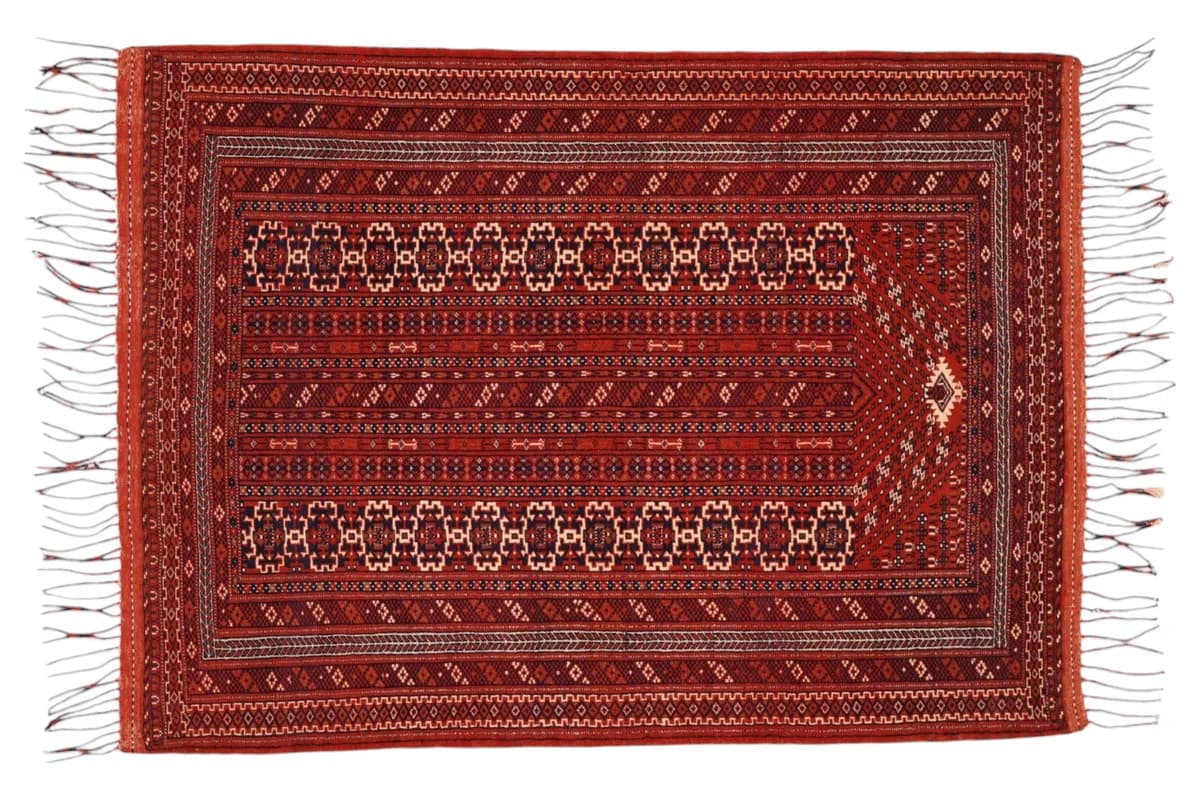
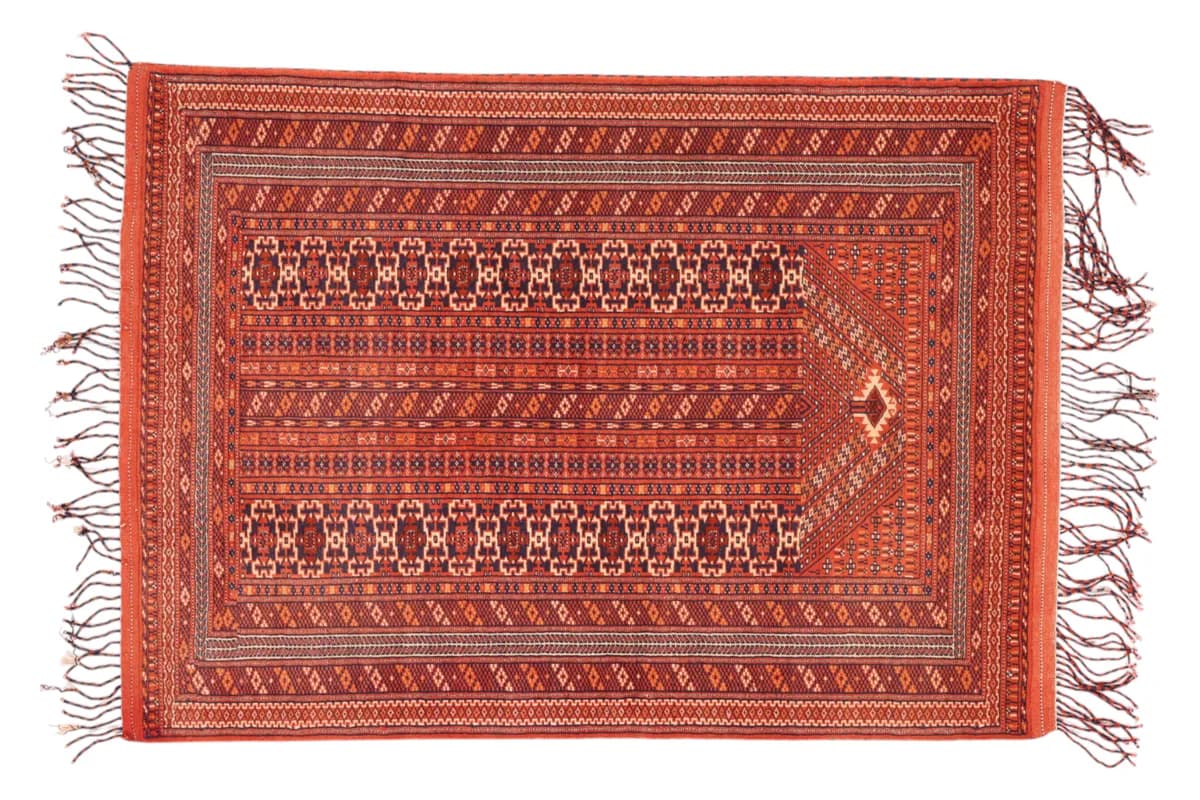
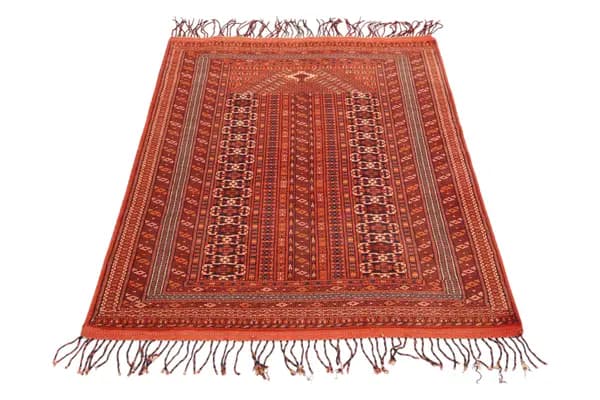
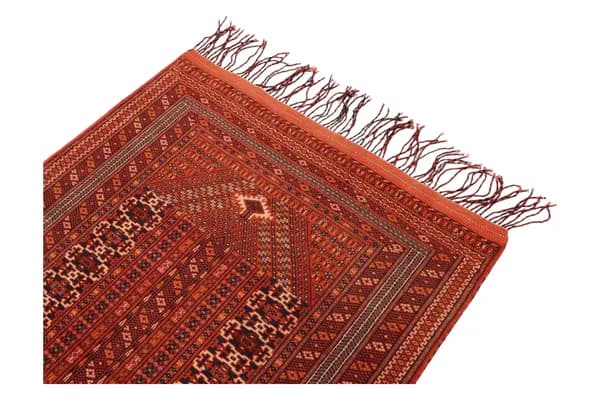
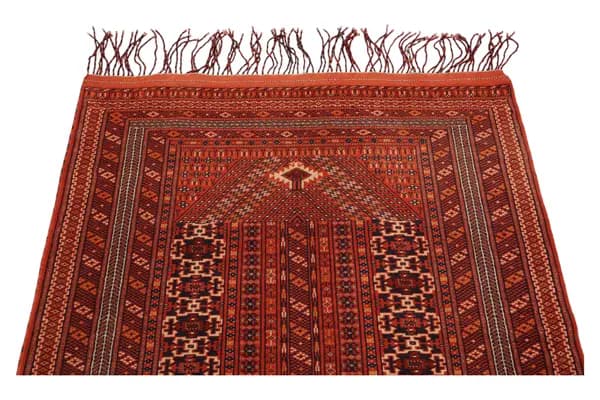
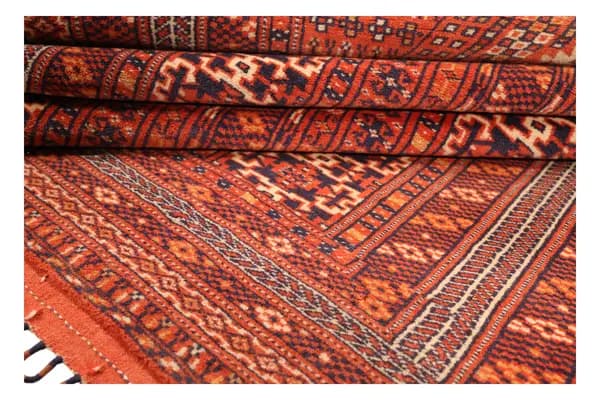
This is a Turkmen rug, also written Turkoman, a nomadic weaving from Turkmen tribes long settled in northeastern Iran, 135 x 99 cm (4'5" x 3'3"). The type is known above all for its repeating gul medallions set against a deep red ground, knotted so densely that Turkmen pieces are counted among the most durable of all hand-knotted rugs. This one keeps that red ground and that density, but instead of the usual repeating rhythm it settles into a single, asymmetric composition.
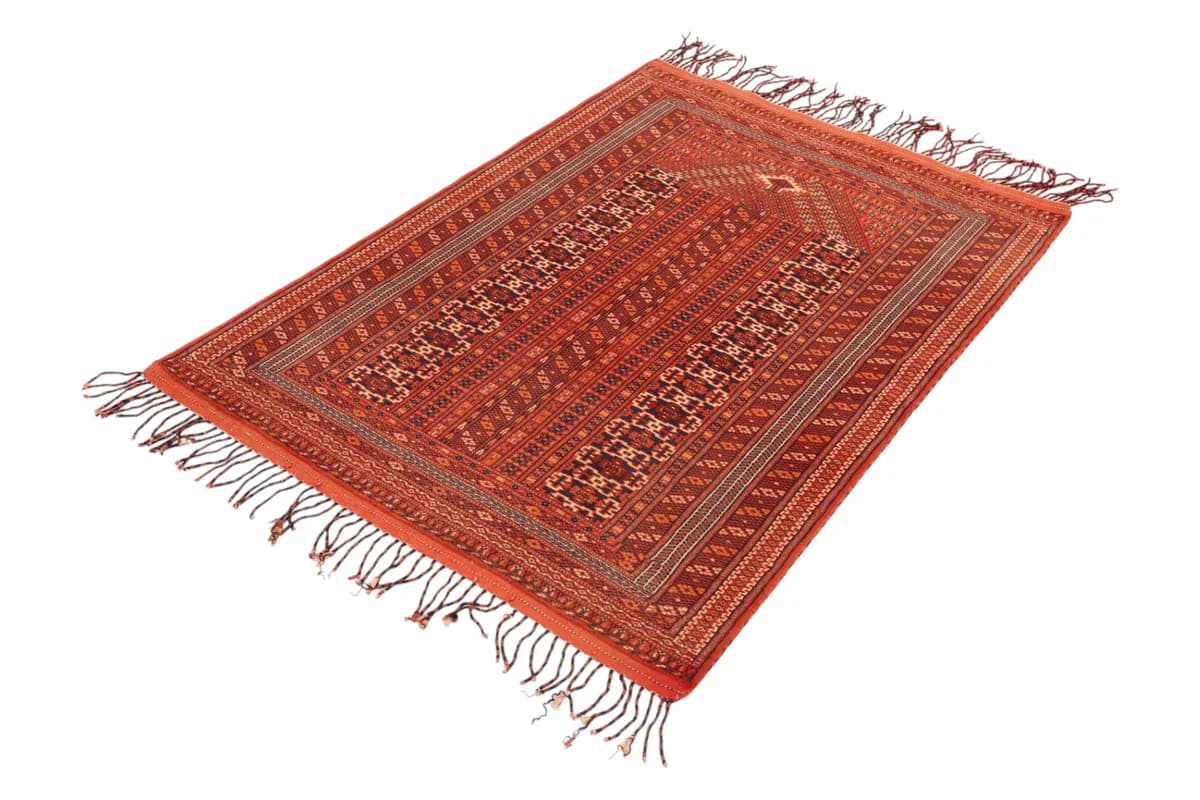
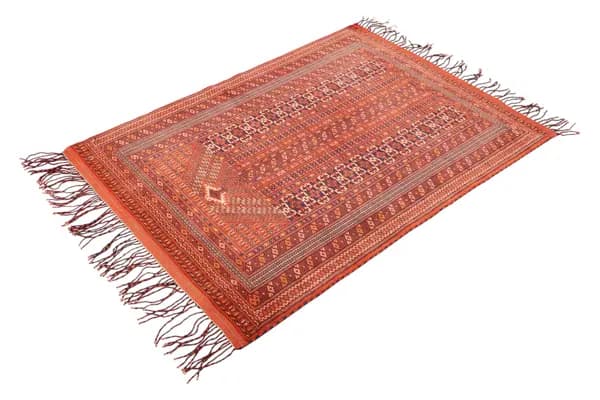
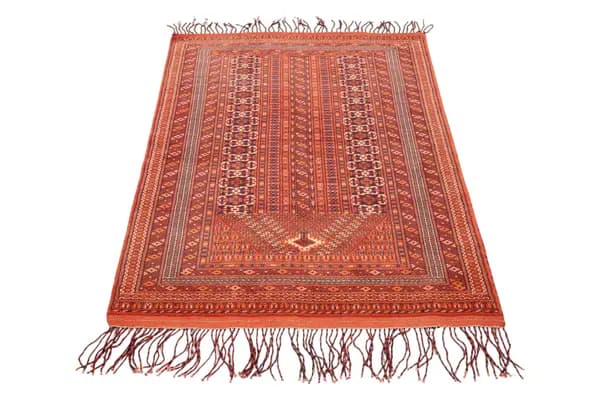
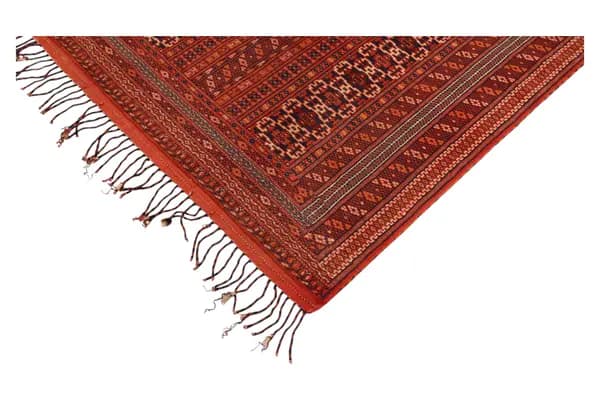
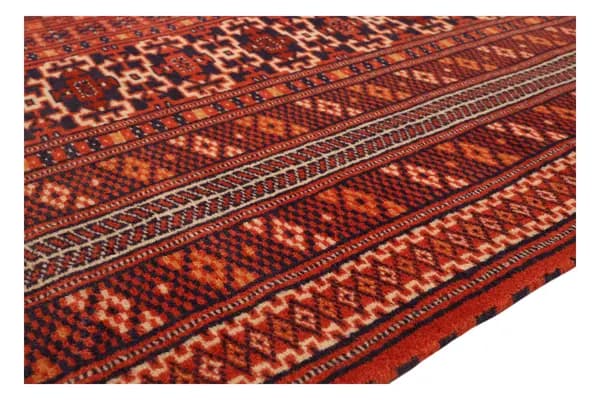
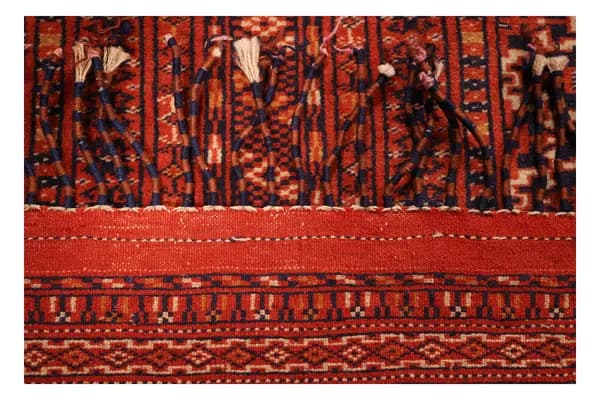
The field runs from a deep brick red into a darker brown-violet, and rather than being centred it is split in two. One half is packed with horizontal rows of gul and diamond motifs in rust, ivory, navy and mustard, close and rhythmic. The other half falls away into a plain dark panel, elongated like a mihrab niche, narrowing steadily to a single small diamond at its point. Around both sides runs a set of narrow stacked borders in rust, ivory and navy, closed by a plain solid orange guard stripe, the whole frame taking up close to a fifth of the rug's width.
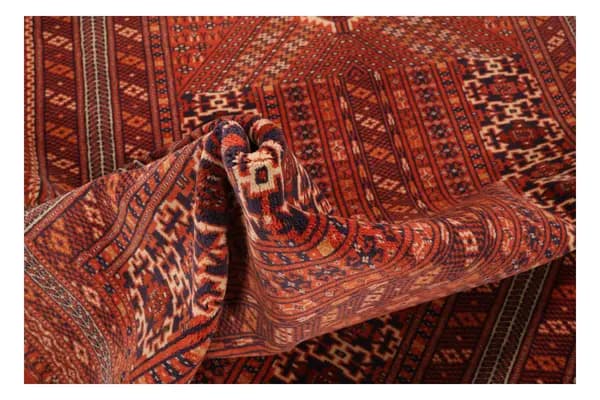
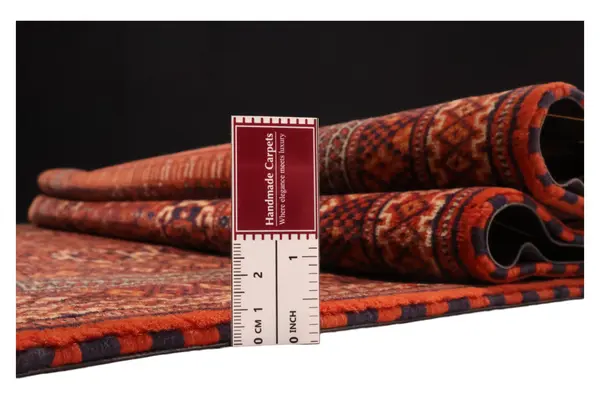
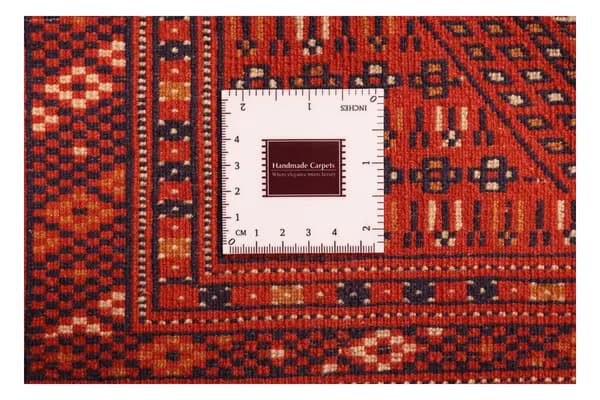
It is hand-knotted in wool on a cotton warp, at a density of 441,000 to 500,000 knots per square metre, fine enough that the weaver, working from memory rather than a drawn plan, could carry that diagonal split cleanly through to a single resolved diamond rather than losing the line partway. The pile is sheared low, to around 6 mm, which gives the surface its flat, finely ribbed character and lets the geometry stay sharp instead of softening into the wool. It is a young piece, made within the last twenty years, and the knotting is as tight as anything this tradition produces.
At a little over a metre by a metre and a third, this is a rug for a hallway, a study, or beside a bed rather than a large open room. The dark ground with its rust and mustard accents warms a space with little daylight and holds its own against dark wood or leather furniture nearby. Underfoot the pile is dense, low and firm, made for a floor that is walked on rather than one that needs protecting. Catch it under a lamp or low winter light and it is the ivory and navy bands of the border that lift first, drawing the eye in toward that single diamond waiting at the point of the niche.
More on Turkmen rugs: origin, making and how to recognise a genuine piece
Exceptionally fine weave
At 135 × 99 cm (1.34 m²) this is a small rug. It works beside a bed, in a reading corner, in front of a fireplace or as a mat by a door. It does not furnish a room; it makes a point in one.
Yes, knotted by hand — knot by knot on a loom, not machine-made. The density is 441,000 to 500,000 knots per square metre; across 1.34 m² that is roughly 590,000 to 670,000 individual knots, every one of them tied by hand.
Hand-spun wool still carries its own lanolin, which keeps liquid sitting on the surface for a moment: blot quickly, with clear water and a light cloth, working inwards and without rubbing. Otherwise regular vacuuming along the pile is enough. Turn the rug once or twice a year so light and footfall reach it evenly.
We are in the Hamburg Speicherstadt. Come and see this rug in daylight, or write to us — a person answers.
Certificate included verifying origin, materials, and craftsmanship.
Ref: 984031