Turkaman
272 × 210 cm
4.650 €





677 €
Incl. VAT
In Stock · Ready to Ship
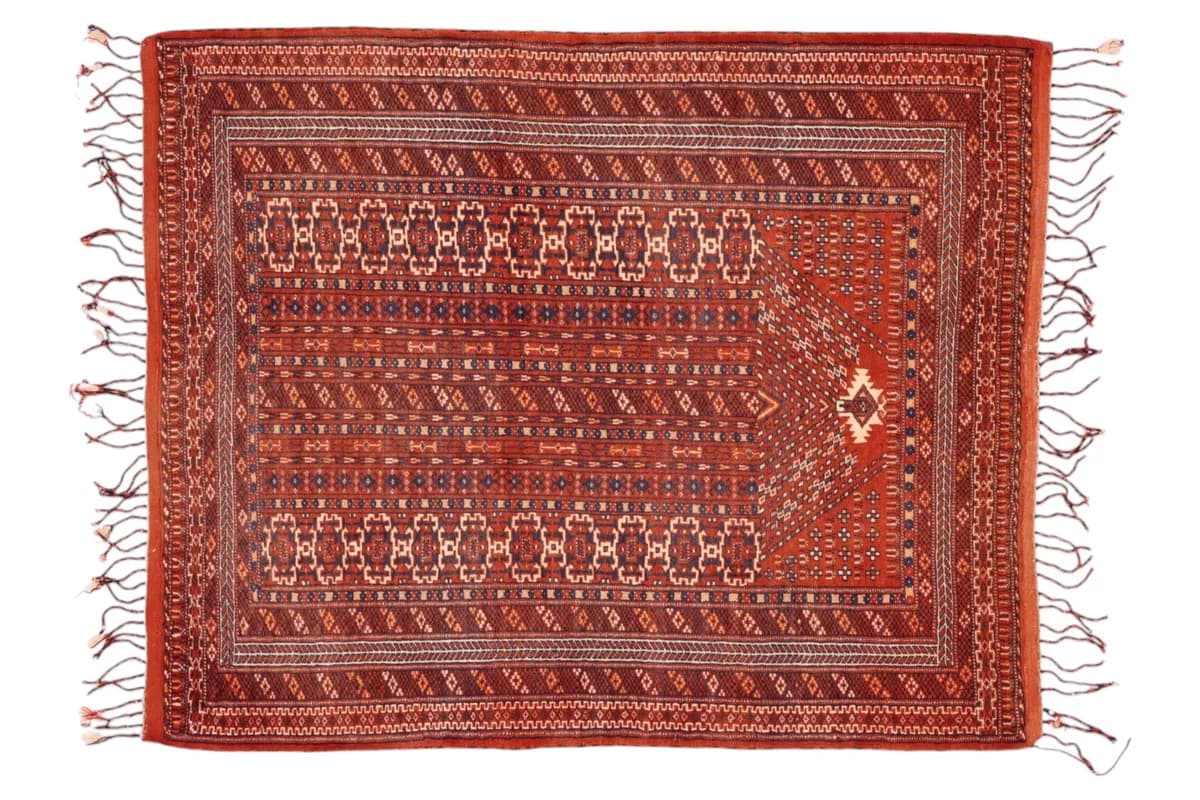
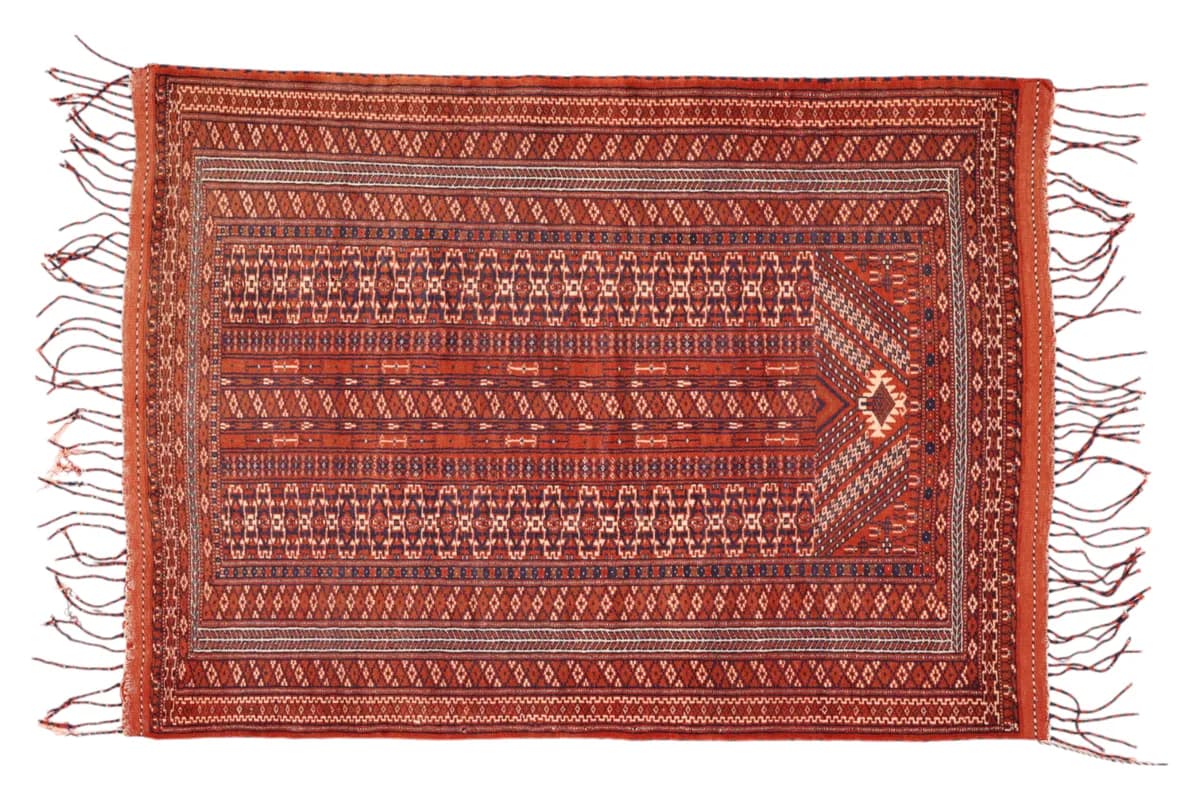
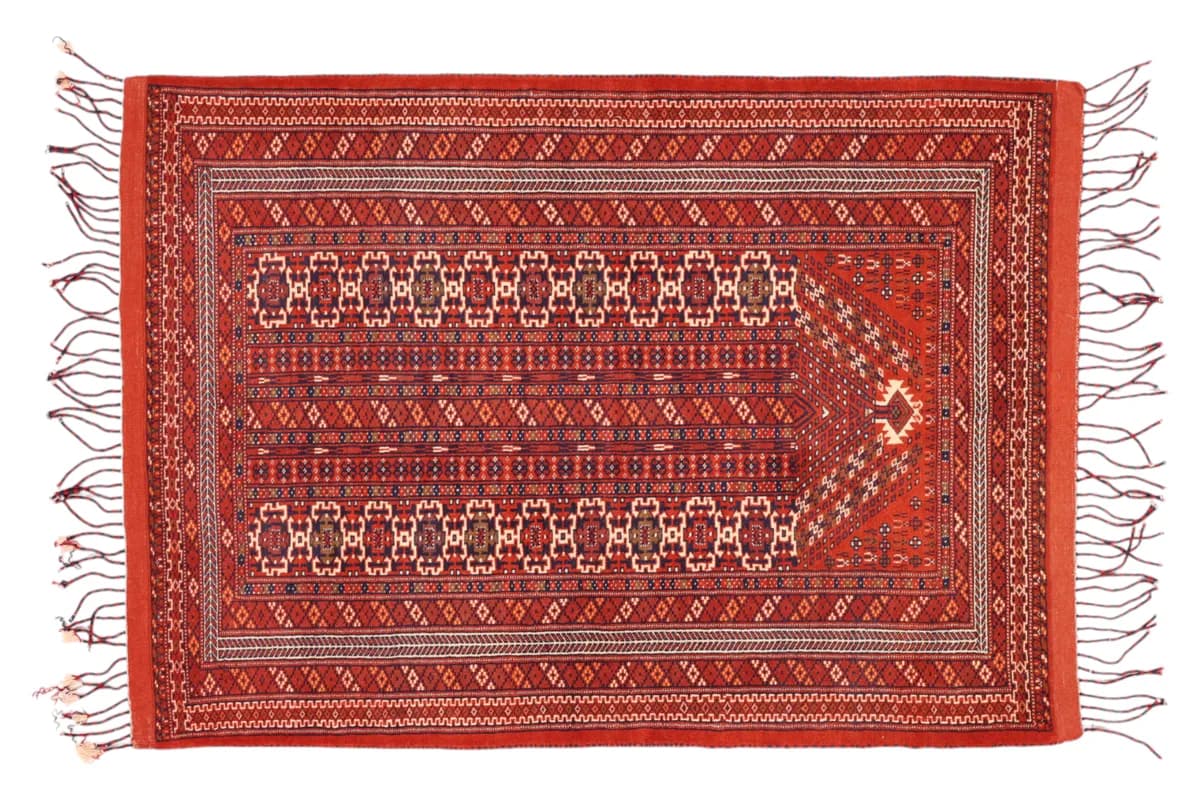
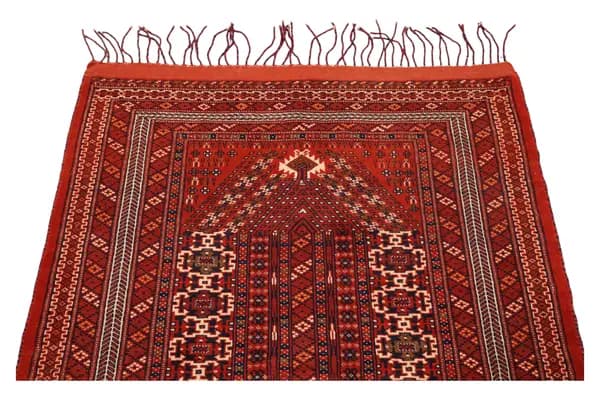
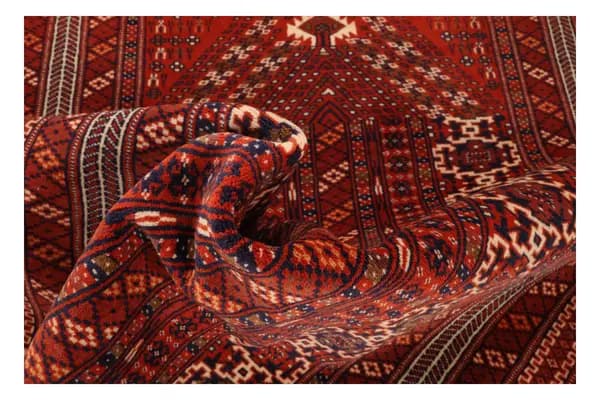
This is a small Turkmen tribal weaving, 138 x 102 cm (4'6" x 3'4"), from the nomadic tradition of Central Asia, made here by Turkmen groups settled in Iran, also written Turkoman. The type is known at once for its repeating gul medallions on a deep red ground and for a knot density that makes it among the most durable of all hand-knotted rugs. Here the field steps inward toward one end, giving the rug the niche-like outline of a prayer design rather than the usual all-over pattern.
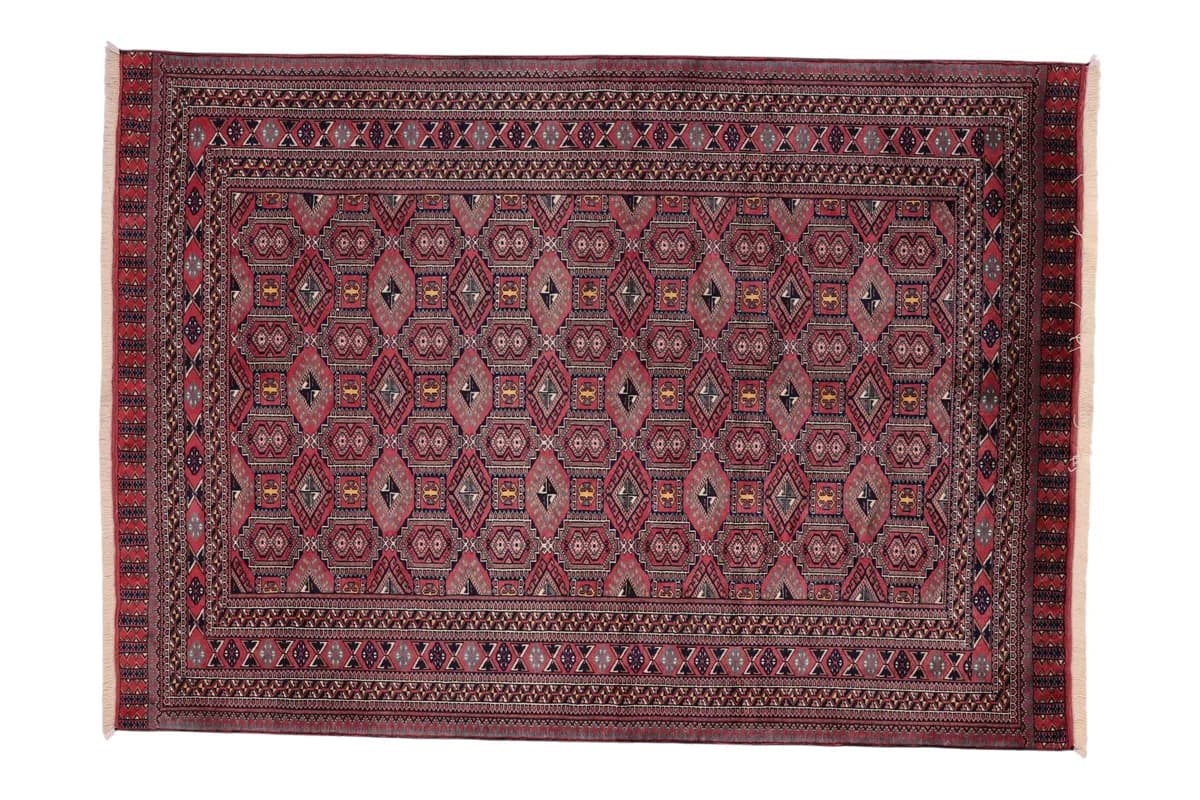
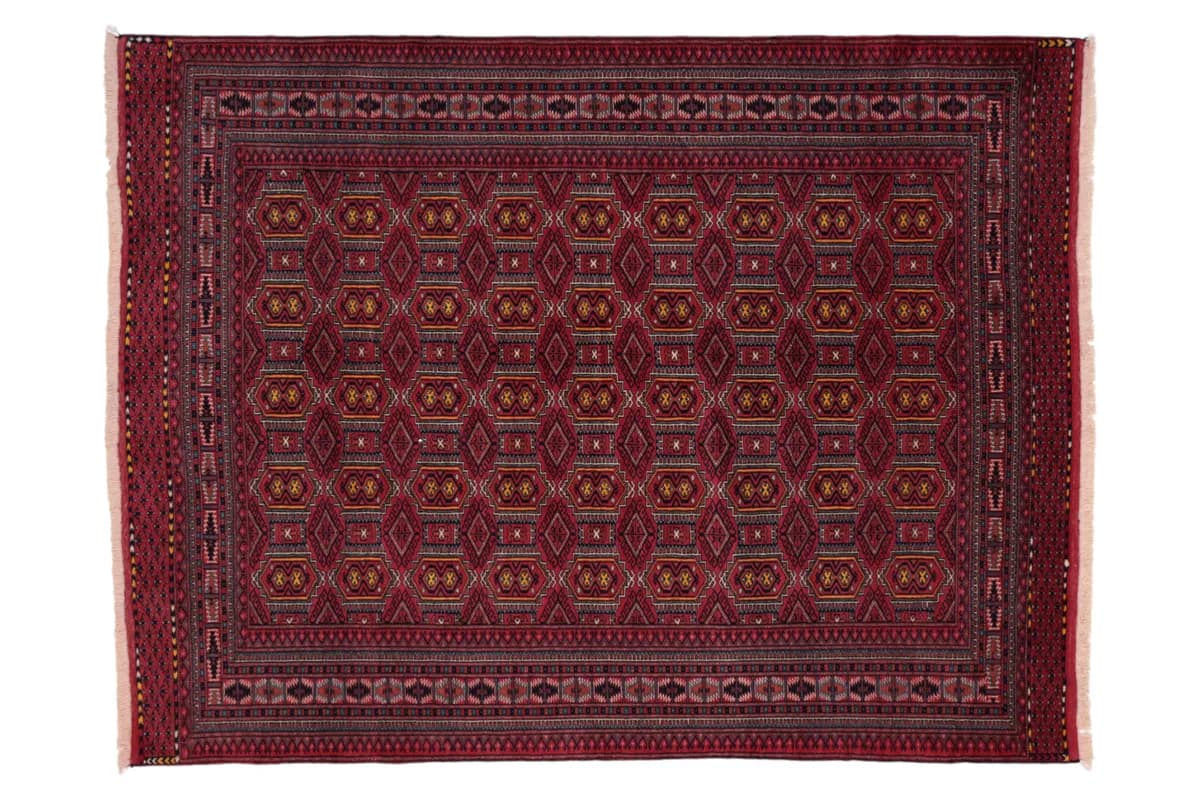
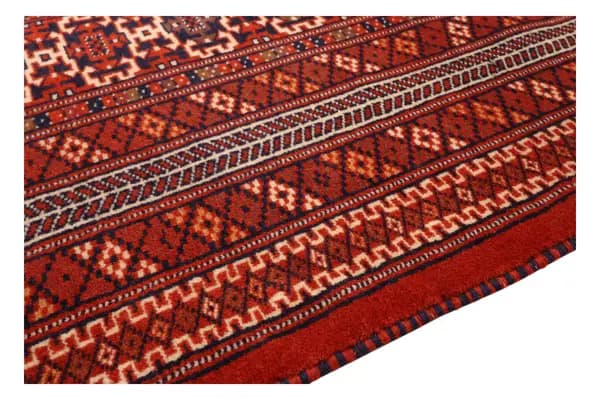
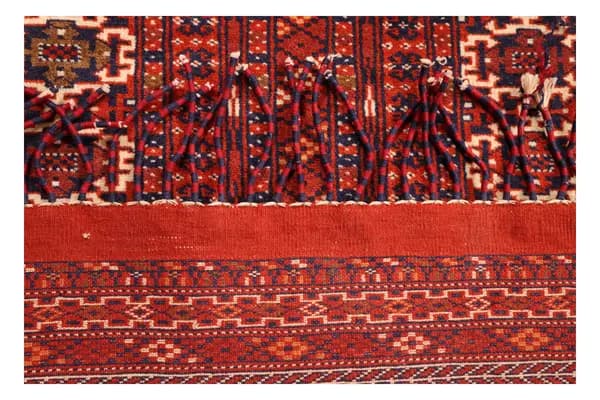
A deep brick red fills the ground, sharpened by panels of dark navy and by ivory outlines that carry the design through. The field narrows toward one end instead of spreading edge to edge, so the whole pattern sits inside a stepped niche rather than a plain rectangle. Within it, rows of gul medallions, each traced in ivory, run in lattice bands either side of a dense striped centre panel. Framing it all is a wide band of narrow stripes, in red, ivory, navy and pale blue-grey diamonds, stacked one inside the other until the border reads almost as strongly as the field.
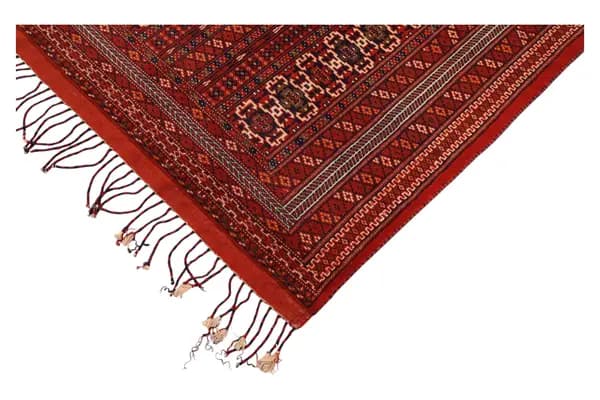
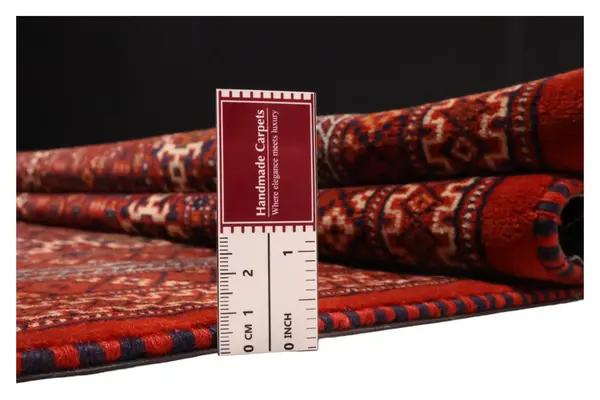
The pile is handspun wool on a cotton warp, knotted at a density of between 441,000 and 500,000 knots per square metre, kept low at around 6 millimetres. Handspun wool varies slightly in thickness along its length, and this is what gives the surface its matte, faintly ribbed texture rather than the flat evenness of machine yarn. At this density a weaver working from memory on a portable loom can still hold the guls and the many border stripes to a clean, crisp edge, keeping a pattern this dense readable in so small a rug.
A rug this size suits a small room: a study, a landing, or the floor by a doorway, somewhere its geometry can be taken in at a glance rather than crossed in passing. The brick red holds its own against dark wood furniture and warms a pale floor without any help from the rest of the room. Underfoot it is dense and firm, the short handspun pile built for daily footfall rather than careful stepping around it. As the light moves across it through the day, the ivory-traced guls catch differently hour to hour, and that is the detail an owner keeps noticing.
More on Turkmen rugs: origin, making and how to recognise a genuine piece
Exceptionally fine weave
At 138 × 102 cm (1.41 m²) this is a small rug. It works beside a bed, in a reading corner, in front of a fireplace or as a mat by a door. It does not furnish a room; it makes a point in one.
Yes, knotted by hand — knot by knot on a loom, not machine-made. The density is 441,000 to 500,000 knots per square metre; across 1.41 m² that is roughly 620,000 to 700,000 individual knots, every one of them tied by hand.
Hand-spun wool still carries its own lanolin, which keeps liquid sitting on the surface for a moment: blot quickly, with clear water and a light cloth, working inwards and without rubbing. Otherwise regular vacuuming along the pile is enough. Turn the rug once or twice a year so light and footfall reach it evenly.
We are in the Hamburg Speicherstadt. Come and see this rug in daylight, or write to us — a person answers.
Certificate included verifying origin, materials, and craftsmanship.
Ref: 994574