Exclusive
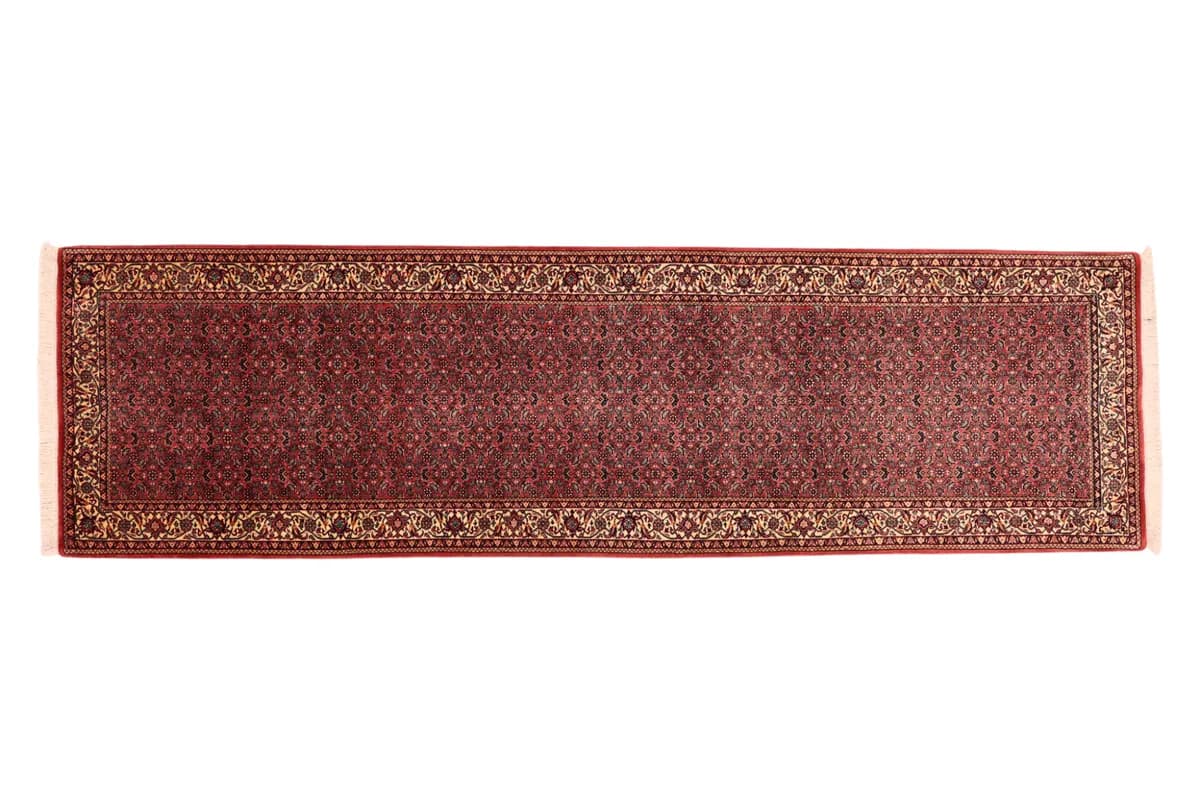
Bidjar | Exclusivewith silk
301 × 87 cm
5.940 €



966 €
Incl. VAT
In Stock · Ready to Ship
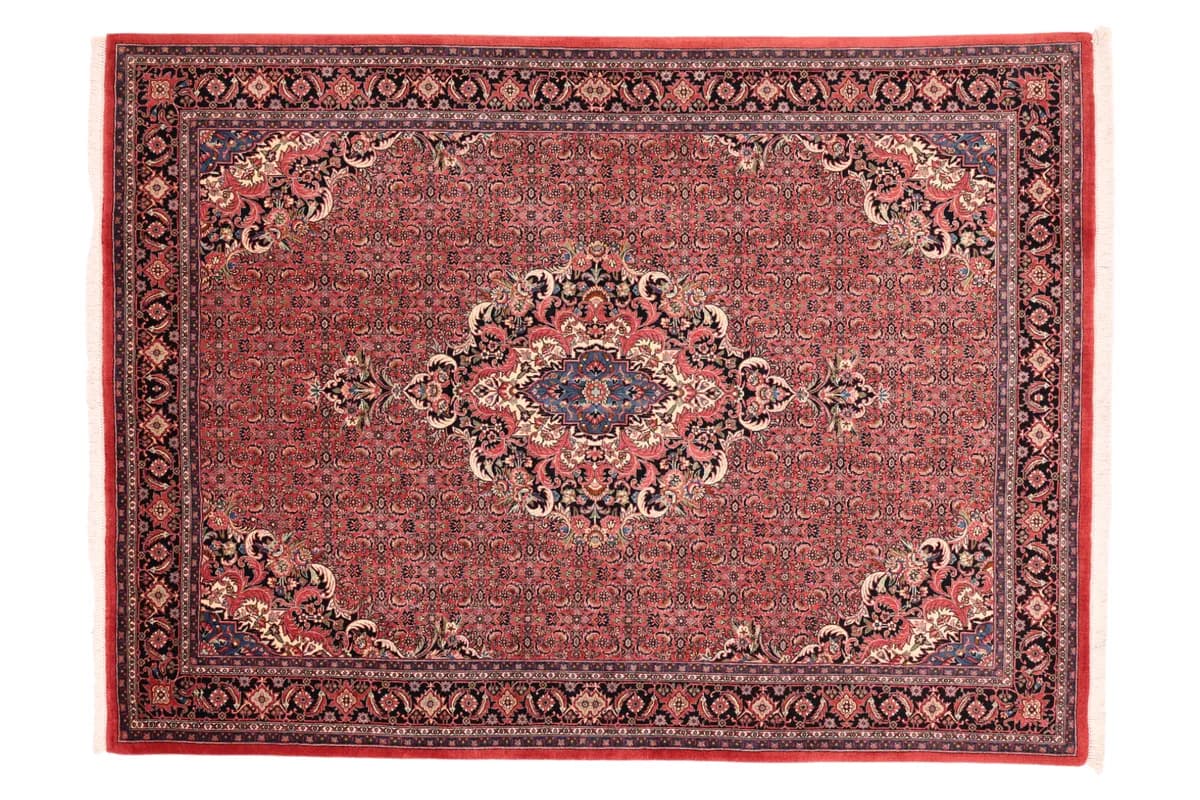
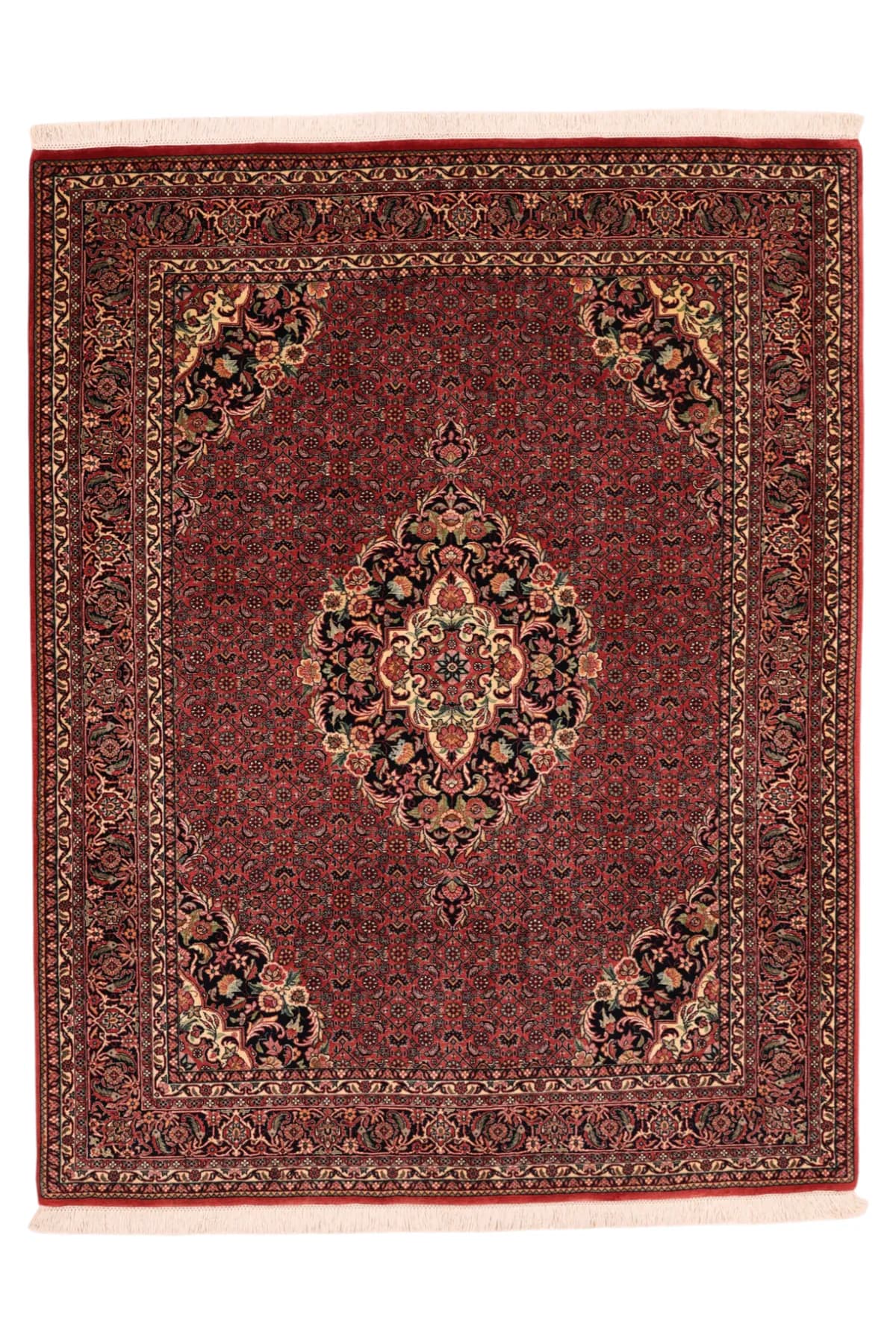
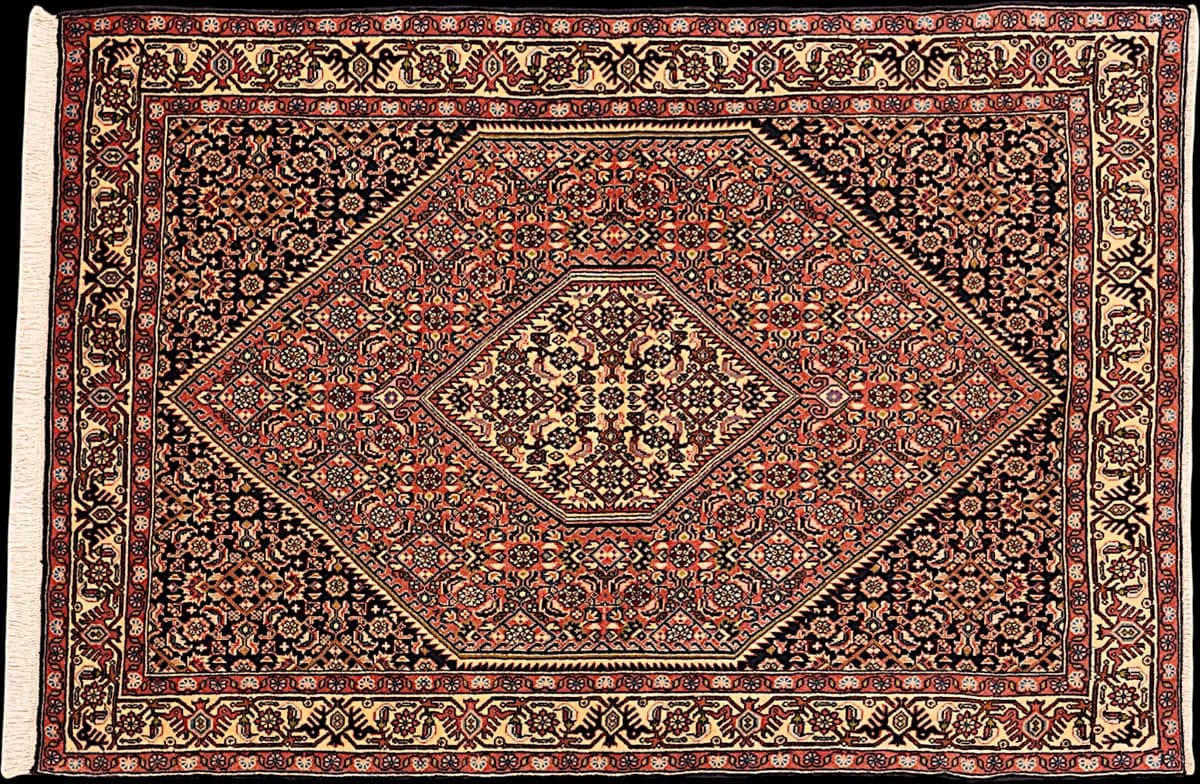
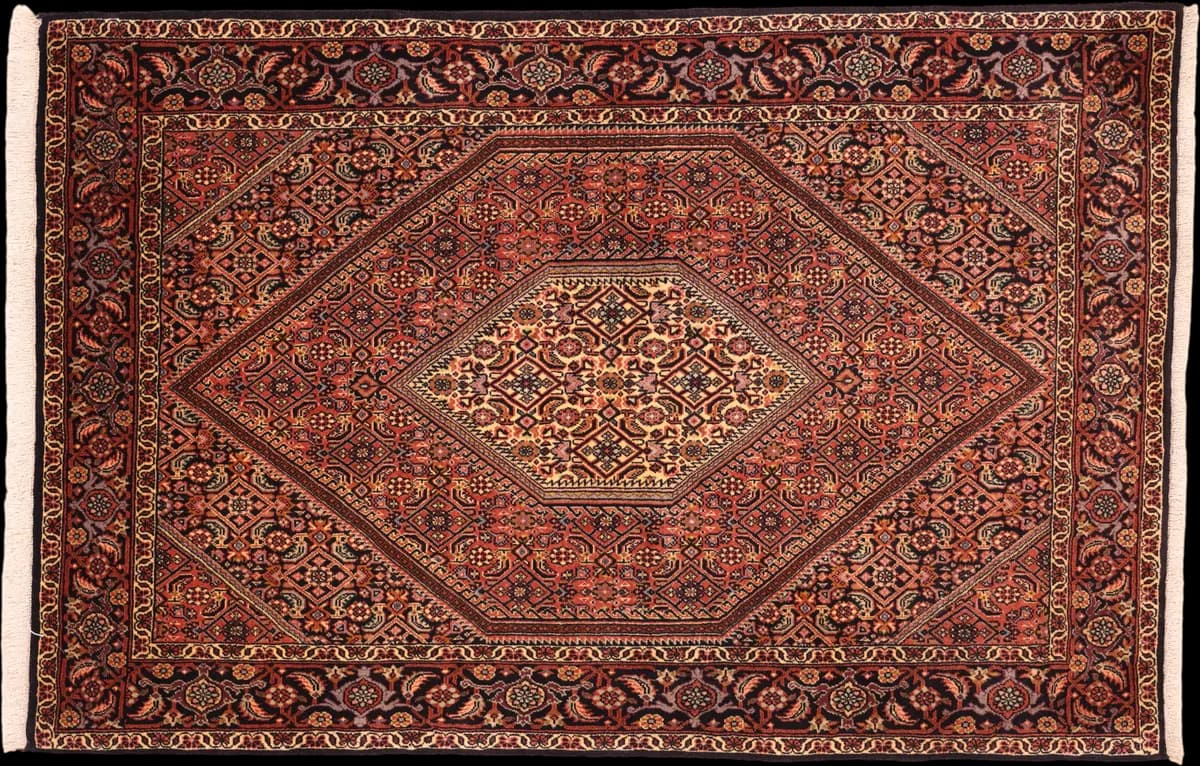
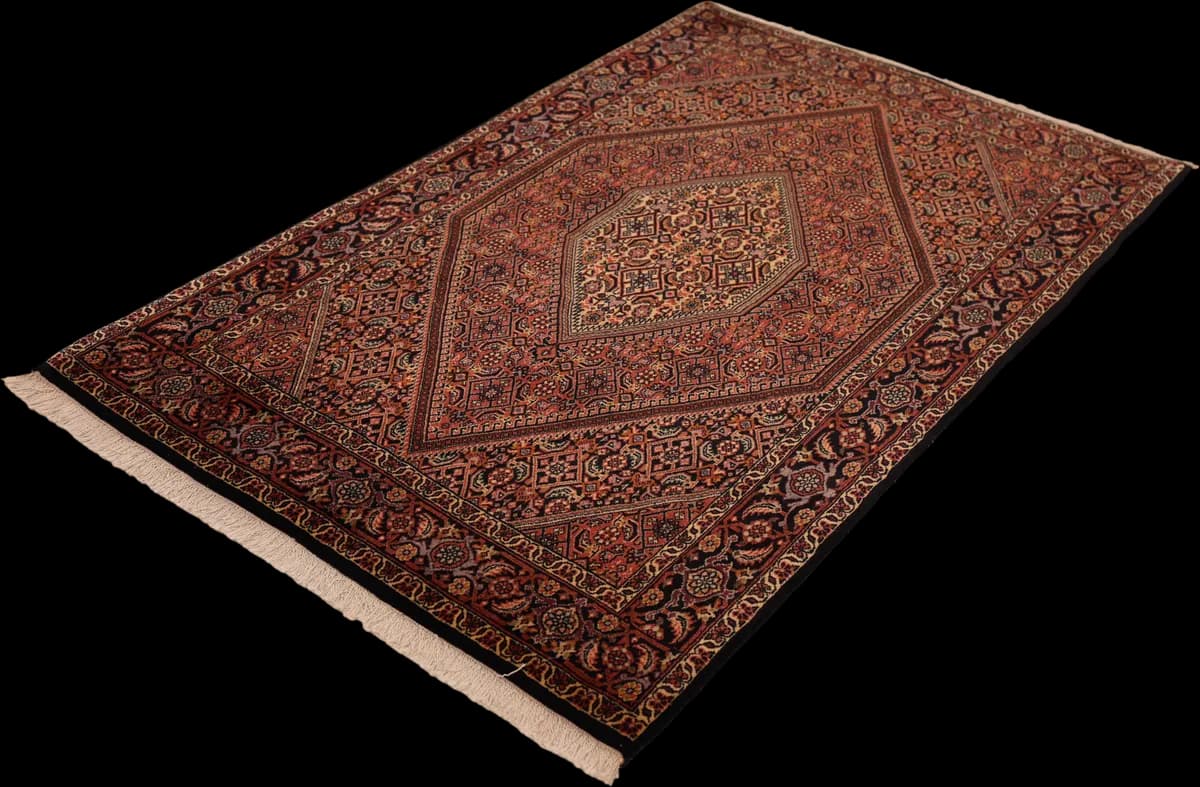
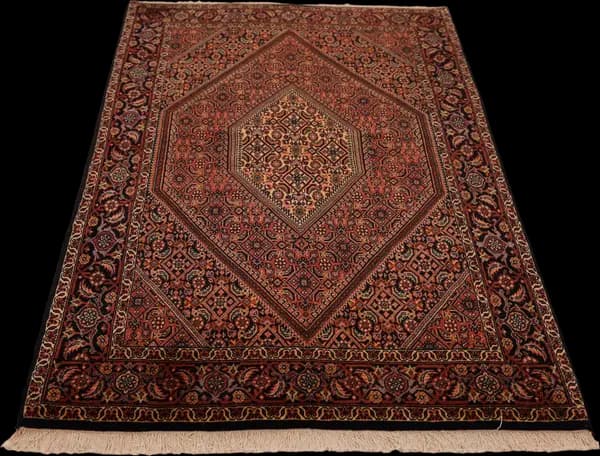
This is a Bidjar, also written Bijar or Bidjar-e Kordestan, knotted in the Kurdish weaving regions of western Iran — 167 x 110 cm (5'6" x 3'7"). Bidjars have long carried the name "the Iron Rugs of Persia", earned by a density of knotting that few other rugs in the Persian tradition attempt. Even at this modest size, the weight and firmness in the hand are unmistakable.
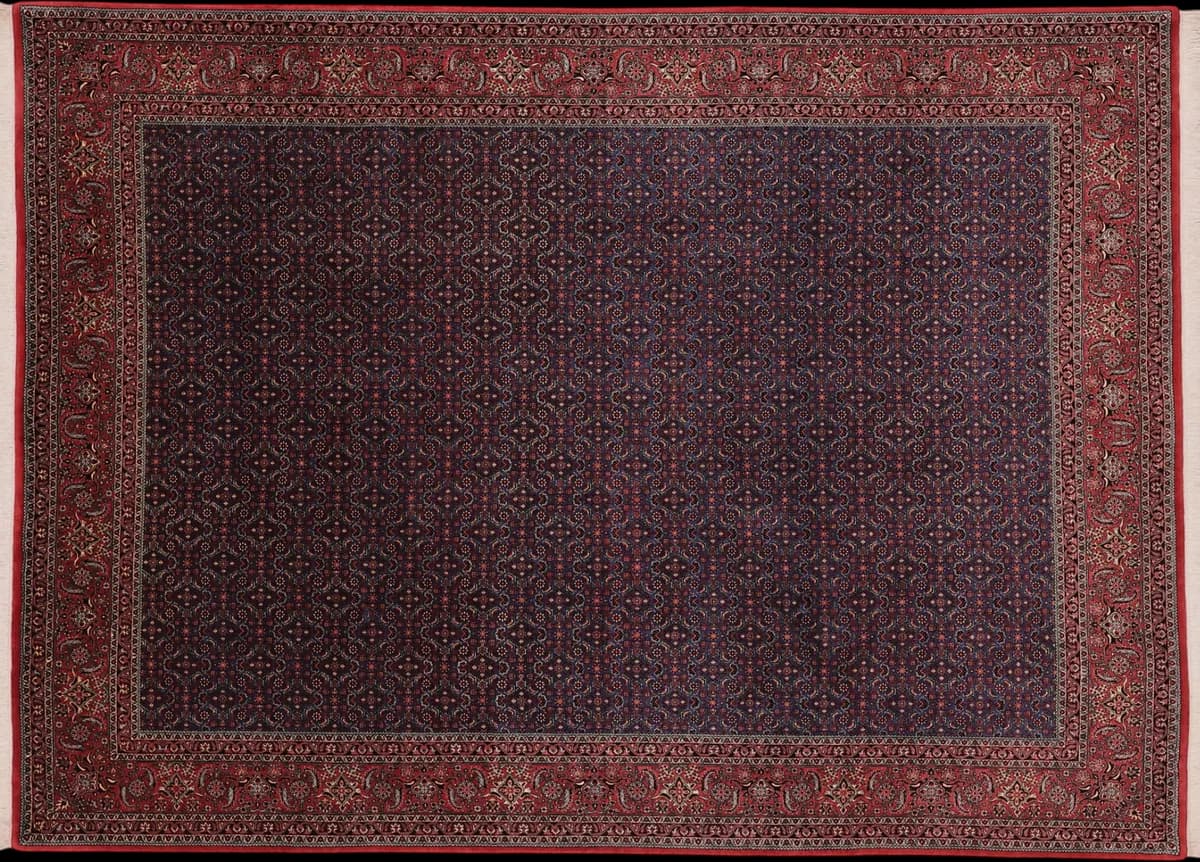
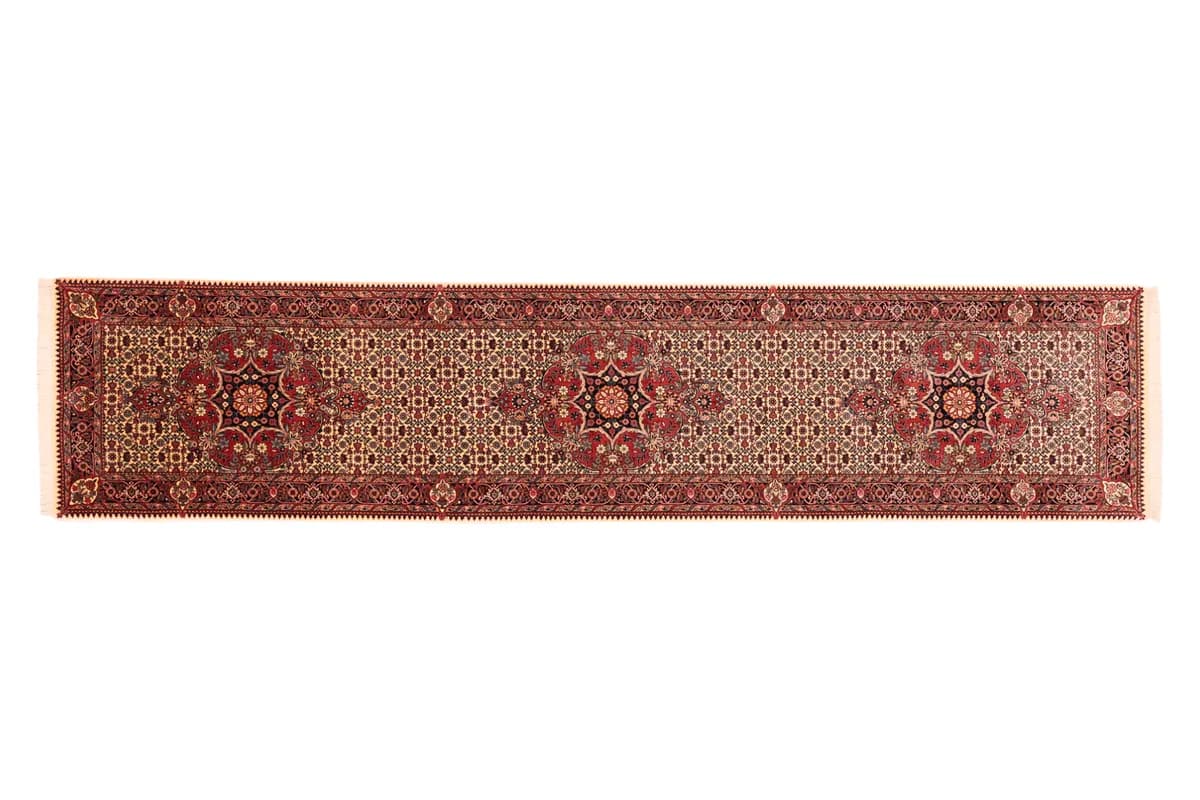
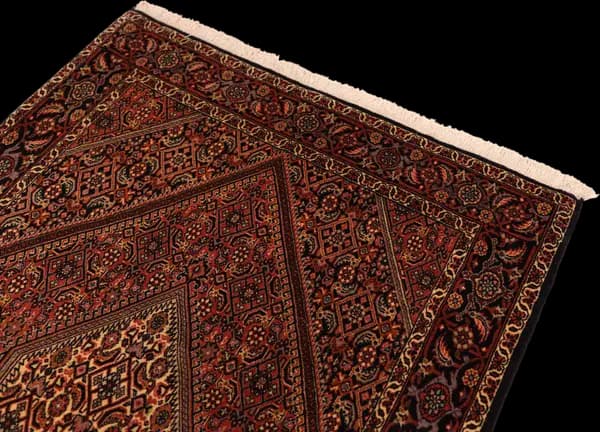
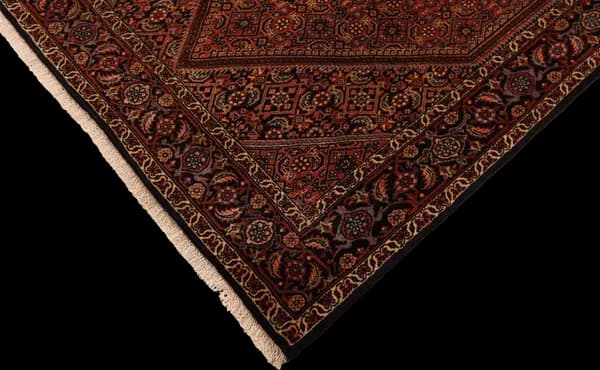
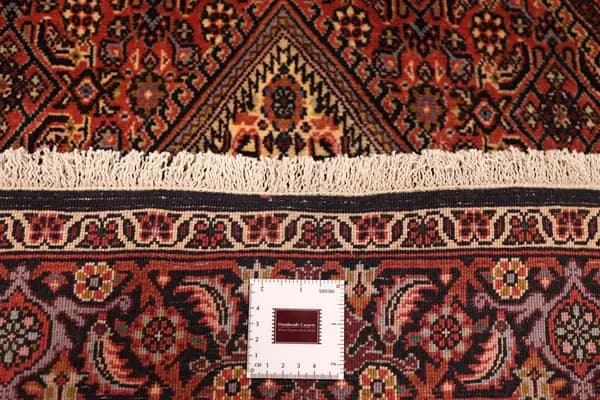
The field is a deep, brick red, filled edge to edge with a fine diamond lattice in the Mahi manner, each small compartment holding its own rosette in rust, sage green, dusty rose or slate blue. Out of this dense ground rises a stepped medallion, an ivory diamond set inside a larger one in rust, so that it reads as two layers rather than one flat shape. A wide border in dark navy carries a rust-red floral vine, held at each edge by narrow guard stripes in cream and rust, closing the design cleanly against the warmth of the field.
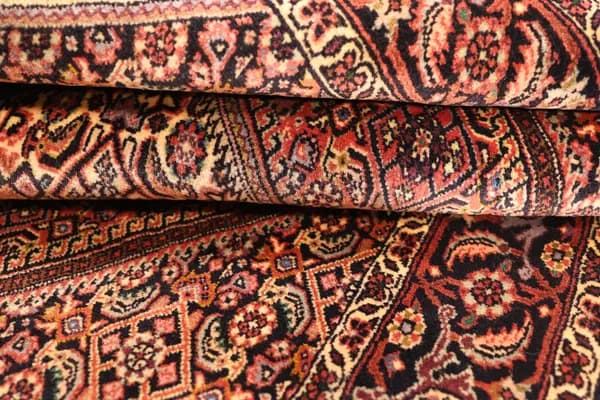
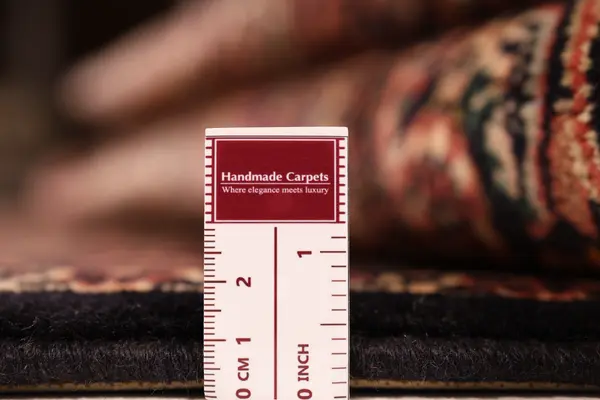
A square metre of this rug carries between 251,000 and 320,000 knots, tied by hand onto a cotton warp with a pile of hand-spun wool trimmed to fifteen millimetres. It is this density, the tightest found anywhere in the Persian tradition, that lets the diamond lattice stay so fine and the medallion keep such sharp edges — there is simply no room in a weave this tight for a line to wander. Bidjars built this way are never folded, only rolled, and the same compactness that makes folding impossible is what gives the rug its long working life underfoot.
At this size the rug suits a hallway or a small study, somewhere it will be crossed daily rather than viewed only from a sofa. The rust and cream warm a pale stone or oak floor, and hold their own against dark furniture without needing strong daylight to read clearly. The density that makes it so firm underfoot also means it takes regular footsteps without flattening, staying crisp where a softer weave would wear thin within a few years. Morning light finds the navy border first, then moves across the lattice and settles in the cream heart of the medallion, calm and exact each time you pass it.
More on Bidjar rugs: origin, making and how to recognise a genuine piece
Fine quality weave
At 167 × 110 cm (1.84 m²) this is a small rug. It works beside a bed, in a reading corner, in front of a fireplace or as a mat by a door. It does not furnish a room; it makes a point in one.
Yes, knotted by hand — knot by knot on a loom, not machine-made. The density is 251,000 to 320,000 knots per square metre; across 1.84 m² that is roughly 460,000 to 590,000 individual knots, every one of them tied by hand.
Hand-spun wool still carries its own lanolin, which keeps liquid sitting on the surface for a moment: blot quickly, with clear water and a light cloth, working inwards and without rubbing. Otherwise regular vacuuming along the pile is enough. Turn the rug once or twice a year so light and footfall reach it evenly.
We are in the Hamburg Speicherstadt. Come and see this rug in daylight, or write to us — a person answers.
Certificate included verifying origin, materials, and craftsmanship.
Ref: 138777