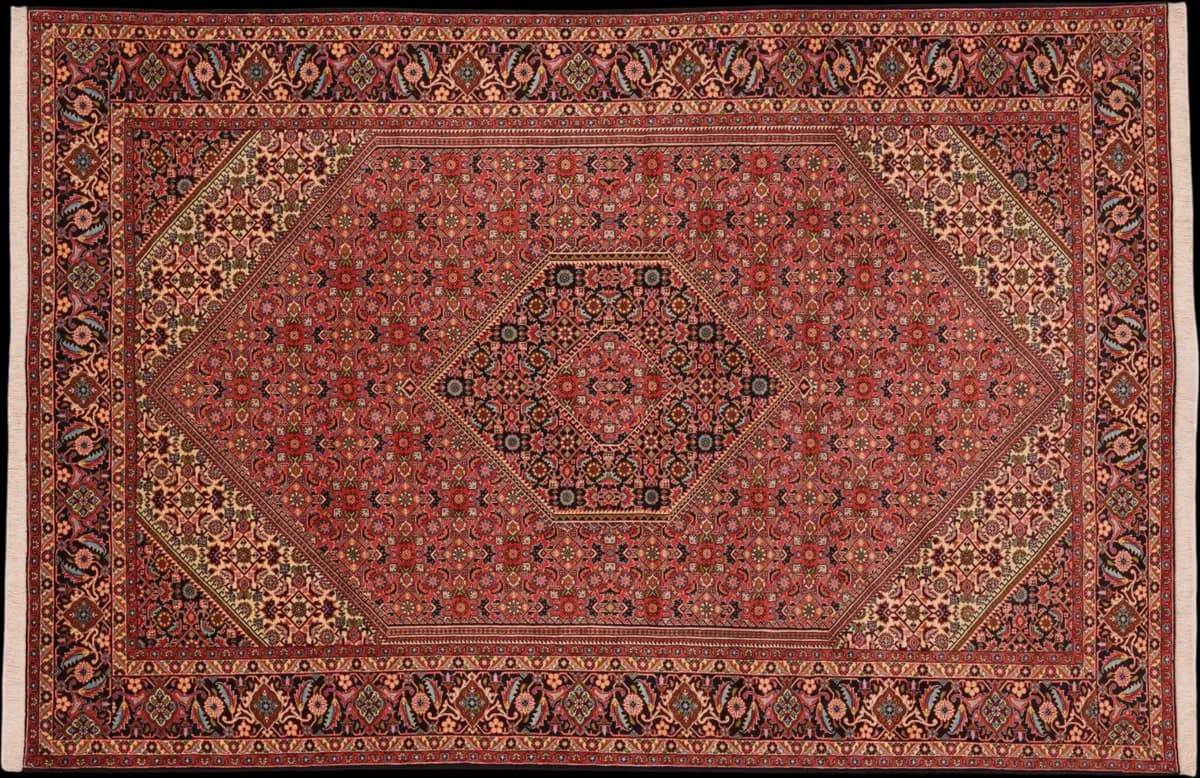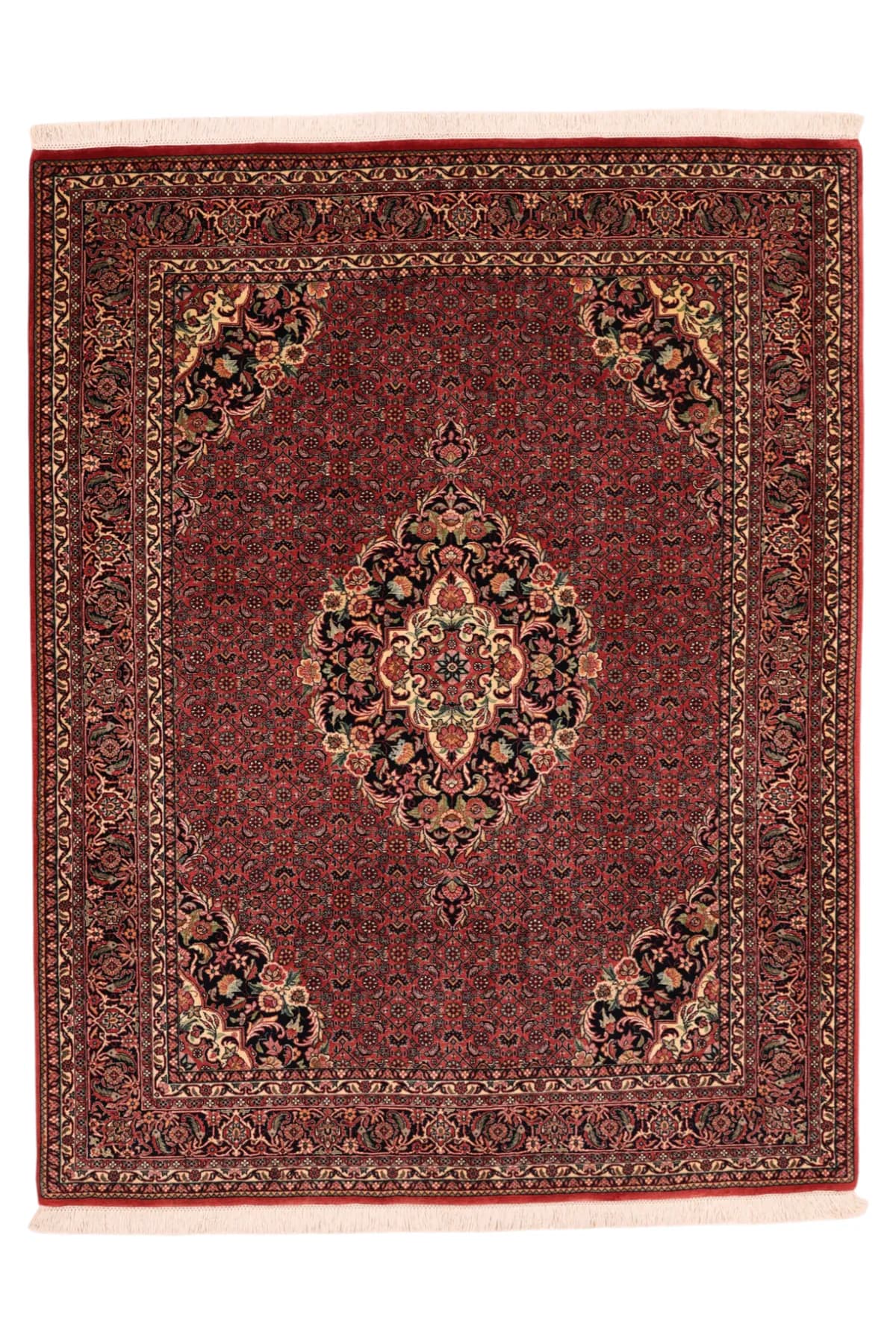
Exclusive
Bidjar | Exclusivewith silk
199 × 156 cm
5.550 €
23.700 €
Incl. VAT
In Stock · Ready to Ship
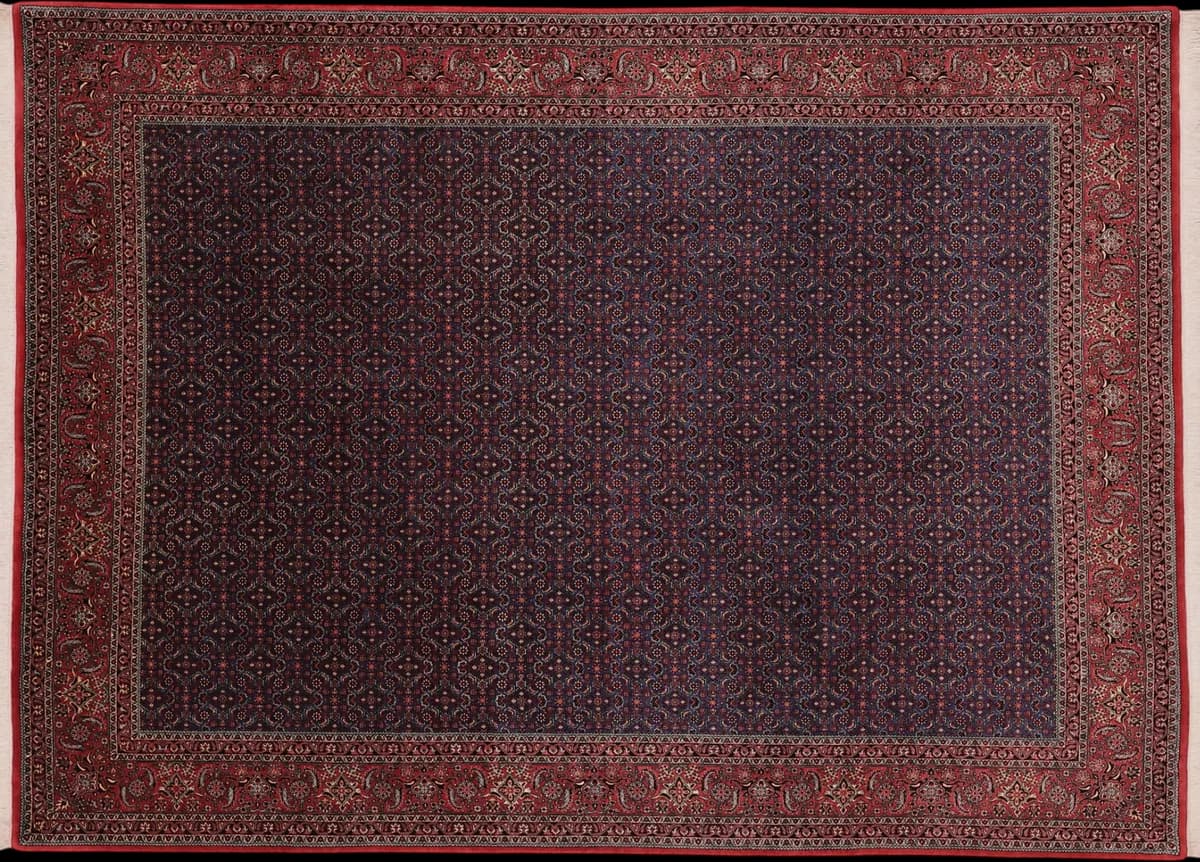
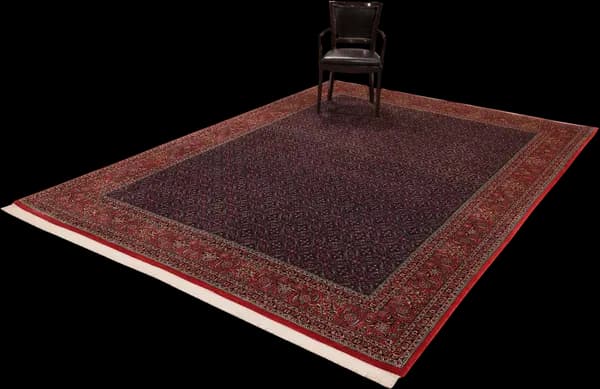
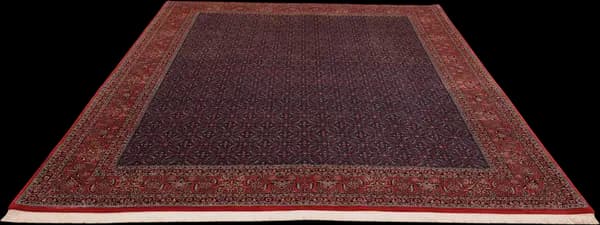
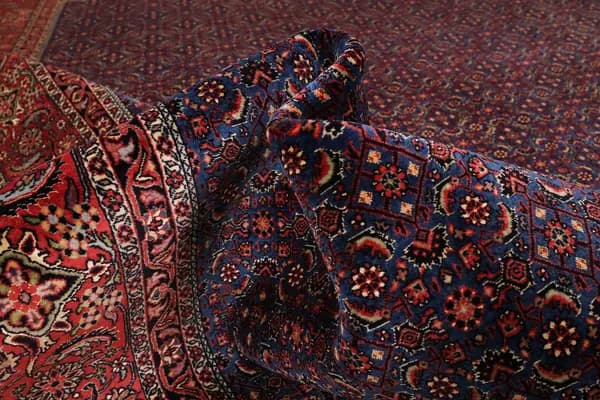
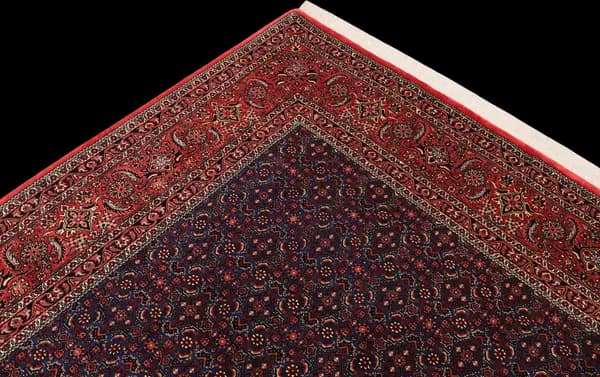
The rug in front of you is a Bidjar, also written Bijar, from the Kurdish regions of western Iran, measuring 351 x 255 cm (11'6" x 8'4"). Weavers there worked from memory rather than a drawn plan, yet Bidjar carries the nickname "the iron rug of Persia" for a reason that has nothing to do with poetry: its knotting is the densest in the whole Persian tradition, packed so tightly that a Bidjar cannot be folded, only rolled.
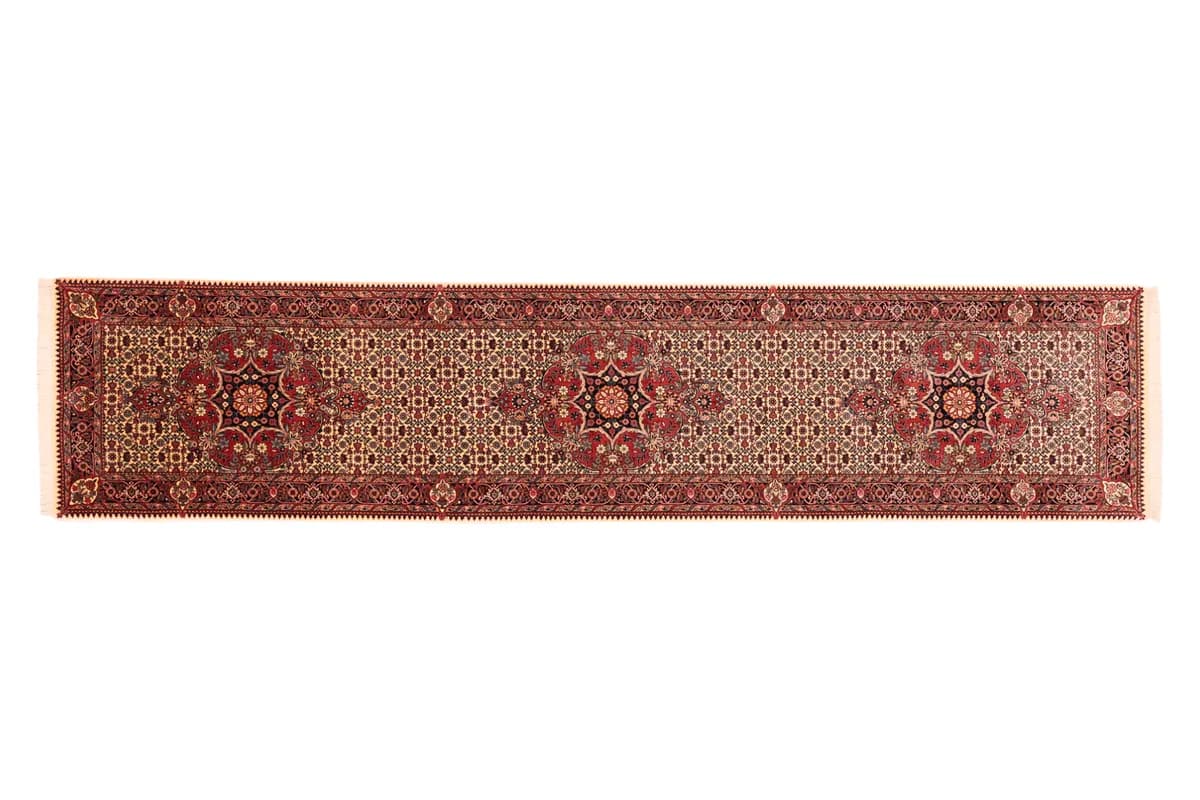
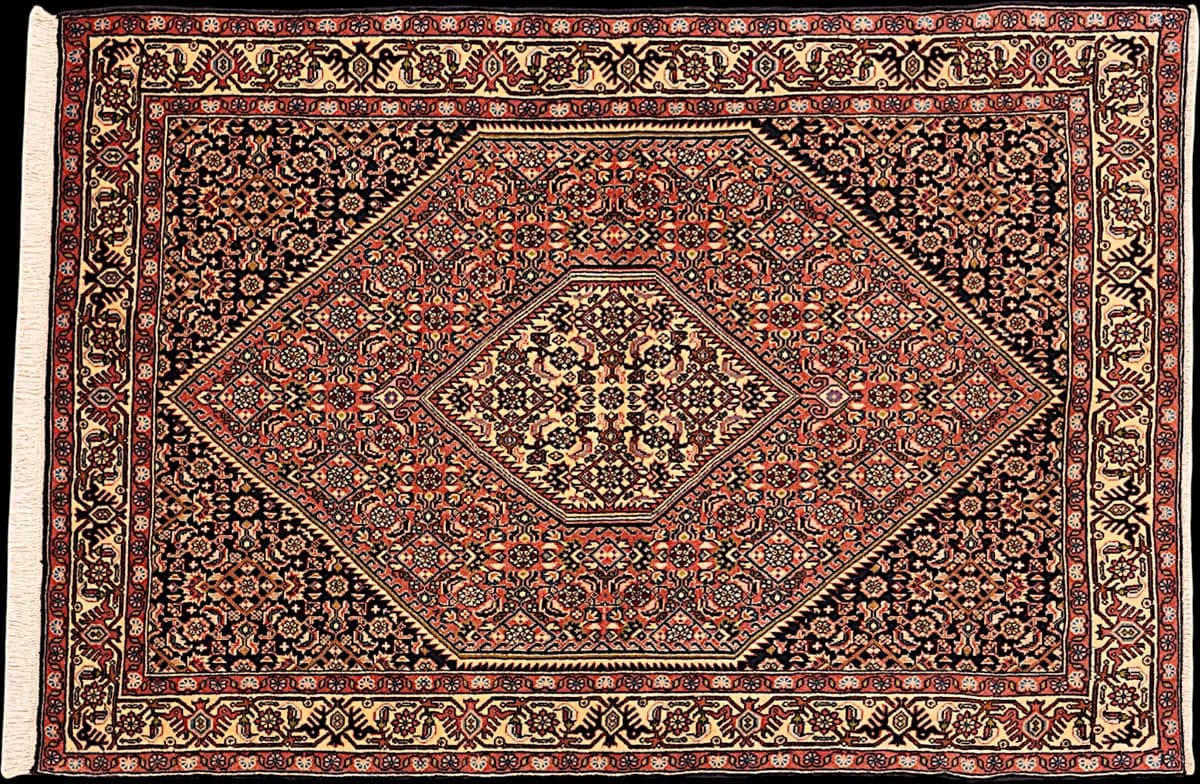
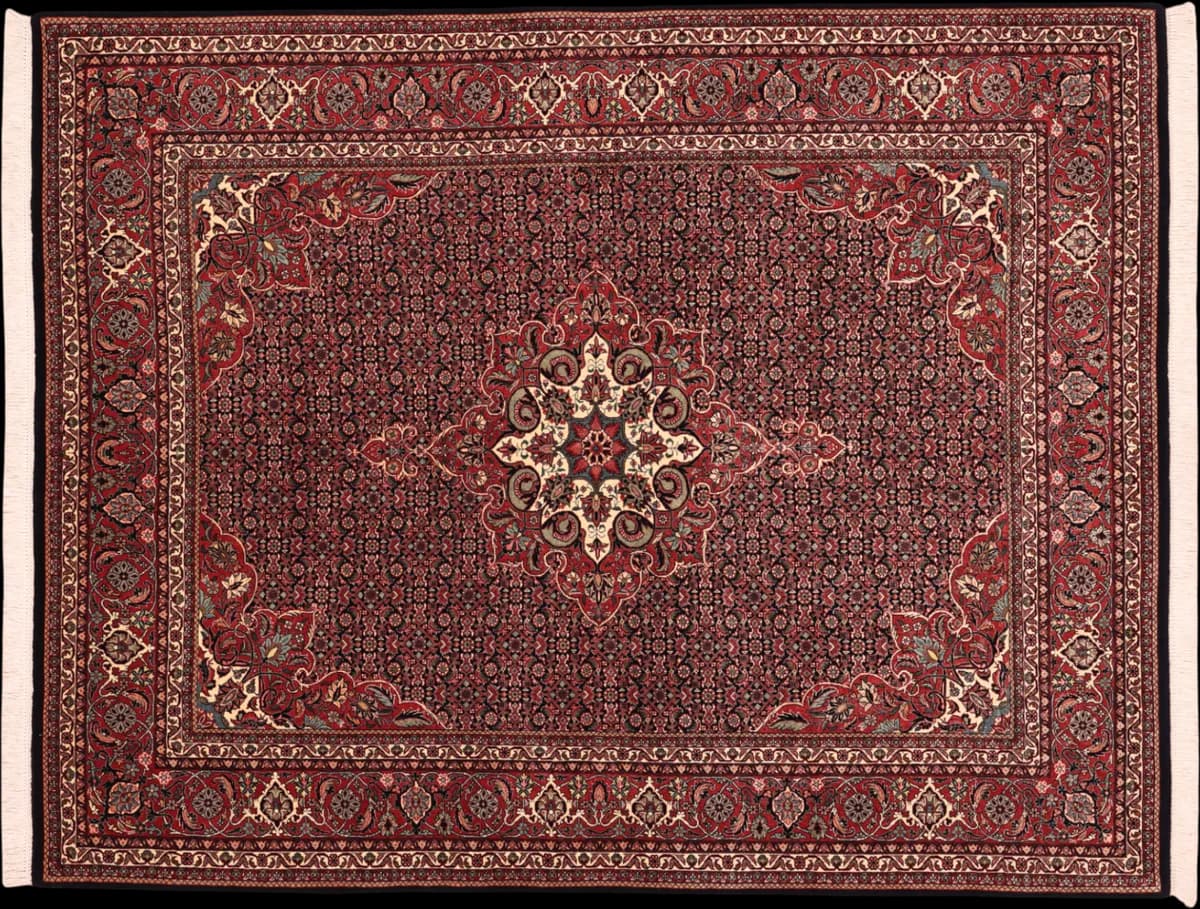
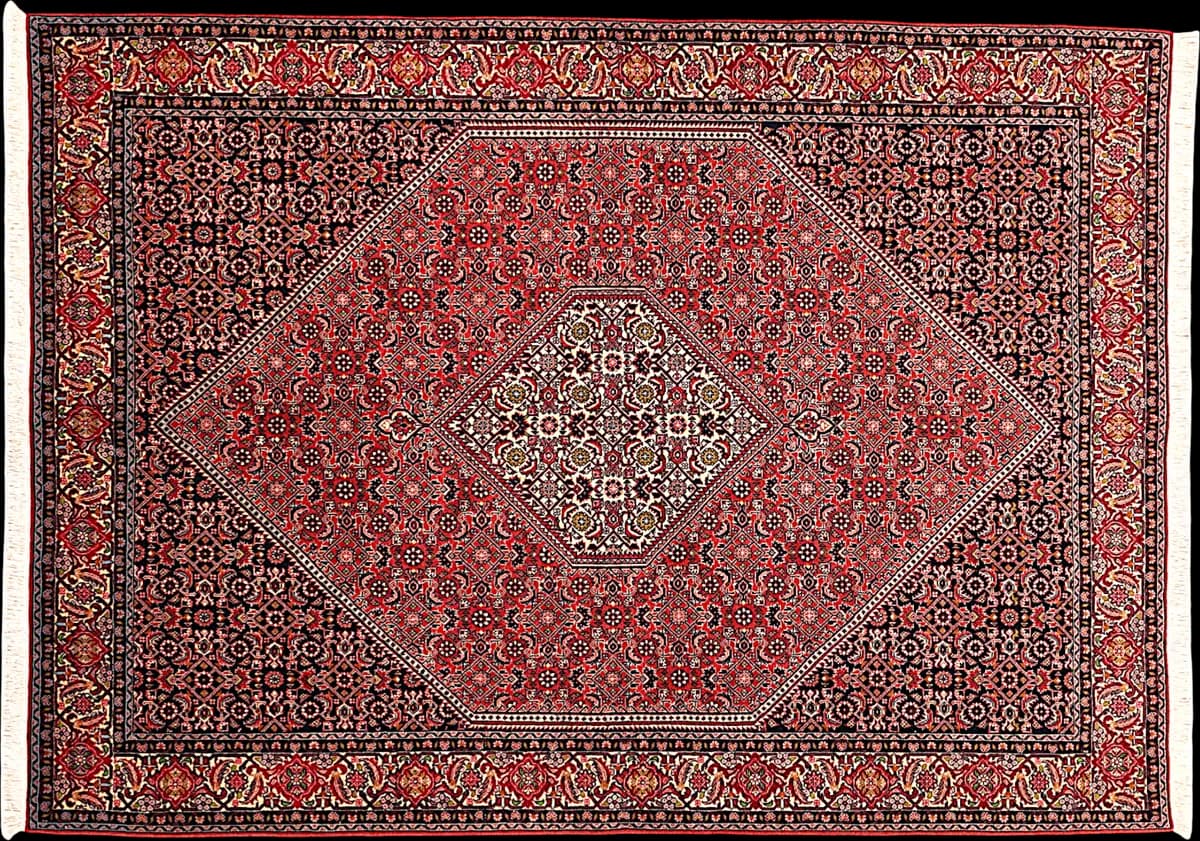
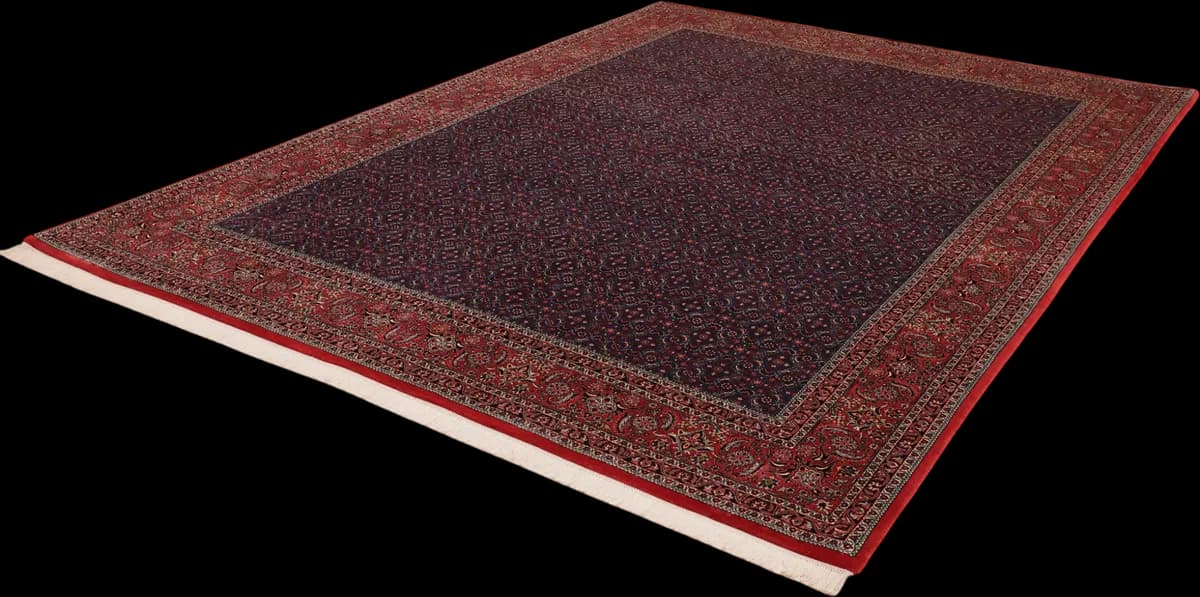
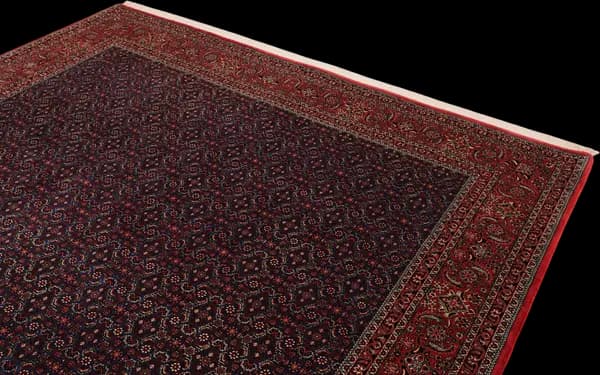
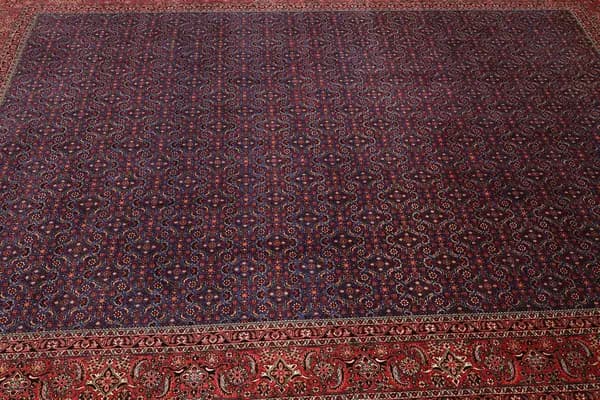
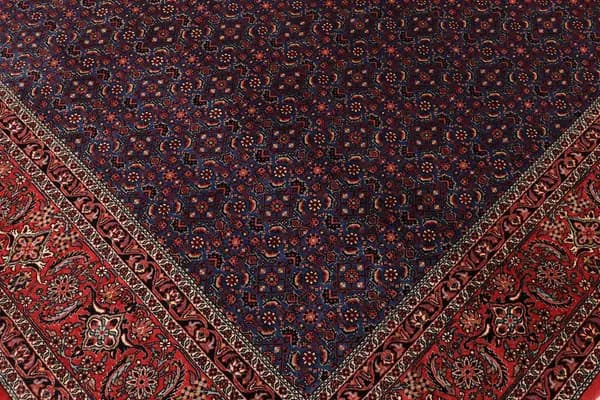
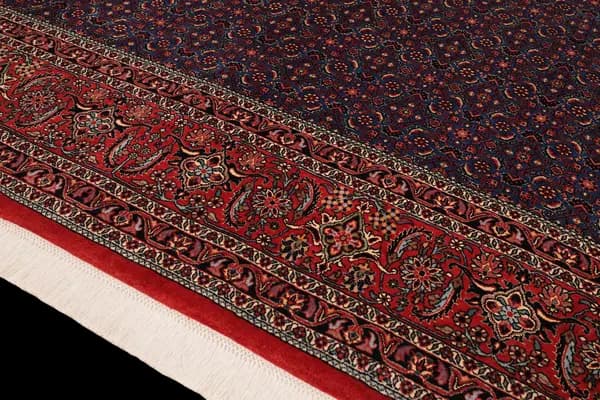
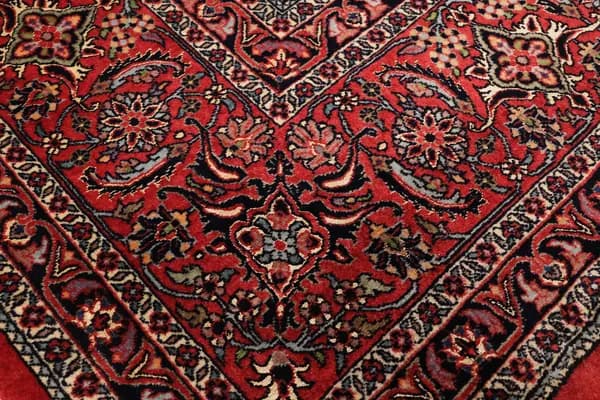
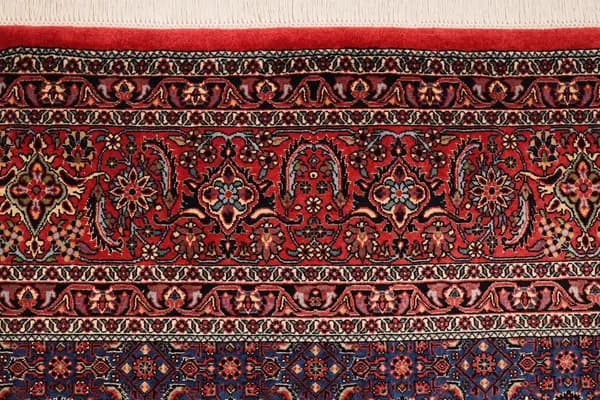
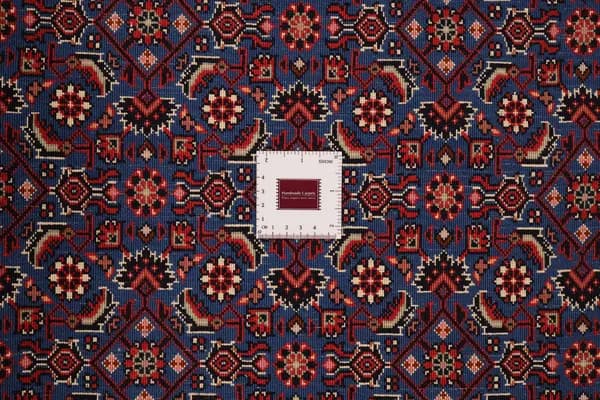
A deep midnight blue, touched with violet, fills the ground from edge to edge, carrying a small, tightly repeated diamond lattice in the Mahi pattern with no medallion to interrupt it. Rosettes in rust-red, cream and steel-blue sit caught within the lattice, glimpsed rather than announced. A wide border in brick red and burgundy runs around the field, filled with floral vine scrollwork and set off by narrow cream guard stripes, taking up close to a fifth of the rug's width. Seen from across a room, the lattice is so fine and so evenly repeated that it can read as a woven fabric print rather than a hand-knotted pattern.
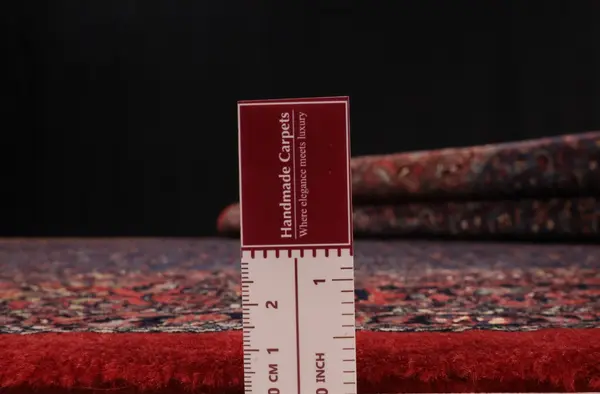
That precision has a plain mechanical cause. The pile is wool blended with silk over a cotton warp, and silk spins into a far thinner thread than wool alone, which lets the weaver tie a tighter knot without the pattern blurring. Here the density runs to 441,000-500,000 knots per square metre, among the tightest a hand can achieve, and a low pile height of 15 mm keeps every line of the lattice crisp rather than soft-edged. The result is a design usually associated with the freedom of a nomadic loom, produced instead with a regularity and calm two-colour discipline more often seen in a drawn workshop cartoon.
A rug of this size sits naturally under a dining table or beneath a living room seating group, and its scale is built for exactly that kind of daily gathering. Against pale flooring the navy ground holds its own rather than disappearing, while the brick-red border keeps the eye moving and stops the room feeling too dark. Underfoot it is dense, firm and substantial, a construction made to be walked on rather than kept for best, and it will take a household's daily traffic without losing its shape. As light moves across the room through the day, the violet undertone in the blue shifts quietly, and the small rust and steel-blue rosettes catch the eye again each time, as if noticed for the first time.
More on Bidjar rugs: origin, making and how to recognise a genuine piece
Superior craftsmanship
At 351 × 255 cm (8.95 m²) this is a very large rug. It carries a whole seating group with every furniture leg on it, or a dining table with the chairs pushed back. In a small room it becomes the floor rather than a rug.
Yes, knotted by hand — knot by knot on a loom, not machine-made. The density is 441,000 to 500,000 knots per square metre; across 8.95 m² that is roughly 3.9 to 4.5 million individual knots, every one of them tied by hand.
This pile contains silk and is more delicate than pure wool. Vacuum without a rotating brush and along the pile, do not beat it, and keep it out of permanent direct sun. Blot spills at once with a light cloth, never rub. For a proper clean a silk-blend rug belongs in expert hands — we handle that for pieces bought from us.
We are in the Hamburg Speicherstadt. Come and see this rug in daylight, or write to us — a person answers.
Certificate included verifying origin, materials, and craftsmanship.
Ref: 153939