Bidjar
293 × 197 cm
4.350 €
3.510 €
Incl. VAT
In Stock · Ready to Ship
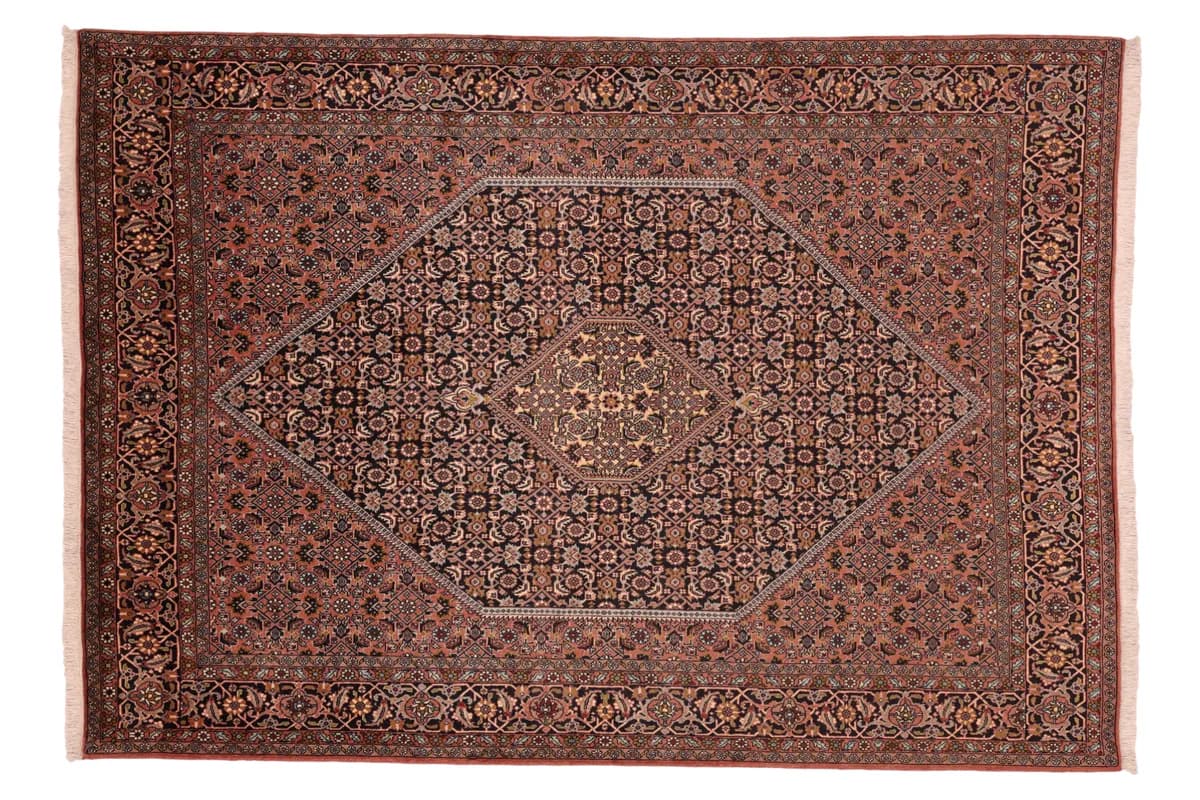
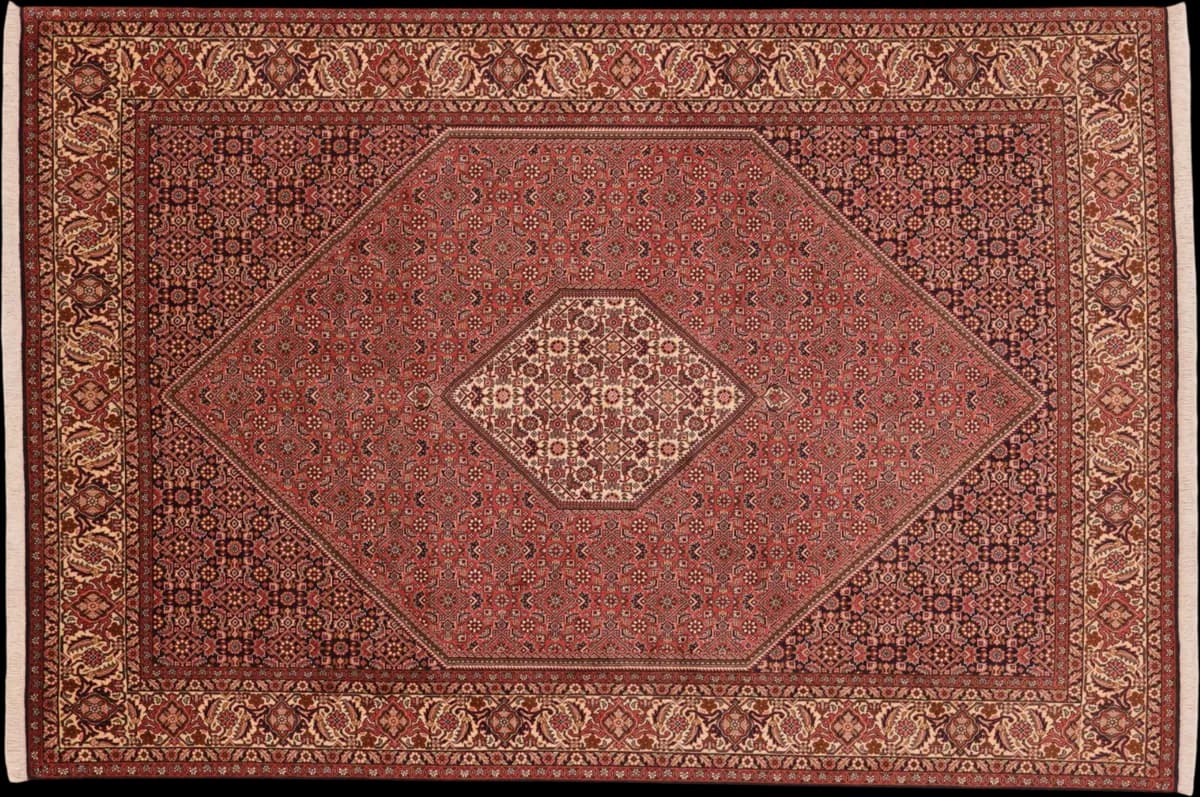
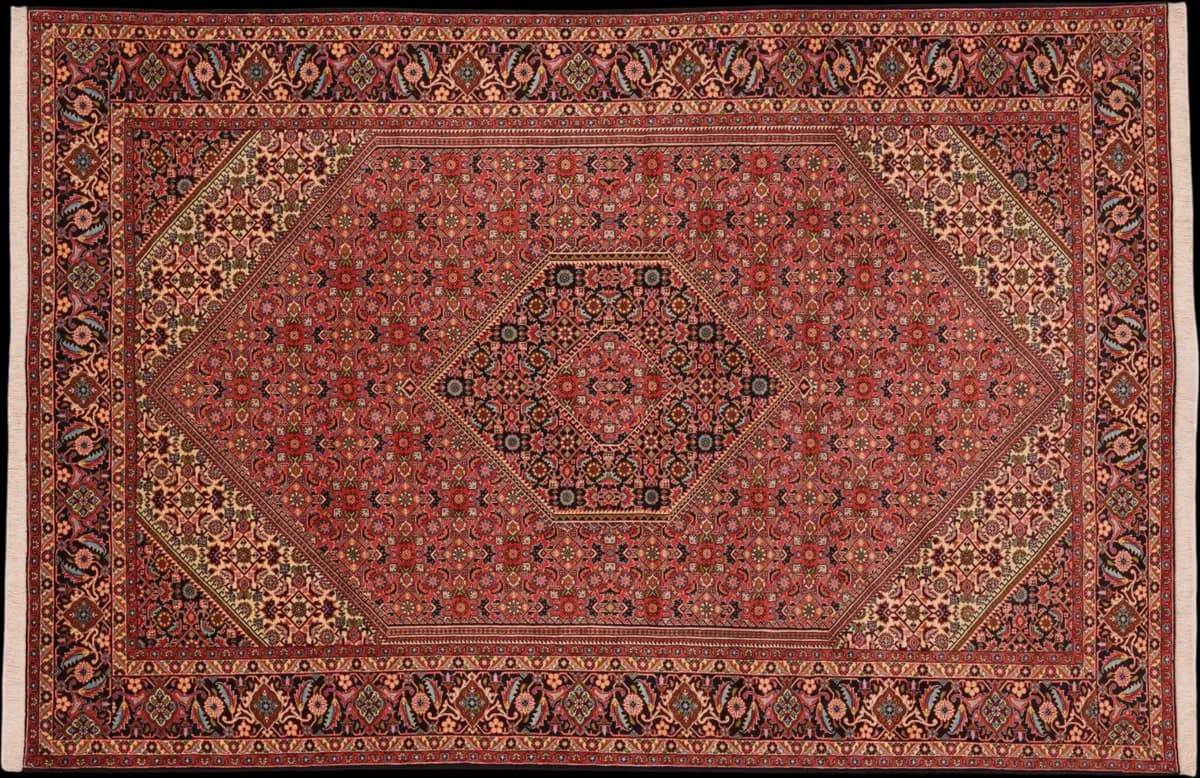
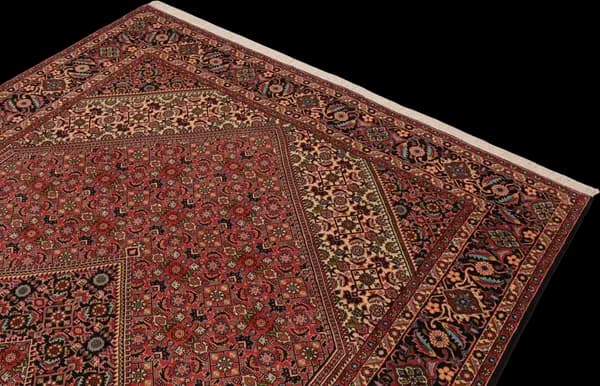
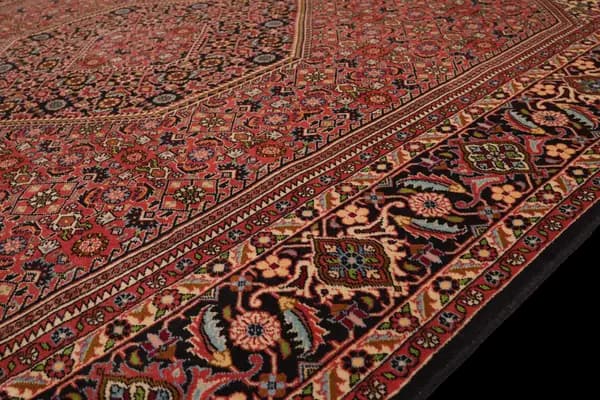
Ask for a Bidjar and most people picture a heavy, brick-red carpet built around one bold, solid medallion. This one, at 297 x 197 cm (9'9" x 6'5"), keeps the weight and the red but rethinks the medallion itself. Bidjars are knotted in the Kurdish regions of western Iran and have earned the name "the Iron Rugs of Persia" for a density that lets them survive decades of hard use without losing shape. This is a full-size piece for a room where people actually gather, not a display rug kept out of the way.
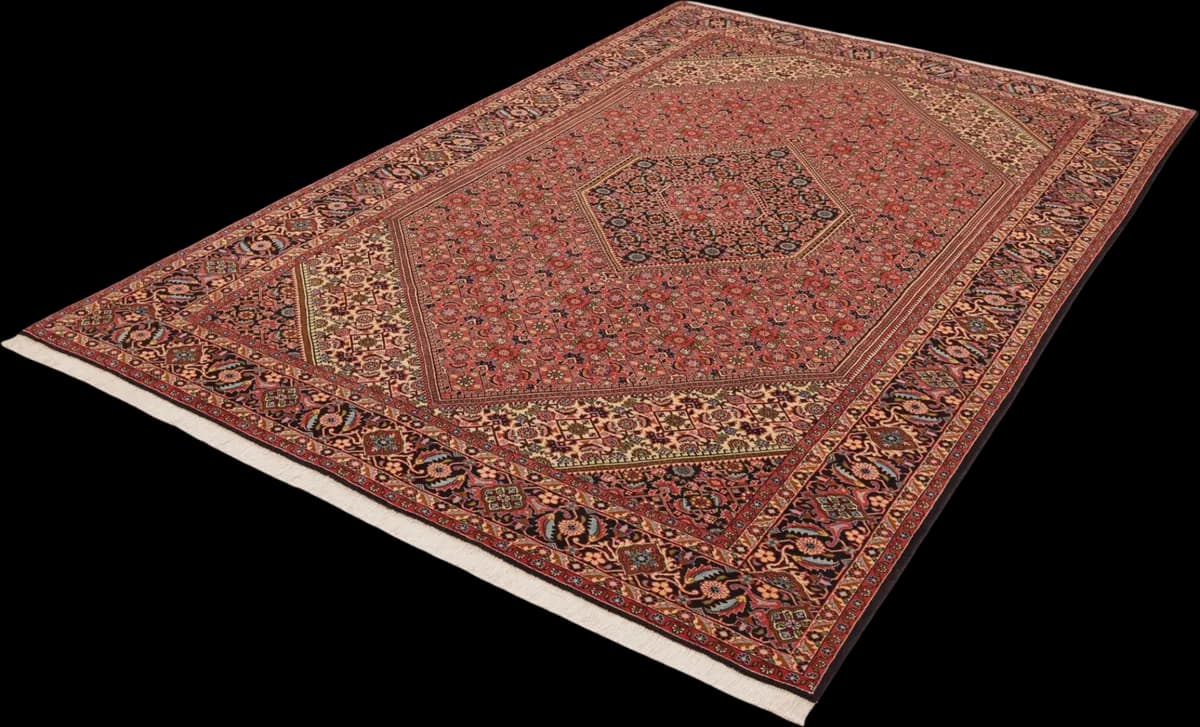
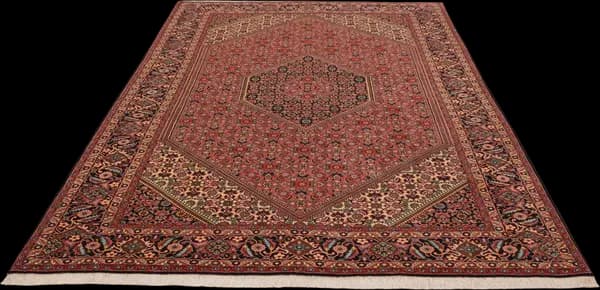
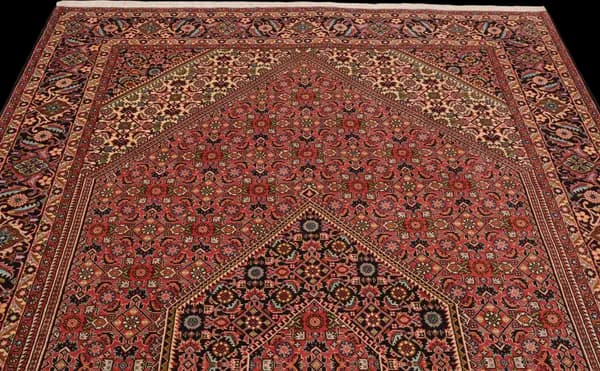
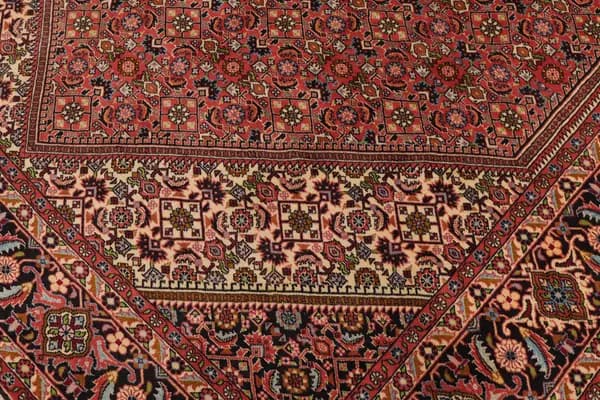
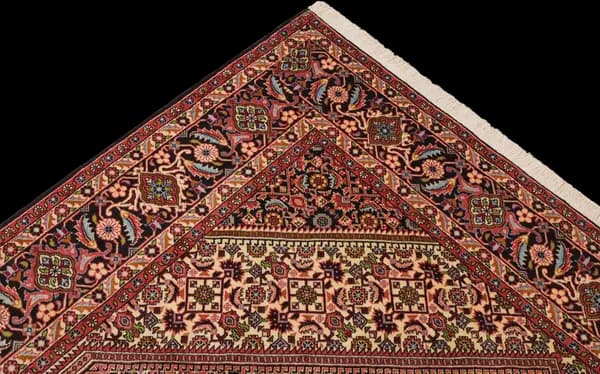
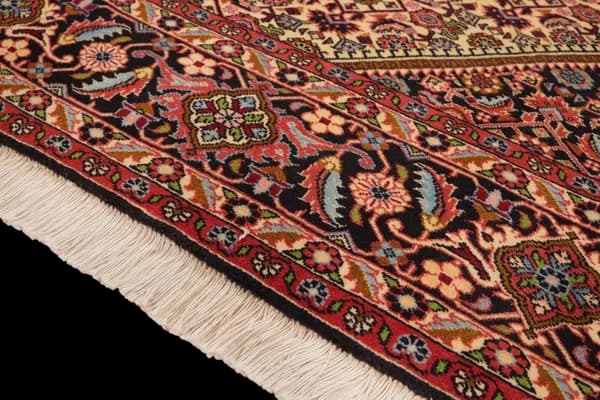
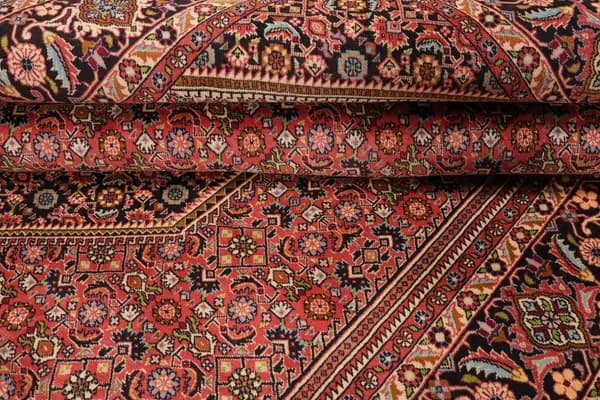
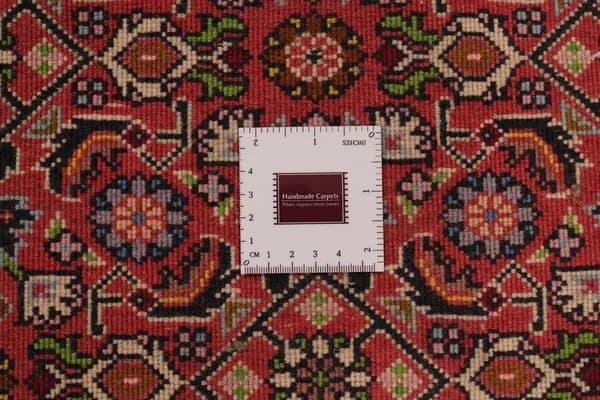
The first impression is a deep rose-red field, and it takes a moment to notice that the red is never left plain: it is filled edge to edge with a fine, small-scale Mahi lattice, rows of stylised fish and rosettes packed close together. The central medallion, a navy hexagon, is not a solid shape dropped onto that field but built from the same lattice, only darker, so the pattern seems to continue rather than stop. Cream cornerpieces open up the density at the edges, and around all of it runs a wide navy border, close to a fifth of the rug's width, carrying red and cream palmettes and vine in a rhythm that answers the field without competing with it.
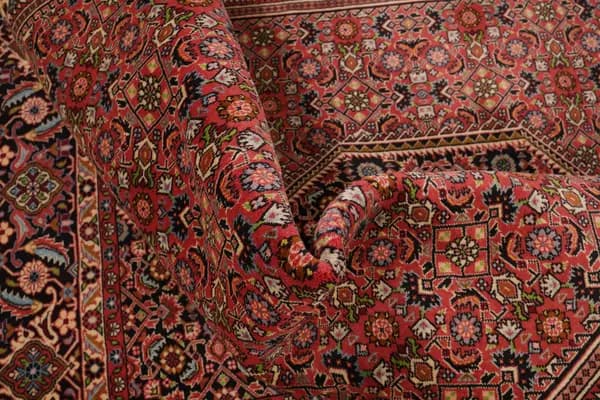
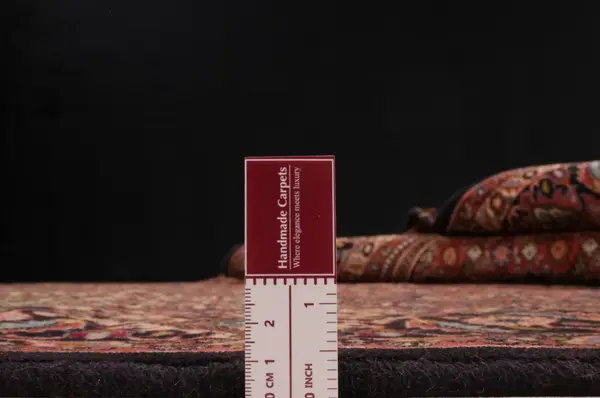
That continuity is only possible because of how tightly this rug is knotted. At 321,000 to 380,000 knots per square metre, a density that sits among the highest in the whole Persian tradition, the weaver had enough resolution to carry the fish motif into the medallion at the same small scale as the field, instead of switching to a broader, simpler shape the way most Bidjars do. The wool pile, hand-spun and set at 15 mm over a cotton warp, is beaten so firm in the finishing that a Bidjar of this kind cannot be folded, only rolled — proof of just how compact the weave is underfoot, and the reason these rugs are trusted to hold their sharpness in rooms that see daily traffic.
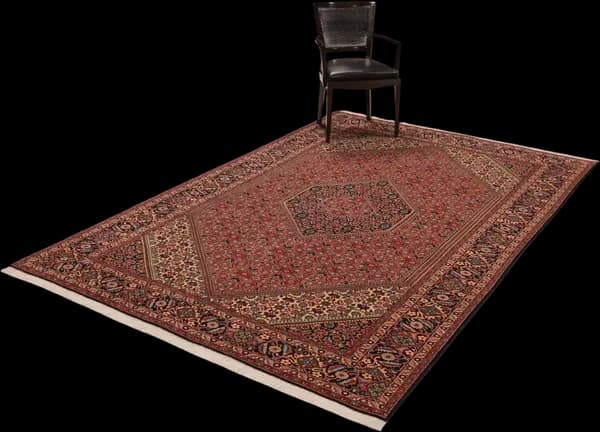
Under a dining table or anchoring a seating group in a living room, this is exactly the kind of floor that space calls for: substantial, dense, and clearly not precious about being walked on. The rose-red carries real warmth against pale floors and holds its own next to dark wood or black furniture, while the navy medallion and border keep the whole composition grounded rather than busy. Underfoot it is firm and even, built for a room that gets used, not one that gets protected. Let afternoon light cross it and the low sheen in the wool catches the lattice at an angle, so the fish motif seems to ripple faintly across field and medallion alike, one pattern, never quite still.
More on Bidjar rugs: origin, making and how to recognise a genuine piece
Superior craftsmanship
At 297 × 197 cm (5.85 m²) this is a large rug. It sits under a seating group with the front legs of sofa and chairs on it, or under a dining table for four. A table for six wants about 80 cm of clearance all round, and needs more.
Yes, knotted by hand — knot by knot on a loom, not machine-made. The density is 321,000 to 380,000 knots per square metre; across 5.85 m² that is roughly 1.9 to 2.2 million individual knots, every one of them tied by hand.
Hand-spun wool still carries its own lanolin, which keeps liquid sitting on the surface for a moment: blot quickly, with clear water and a light cloth, working inwards and without rubbing. Otherwise regular vacuuming along the pile is enough. Turn the rug once or twice a year so light and footfall reach it evenly.
We are in the Hamburg Speicherstadt. Come and see this rug in daylight, or write to us — a person answers.
Certificate included verifying origin, materials, and craftsmanship.
Ref: 188773