Senneh
159 × 124 cm
975 €
1.035 €
Incl. VAT
In Stock · Ready to Ship
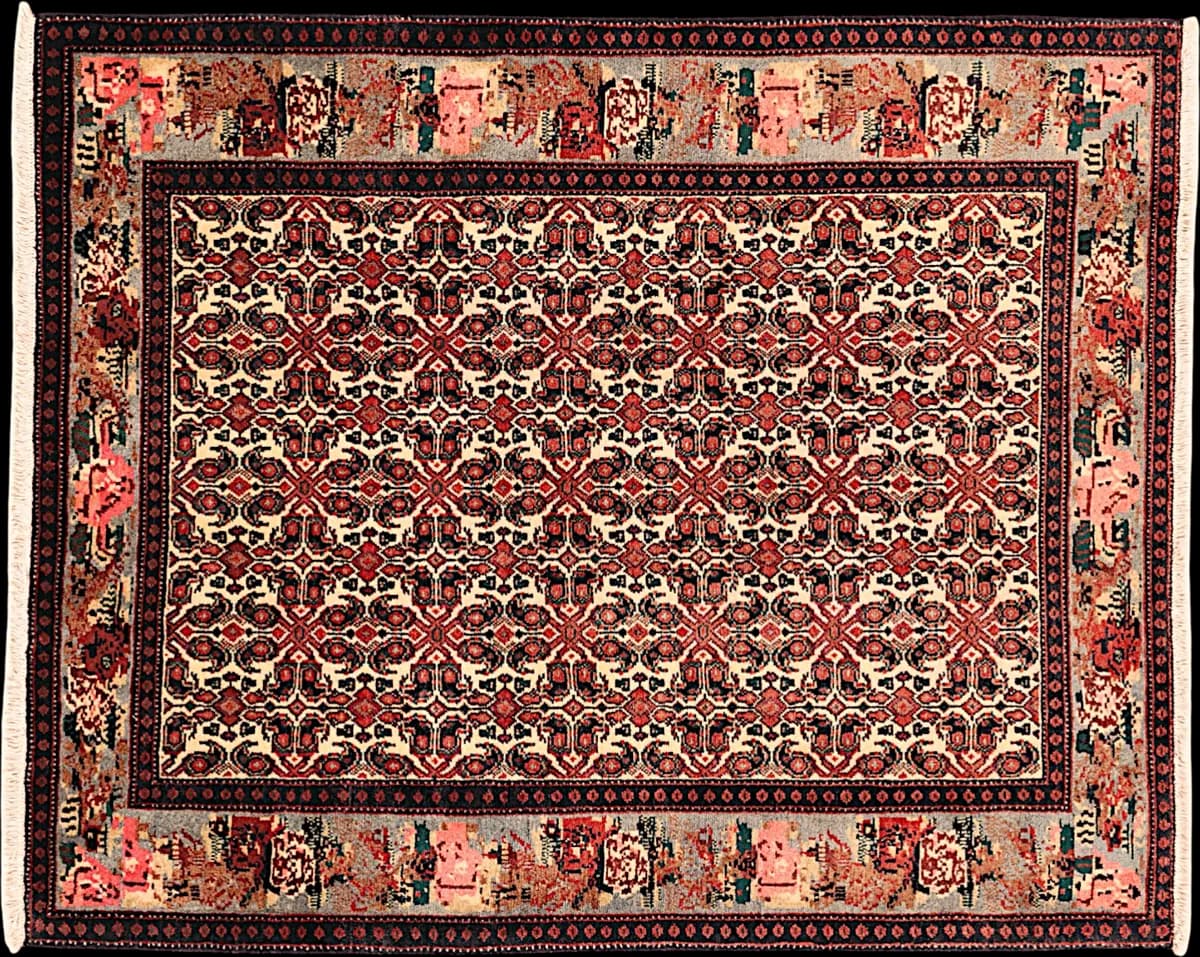
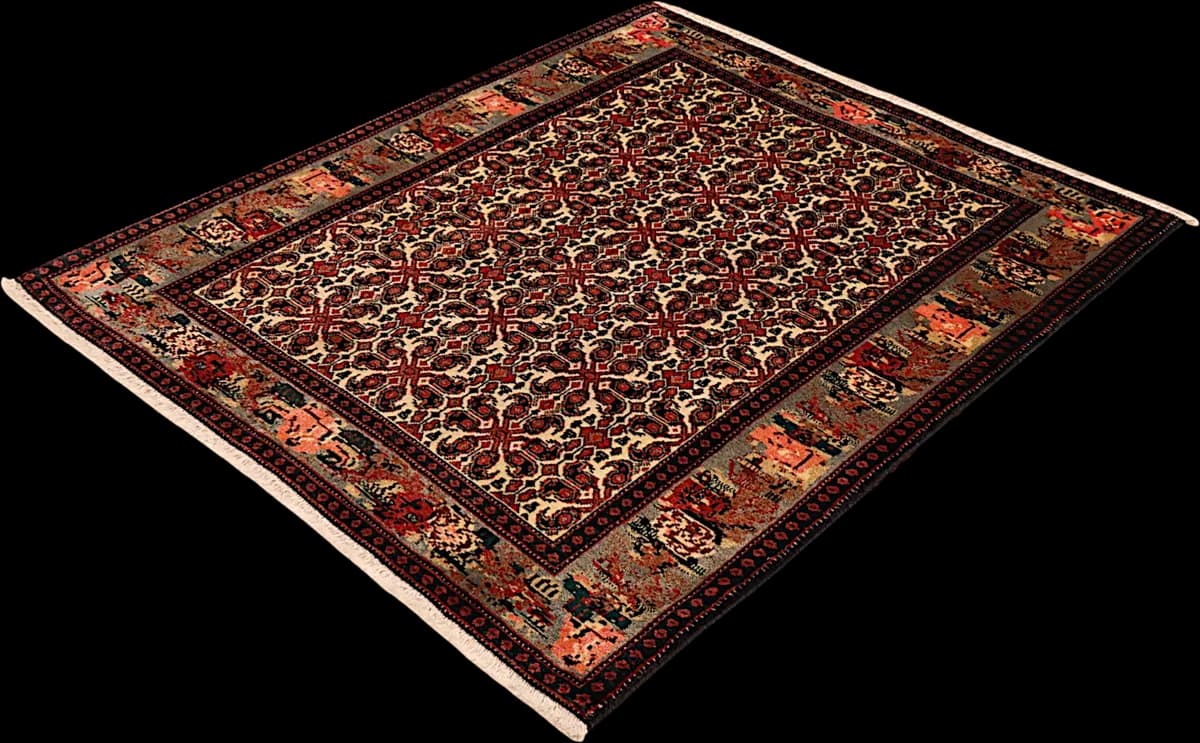
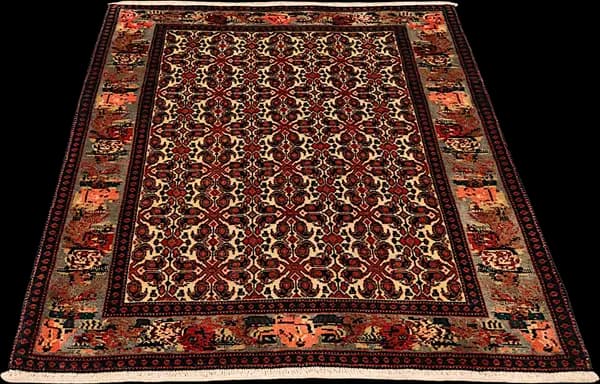
Senneh, also written Senna, is the historic name for Sanandaj in Kurdish Iran, a city famed above all for kilims so finely drawn that collectors call them almost painted. This piece, 147 x 120 cm (4'10" x 3'11"), is hand-knotted rather than woven flat, carrying that same fineness of drawing into pile instead of kilim.
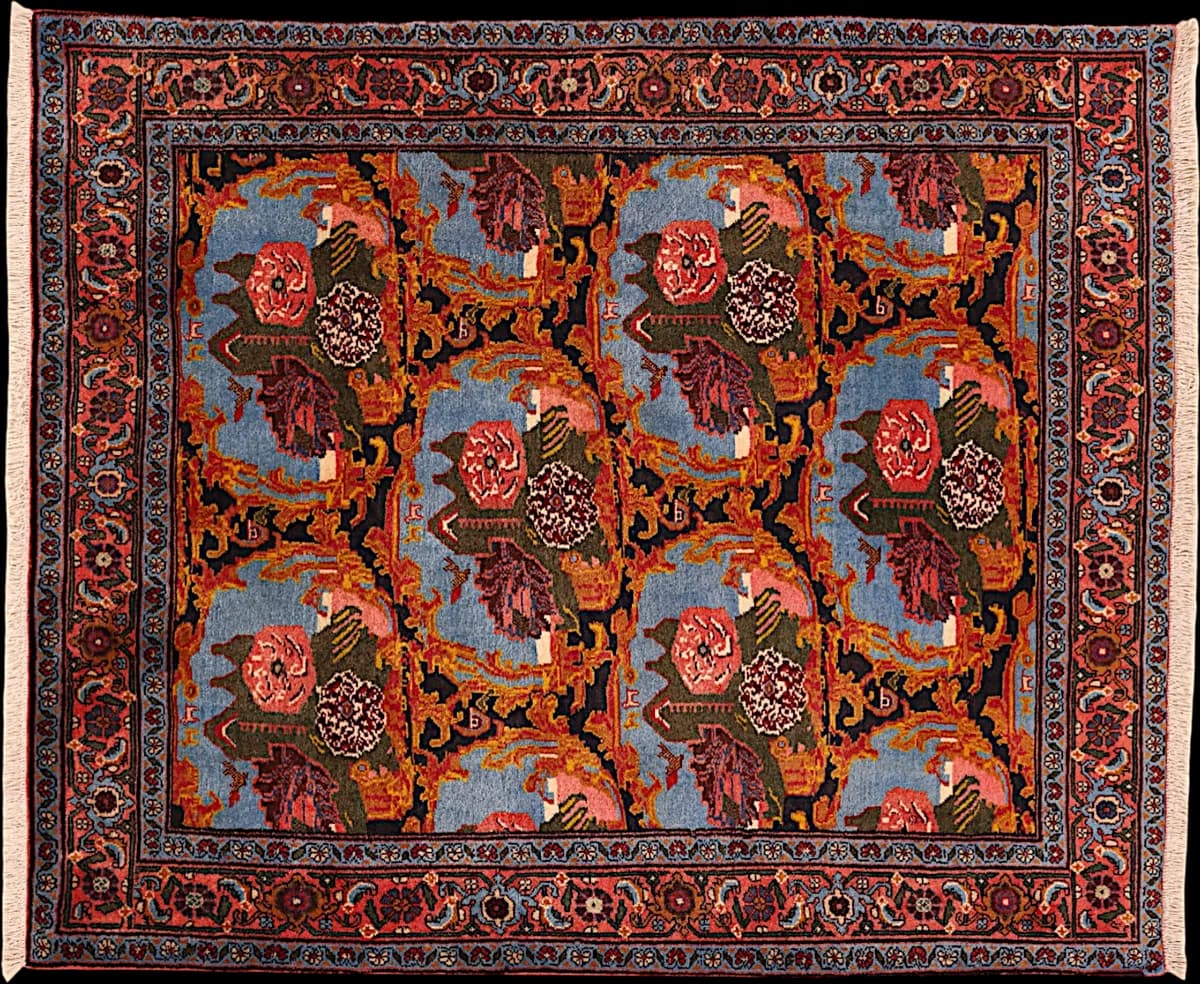
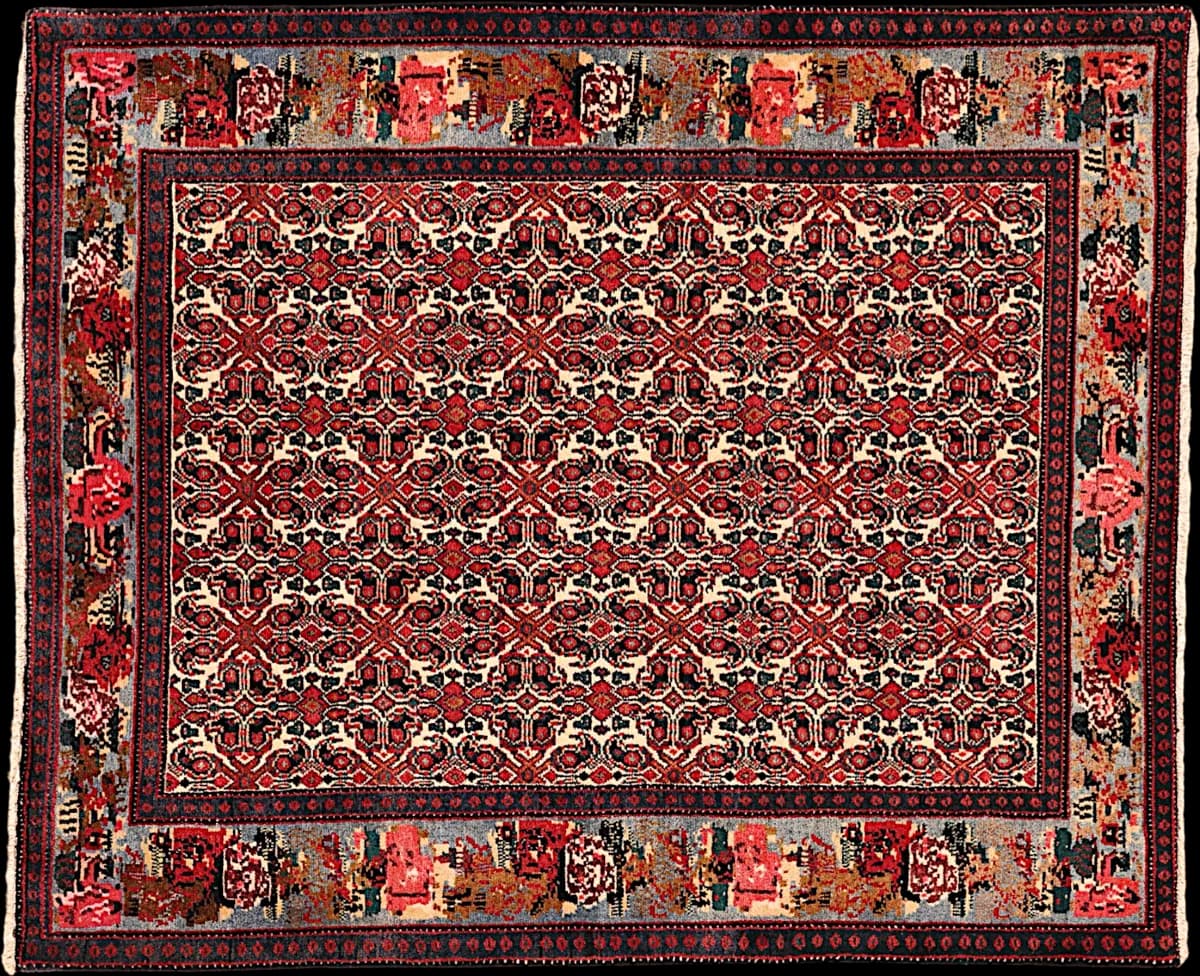
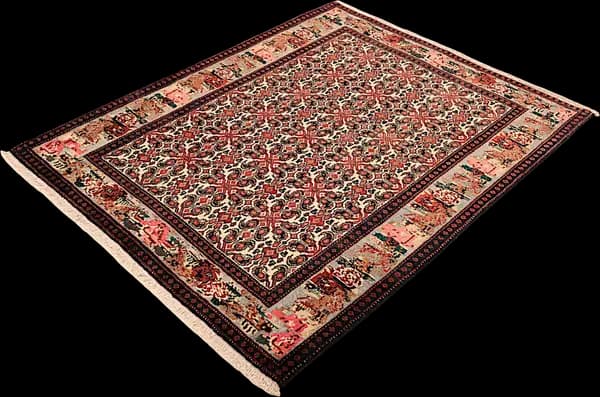
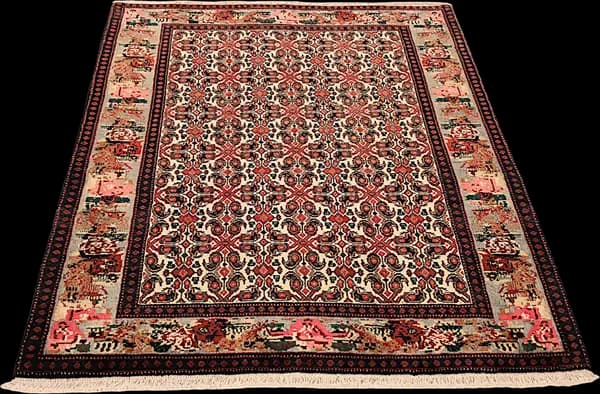
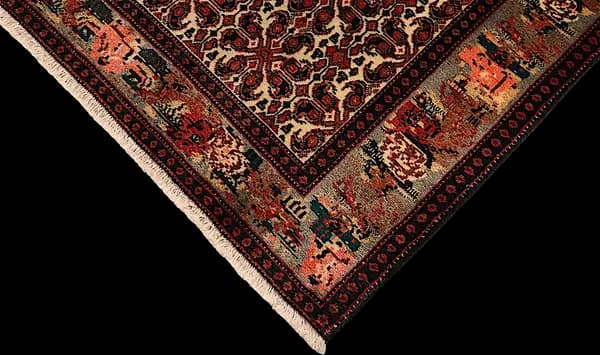
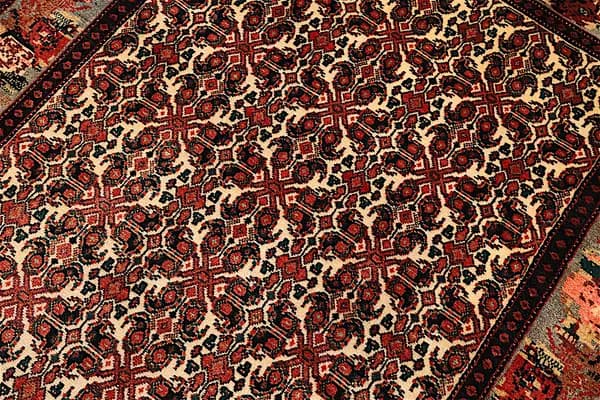
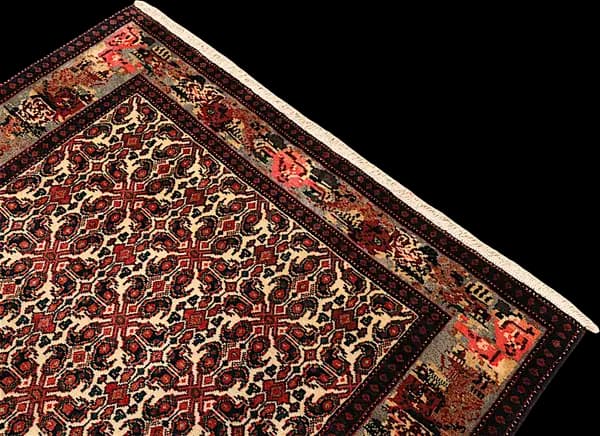
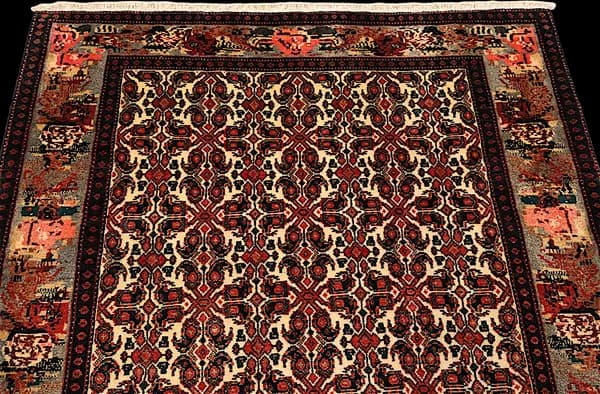
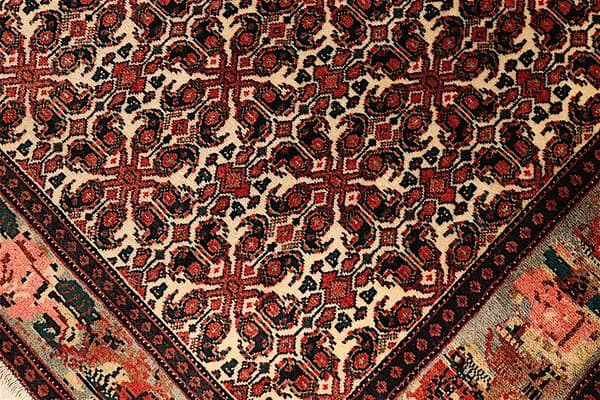
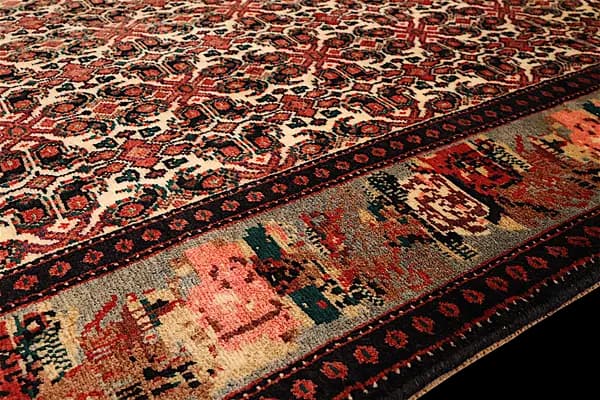
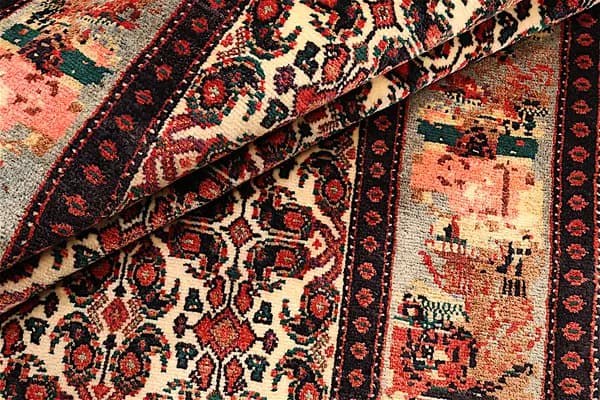
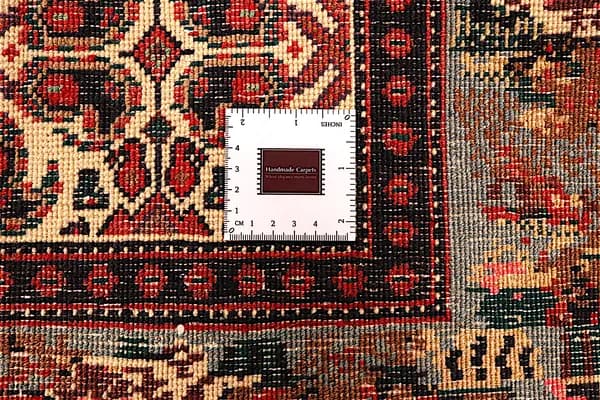
The field is ivory with a warm red undertone, packed edge to edge with a tight lattice of stylised rosettes in red and navy, so close-set it reads almost like tilework. Around this disciplined geometry runs a much wider border on a soft slate-blue ground, scattered with small vase and plant vignettes in dusty pink, red and touches of teal and mustard, closed by narrow navy and red guard stripes. Field and border feel like two different hands: one exact and repeating, the other soft and painterly.
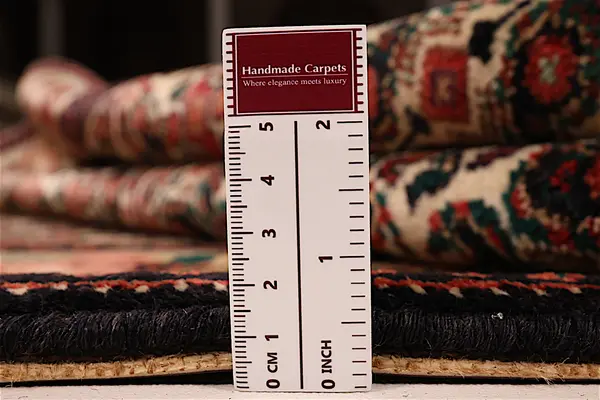
That contrast comes from how each part was drawn and knotted. Senneh weavers tie an asymmetric knot, historically misnamed after the town but genuinely their own, worked here at 201,000 to 250,000 knots per square metre on a cotton warp, with hand-spun wool kept to a pile of just 12 mm. That density and short pile are what let the lattice hold such clean, tile-like edges, while the same fine knotting leaves the border free to curve and soften into its painted vase forms.
At 147 x 120 cm this suits a smaller space: a study, a landing, or beside a bed. The warm ivory ground lifts a room short on daylight, while the slate border holds its own against darker furniture. Underfoot the weave is dense and firm, the short pile built for daily use rather than careful protection. Morning light catches the border's pink and teal first, the lattice holding steady beneath it.
More on Senneh rugs: origin, making and how to recognise a genuine piece
Fine quality weave
At 147 × 120 cm (1.76 m²) this is a small rug. It works beside a bed, in a reading corner, in front of a fireplace or as a mat by a door. It does not furnish a room; it makes a point in one.
Yes, knotted by hand — knot by knot on a loom, not machine-made. The density is 201,000 to 250,000 knots per square metre; across 1.76 m² that is roughly 350,000 to 440,000 individual knots, every one of them tied by hand.
Hand-spun wool still carries its own lanolin, which keeps liquid sitting on the surface for a moment: blot quickly, with clear water and a light cloth, working inwards and without rubbing. Otherwise regular vacuuming along the pile is enough. Turn the rug once or twice a year so light and footfall reach it evenly.
We are in the Hamburg Speicherstadt. Come and see this rug in daylight, or write to us — a person answers.
Certificate included verifying origin, materials, and craftsmanship.
Ref: 149540