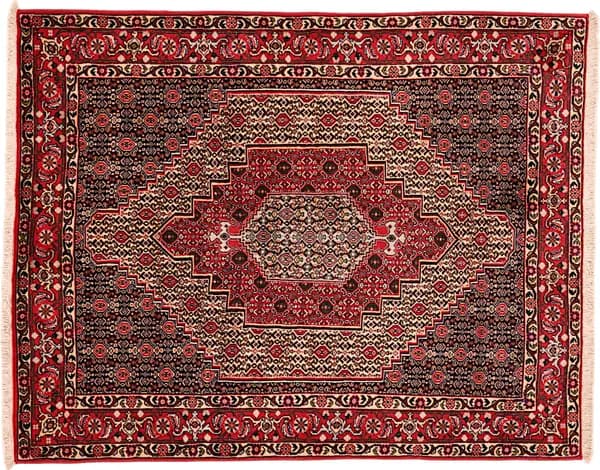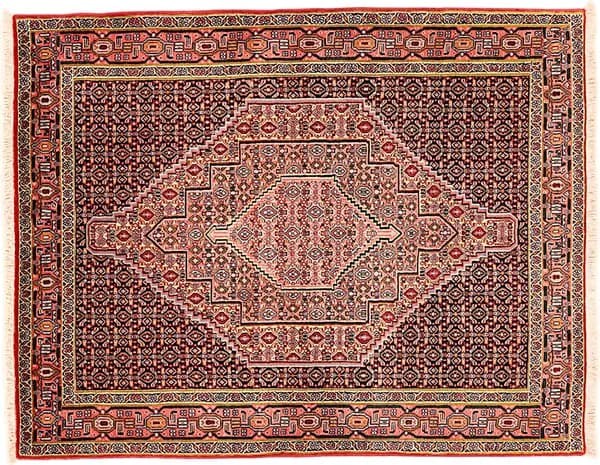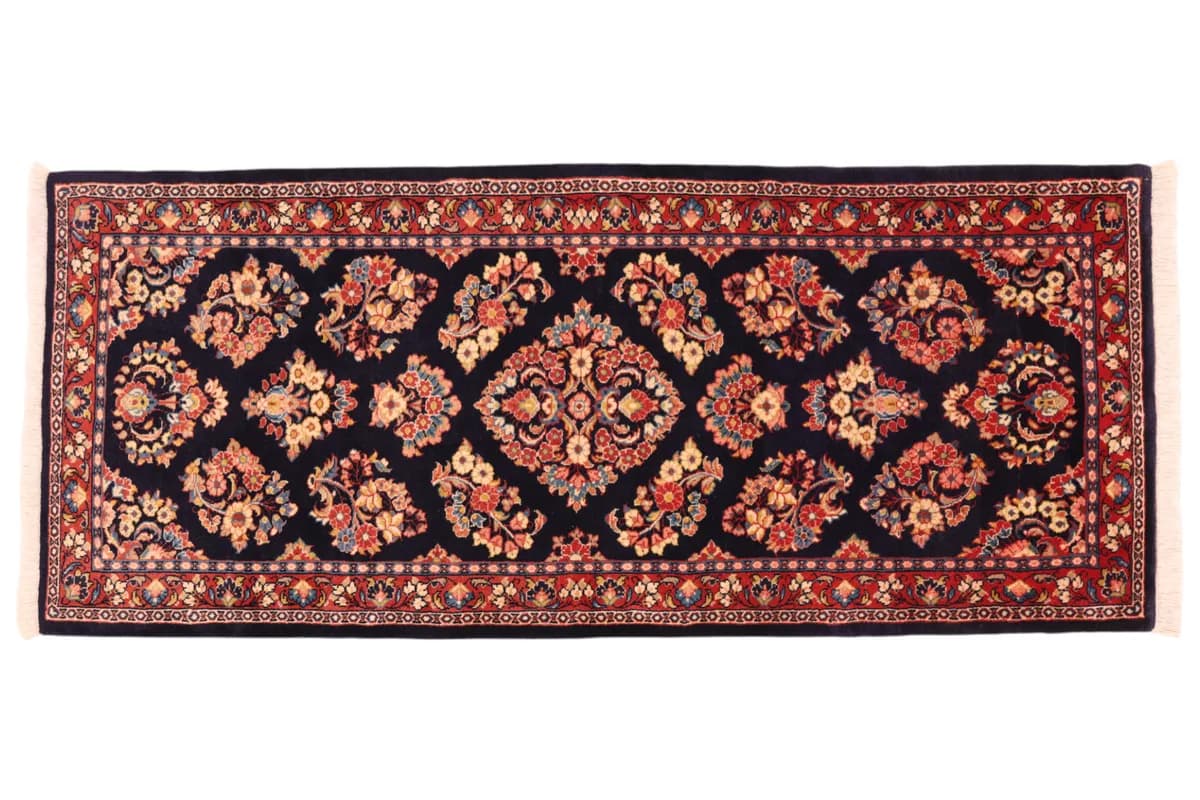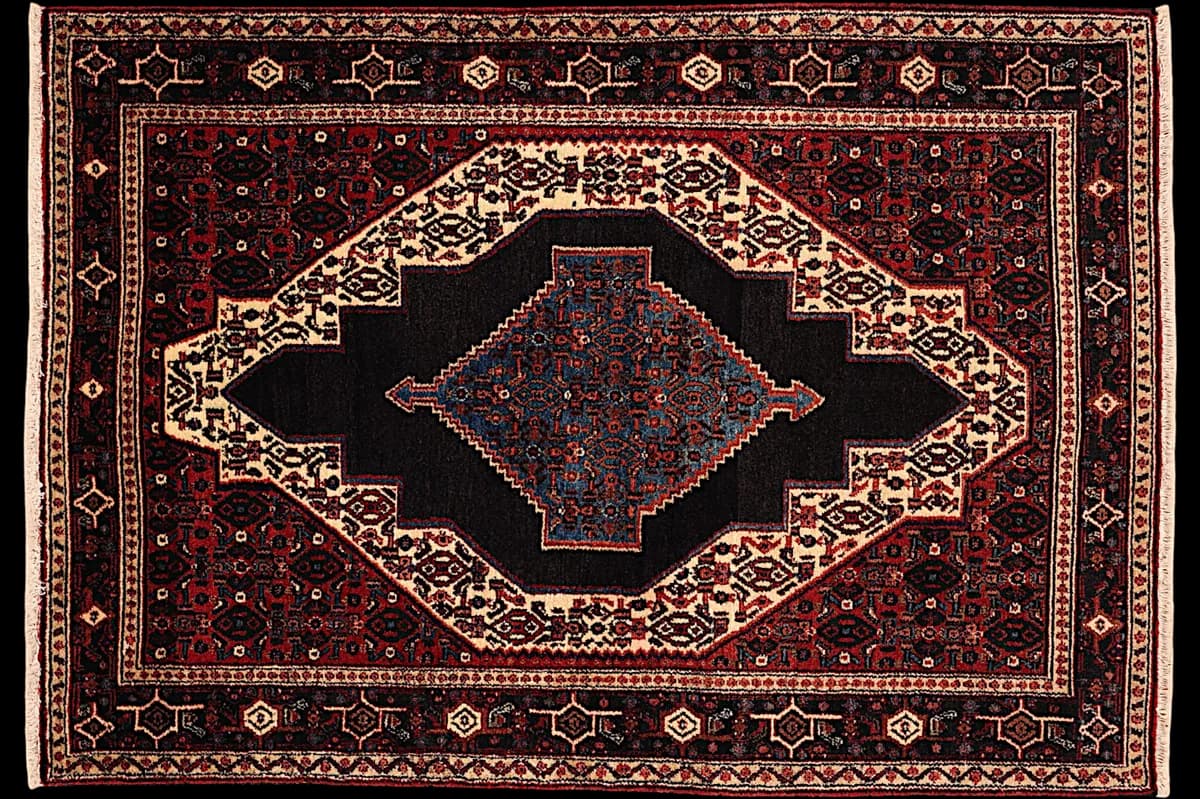
Senneh or Sanandaj — why two names?
The town is called Sanandaj today; it was called Senneh before. In the international rug trade the older name held, because it has stood on labels and in catalogues since the nineteenth century. Search for Senneh or search for Sanandaj and you mean the same piece.
The name even found a second way into the technical vocabulary. The symmetric knot is occasionally called the Turkish knot and the asymmetric one the Persian or Senneh knot. That is not historically clean — Senneh itself knots predominantly asymmetrically, but the naming comes from nineteenth-century European handbooks and took on a life of its own.
For a buyer the practical point is simple: two listings with different spellings are not two different origins. They can be compared directly.
What separates a Senneh from other Kurdish rugs
Kordestan is known for heavy, dense rugs — the Bidjar from the same province is regarded as the densest rug in the whole Persian tradition. The Senneh goes the opposite way. It is thin, light and finely drawn, and in the hand it feels more like a city rug than a Kurdish one.
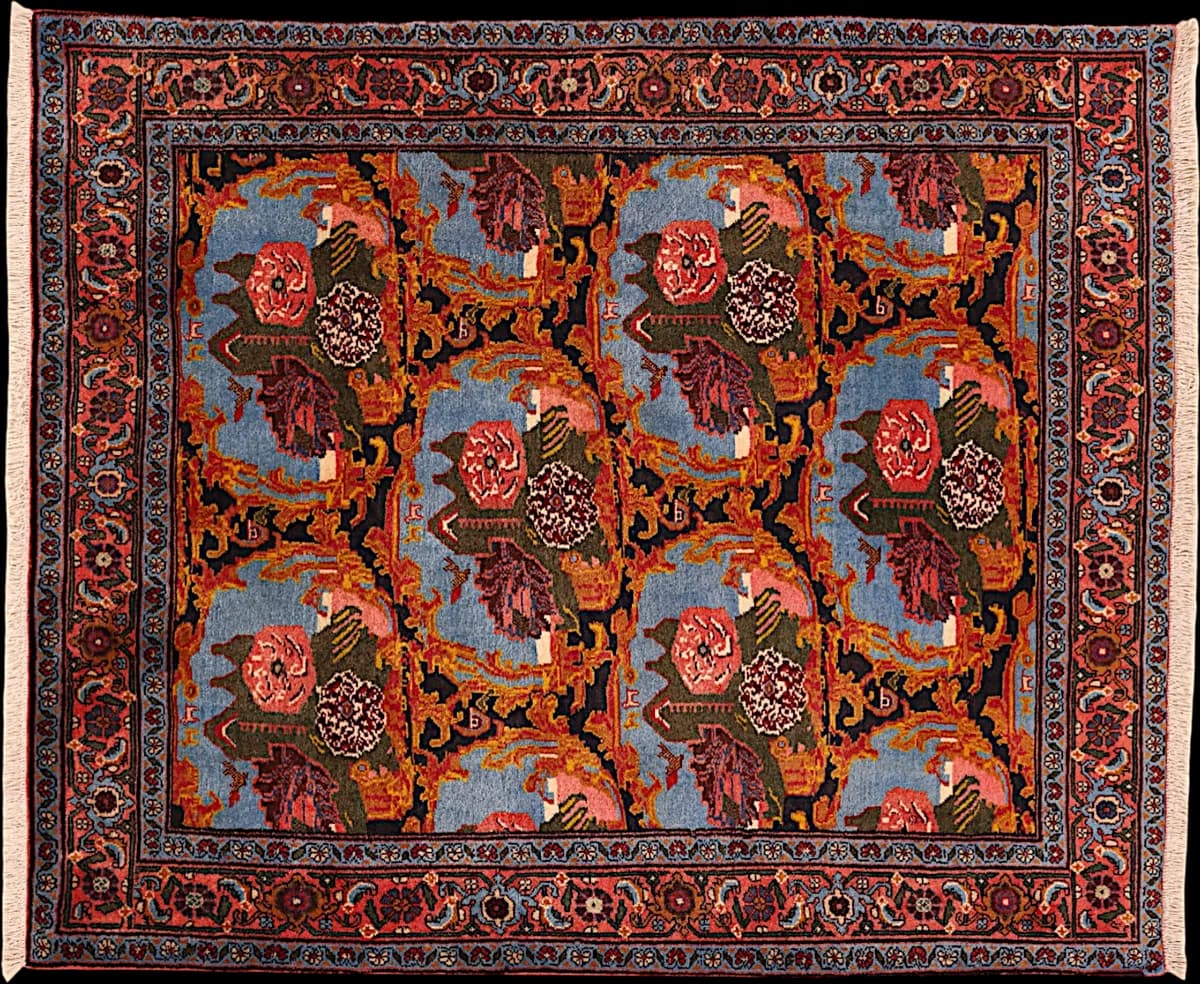
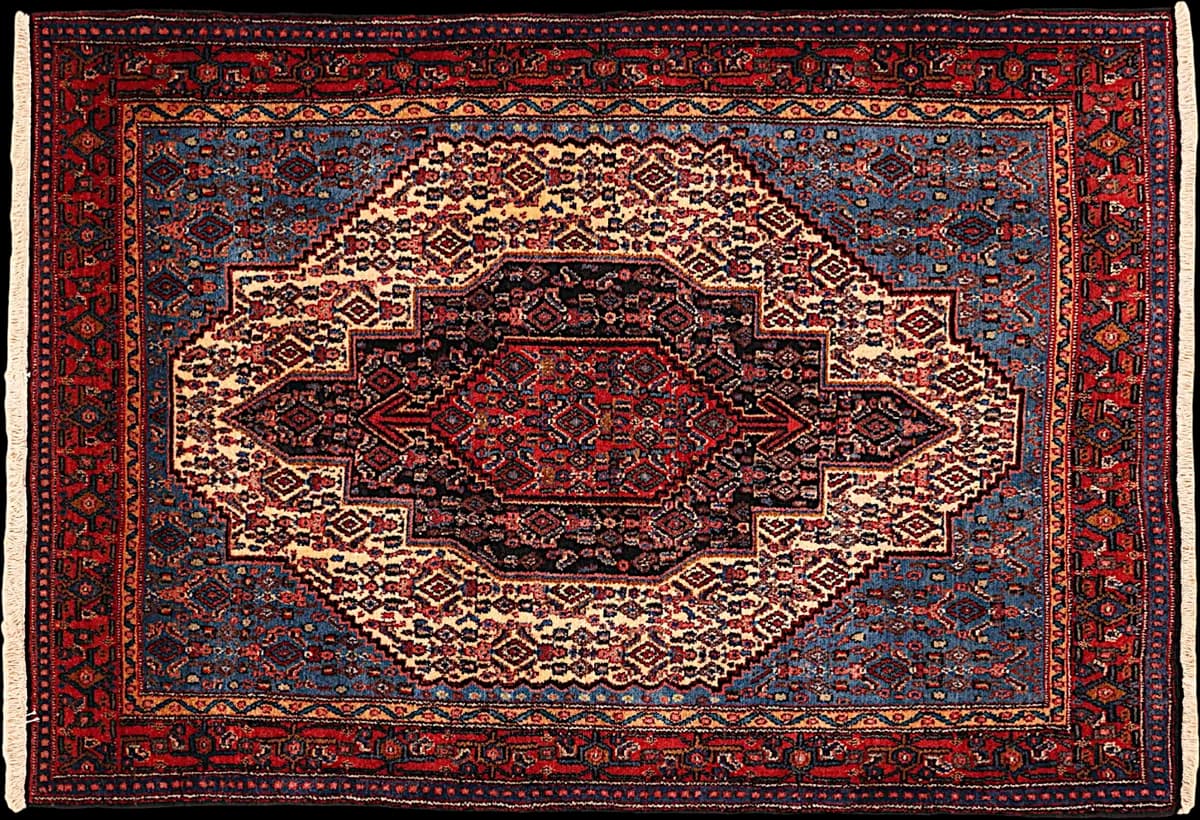
That fineness has a technical reason. The pile is sheared short, and the drawing relies on small-scale patterns that demand a high density. A Herati ground with its diamond frames and paired leaves, or a dense boteh field, can be drawn sharply at two hundred and fifty thousand knots; at half that the contours blur.
The small formats belong with it. A fine, small-scale drawing works close up, and the typical size under three square metres is exactly the one at which the pattern is still read rather than perceived as a field of colour.
- Thin build — the rug folds, unlike a Bidjar.
- Small-scale drawing with sharp contours, usually Herati or boteh.
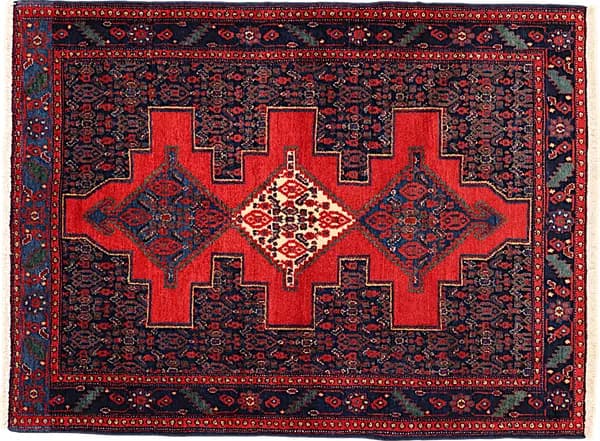
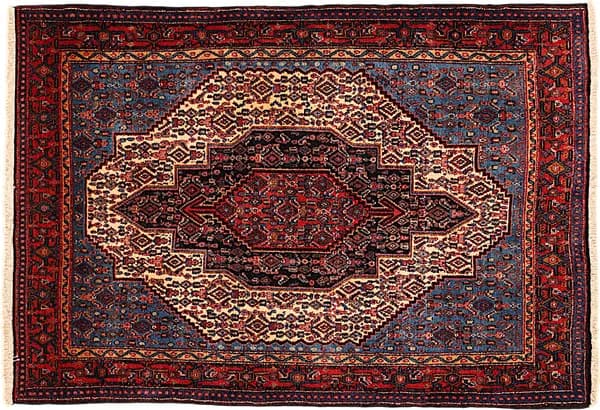
- Medallion composition is the rule, not the exception.
- Cotton warp, visible in the light, smooth fringes.
- Frequently aged — many pieces in the trade are twenty to forty years old with a quiet patina.
Which room a Senneh suits
The typical size makes the answer easy: a Senneh is a rug for a place, not for a whole room. In front of a bed, in a seating corner, in a study, in a hallway — anywhere you see it from two metres and can still make out the drawing.
For a dining table it is generally too small. There you need around 80 centimetres of clearance beyond the table edge, and only the larger pieces of the type reach that.
The thin build is a practical advantage in rooms with doors that close close to the floor. A twelve-millimetre pile on a light foundation builds up considerably less than a Bidjar or a Gabbeh and fits where thicker rugs catch.
Care
Vacuum along the pile, without a rotating brush. On a short-sheared pile the brush is especially unnecessary: there is no deep pile for it to work dirt out of, and it attacks the surface.
Blot spills at once with clear water and a light cloth, from the outside in. Do not rub, because on fine drawing a roughened patch stays visible.
A thin rug takes an anti-slip underlay well and usually needs one on smooth floors — unlike a heavy Bidjar, which stays put through its own weight.
Senneh or Bidjar?
Both come from Kordestan, both are Kurdish work — and they are built almost as opposites. Choosing between them is choosing between fineness and firmness.
| Criterion | Senneh | Bidjar |
|---|---|---|
| Build | thin, folds | very dense, roll only |
| Knot density | 201,000 – 250,000 / m² | 441,000 – 500,000 / m² |
| Pile height | around 12 mm, short sheared | around 15 mm |
| Typical size | small, often under 3 m² | medium to large |
| Character | fine drawing, city-like | heavy, robust, angular forms |
Common questions
Are Senneh and Sanandaj the same?
Yes. Sanandaj is the present name of the town, Senneh the older one that held in the rug trade. Both spellings denote the same origin and the same weaving tradition.
What is the Senneh knot?
A common but historically imprecise term for the asymmetric knot, also called the Persian knot. The name comes from nineteenth-century European handbooks. Senneh does indeed knot predominantly asymmetrically, but the knot was neither invented there nor confined to the town.
Why are Senneh rugs so much thinner than Bidjar?
The pile is sheared short and the foundation is built lighter. A Bidjar by contrast is wet-knotted and compacted with an iron comb, which makes it so dense it will not fold. Both come from the same province but pursue opposite aims.
Is a Senneh suitable for heavily used rooms?
For a hallway yes; for the middle of a living room in daily use, a thicker and denser rug is better. The short pile shows traffic lines earlier than a high-pile piece. Where the rug is mainly seen and less walked on, the Senneh plays to its strength.
How do I recognise an older Senneh?
By the patina: natural dyes shift slightly warmer over decades without going pale, and the pile takes on a quiet sheen that new wool does not have.