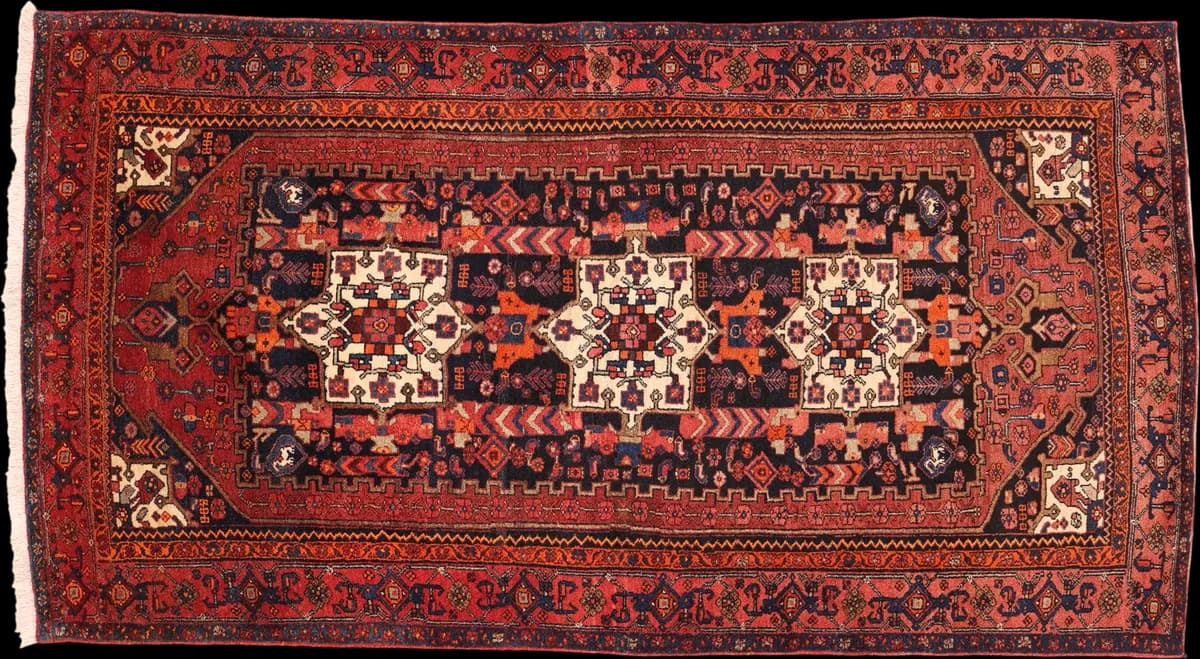
Koliai
286 × 138 cm
1.785 €






5.262 €
Incl. VAT
In Stock · Ready to Ship
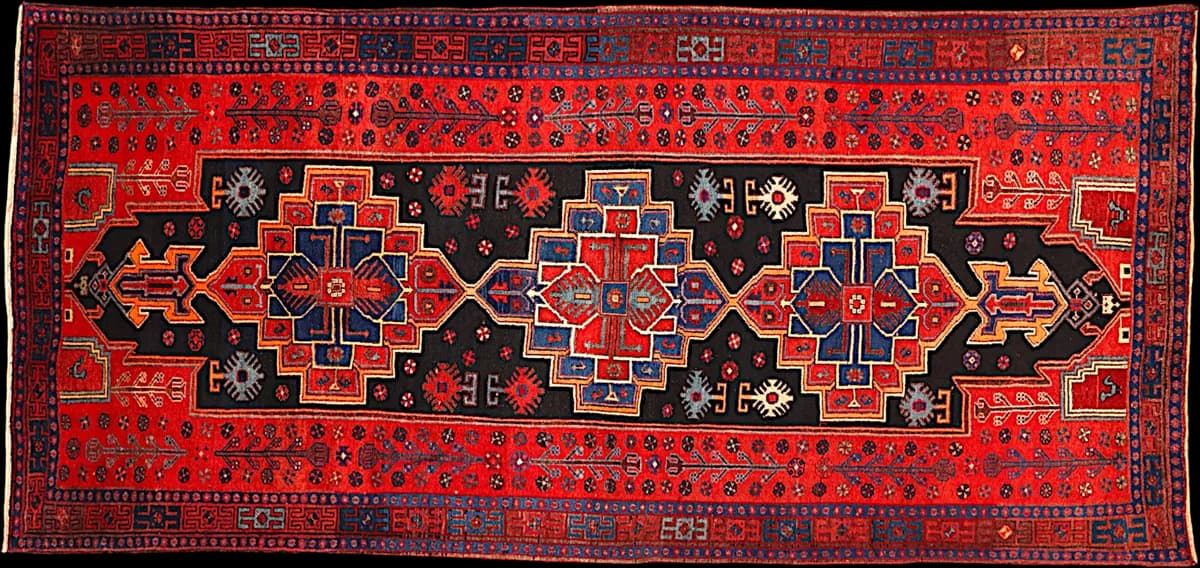
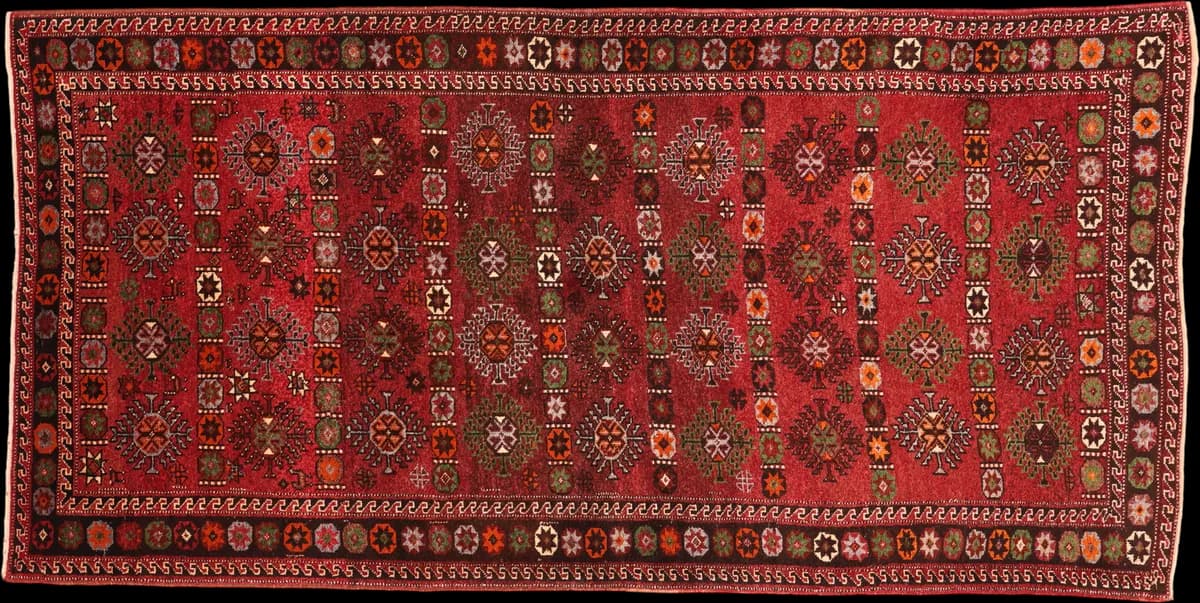
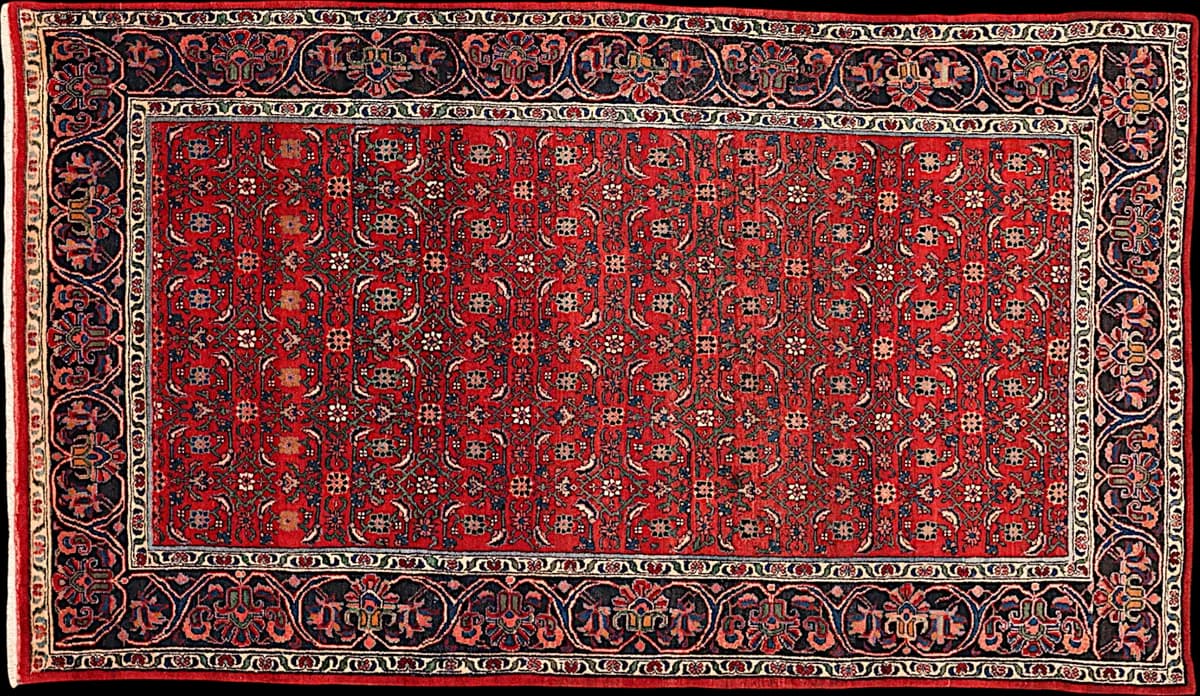
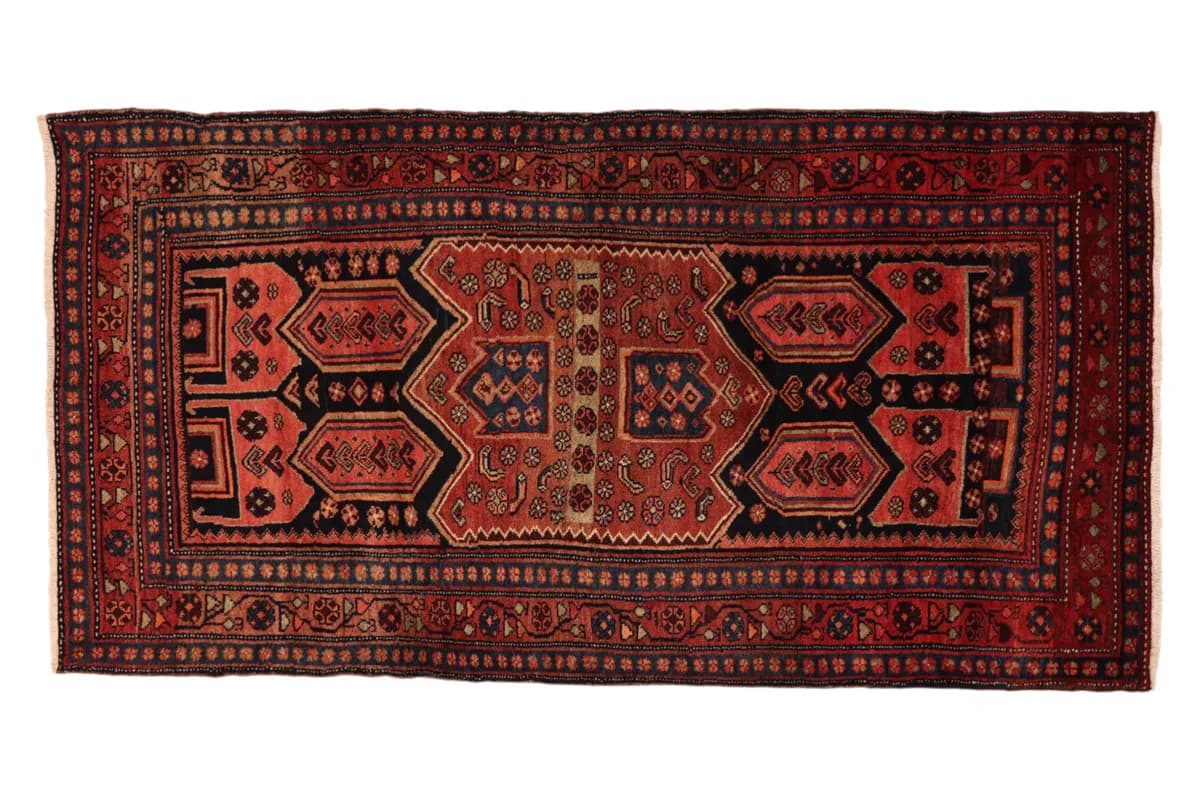
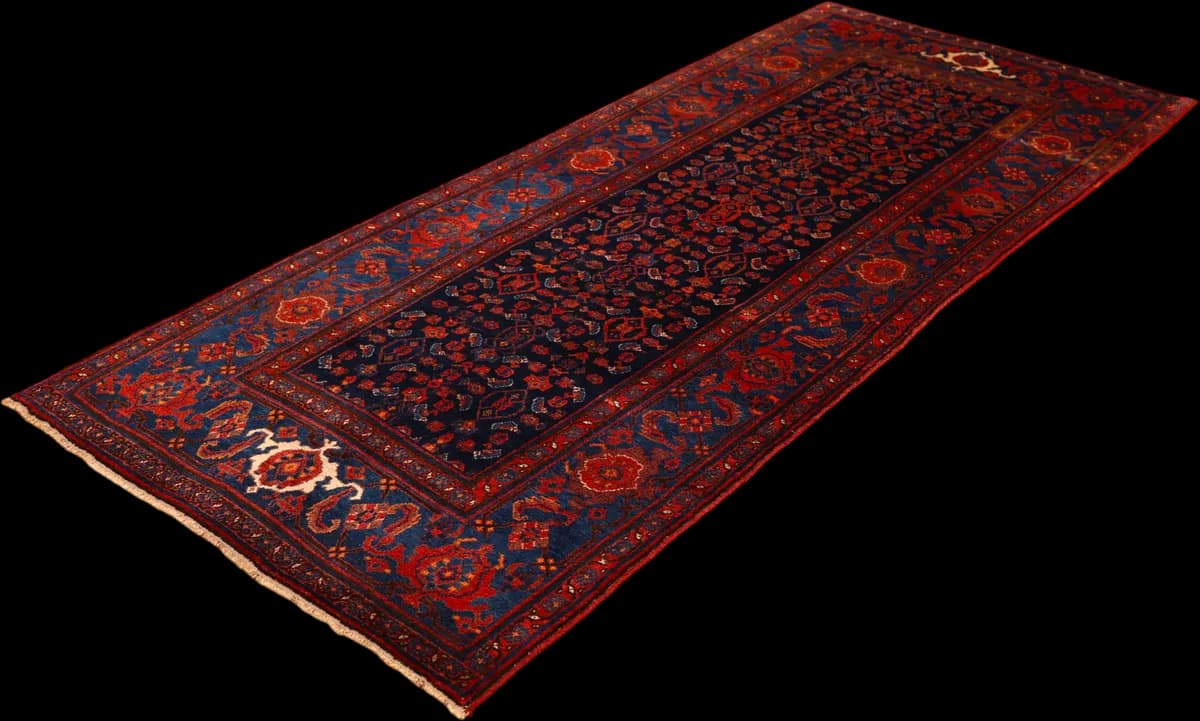
This is a Kordi runner, a tribal weaving attributed to Kurdish weavers across the Kurdish-inhabited regions of Iran, a range stretching from Kordestan and Kermanshah as far as Khorasan. Sometimes written Kurdi, the type is known for robust, dense structure and a character that can swing from bold geometry to soft floral drawing. This piece measures 328 x 134 cm (10'9" x 4'5") and takes the quieter of those two paths.
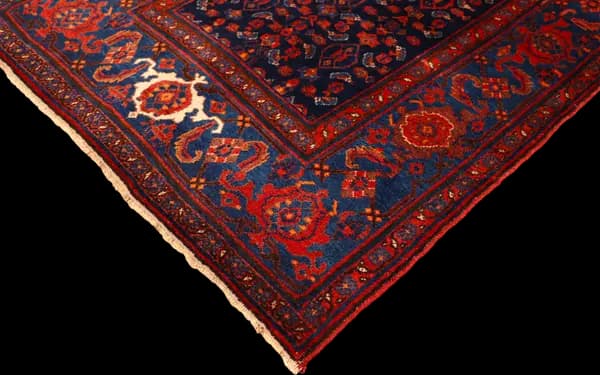
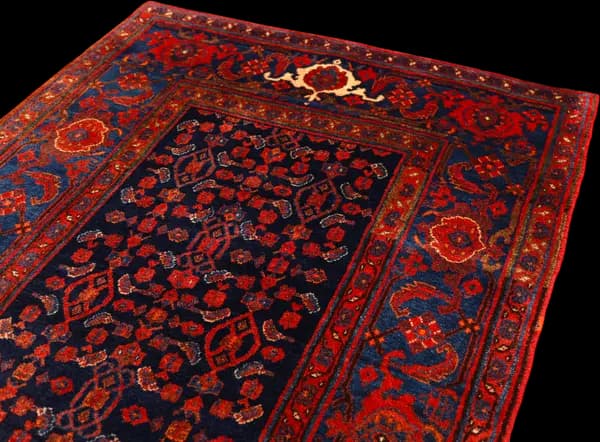
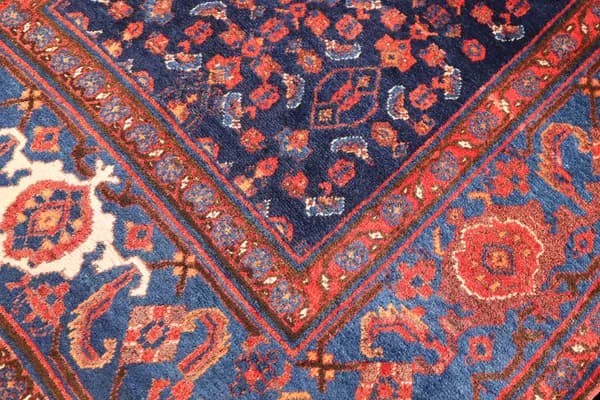
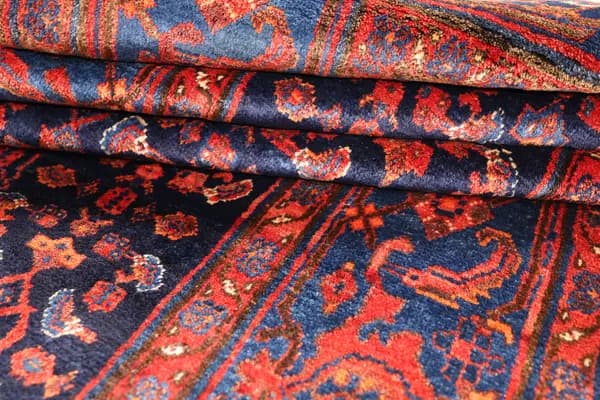
The field is a deep navy, carrying a fine, small-scale Mahi lattice that repeats evenly from one end of the runner to the other, with no medallion to break the rhythm. Brick red and terracotta touches sit within the lattice, steadying the blue, and the whole field is held by a wide cornflower-blue border of red palmettes on a running vine. A narrow red guard band, set with rosette cartouches, closes the edge and keeps the navy firmly contained.
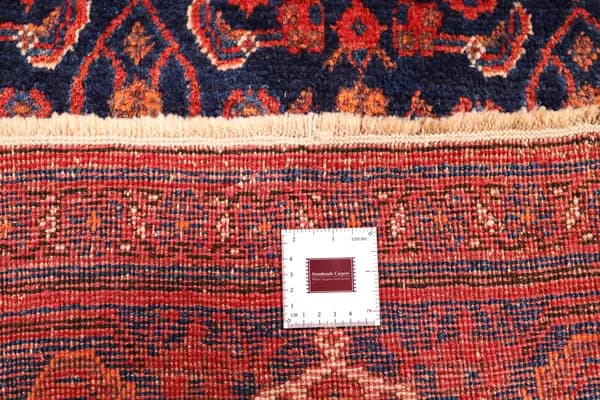
The rug is hand-knotted, the knots tied over a cotton warp with a pile of hand-spun wool. Hand-spinning leaves small, natural variations in the thickness of the yarn, and those variations surface as a gentle shift of tone across the navy rather than one flat colour. Knotting a pattern this fine and this consistent from memory, with no drawn plan to follow, asks real discipline of the weaver, and it is that discipline, not chance, which keeps the lattice so regular along the full length of the runner.
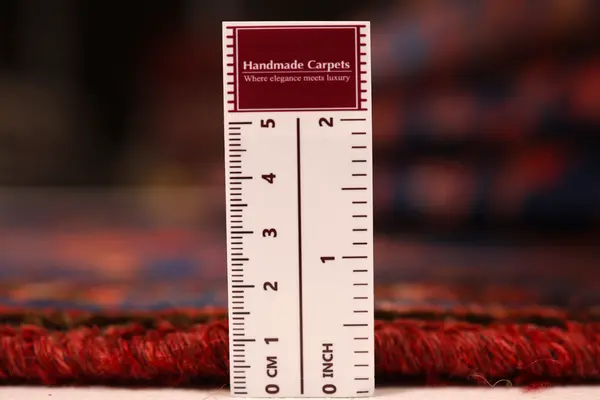
A runner this size belongs in a hallway or along a landing, somewhere it will be walked its full length rather than stepped around. The navy holds its own even where daylight is thin, and the red and cornflower-blue lift it against a pale floor or a darker skirting board equally well. Underfoot the wool is dense and firm, made for daily use rather than for looking at from a doorway, and it is in the morning light that the soft shift of tone across the field is easiest to catch.
More on Kordi rugs: origin, making and how to recognise a genuine piece
At 328 × 134 cm (4.40 m²) this is a runner. It belongs in a hallway, an entrance, on a landing or lengthways beside a bed. It is too narrow for the middle of a room.
Yes, knotted by hand — knot by knot on a loom, not machine-made.
Hand-spun wool still carries its own lanolin, which keeps liquid sitting on the surface for a moment: blot quickly, with clear water and a light cloth, working inwards and without rubbing. Otherwise regular vacuuming along the pile is enough. Turn the rug once or twice a year so light and footfall reach it evenly.
We are in the Hamburg Speicherstadt. Come and see this rug in daylight, or write to us — a person answers.
Certificate included verifying origin, materials, and craftsmanship.
Ref: 400617