Koliai
290 × 146 cm
1.955 €
1.305 €
Incl. VAT
In Stock · Ready to Ship
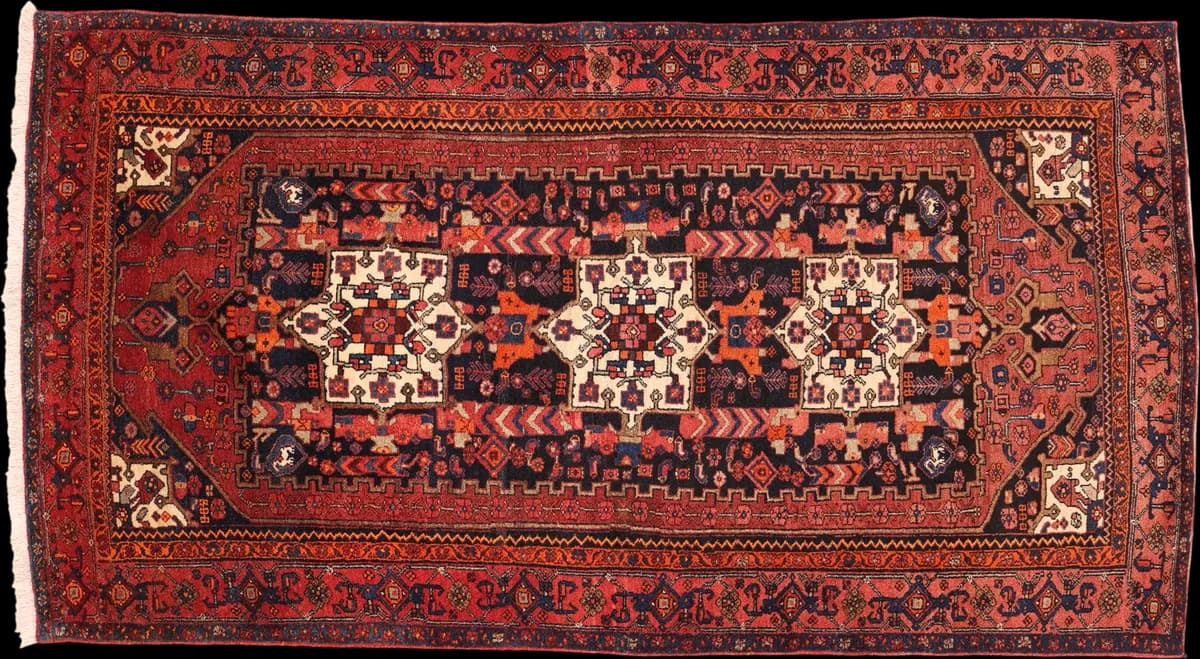
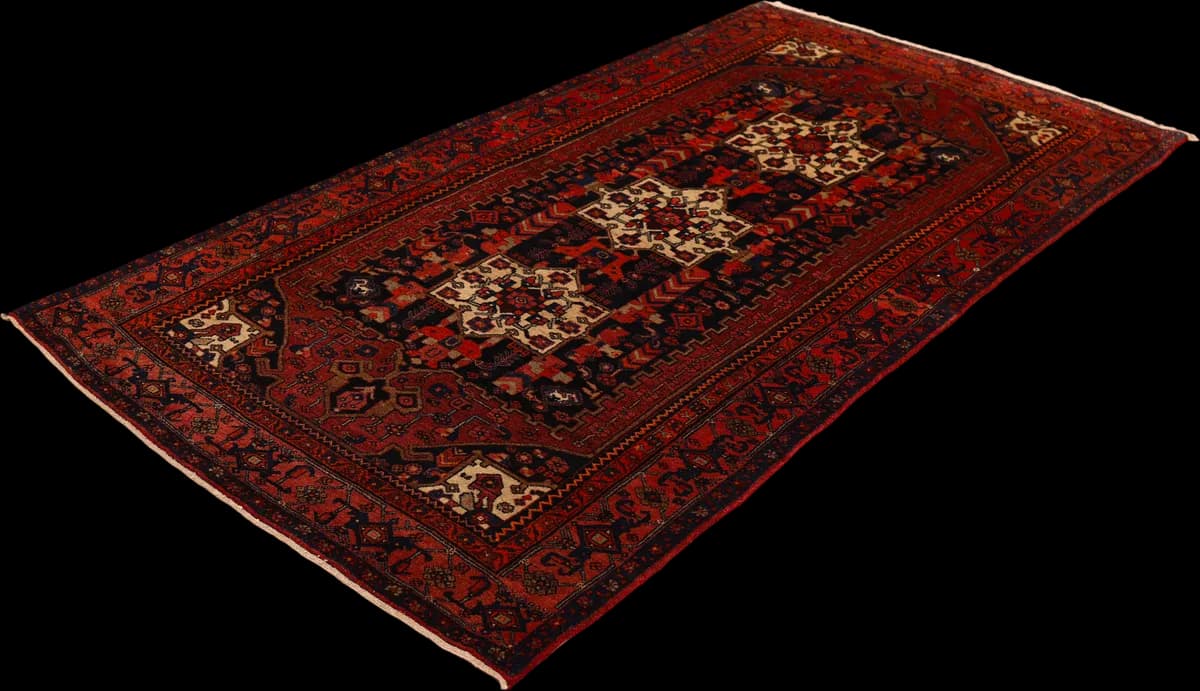
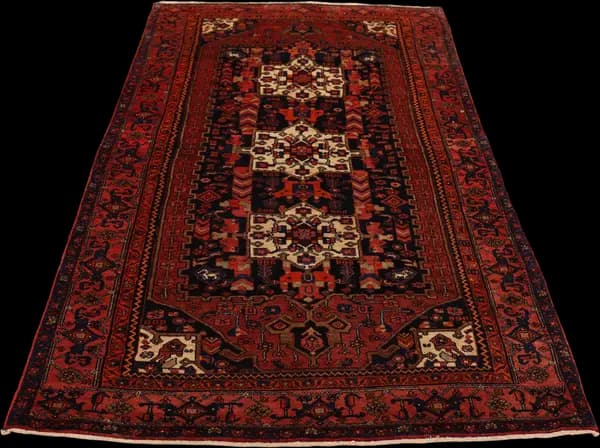
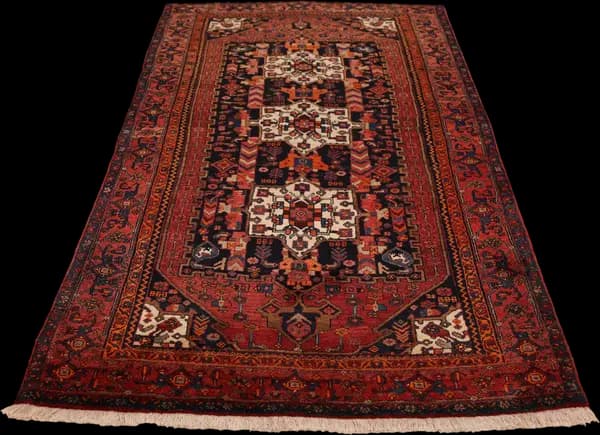
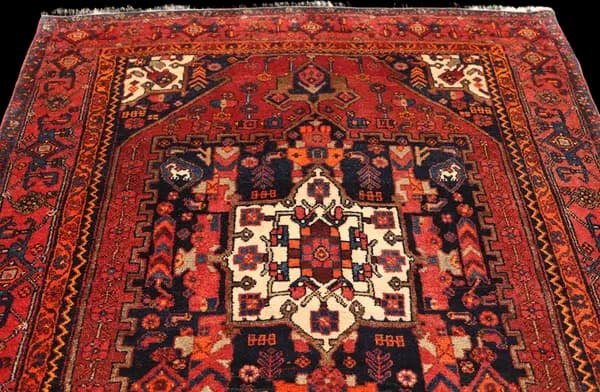
This is a Kordi rug, a tribal and nomadic weaving attributed to Kurdish weavers across the broad Kurdish-inhabited stretch of Iran, from Kurdistan and Kermanshah through to Khorasan, measuring 290 x 158 cm (9'6" x 5'2"). The type is known for a robust, wool-on-wool structure and a bold, saturated palette, knotted from memory on a portable loom rather than drawn out in advance. What is unusual here is how ordered that memory-work has turned out to be: a classical three-medallion, Seh Torandj layout, normally a formal city design, rendered instead by a tribal hand.
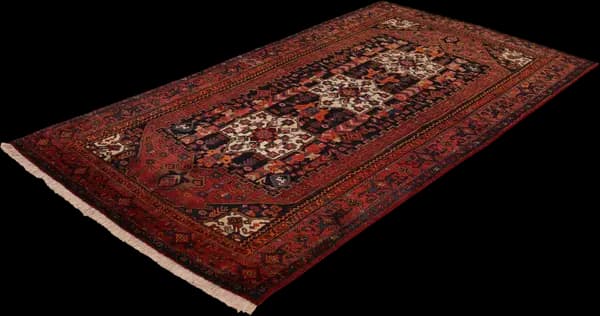
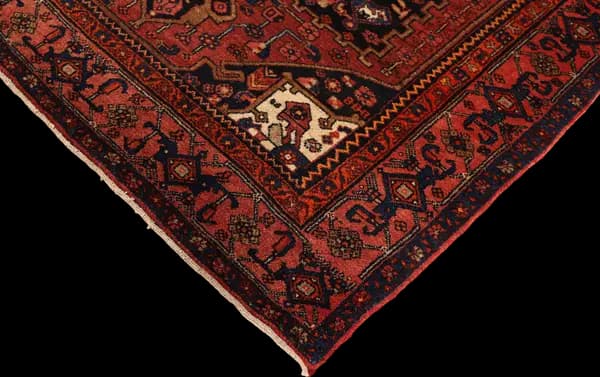
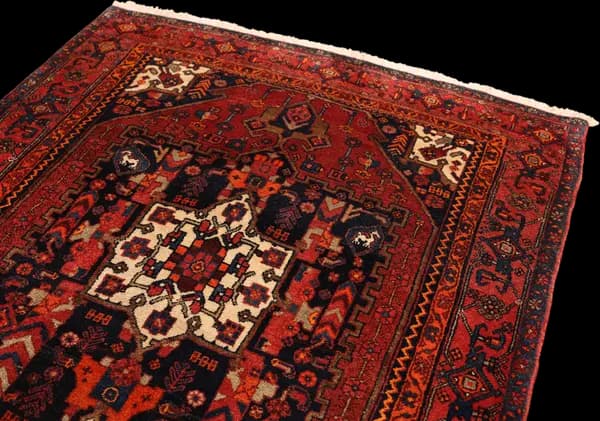
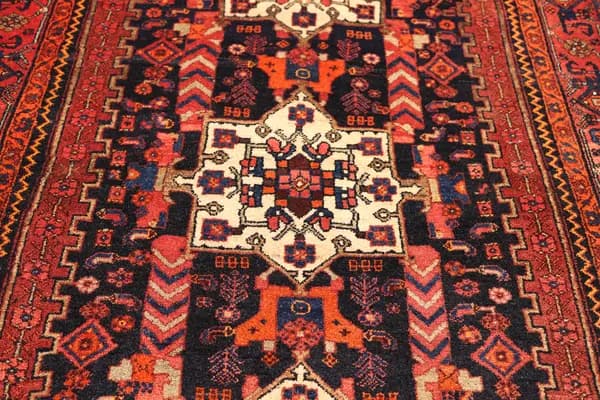
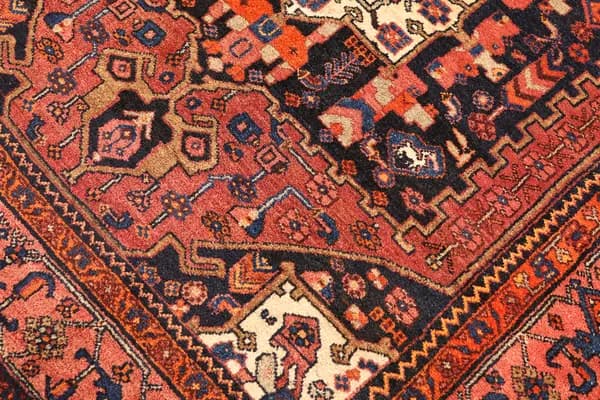
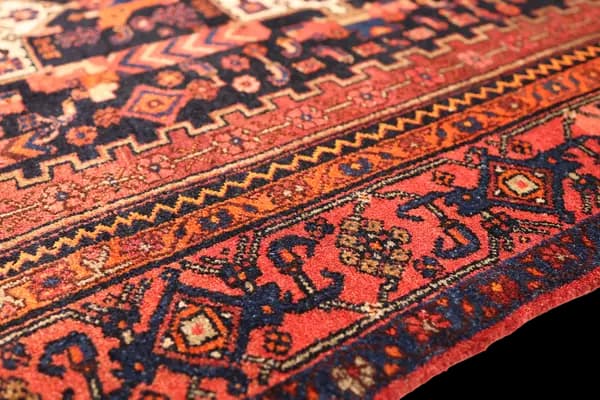
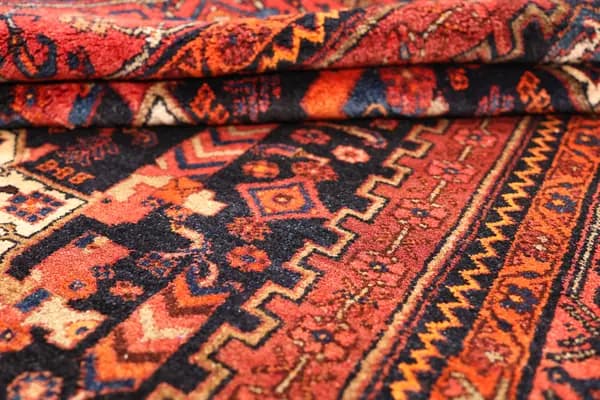
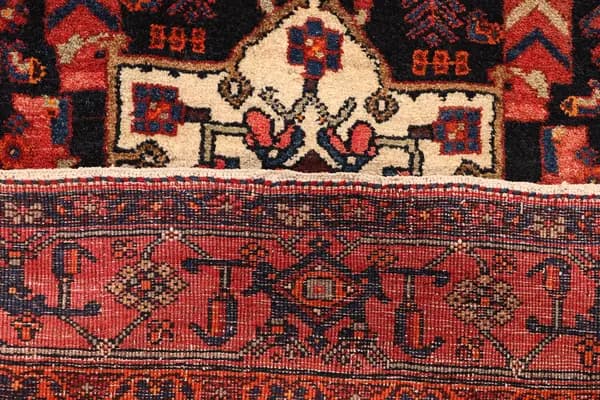
The field reads first as a dense, dark indigo ground broken by passages of brick red, over which three stepped ivory medallions rise in a clear, unbroken column, each filled with its own geometric centre of rust-red and navy. Around them the dark ground carries a scatter of small geometric fillers and chevrons, with touches of mustard and dusty rose kept modest against the depth of the indigo. Small ivory cartouches sit in each corner, holding dark stylised shapes that may read as figures rather than pure ornament. A wide brick-red border of meandering vine and rosette closes the field, held in by a narrow indigo guard border of running chain.
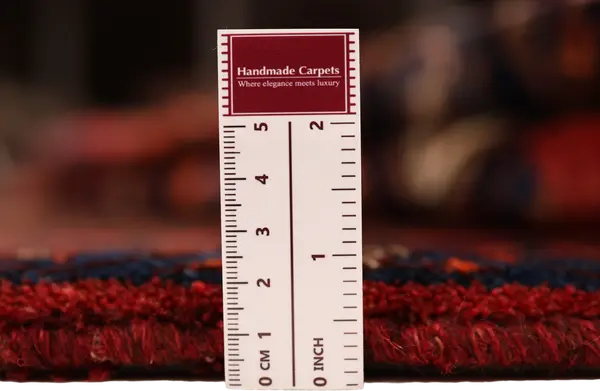
The wool is hand-spun, knotted in symmetric Kurdish fashion onto a cotton foundation, which gives the rug the firmness and structural weight the type is known for. Knot density here runs to 800,000–1,000,000 per square metre, high for a rug worked from memory rather than a cartoon, and it is this density that lets the medallions keep such clean, steady edges rather than the softer drift a looser tribal knot would allow. The pile stands at 12 millimetres, medium to high, and carries no sheen at all, only the warm, matte compactness of local wool worked by hand.
At 290 x 158 cm this is a rug for a seating area in the living room, laid where its column of medallions can run its full length rather than be cut short by furniture. The indigo holds its own against dark wood or dark upholstery, and against a pale floor it grounds the room the moment you walk in. Underfoot it is dense and firm, wool that was spun and knotted to be walked on daily rather than kept for show. As the light moves across it through the day, the matte wool takes it quietly, and the ivory medallions hold their clarity from morning into evening.
More on Kordi rugs: origin, making and how to recognise a genuine piece
Exceptionally fine weave
At 290 × 158 cm (4.58 m²) this is a medium rug. It works in front of a sofa, in front of a bed or in a study. It is too small for a dining table — there you want about 80 cm of clearance so a chair does not tip over the edge when pushed back.
Yes, knotted by hand — knot by knot on a loom, not machine-made. The density is 800,000 to 1,000,000 knots per square metre; across 4.58 m² that is roughly 3.7 to 4.6 million individual knots, every one of them tied by hand.
Hand-spun wool still carries its own lanolin, which keeps liquid sitting on the surface for a moment: blot quickly, with clear water and a light cloth, working inwards and without rubbing. Otherwise regular vacuuming along the pile is enough. Turn the rug once or twice a year so light and footfall reach it evenly.
We are in the Hamburg Speicherstadt. Come and see this rug in daylight, or write to us — a person answers.
Certificate included verifying origin, materials, and craftsmanship.
Ref: 666544