Koliai
294 × 129 cm
1.970 €
1.950 €
Incl. VAT
In Stock · Ready to Ship
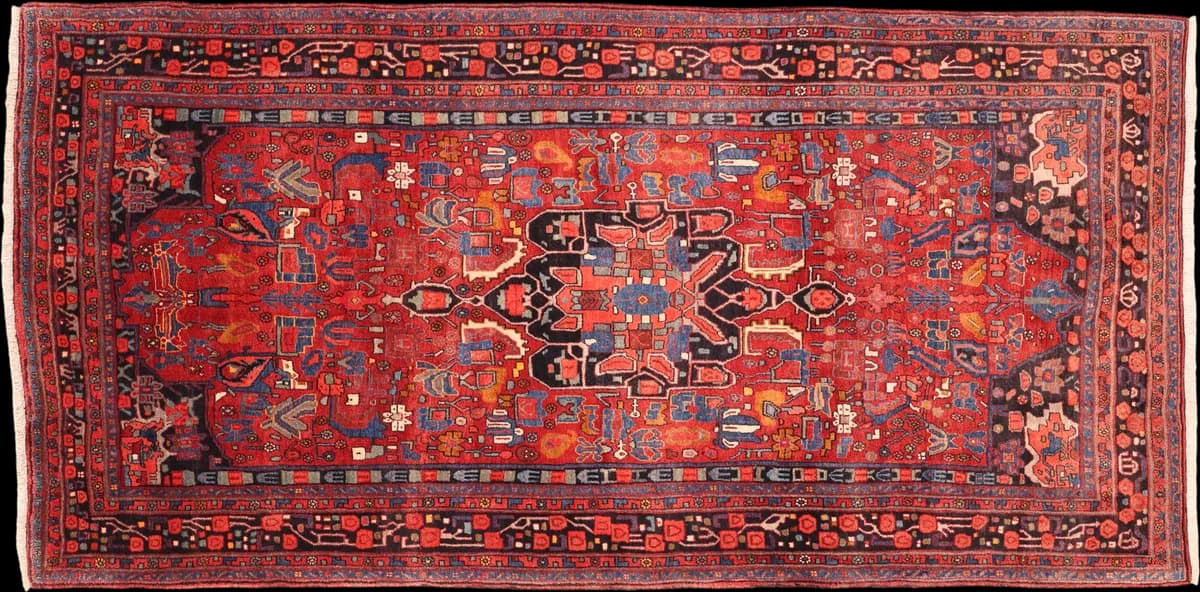
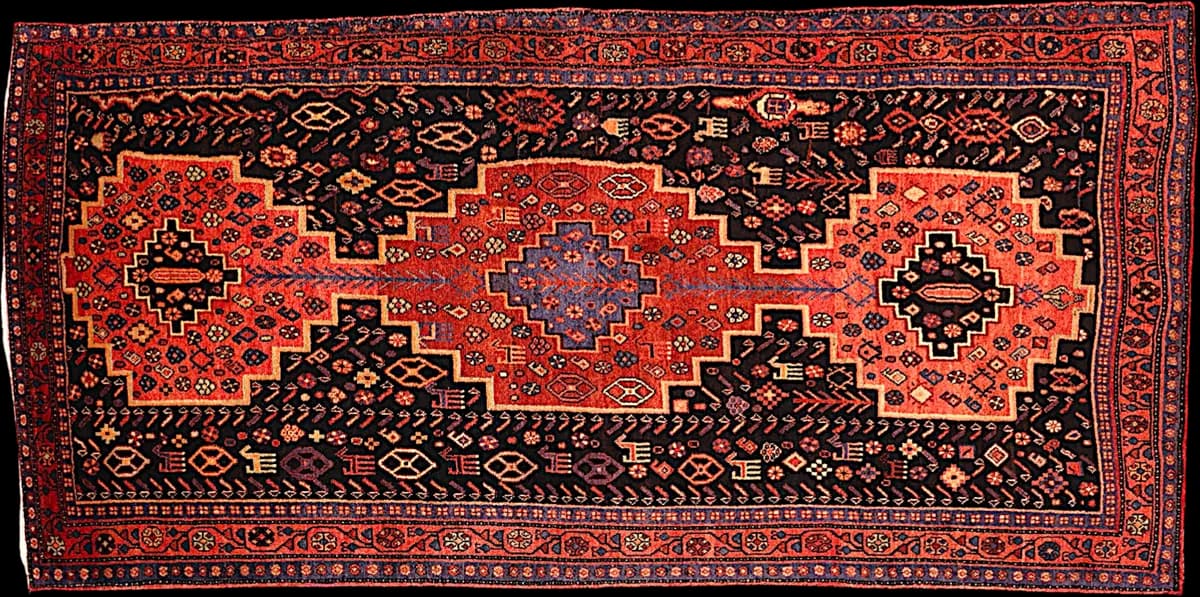
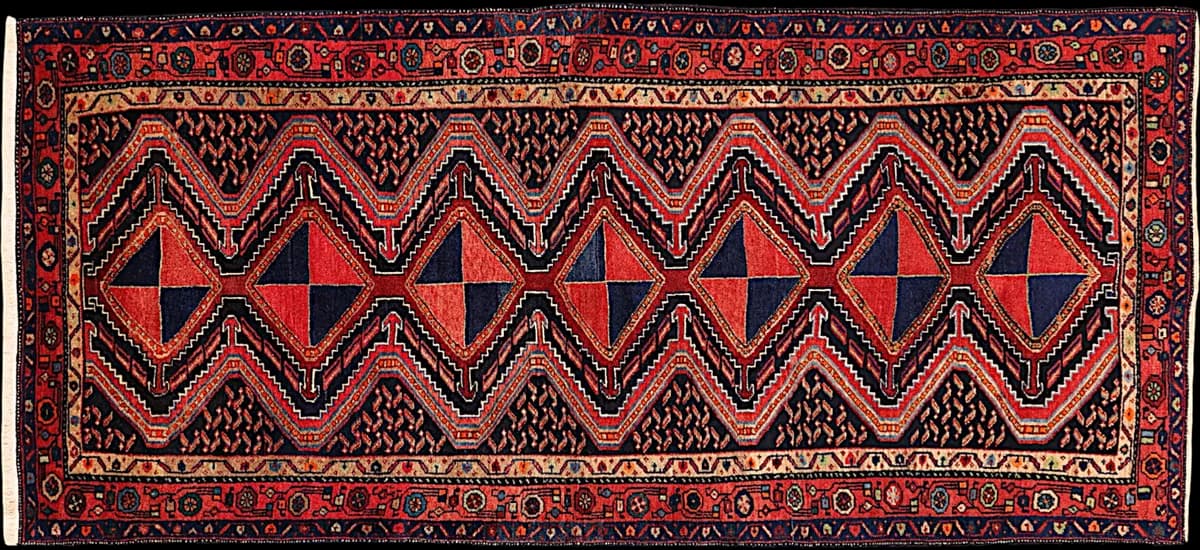
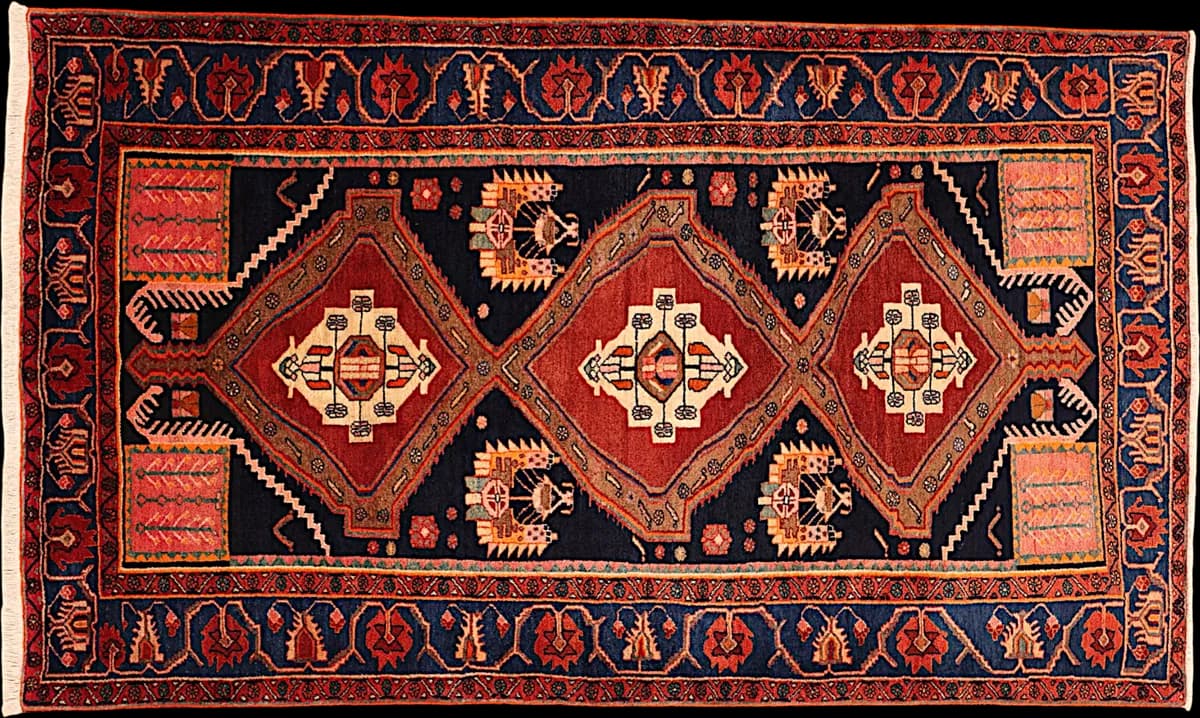
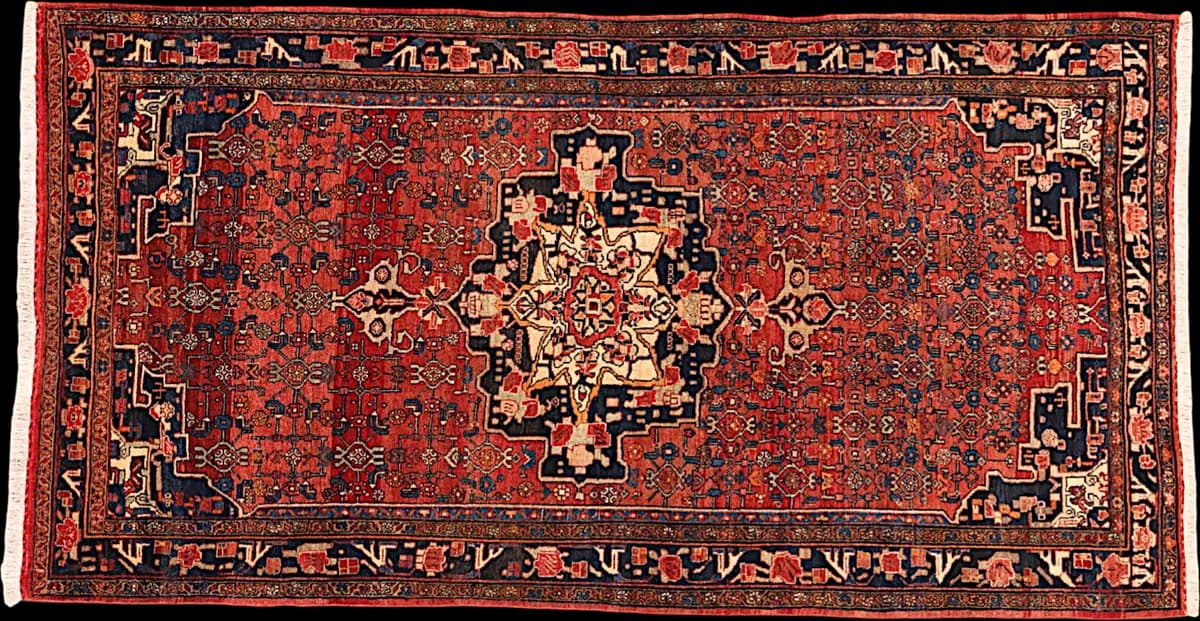
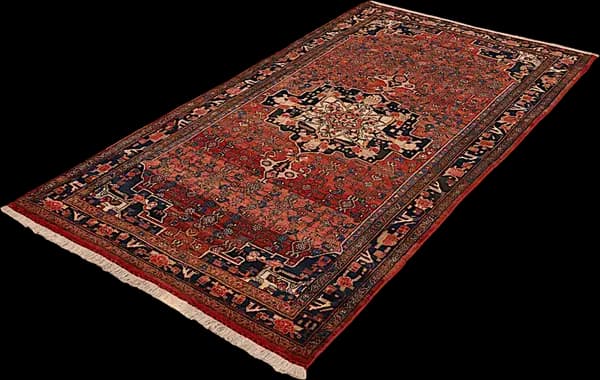
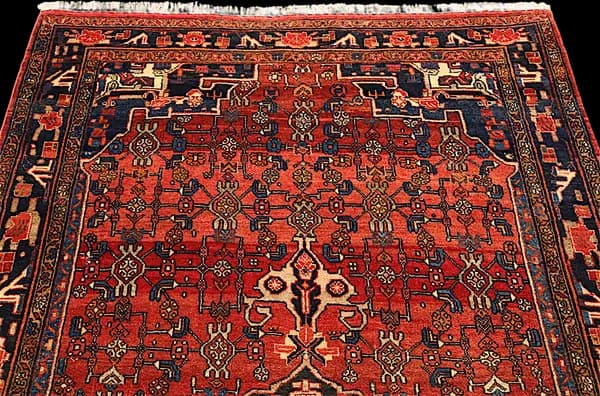
This is a Kordi, a tribal rug knotted by Kurdish weavers across the wide arc of western and north-eastern Iran, from Kurdistan and Kermanshah through to Khorasan. This particular piece measures 263 x 137 cm (8'8" x 4'6"). Kurdish weaving is known for a dense, robust structure and for moving freely between bold geometry and softer floral drawing, often within the very same family of rugs.
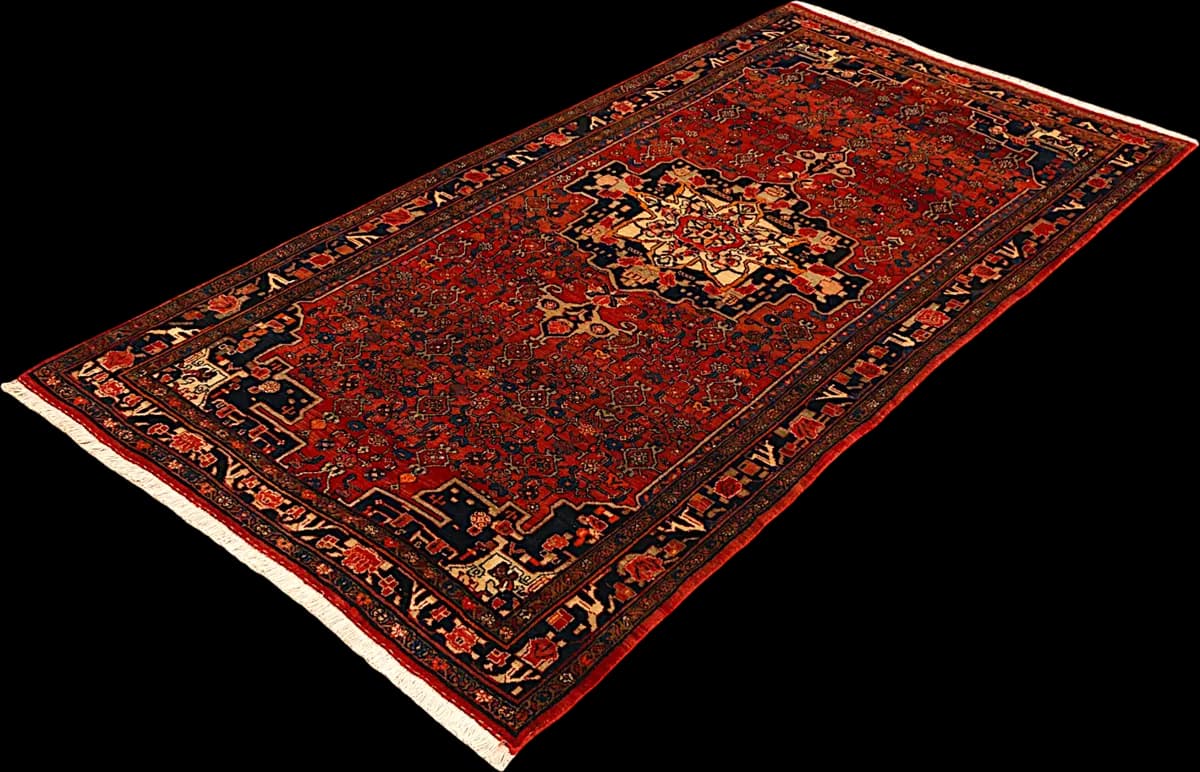
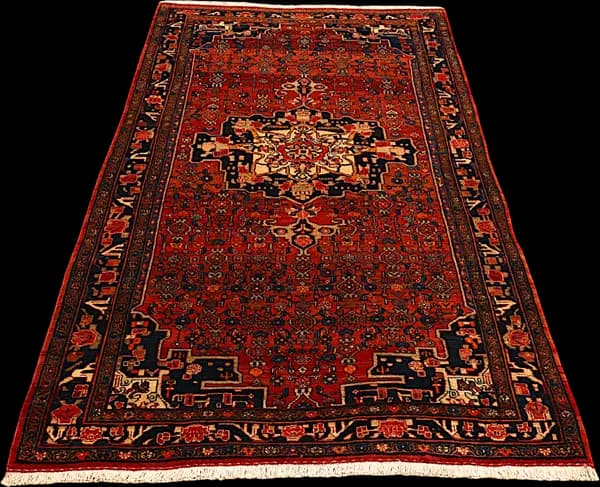
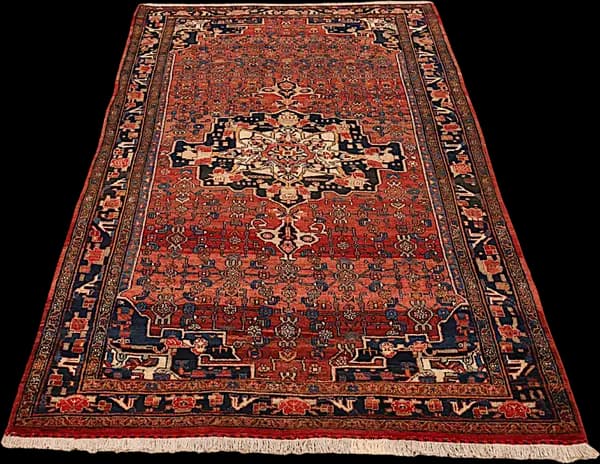
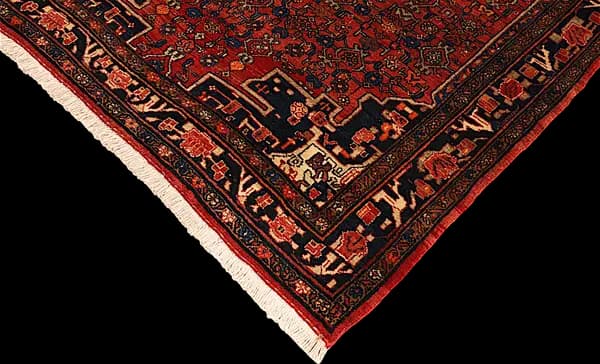
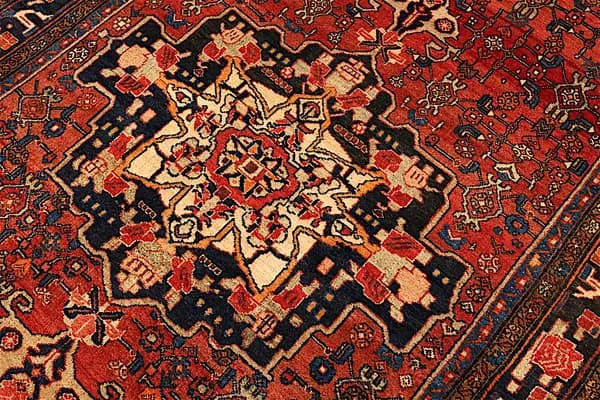
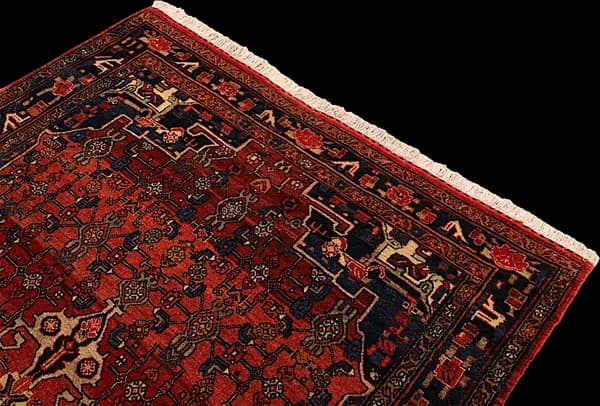
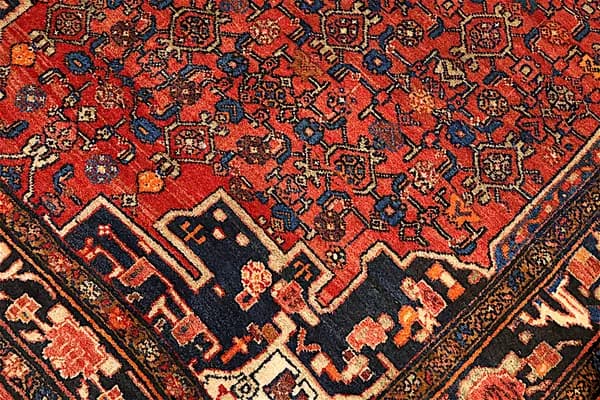
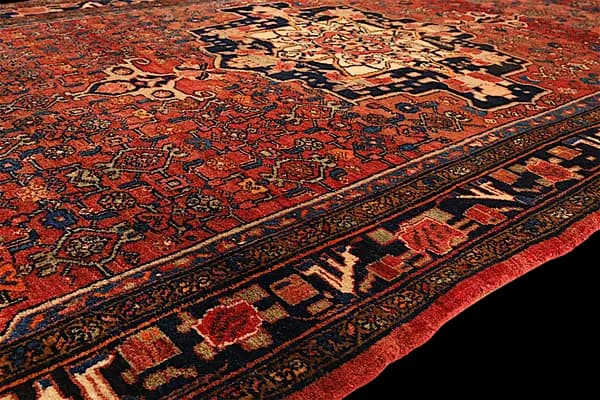
The field opens in a deep brick red, warm rather than sharp. Across it runs a fine, dense diamond lattice in the Mahi, or herati, manner, repeating steadily until it meets a large stepped star medallion at the centre, worked in navy and ivory, its pale ground gathering a little floral detail of its own rather than sitting empty. Cream spandrels settle into the corners, echoing that same pale note. Around the whole field runs a broad navy border, carrying a serrated vine in cream, rust and camel, holding its own against the red rather than simply framing it.
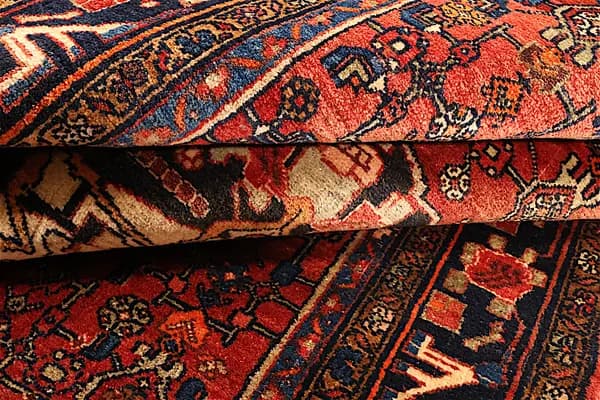
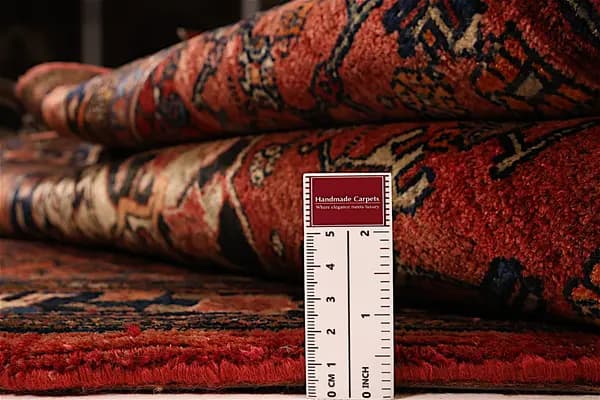
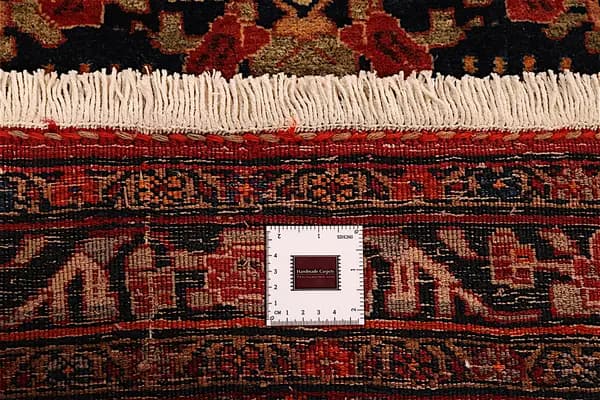
It is knotted by hand with the symmetric knot onto a cotton warp, at a density of roughly 128,000 to 160,000 knots per square metre — modest beside a city workshop, but enough to carry this much pattern cleanly. The pile is hand-spun wool, sheared to about 15 millimetres, and it shows the gentle unevenness that hand-spun thread always carries, taking light in a soft, matt way with a faint ribbing you can feel underfoot as much as see. What sets this piece apart is the discipline in the drawing: a medallion held this evenly, this squarely inside its field, is not the usual record of a wandering hand but of a weaver working from memory with real control over her own design.
At 263 x 137 cm this is a rug for a bedroom, comfortably placed beside or at the foot of a bed, or tucked into a quieter corner of a living room. The brick red holds its warmth against pale floorboards and does not flatten under darker furniture, while the navy border keeps the whole piece anchored rather than spreading. Underfoot it is dense and slightly springy, a wool pile made for daily bare feet rather than careful stepping around it. Morning light across the red field is worth watching for on its own.
More on Kordi rugs: origin, making and how to recognise a genuine piece
Traditional weave
At 263 × 137 cm (3.60 m²) this is a medium rug. It works in front of a sofa, in front of a bed or in a study. It is too small for a dining table — there you want about 80 cm of clearance so a chair does not tip over the edge when pushed back.
Yes, knotted by hand — knot by knot on a loom, not machine-made. The density is 128,000 to 160,000 knots per square metre; across 3.60 m² that is roughly 460,000 to 580,000 individual knots, every one of them tied by hand.
Hand-spun wool still carries its own lanolin, which keeps liquid sitting on the surface for a moment: blot quickly, with clear water and a light cloth, working inwards and without rubbing. Otherwise regular vacuuming along the pile is enough. Turn the rug once or twice a year so light and footfall reach it evenly.
We are in the Hamburg Speicherstadt. Come and see this rug in daylight, or write to us — a person answers.
Certificate included verifying origin, materials, and craftsmanship.
Ref: 702077