Why Kurdish rugs come from north-eastern Iran
Kordestan lies in western Iran, on the border with Iraq. North Khorasan lies in the north-east, on the border with Turkmenistan. A thousand kilometres separate them. That there is Kurdish weaving there is neither coincidence nor imitation but the result of a resettlement.
Shah Abbas the Great moved Kurdish tribes from the west to the north-eastern frontier of the empire in the early seventeenth century. The reason was military: the border with the Uzbek khanates had to be held, and the Kurdish tribes were considered formidable. They stayed, and their descendants weave there to this day.
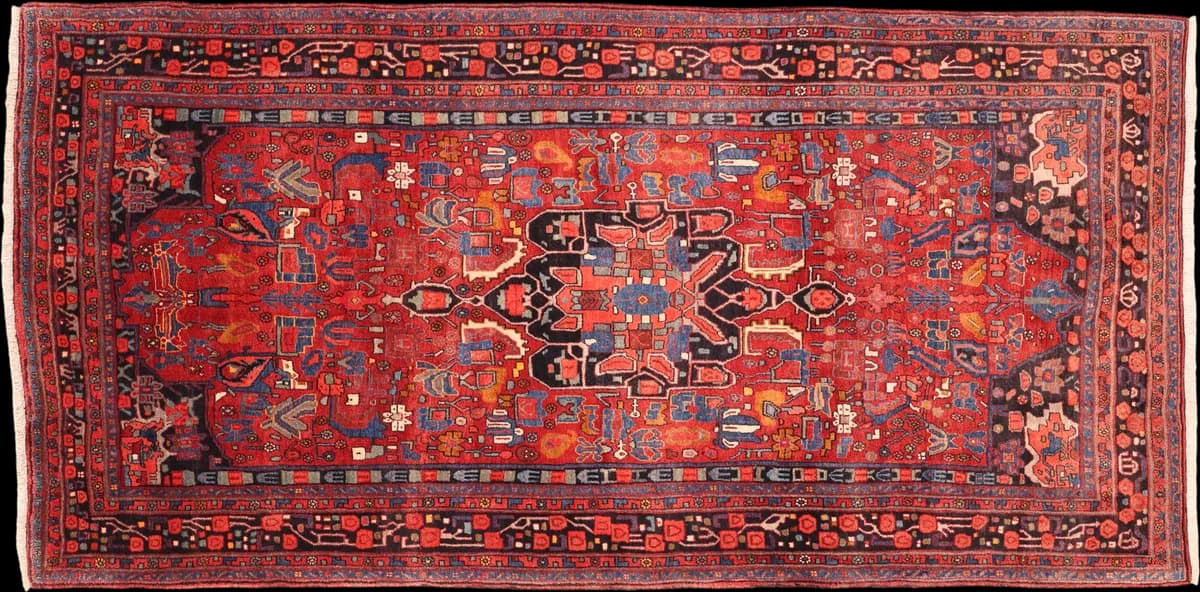
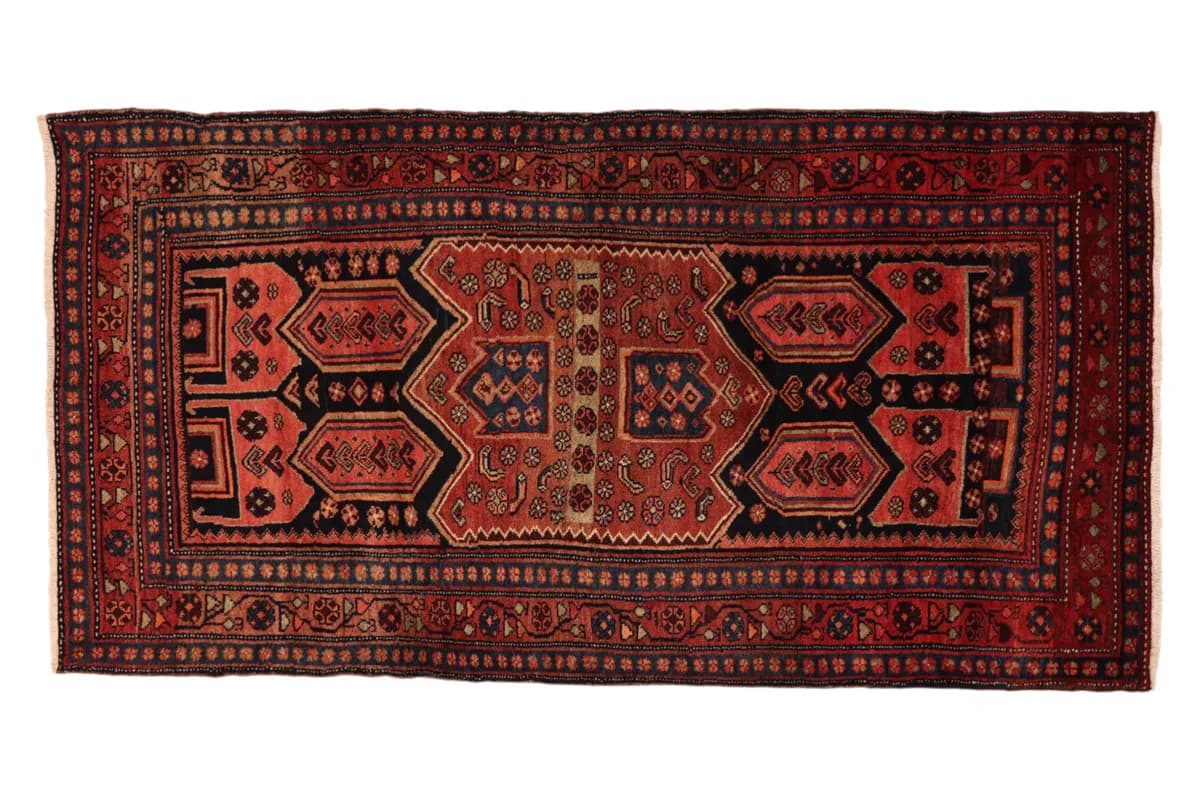
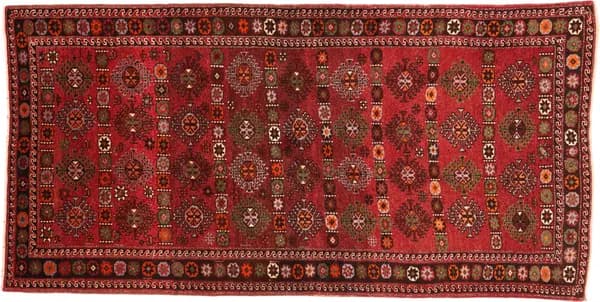
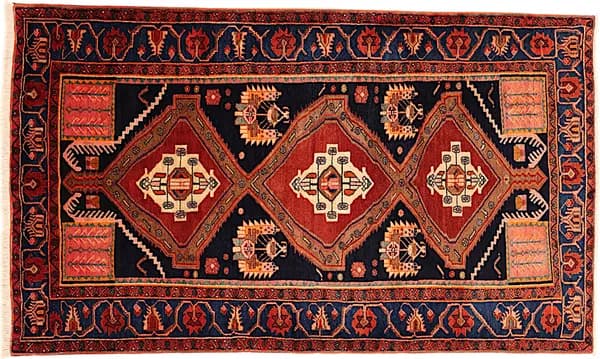
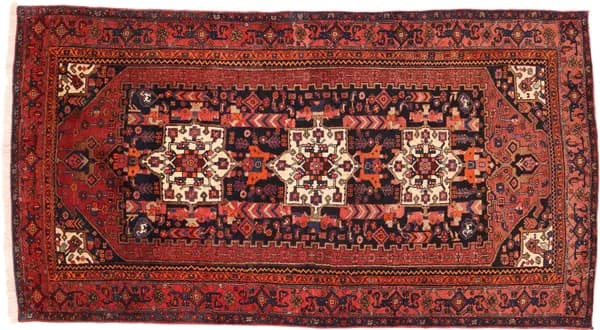
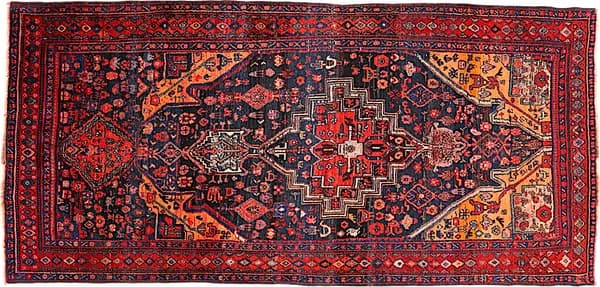
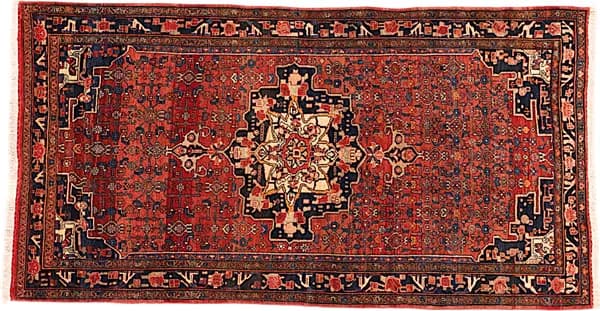
For the rug that means a rare mixture. The design language stayed Kurdish — angular medallions, geometric ornament, strong reds and blues. The wool comes from Khorasan, and centuries of proximity to Turkmen and Baluch weavers have left traces in individual motifs.
How to recognise a Kordi
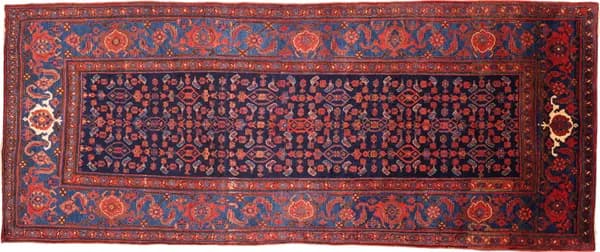
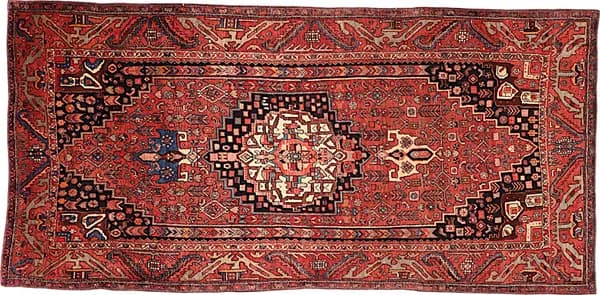
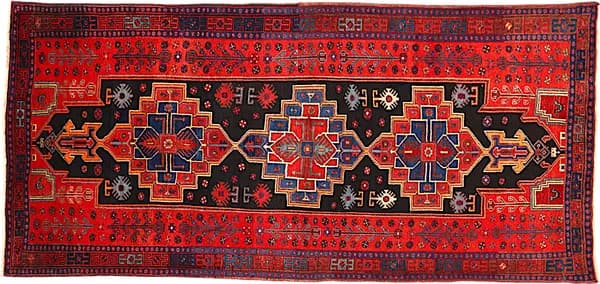
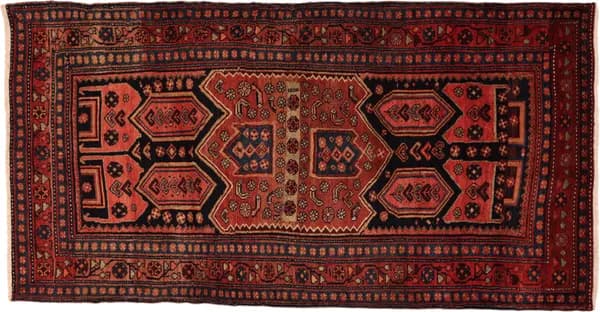
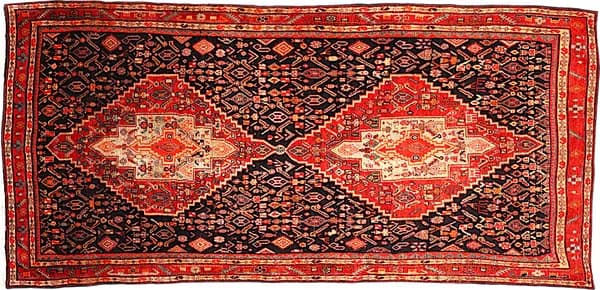
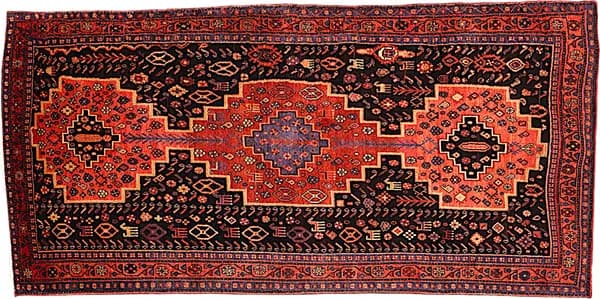
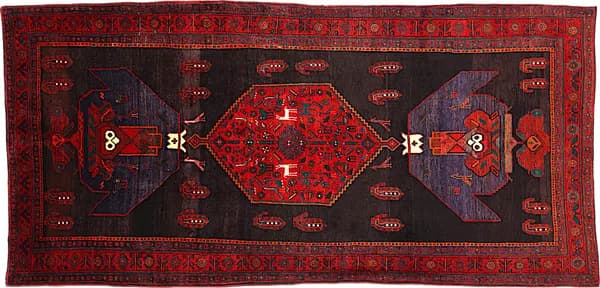
The first mark is the drawing. Kurdish patterns are angular, not round. A medallion is built in steps rather than as a soft ellipse; leaf ornaments have straight edges instead of flowing contours. Lay a Tabriz or a Kashan beside one and the difference is immediate.
The second is the pile. At ten to fifteen millimetres it sits well above what city manufactories shear. That gives the rug substance underfoot and makes it a working piece that absorbs footfall rather than showing it.
The third is age. A large share of the pieces in the trade are forty to sixty years old. That is the rule for this type rather than the exception. Natural dyes have shifted slightly warmer over that time without going pale, and the pile has taken on a quiet sheen.
- Angular, stepped medallions instead of soft ellipses — Kurdish design language.
- Substantial pile of ten to fifteen millimetres.
- Frequently forty years and older, with a settled patina.
- Fringes as the extended warp, mostly cotton, occasionally wool.
- Quchan or Ghotschan in the name points to the main place of weaving.
Which room a Kordi suits
The typical formats between just under three and a good five square metres fit under a seating group or in front of a sofa. The substantial pile makes it a rug for rooms that are used — it is not built to be spared.
On pale wood the strong reds and blues read warm and set a clear accent. Beside dark furniture they hold their own without effort. In a very light, very pared-back room a Kordi can dominate; anyone who does not want that should choose a quieter type.
For a dining table the typical size is usually not enough, because around 80 centimetres of clearance beyond the table edge is needed. For a reading corner, a bedroom or a seating group the format is exactly right.
Care
Vacuum along the pile, without a rotating brush. On high-pile rugs the temptation to use a brush is great — it pulls fibres out over time and is not worth it.
Blot spills at once with clear water and a light cloth, from the outside in, without rubbing. The lanolin content of the handspun wool buys a moment.
On a piece of this age a professional deep clean is worthwhile. It lifts dust from the base of the pile that no vacuum reaches, and the colours emerge noticeably clearer afterwards.
Kordi or Koliayie?
Both are Kurdish work, both more coarsely knotted than city rugs — and they come from opposite ends of the country. The difference shows mainly in age and pile.
| Criterion | Kordi | Koliayie |
|---|---|---|
| Place of weaving | North Khorasan, north-eastern Iran | Kermanshah, western Iran |
| Knot density | 128,000 – 160,000 / m² | 128,000 – 160,000 / m² |
| Pile height | 10 – 15 mm | around 12 mm |
| Typical age | frequently 40 – 60 years | mostly 20 – 40 years |
| Neighbours | Turkmen and Baluch | the Kurdish heartland |
Common questions
Why is the rug called Kurdish but comes from Khorasan?
Because the weavers are Kurds whose ancestors were resettled from the west to the north-eastern frontier under Shah Abbas in the seventeenth century. They stayed and weave in Kurdish design language to this day — a thousand kilometres from Kordestan.
What does Ghotschan in the name mean?
Ghotschan is a common spelling of Quchan, the most important place of weaving in the region in North Khorasan. The suffix therefore names the place more precisely and denotes no different construction.
Are Kordi rugs usually older?
Yes, with this type that is the normal case: a large share of pieces in the trade are forty to sixty years old. A colour scheme shifted slightly warmer is a mark of settled patina, not a defect. What to watch for are brittle edges.
How does a Kordi differ from a Baluch?
Both come from north-eastern Iran and are tribal work. The Baluch is usually smaller and darker — rust brown and blue-black — and frequently carries a prayer niche. The Kordi is larger, more colourful and works with angular medallions.
Is the high pile a disadvantage?
No. Ten to fifteen millimetres give substance underfoot and absorb footfall rather than showing it. Fine drawing is not possible at this pile height, but it is not the aim of the type either.