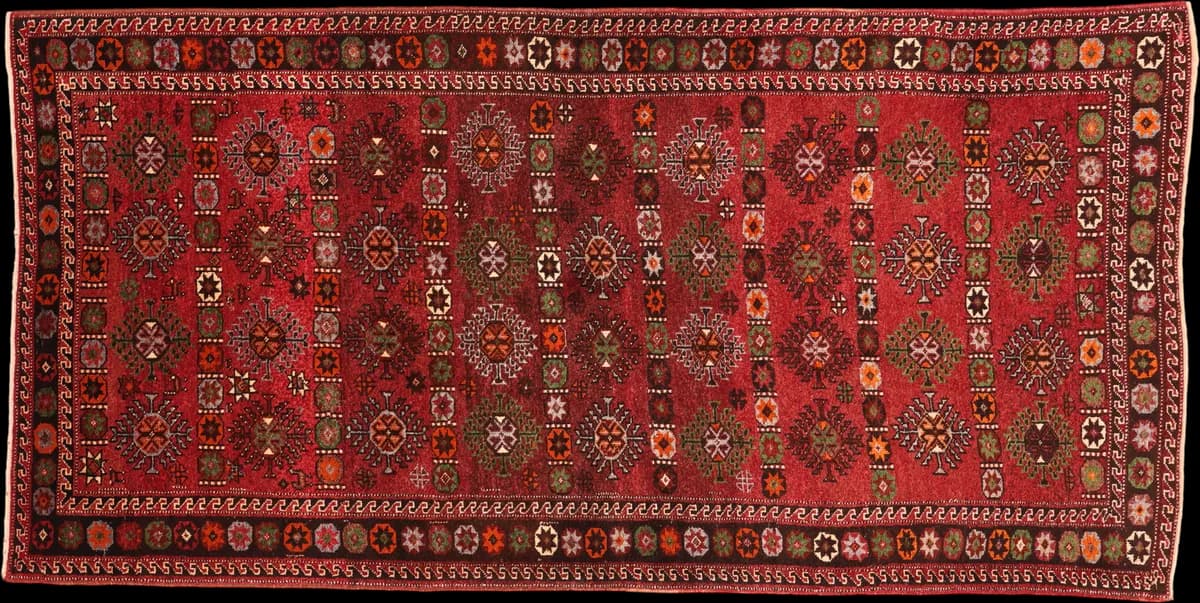
Koliai
300 × 150 cm
2.348 €
1.650 €
Incl. VAT
In Stock · Ready to Ship
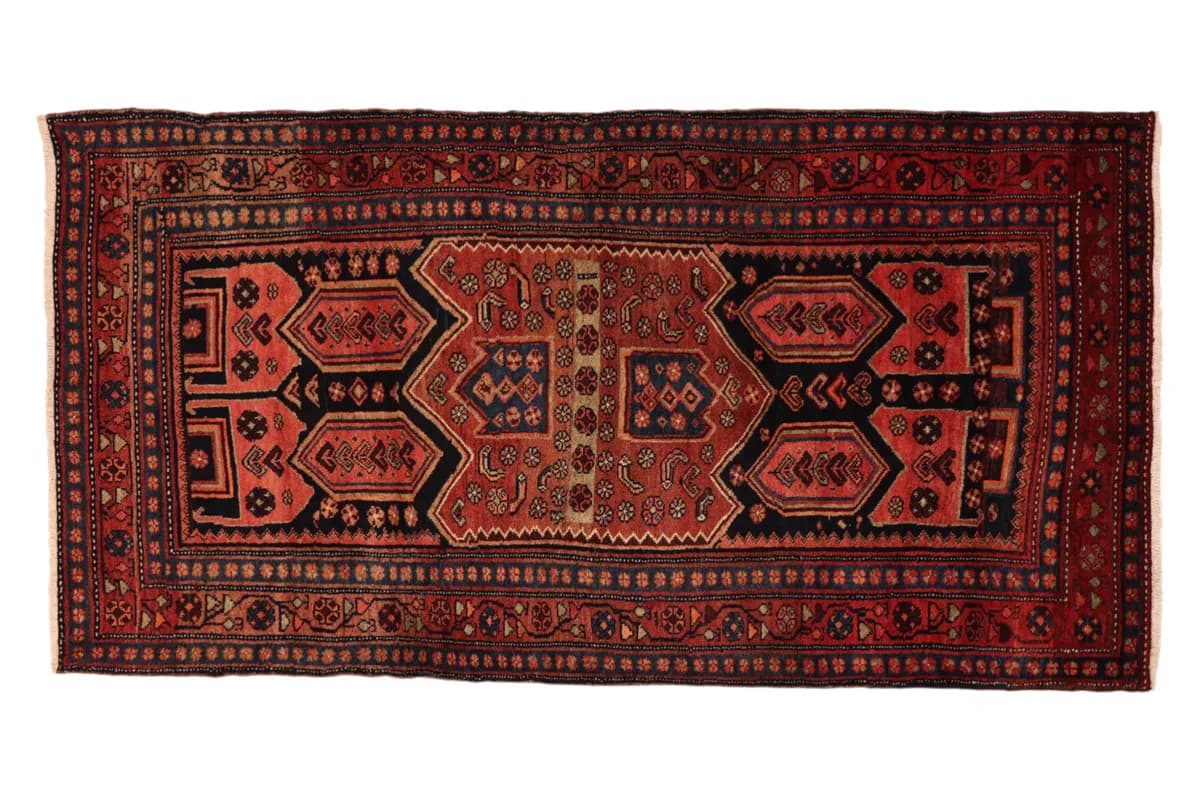
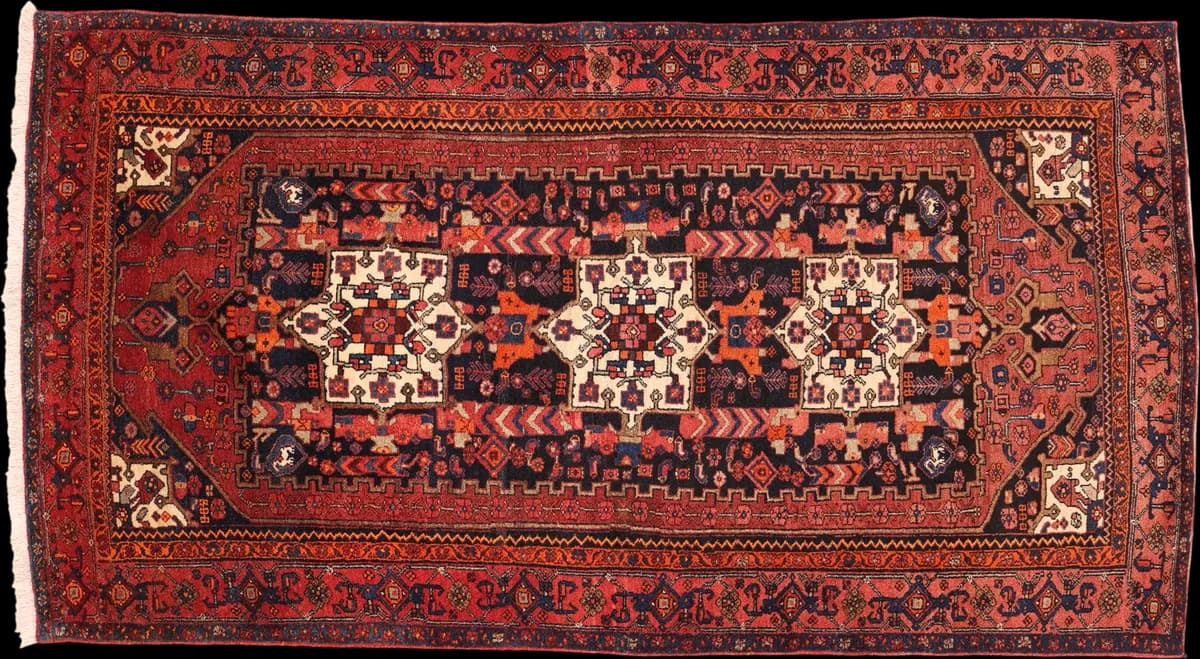
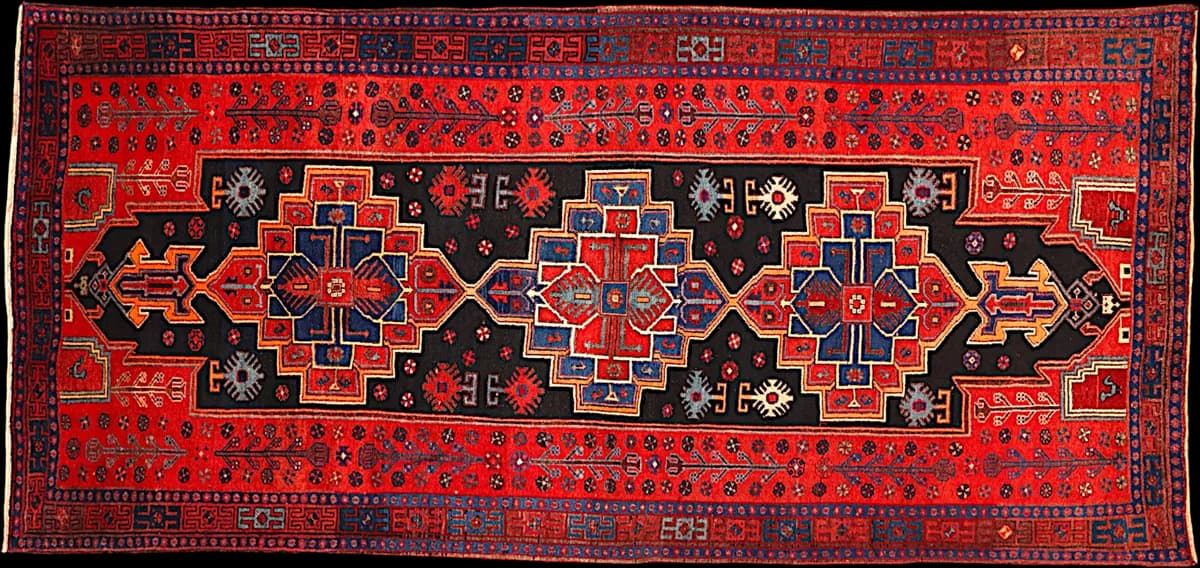
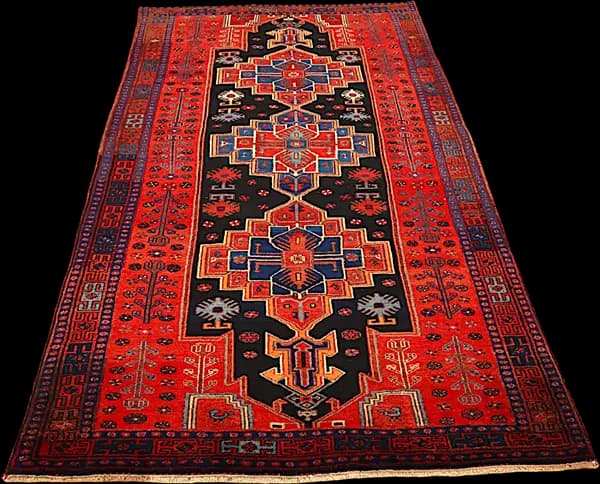
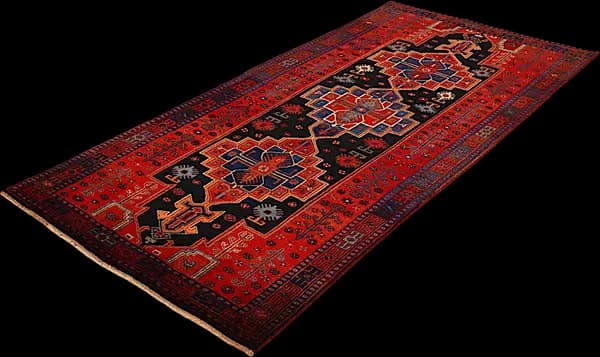
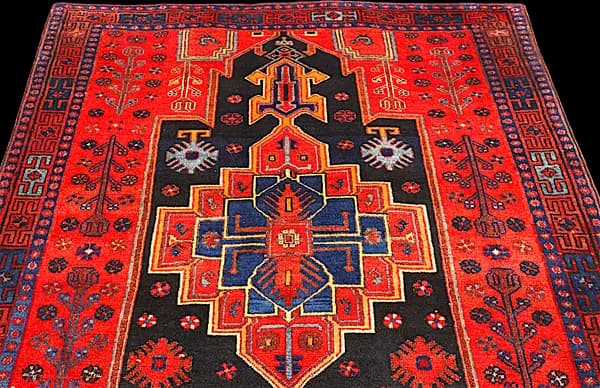
This is a Kordi runner, a Kurdish weaving from the wide arc of Kurdish-inhabited Iran that reaches from Kurdistan and Kermanshah towards Khorasan, measuring 305 x 145 cm (10'0" x 4'9"). The type is known for a robust, sturdy structure and a bold, unmistakable geometry, the work of weavers building the pattern from memory rather than from a drawn plan.
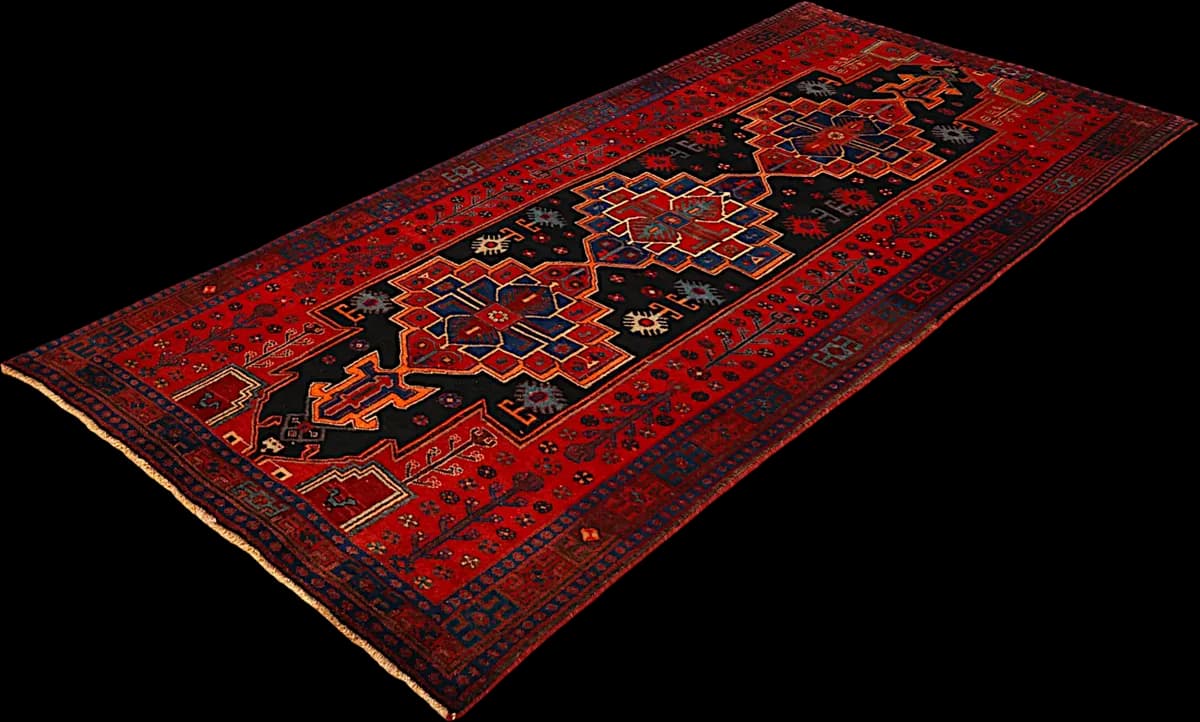
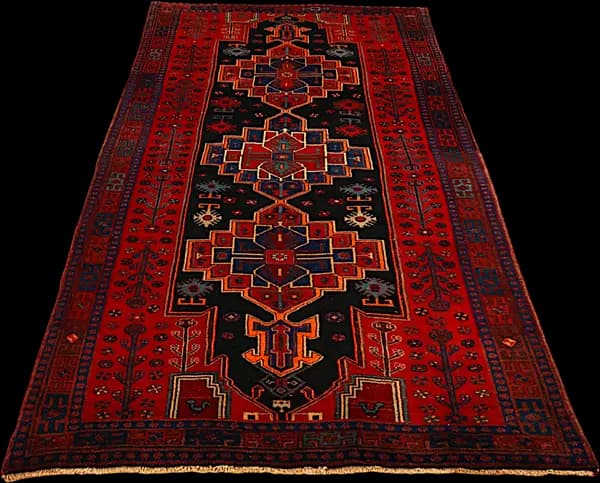
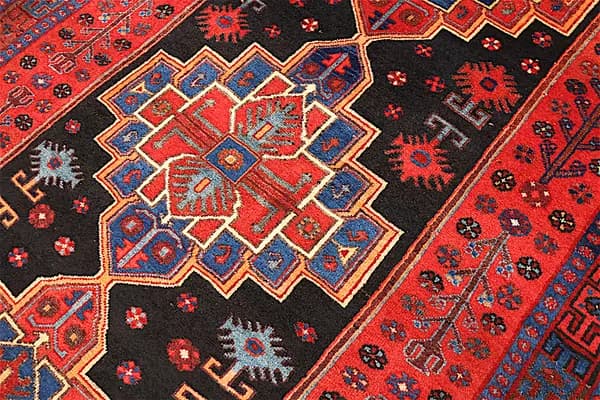
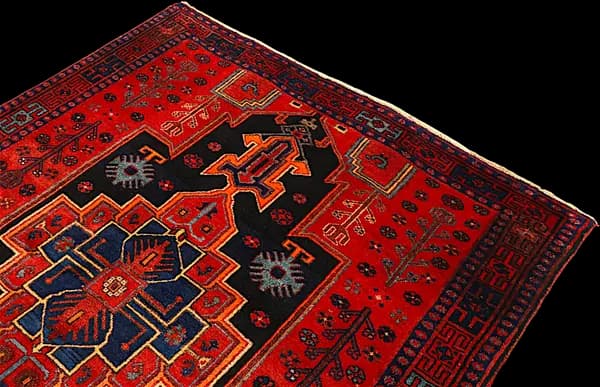
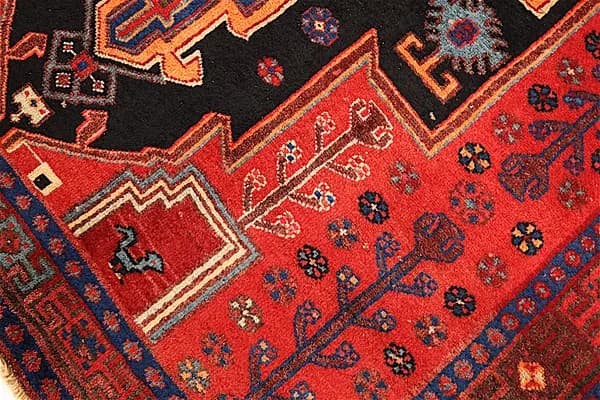
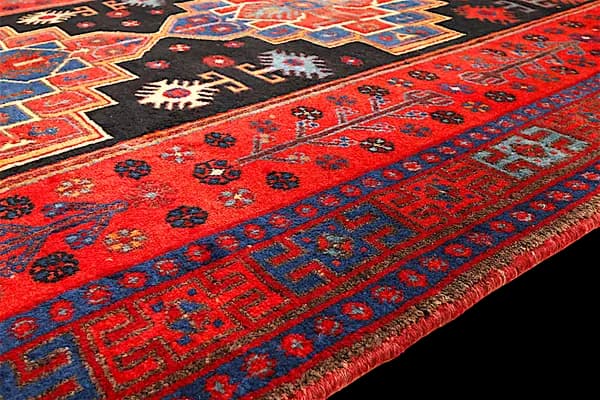
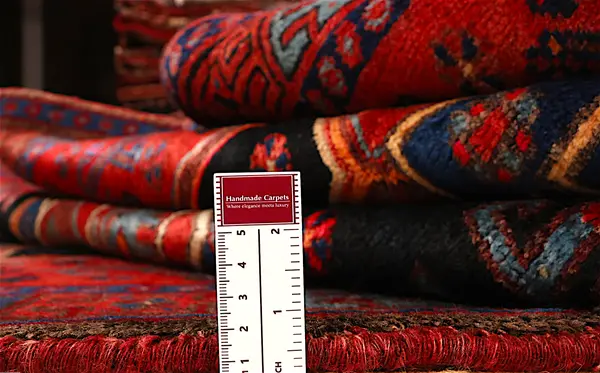
The field is an almost black anthracite-blue, and against it three large stepped diamond medallions rise in a column, one above the other, joined by hooked, angular pendants that end in arrow-like points. The effect is directional, almost totemic, so the eye travels the length of the runner rather than settling on one centre. Each medallion carries a slightly different combination of brick red, ivory, camel and pale blue-grey within it, and the column reads as a sequence rather than a mechanical repeat. A broad brick-red border, close to a fifth of the width, closes the design with small rosettes and serrated botteh forms.
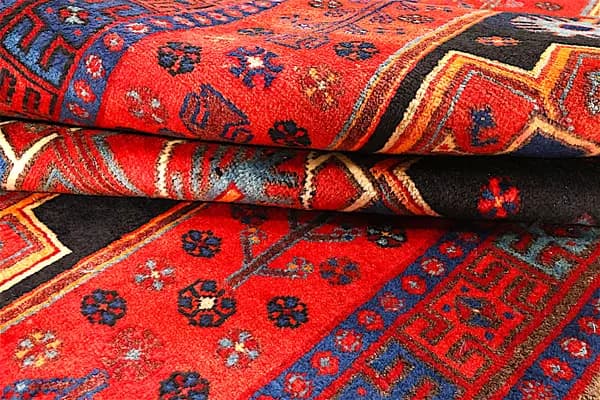
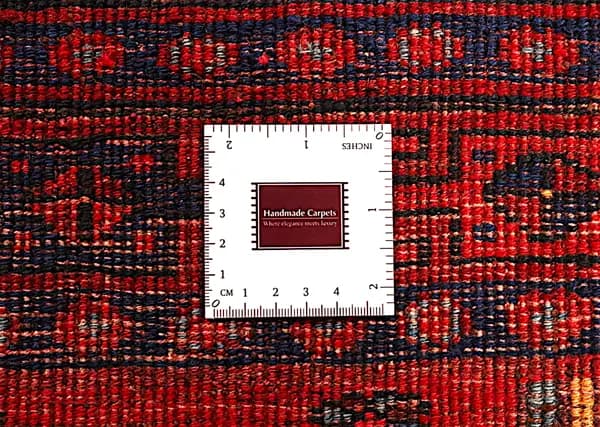
The rug is hand-knotted with the symmetric knot on a wool foundation, at a density of 128,000 to 160,000 knots per square metre — a firm, substantial structure rather than a fine one, well matched to the scale of the medallions. The pile is hand-spun wool, 12 mm deep, spun and coloured by hand rather than machine, which is why the surface carries no sheen but a visible, living texture instead. Because the weaver worked from memory rather than from a fixed cartoon, no two medallions came out quite alike, and those small shifts in colour from one to the next are the record of that hand rather than any unevenness in the work.
At 305 x 145 cm this is a runner for a hallway or a long landing, and it is built for exactly that kind of daily footfall. Against pale floorboards the dark field holds its own rather than fading into them, while the brick-red border keeps the space warm even where daylight is scarce. Underfoot the wool is dense and firm, not deep or soft, a weave that takes being walked on rather than asking to be protected. Walk its length and the three medallions move with you, each one subtly its own, so the same runner reads a little differently every time you pass.
More on Kordi rugs: origin, making and how to recognise a genuine piece
Traditional weave
At 305 × 145 cm (4.42 m²) this is a medium rug. It works in front of a sofa, in front of a bed or in a study. It is too small for a dining table — there you want about 80 cm of clearance so a chair does not tip over the edge when pushed back.
Yes, knotted by hand — knot by knot on a loom, not machine-made. The density is 128,000 to 160,000 knots per square metre; across 4.42 m² that is roughly 570,000 to 710,000 individual knots, every one of them tied by hand.
Hand-spun wool still carries its own lanolin, which keeps liquid sitting on the surface for a moment: blot quickly, with clear water and a light cloth, working inwards and without rubbing. Otherwise regular vacuuming along the pile is enough. Turn the rug once or twice a year so light and footfall reach it evenly.
We are in the Hamburg Speicherstadt. Come and see this rug in daylight, or write to us — a person answers.
Certificate included verifying origin, materials, and craftsmanship.
Ref: 533412