Koliai
260 × 135 cm
1.980 €






1.970 €
Incl. VAT
In Stock · Ready to Ship
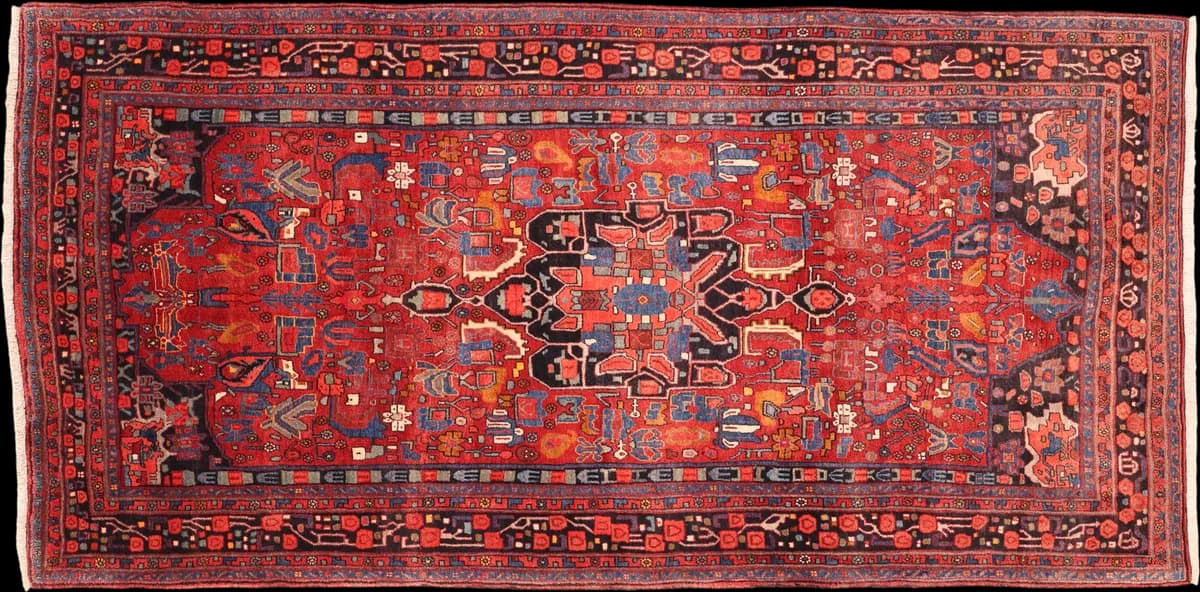
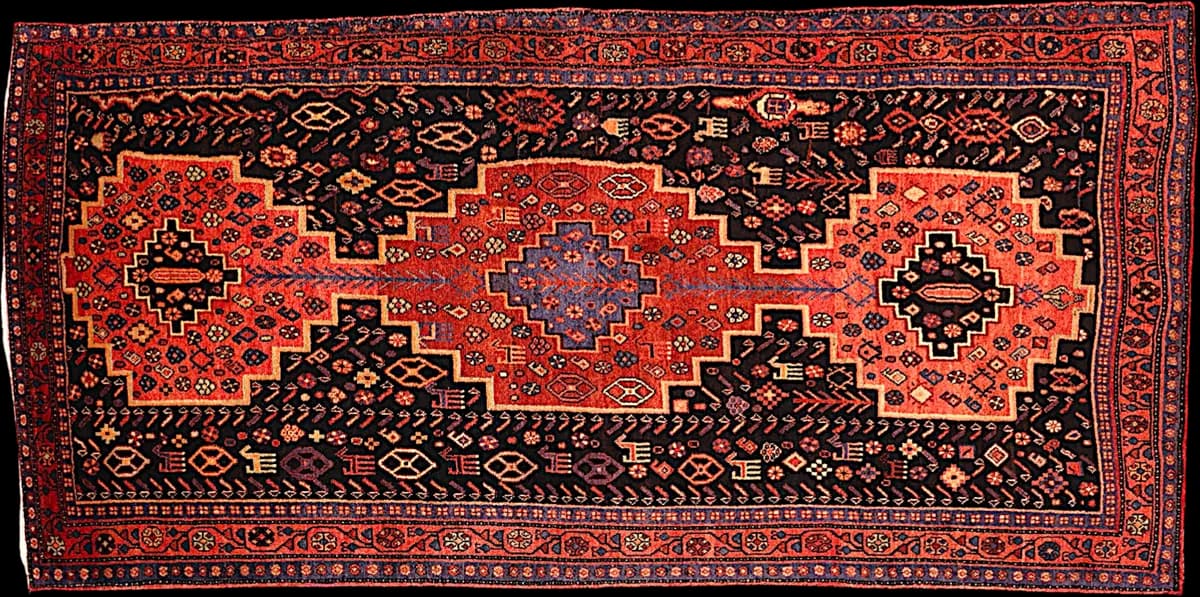
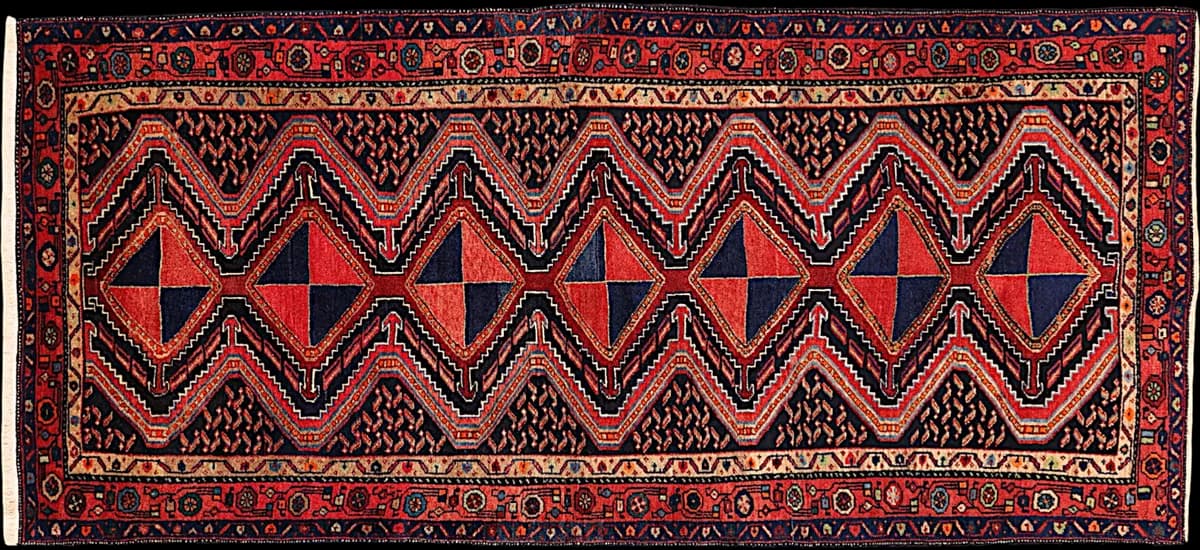
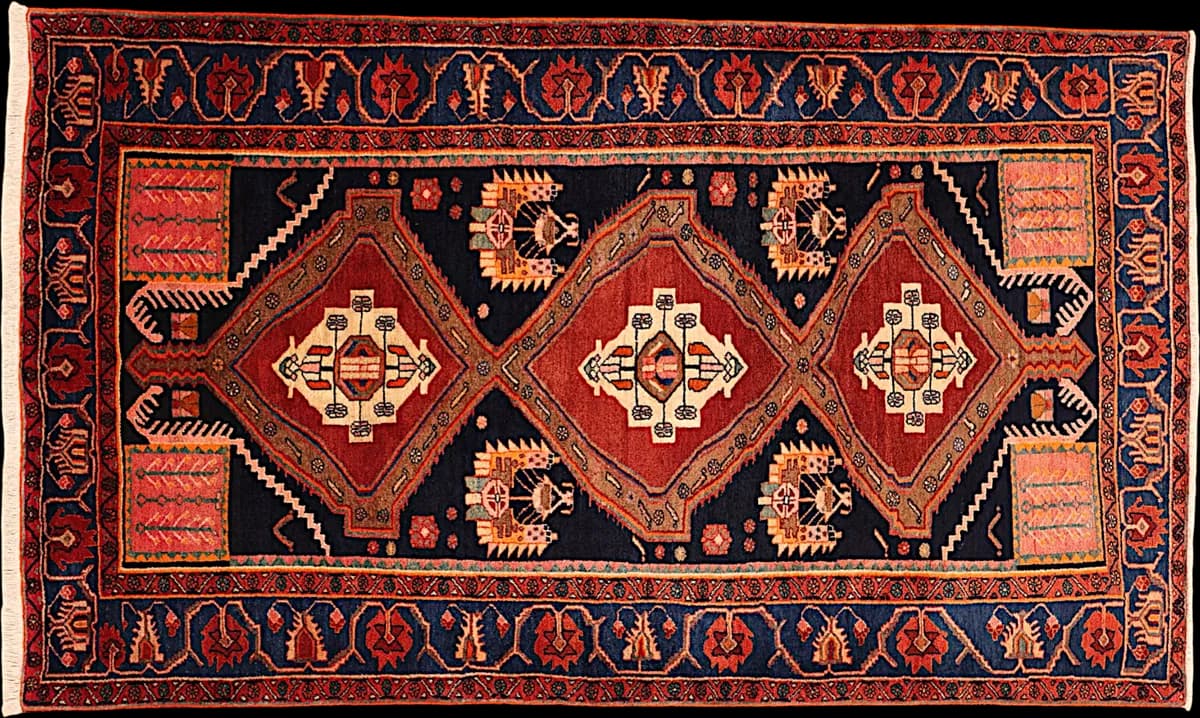
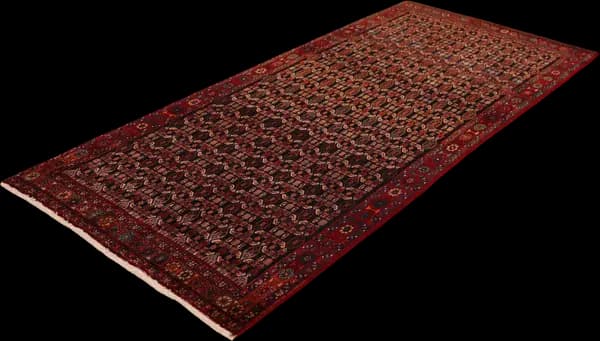
A Kordi runner, a Kurdish tribal weaving from the wide arc of western Iran where Kurdish communities have worked at the loom for generations, measuring 294 x 129 cm (9'8" x 4'3"). Kordi rugs are built to last, knotted with the symmetric knot on a firm foundation, and carry a character that swings between bold geometry and softer floral work depending on the district. This one leans toward geometry, knotted from memory rather than a plan.
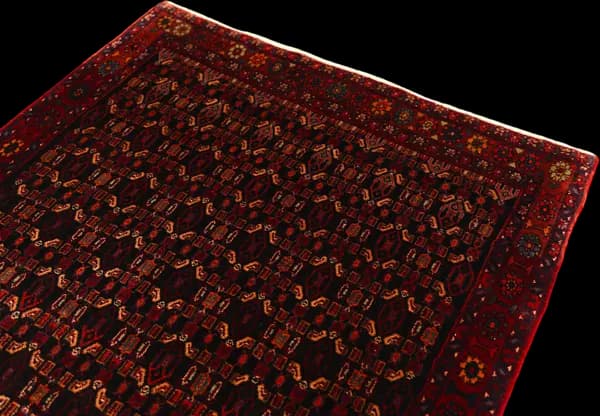
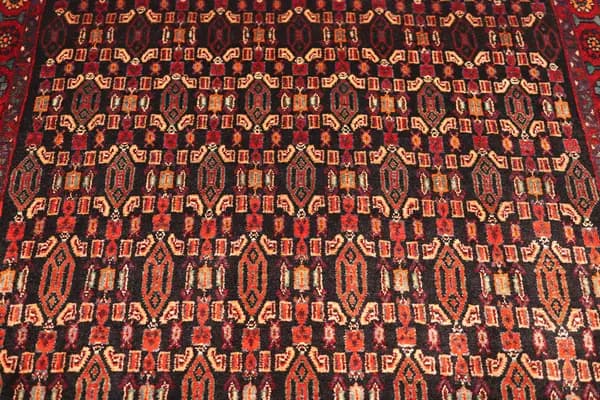
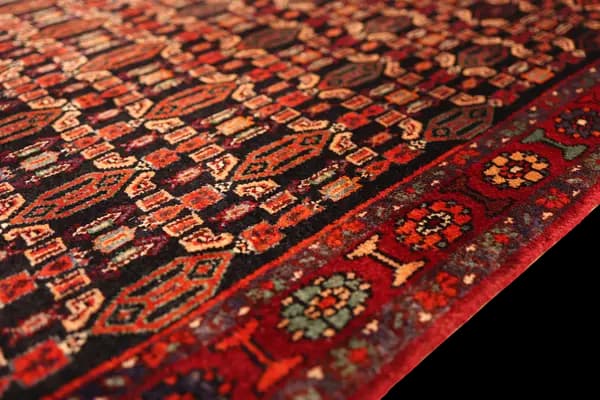
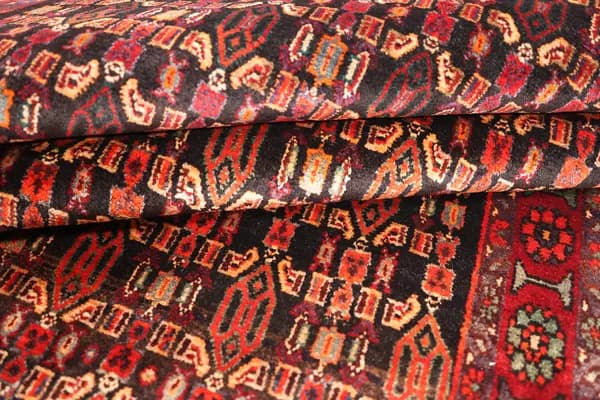
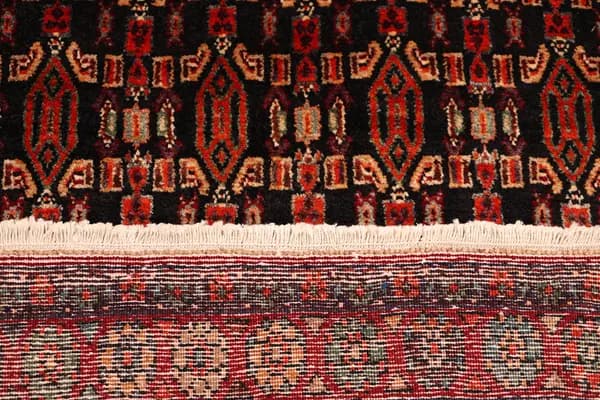
A deep navy-black ground carries a tight, all-over lattice of small hooked botteh forms, repeated in close rows from end to end with no medallion to interrupt them. Looking along the runner's length, the colour is not constant: the lattice opens near-black at one end, softens into a paler peach and rust zone through the middle, then returns to the dark ground toward the far end, so the same pattern seems to pass through three distinct moods. A narrow red border runs the full length, filled with small rosettes and stylised vase forms in cream, coral and mustard, held in by a thin dark guard stripe that keeps the field and border cleanly separate.
The pile is hand-spun wool, knotted by hand onto a cotton warp, at a density of 201,000 to 250,000 knots per square metre — solid, workaday tribal work rather than fine city knotting, and built for a floor that gets walked on. Hand-spun wool is rarely dyed in one uniform batch; a weaver working from memory over many months, on a rug nearly three metres long, will naturally draw on more than one dye lot along the way. That is very likely what produced the shifting bands here, the lattice staying the same while the wool beneath it changes colour zone by zone, an effect no cartoon or workshop drawing would set out to make.
At close to three metres, this is a hallway or landing runner, and the dark ground is exactly what a corridor with little daylight needs to hold its footing, while the paler rust-and-peach band catches whatever light does reach it and carries it along the length. Underfoot the wool is dense and firm, twelve millimetres of hand-spun pile that takes daily crossing without complaint. Walk its length morning and evening and the banded field reads differently each time, dark, then warm, then dark again, the one rug behaving like three.
More on Kordi rugs: origin, making and how to recognise a genuine piece
Fine quality weave
At 294 × 129 cm (3.79 m²) this is a runner. It belongs in a hallway, an entrance, on a landing or lengthways beside a bed. It is too narrow for the middle of a room.
Yes, knotted by hand — knot by knot on a loom, not machine-made. The density is 201,000 to 250,000 knots per square metre; across 3.79 m² that is roughly 760,000 to 950,000 individual knots, every one of them tied by hand.
Hand-spun wool still carries its own lanolin, which keeps liquid sitting on the surface for a moment: blot quickly, with clear water and a light cloth, working inwards and without rubbing. Otherwise regular vacuuming along the pile is enough. Turn the rug once or twice a year so light and footfall reach it evenly.
We are in the Hamburg Speicherstadt. Come and see this rug in daylight, or write to us — a person answers.
Certificate included verifying origin, materials, and craftsmanship.
Ref: 871670