What separates a village weaving from a manufactory
In a city workshop a rug is made from a drawn cartoon. A designer fixes the pattern square by square and the weaver works through it. The result is symmetrical and exact — and practically identical on two rugs of the same design.
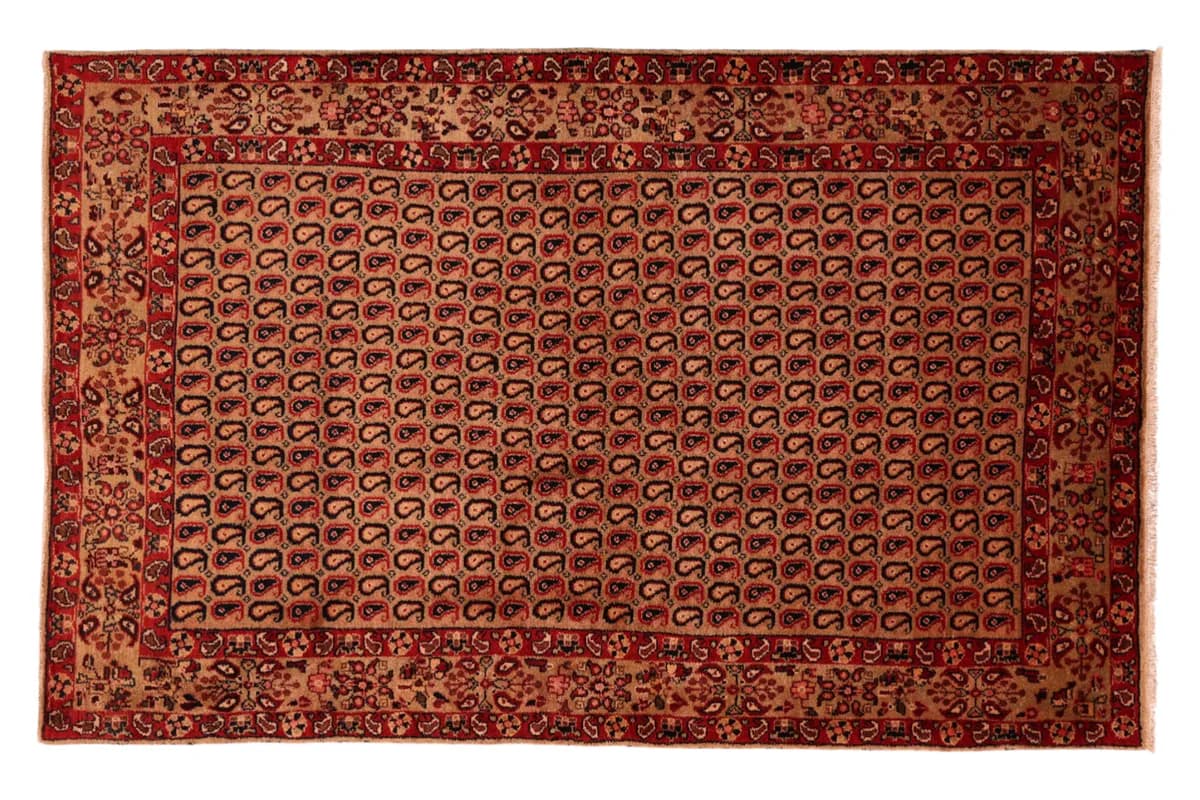
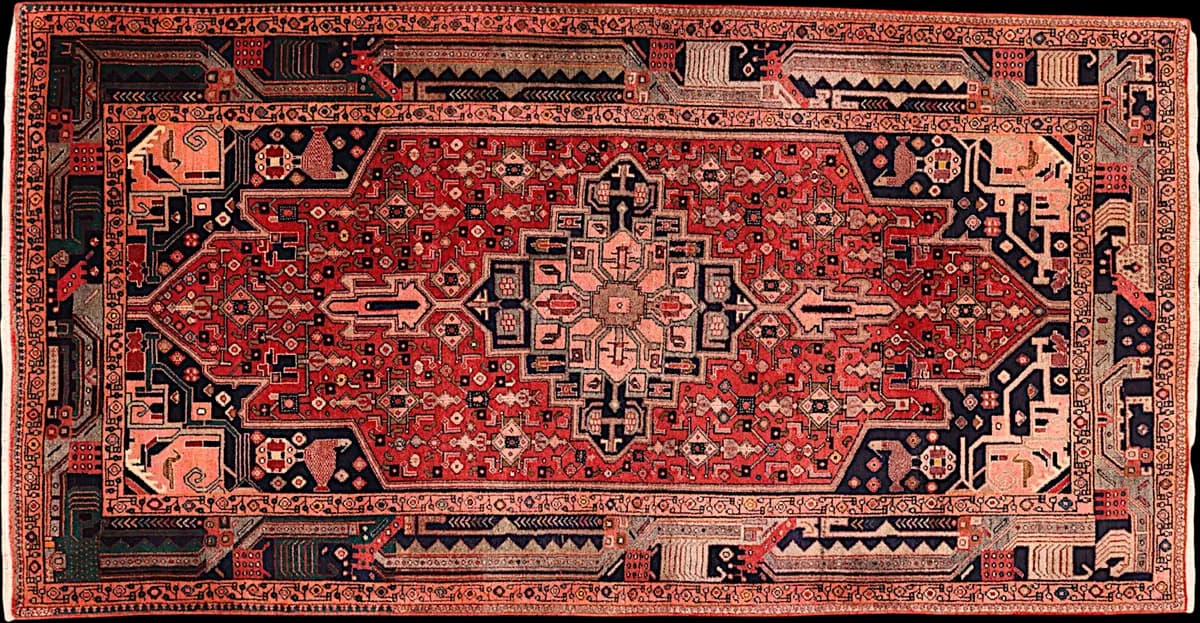
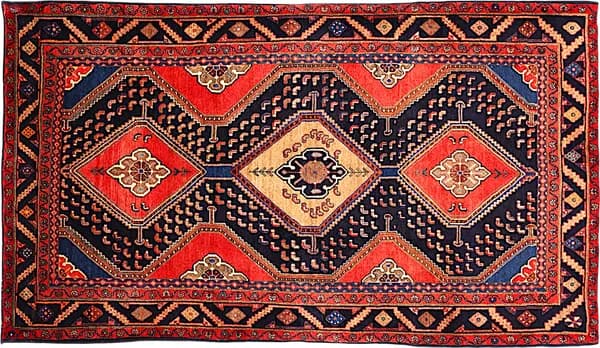
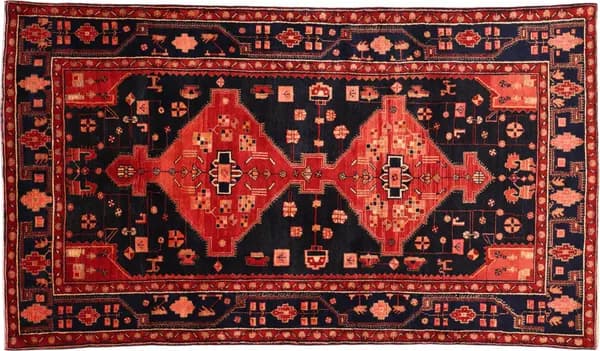
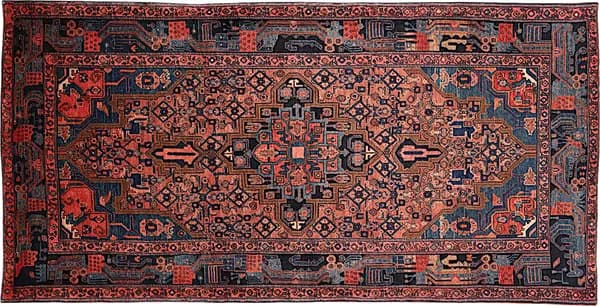
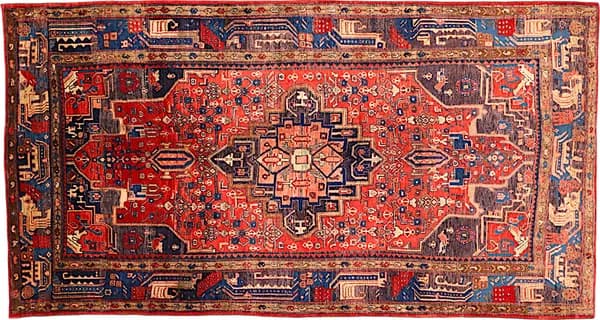
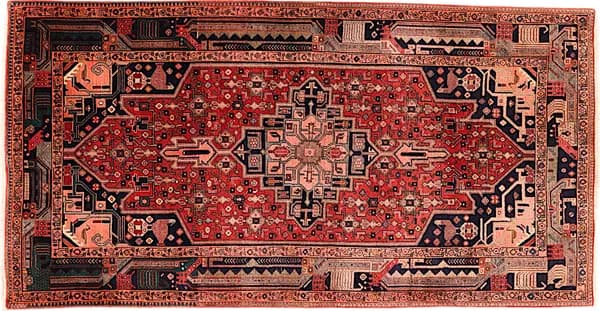
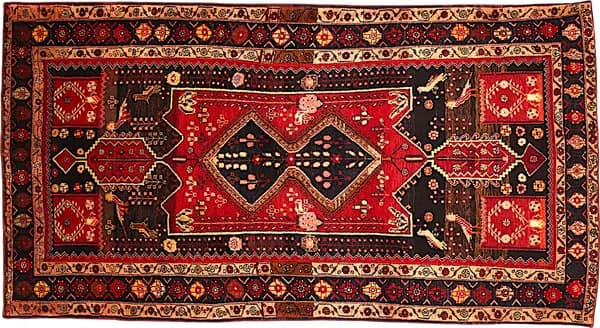
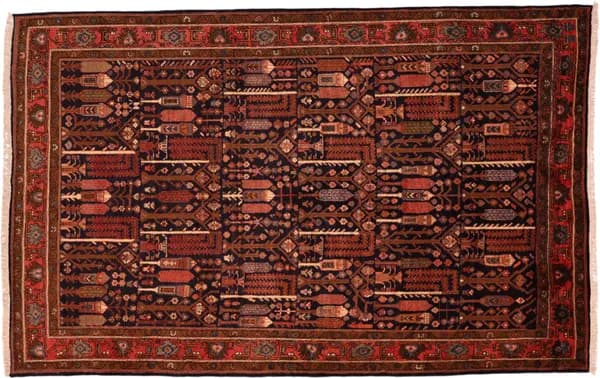
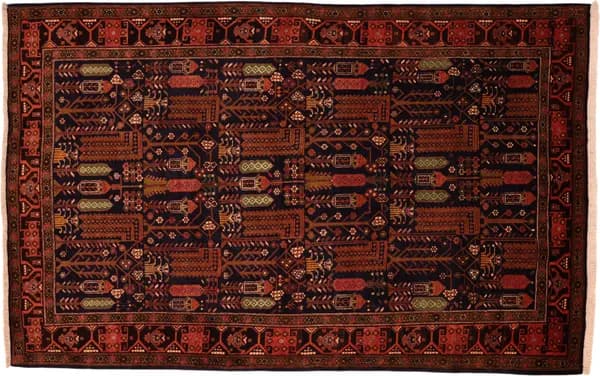
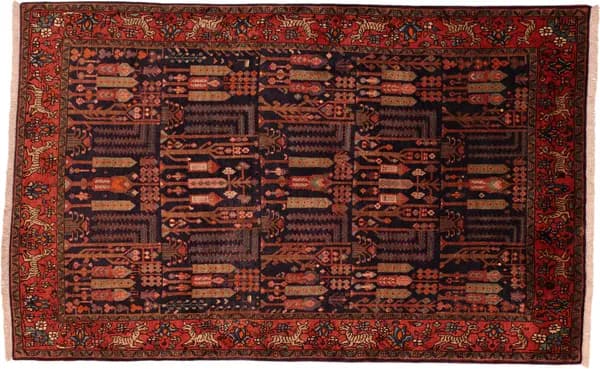
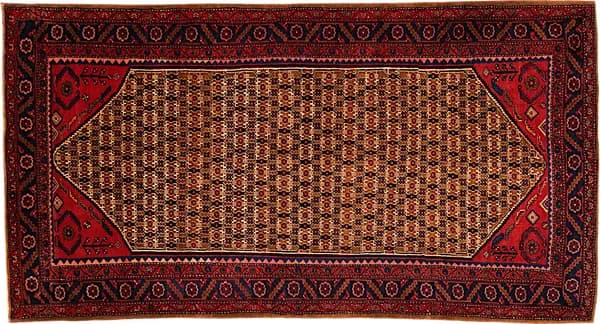
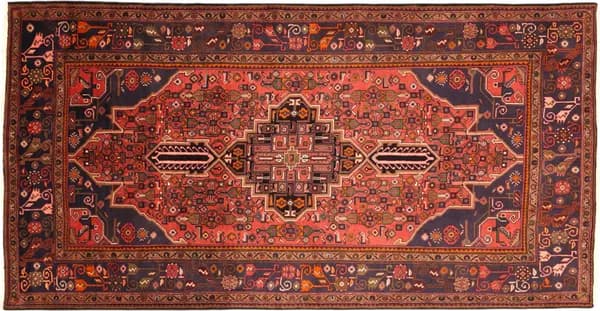
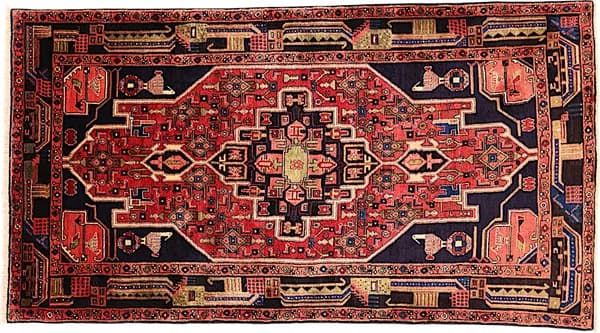
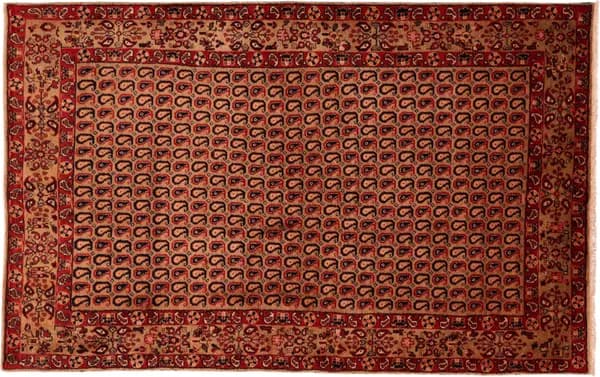
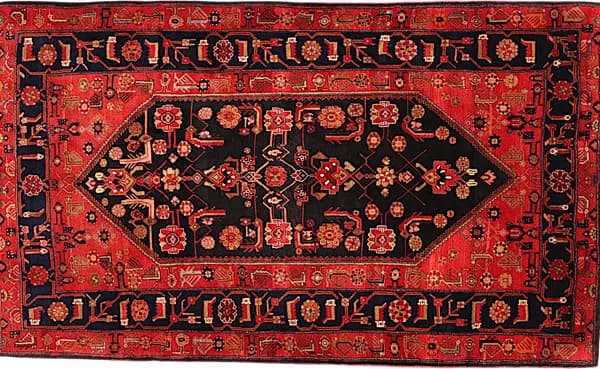
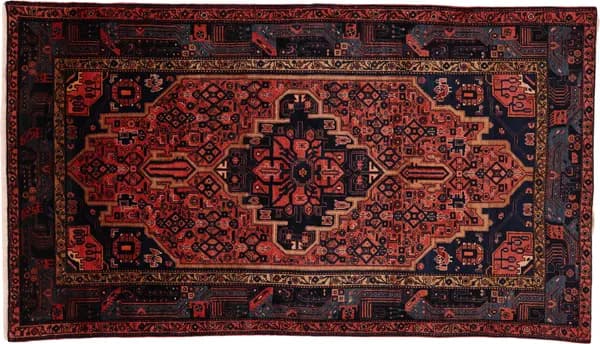
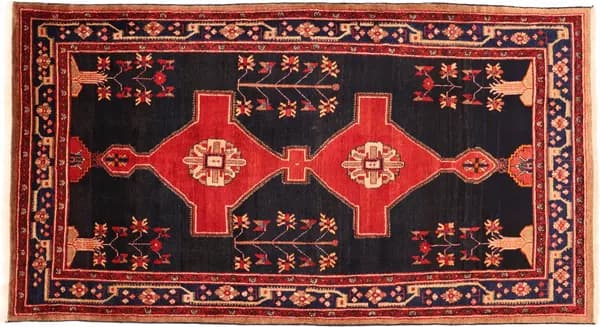
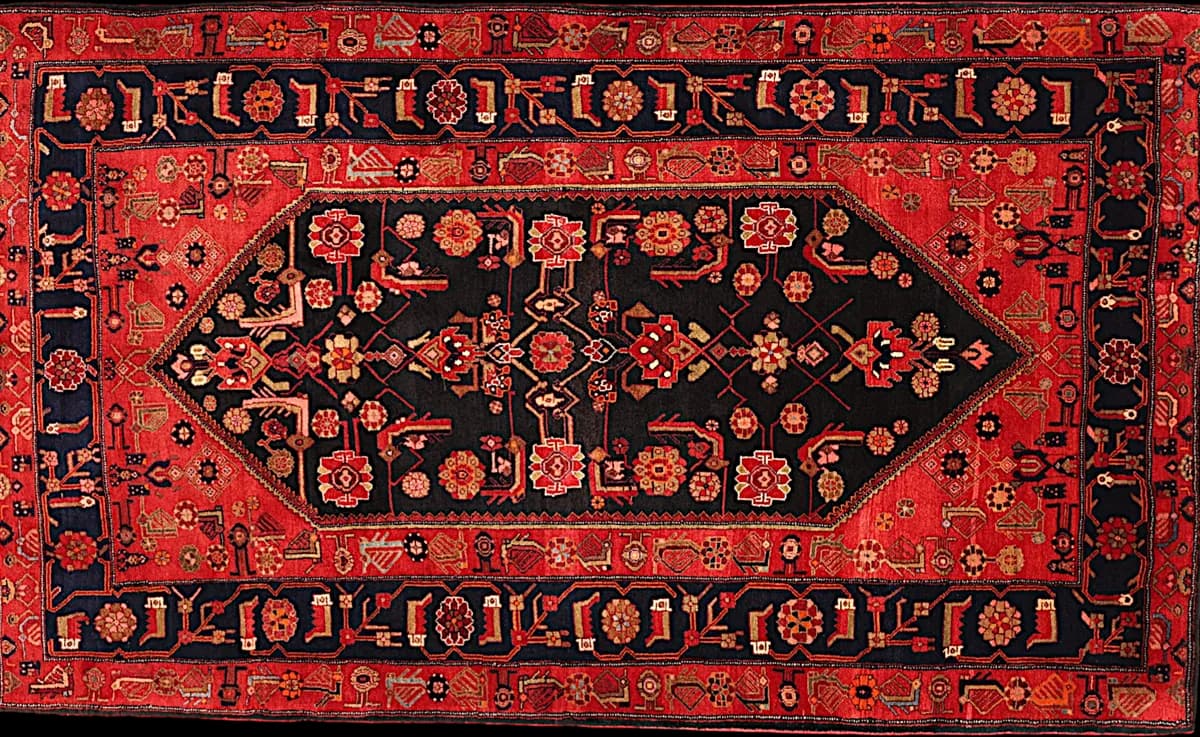
Kolyai works differently. The weaver knows the pattern from her family and sets it freehand. She corrects as she goes, adapts, leaves things out. That is why no Koliayie is exactly symmetrical: a medallion sits a few centimetres off centre, a corner ornament differs from the one opposite, a colour changes halfway up because the dye bath ran out.
Anyone who reads those deviations as faults is better served by a city rug. Anyone who reads them as what they are — the trace of a hand over months — gets considerably more character for considerably less money.
What the coarser knot count means in practice
At 128,000 to 160,000 knots per square metre each knot sits larger and the pile stands stronger. That rules out fine drawing: a leaf ornament with delicate curves cannot be set cleanly at this density. Hence the geometric vocabulary — diamonds, hooks, stepped edges, angular medallions.
For durability the coarser knotting is no disadvantage, quite the opposite. A strong pile of thick handspun wool absorbs footfall better than a finely sheared one.
And the density explains the price. A square metre with 150,000 knots costs less working time than one with 500,000. Anyone looking for an honestly knotted Persian rug at living-room size, without paying the premium for fineness, is in the right place with the Kurdish village weavings.
- Geometric patterns instead of floral curves — a consequence of knot size, not a stylistic whim.
- Strong pile of thick handspun wool absorbs footfall well.
- Slight asymmetries and colour shifts are marks of freehand work.
- In the trade mostly twenty years and older, with calmly mellowed colours.
- Considerably cheaper per square metre than fine city rugs of the same size.
Which room a Koliayie suits
The typical formats between three and a half and five and a half square metres sit exactly at the size for a seating group: sofa and armchairs stand with their front legs on the rug, the coffee table entirely on it.
The strong pile and geometric drawing tolerate traffic. A Koliayie is the rug for a living room that is lived in — with children, with a dog, with an armchair that gets moved regularly. It is not made to be spared.
In a very modern, very quiet room the strong colour can dominate. Anyone wanting a restrained rug is better served by the more modern nomadic lines with their pared-back drawing; anyone wanting character is right here.
Care
Vacuum regularly along the pile, without a rotating brush. The strong pile tolerates a good deal, but the brush pulls fibres out of the surface over time.
Blot spills at once with clear water and a light cloth, from the outside in. Handspun wool with its lanolin content buys a moment.
An older rug takes a professional deep clean every few years well and looks noticeably fresher afterwards. In between, turning it once or twice a year is enough to spread light and footfall.
Koliayie or Bidjar?
Both are Kurdish weavings from western Iran and both are robustly built. The difference lies in fineness and weight — and in price per square metre.
| Criterion | Koliayie | Bidjar |
|---|---|---|
| Type | village weaving, freehand | village and workshop work, wet-knotted |
| Knot density | 128,000 – 160,000 / m² | 441,000 – 500,000 / m² |
| Drawing | geometric, angular | finer, often Herati ground |
| Weight | normal, folds | very heavy, roll only |
| Price level | considerably cheaper per m² | higher |
Common questions
Is a Koliayie a genuine Persian rug?
Yes. It is hand-knotted in the Iranian province of Kermanshah with the asymmetric Persian knot on a cotton warp. That it is more coarsely knotted than a city rug makes it village work, not inferior goods.
Why is my Koliayie not quite symmetrical?
Because it was knotted freehand. The weaver works from a pattern she knows, not from a drawn cartoon. A medallion slightly off centre or differing corner ornaments are the normal result of that method and no fault in a village rug.
What does the colour change halfway up mean?
That is abrash. The weaver mixed a new dye bath mid-work, and no bath matches another exactly. With naturally dyed handspun wool this is usual and counts as a mark of authenticity.
Are old Koliayie better than new ones?
Not as a rule. Most pieces in the trade are twenty years and older; what matters is the construction, not the age. Look for an even pile height and firm edges without brittle spots.
What room size does a Koliayie suit?
Typical formats lie between three and a half and five and a half square metres. That is the size for a seating group where sofa and armchairs stand with their front legs on the rug. For a dining table with clearance it is usually not enough.