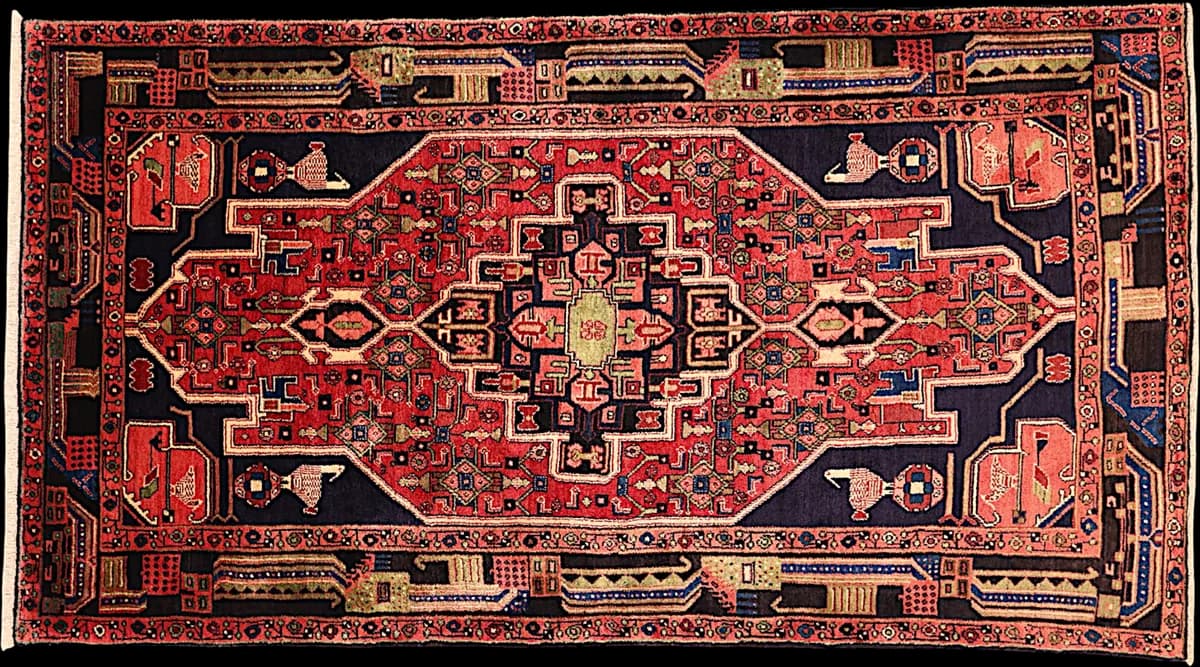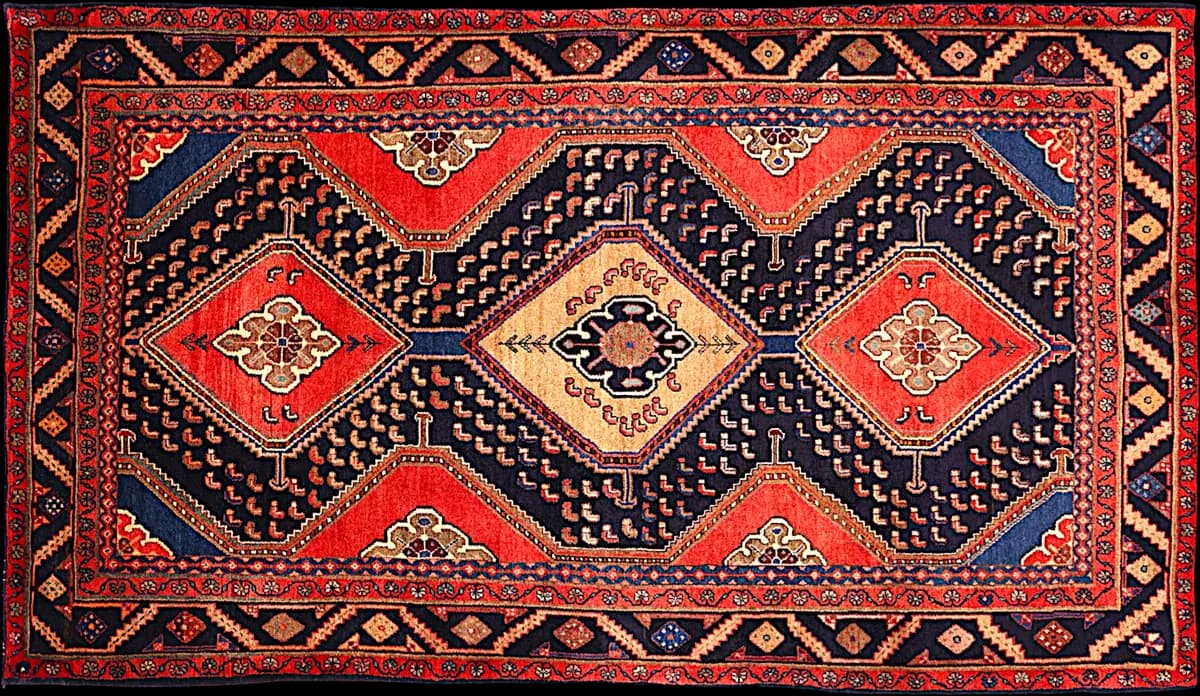
Koliai
274 × 155 cm
1.650 €




1.950 €
Incl. VAT
In Stock · Ready to Ship
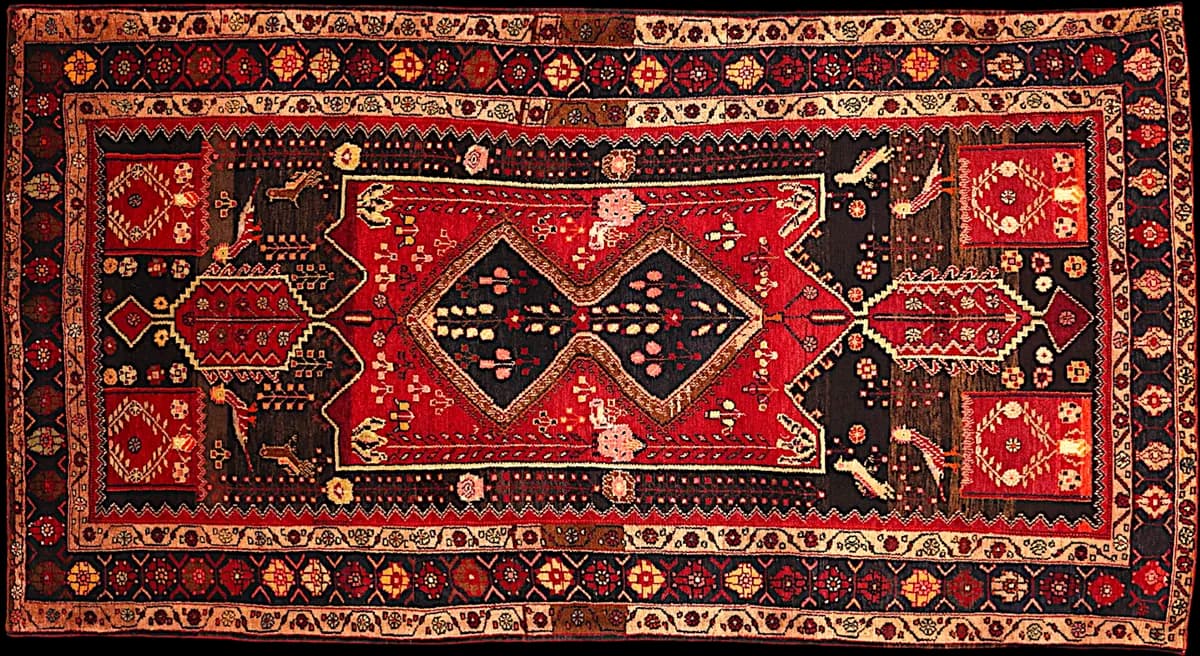
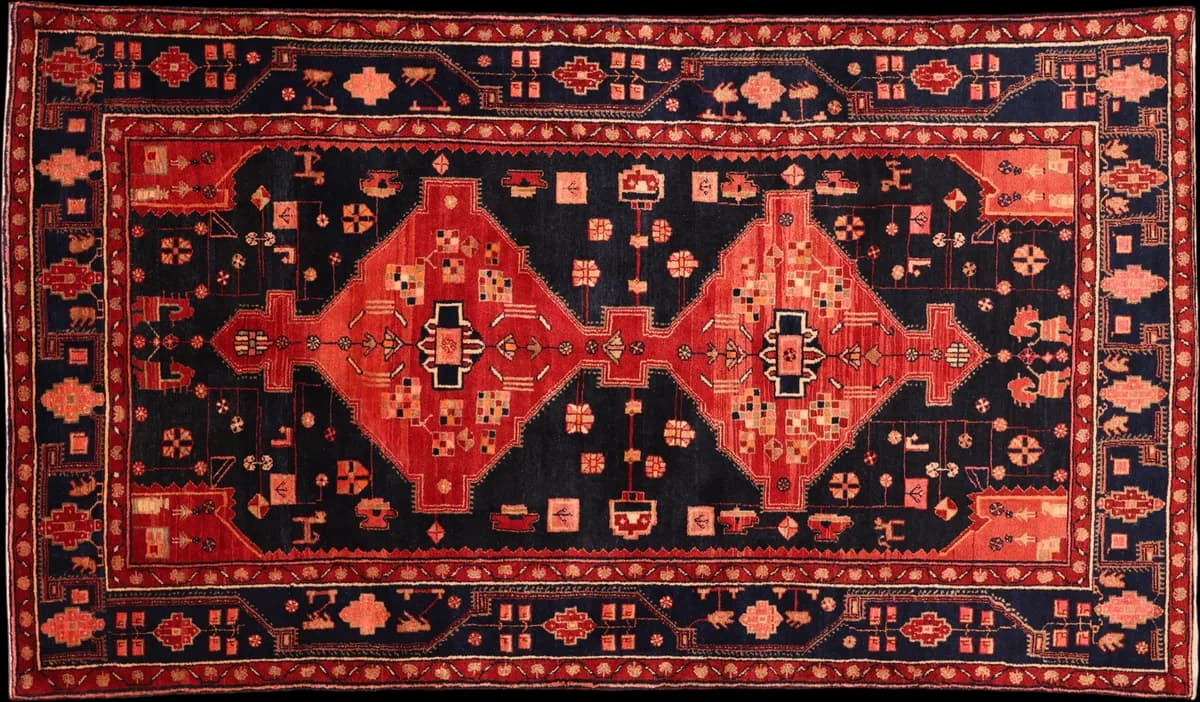
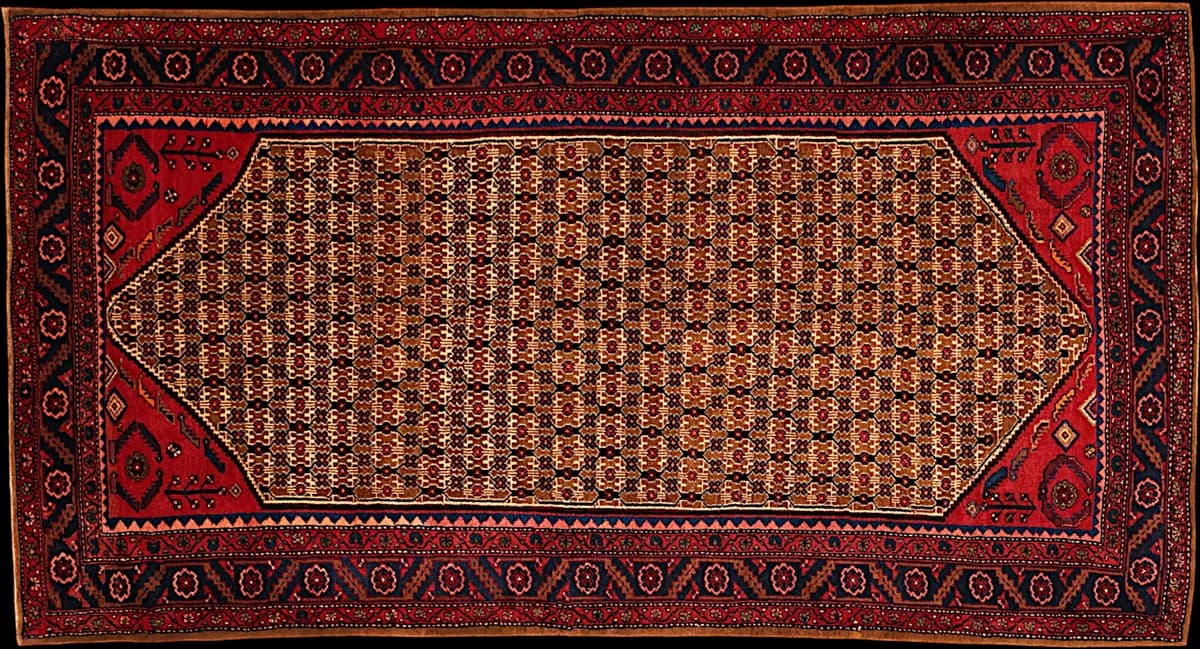
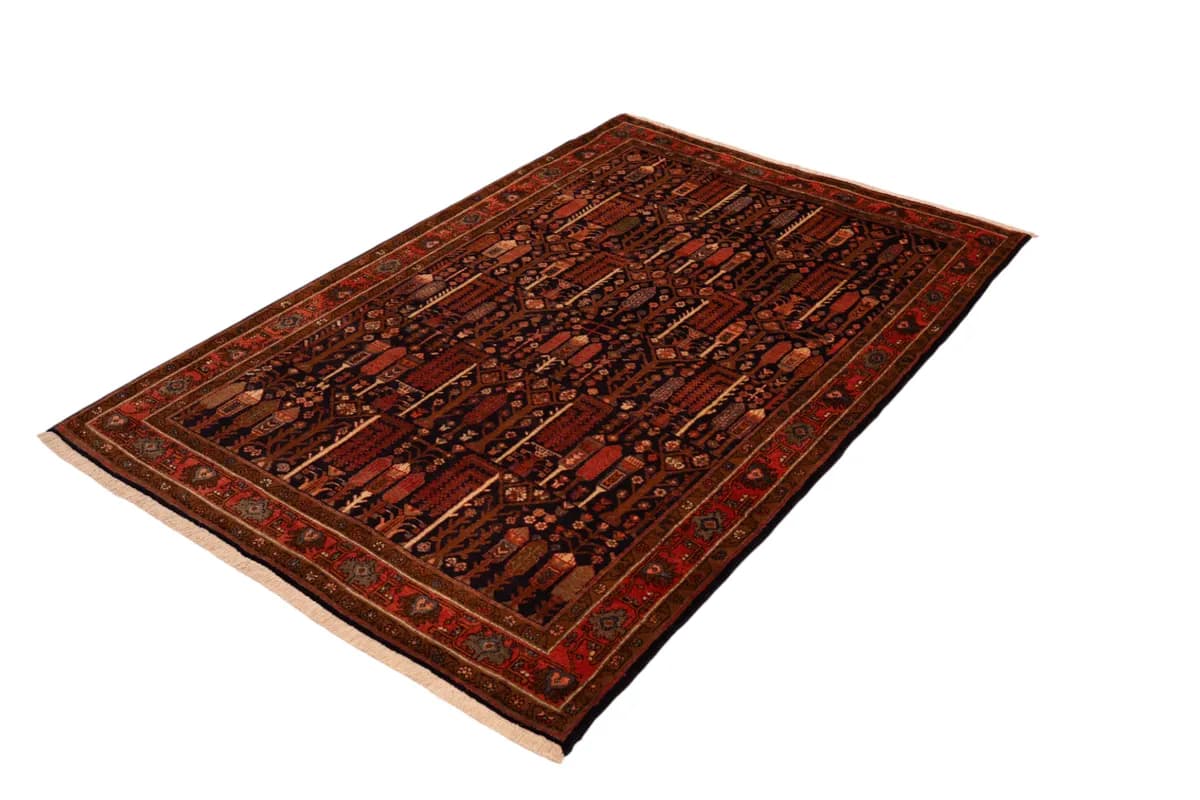
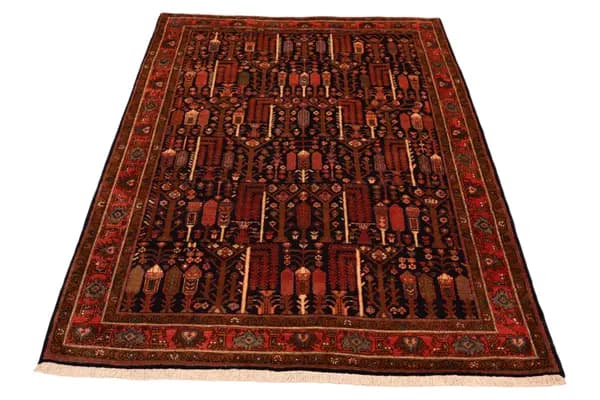
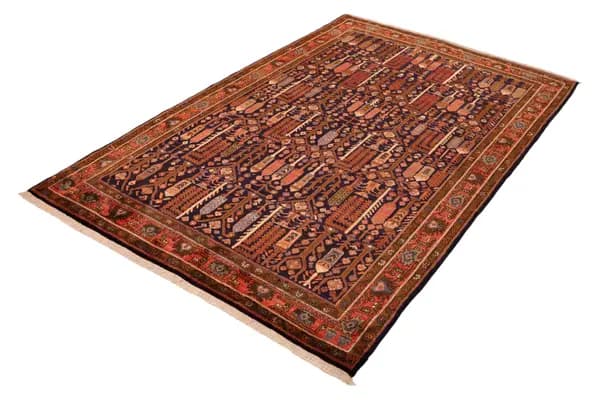
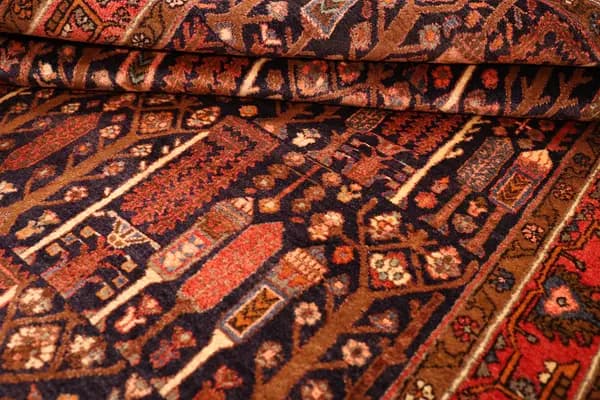
Among Koliai weavings, the standard is a bold central medallion set within a hexagonal Herati lattice, knotted by Kurdish tribal weavers who once moved seasonally through the Songhor district of western Iran, part of the wider Kermanshah weaving region. This rug, 242 x 155 cm (7'11" x 5'1"), takes the same tribal hand and the same dense, high-piled knotting, but sets the field out differently: there is no medallion here at all.
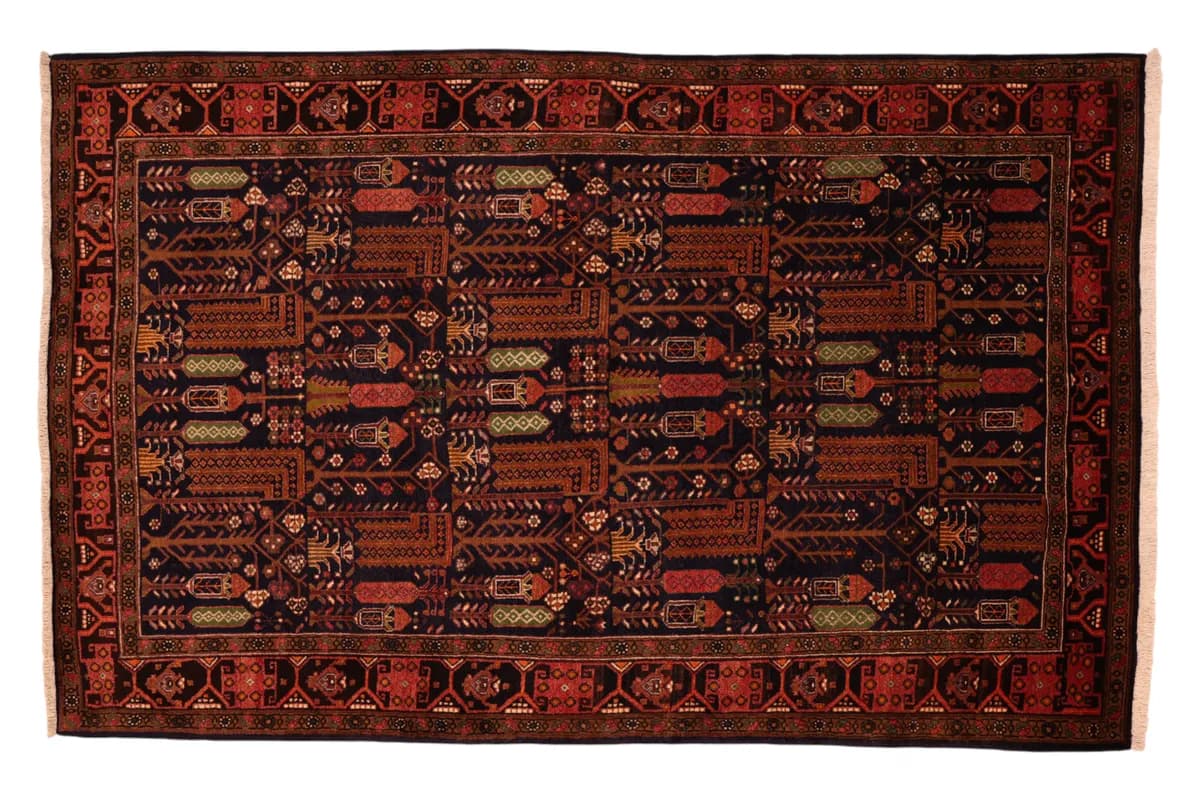
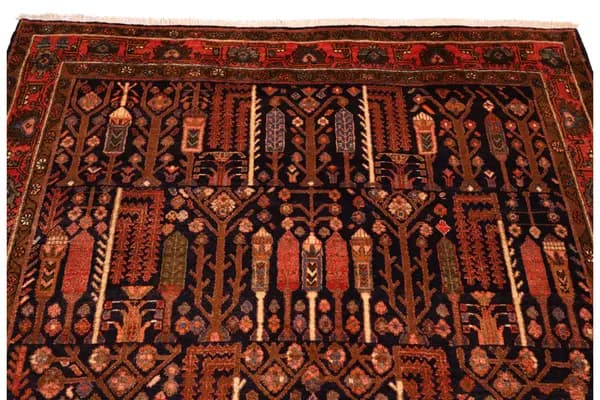
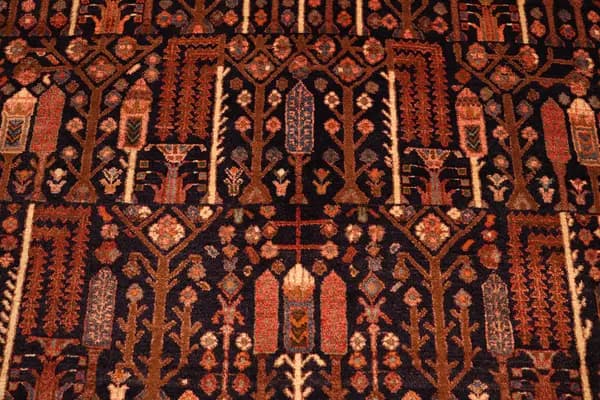
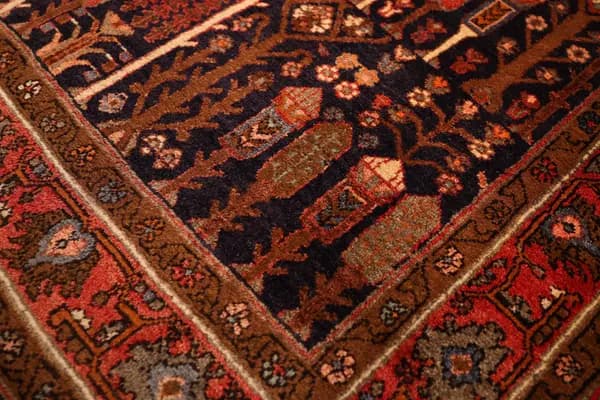
The ground is a deep midnight blue, dark enough to read almost as black, and against it the field is divided into vertical columns rather than built around a single centre. Each column carries a stack of boteh and cypress-tree forms, one below the next, alternating in colour as they run — brick red giving way to rust, cinnamon brown, ivory, a dusty blue-grey, small touches of olive within the shapes. A generous main border gathers the columns in, holding a field that could otherwise feel like a set of separate strips together as one rug. The surface is flat and tightly clipped, with the matte, slightly uneven sheen of hand-spun wool rather than any polish.
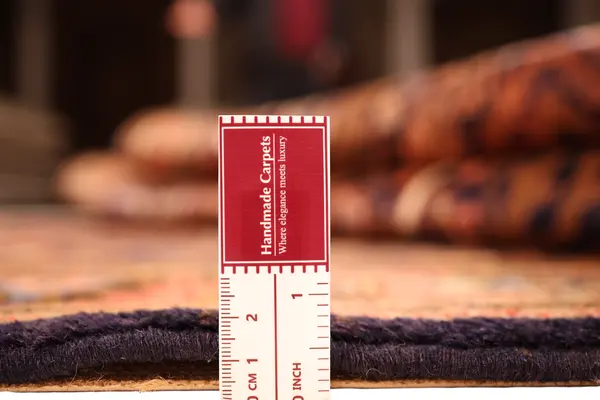
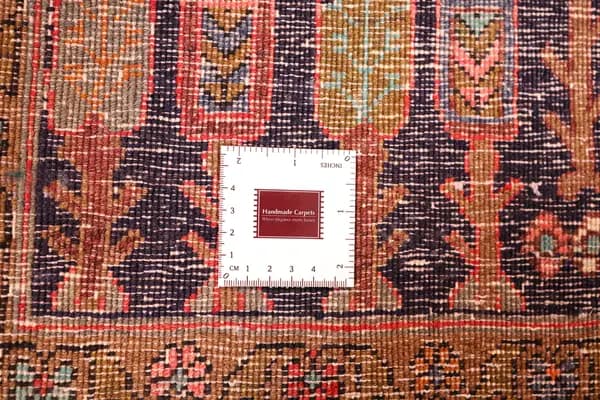
That crispness is a function of the knotting. At 128,000 to 160,000 knots per square metre, this is a firm, close weave for a tribal piece, tight enough to keep the edges of each boteh sharp down a column that has no medallion to anchor it visually. The pile is hand-spun wool on a cotton warp, clipped to about 12 mm, and the wool itself is the lanolin-rich fleece of mountain-grazed sheep, which is what gives the colours their depth and what has kept a rug of twenty to forty years still firm underfoot.
A rug this size sits comfortably under a seating group in a living room or den, or anchors a study floor. The near-black ground holds its own against dark wood or leather furniture, while the rust and brick tones will warm a pale floor rather than disappear into it. Underfoot it is dense and firm, built for a room that gets used, not one that is kept for best. Watch it through a change of light and the columns take turns catching the eye, one colour, then the next.
More on Koliayie rugs: origin, making and how to recognise a genuine piece
Traditional weave
At 242 × 155 cm (3.75 m²) this is a medium rug. It works in front of a sofa, in front of a bed or in a study. It is too small for a dining table — there you want about 80 cm of clearance so a chair does not tip over the edge when pushed back.
Yes, knotted by hand — knot by knot on a loom, not machine-made. The density is 128,000 to 160,000 knots per square metre; across 3.75 m² that is roughly 480,000 to 600,000 individual knots, every one of them tied by hand.
Hand-spun wool still carries its own lanolin, which keeps liquid sitting on the surface for a moment: blot quickly, with clear water and a light cloth, working inwards and without rubbing. Otherwise regular vacuuming along the pile is enough. Turn the rug once or twice a year so light and footfall reach it evenly.
We are in the Hamburg Speicherstadt. Come and see this rug in daylight, or write to us — a person answers.
Certificate included verifying origin, materials, and craftsmanship.
Ref: 992363