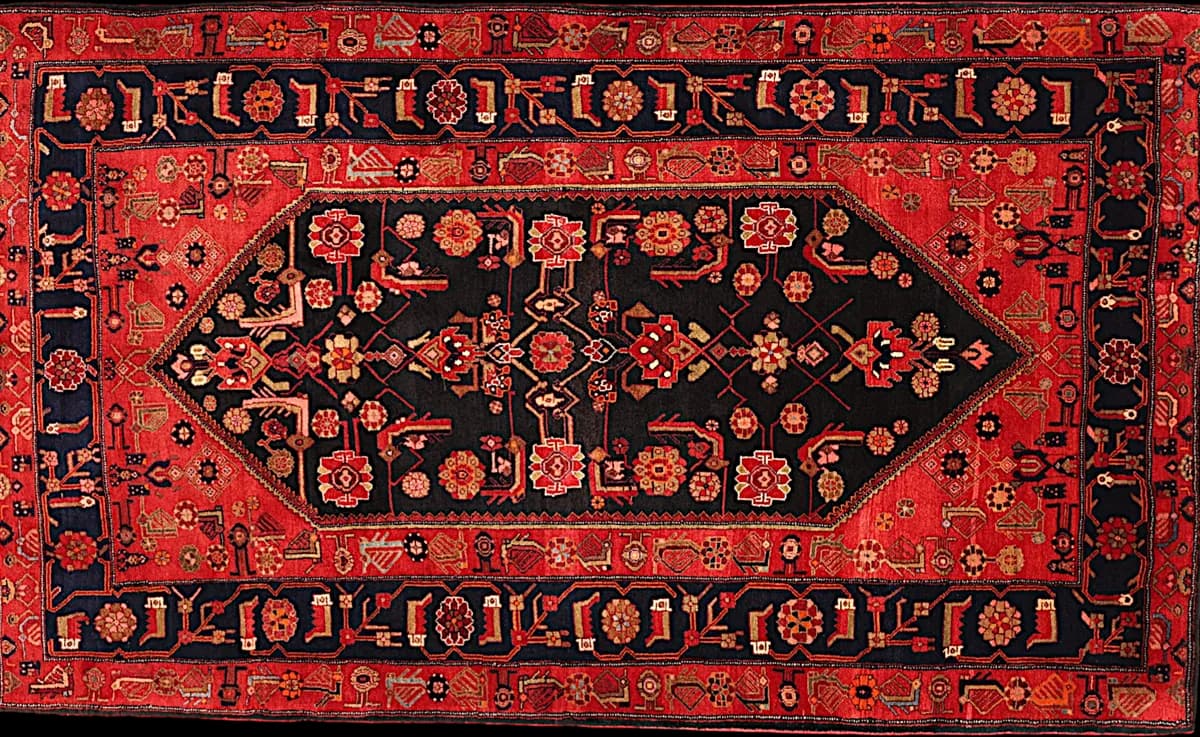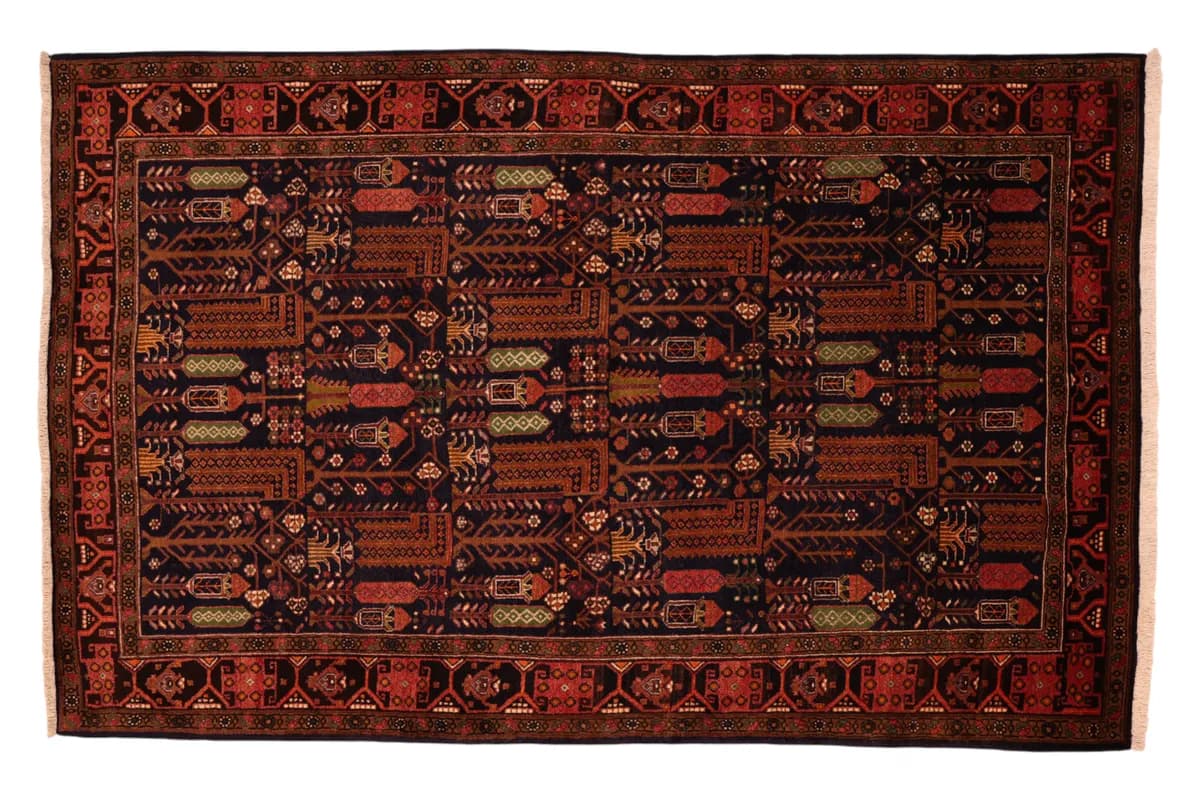
Koliai
239 × 152 cm
1.950 €
835 €
Incl. VAT
In Stock · Ready to Ship
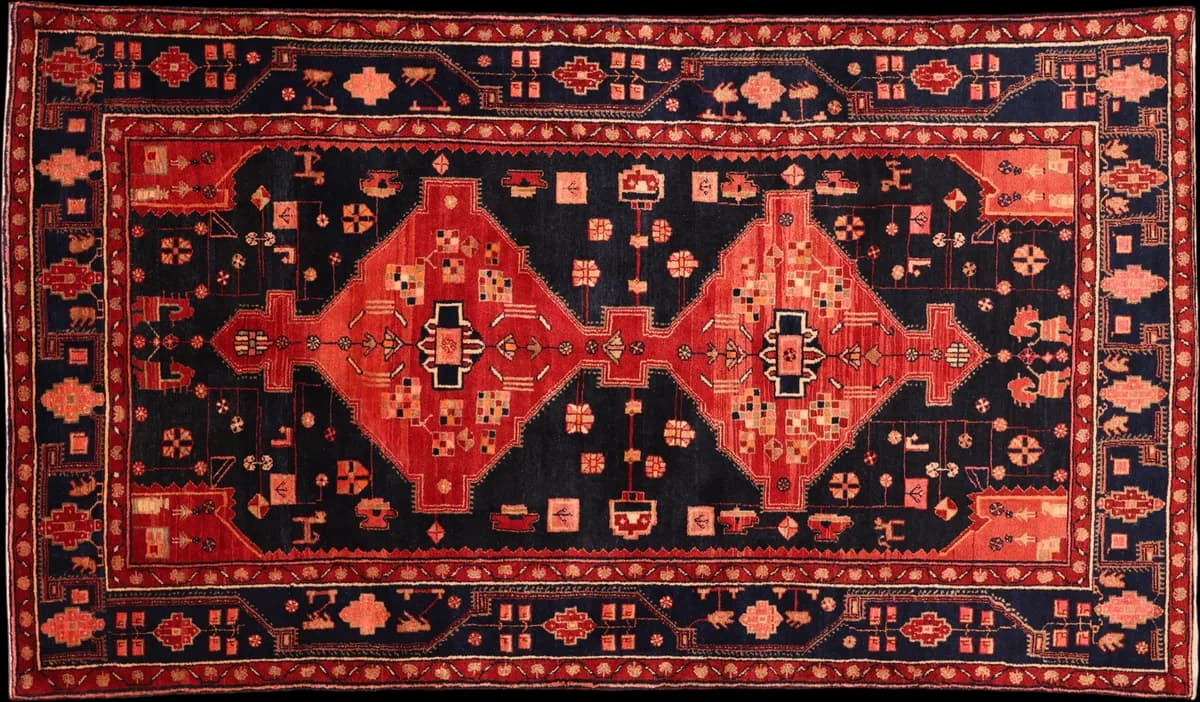
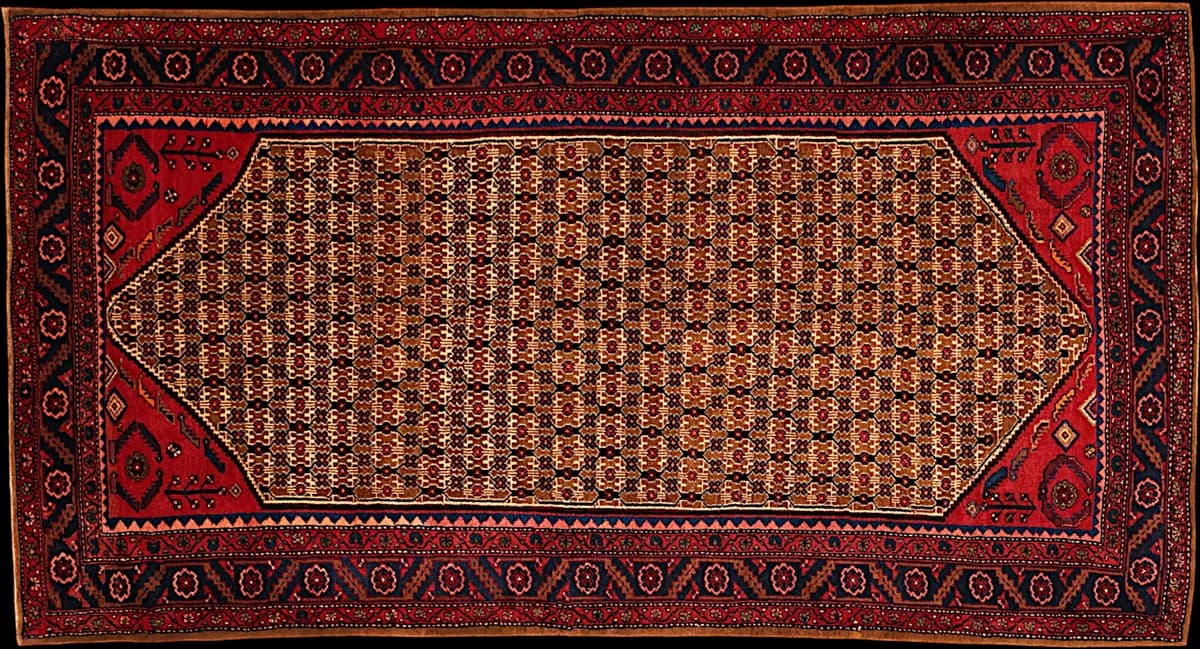
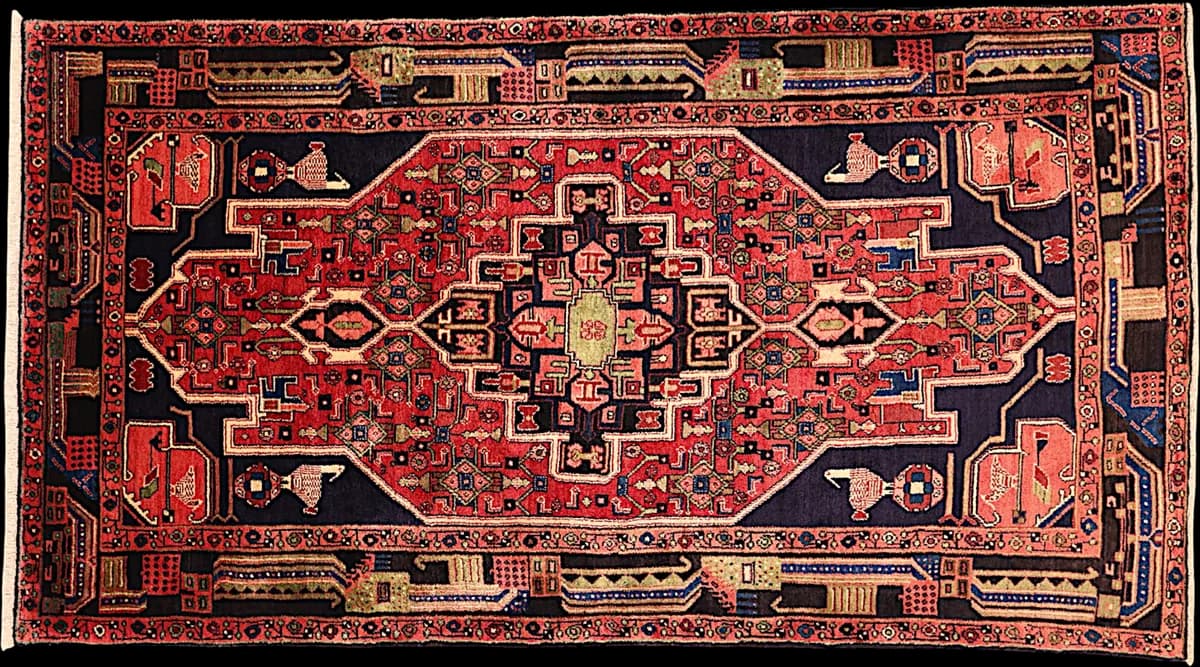
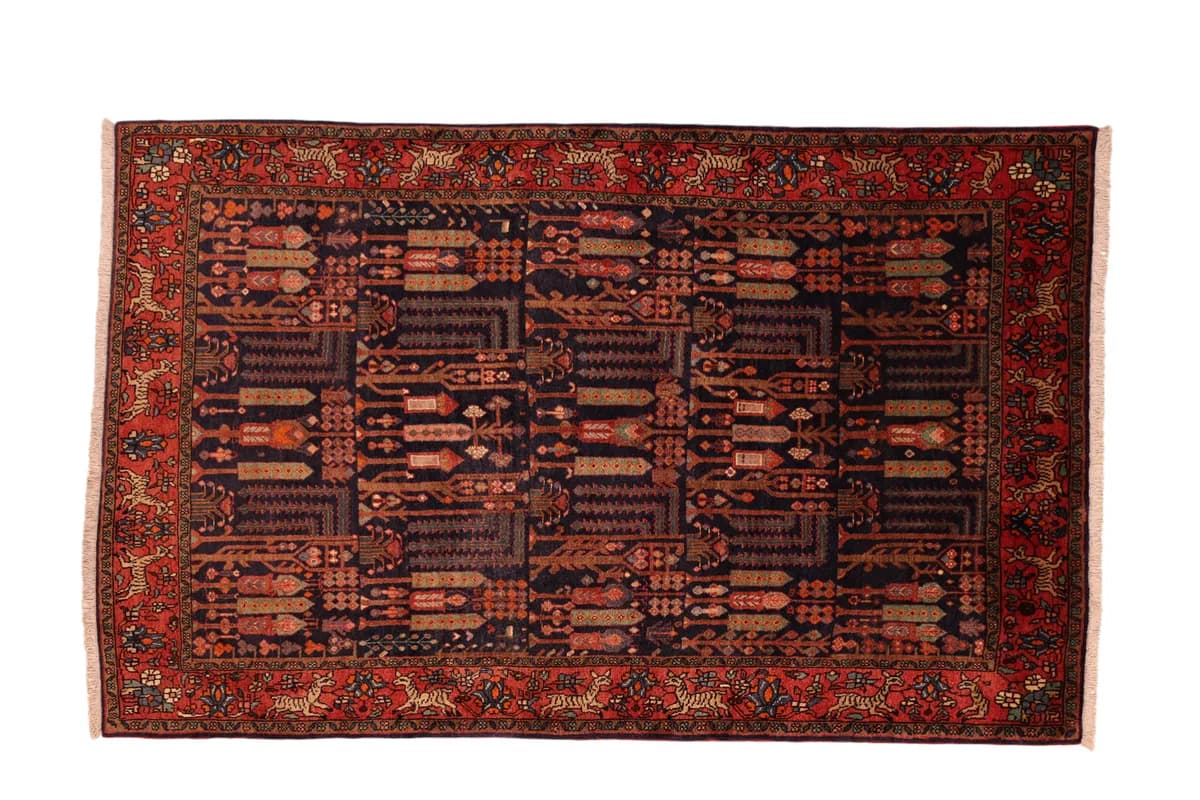
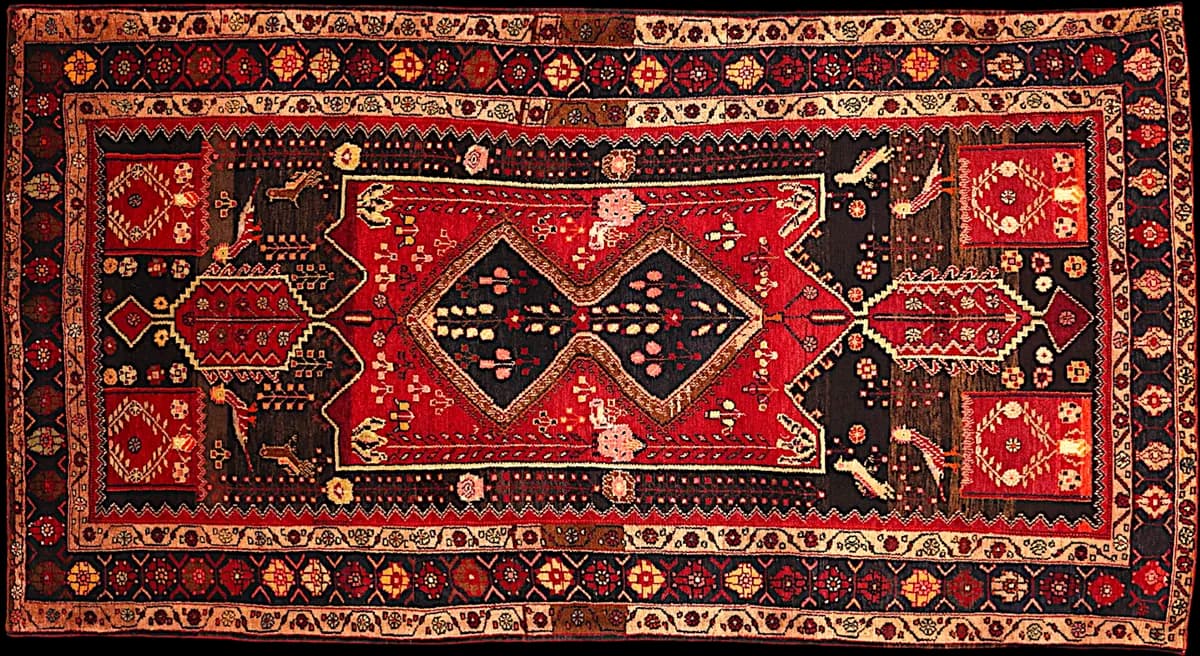
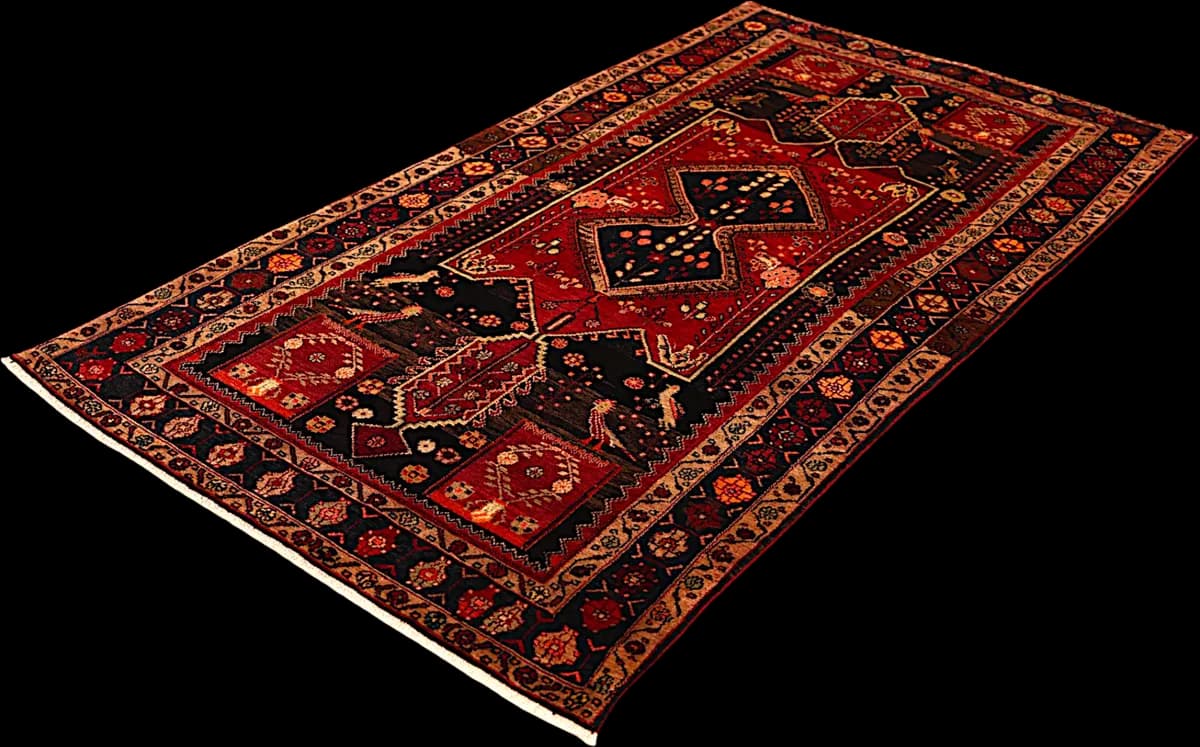
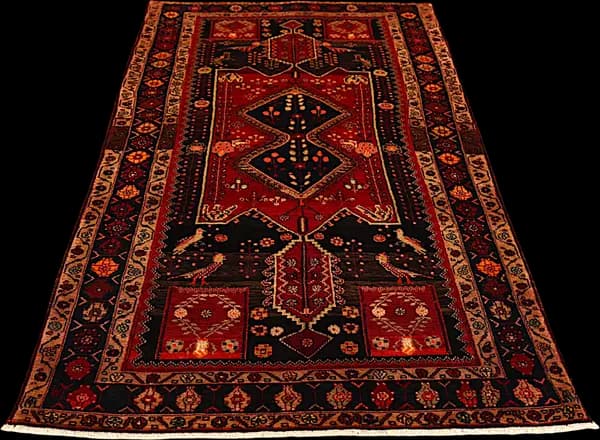
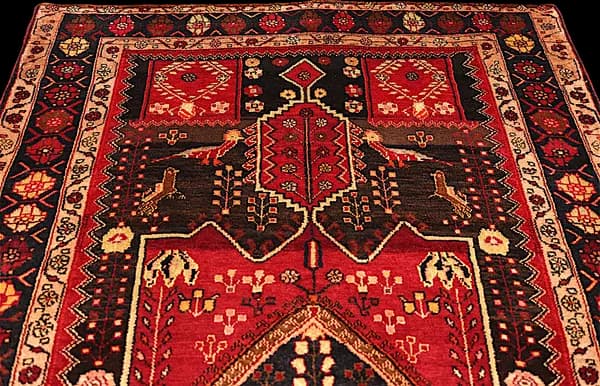
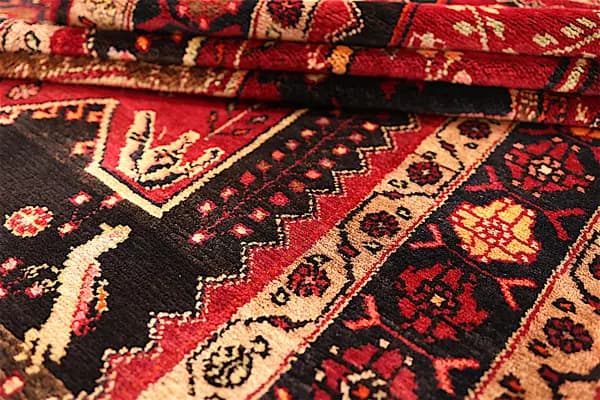
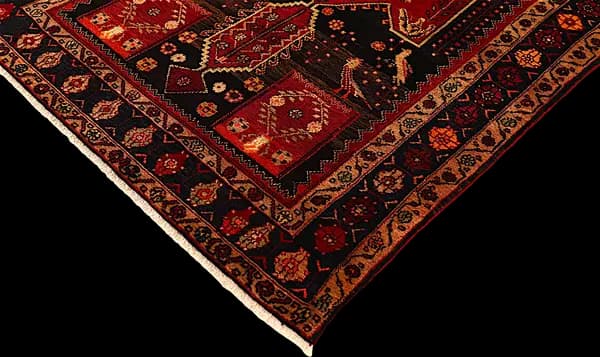
This is a Koliai, a tribal Kurdish weaving from the Songhor district of western Iran, part of the wider Kurdistan and Kermanshah weaving region, measuring 285 x 150 cm (9'4" x 4'11"). Koliai rugs are knotted by families who once lived a nomadic life in these mountains, and they are known above all for a dense, high pile and a colour range that is rich and unusually alive. Where the type is normally read as pure geometry, this piece leans toward something more like a story.
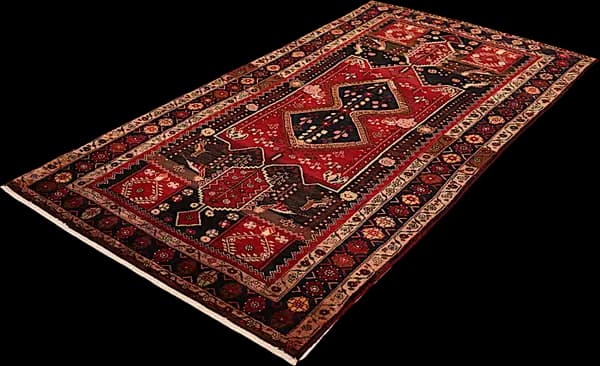
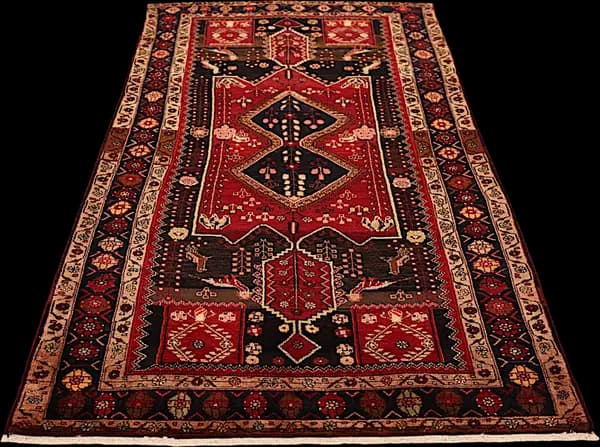
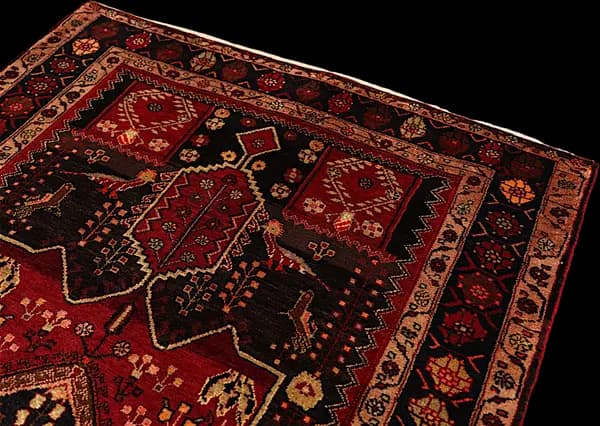
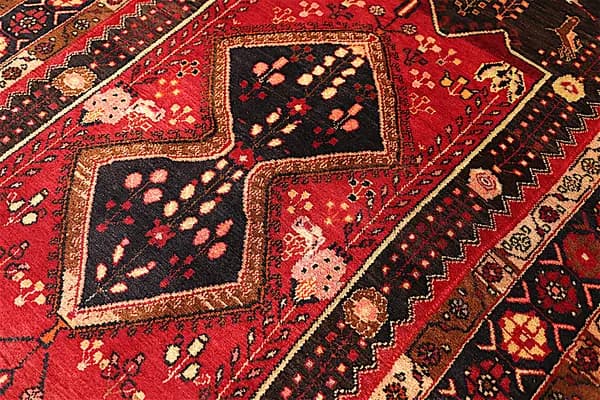
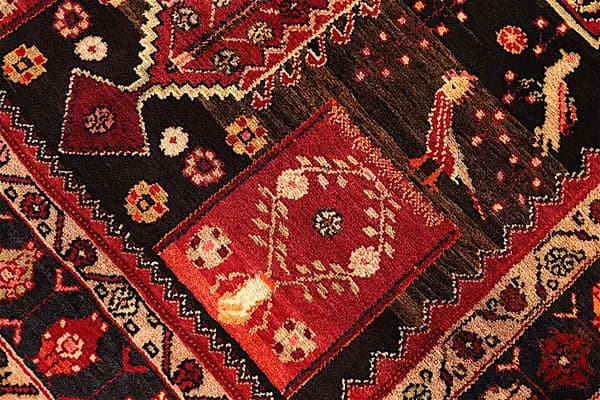
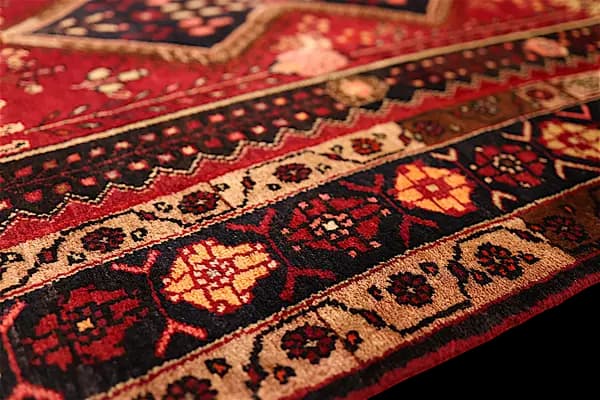
The field is a deep, confident brick red, and across it sits a large medallion in dark brown-black, its edges stepped and hooked rather than smooth. Smaller pendant diamonds echo the medallion above and below it, and the corners carry panels in the same dark ground. Look closer at those corners and along the medallion's own edges, and small figures emerge: stylised birds and four-legged animals, worked in mustard, pink and rust against the brown. The whole field is held by a wide border system, a dark ground scattered with small polychrome rosettes, framed by narrower ivory and red guard stripes that read distinctly lighter and busier than the calm red of the field.
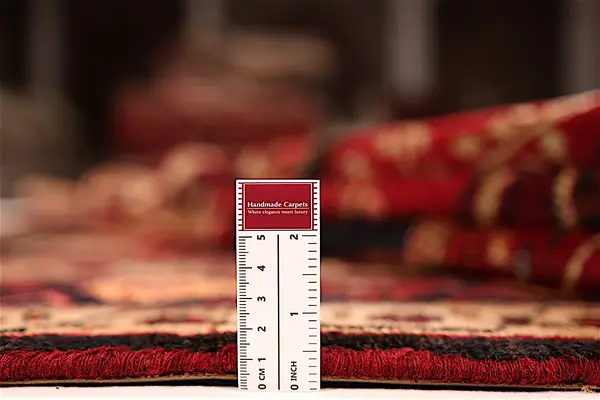
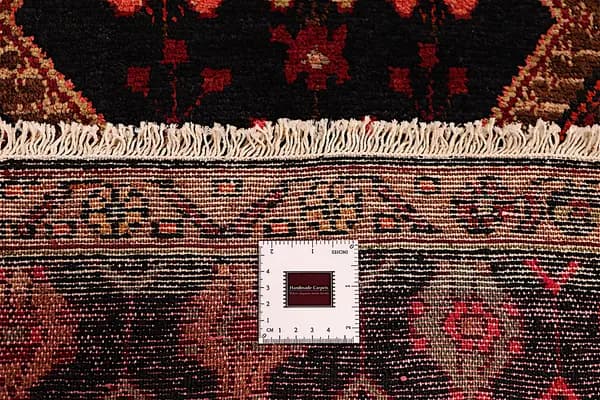
This is hand-knotted, at a density of 128,000 to 160,000 knots per square metre, on a cotton warp, with hand-spun wool making up the pile. Village and workshop rugs are knotted from a drawn cartoon; a Koliai like this one is knotted from memory, and that freedom is exactly what allows small birds and animals to appear where a strict repeat of Herati diamonds would otherwise sit. The wool itself, grazed on mountain pasture and left lanolin-rich, gives the surface its particular soft sheen even though the finish overall is matt, and at 12 mm the pile has enough depth to hold those figures with real presence underfoot.
At 285 x 150 cm this is a rug for a dining table or a seating group in a living or dining room, long enough to gather furniture on rather than sit beneath it alone. The red holds its ground against dark wood and warms a pale floor without effort, while the dark medallion keeps the whole design anchored rather than busy. Underfoot it is dense and firm, built for a room that gets used, not one that gets protected. Live with it a while and the birds and animals in the corners are the sort of detail you keep rediscovering, long after you thought you knew the rug.
More on Koliayie rugs: origin, making and how to recognise a genuine piece
Traditional weave
At 285 × 150 cm (4.28 m²) this is a medium rug. It works in front of a sofa, in front of a bed or in a study. It is too small for a dining table — there you want about 80 cm of clearance so a chair does not tip over the edge when pushed back.
Yes, knotted by hand — knot by knot on a loom, not machine-made. The density is 128,000 to 160,000 knots per square metre; across 4.28 m² that is roughly 550,000 to 680,000 individual knots, every one of them tied by hand.
Hand-spun wool still carries its own lanolin, which keeps liquid sitting on the surface for a moment: blot quickly, with clear water and a light cloth, working inwards and without rubbing. Otherwise regular vacuuming along the pile is enough. Turn the rug once or twice a year so light and footfall reach it evenly.
We are in the Hamburg Speicherstadt. Come and see this rug in daylight, or write to us — a person answers.
Certificate included verifying origin, materials, and craftsmanship.
Ref: 139343