Koliai
271 × 169 cm
2.511 €
1.950 €
Incl. VAT
In Stock · Ready to Ship
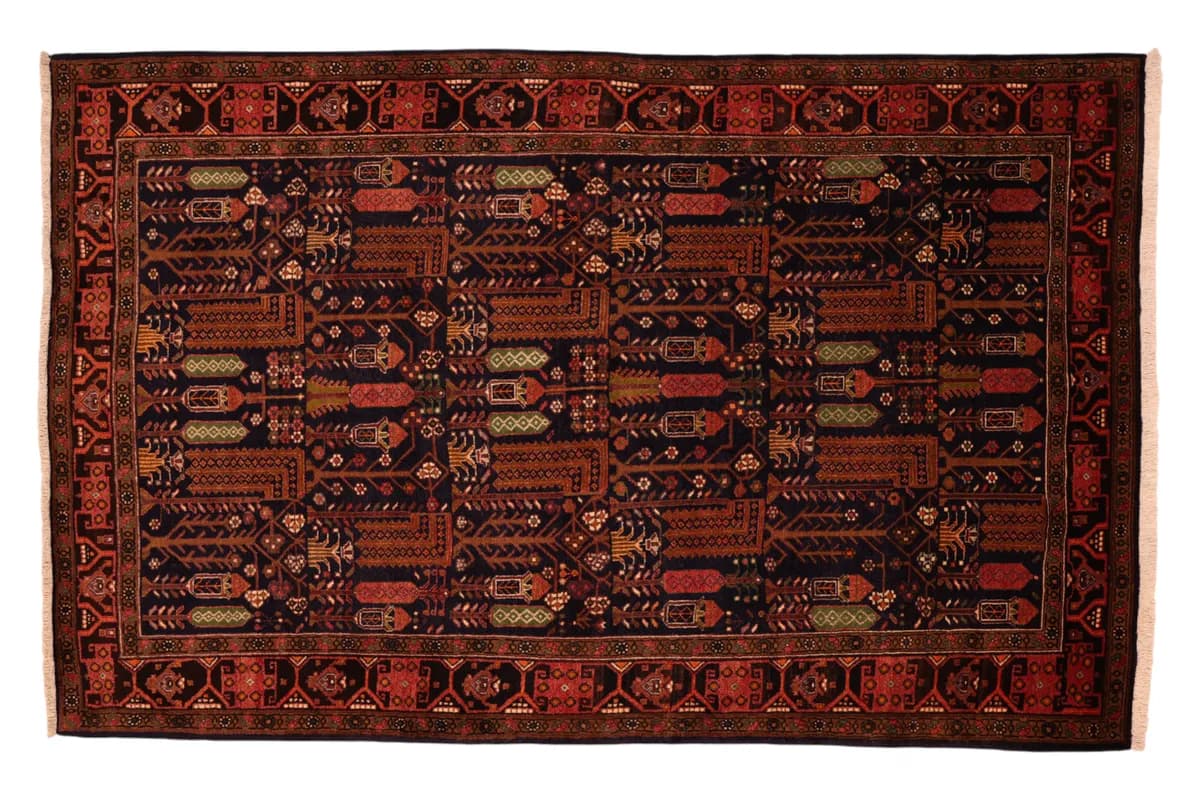
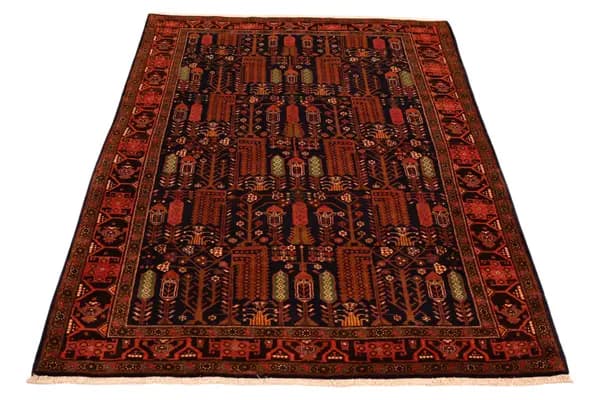
This is a Koliai, a tribal rug knotted by Kurdish weavers of the Songhor district in western Iran, part of the wider Kermanshah weaving region. At 239 x 152 cm (7'10" x 5'0"), it is sized for a room rather than a hallway. Koliai weavings are known for their firm, high-piled knotting and a bold central medallion raised on a Herati diamond lattice.
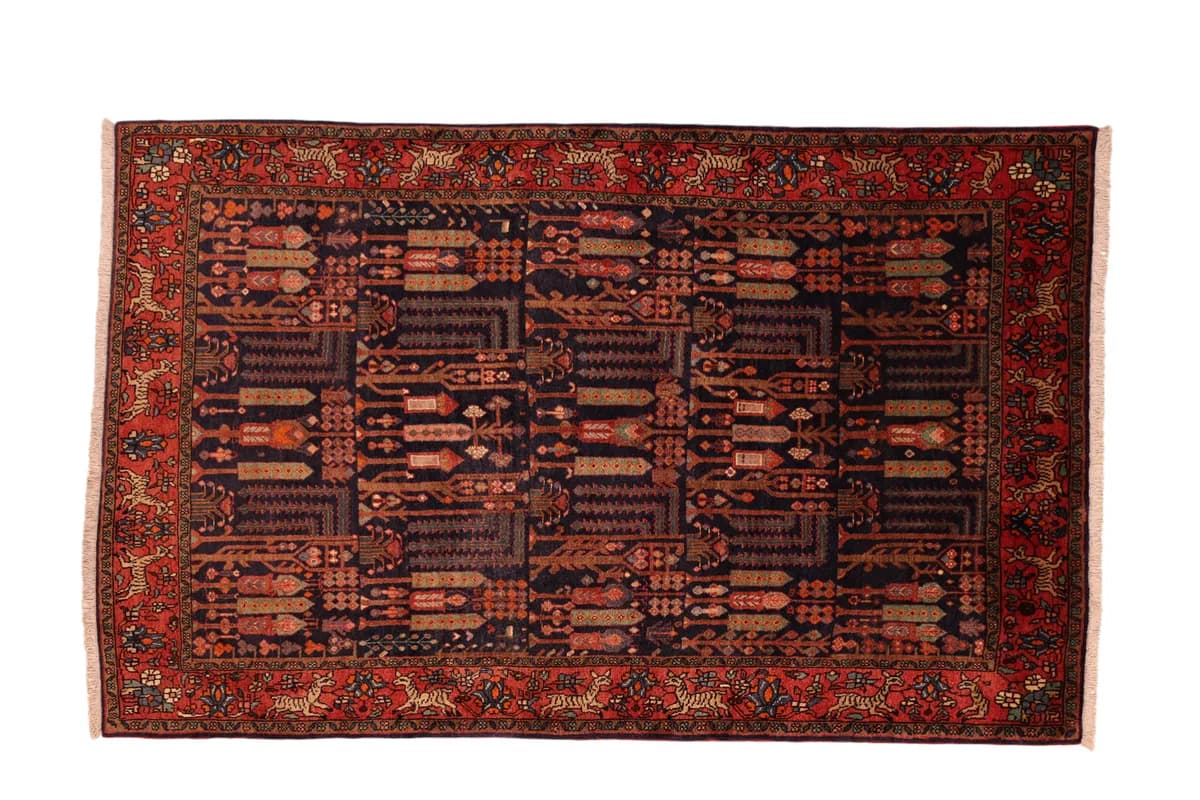
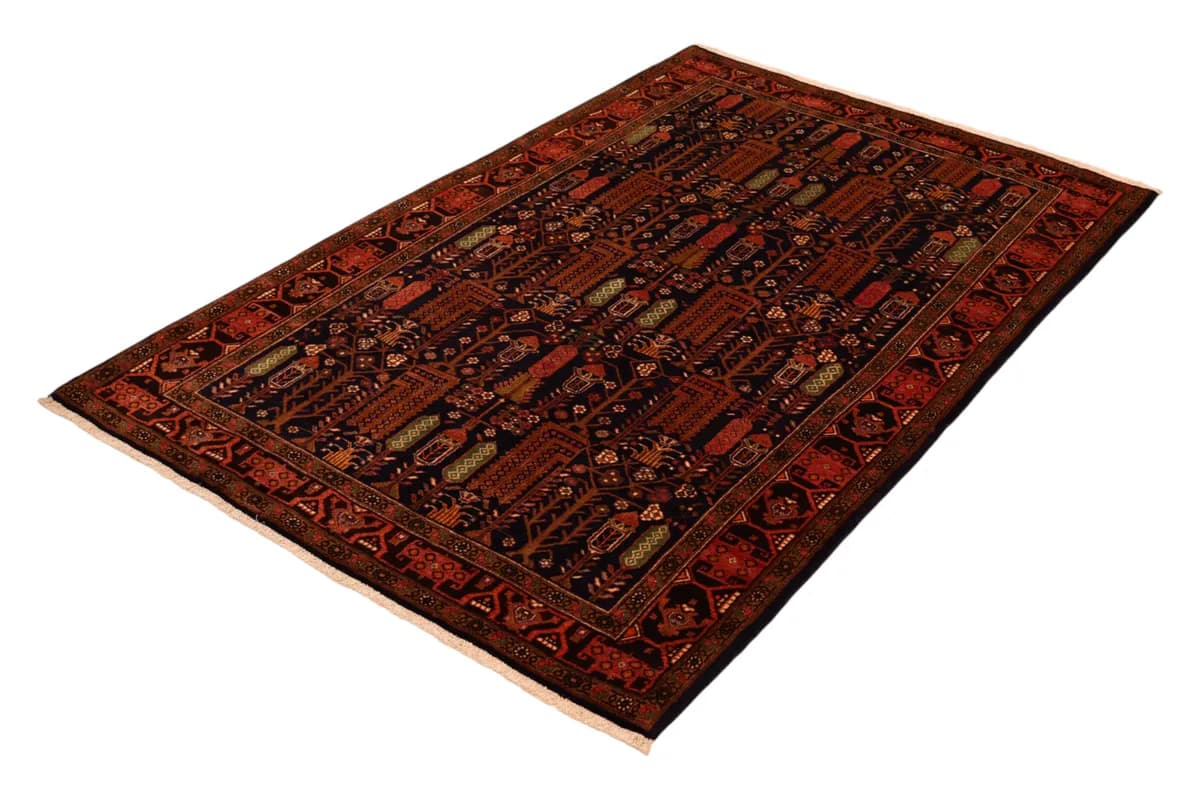
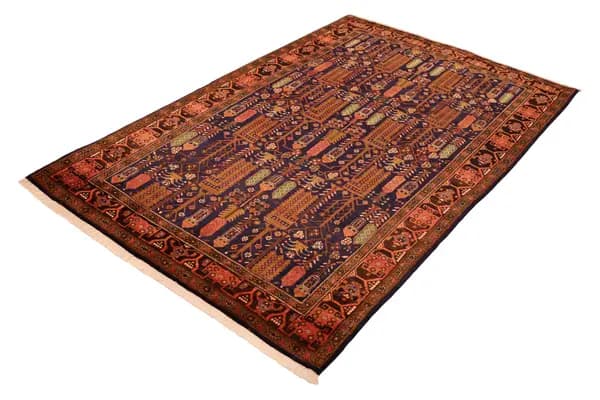
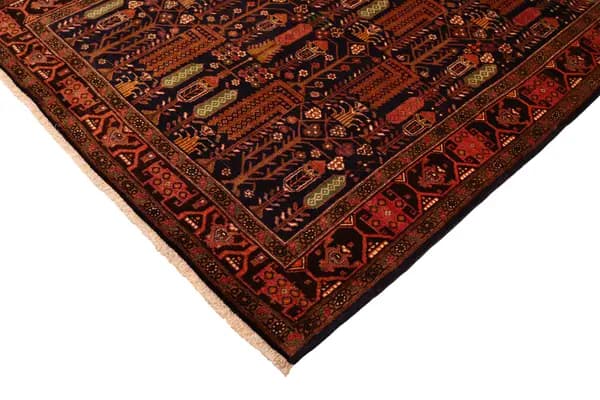
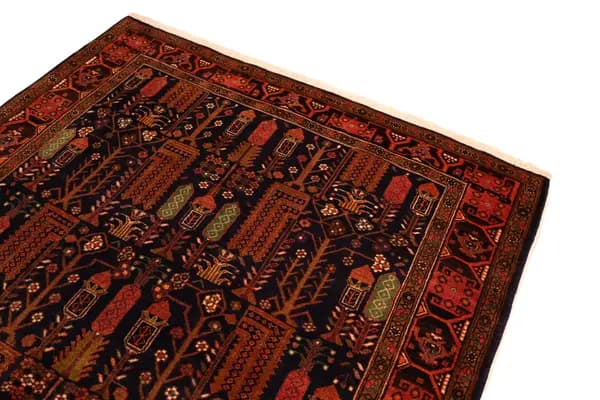
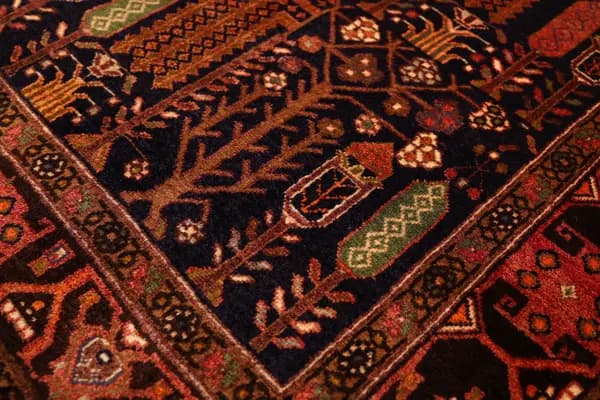
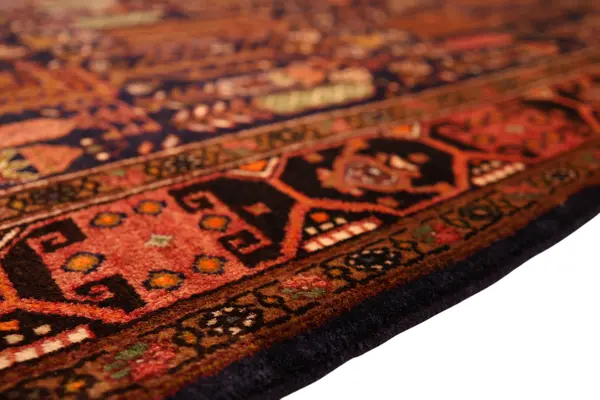
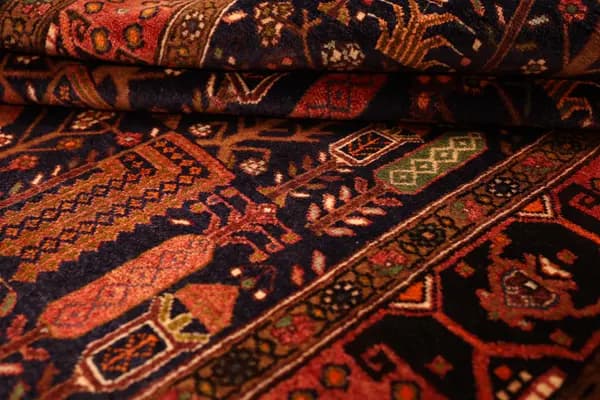
Look at it and the ground reads first: a deep navy, close to blue-black, unusual for a design usually carried on brick red. Rather than gathering into a single medallion, the pattern runs in vertical columns, tree-and-vase motifs alternating with diamond-lattice fillers, each lattice in olive green and outlined in cream. The field marches rather than centres, upright and steady across the width of the rug. It closes into a wide rust-red border, hooked diamonds set in compartments, the one place where the usual Koliai warmth is allowed to take over.
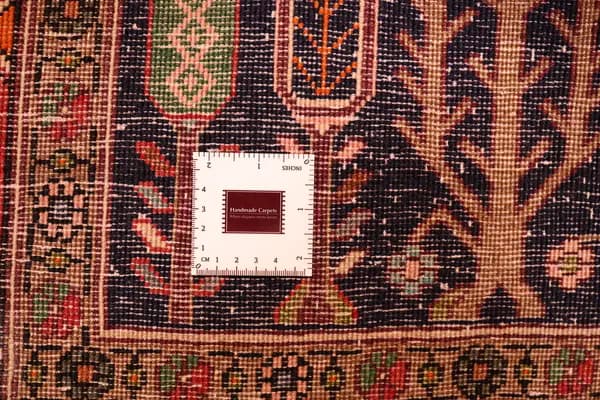
The rug is hand-knotted, the pile hand-spun from lanolin-rich wool grazed on mountain pasture, tied to a cotton warp at a firm 128,000 to 160,000 knots per square metre. That density is enough to keep the columns straight and the lattices crisp without needing the fine knot count a city workshop would use for the same clarity. The lanolin in the wool gives the surface its low, even sheen rather than a bright shine, and it is a fair part of why the rug still wears well twenty to forty years on. At 12 mm the pile sits substantial underfoot, tribal in feel rather than refined, true to a design knotted from memory rather than drawn out beforehand.
A rug this size settles well in a bedroom, laid alongside rather than under the bed, or into a smaller seating corner of a living room. The navy ground holds its own against dark furniture and warms a pale floor equally, absorbing light rather than throwing it back, while the rust border and olive lattice keep the room from going flat. Underfoot it is dense and firm, made for daily footfall rather than careful protection, and the lanolin keeps it resilient through exactly that use. Morning light picks out the cream lattice outlines first and works down the columns as the day turns, so the rug keeps moving quietly even though nothing in it is asking to be noticed all at once.
More on Koliayie rugs: origin, making and how to recognise a genuine piece
Traditional weave
At 239 × 152 cm (3.63 m²) this is a medium rug. It works in front of a sofa, in front of a bed or in a study. It is too small for a dining table — there you want about 80 cm of clearance so a chair does not tip over the edge when pushed back.
Yes, knotted by hand — knot by knot on a loom, not machine-made. The density is 128,000 to 160,000 knots per square metre; across 3.63 m² that is roughly 460,000 to 580,000 individual knots, every one of them tied by hand.
Hand-spun wool still carries its own lanolin, which keeps liquid sitting on the surface for a moment: blot quickly, with clear water and a light cloth, working inwards and without rubbing. Otherwise regular vacuuming along the pile is enough. Turn the rug once or twice a year so light and footfall reach it evenly.
We are in the Hamburg Speicherstadt. Come and see this rug in daylight, or write to us — a person answers.
Certificate included verifying origin, materials, and craftsmanship.
Ref: 187962