Koliai
305 × 165 cm
981 €
1.278 €
Incl. VAT
In Stock · Ready to Ship
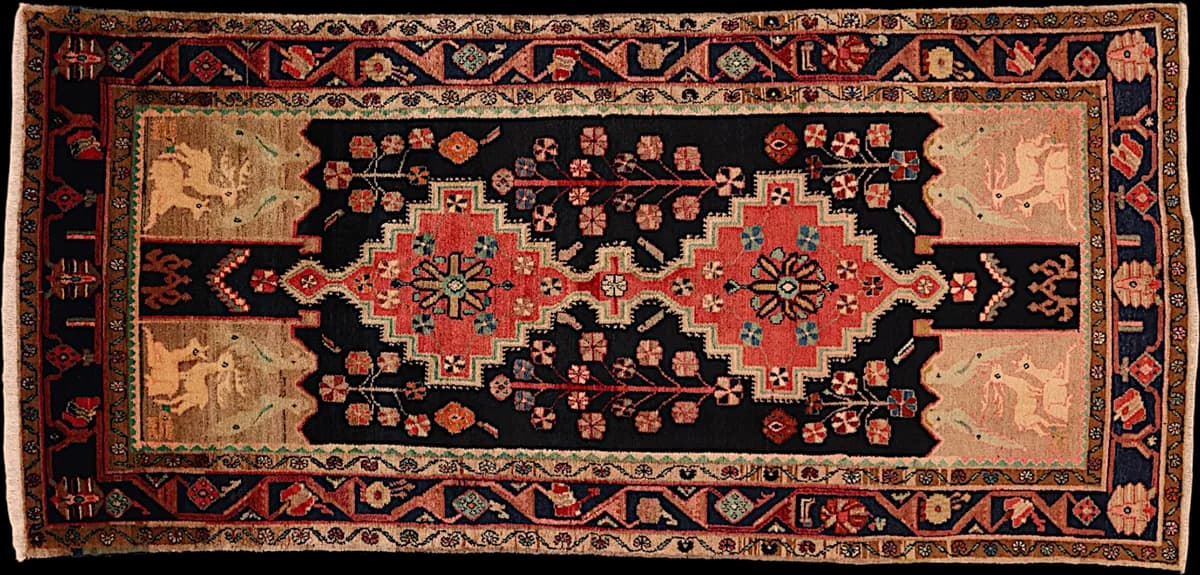
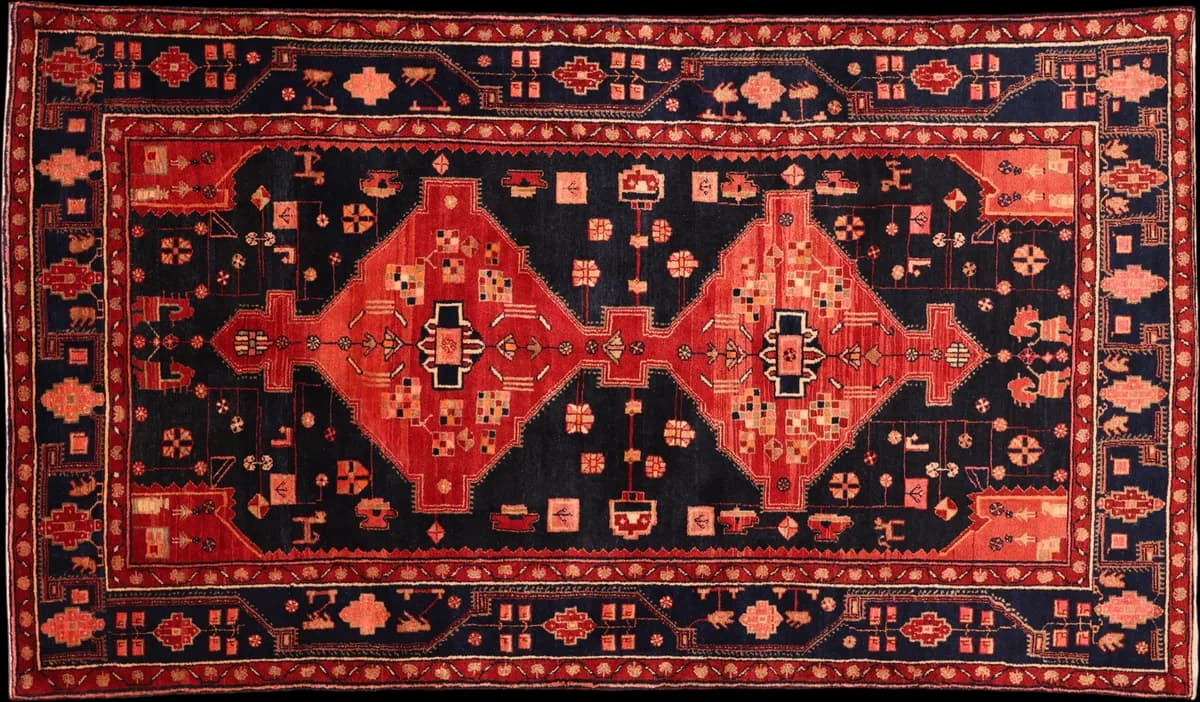
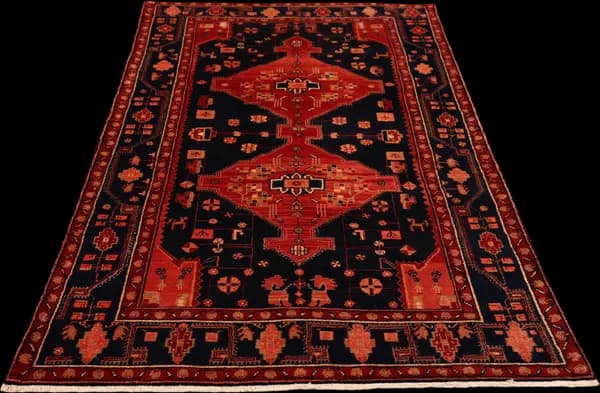
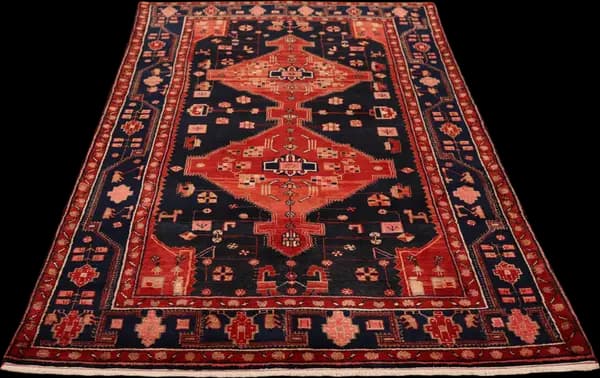
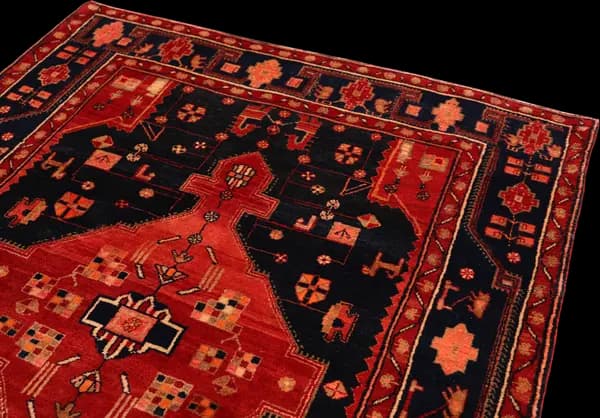
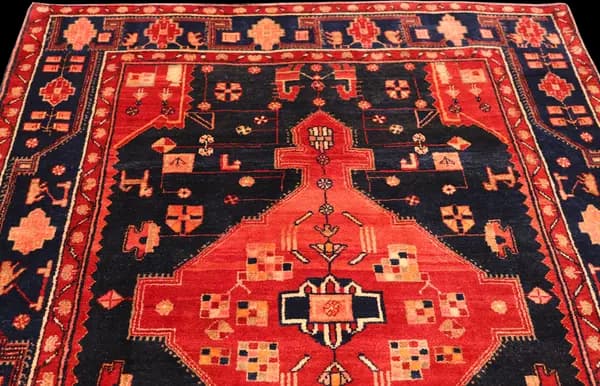
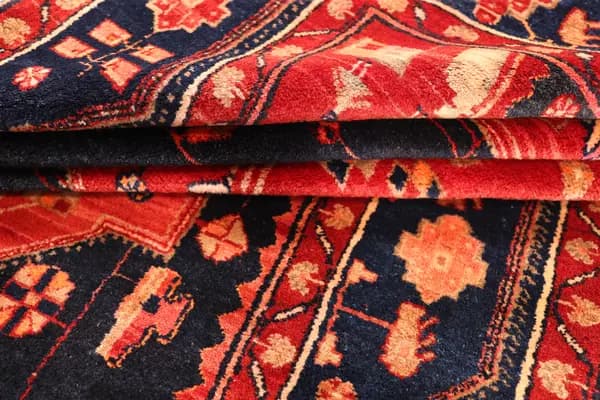
A Koliai, a tribal Kurdish weaving from the Songhor district of western Iran, part of the wider Kermanshah weaving region, 281 x 160 cm (9'3" x 5'3"). Koliai rugs are knotted from memory by mountain tribes once nomadic, and they are known for a dense, high pile and a colour range that usually reads as warm and energetic. This one takes that same vividness and sets it against a ground dark enough to hold it rather than let it shout.
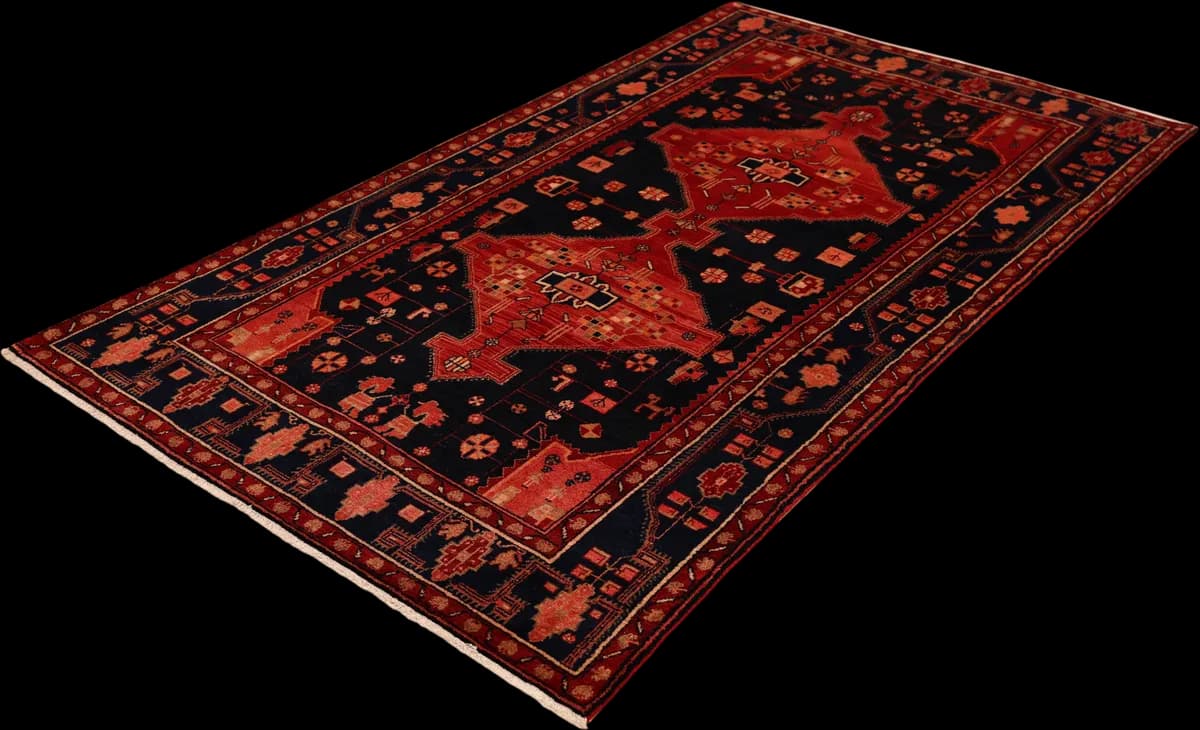
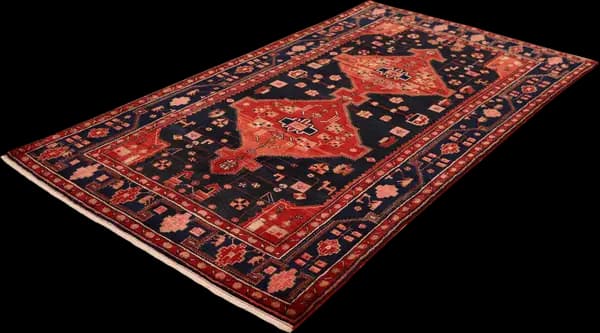
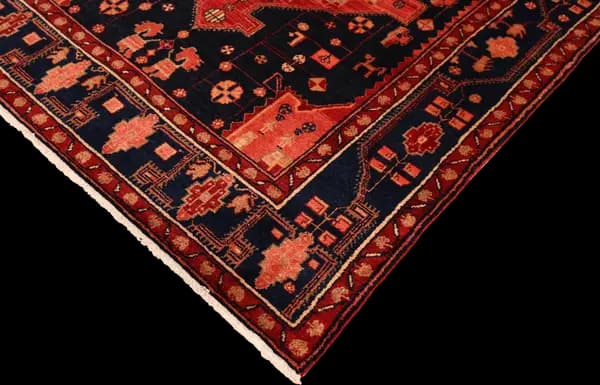
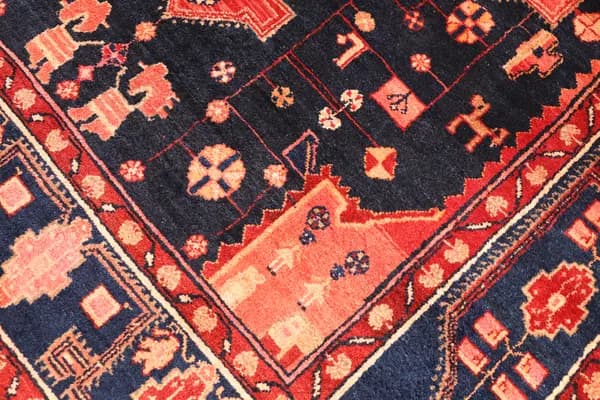
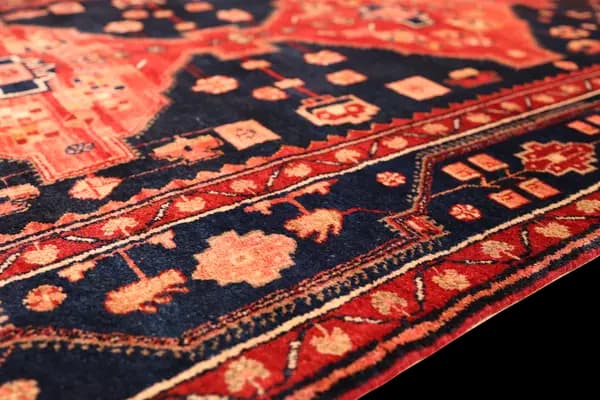
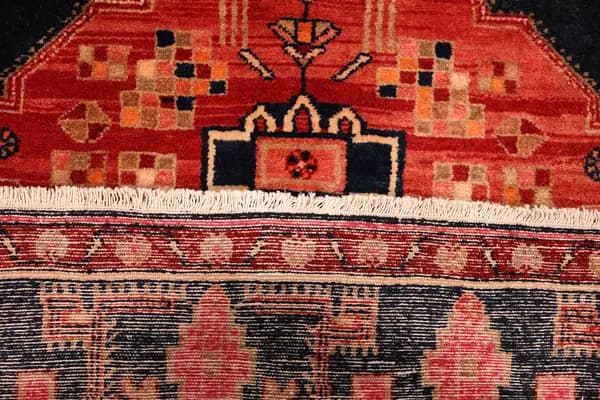
The field is a deep navy running almost to black, and against it two large hooked diamond medallions chain down the length of the rug, their outlines picked out in ivory and camel. Around and between them, small geometric figures scatter across the dark ground: rosettes, hooked forms, little points of salmon-pink, cream, ochre and dark green, each one distinct against the black rather than blending into a lighter field. A narrow border in the same restrained set of colours closes the design, so the eye stays on the medallions and the field between them rather than travelling out to the edge.
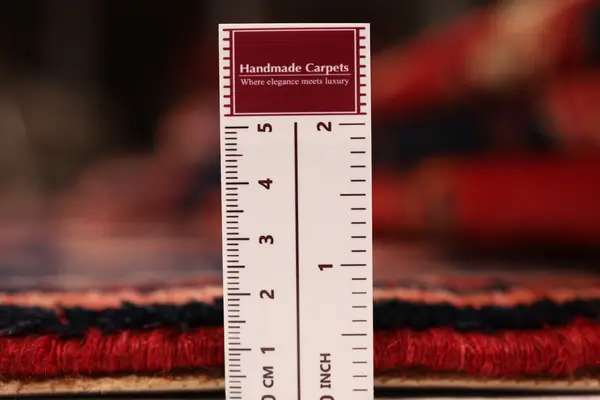
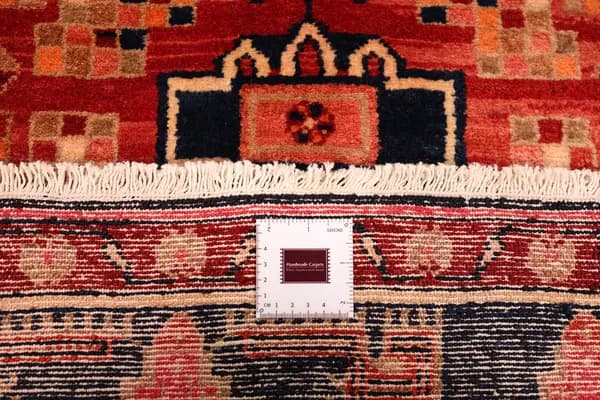
The wool is hand-spun and lanolin-rich, grazed on the high pastures the weaving tribes still know, and it is this that gives the surface its close, matt richness rather than any applied sheen. At 201,000 to 250,000 knots per square metre, the density is high for tribal work knotted on a portable loom, and it is what allows the small filler motifs to stay sharp rather than blur into the dark ground around them. A pile of 12 millimetres, worked on a cotton warp, gives the rug its weight and its slightly ribbed underfoot texture, both marks of a piece built for daily use rather than display.
In a living room, laid in front of a sofa or under a low table, this depth of ground holds its own against dark furniture and timber floors alike, while the salmon and ochre scattered through it keep the room from feeling heavy. Underfoot it is dense and firm, wool that has been walked on for twenty to forty years already and asks to be walked on further, not set aside. As daylight moves across it through the day, the small figures catch the light one at a time rather than all at once, so the rug keeps giving something new to notice long after the first look.
More on Koliayie rugs: origin, making and how to recognise a genuine piece
Fine quality weave
At 281 × 160 cm (4.50 m²) this is a medium rug. It works in front of a sofa, in front of a bed or in a study. It is too small for a dining table — there you want about 80 cm of clearance so a chair does not tip over the edge when pushed back.
Yes, knotted by hand — knot by knot on a loom, not machine-made. The density is 201,000 to 250,000 knots per square metre; across 4.50 m² that is roughly 0.9 to 1.1 million individual knots, every one of them tied by hand.
Hand-spun wool still carries its own lanolin, which keeps liquid sitting on the surface for a moment: blot quickly, with clear water and a light cloth, working inwards and without rubbing. Otherwise regular vacuuming along the pile is enough. Turn the rug once or twice a year so light and footfall reach it evenly.
We are in the Hamburg Speicherstadt. Come and see this rug in daylight, or write to us — a person answers.
Certificate included verifying origin, materials, and craftsmanship.
Ref: 188686