Koliai
322 × 160 cm
1.004 €
1.785 €
Incl. VAT
In Stock · Ready to Ship
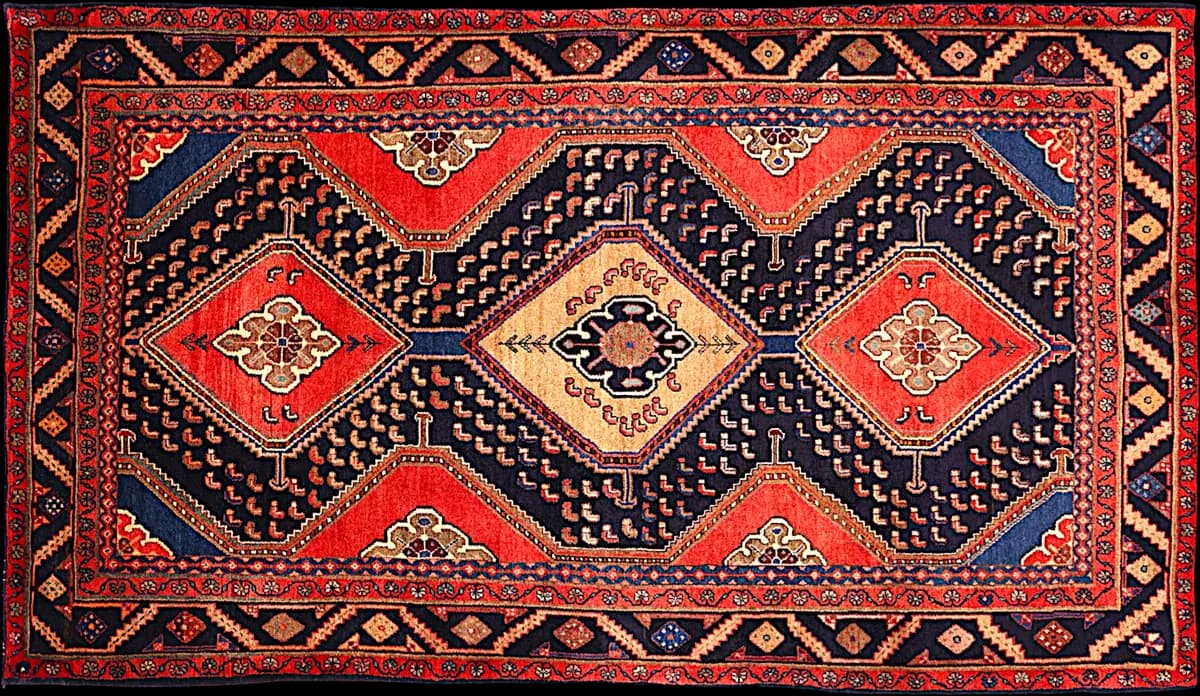
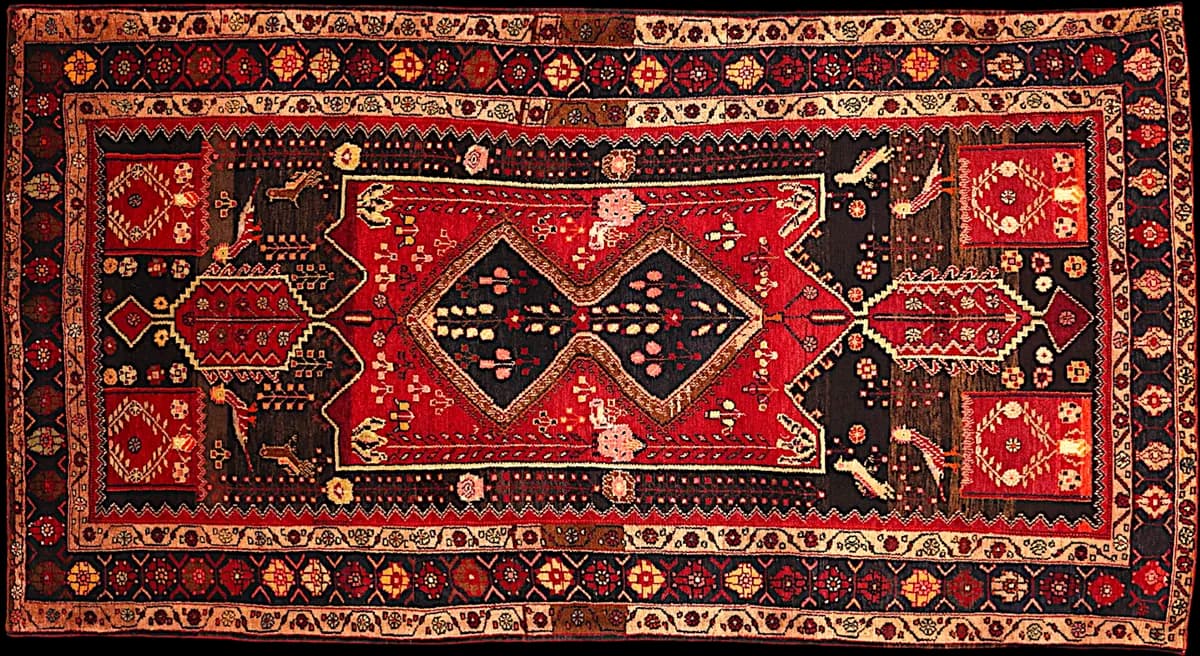
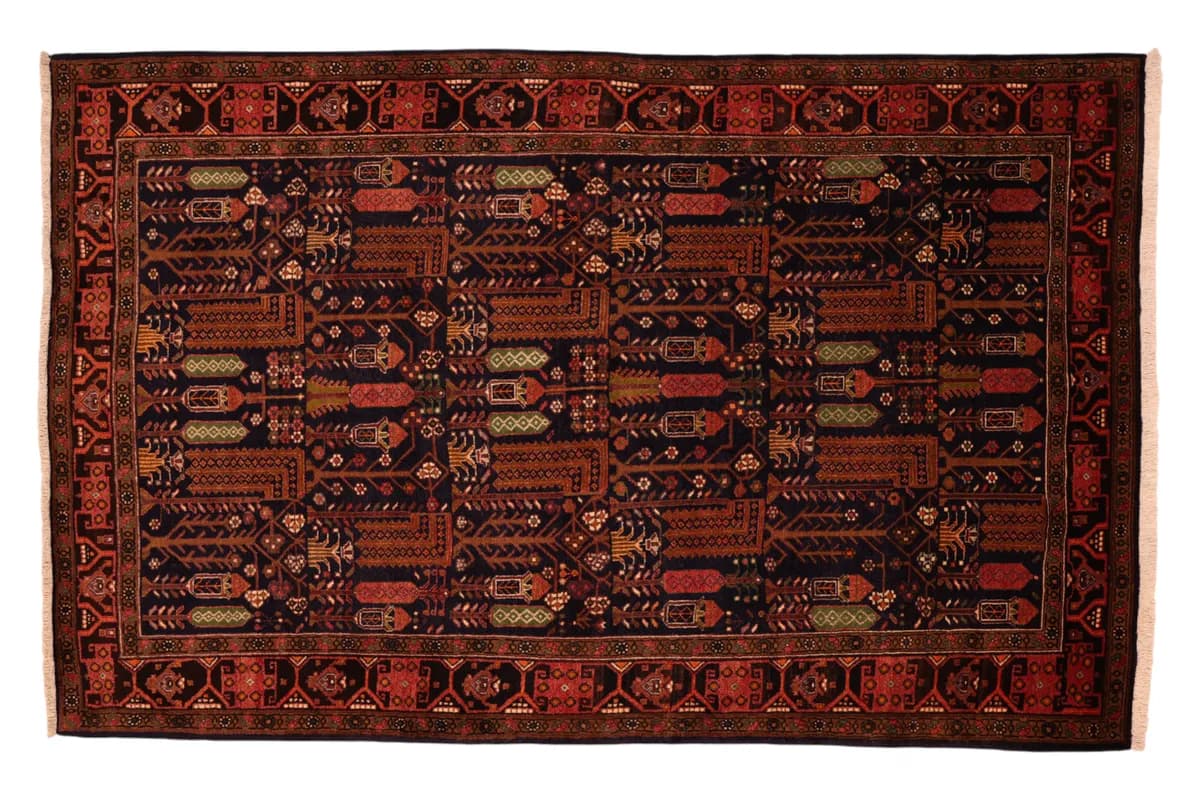
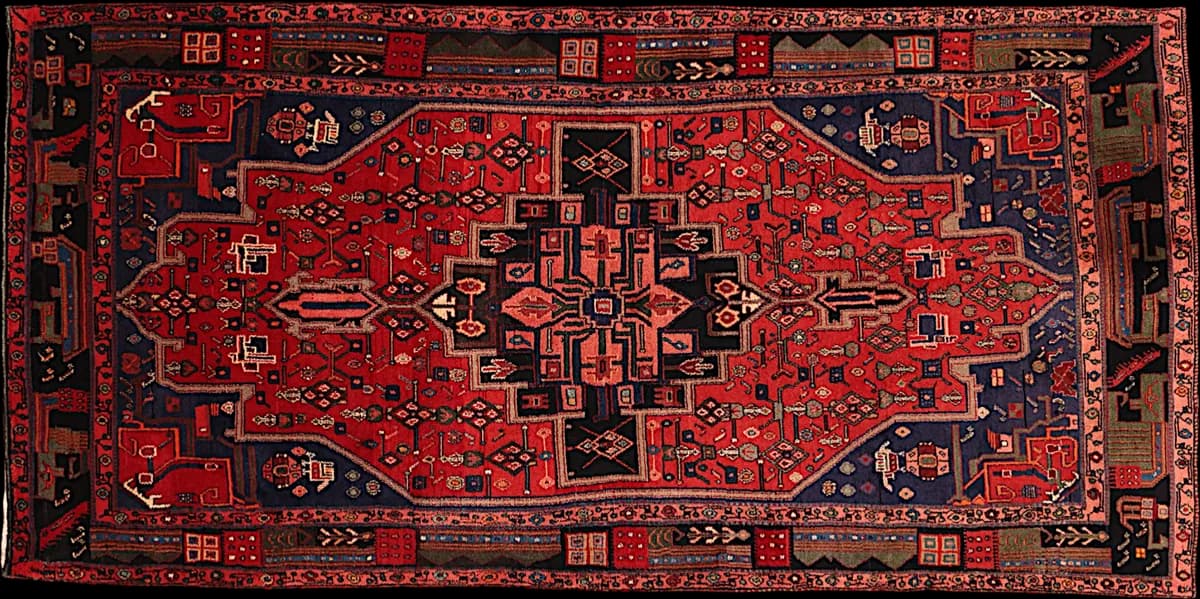
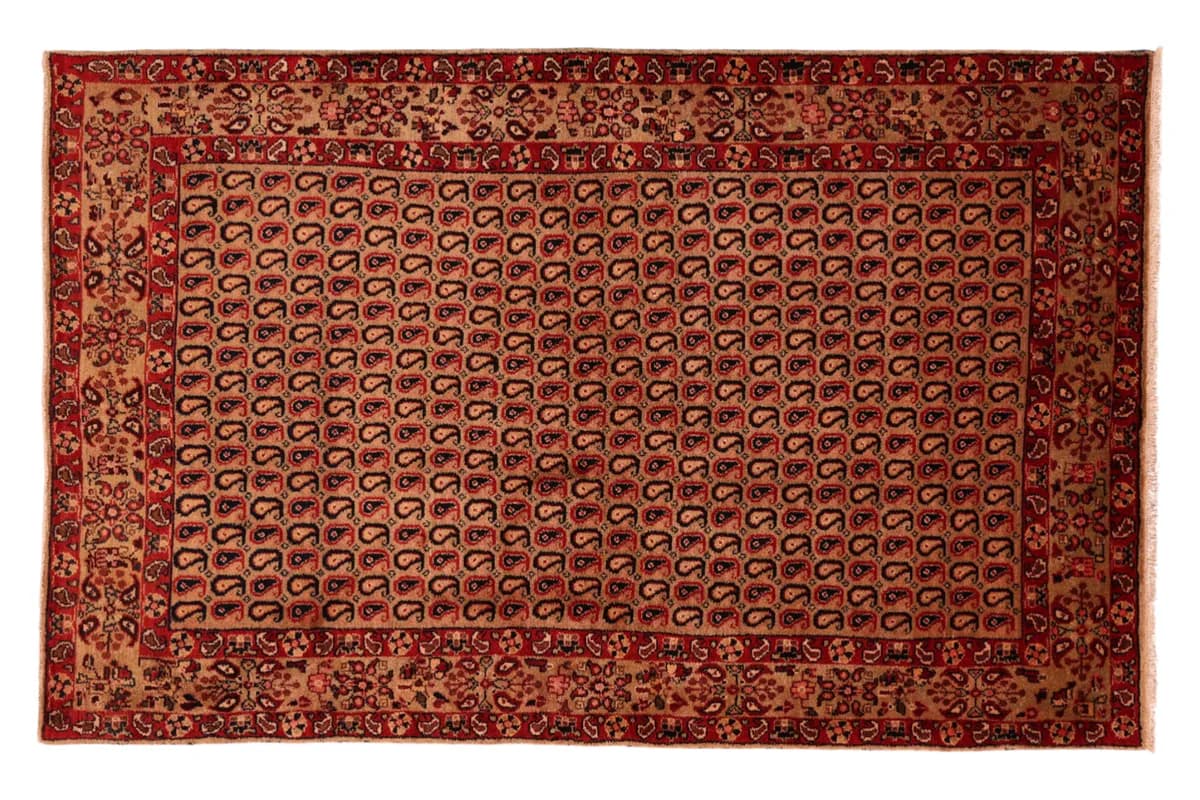
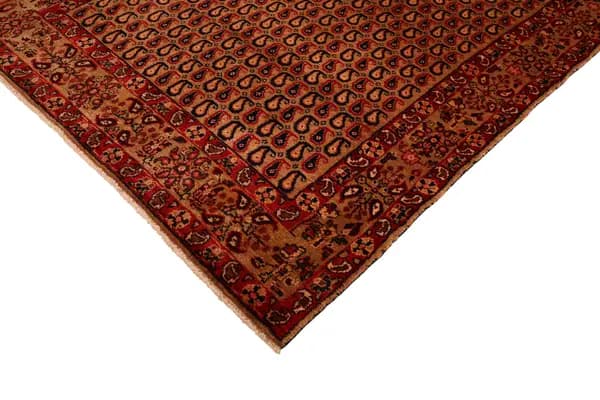
This is a Koliai, also written Koliayie, a tribal Kurdish weaving from the Songhor district of western Iran, part of the wider Kurdistan and Kermanshah weaving region, at 240 x 152 cm (7'10" x 5'0"). Koliai rugs are usually built around a large central medallion set on a Herati diamond field, knotted from memory by weavers who kept their own version of the design in mind rather than a drawn plan. This piece leaves that format behind: there is no medallion at all, and what takes its place is something far more disciplined.
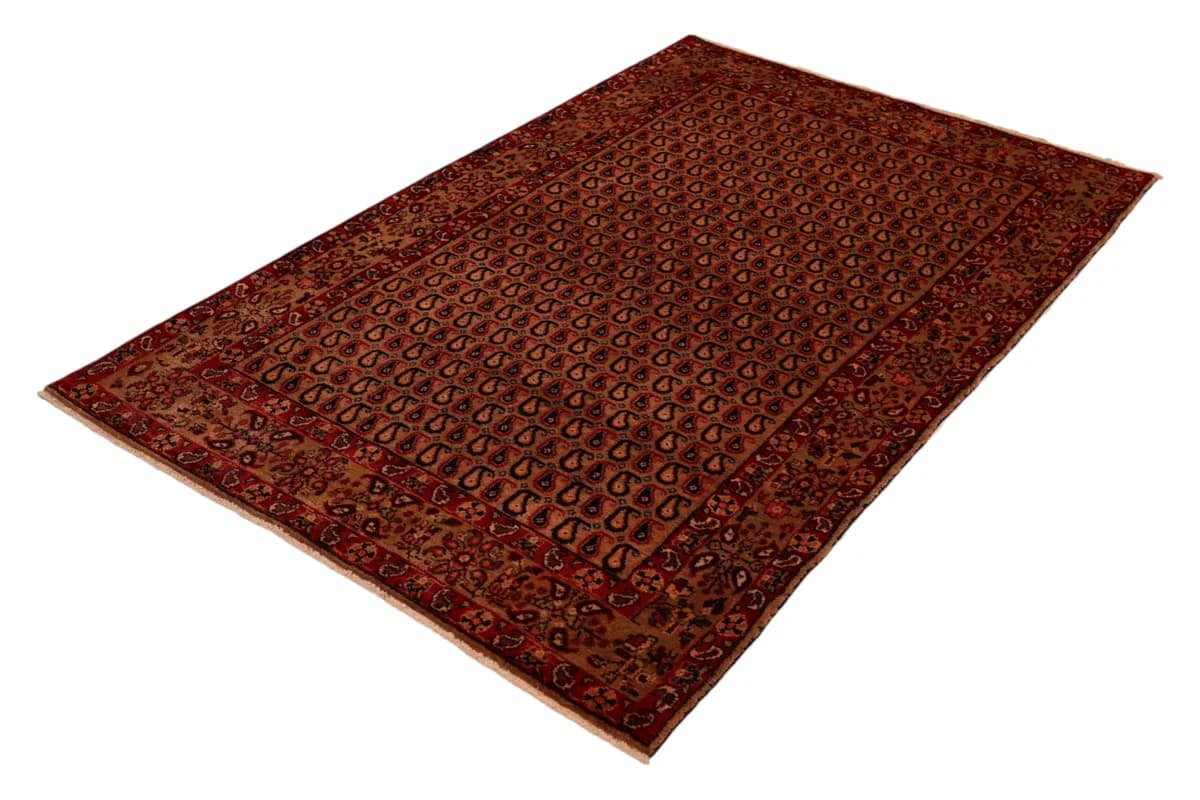
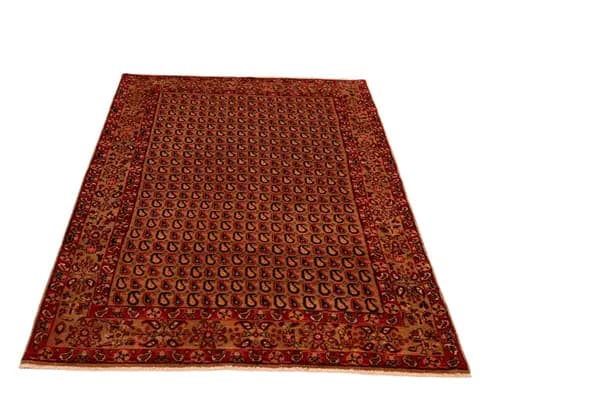
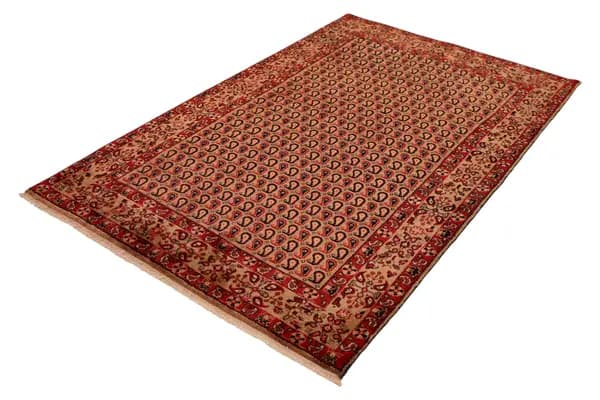
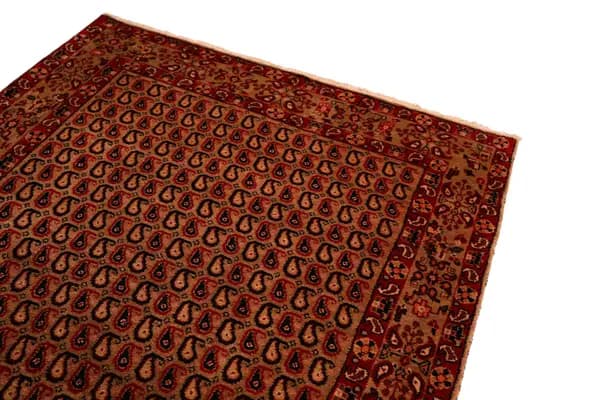
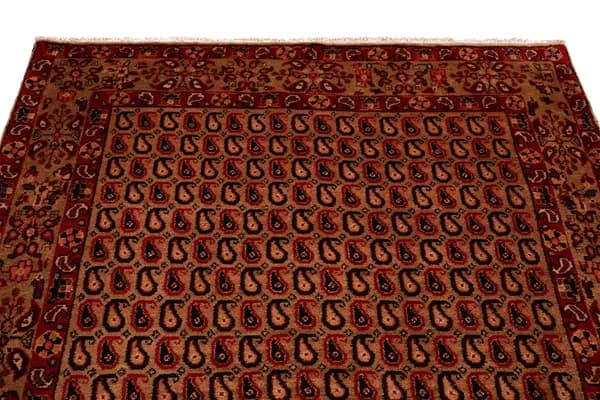
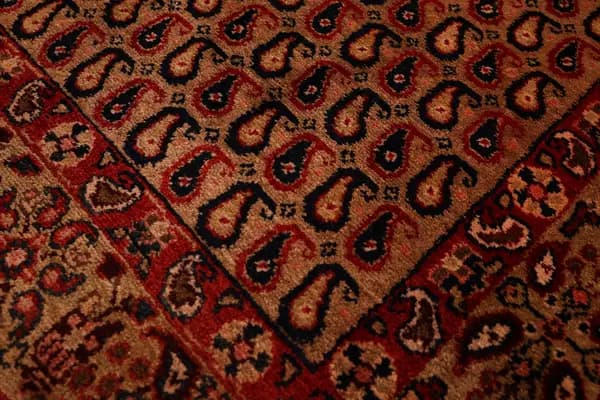
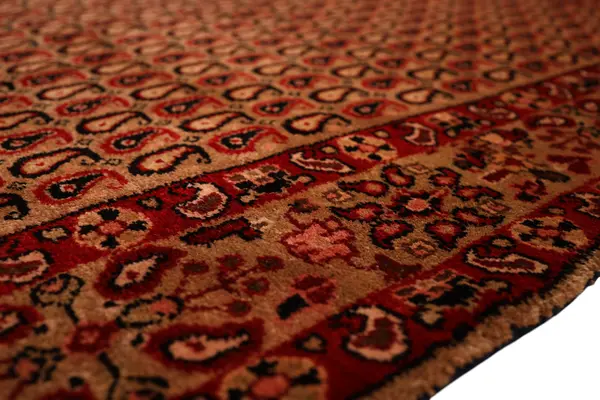
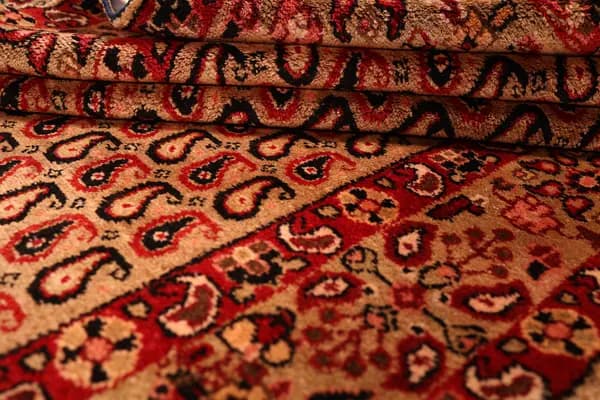
The ground is a warm camel, and across it runs a dense, even repeat of small boteh, paisley shapes, in alternating rows of red and navy. The effect, from any distance, is a fine striped grid rather than a scattered pattern, each row holding its colour before the next takes over. A wide red border closes the field, carrying floral scrollwork and pink blossoms, with cream and rust filling the smaller motifs and touches of pink and pale blue in the guard stripes. Where Koliai weaving is generally known for a busy, richly coloured field, this one reads as calm and almost architectural.
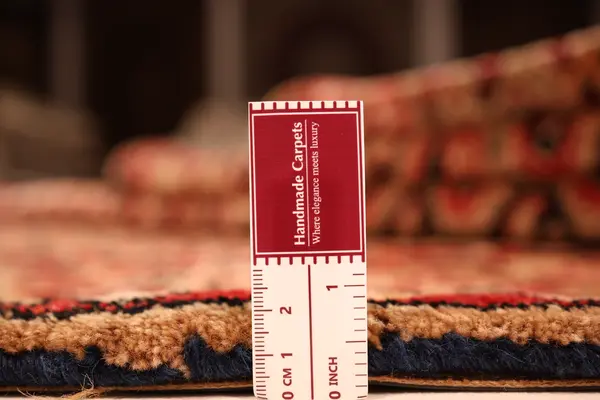
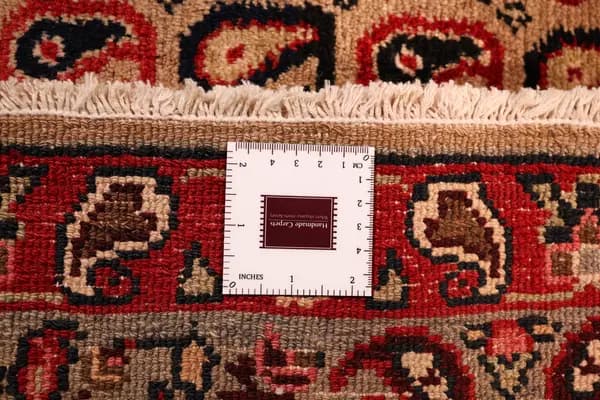
The wool is hand-spun and lanolin-rich, taken from sheep grazed on mountain pasture, which is what gives Koliai pile its characteristic sheen and long wear even under a matte surface. Knotted at 72,000 to 90,000 knots per square metre on a cotton warp, with a 12 mm pile, it is a solid tribal density rather than an exceptionally fine one, and that generosity of pile is exactly what lets the colour sit so cleanly row on row. Keeping that alternation regular, without a cartoon to follow, over a rug knotted forty to sixty years ago from memory alone, is a quiet piece of discipline in itself.
At this size the rug suits a bedroom comfortably, laid beside or in front of the bed rather than under a large piece of furniture. The camel ground will warm a pale floor, while the red and navy grid holds its own against dark wood without competing for attention. Underfoot it is dense and springy rather than plush, wool that was made to be walked on and to keep its shape through decades of use. Morning light across it catches the lanolin sheen in the wool and picks out the red and navy rows in quiet alternation, a pattern that rewards a second, closer look rather than announcing itself from across the room.
More on Koliayie rugs: origin, making and how to recognise a genuine piece
Artisan crafted
At 240 × 152 cm (3.65 m²) this is a medium rug. It works in front of a sofa, in front of a bed or in a study. It is too small for a dining table — there you want about 80 cm of clearance so a chair does not tip over the edge when pushed back.
Yes, knotted by hand — knot by knot on a loom, not machine-made. The density is 72,000 to 90,000 knots per square metre; across 3.65 m² that is roughly 260,000 to 330,000 individual knots, every one of them tied by hand.
Hand-spun wool still carries its own lanolin, which keeps liquid sitting on the surface for a moment: blot quickly, with clear water and a light cloth, working inwards and without rubbing. Otherwise regular vacuuming along the pile is enough. Turn the rug once or twice a year so light and footfall reach it evenly.
We are in the Hamburg Speicherstadt. Come and see this rug in daylight, or write to us — a person answers.
Certificate included verifying origin, materials, and craftsmanship.
Ref: 664499