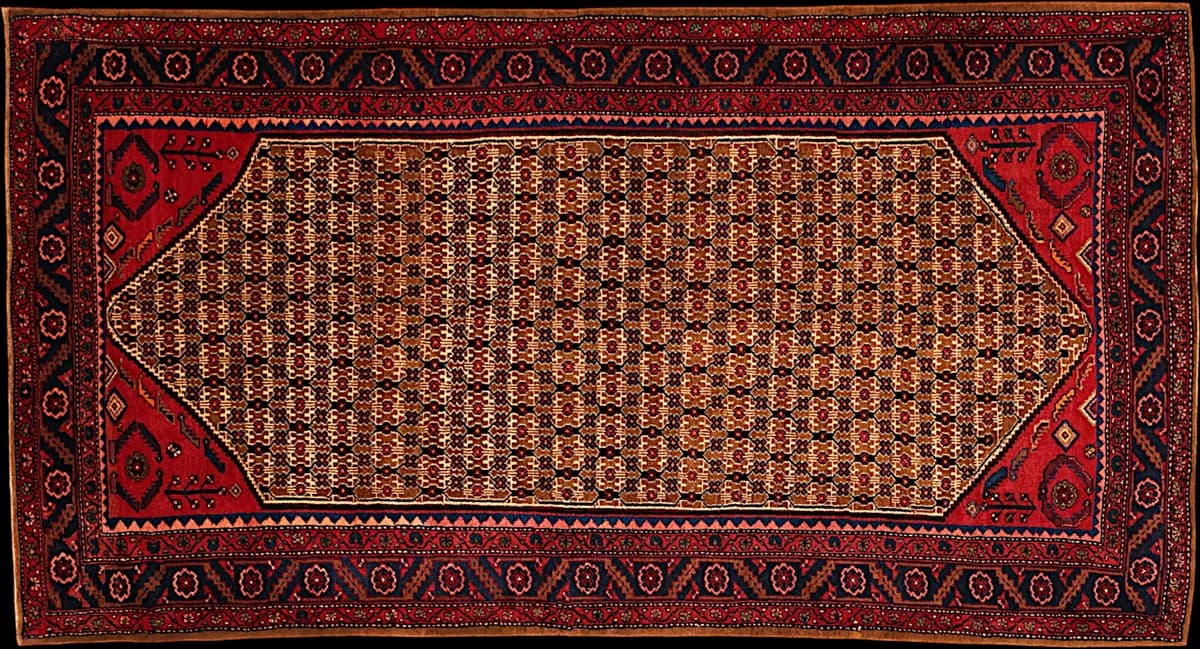
Koliai
242 × 155 cm
1.950 €








2.079 €
Incl. VAT
In Stock · Ready to Ship
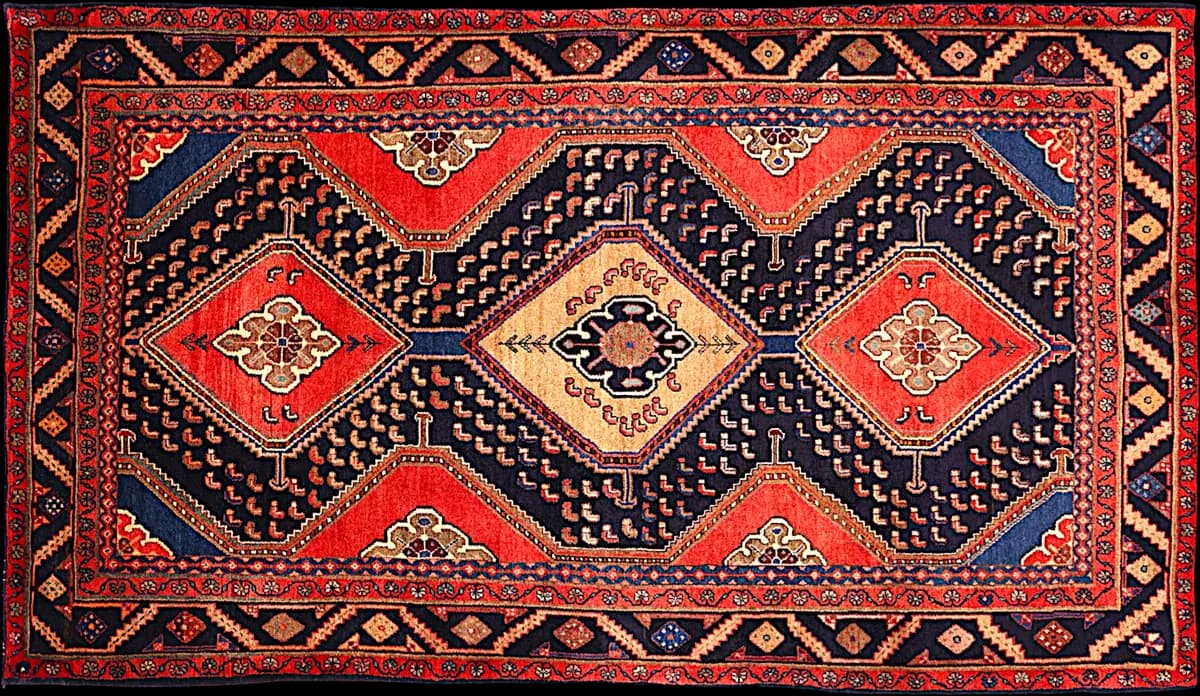
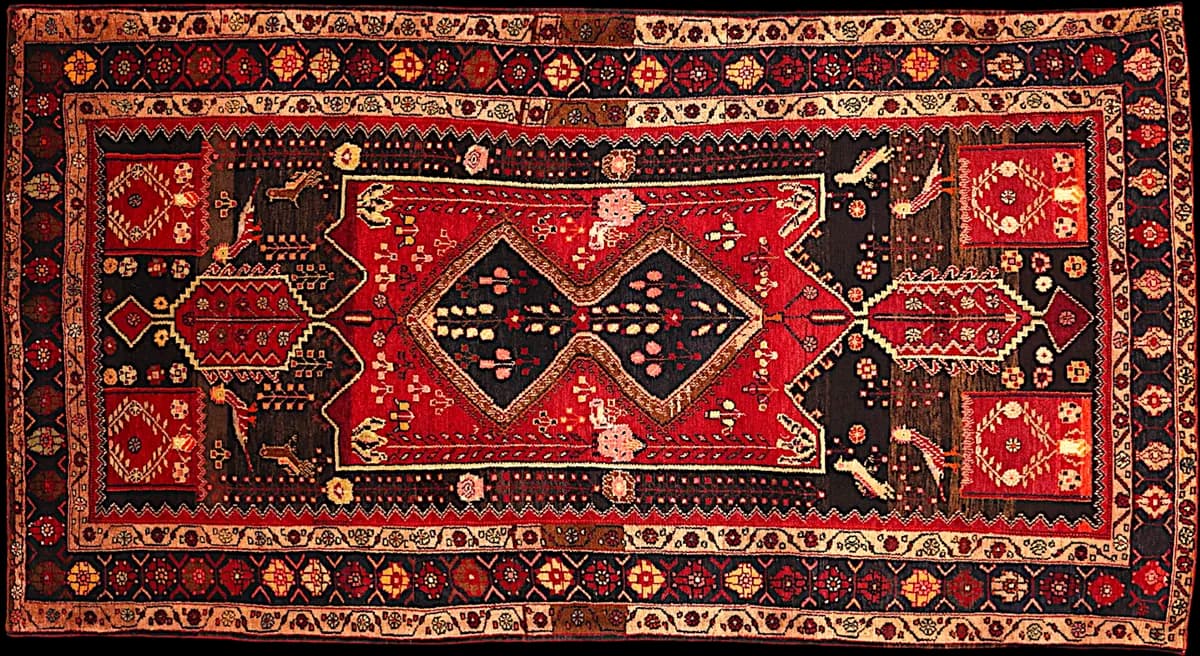
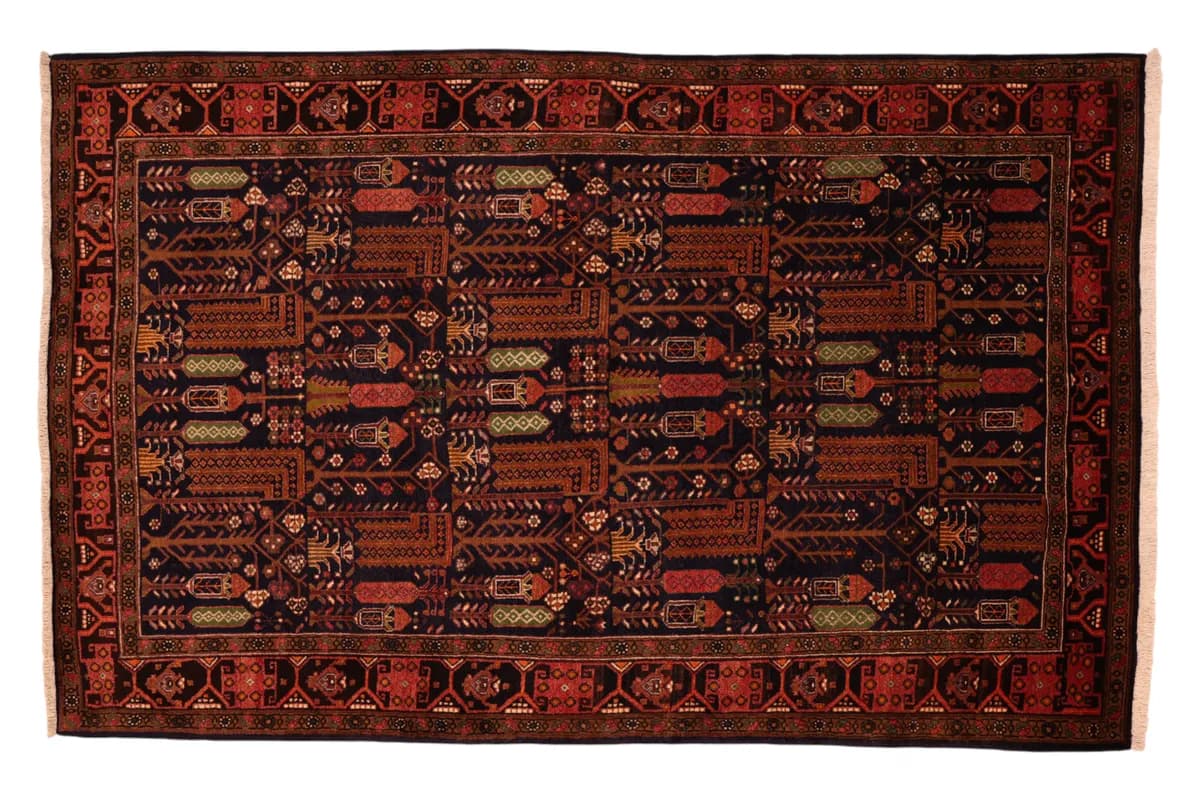
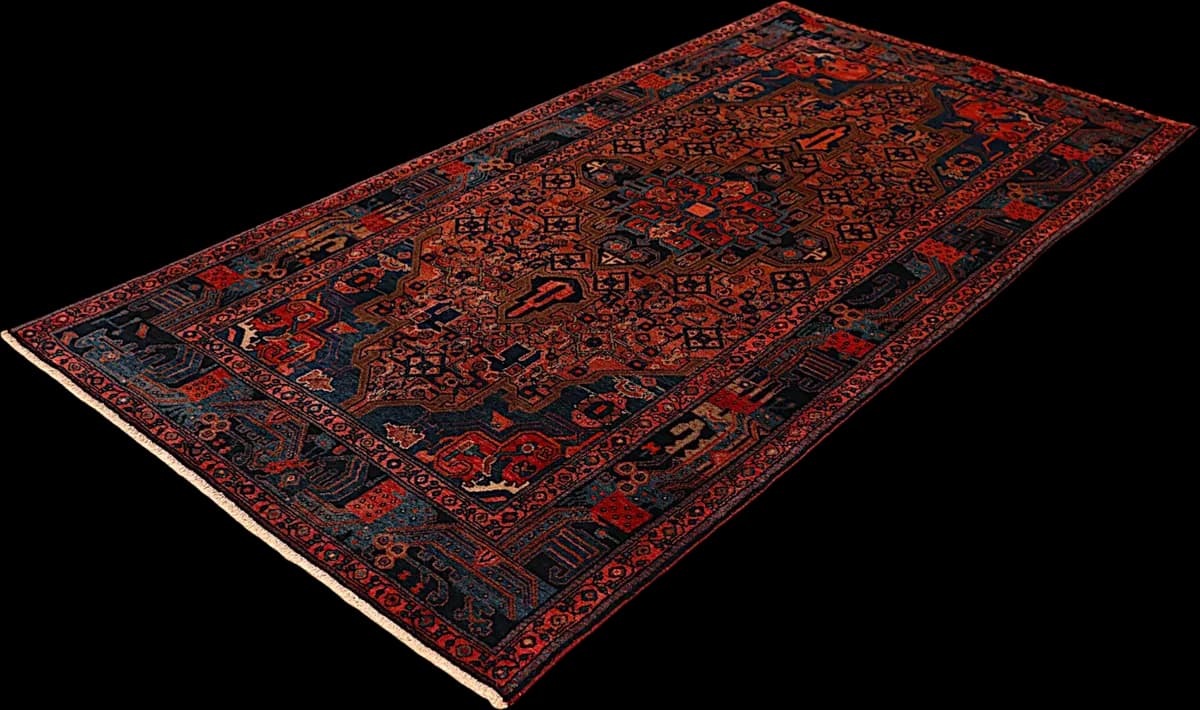
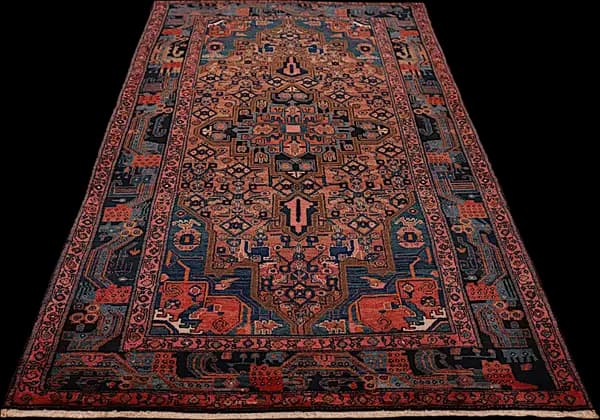
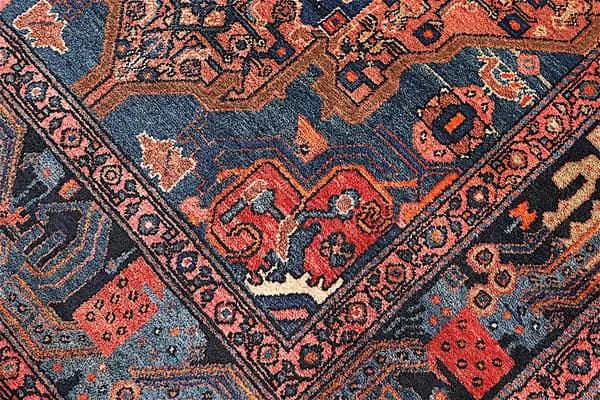
A Koliai rug, also written Koliayie, 302 x 153 cm (9'11" x 5'0"), knotted by Kurdish tribal weavers who once lived a nomadic life in the Songhor district of western Iran, part of the wider Kurdistan and Kermanshah weaving region. These are tribal pieces knotted from memory rather than a fixed plan, known for a dense, high pile and a saturated, energetic colour range that reads as both warm and grounded.
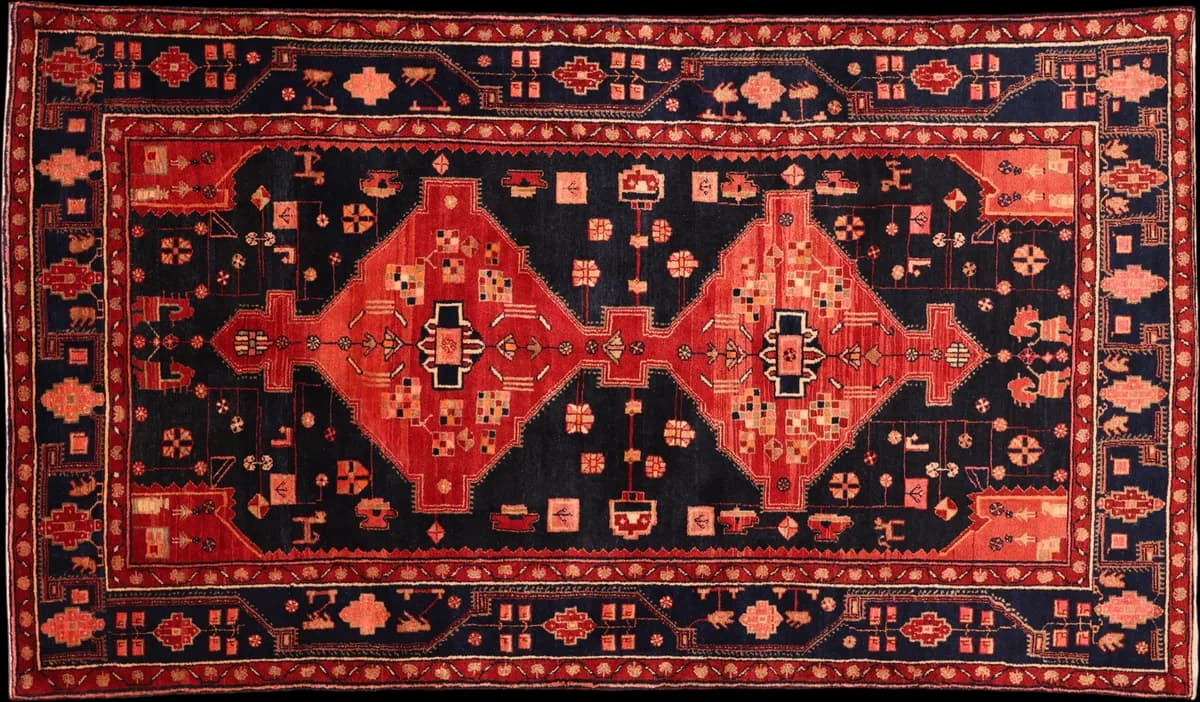
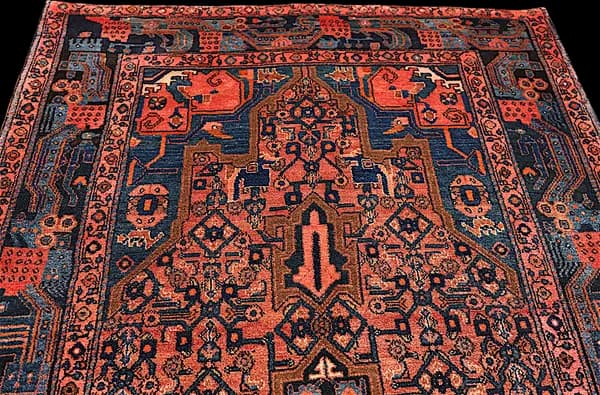
The field is a warm salmon-pink running toward terracotta, scattered all over with a fine diamond lattice of small rosettes. Floating on this field is a large stepped medallion in the same warm tones, its outline stepped and hooked rather than smoothly curved. The corners are boxed off in deep navy blue, filled not with the flowing vine you might expect but with angular, hooked geometric shapes, giving the whole rug a more graphic, blocky presence than a typical medallion-and-spandrel design. The wide navy border, filled with rows of small octagonal rosettes and edged on both sides by narrower salmon floral guard stripes, closes the composition firmly around it.
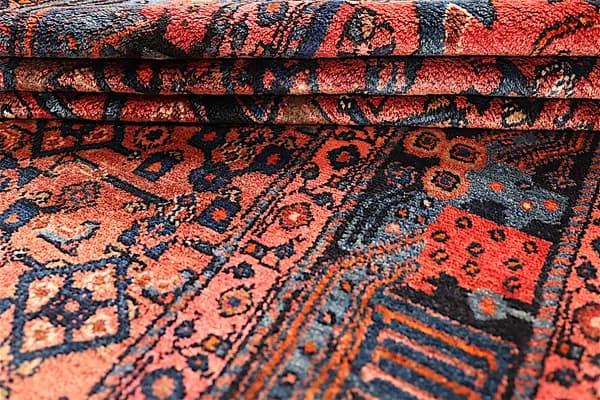
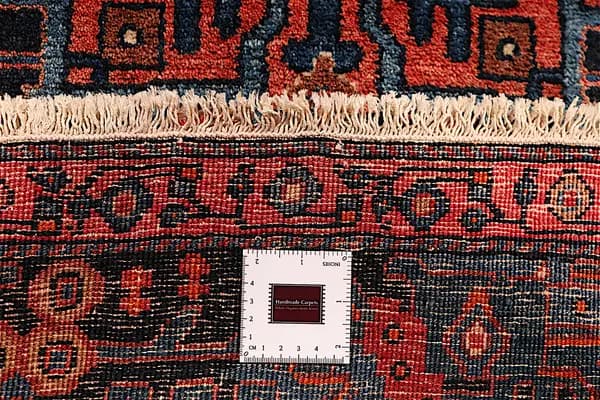
That graphic quality comes directly from the way the rug was made. This is a hand-knotted piece, the pile hand-spun wool on a cotton warp, tied at a density of 201,000 to 250,000 knots per square metre — fine enough to draw the small rosettes and the stepped medallion cleanly, but built by a weaver working freehand rather than following a drawn cartoon, which is why the corner fillers come out as angles and hooks rather than curling vine. The pile stands at 12 millimetres, high and firm, and the wool itself is the lanolin-rich fleece of mountain-grazed sheep, which gives the surface a quiet matt sheen and unusual durability rather than any brightness of colour.
At just over three metres by a metre and a half, this rug sits well in a dining room under a table for six, or anchoring a seating group in a living room. The salmon field warms a pale floor and holds its ground against dark wood or navy upholstery, while the navy border keeps the whole thing from ever looking soft-edged. Underfoot the pile is dense and springy, built for a room that gets used rather than kept for best. Move around it through the day and the matt wool takes the light differently from every angle, the lattice of small rosettes catching a faint gleam that never quite settles.
More on Koliayie rugs: origin, making and how to recognise a genuine piece
Fine quality weave
At 302 × 153 cm (4.62 m²) this is a medium rug. It works in front of a sofa, in front of a bed or in a study. It is too small for a dining table — there you want about 80 cm of clearance so a chair does not tip over the edge when pushed back.
Yes, knotted by hand — knot by knot on a loom, not machine-made. The density is 201,000 to 250,000 knots per square metre; across 4.62 m² that is roughly 0.9 to 1.2 million individual knots, every one of them tied by hand.
Hand-spun wool still carries its own lanolin, which keeps liquid sitting on the surface for a moment: blot quickly, with clear water and a light cloth, working inwards and without rubbing. Otherwise regular vacuuming along the pile is enough. Turn the rug once or twice a year so light and footfall reach it evenly.
We are in the Hamburg Speicherstadt. Come and see this rug in daylight, or write to us — a person answers.
Certificate included verifying origin, materials, and craftsmanship.
Ref: 853446