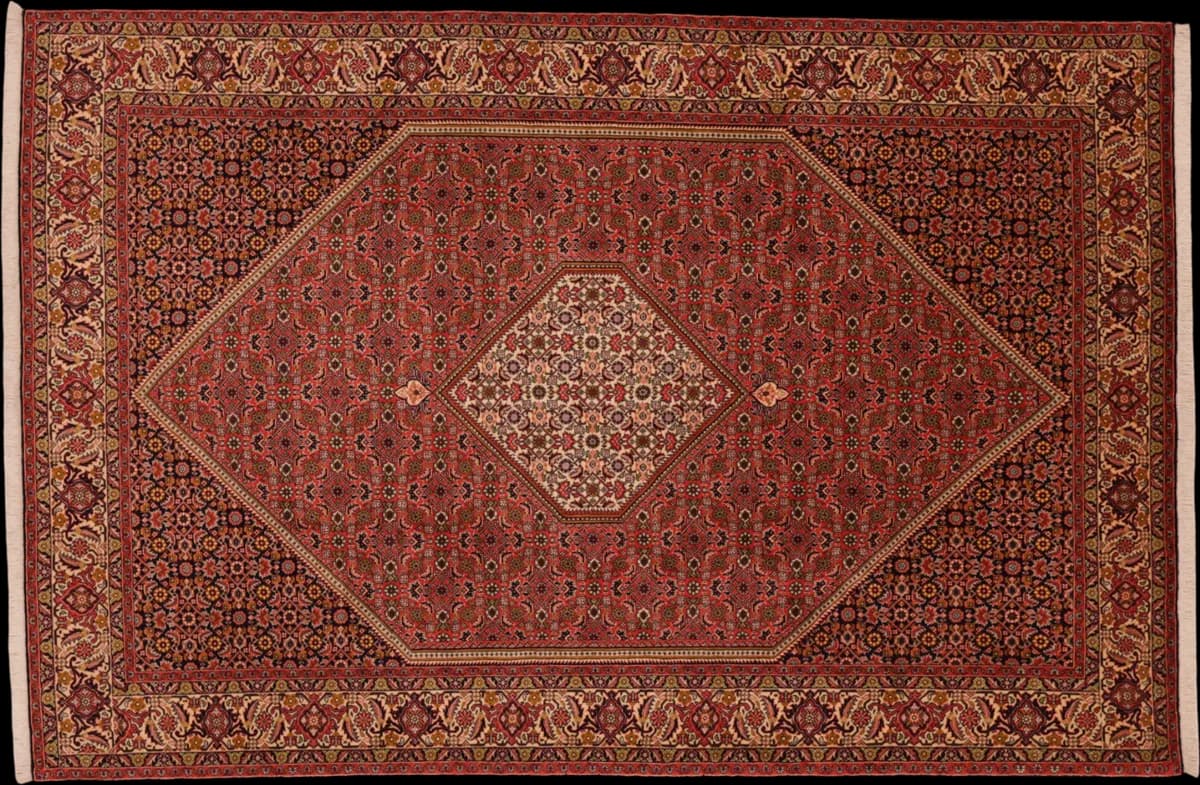
Bidjar
300 × 198 cm
4.650 €







3.000 €
Incl. VAT
In Stock · Ready to Ship
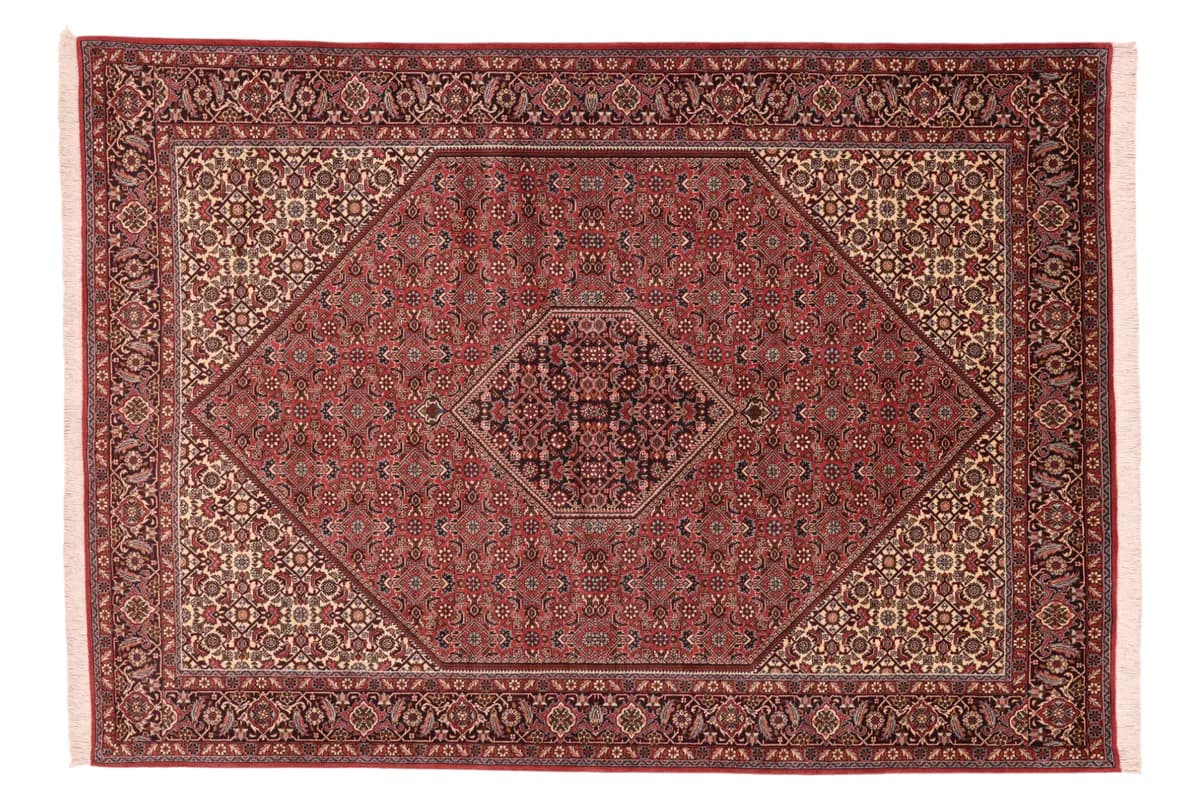
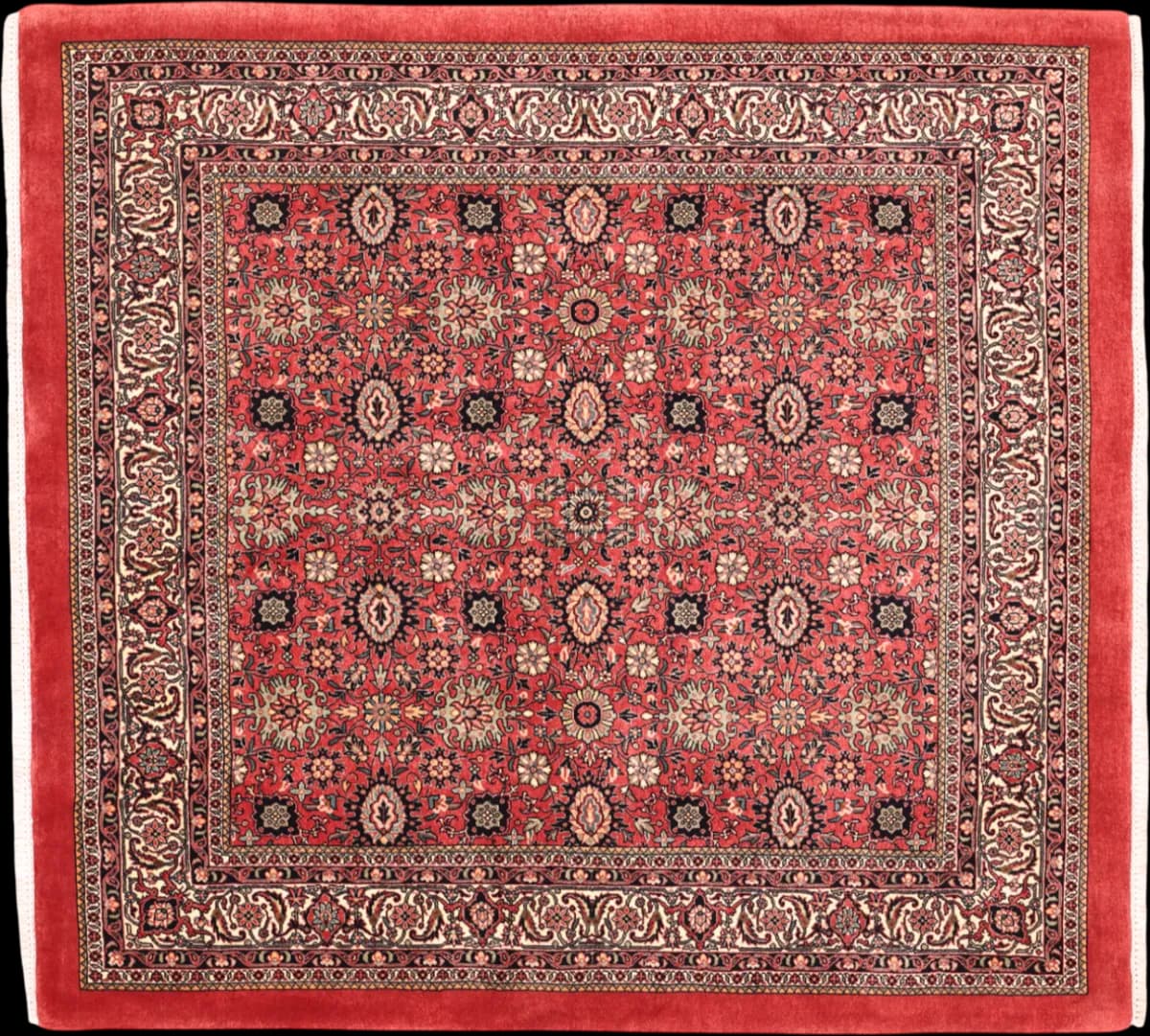
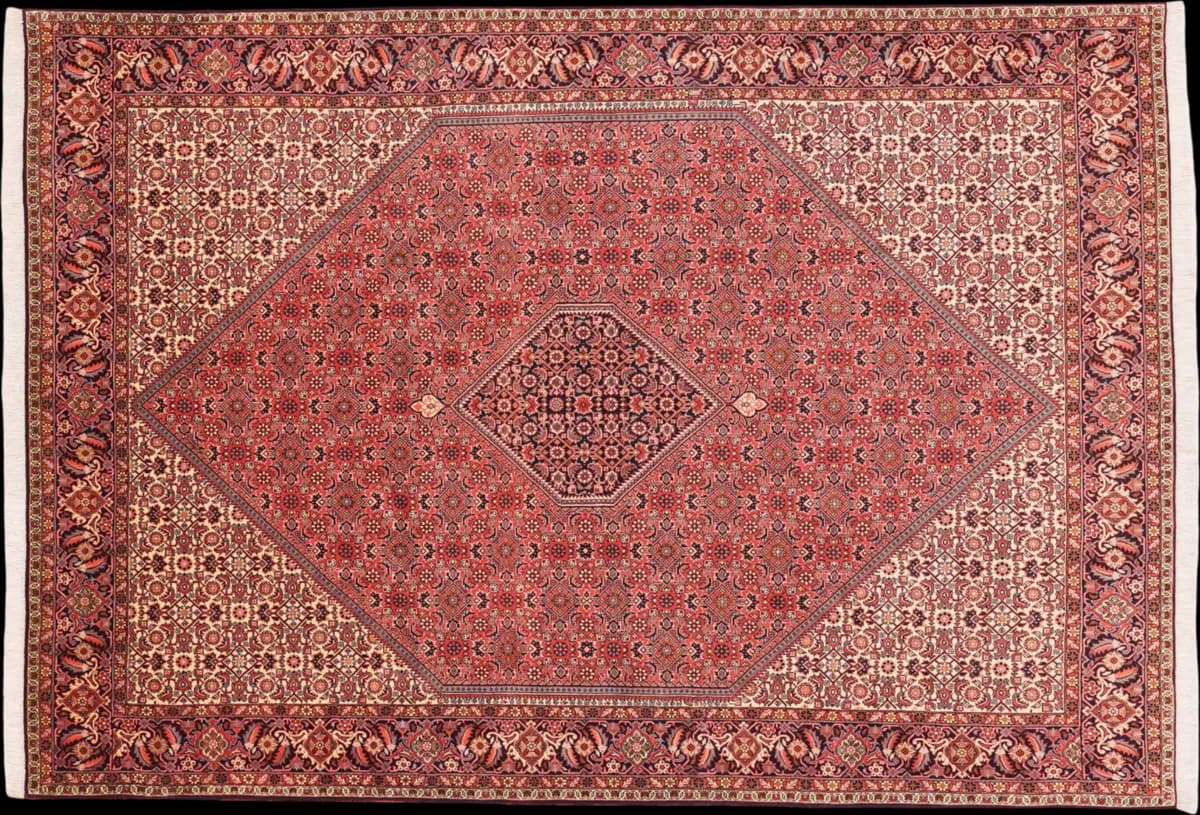
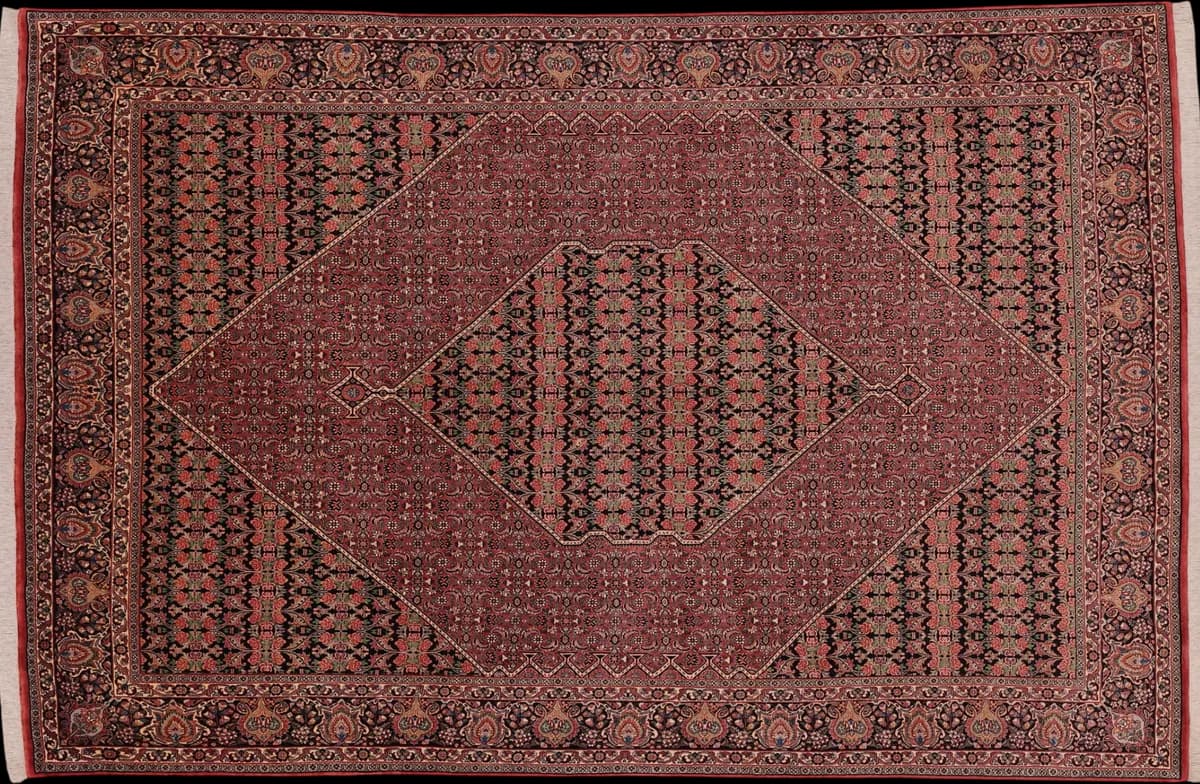
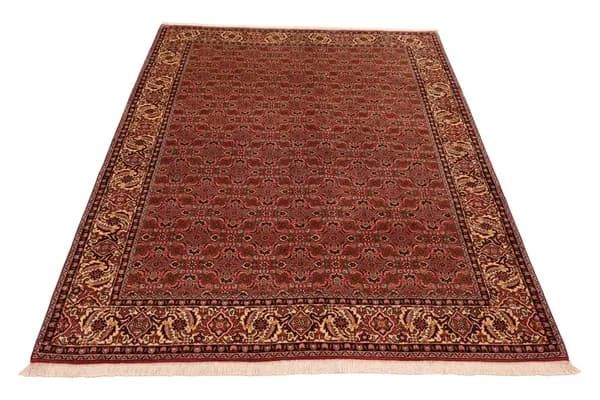
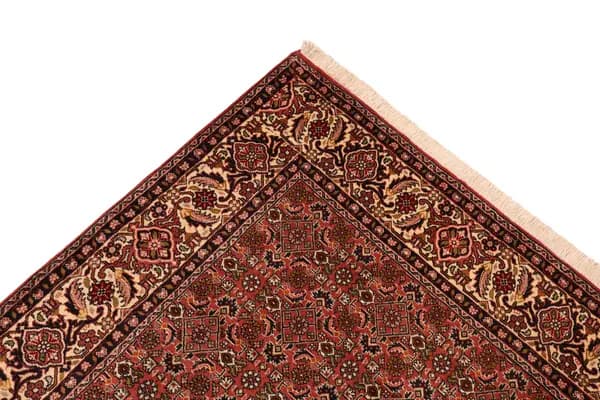
This is a Bijar, also written Bidjar, from the Kurdish weaving regions of western Iran, measuring 243 x 174 cm (7'11" x 5'8"). Known across the Persian tradition as the iron rug, it is prized for a density and firmness no other regional weave quite matches. Here that strength appears not in a bold medallion but in a calm, all-over field.
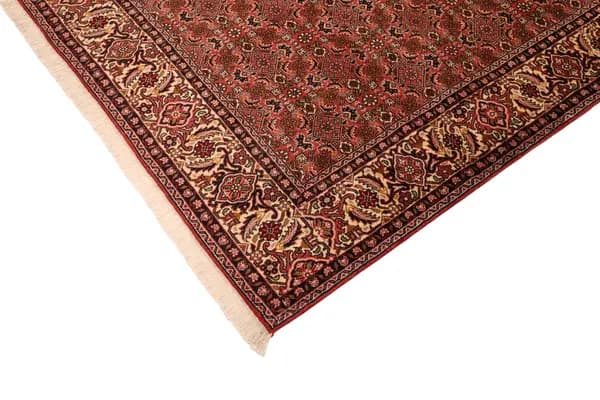
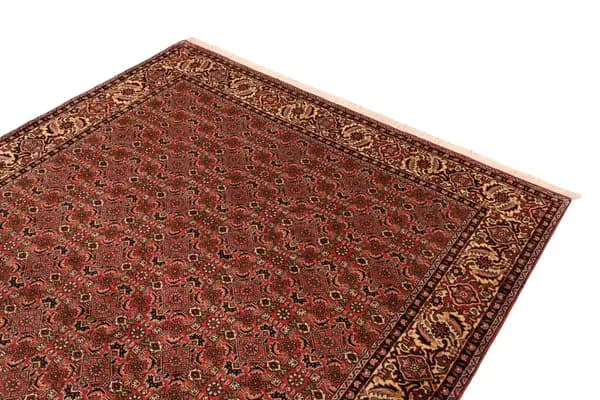
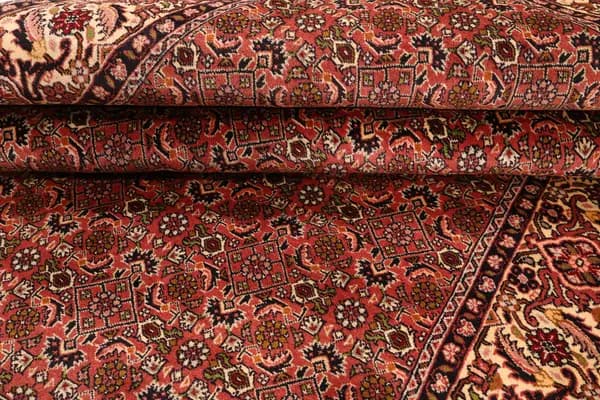
A warm brick red fills the entire field, carrying a fine diamond lattice in the Mahi pattern, repeated evenly from edge to edge with no medallion to interrupt it. Small touches of olive, mustard, dusty pink and charcoal sit within the lattice, quiet against the red. Then comes the border: a wide ivory ground carrying a dark-outlined floral vine, dense and multi-toned, framed by narrow navy guard stripes. Against the calm of the field, the border reads almost like a richer composition wrapped around it.
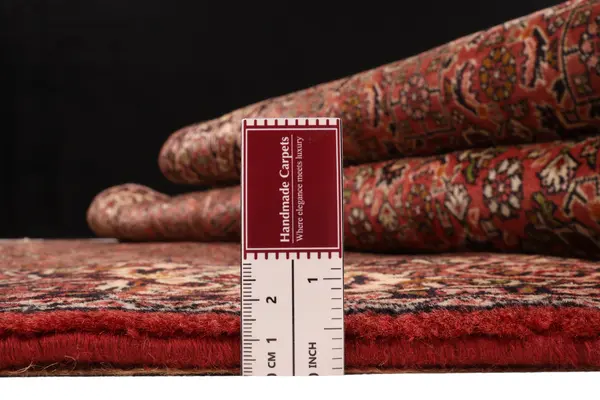
Much of that contrast comes from how it was made: hand-knotted, in hand-spun wool on a cotton warp, at 321,000 to 380,000 knots per square metre — among the tightest found in the Persian tradition. A weave this compact takes months longer at the loom, and is why Bijar rugs are only ever rolled, never folded: the structure is too dense to crease. At 15 millimetres, the pile holds enough depth to keep the field steady while leaving the border's lines sharp.
A rug this size suits a living room, laid under a seating group, where its brick red holds its own against dark wood and warms a paler floor. Underfoot it feels dense and substantial rather than soft — a weave built to be walked on daily, not kept for best. As daylight moves across the room, the ivory border catches it first, its floral vine lifting gently before the red field beneath.
More on Bidjar rugs: origin, making and how to recognise a genuine piece
Superior craftsmanship
At 243 × 174 cm (4.23 m²) this is a medium rug. It works in front of a sofa, in front of a bed or in a study. It is too small for a dining table — there you want about 80 cm of clearance so a chair does not tip over the edge when pushed back.
Yes, knotted by hand — knot by knot on a loom, not machine-made. The density is 321,000 to 380,000 knots per square metre; across 4.23 m² that is roughly 1.4 to 1.6 million individual knots, every one of them tied by hand.
Hand-spun wool still carries its own lanolin, which keeps liquid sitting on the surface for a moment: blot quickly, with clear water and a light cloth, working inwards and without rubbing. Otherwise regular vacuuming along the pile is enough. Turn the rug once or twice a year so light and footfall reach it evenly.
We are in the Hamburg Speicherstadt. Come and see this rug in daylight, or write to us — a person answers.
Certificate included verifying origin, materials, and craftsmanship.
Ref: 451116