Exclusive
Bidjar | Exclusivewith silk
202 × 153 cm
5.850 €





5.100 €
Incl. VAT
In Stock · Ready to Ship
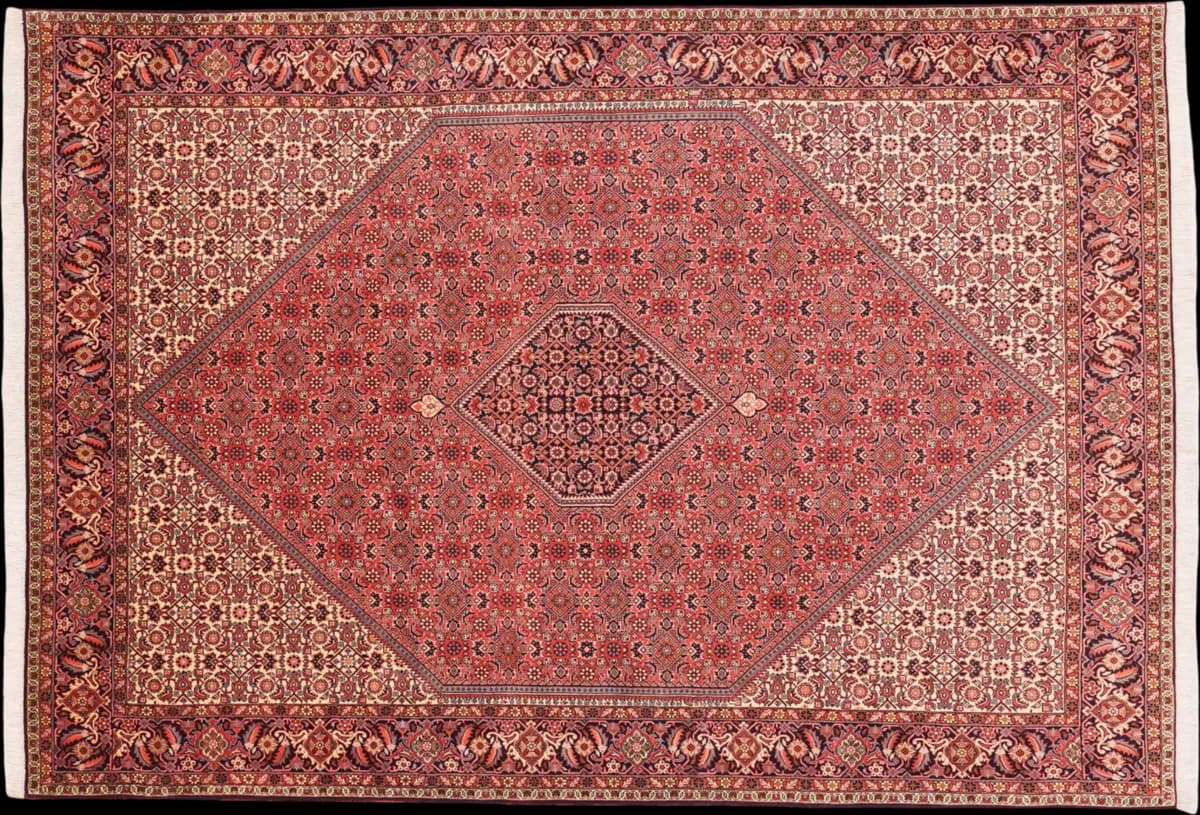
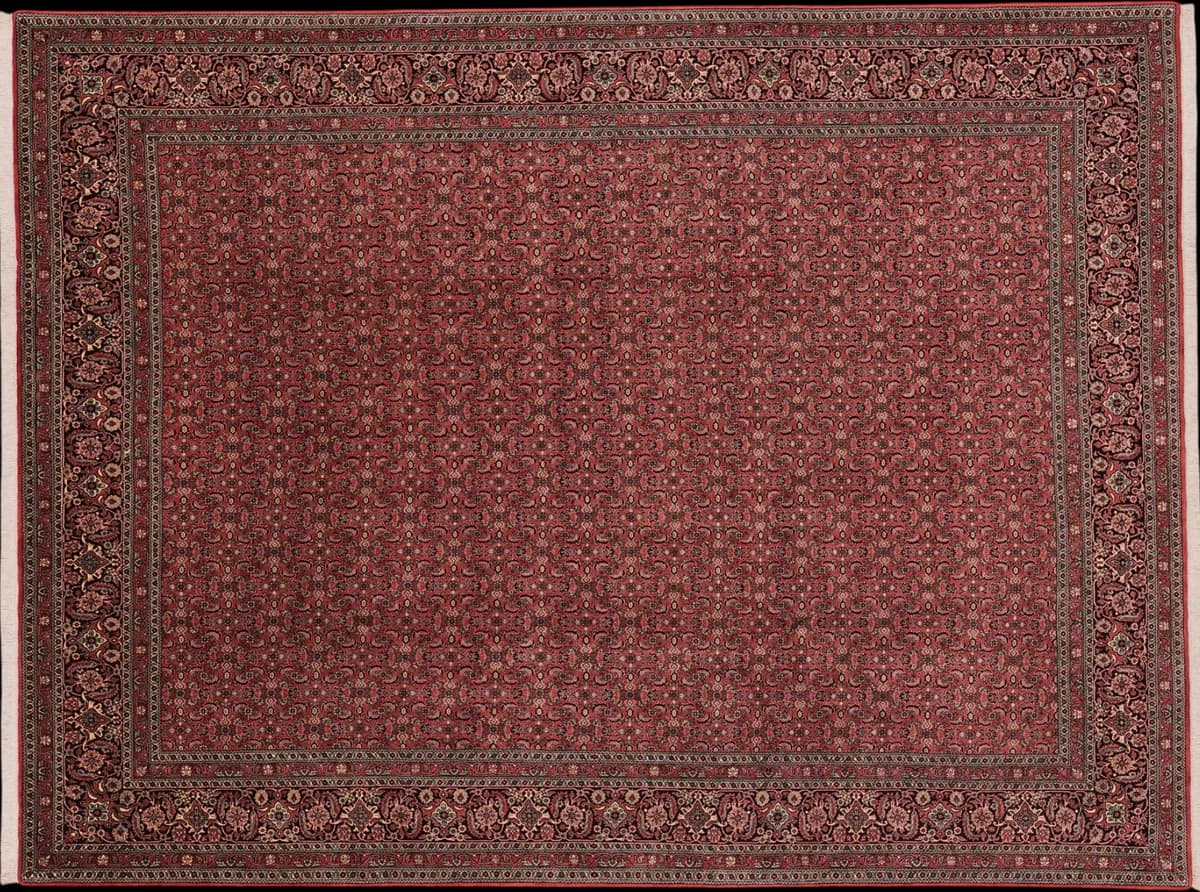
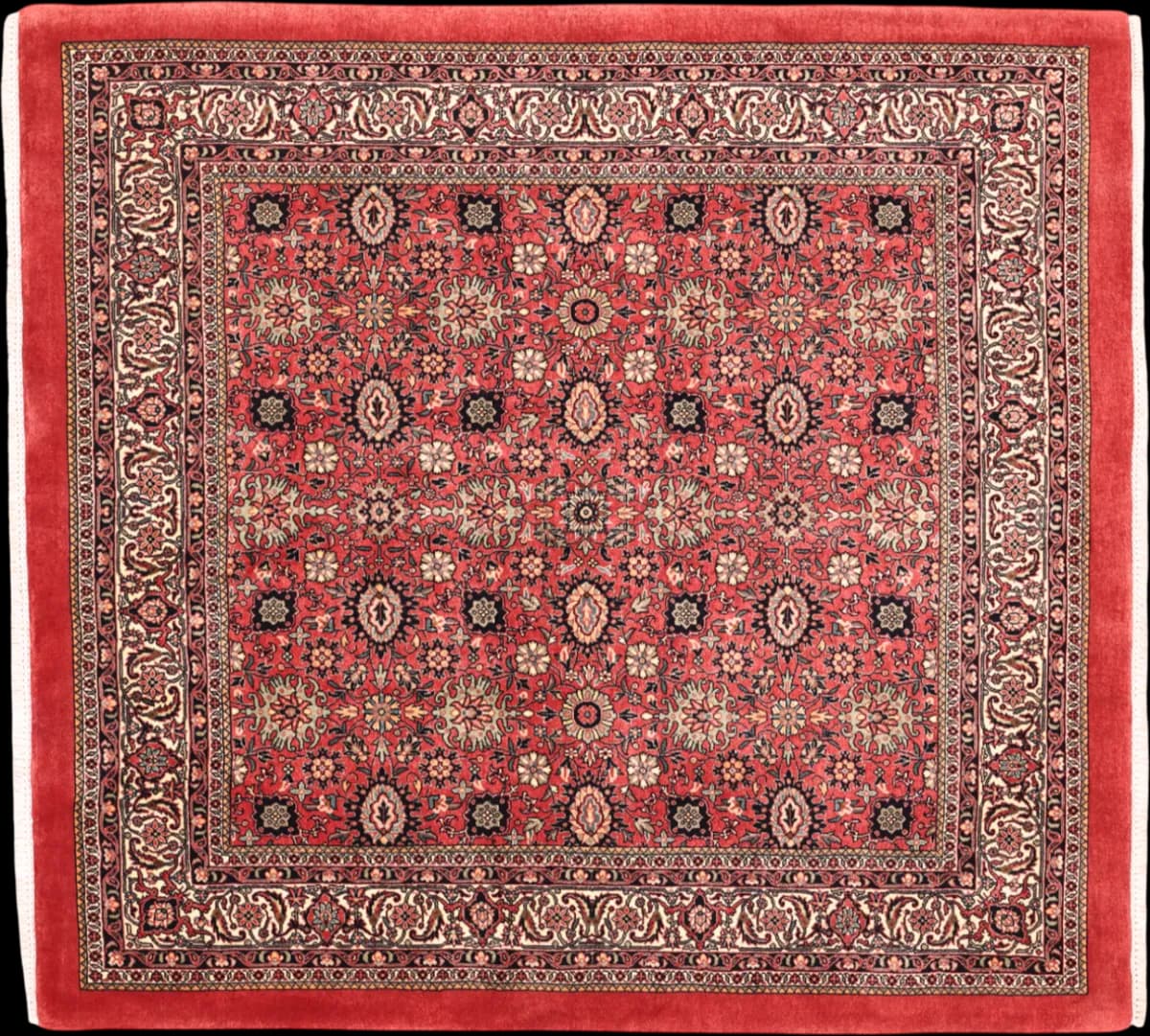
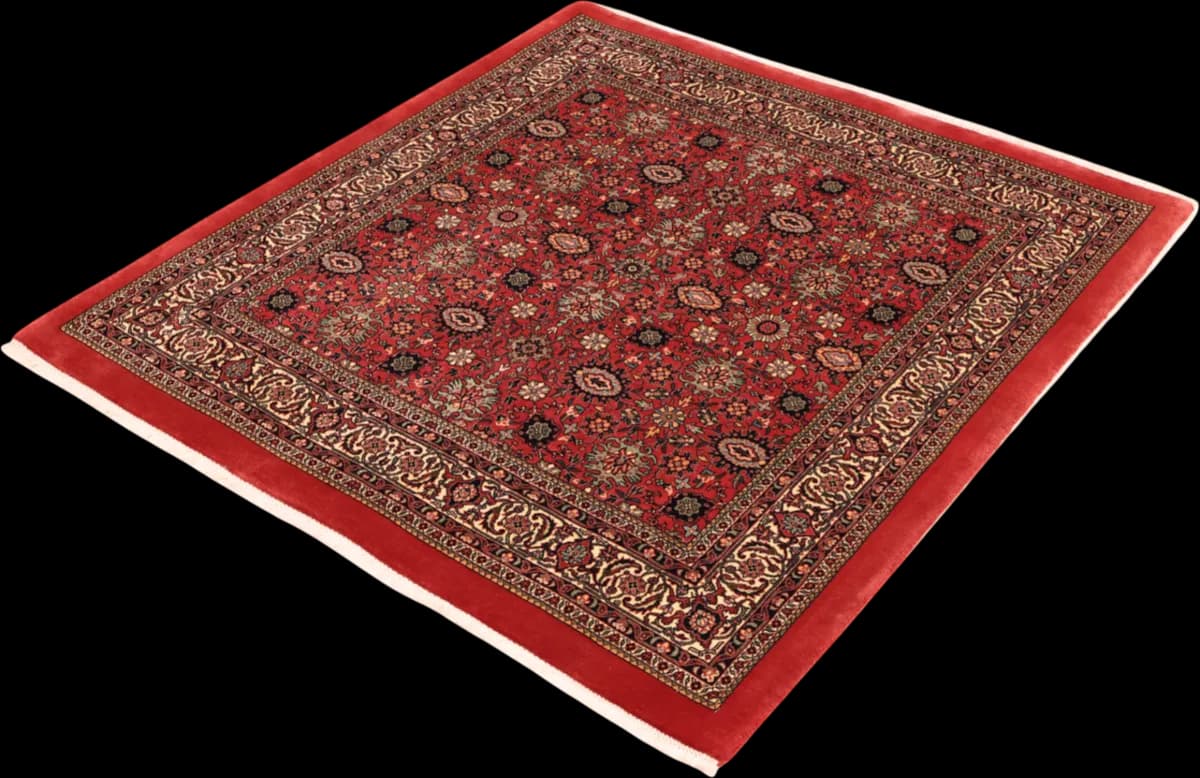
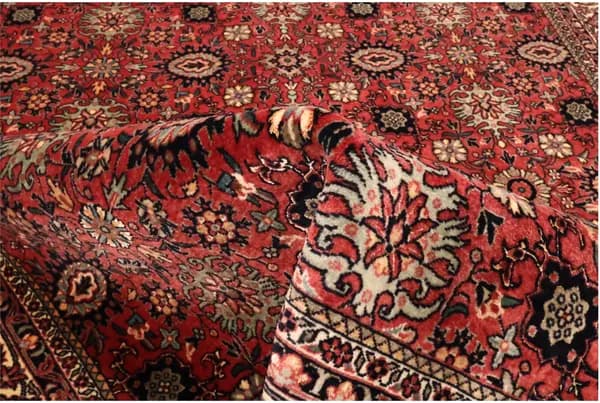
A Bijar, hand-knotted in the Kurdish regions of western Iran, measuring 163 x 153 cm (5'4" x 5'0"). This is the type long called "the iron rug of Persia," prized among collectors for a density and weight unmatched elsewhere in the Persian tradition. What sets this particular piece apart is its shape: the all-over Mahi design usually runs long and rectangular, built to repeat toward a horizon beyond the rug's edges. Here it stops, nearly square, and you can take in the whole pattern at once rather than sensing it continue past the border.
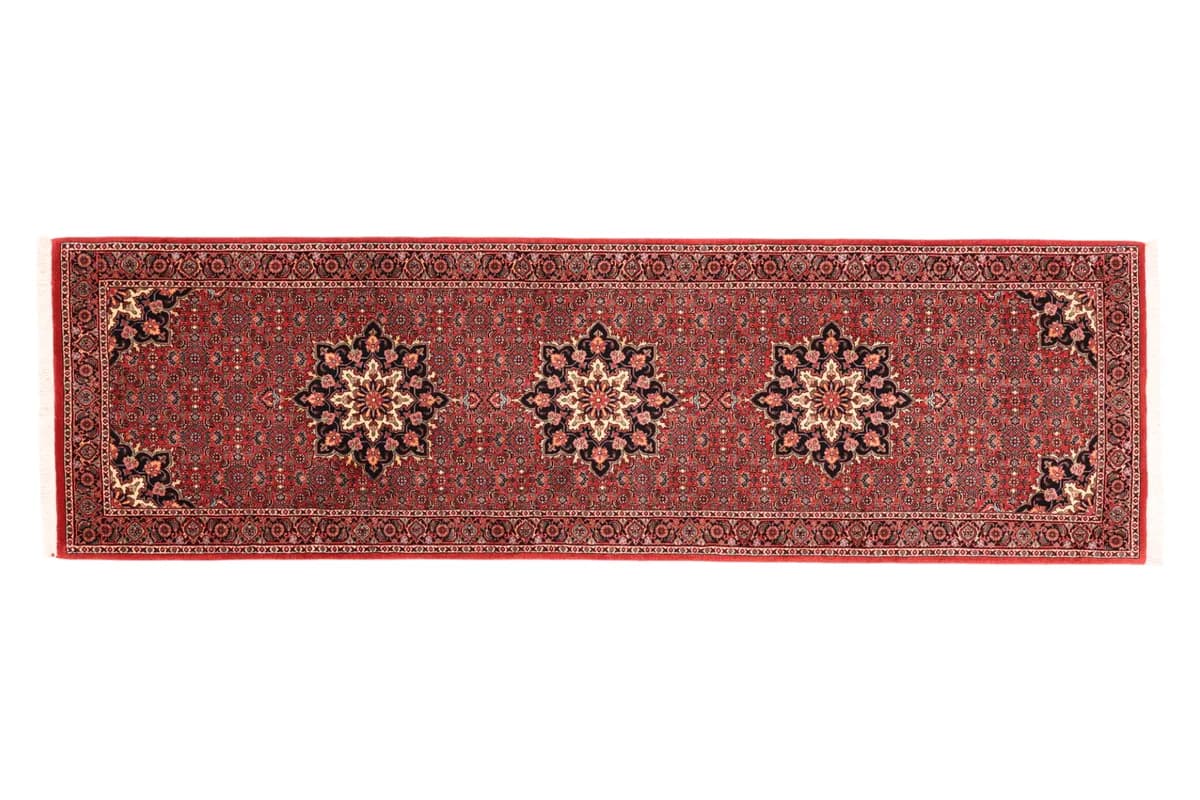
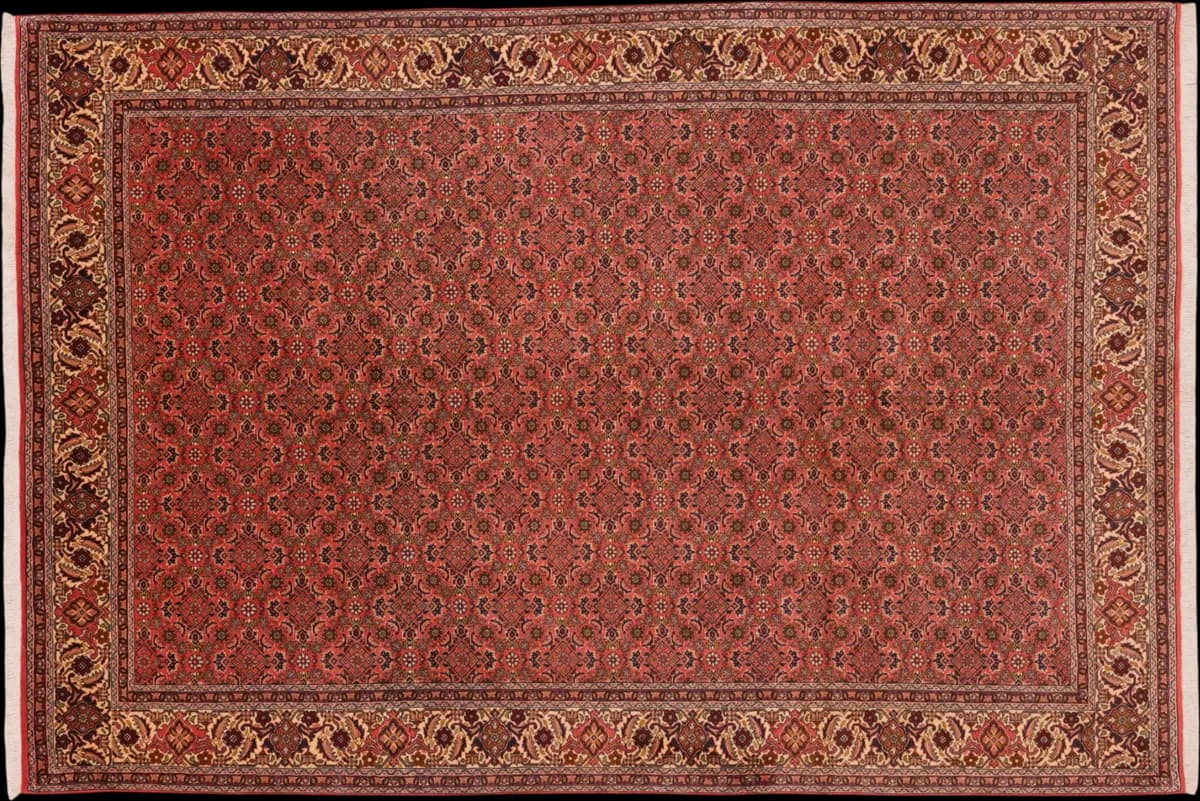
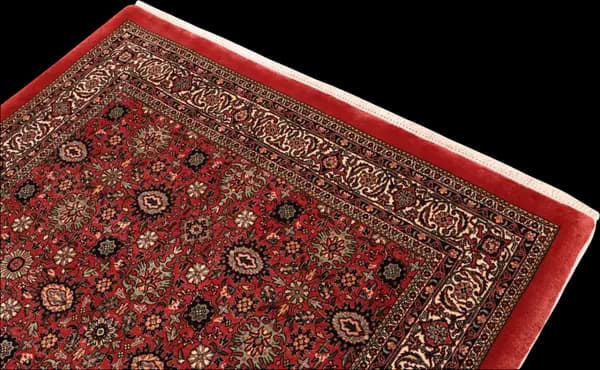
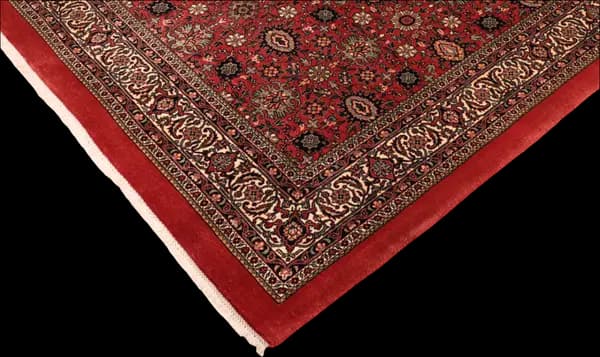
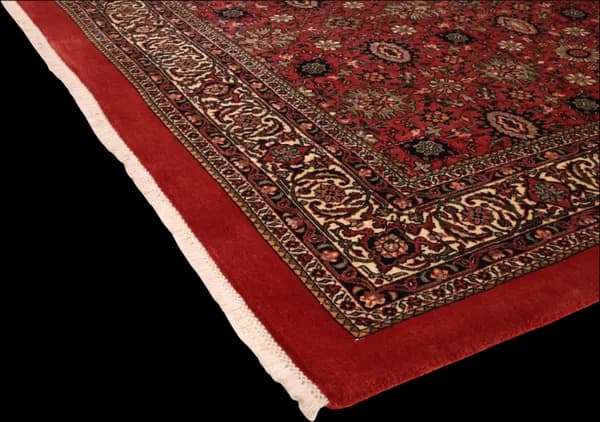
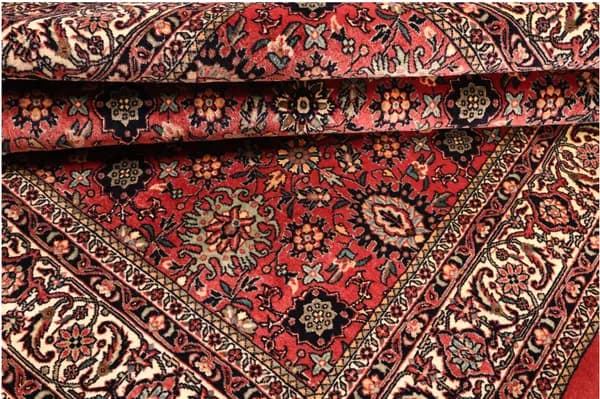
The field is a deep brick red, filled edge to edge with a dense Mahi lattice and no medallion to break it. Navy diamond reserves alternate with floral rosettes in sage green and dusty pink, touched with ochre and slate blue, each one drawn with the same evenness across the field. A wide multi-band border in ivory and navy carries a scrolling floral vine, taking up close to a fifth of the rug's width and holding the red field firmly in place. Nothing in the design pulls the eye toward a centre; the whole surface reads as one continuous, balanced pattern.
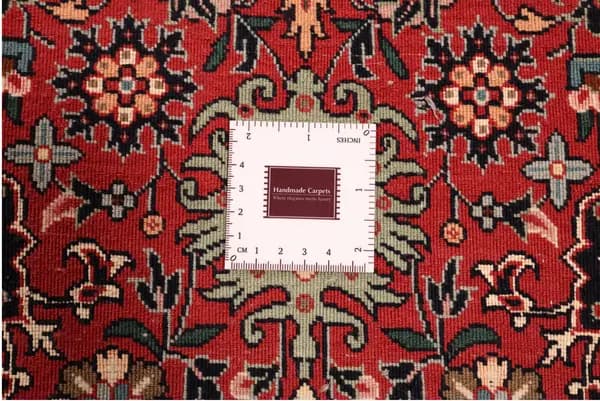
That evenness is a function of the knotting. This piece carries between 441,000 and 500,000 knots per square metre, among the tightest counts in Persian weaving, which is what lets a pattern this fine stay crisp right up to a near-square edge rather than blurring or needing more length to resolve. The pile is wool with silk worked through it, and the silk is what gives the lighter motifs their faint sheen against the matte red ground. On a cotton foundation and at 15 mm of pile, the rug has real substance in the hand, and by Bijar convention it is rolled rather than folded, the weave is too compact to crease.
A square format like this suits a room where a long rectangle would look forced: a study, a small seating corner, or an entrance hall. The brick red holds its own against dark wood and warms a pale floor without dominating it. Underfoot it is dense and firm, built for daily use rather than careful protection, and as light moves across it through the day the silk brings the rosettes forward, one at a time.
More on Bidjar rugs: origin, making and how to recognise a genuine piece
Exceptionally fine weave
At 163 × 153 cm (2.49 m²) this is a small rug. It works beside a bed, in a reading corner, in front of a fireplace or as a mat by a door. It does not furnish a room; it makes a point in one.
Yes, knotted by hand — knot by knot on a loom, not machine-made. The density is 441,000 to 500,000 knots per square metre; across 2.49 m² that is roughly 1.1 to 1.2 million individual knots, every one of them tied by hand.
This pile contains silk and is more delicate than pure wool. Vacuum without a rotating brush and along the pile, do not beat it, and keep it out of permanent direct sun. Blot spills at once with a light cloth, never rub. For a proper clean a silk-blend rug belongs in expert hands — we handle that for pieces bought from us.
We are in the Hamburg Speicherstadt. Come and see this rug in daylight, or write to us — a person answers.
Certificate included verifying origin, materials, and craftsmanship.
Ref: 456414