Exclusive
Bidjar | Exclusivewith silk
163 × 153 cm
5.100 €
2.880 €
Incl. VAT
In Stock · Ready to Ship
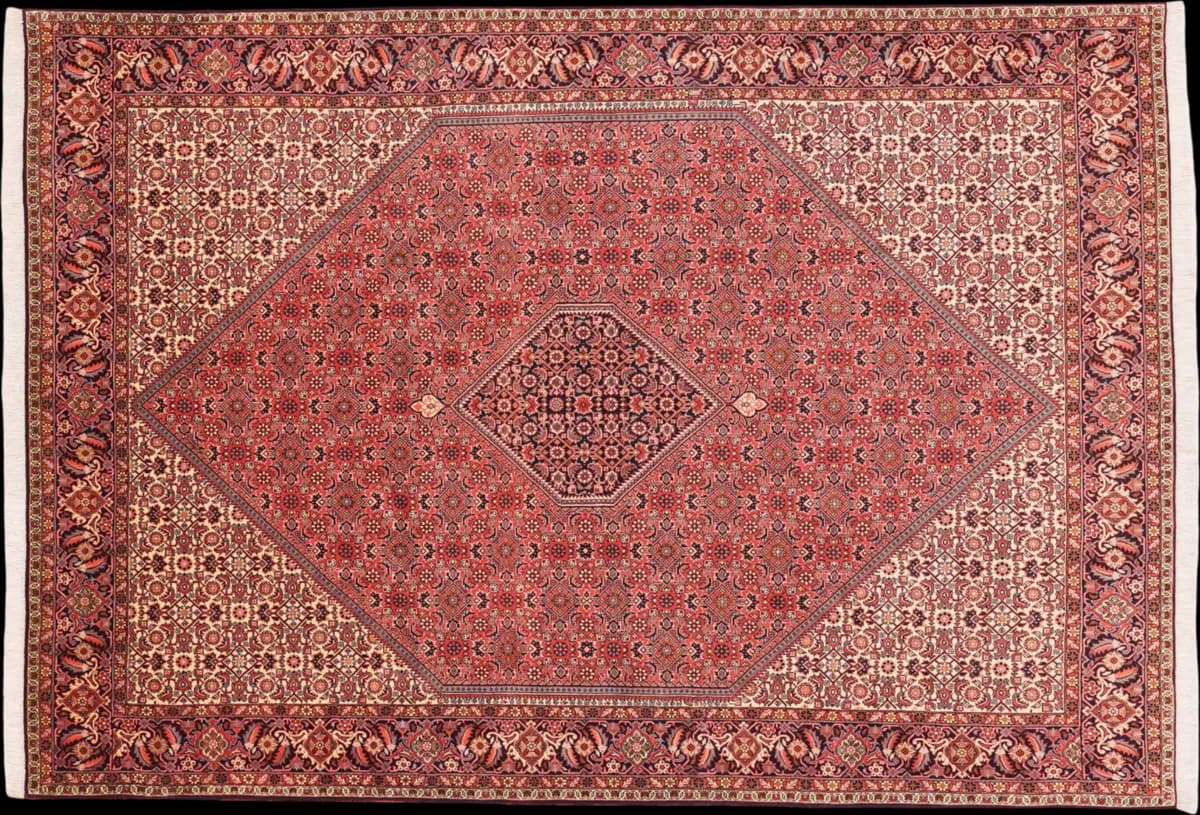
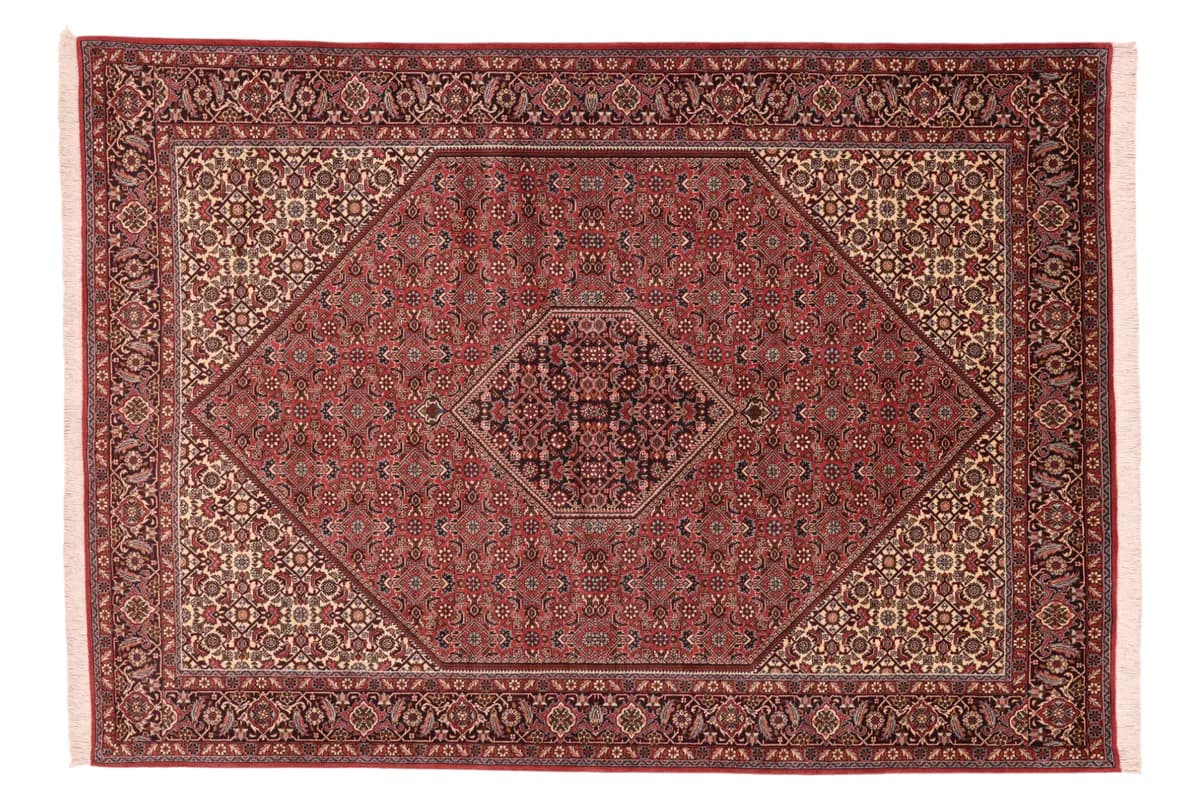
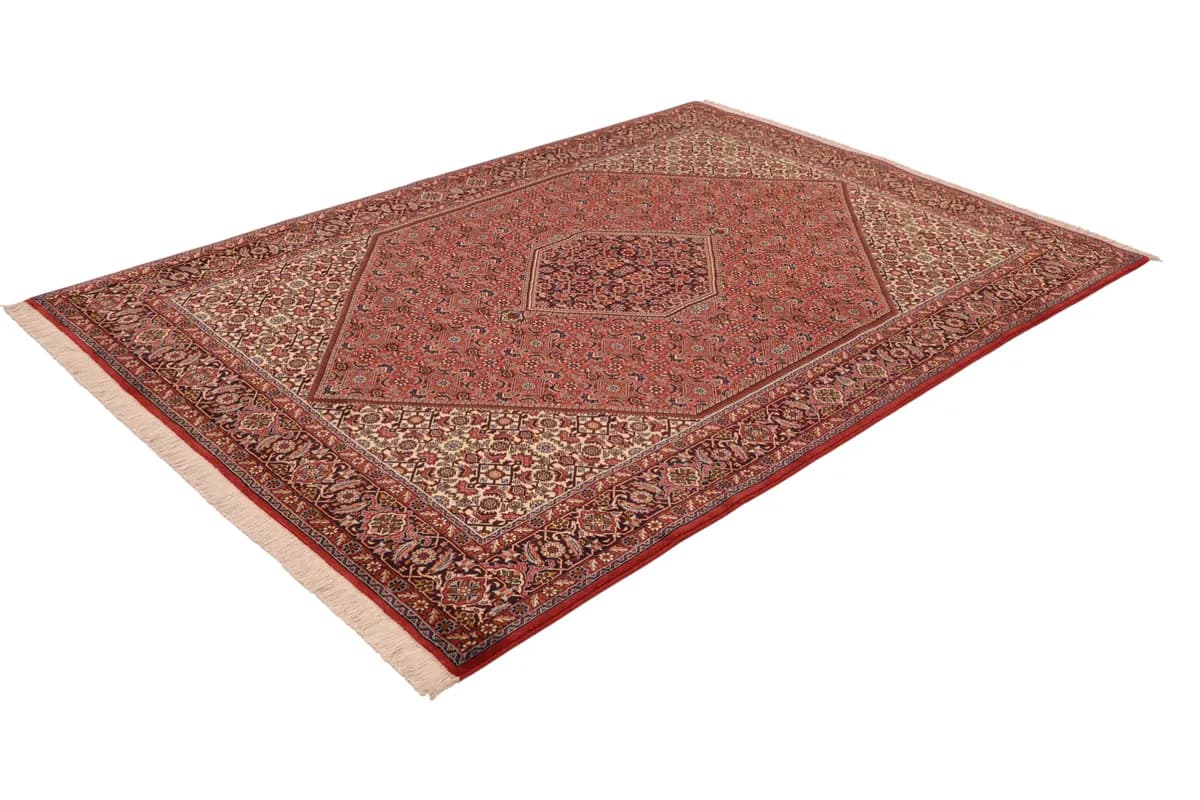
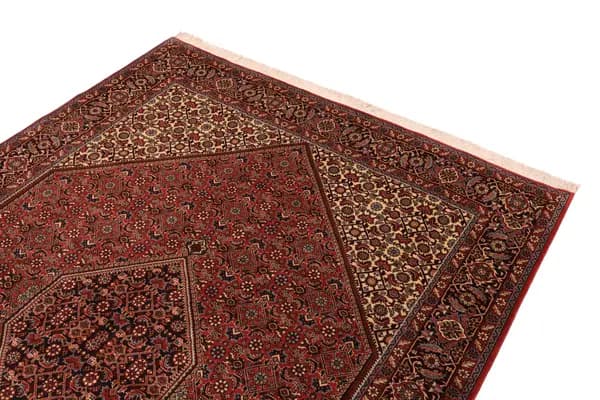
A Bidjar from the Kurdish weaving regions of western Iran, 245 x 173 cm (8'0" x 5'8"), a size suited to a dining table or a fair-sized seating group. Bidjars have earned the name "the Iron Rugs of Persia" for a structure so dense and firmly pressed that the rugs cannot be folded, only rolled, and for a durability collectors have prized for generations. What sets this one apart is how finely the geometry is drawn within that famously heavy construction.
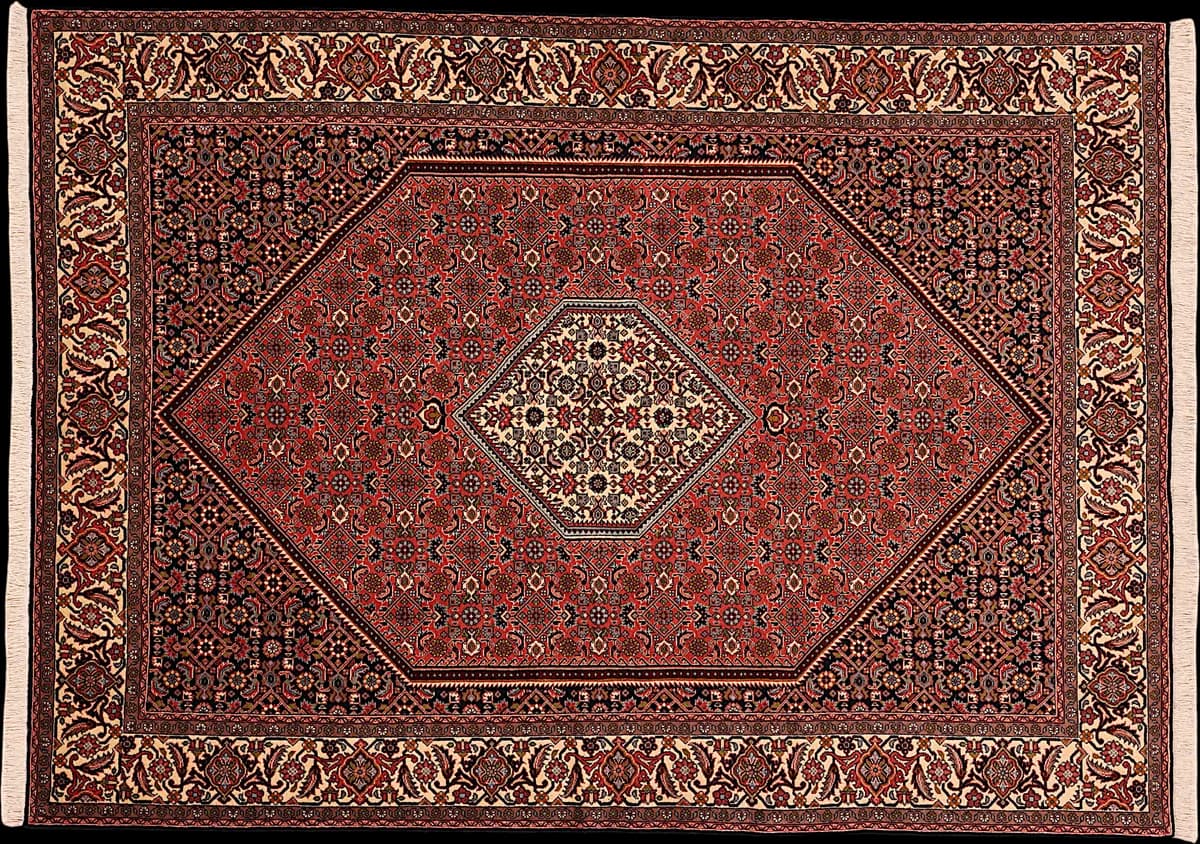
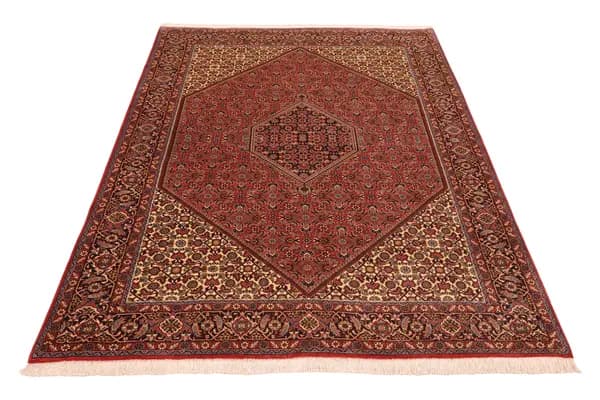
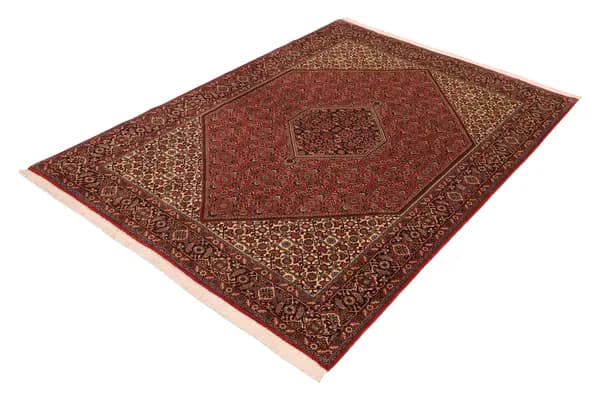
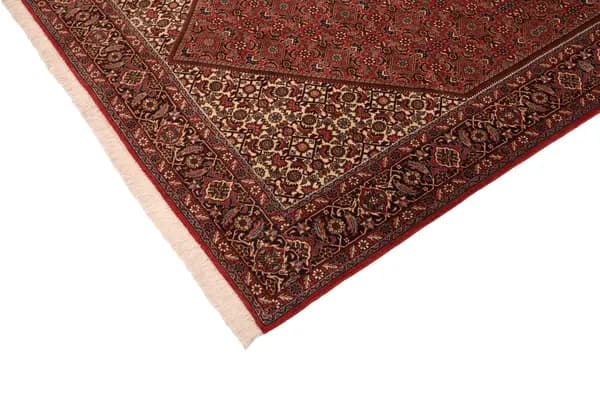
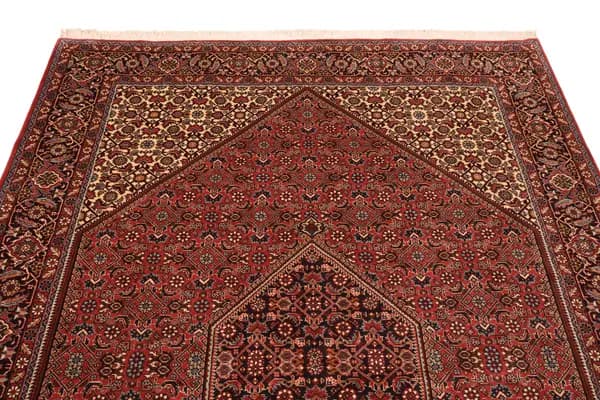
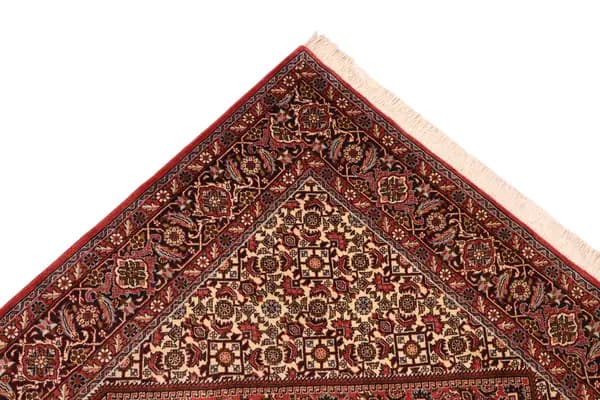
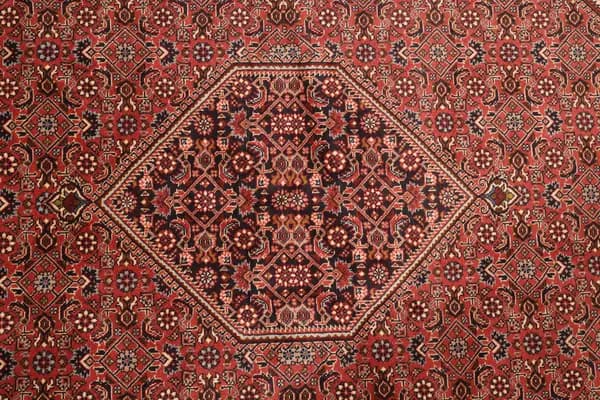
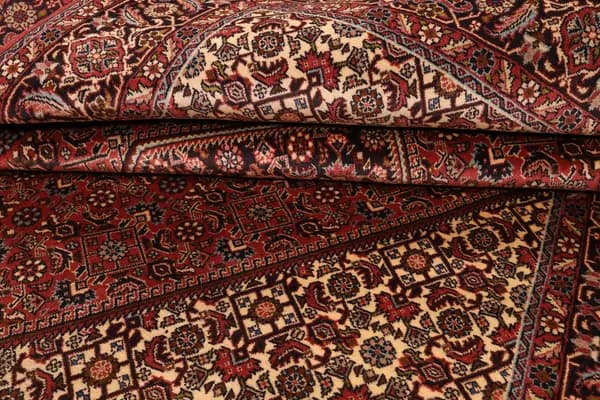
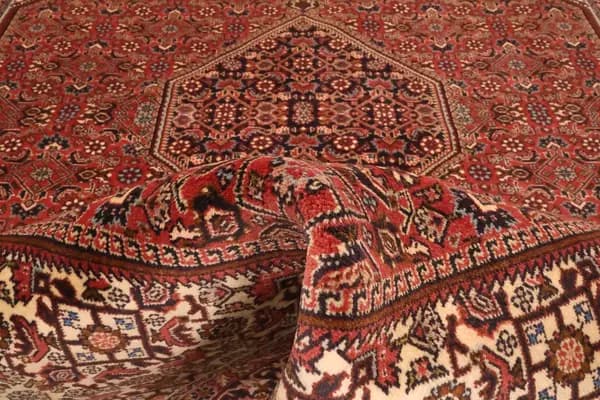
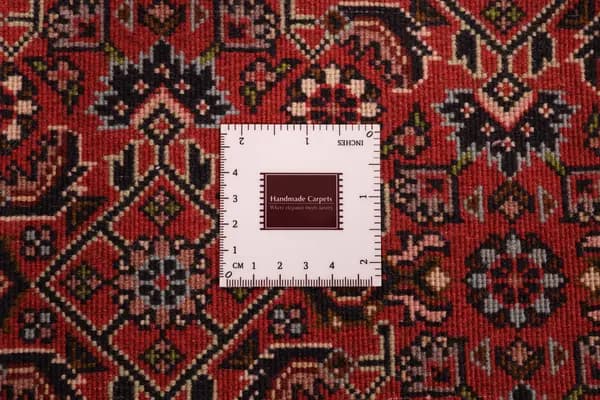
A deep brick red dominates the field, carried by a dense Mahi lattice of small fish-and-rosette motifs repeating with real precision across the ground. At the centre sits a diamond medallion, and within it a smaller, darker hexagonal medallion, so the eye finds a medallion inside a medallion. Ivory corner spandrels break the red at each end of the field, and a wide navy border, filled with red and cream floral vine work, closes the design with enough contrast to hold the whole composition together.
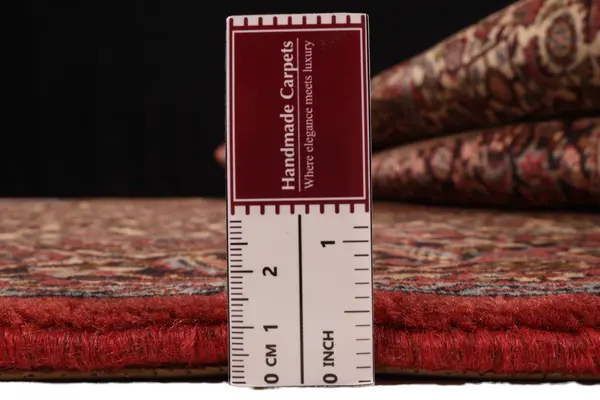
That crispness is a matter of knot count. At 321,000 to 380,000 knots per square metre, this is among the tightest weaving in the Persian tradition, and it is what allows a lattice this fine and this even to stay sharp rather than blur at the edges, as coarser Bidjars sometimes do. The pile is hand-spun wool on a cotton foundation, clipped to fifteen millimetres, low enough to keep every line of the pattern legible underfoot as well as to the eye. The result is a rug that is dense and substantial in the hand, in keeping with its type, but drawn with a discipline not every Bidjar bothers with.
In a dining room, this red holds its own beneath a table and chairs and gains rather than loses presence under overhead light, warming pale wood floors and standing up comfortably to dark furniture. It sits just as well anchoring a living room seating group. Underfoot it is firm, dense and reassuring, a weave built for daily use rather than a room kept for best. As light moves across it through the day, the fine diamond lattice catches a soft wool lustre, and the medallion within the medallion is the detail that keeps drawing the eye back in.
More on Bidjar rugs: origin, making and how to recognise a genuine piece
Superior craftsmanship
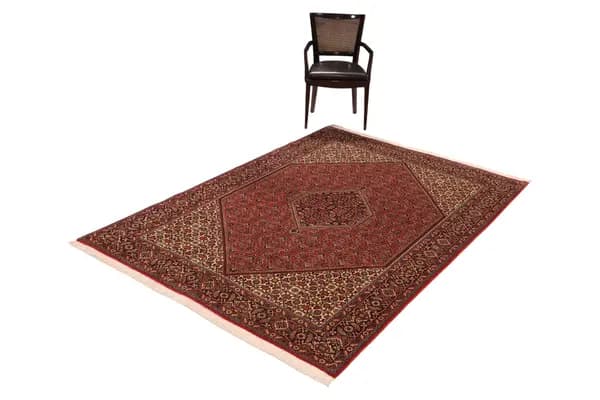
At 245 × 173 cm (4.24 m²) this is a medium rug. It works in front of a sofa, in front of a bed or in a study. It is too small for a dining table — there you want about 80 cm of clearance so a chair does not tip over the edge when pushed back.
Yes, knotted by hand — knot by knot on a loom, not machine-made. The density is 321,000 to 380,000 knots per square metre; across 4.24 m² that is roughly 1.4 to 1.6 million individual knots, every one of them tied by hand.
Hand-spun wool still carries its own lanolin, which keeps liquid sitting on the surface for a moment: blot quickly, with clear water and a light cloth, working inwards and without rubbing. Otherwise regular vacuuming along the pile is enough. Turn the rug once or twice a year so light and footfall reach it evenly.
We are in the Hamburg Speicherstadt. Come and see this rug in daylight, or write to us — a person answers.
Certificate included verifying origin, materials, and craftsmanship.
Ref: 456195