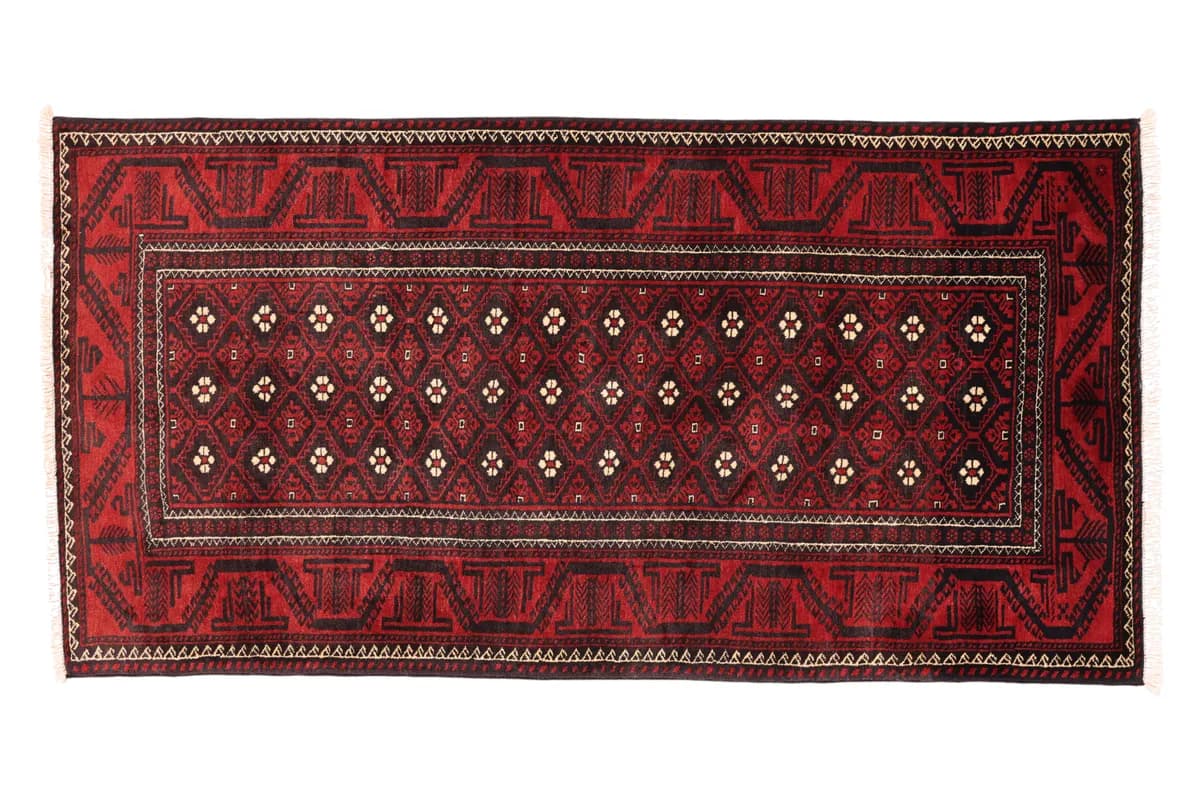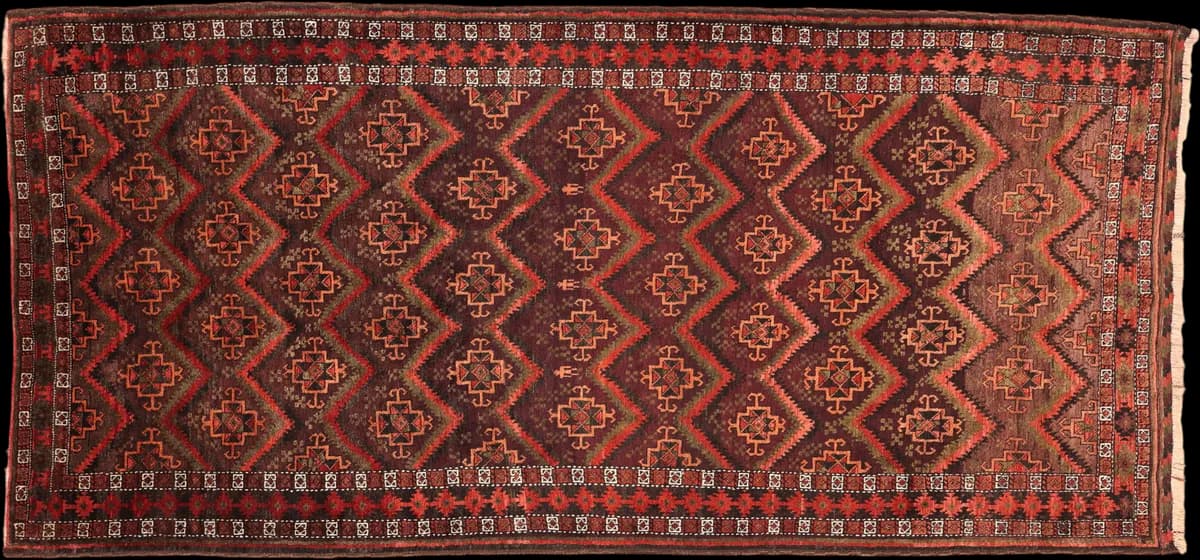
Belutsch
192 × 112 cm
613 €
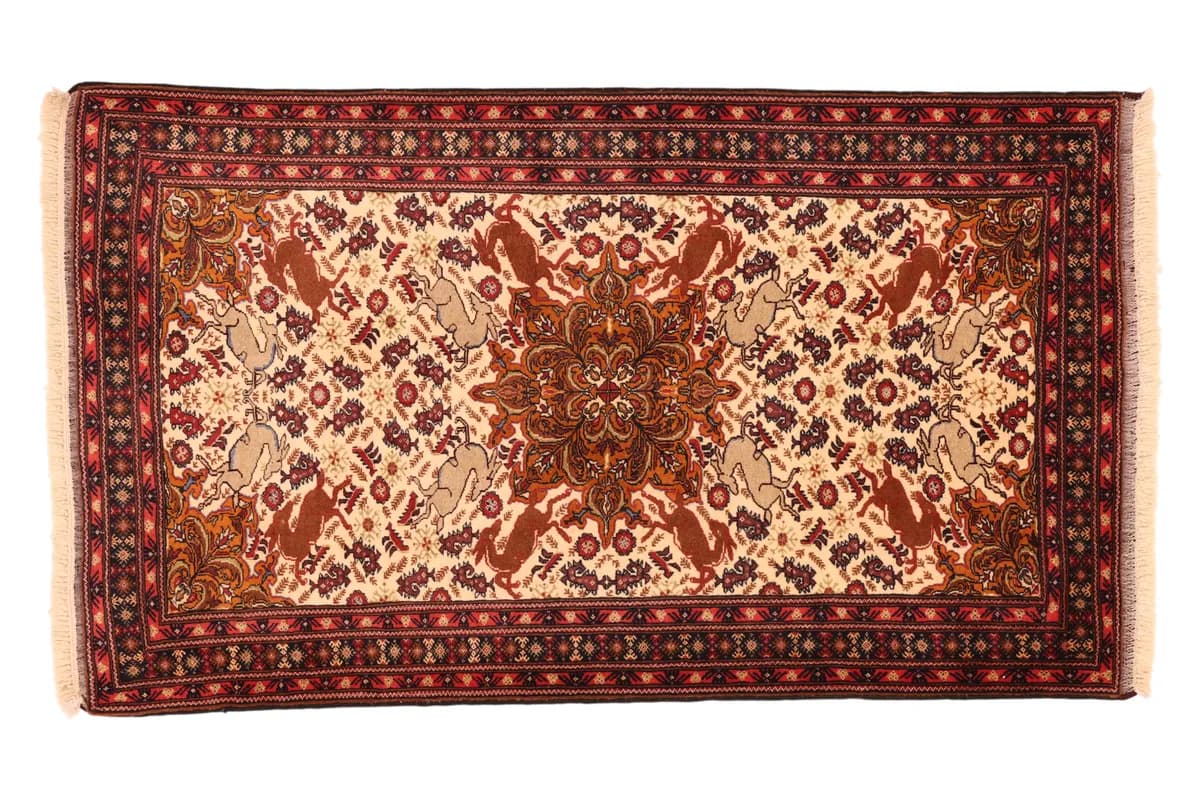
539 €
Incl. VAT
In Stock · Ready to Ship
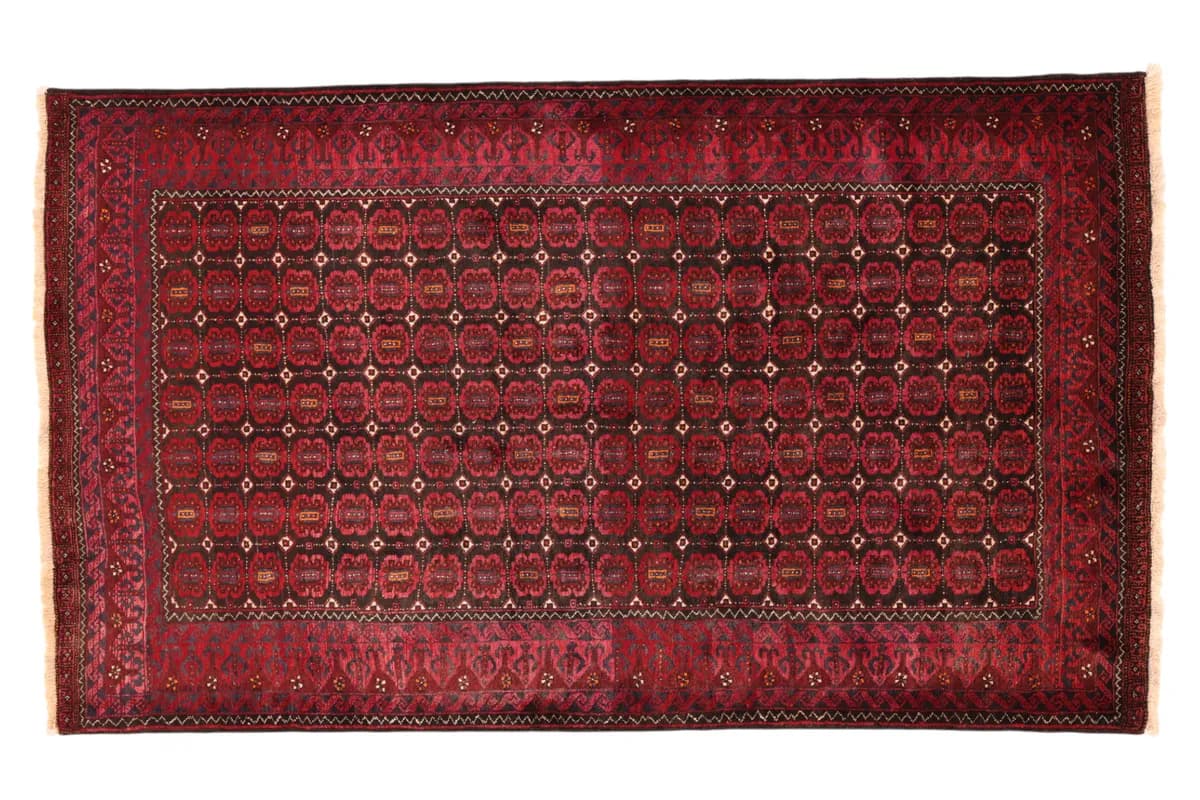
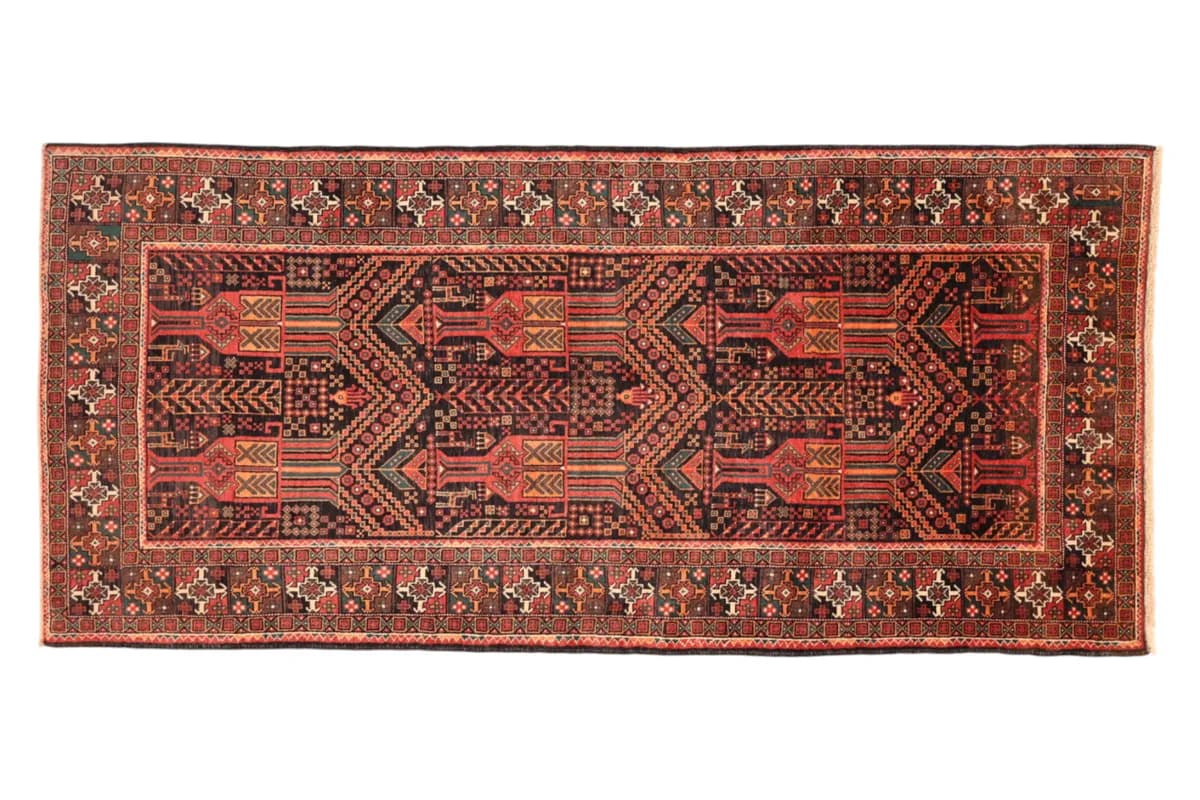
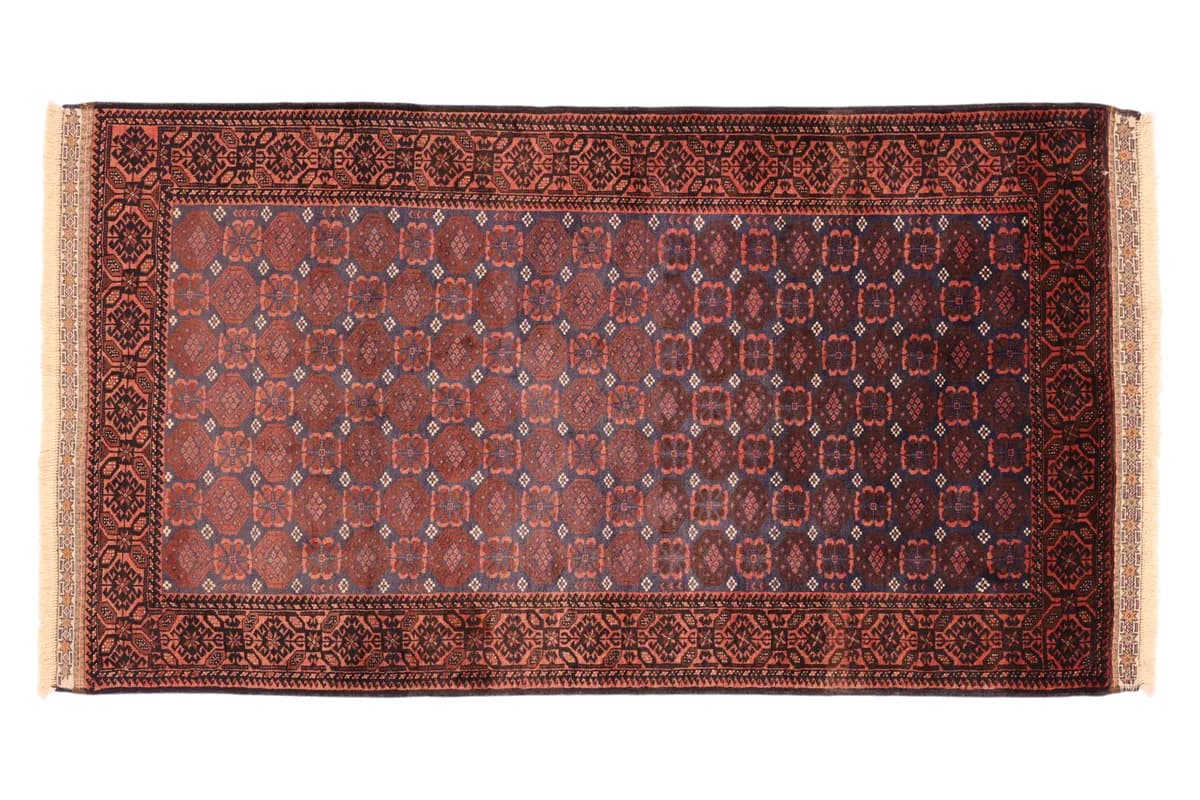
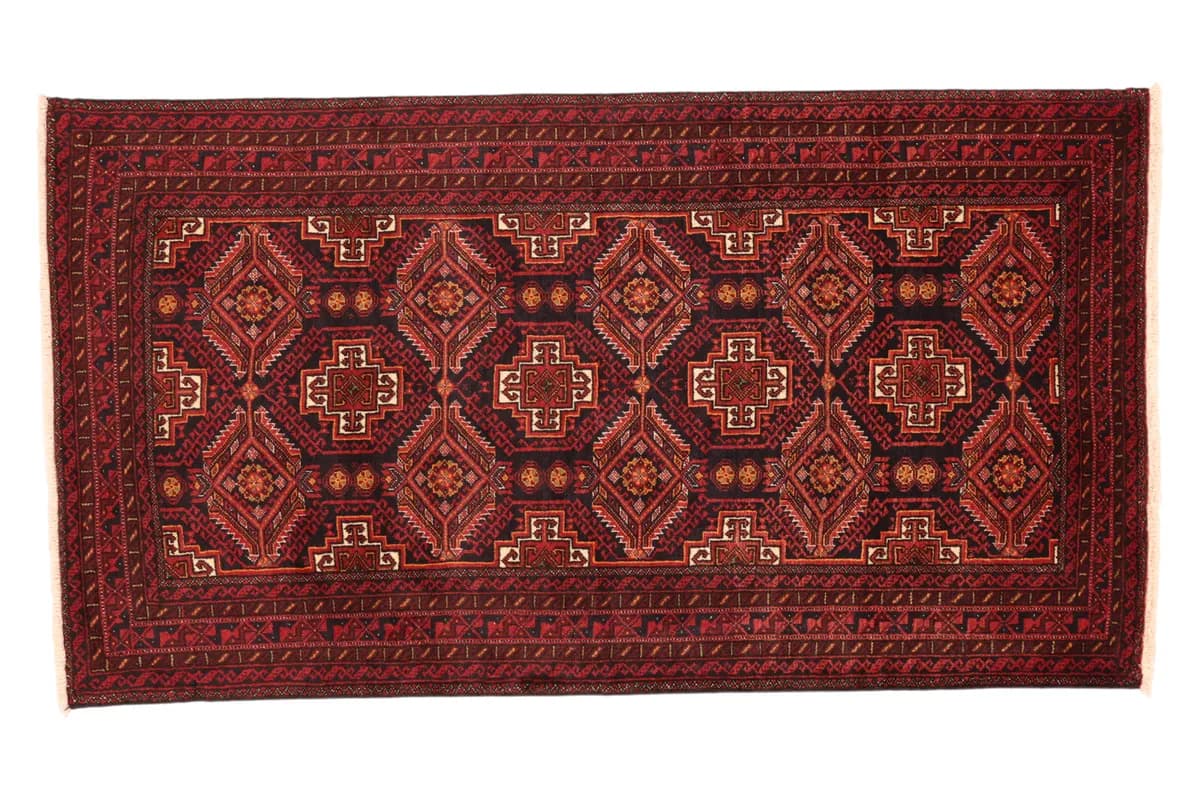
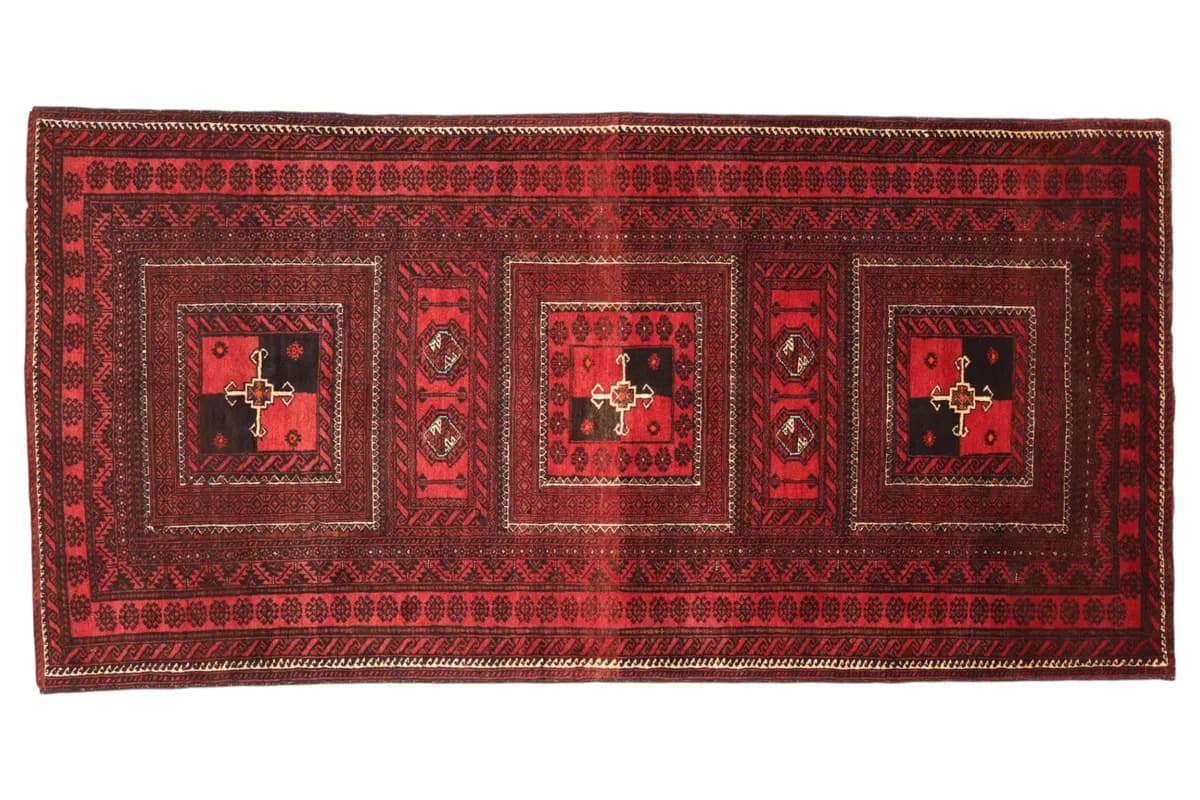
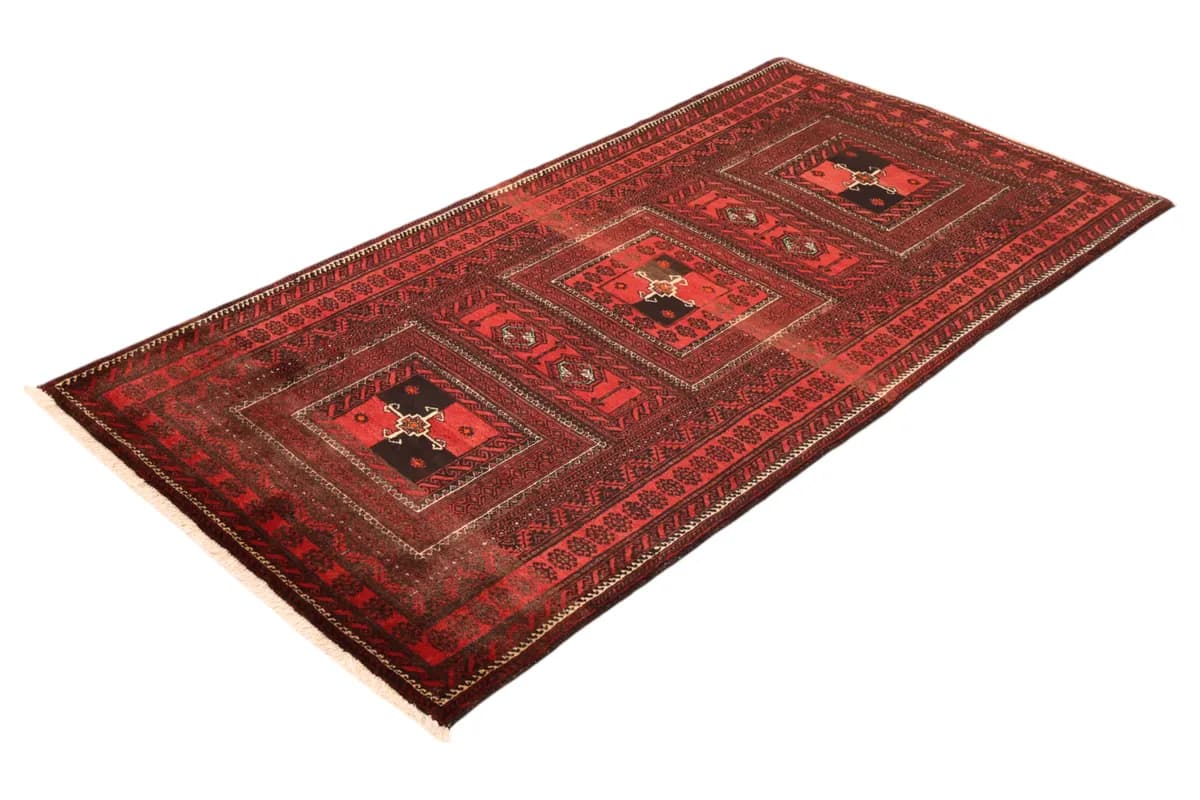
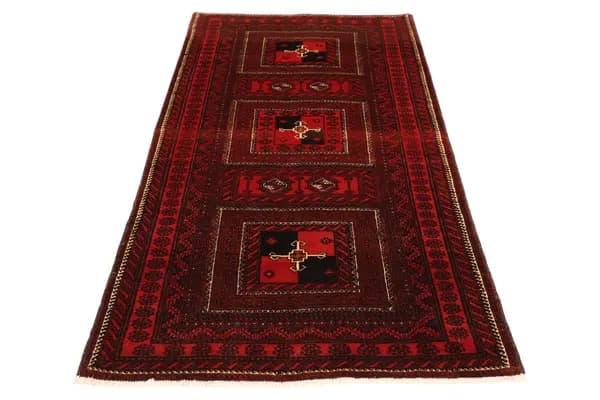
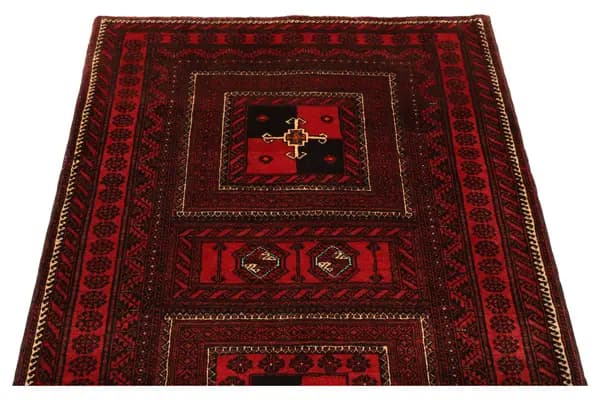
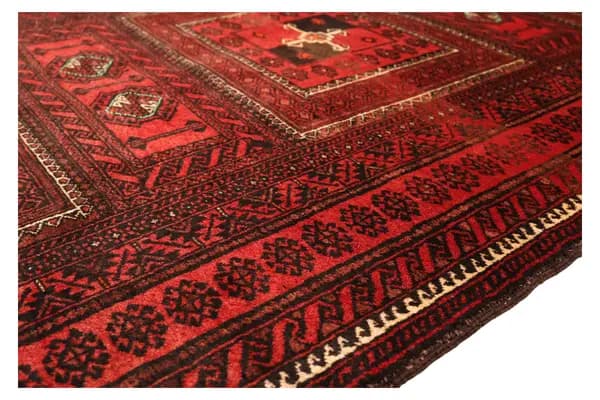
This is a Baluch runner, 197 x 96 cm (6'6" x 3'2"), also written Belouch, from the tribal weaving grounds of south-eastern Iran. The type is known for bold, angular geometry and a deep, earthy palette, often gathered into a single prayer-niche field. Here the weaver chose something rarer: three separate compartments, each its own small world.
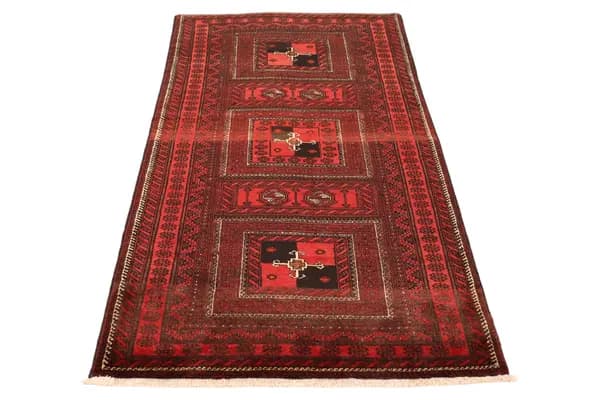
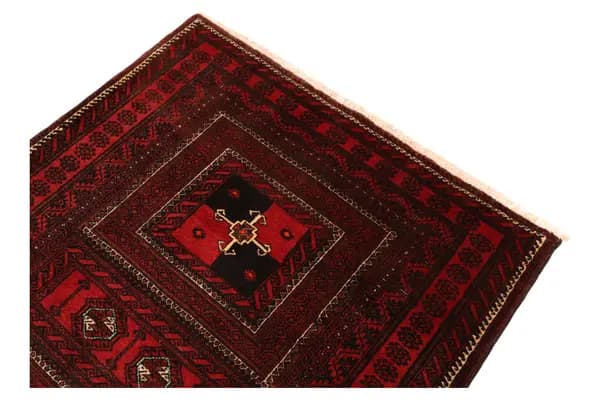
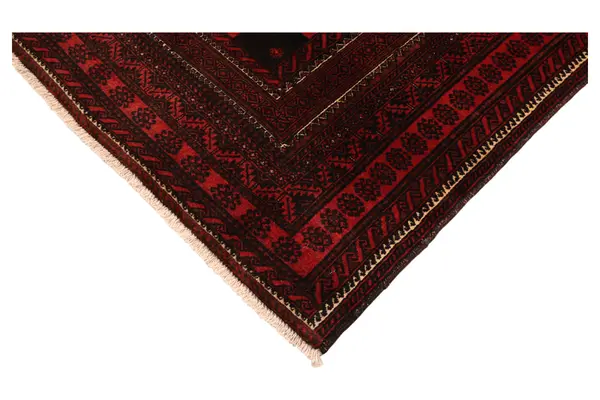
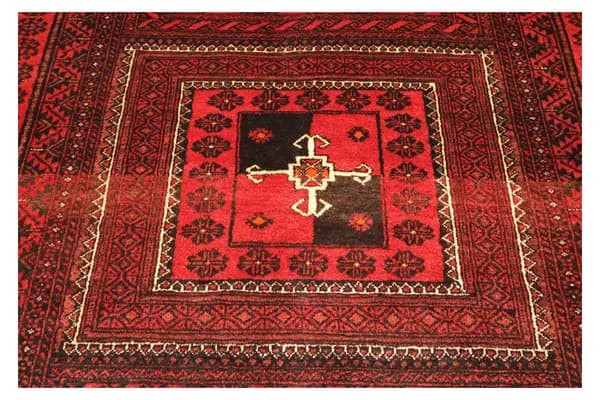
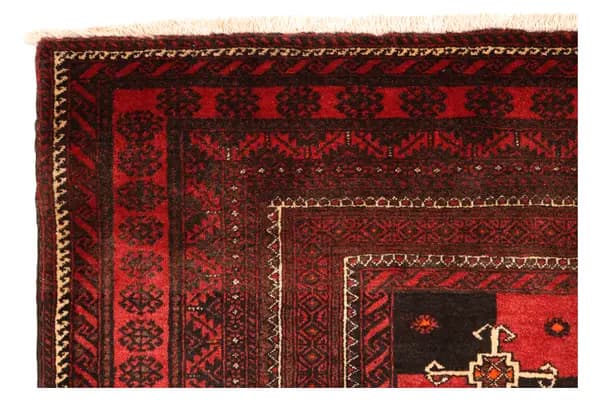
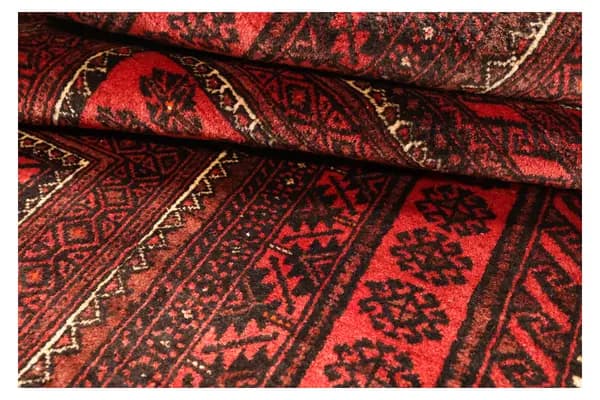
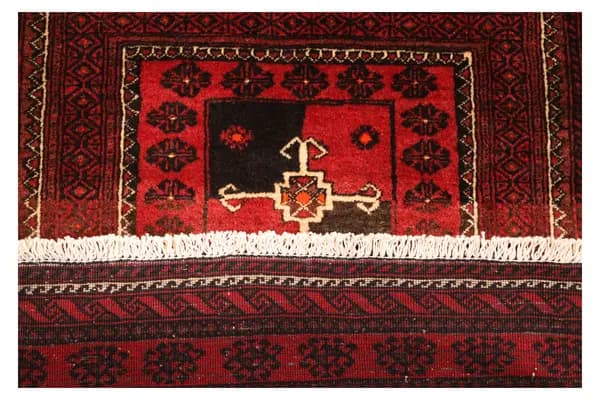
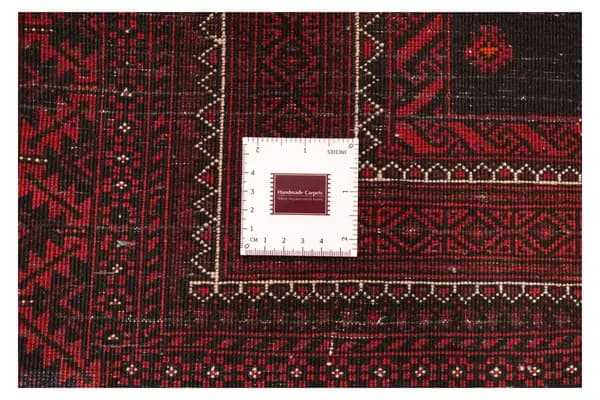
A deep brick red runs the length of the piece, broken by dark brown-black into three squarish compartments, each one quartered and centred on a small cross-shaped medallion. Narrow ivory-bordered panels mark the divide between them, so the eye moves compartment to compartment rather than following one continuous field. Small touches of turquoise and orange sit inside the medallions, warming the red without competing with it. Down the centre the red shifts a shade lighter in places, the kind of quiet variation handspun wool carries from skein to skein. The border gathers several concentric red and brown guard stripes around a rosette band, closing at the edge in a fine ivory zigzag.
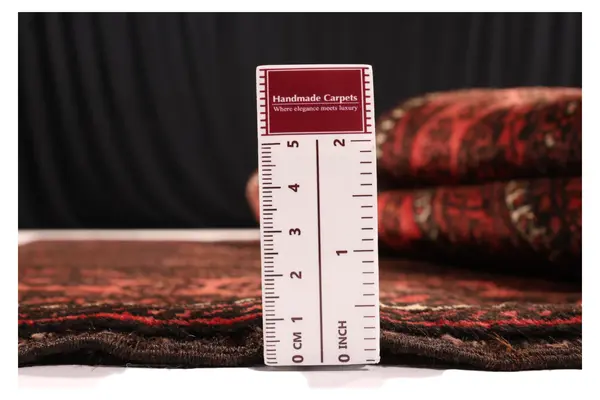
The wool was spun by hand before it was dyed and knotted onto a cotton warp, and handspun yarn takes dye less evenly than machine-spun wool, which is part of why that shift in red sits down the centre rather than the colour lying flat. At 128,000 to 160,000 knots per square metre and a 6 mm pile, the weave holds the sharp edges of the quartered compartments without letting them soften into a blur. Woven from memory rather than from a drawn plan, the three compartments were never meant to repeat exactly, and they do not.
A runner of this size belongs in a hallway or on a landing, somewhere it is seen a few steps at a time rather than all at once, which suits a rug built from three compartments rather than one long repeat. The brick red holds its own even where daylight is short, warming a passage that might otherwise feel bare. Underfoot the pile is dense and firm, wool built for a floor that gets walked on rather than admired from the doorway. Walk its length and the rug changes compartment by compartment, each one its own small red-and-black room to pass through.
More on Baluch rugs: origin, making and how to recognise a genuine piece
Traditional weave
At 197 × 96 cm (1.89 m²) this is a small rug. It works beside a bed, in a reading corner, in front of a fireplace or as a mat by a door. It does not furnish a room; it makes a point in one.
Yes, knotted by hand — knot by knot on a loom, not machine-made. The density is 128,000 to 160,000 knots per square metre; across 1.89 m² that is roughly 240,000 to 300,000 individual knots, every one of them tied by hand.
Hand-spun wool still carries its own lanolin, which keeps liquid sitting on the surface for a moment: blot quickly, with clear water and a light cloth, working inwards and without rubbing. Otherwise regular vacuuming along the pile is enough. Turn the rug once or twice a year so light and footfall reach it evenly.
We are in the Hamburg Speicherstadt. Come and see this rug in daylight, or write to us — a person answers.
Certificate included verifying origin, materials, and craftsmanship.
Ref: 510453