Belutsch
207 × 106 cm
624 €





448 €
Incl. VAT
In Stock · Ready to Ship
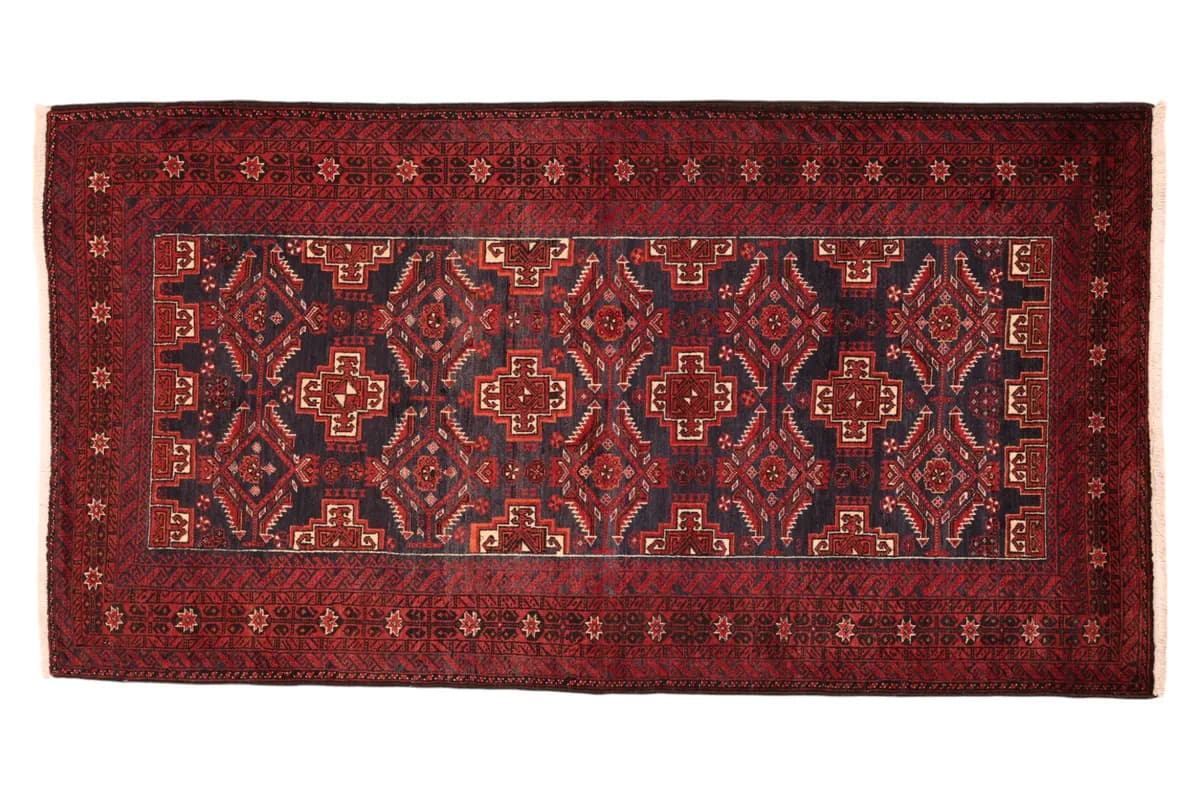
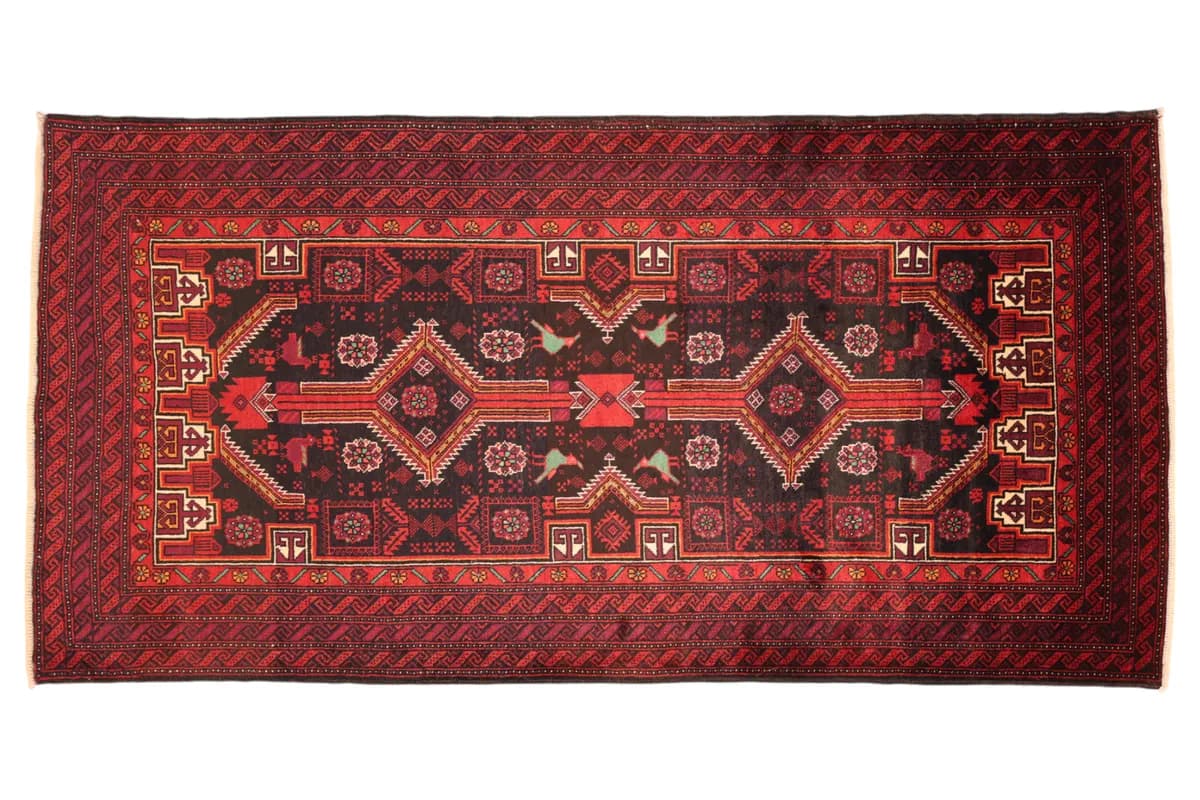
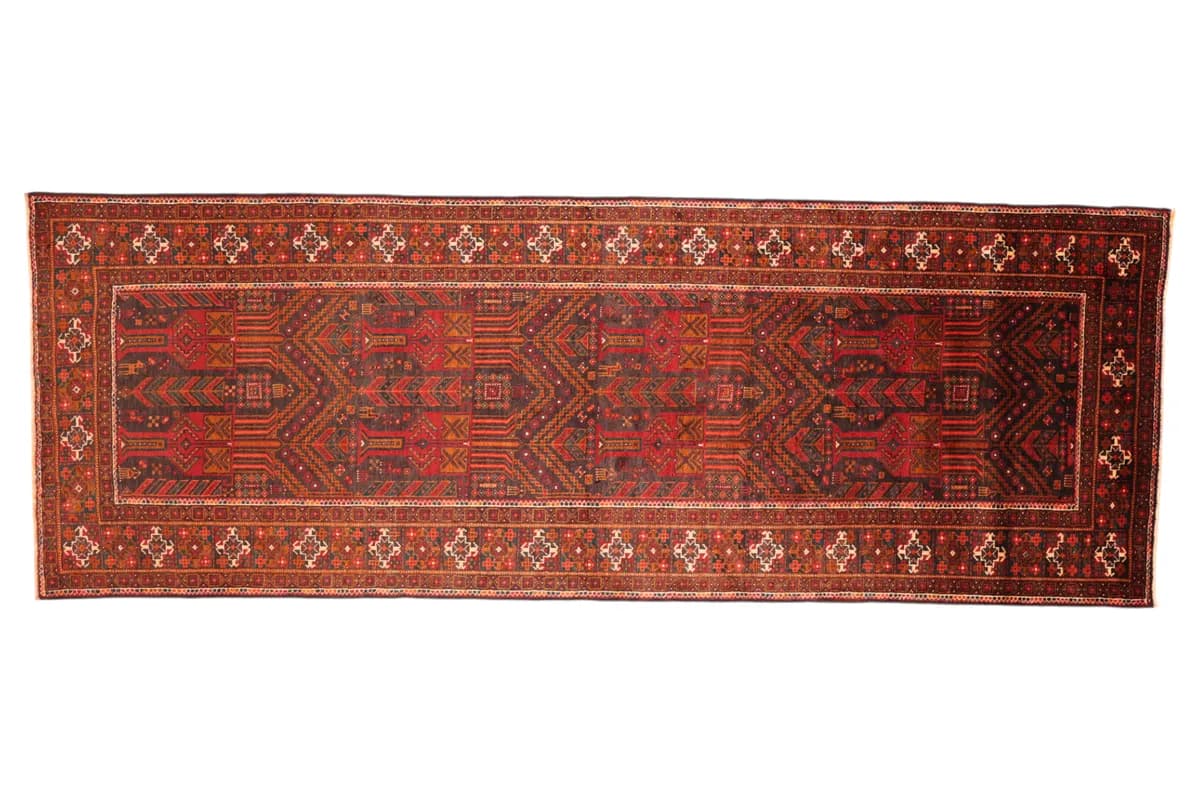
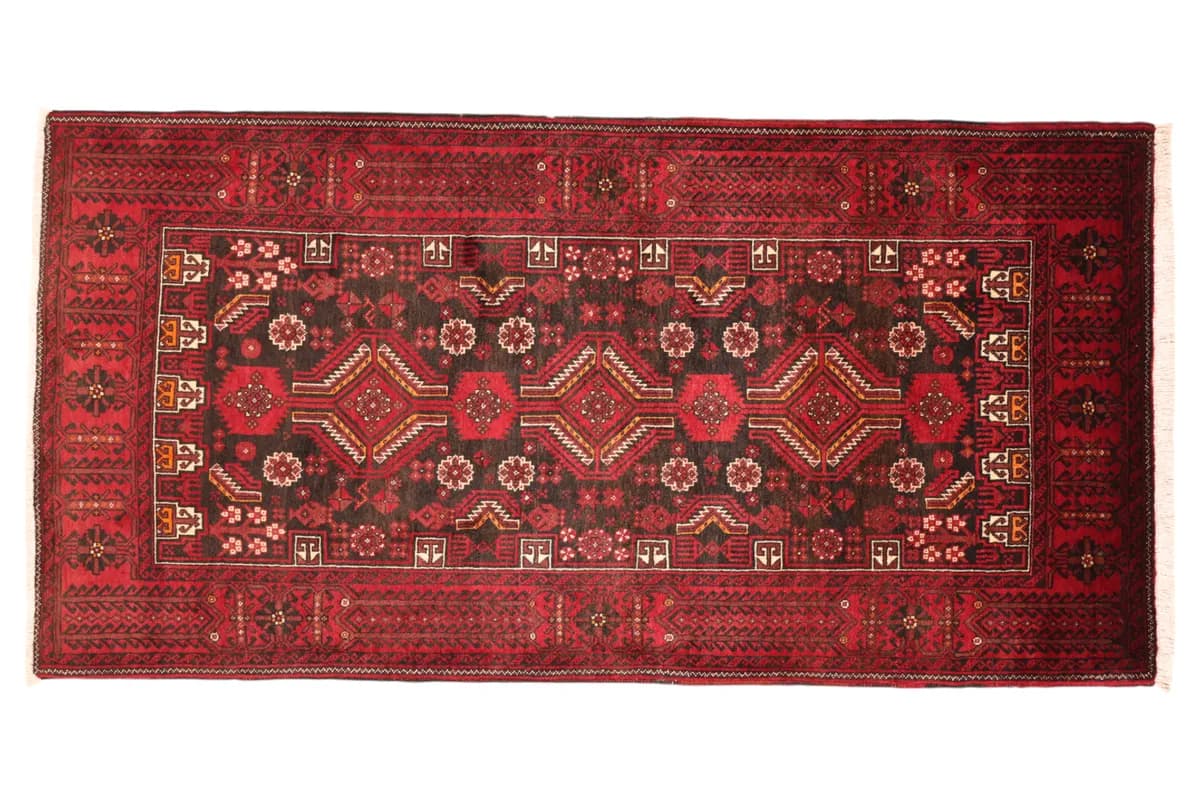
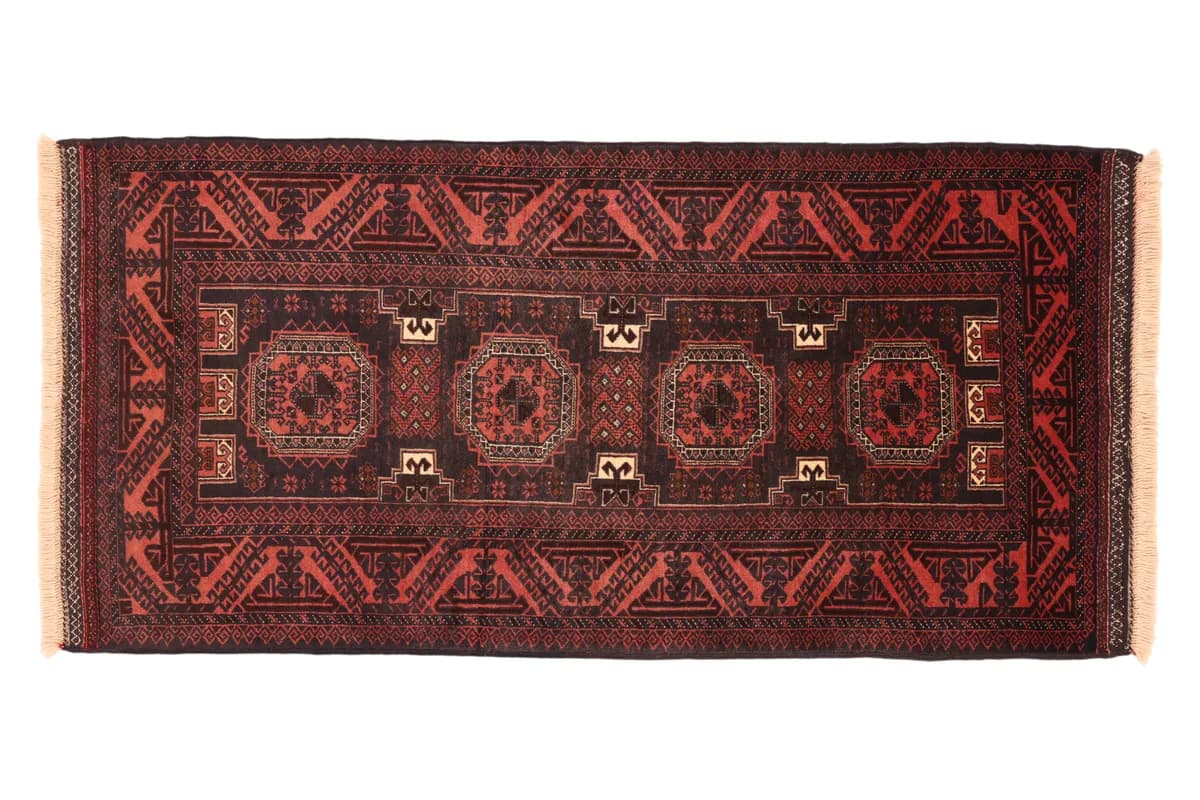
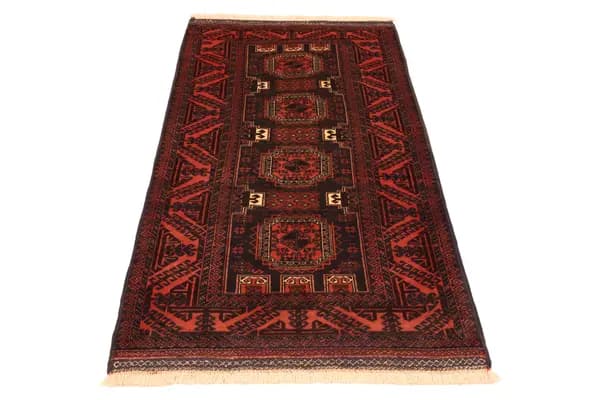
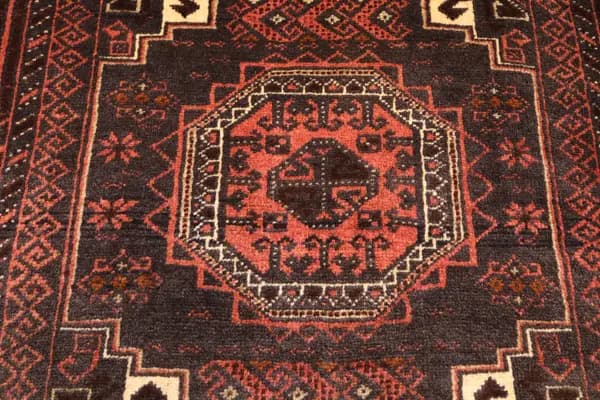
This is a Belutsch runner, also written Baluch, a tribal weaving from the borderlands of southeast Iran, measuring 196 x 92 cm (6'5" x 3'0"). Belutsch pieces are knotted from memory on portable looms, prized for bold angular geometry and deep, earthy colour. Where most carry a single medallion, this one strings four in a steady column down its length.
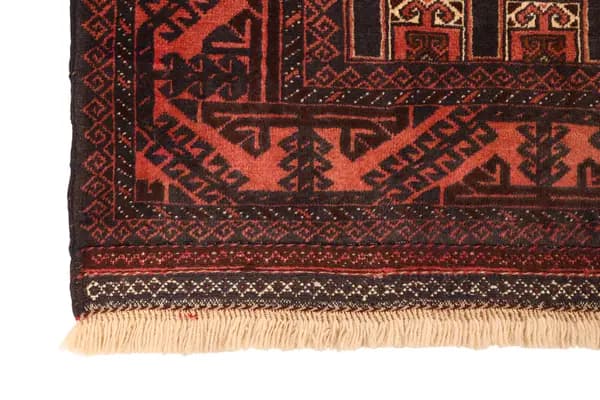
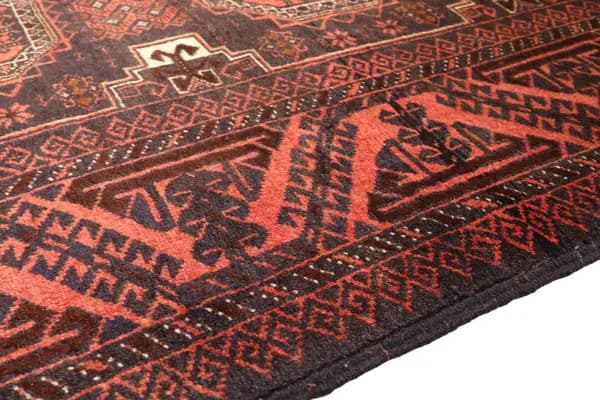
The ground is a deep blackish-brown with an undertone of aubergine, dark enough that the four brick-red octagon medallions seem to glow against it. Each medallion holds a darker centre, and between them small cream-and-plum hooked devices, like combs, mark the vertical axis in even steps. The eye follows this chain the full length of the runner before reaching the border, a wide band of diagonal zigzag and hooked motifs in brick red and dark brown, forceful enough to hold its own against the depth of the field.
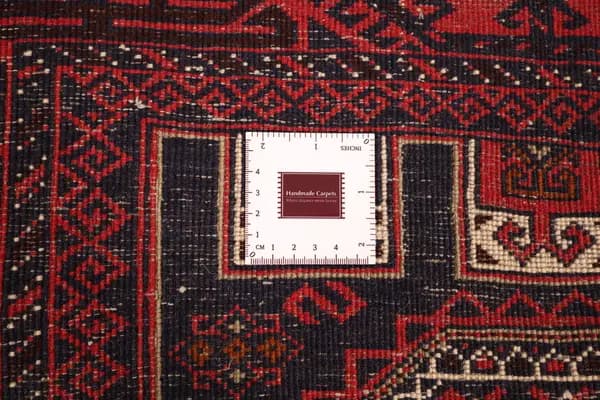
The wool is hand-spun, carrying more texture and irregularity than machine-spun yarn, and it is this that gives the pile its ribbed, matte surface rather than any sheen. Aged twenty to forty years, the runner holds a knot density of around 128,000 to 160,000 knots per square metre, tight enough to keep the octagons' sharp corners and the border's zigzag edges crisp rather than blurred. A wool warp beneath keeps the weave supple, and a six-millimetre pile gives it enough depth to feel substantial without turning soft.
A runner this size suits a hallway or landing, seen in passing rather than sat on. Against a pale floor with little daylight, the near-black field and its chain of brick-red medallions bring real warmth, holding the space together. The wool is dense and firm underfoot, built for daily use rather than display, and morning light catches the ribbed pile and the reds of the medallions long into the day.
More on Baluch rugs: origin, making and how to recognise a genuine piece
Traditional weave
At 196 × 92 cm (1.80 m²) this is a small rug. It works beside a bed, in a reading corner, in front of a fireplace or as a mat by a door. It does not furnish a room; it makes a point in one.
Yes, knotted by hand — knot by knot on a loom, not machine-made. The density is 128,000 to 160,000 knots per square metre; across 1.80 m² that is roughly 230,000 to 290,000 individual knots, every one of them tied by hand.
Hand-spun wool still carries its own lanolin, which keeps liquid sitting on the surface for a moment: blot quickly, with clear water and a light cloth, working inwards and without rubbing. Otherwise regular vacuuming along the pile is enough. Turn the rug once or twice a year so light and footfall reach it evenly.
We are in the Hamburg Speicherstadt. Come and see this rug in daylight, or write to us — a person answers.
Certificate included verifying origin, materials, and craftsmanship.
Ref: 839605