Belutsch
229 × 120 cm
1.114 €






448 €
Incl. VAT
In Stock · Ready to Ship
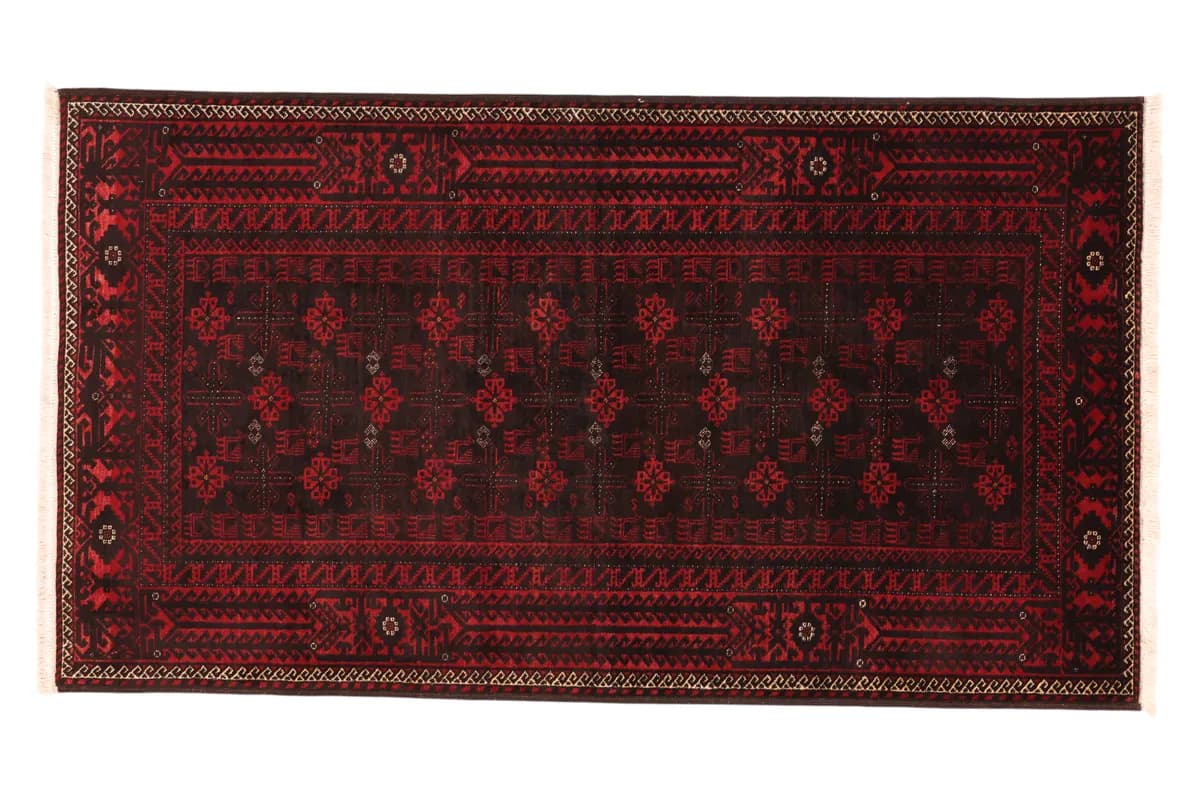
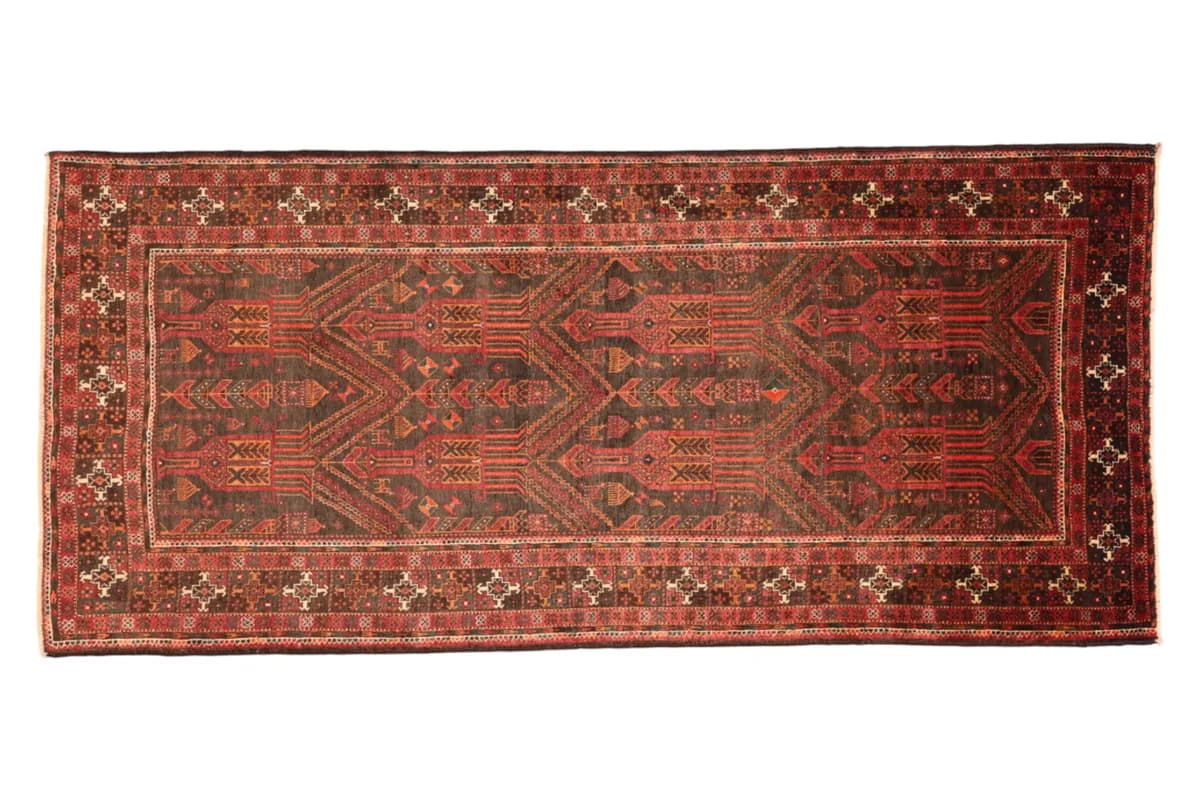
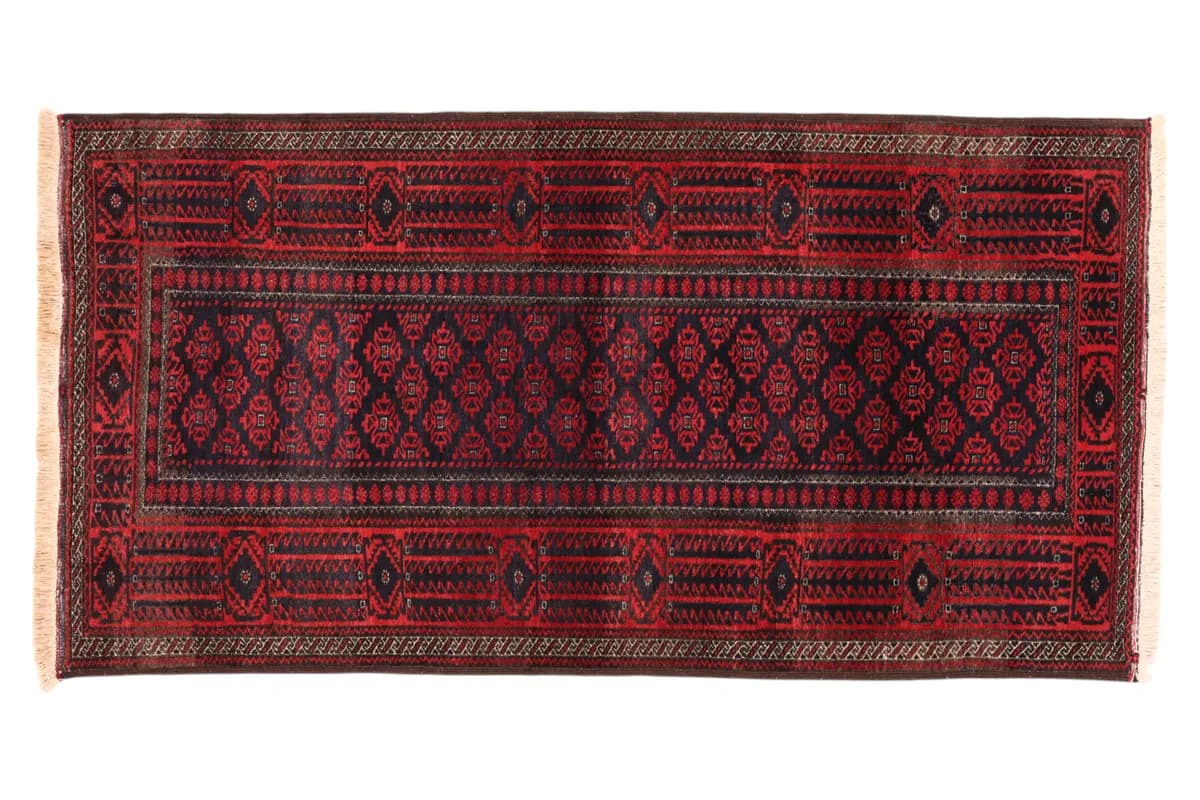
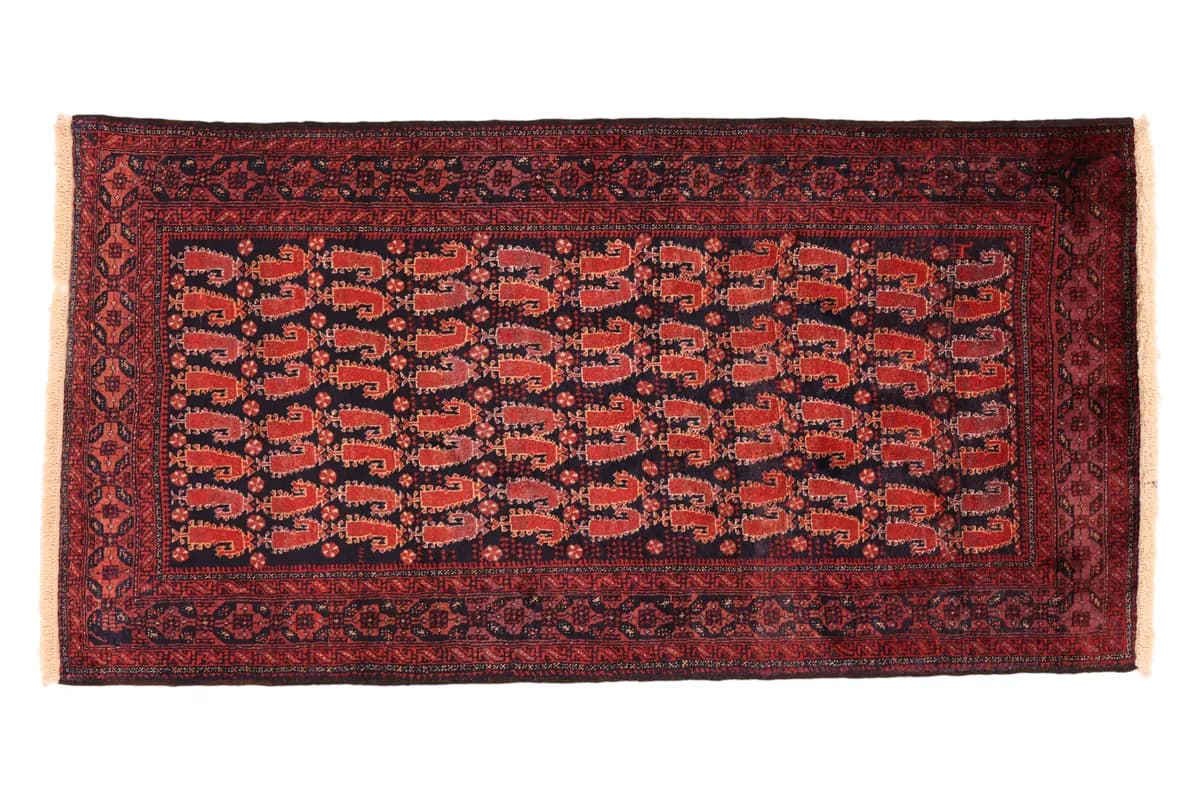
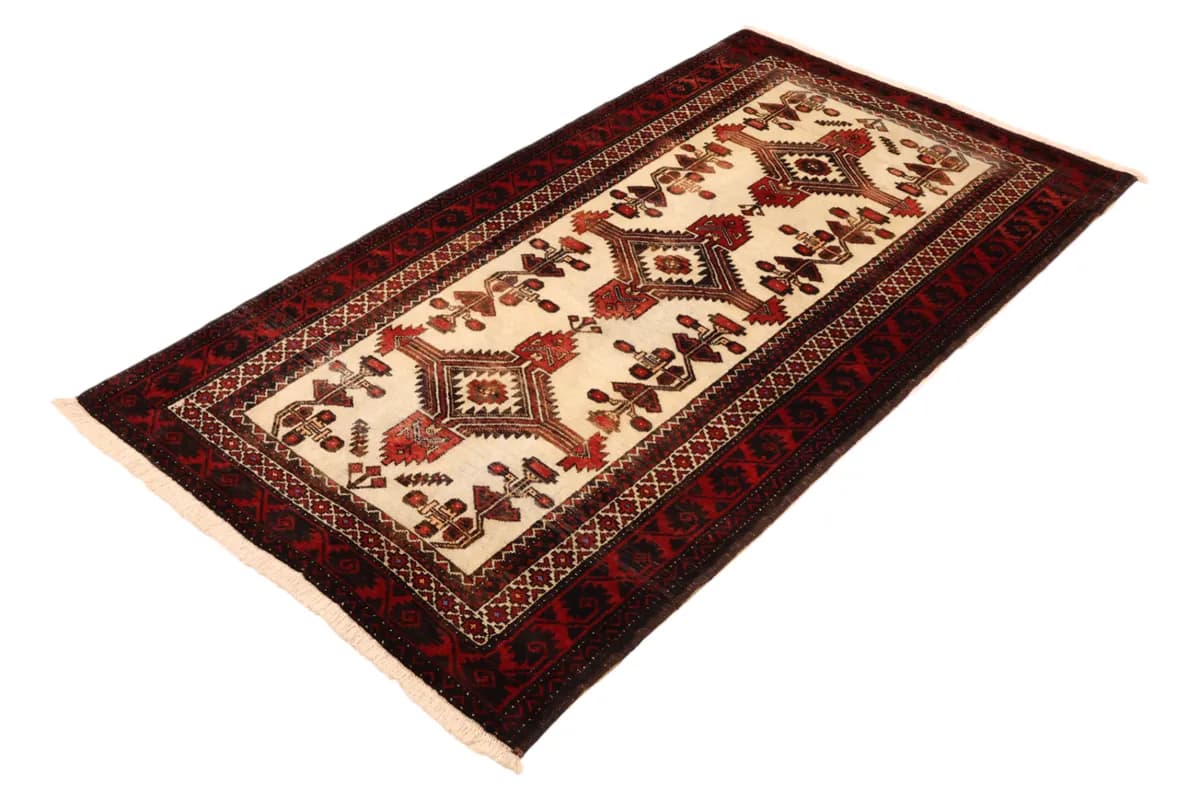
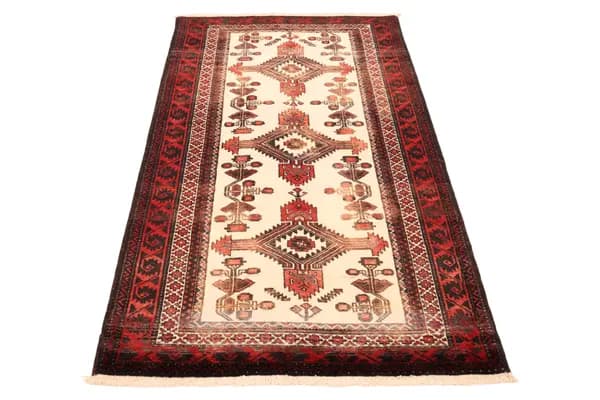
Belutsch weavings come from the tribal borderlands of southeastern Iran, made by women working from memory on portable looms rather than from any drawn plan, and they are usually known for a dark, earthy palette — deep brick reds and indigo dominating the field. This piece, 180 x 100 cm (5'11" x 3'3"), breaks from that expectation before you look at anything else: the ground is a warm ivory, and the familiar Baluch geometry sits on it rather than being buried in it.
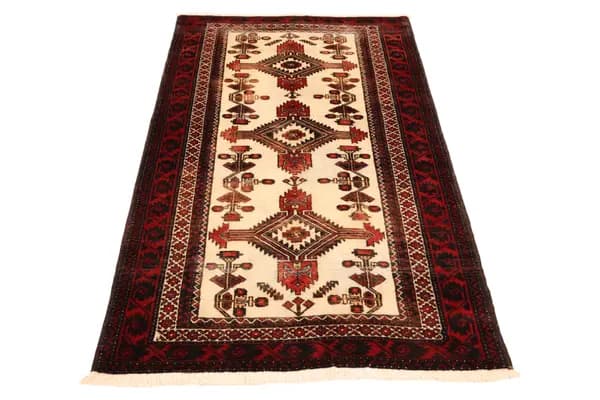
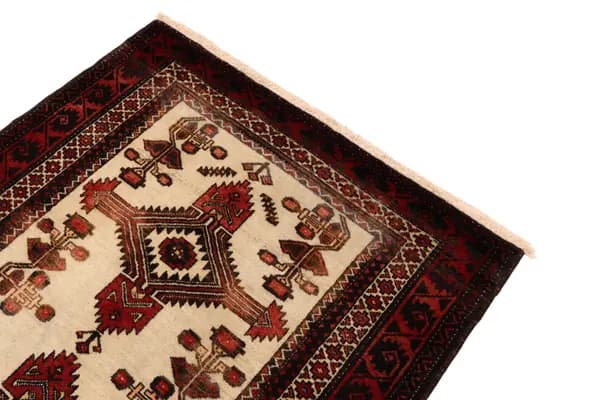
That ivory field carries three large serrated diamond medallions set in a column, each one burgundy with a soft cream centre, so the eye reads them as a chain rather than a single fixed point. Hooked pendant devices flank the medallions, the kind of angular tribal motif passed down rather than drawn, and together they form the Seh Torandj arrangement this weaving is named for. Around the field run several narrow guard stripes in dark brown-black, small navy and rust details caught within them, before the composition is closed by a broad brick-red main border that pulls the whole rug back toward the colour a Baluch is expected to show.
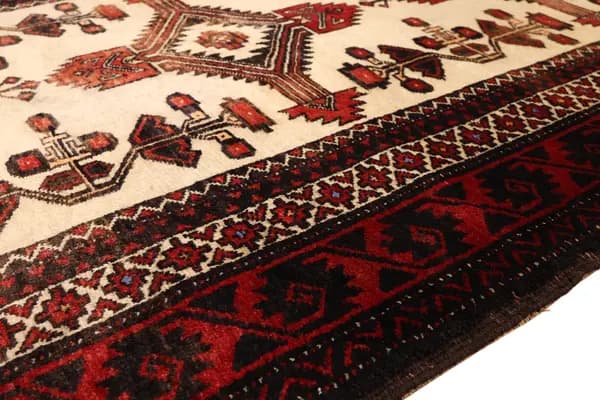
The wool is hand-spun rather than machine-spun, which is why the pile has a slightly uneven, matte surface with no sheen — each strand takes dye a little differently, and that is part of what gives the reds and rust their depth rather than flatness. At a knot density of 128,000 to 160,000 per square metre, tied over a cotton warp, this is a coarser structure than a city workshop would use, and it is exactly what lets the geometry read as bold, graphic shapes rather than fine detail. Twenty to forty years of age have not softened that clarity; if anything the wool has settled into it.
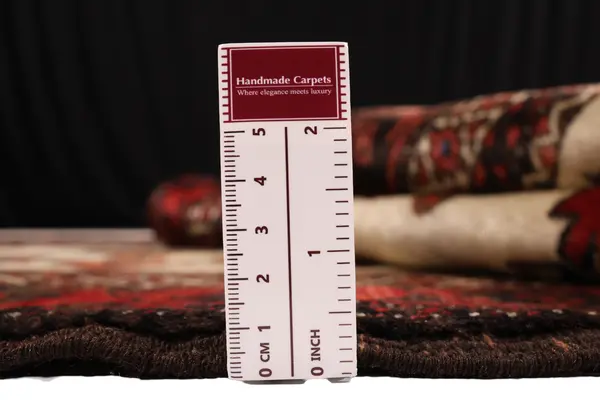
At this size the rug suits a smaller room to itself — a study floor, a landing, or the space beside a bed — rather than a large seating group, and the ivory ground does real work there, lifting a room that gets modest daylight without needing a pale floor beneath it. Underfoot the pile is dense and slightly springy at 6 mm, firm enough for daily footing rather than a piece to tread around. Morning light across that ivory ground is what stays with you, catching each medallion in turn as the sun moves.
More on Baluch rugs: origin, making and how to recognise a genuine piece
Traditional weave
At 180 × 100 cm (1.80 m²) this is a small rug. It works beside a bed, in a reading corner, in front of a fireplace or as a mat by a door. It does not furnish a room; it makes a point in one.
Yes, knotted by hand — knot by knot on a loom, not machine-made. The density is 128,000 to 160,000 knots per square metre; across 1.80 m² that is roughly 230,000 to 290,000 individual knots, every one of them tied by hand.
Hand-spun wool still carries its own lanolin, which keeps liquid sitting on the surface for a moment: blot quickly, with clear water and a light cloth, working inwards and without rubbing. Otherwise regular vacuuming along the pile is enough. Turn the rug once or twice a year so light and footfall reach it evenly.
We are in the Hamburg Speicherstadt. Come and see this rug in daylight, or write to us — a person answers.
Certificate included verifying origin, materials, and craftsmanship.
Ref: 939853