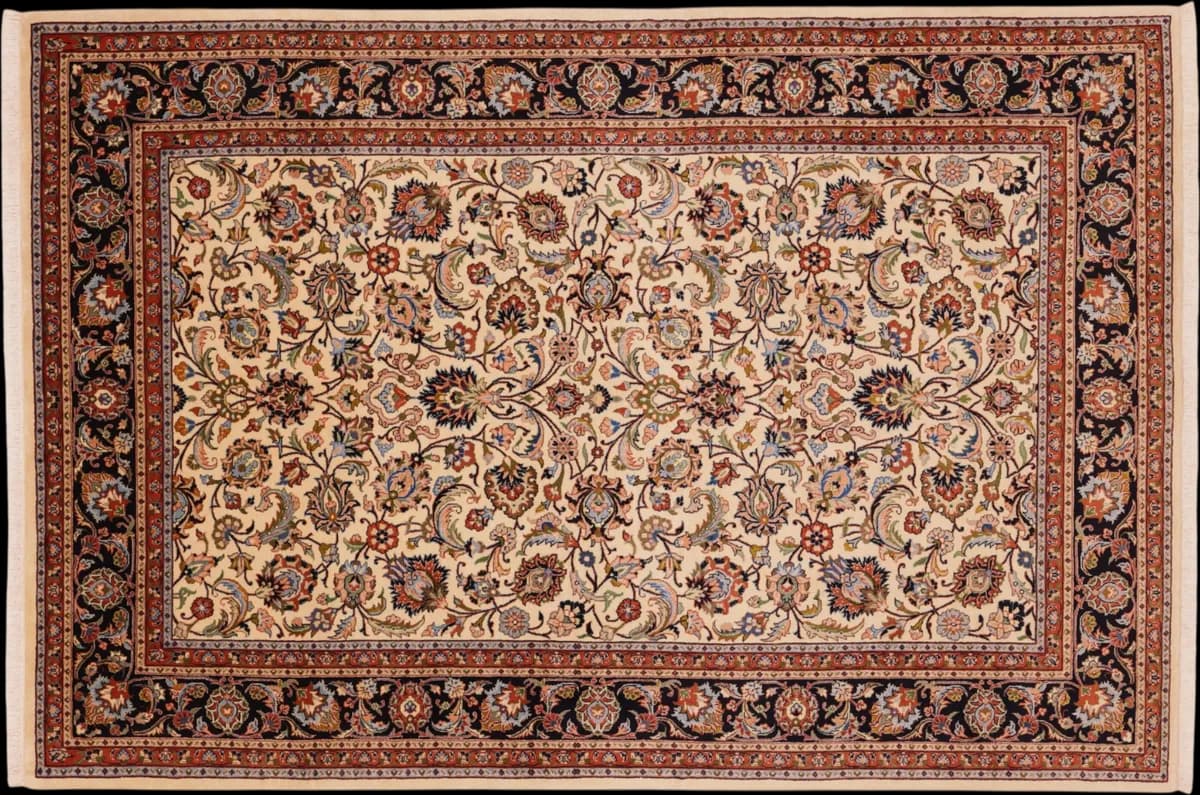
Ghom
222 × 153 cm
2.850 €
5.700 €
Incl. VAT
In Stock · Ready to Ship
This is a Zabol rug, also written Zabul, from Sistan and Baluchestan, the remote southeastern corner of Iran near the Afghan border and one of the oldest continuously worked weaving regions in the Persian world. The area is known for bold, geometric tribal patterns in earthy natural dyes, which makes this piece, at 250 x 202 cm (8'2" x 6'8"), an unusual example of the type.
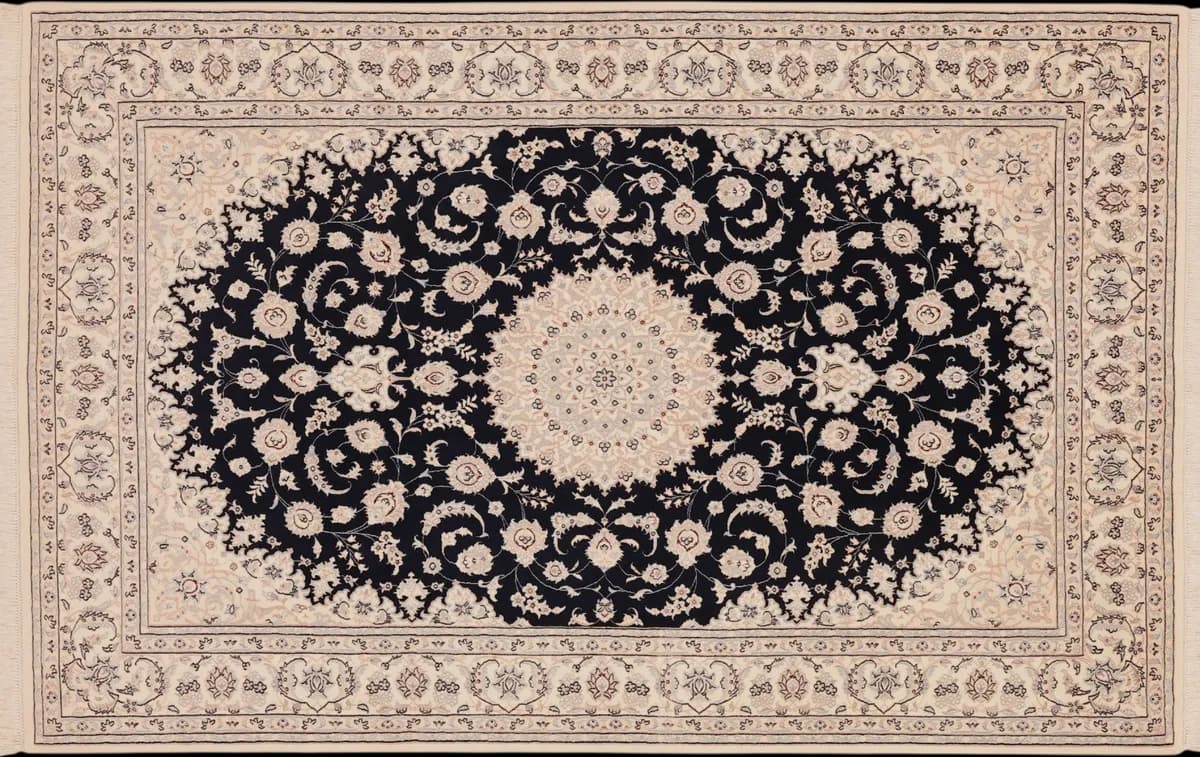
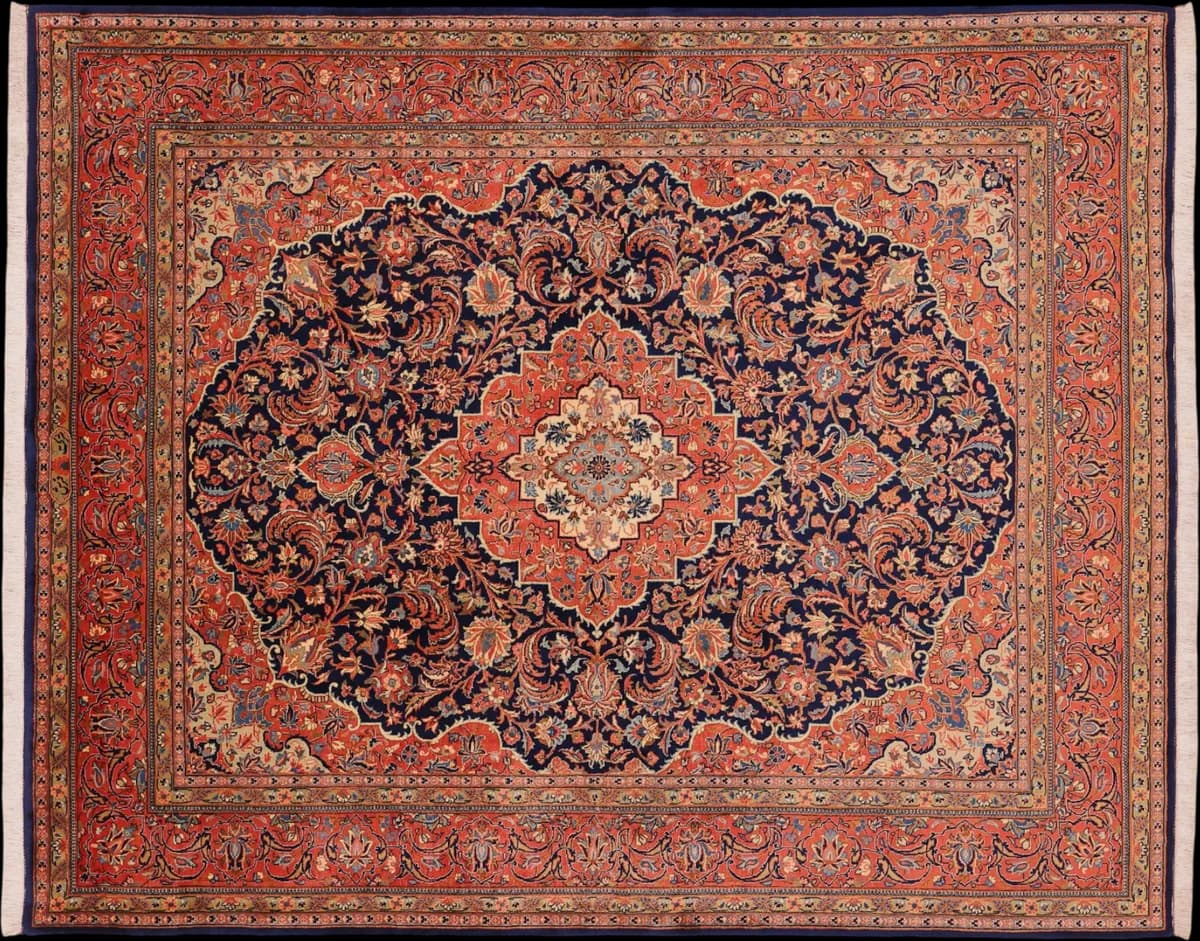
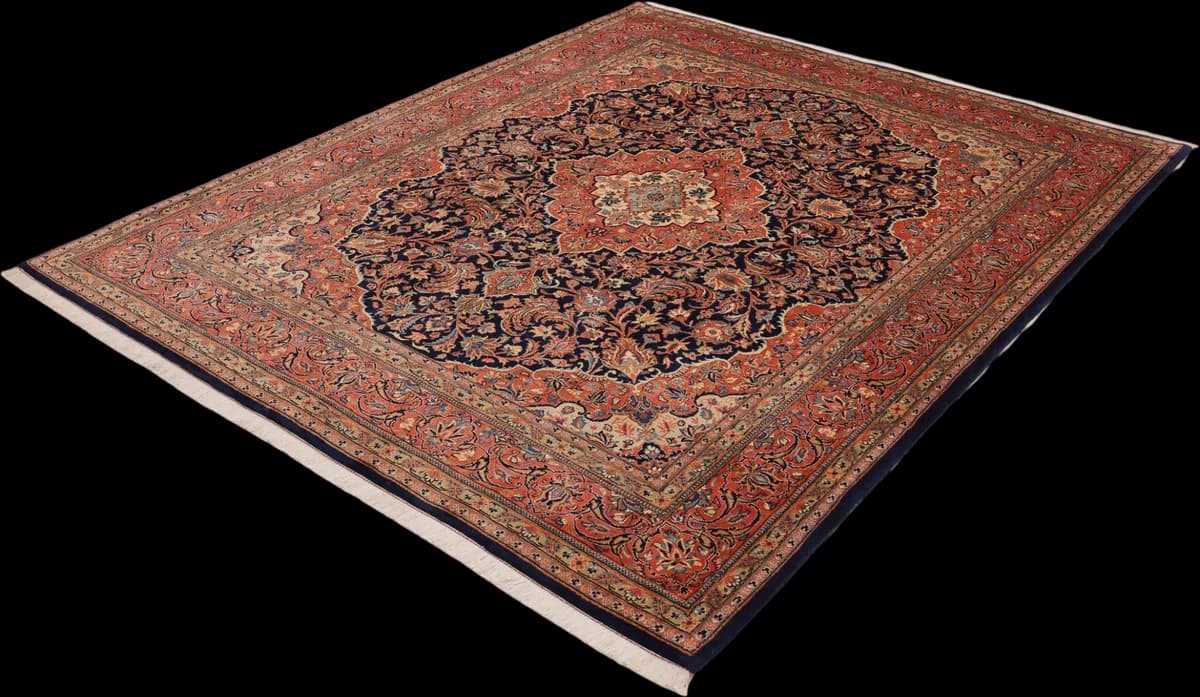
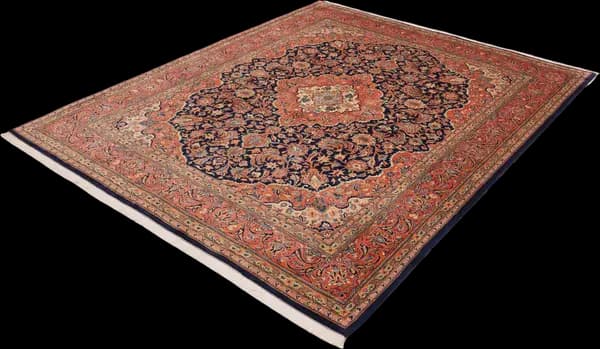
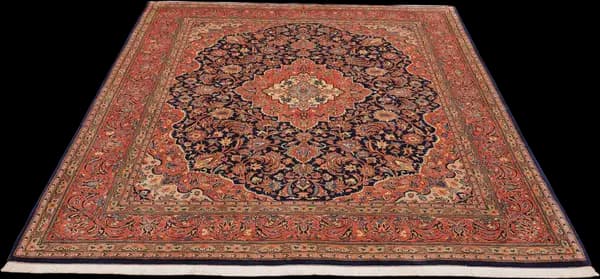
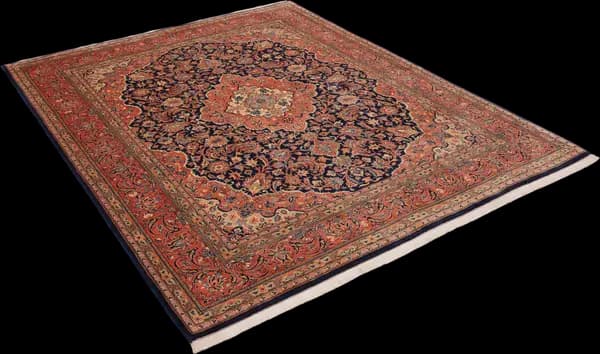
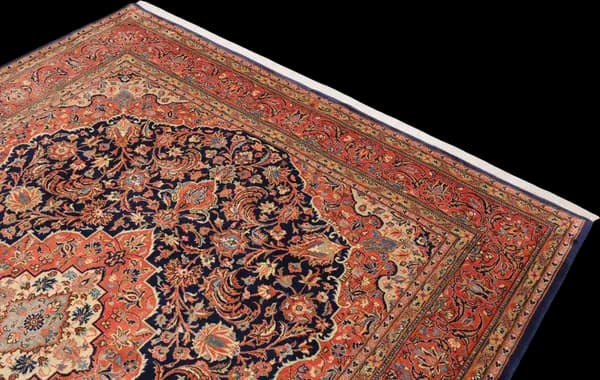
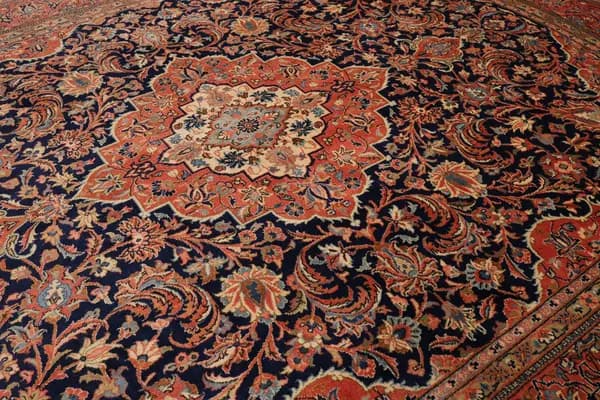
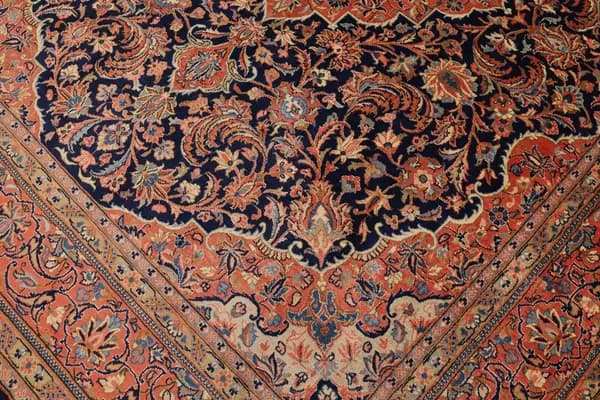
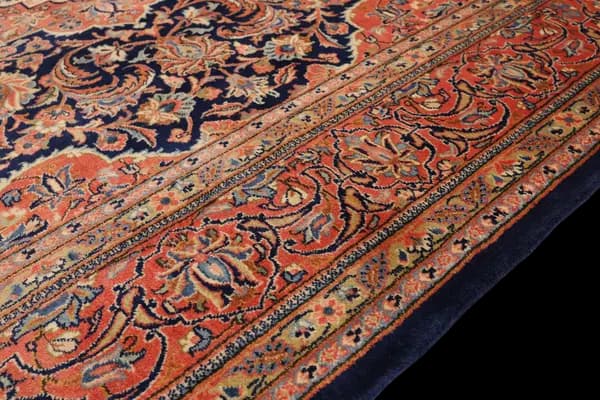
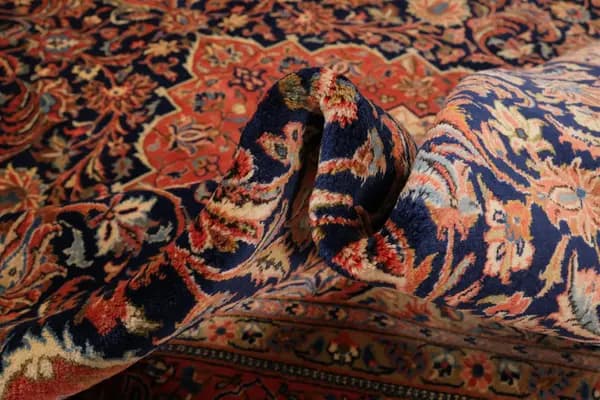
The first impression is a deep navy field, densely covered in fine floral scrollwork, holding a central lobed medallion at its centre. Inside the medallion, a cream pendant core is set with small blue-grey rosettes, giving the eye a clear place to rest. Terracotta and brick-red spandrels fill the corners, echoing the wide brick-red border that frames the piece, a continuous vine and palmette repeat within thin guard stripes.
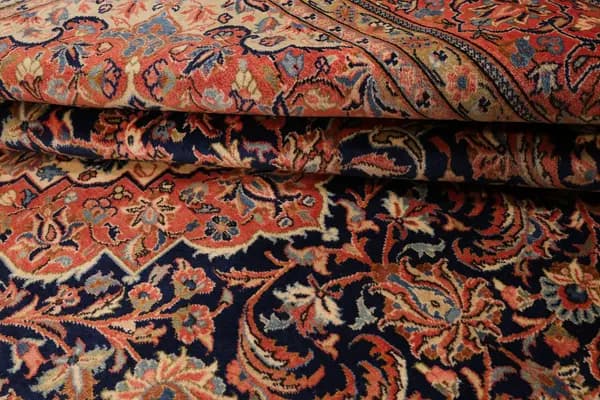
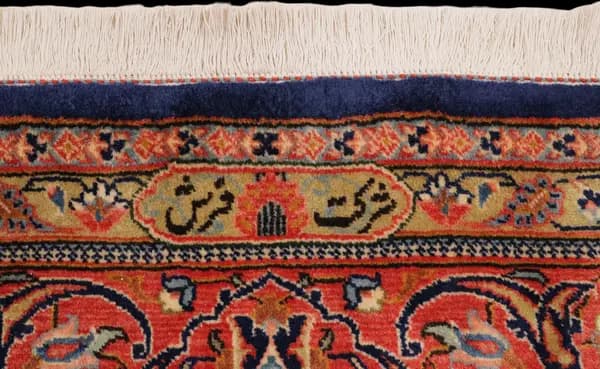
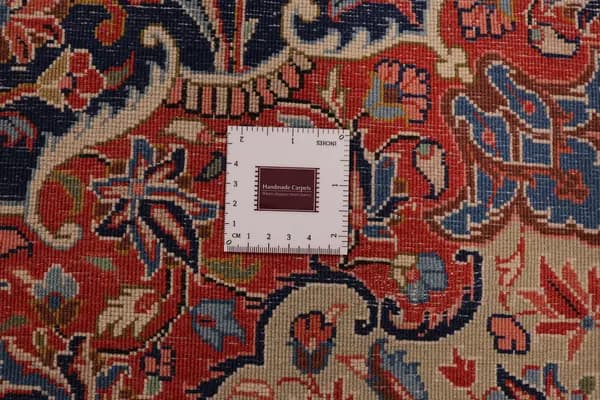
What makes this drawing possible is knot density, 321,000 to 380,000 knots per square metre, tied onto a cotton warp with a hand-spun wool pile kept to 12 millimetres. That density lets the small rosettes inside the medallion stay legible rather than dissolve into the scrollwork, and it stands for months of steady work at the loom. The piece carries the mark of Sherkat Farsh, explaining why this tribal rug carries a medallion design closer to central Iran's workshops than to the region's usual geometric patterns.
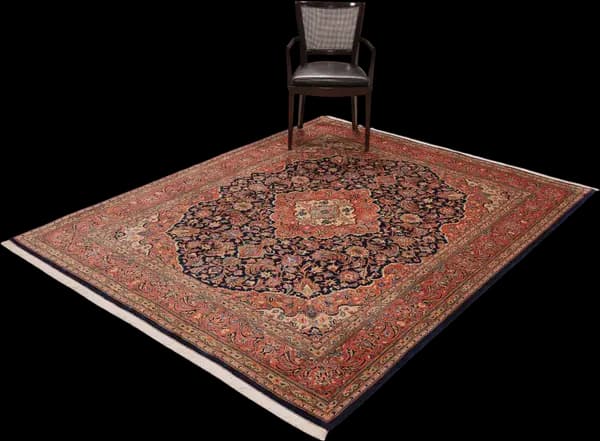
A rug of this size suits a living room, anchoring a sofa group rather than disappearing beneath it. The navy field holds its own against dark wood or leather and warms a pale floor, while the brick-red border keeps the eye moving round the edge. Underfoot it is dense and firm, made for daily use rather than kept for bare feet only. As daylight moves across it, the cream medallion, calm at the centre of all that colour, keeps drawing the eye back.
Baluch rugs are tribal weavings from the Baloch people of eastern Iran, primarily Khorasan and Sistan-Baluchestan provinces, as well as neighbouring regions in Afghanistan and Pakistan. Knotted with the asymmetrical (Persian) knot, traditionally on an all-wool foundation, they are immediately recognisable by their dark, rich palette of deep reds, indigo blues, and dark browns with ivory and orange accents.
Geometric tribal motifs, rows of small guls, diamonds, and angular rosettes, dominate the design language. Prayer rug layouts with the tree-of-life motif appear frequently. Typically small-format pieces, Baluch rugs are woven from the weavers' own flocks, sometimes incorporating goat hair and natural camel-hair fields. The master weaver has signed this piece, a mark of exceptional quality and pride in their craft.
Superior craftsmanship
At 250 × 202 cm (5.05 m²) this is a large rug. It sits under a seating group with the front legs of sofa and chairs on it, or under a dining table for four. A table for six wants about 80 cm of clearance all round, and needs more.
Yes, knotted by hand — knot by knot on a loom, not machine-made. The density is 321,000 to 380,000 knots per square metre; across 5.05 m² that is roughly 1.6 to 1.9 million individual knots, every one of them tied by hand.
Hand-spun wool still carries its own lanolin, which keeps liquid sitting on the surface for a moment: blot quickly, with clear water and a light cloth, working inwards and without rubbing. Otherwise regular vacuuming along the pile is enough. Turn the rug once or twice a year so light and footfall reach it evenly.
We are in the Hamburg Speicherstadt. Come and see this rug in daylight, or write to us — a person answers.
Certificate included verifying origin, materials, and craftsmanship.
Ref: 997237