Belutsch
281 × 120 cm
1.264 €







781 €
Incl. VAT
In Stock · Ready to Ship
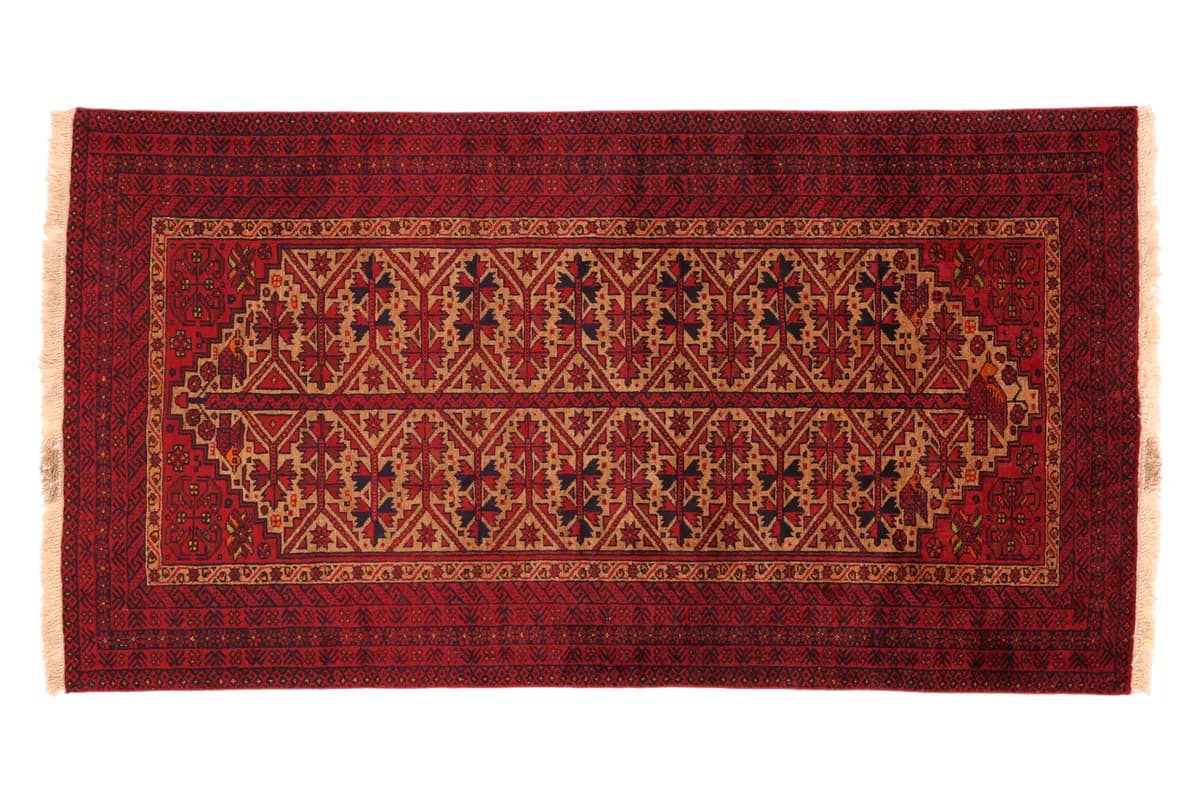
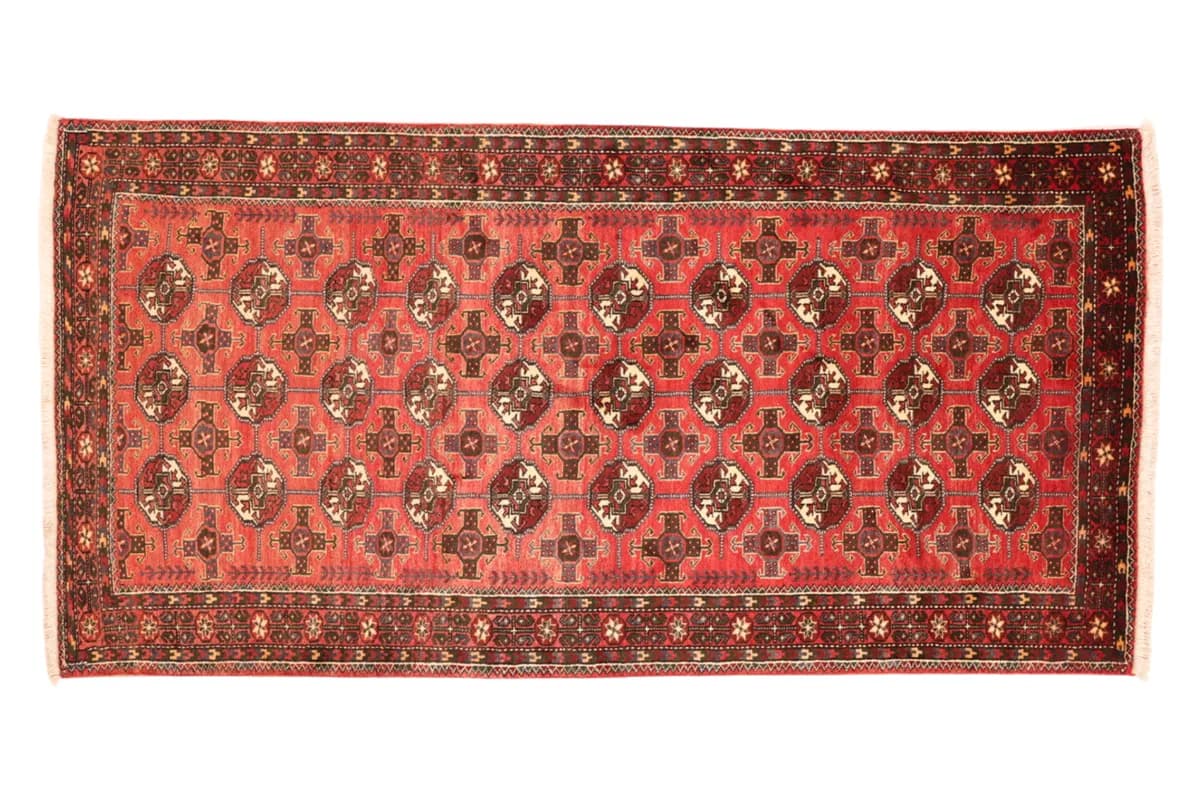
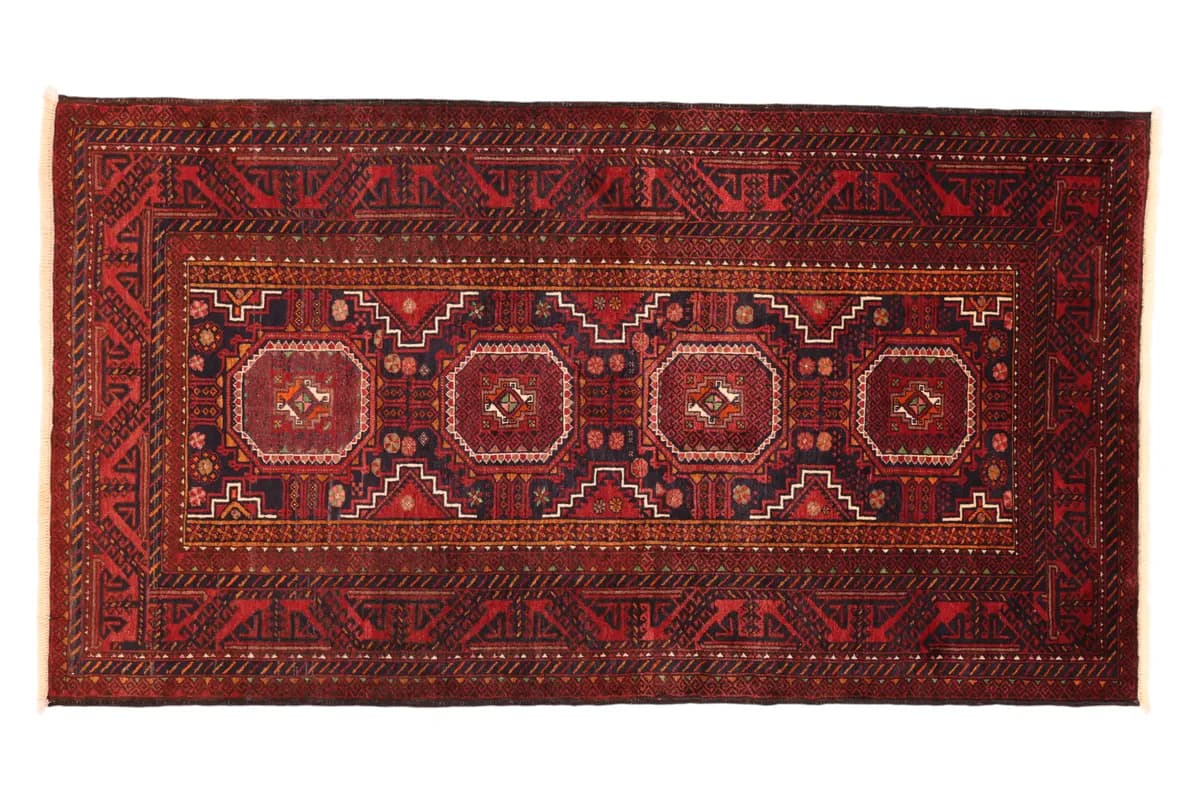
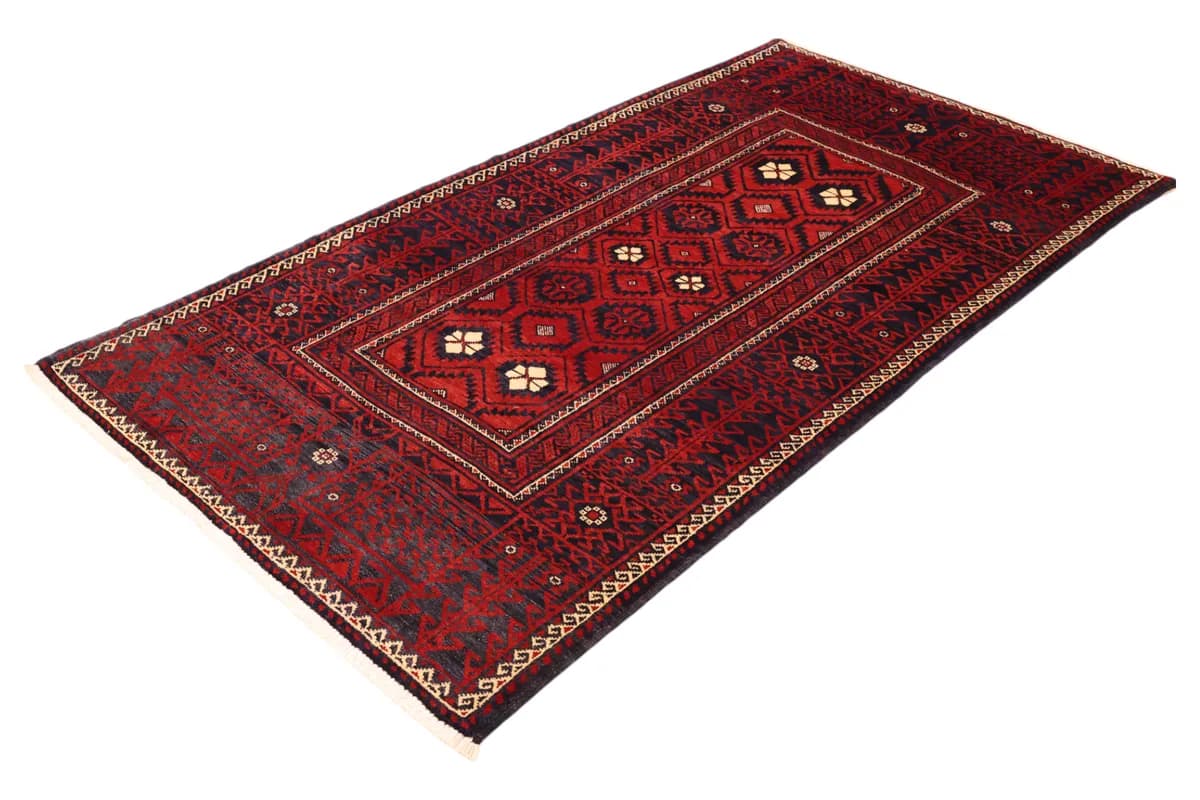
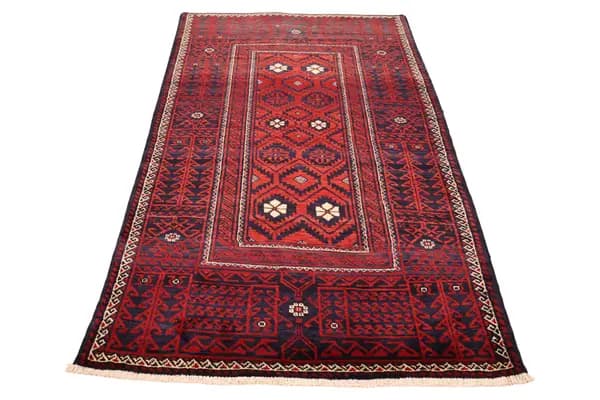
A Baluch, also written Belouch, is a tribal and nomadic weaving from the borderlands of southeastern Iran, knotted from memory rather than from any drawn plan. This piece measures 228 x 120 cm (7'5" x 3'11"), a size suited to a single room rather than a hall. The type is known for its deep reds and indigo blue, its bold angular geometry, and often a prayer-niche layout at the centre. Here there is no medallion at all — instead the field runs edge to edge, and the border has grown so wide and so layered that it competes with the field for attention, which is not the usual Baluch arrangement.
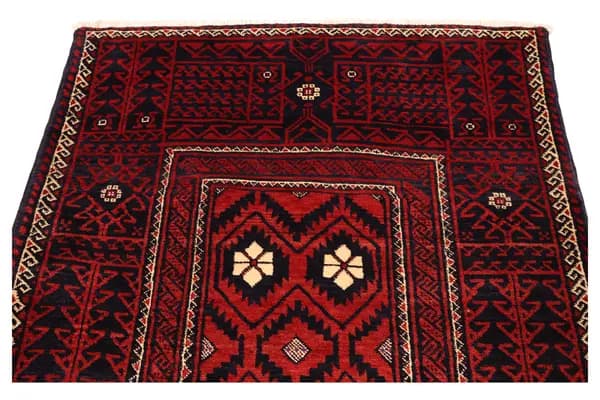
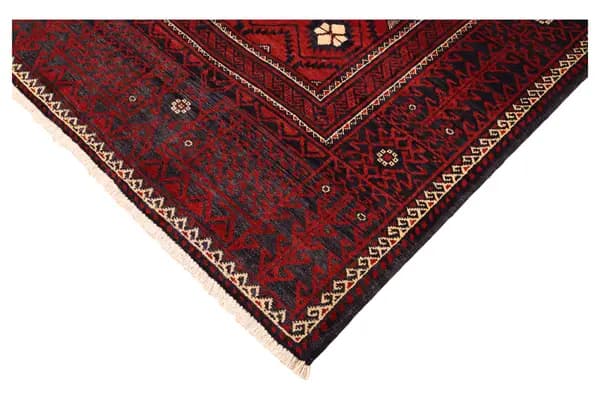
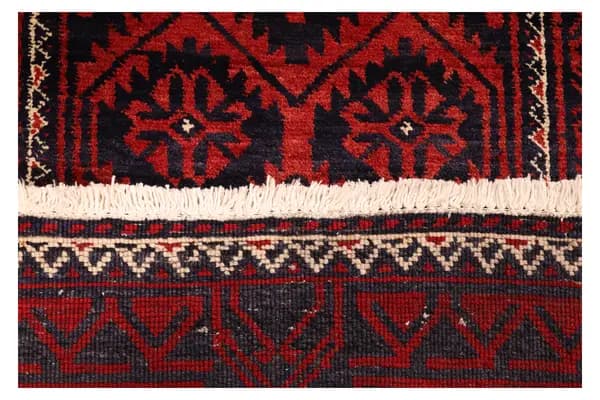
The field is a deep brick red, covered in an all-over diamond lattice with small ivory rosettes set at each crossing, a pattern close to the Mina Khani tradition. With no medallion to anchor the eye, the lattice simply continues, calm and repeating, until it meets the border. That border is built in several nested bands rather than one: dark indigo compartments filled with red hooked motifs, a scatter of ivory rosettes in the corners, and a thin ivory zigzag stripe running the outer edge. The effect is a frame within a frame, nearly as dark as the field is red.
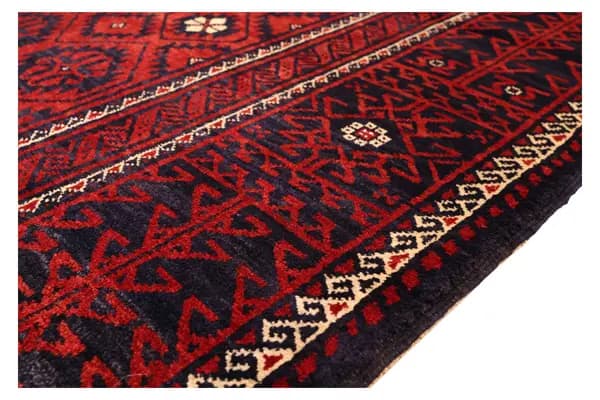
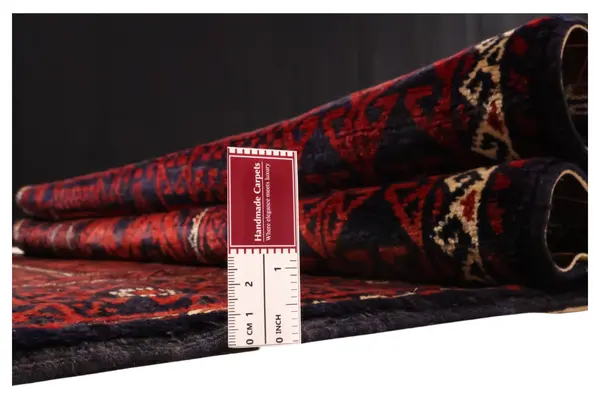
Such a border takes more from a weaver than a single repeating band would — every nested panel has to be counted and carried in the memory separately, row by row, on a portable loom with no drawn cartoon to follow. The wool is hand-spun, which gives the surface its slightly uneven, matte texture rather than any sheen, and it has been knotted at a density of 128,000 to 160,000 knots per square metre onto a cotton warp, dense enough to hold that architectural border firm and sharp over twenty to forty years of use.
In a bedroom, this rug sits well beside or beneath the bed, the brick red holding its warmth against pale floorboards and dark wood alike. Underfoot the hand-spun wool is dense and slightly textured rather than smooth, firm enough for daily use. As daylight crosses it through the morning, the ivory rosettes catch the light in turn, and the eye keeps returning to that unusually heavy, layered border.
More on Baluch rugs: origin, making and how to recognise a genuine piece
Traditional weave
At 228 × 120 cm (2.74 m²) this is a medium rug. It works in front of a sofa, in front of a bed or in a study. It is too small for a dining table — there you want about 80 cm of clearance so a chair does not tip over the edge when pushed back.
Yes, knotted by hand — knot by knot on a loom, not machine-made. The density is 128,000 to 160,000 knots per square metre; across 2.74 m² that is roughly 350,000 to 440,000 individual knots, every one of them tied by hand.
Hand-spun wool still carries its own lanolin, which keeps liquid sitting on the surface for a moment: blot quickly, with clear water and a light cloth, working inwards and without rubbing. Otherwise regular vacuuming along the pile is enough. Turn the rug once or twice a year so light and footfall reach it evenly.
We are in the Hamburg Speicherstadt. Come and see this rug in daylight, or write to us — a person answers.
Certificate included verifying origin, materials, and craftsmanship.
Ref: 124749