Belutsch
162 × 84 cm
388 €





656 €
Incl. VAT
In Stock · Ready to Ship
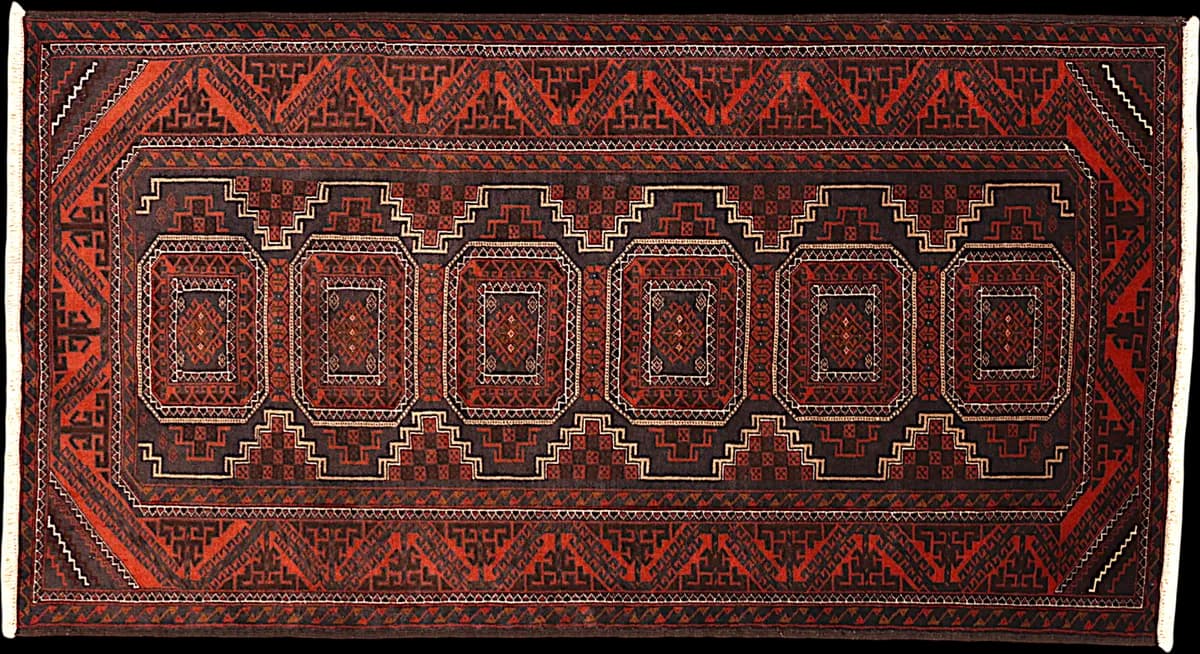
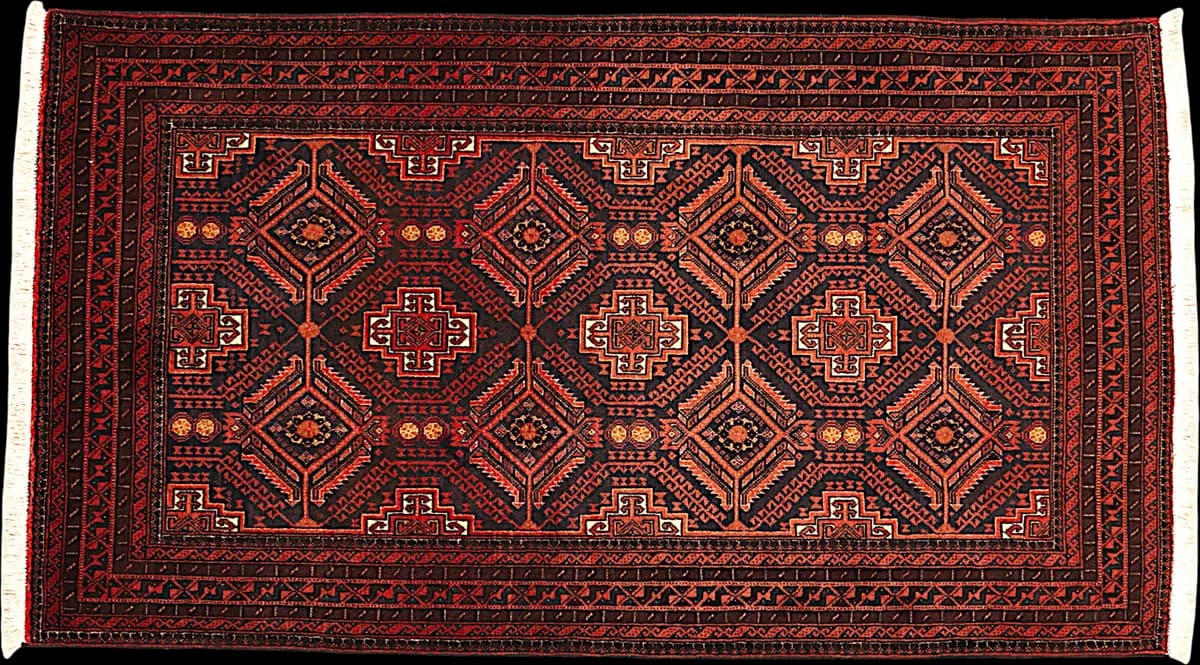
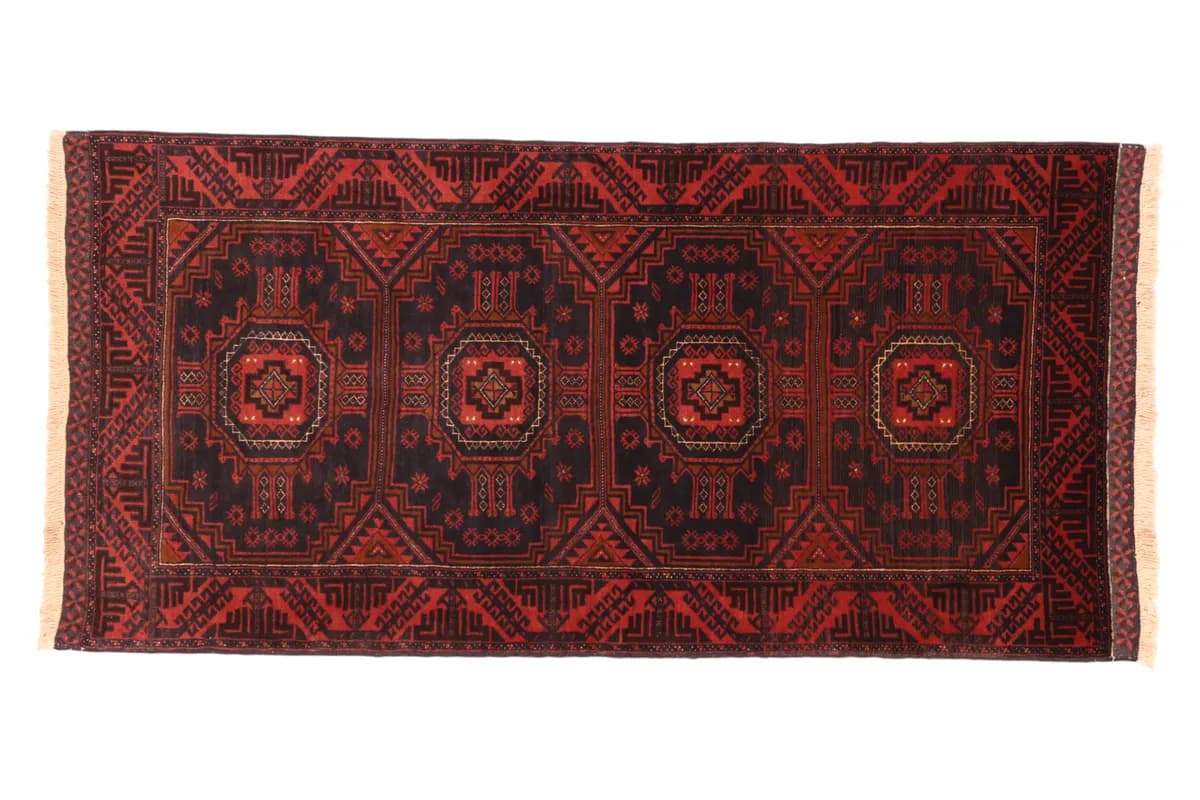
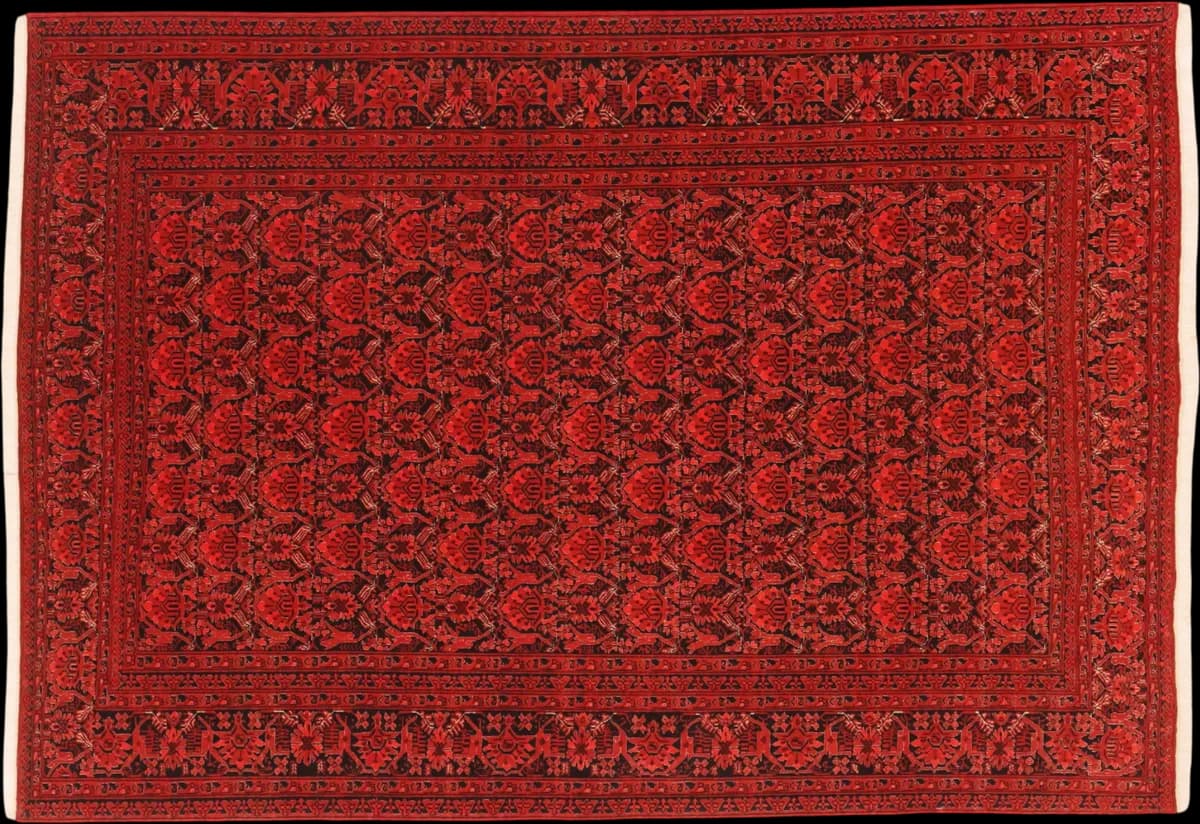
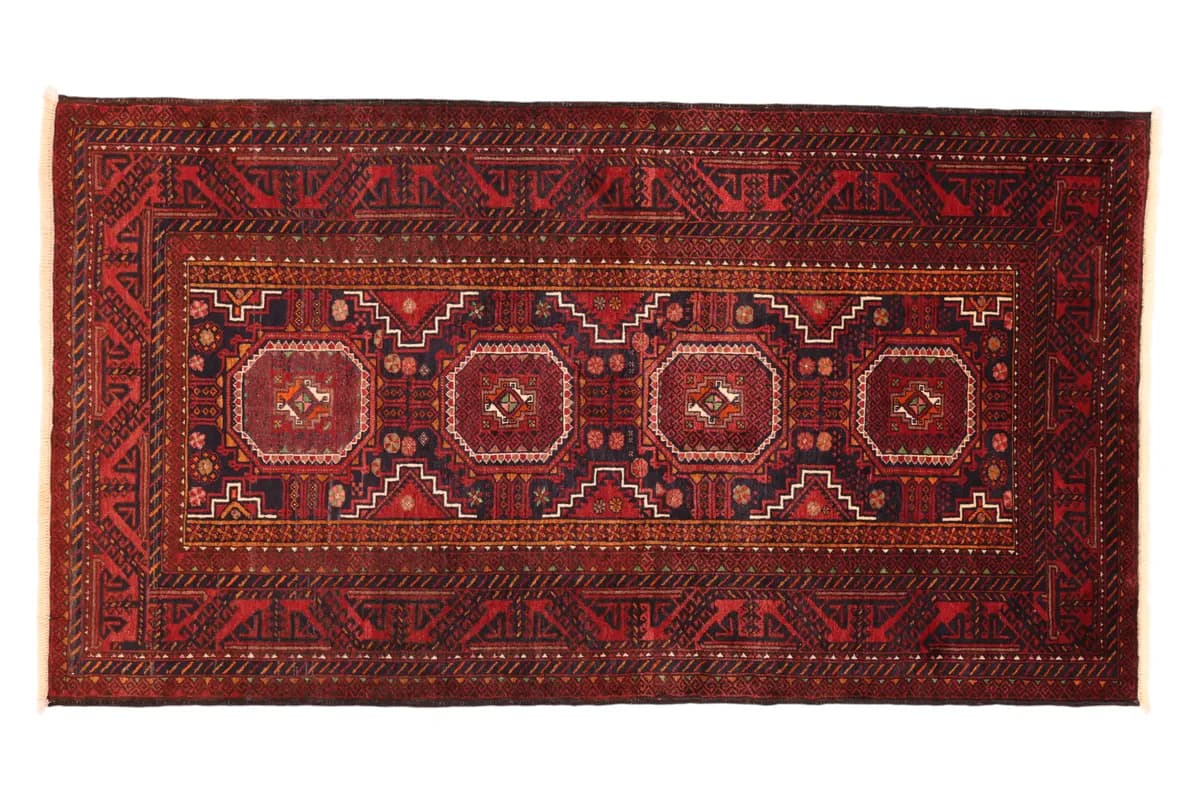
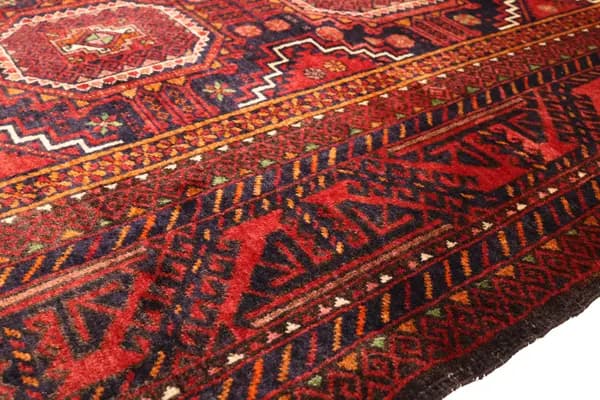
This is a Baluch rug, also written Beluch, a tribal weaving from the borderlands of southeastern Iran, measuring 188 x 101 cm (6'2" x 3'4"). Baluch weavers are known for bold, angular geometry in deep reds and indigo, knotted from memory rather than from a drawn plan. Here that memory has produced something unusually orderly for the type: four medallions, set out in a single steady row rather than scattered across the field.
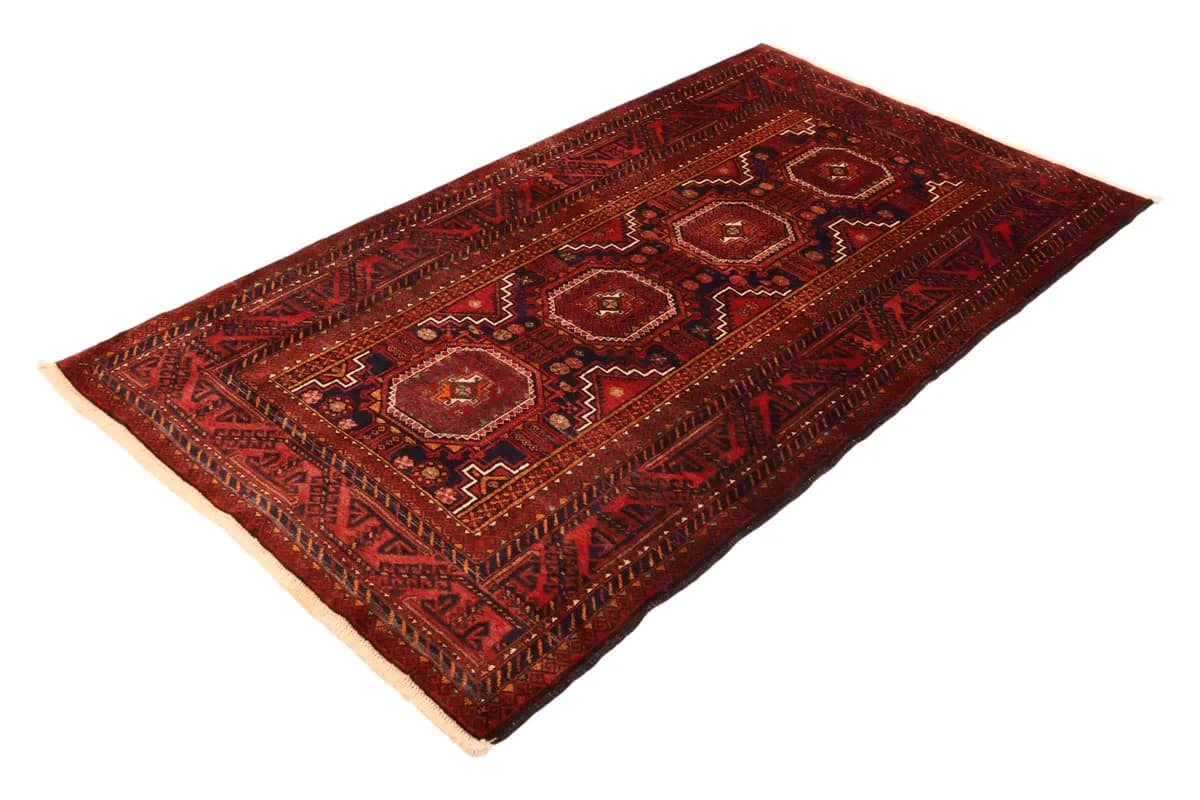
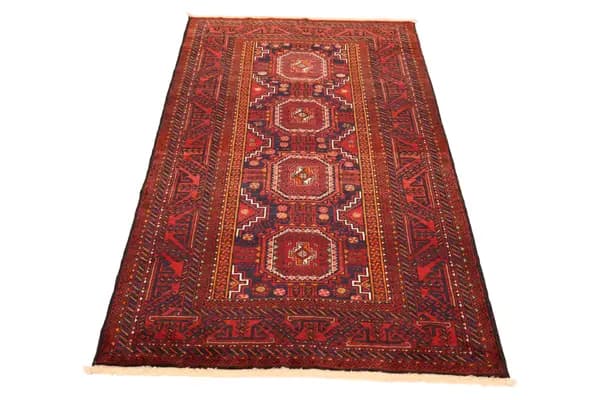
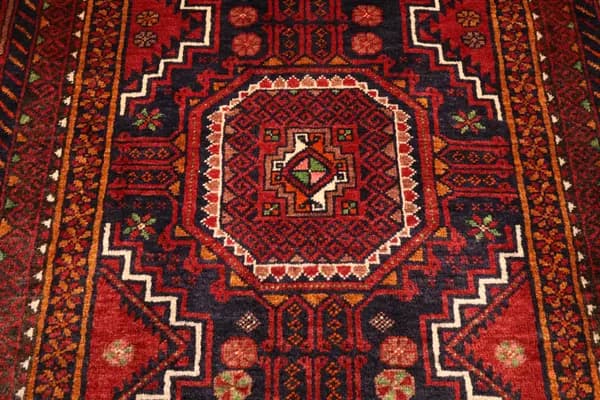
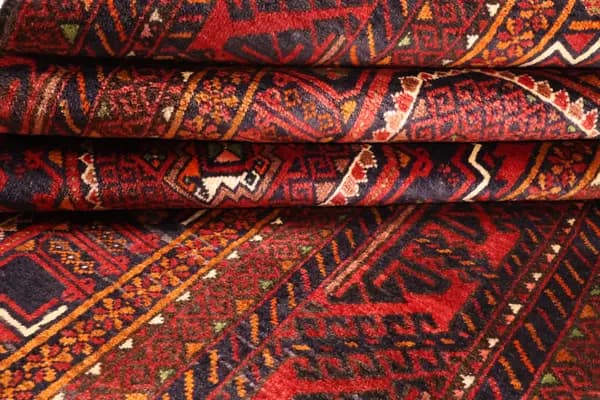
The field is a deep indigo, dark enough to hold the four brick-red octagonal medallions apart like beads on a string. Each one carries its own small diamond at the centre and is outlined in ivory zigzag, so the row reads as four distinct steps rather than one repeating pattern. Around them the indigo carries small rosettes in pink, orange and green, placed loosely rather than in ranks, softening the strictness of the row. A broad brick-red border closes the field, filled with dark navy hooked diamonds, and narrow ochre stripes run along the outer edge like a quiet frame.
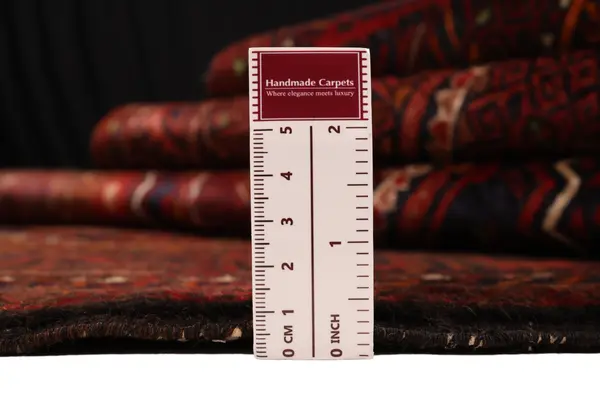
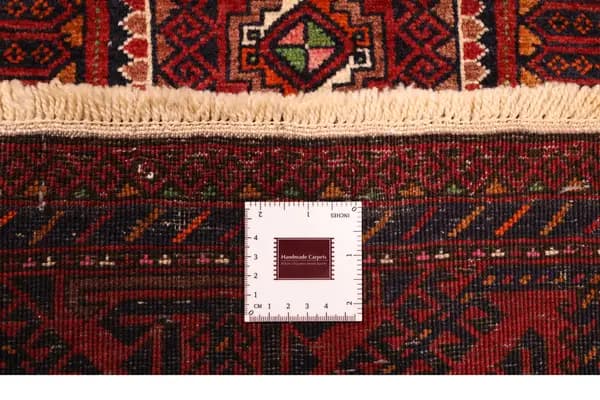
The pile is handspun wool, knotted by hand onto a cotton warp at a density of roughly 128,000 to 160,000 knots per square metre. That is a modest count next to a city workshop rug, and it explains the bold, blocky drawing of the medallions — handspun wool does not hold the fine curves that a finer cotton or silk knot can. What the density does not explain is the discipline: keeping four medallions near-identical in size and colour, entirely from memory, on a portable loom, over what would have been months of work. The 6mm pile, now twenty to forty years old, has settled into a firm, slightly nubby surface with real body underfoot.
A rug this size suits a hallway or a landing, somewhere it is seen in passing rather than sat over for hours. The indigo field holds its own even where daylight is thin, and the row of red medallions carries the eye along its length rather than sitting as one static square. The handspun wool feels dense and slightly coarse against bare feet, built for a floor that is walked on rather than protected, and it wears accordingly. Let afternoon light move across it and the ivory zigzags catch first, then the reds, so the row of medallions seems to step forward one at a time.
More on Baluch rugs: origin, making and how to recognise a genuine piece
Traditional weave
At 188 × 101 cm (1.90 m²) this is a small rug. It works beside a bed, in a reading corner, in front of a fireplace or as a mat by a door. It does not furnish a room; it makes a point in one.
Yes, knotted by hand — knot by knot on a loom, not machine-made. The density is 128,000 to 160,000 knots per square metre; across 1.90 m² that is roughly 240,000 to 300,000 individual knots, every one of them tied by hand.
Hand-spun wool still carries its own lanolin, which keeps liquid sitting on the surface for a moment: blot quickly, with clear water and a light cloth, working inwards and without rubbing. Otherwise regular vacuuming along the pile is enough. Turn the rug once or twice a year so light and footfall reach it evenly.
We are in the Hamburg Speicherstadt. Come and see this rug in daylight, or write to us — a person answers.
Certificate included verifying origin, materials, and craftsmanship.
Ref: 144754