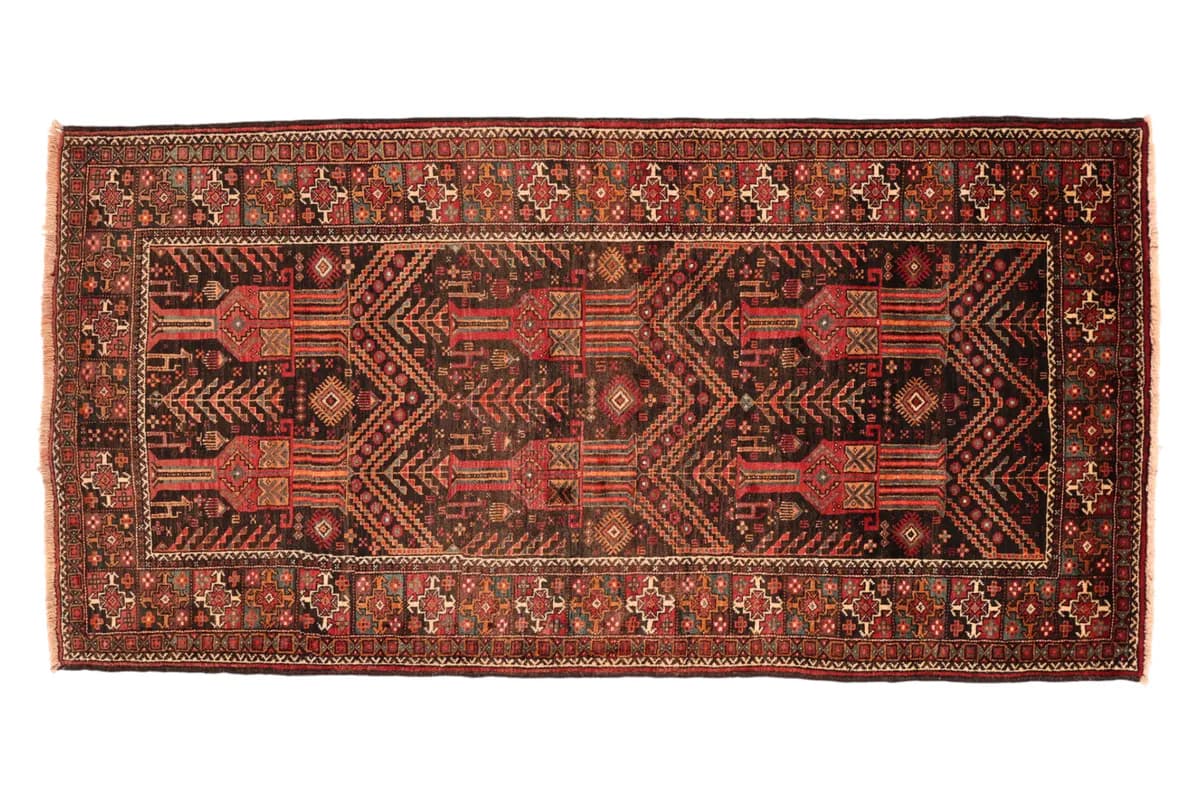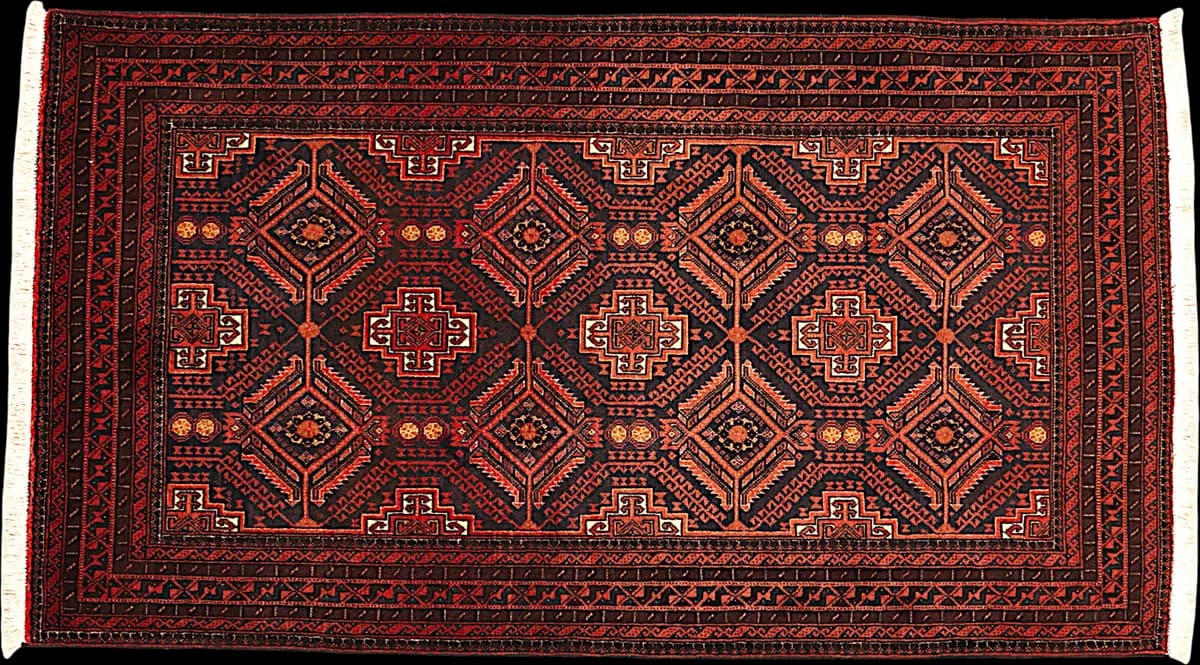
Belutsch
176 × 100 cm
438 €
458 €
Incl. VAT
In Stock · Ready to Ship
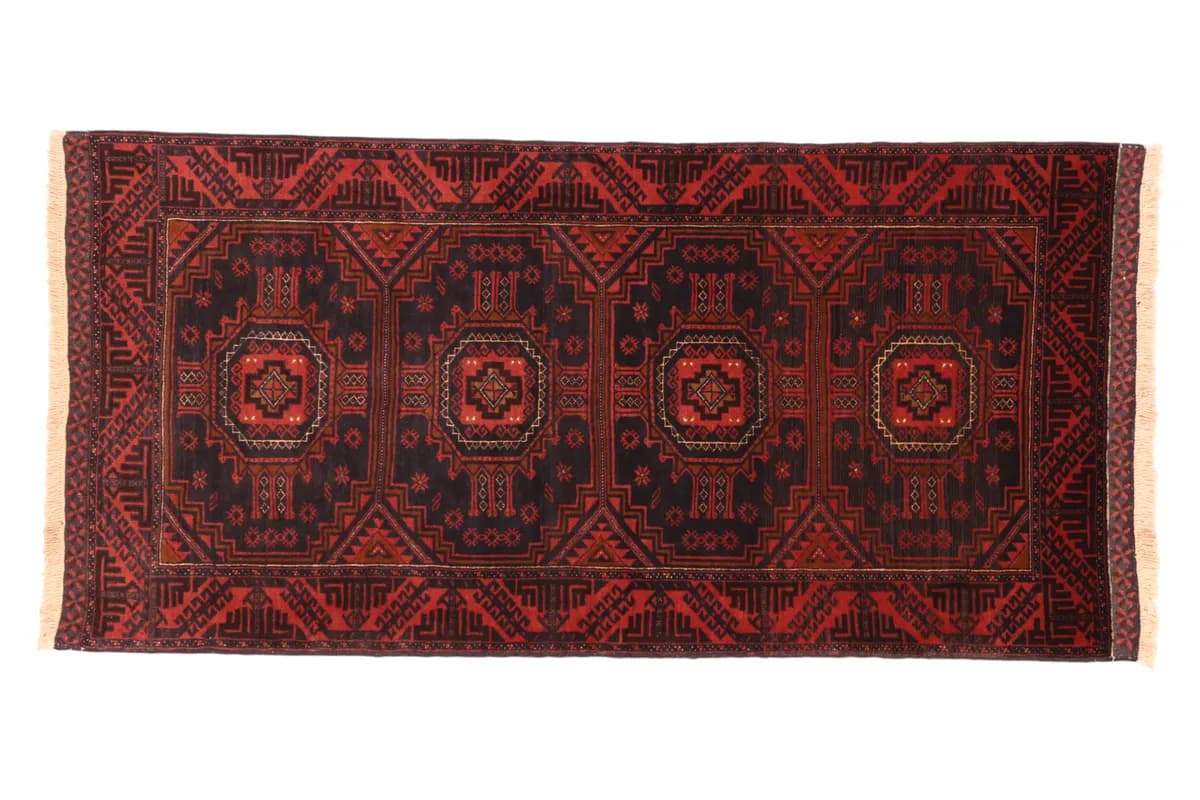
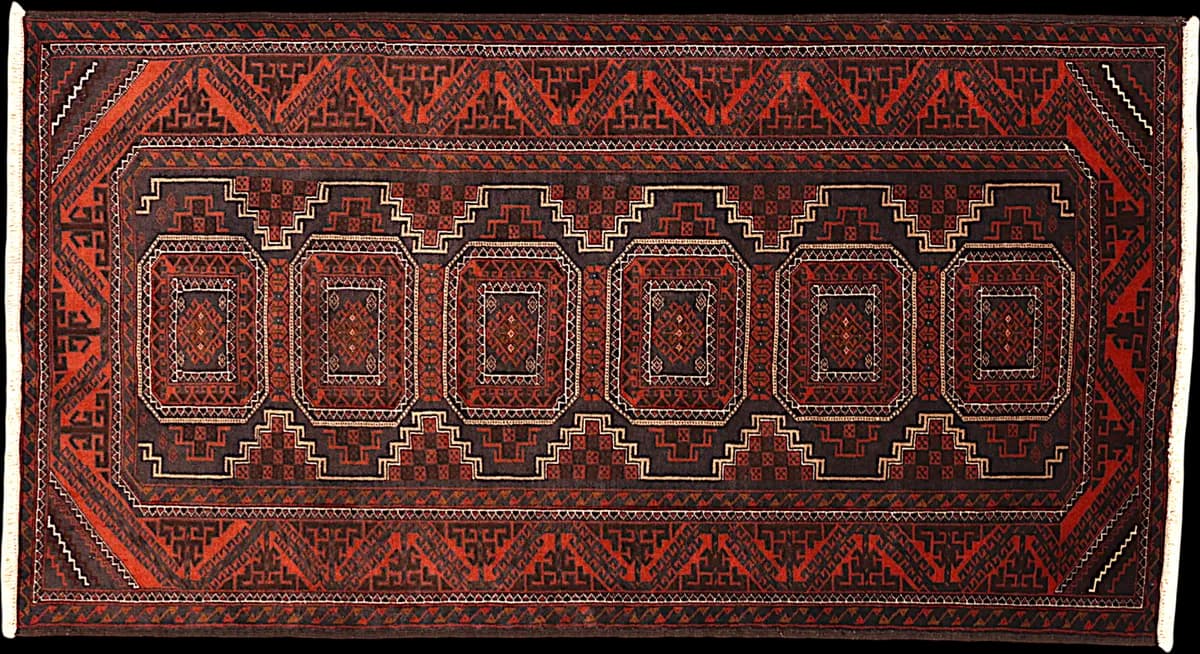
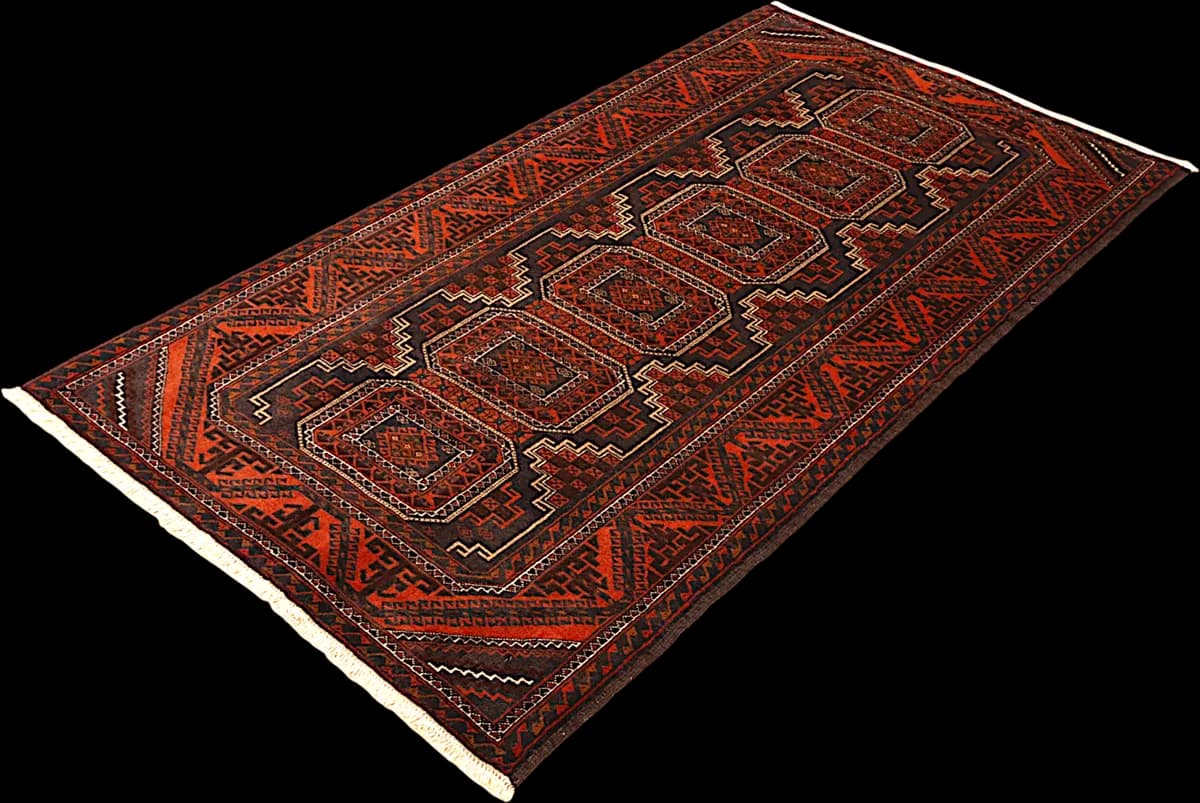
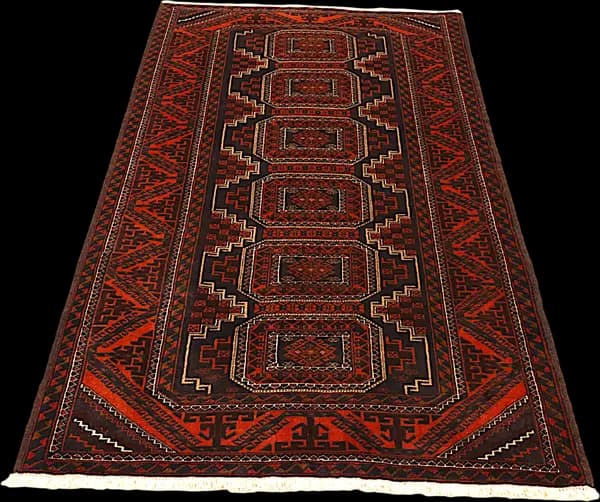
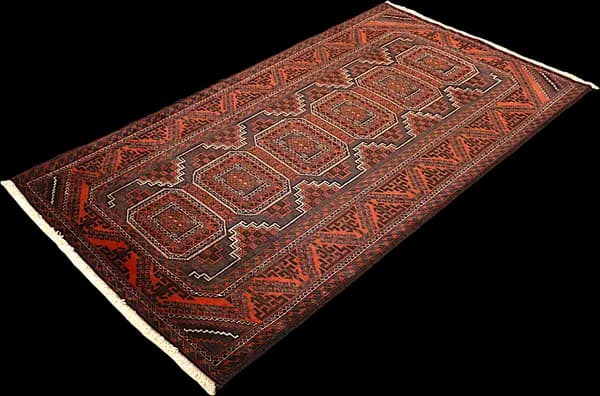
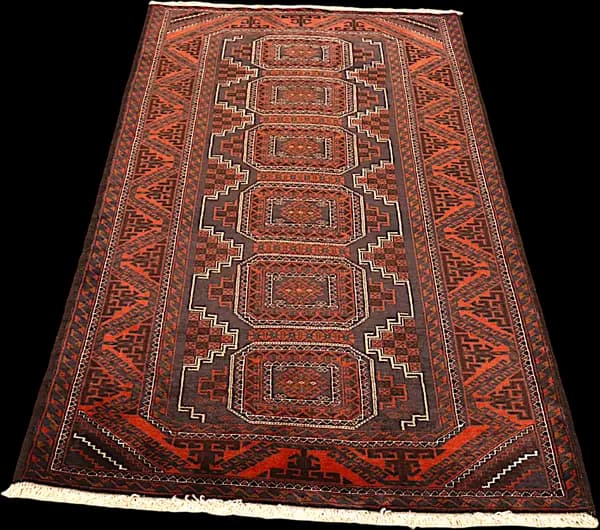
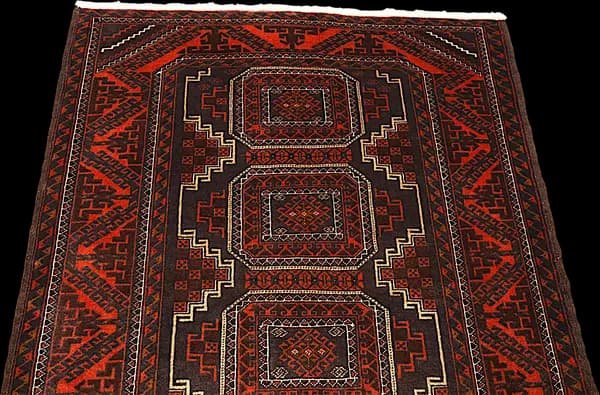
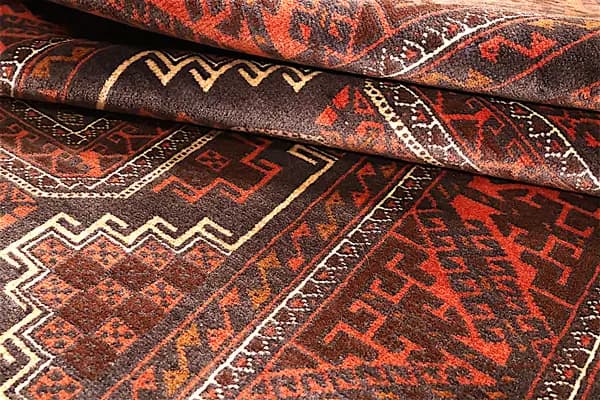
This is a Baluch rug, also written Belouch, a tribal weaving from the border country of southeastern Iran, measuring 184 x 100 cm (6'0" x 3'3"). The type is known for bold geometric medallions and prayer-niche, or mihrab, layouts, worked in the deep reds and indigo that mark out this region's weaving, and for wool spun by hand rather than by machine. Where a Baluch piece usually carries three or four medallions, this one carries six, run down the field in a single column.
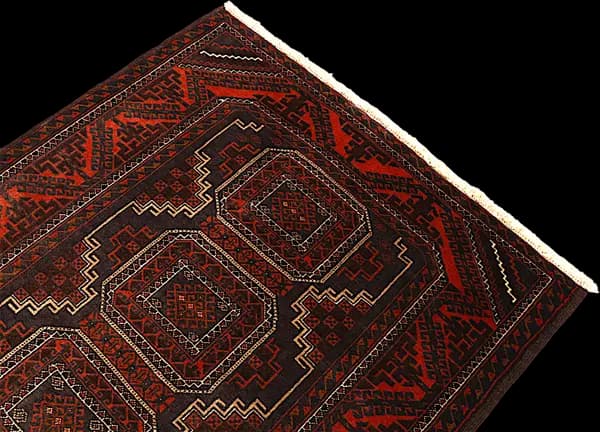
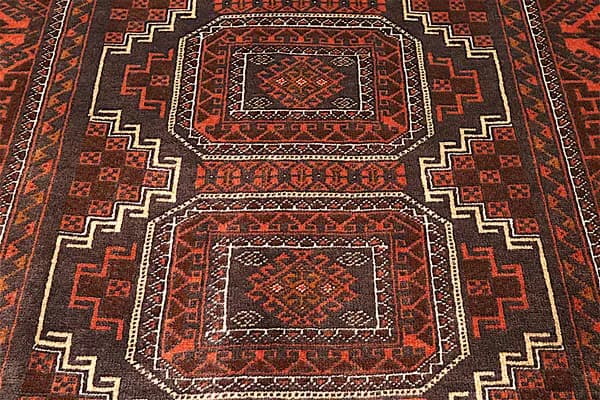
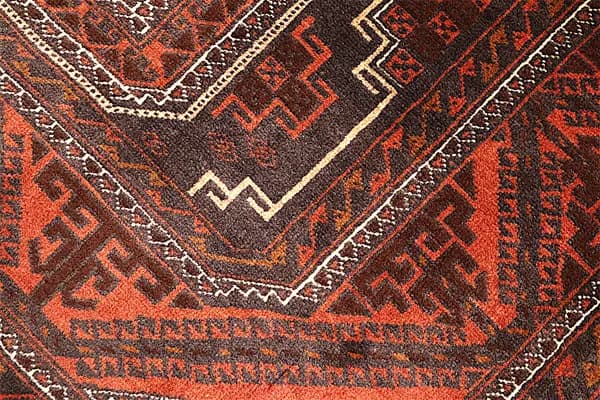
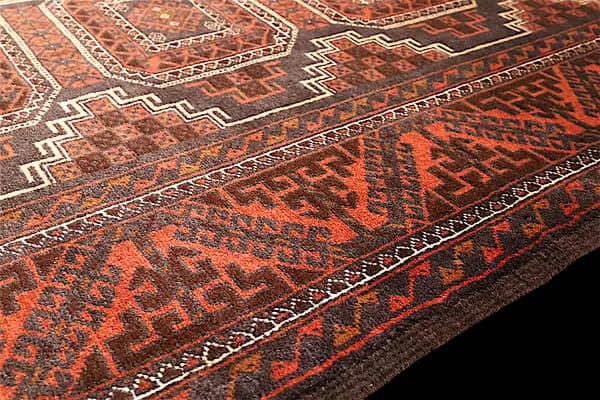
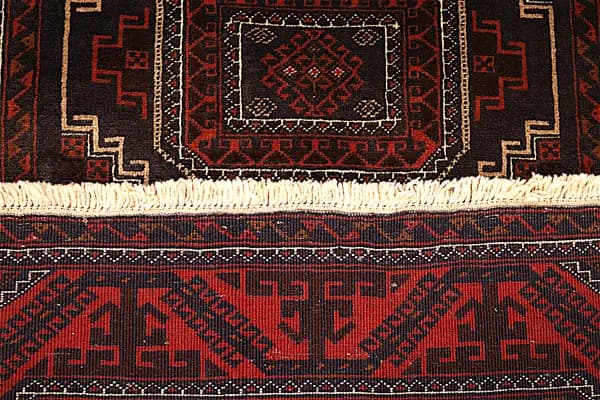
The field itself is a deep blackish brown, almost lost in shadow, against which six octagonal medallions step downward, each centred on a diamond and picked out in brick red and rust with a fine ivory outline. Seen together they read less as a single focal point and more as a procession, one figure following the next down the length of the rug. The border that holds them is wide and dark, close to a fifth of the width, filled with a bold red zigzag and stepped lattice, and along both long edges a crisp ivory guard stripe cuts through the darkness like a lit seam.
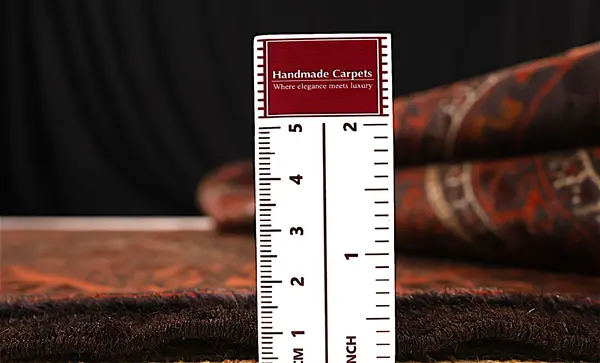
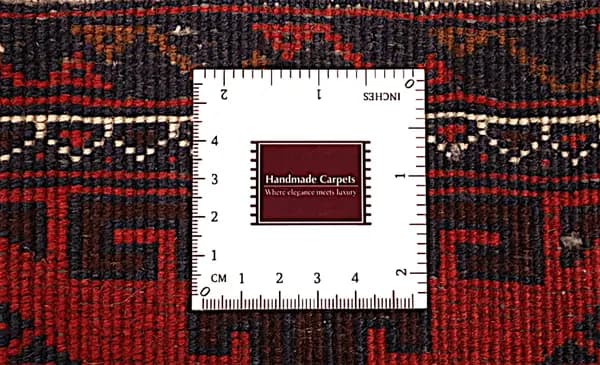
A design like this was never drawn out on paper. A Baluch weaver worked from memory, at a portable loom, and the count of medallions was hers to decide rather than fixed by any cartoon — which is how this piece came to hold six where convention says three or four. The wool itself was spun by hand before it was knotted, and hand-spun yarn takes dye and light unevenly, which is why the reds shift subtly from medallion to medallion rather than sitting flat. At 128,000 to 160,000 knots per square metre and a 6 mm pile, the weave is close enough to hold the geometry crisply while keeping the matte, textured surface this weaving is prized for.
A rug this size suits a hallway or a landing, somewhere you pass through rather than sit still in, and the procession down the field gives you six small things to notice in turn as you go. The near-black ground holds its own against dark woodwork and warms a pale floor at once, while the ivory guard stripe catches whatever light there is, even in a hallway with none of its own. Underfoot it is dense and firm, wool made to be walked on rather than admired from a chair, and it will take the daily traffic of a passage without complaint. Morning or lamplight along that ivory edge is the thing you will keep noticing.
More on Baluch rugs: origin, making and how to recognise a genuine piece
Traditional weave
At 184 × 100 cm (1.84 m²) this is a small rug. It works beside a bed, in a reading corner, in front of a fireplace or as a mat by a door. It does not furnish a room; it makes a point in one.
Yes, knotted by hand — knot by knot on a loom, not machine-made. The density is 128,000 to 160,000 knots per square metre; across 1.84 m² that is roughly 240,000 to 290,000 individual knots, every one of them tied by hand.
Hand-spun wool still carries its own lanolin, which keeps liquid sitting on the surface for a moment: blot quickly, with clear water and a light cloth, working inwards and without rubbing. Otherwise regular vacuuming along the pile is enough. Turn the rug once or twice a year so light and footfall reach it evenly.
We are in the Hamburg Speicherstadt. Come and see this rug in daylight, or write to us — a person answers.
Certificate included verifying origin, materials, and craftsmanship.
Ref: 179087