Kelim Pars
218 × 194 cm
952 €





1.298 €
Incl. VAT
In Stock · Ready to Ship
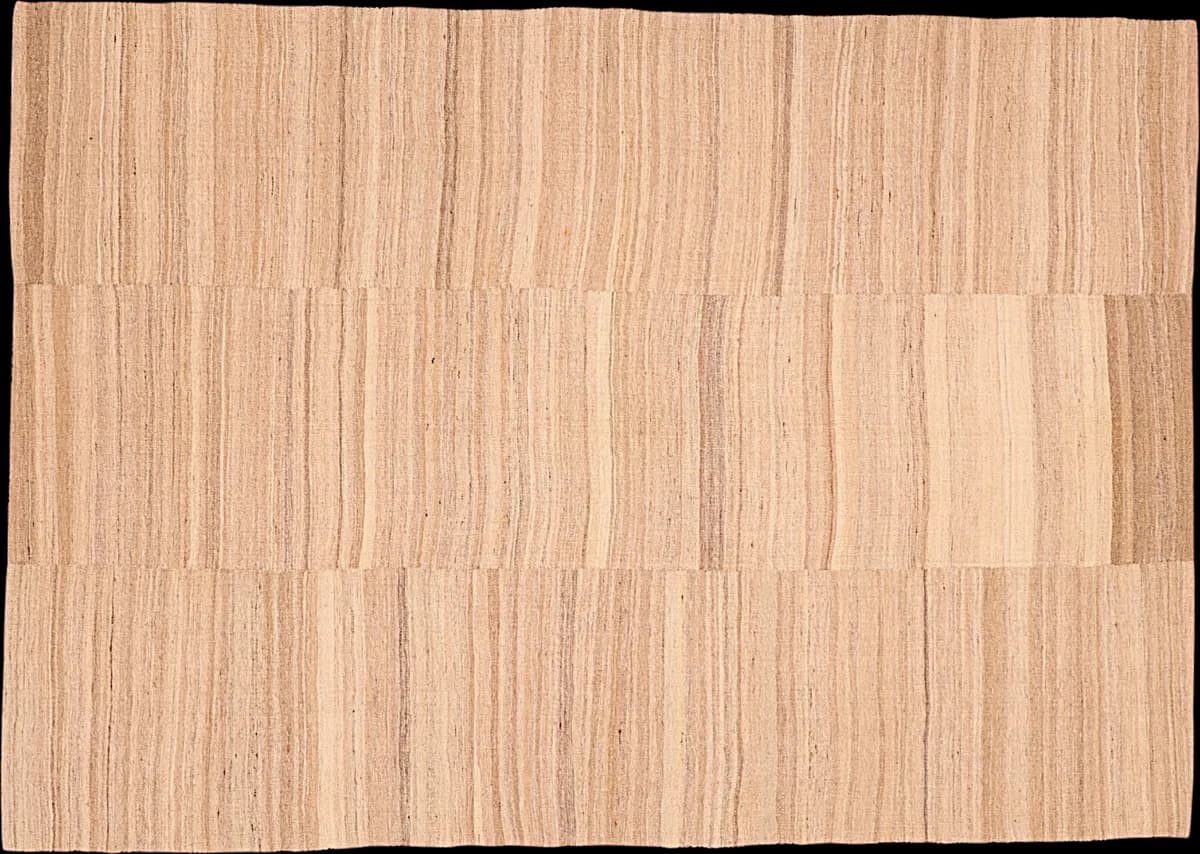
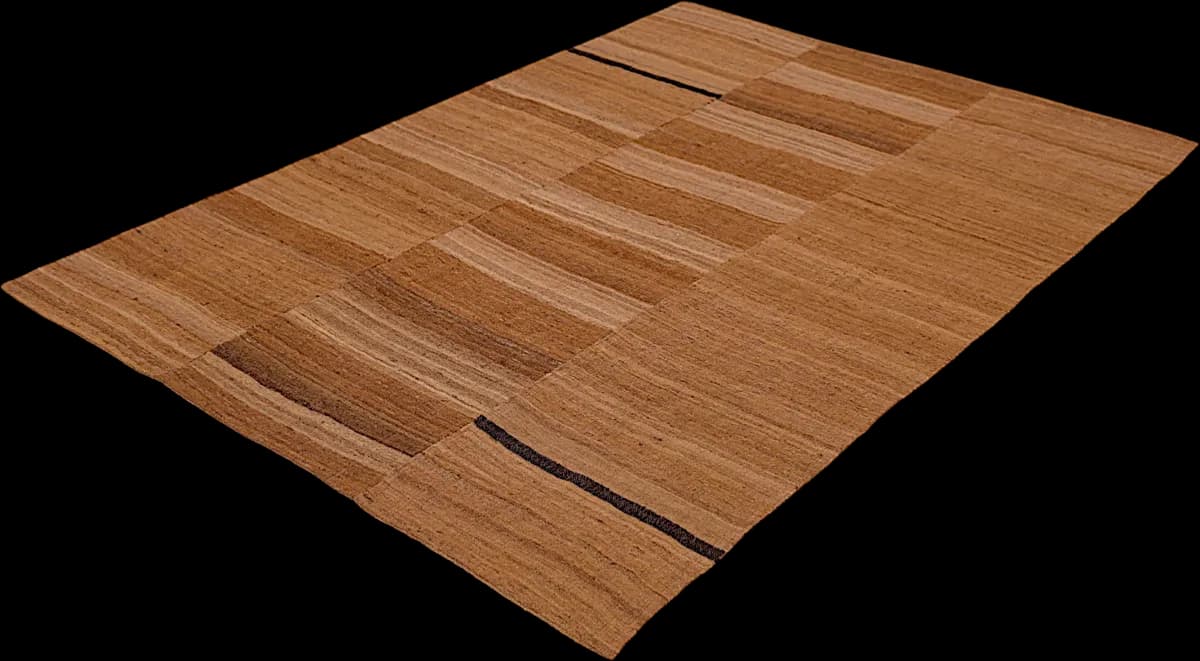
This is a Kelim Pars, also written Kilim Pars, a tribal flatweave from Fars province in southern Iran, home to the Qashqai and Khamseh confederations. It measures 287 x 201 cm (9'5" x 6'7"). Kelim Pars weavings are known for bold diamond fields and stylised animals in deep reds and indigo — a vocabulary this piece sets quietly aside.
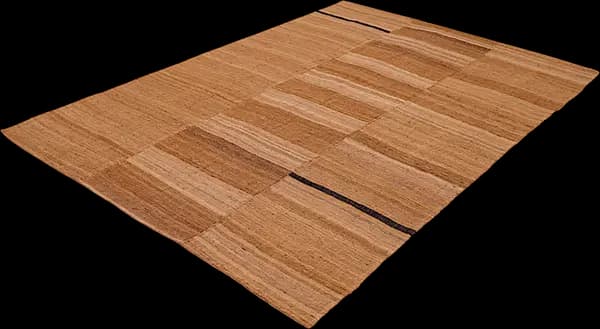
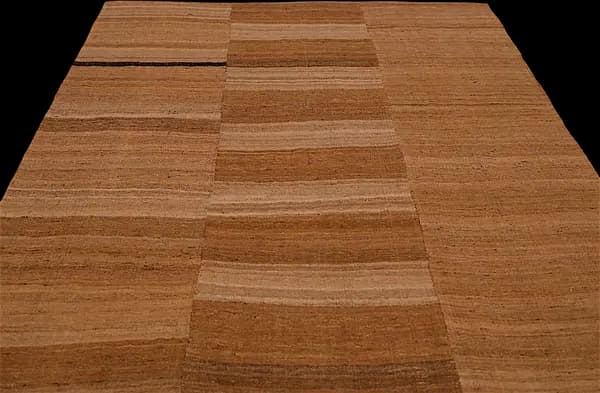
The rug reads as an expanse of warm camel brown, built from horizontal strip panels with fine vertical striations running through the wool. There is no medallion, no animals, no border to frame the field — the panel seams mark the only divisions, running the full width. Two thin stripes, almost black, cross the field asymmetrically, one set high to the right, one low to the left, the sole graphic incident on an otherwise plain ground.
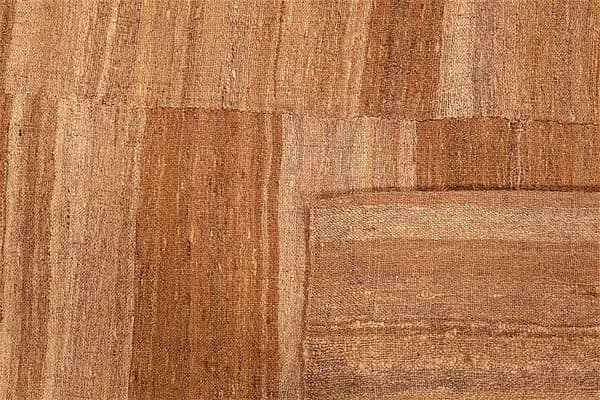
It was woven, not knotted, on a horizontal ground loom that a Qashqai or Khamseh family could set up and carry with the flock. The weft is hand-spun wool over a cotton warp, and the irregularity of that yarn — thicker here, finer there — is what gives the surface its fine ribbing and its striations, rather than any deliberate patterning. At four millimetres the weave is thin, flat and weft-faced throughout, with no pile to shear and nothing to wear down.
A rug this flat and quiet suits a hallway or study as well as a living room, somewhere the eye can rest. The camel ground warms a pale floor and holds its own against dark wood, never competing with what stands on it. Underfoot it is light and firm rather than soft, reversible, made for a floor that is walked on. Watch it through the day and the two dark stripes shift against the striations, the one thing here that keeps changing.
More on Kilims: origin, making and how to recognise a genuine piece
At 287 × 201 cm (5.77 m²) this is a large rug. It sits under a seating group with the front legs of sofa and chairs on it, or under a dining table for four. A table for six wants about 80 cm of clearance all round, and needs more.
No — this piece is hand-woven, not knotted. A flatweave has no pile: the pattern comes from warp and weft alone. That makes it thin, light and usable on both sides, and it is a technique in its own right rather than a simpler version of a knotted rug.
Vacuum regularly, ideally along the weave and without a rotating brush. A flatweave can be turned over, which spreads the wear — flip it once or twice a year. Blot spills at once with clear water and a light cloth, working inwards, and never rub.
We are in the Hamburg Speicherstadt. Come and see this rug in daylight, or write to us — a person answers.
Certificate included verifying origin, materials, and craftsmanship.
Ref: 336843