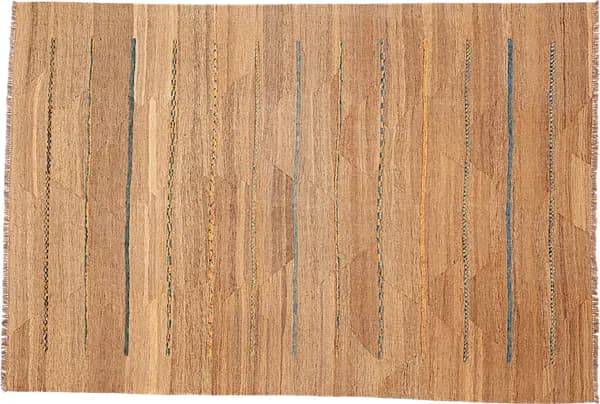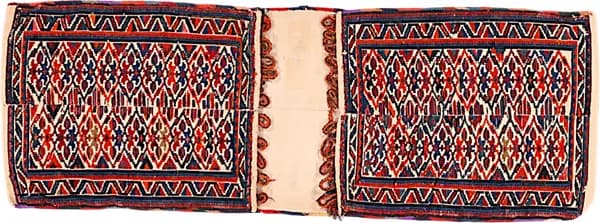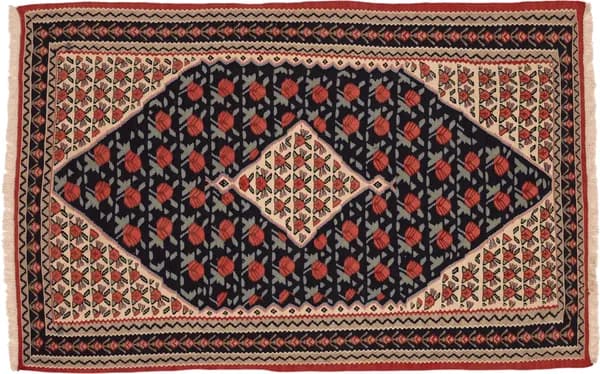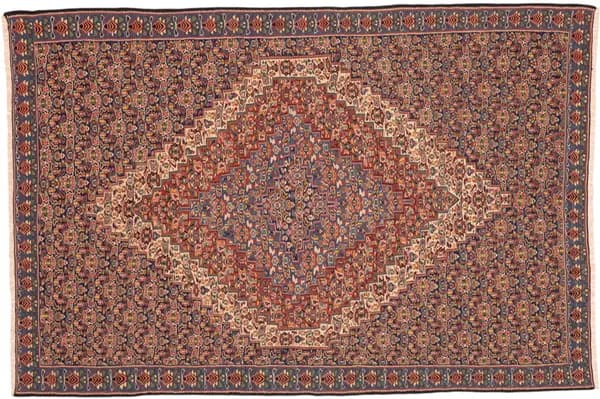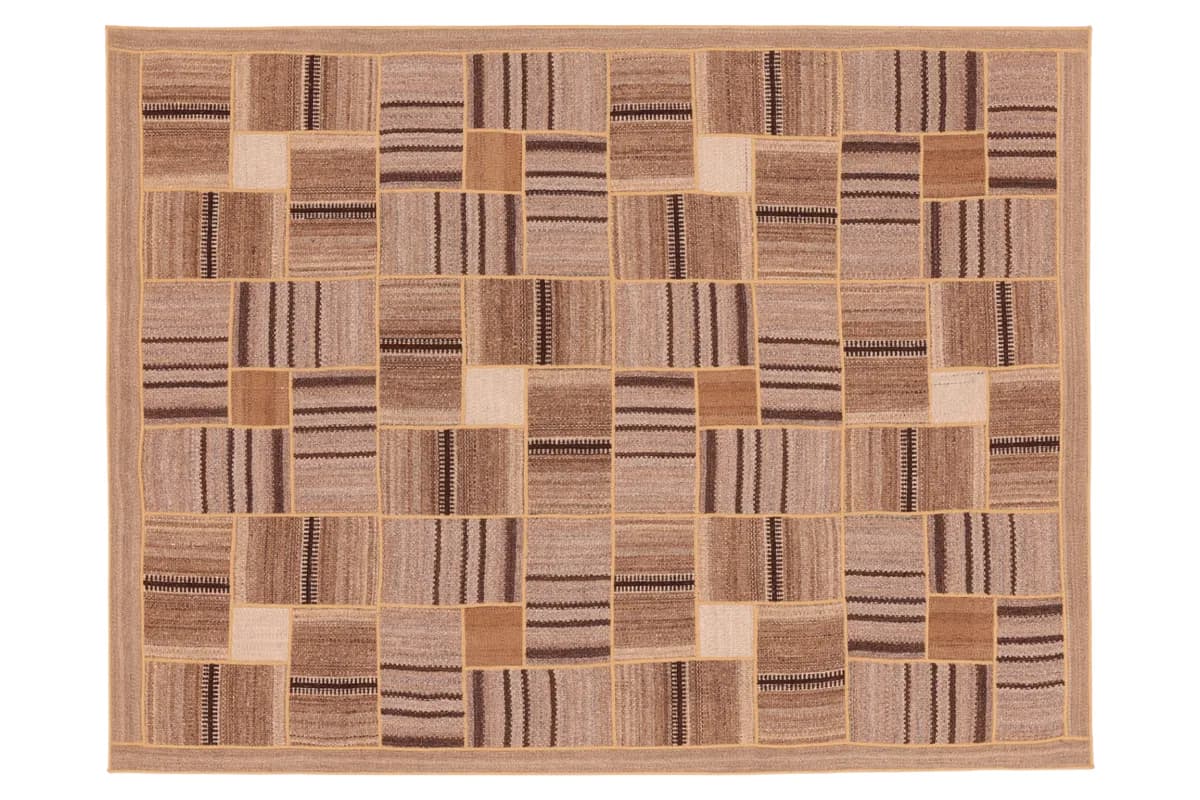
How the two are built
Every rug starts as a set of warp threads stretched on a loom. What happens next is the whole difference.
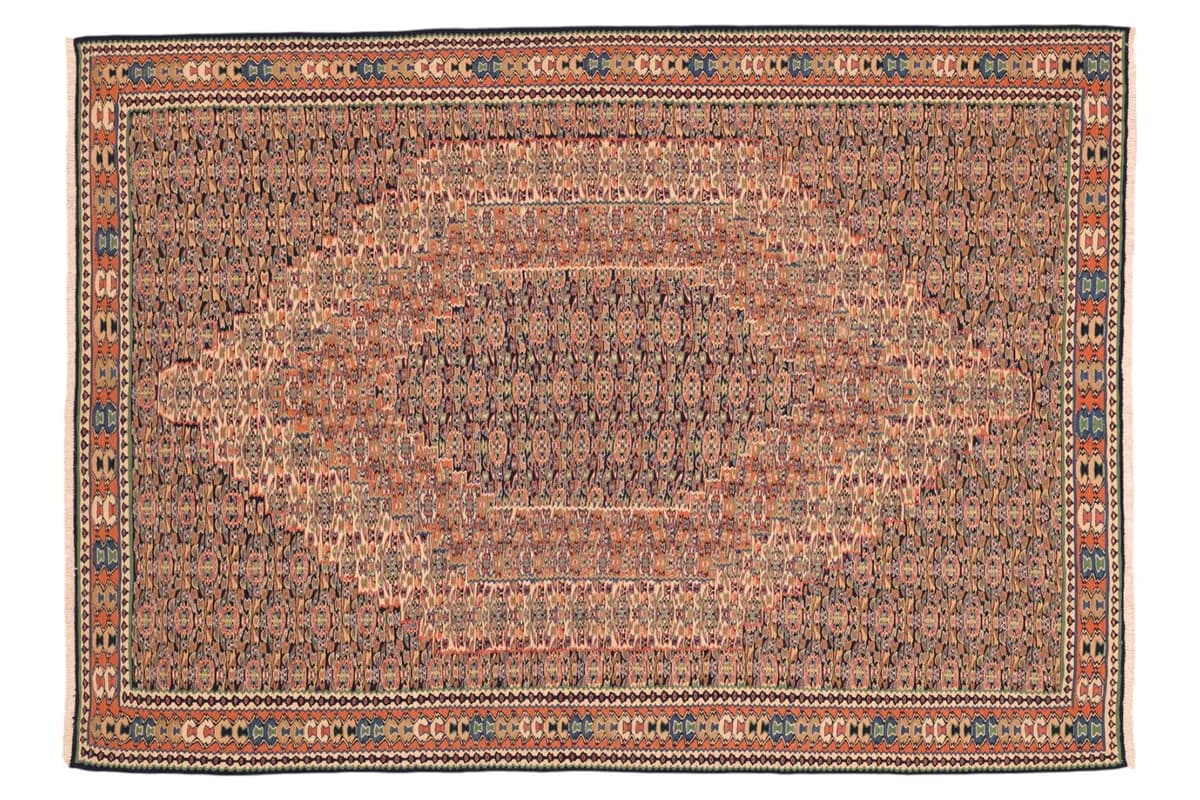
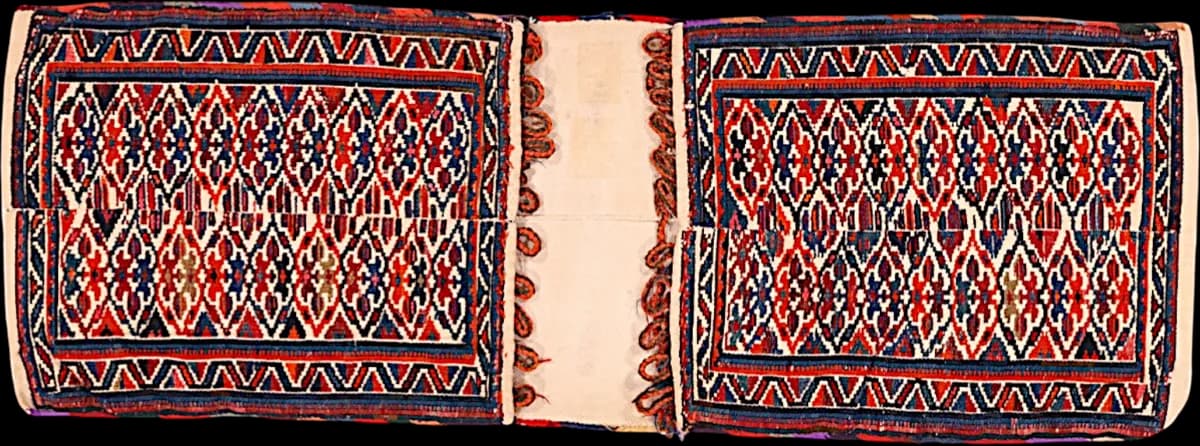
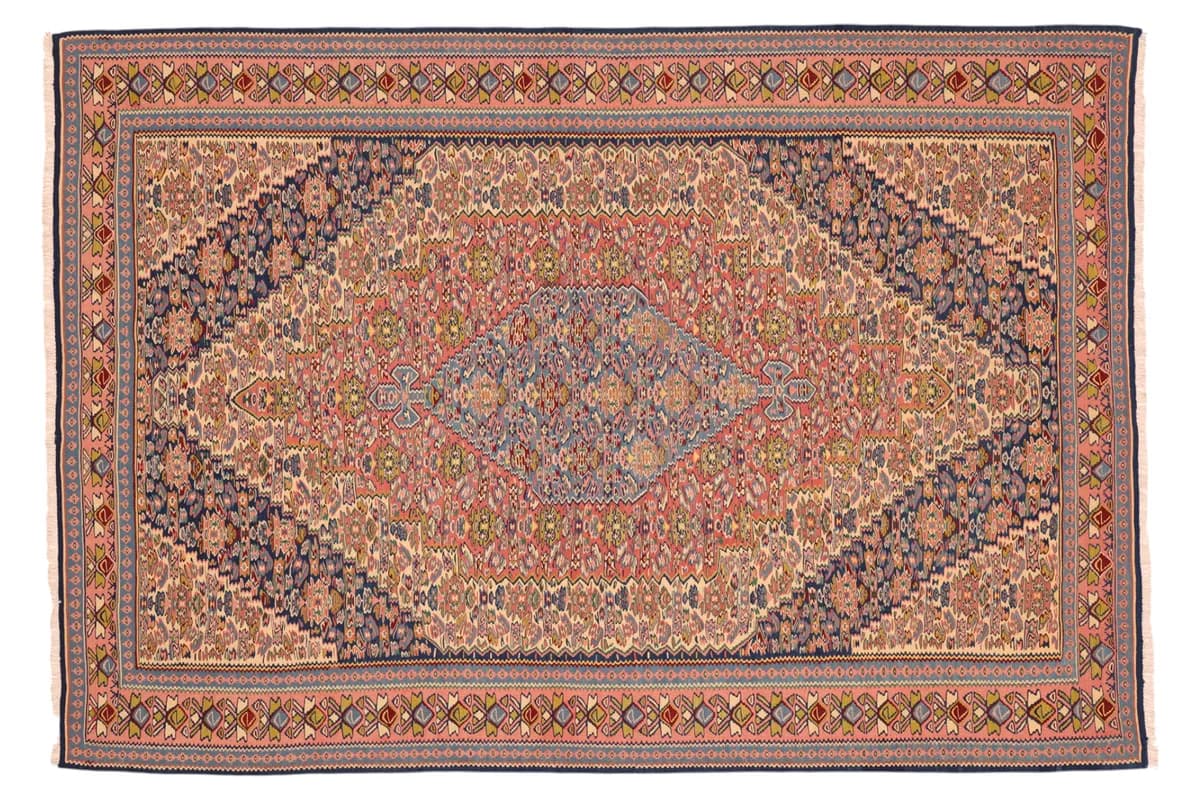
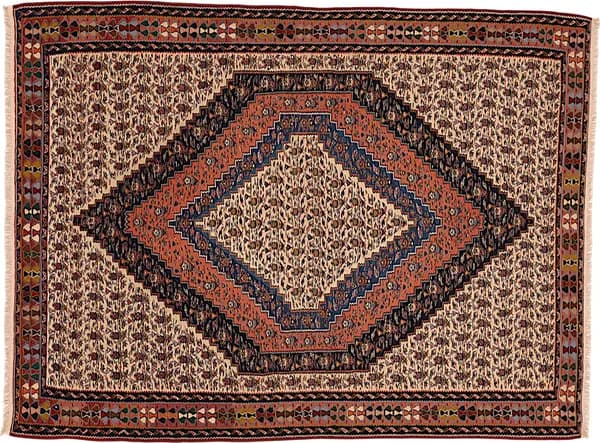
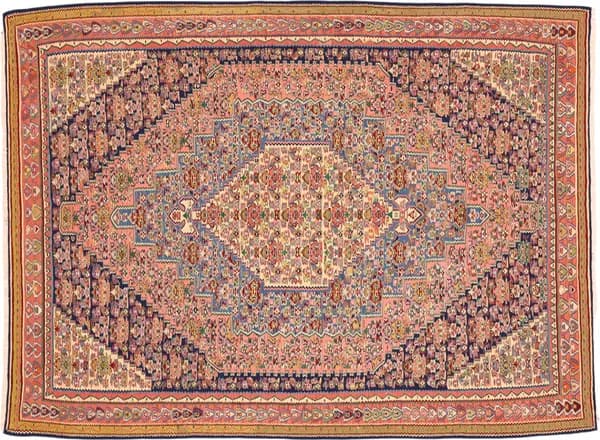
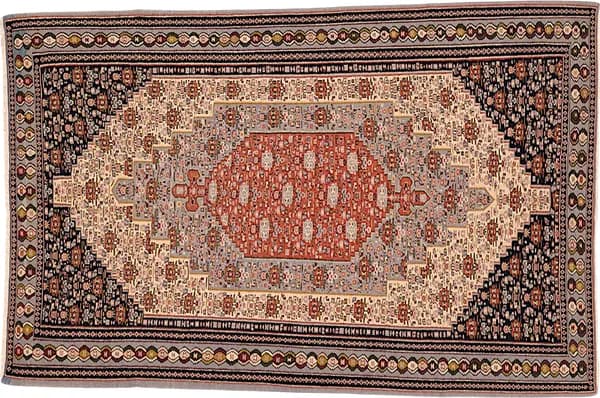
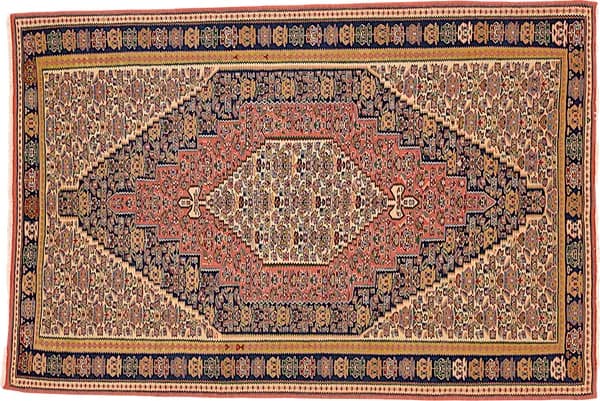
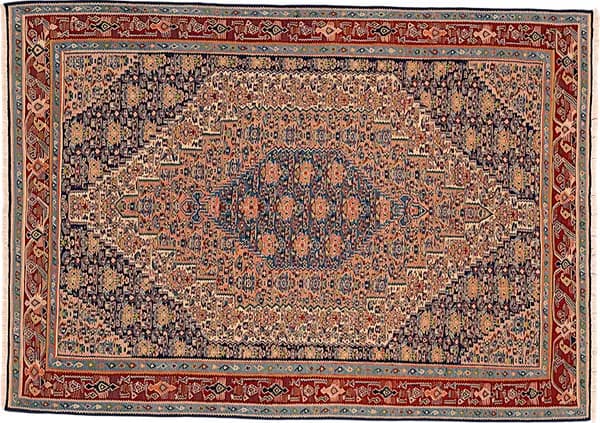
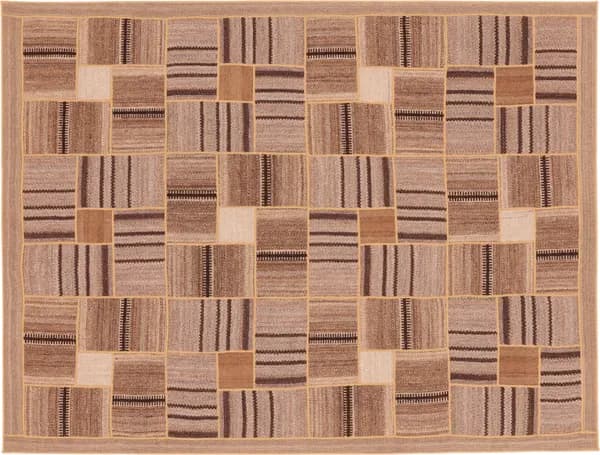
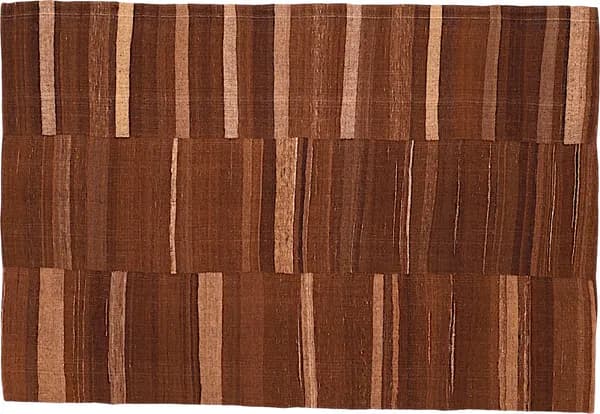
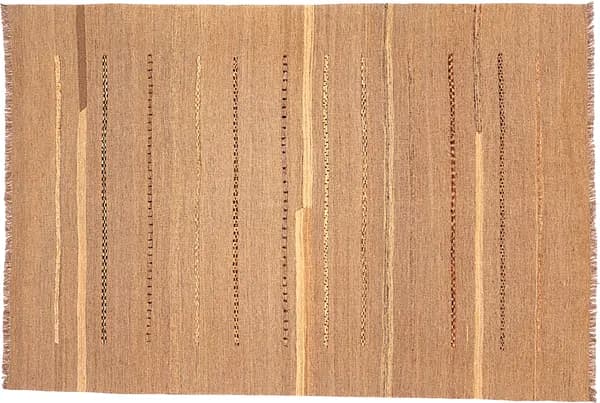
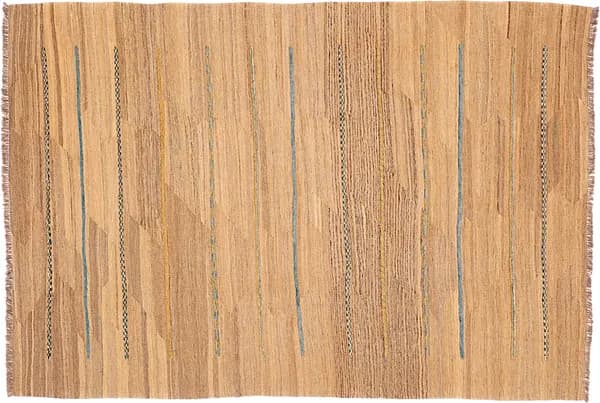
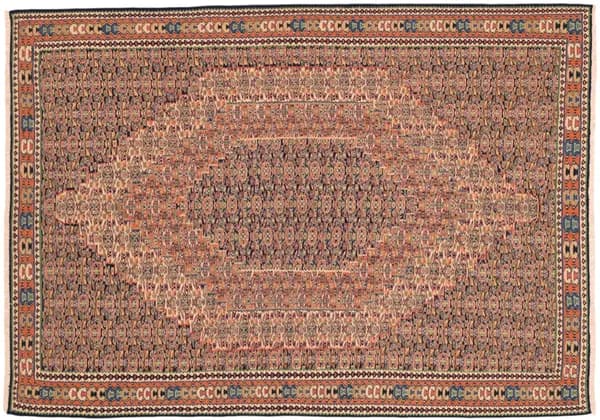
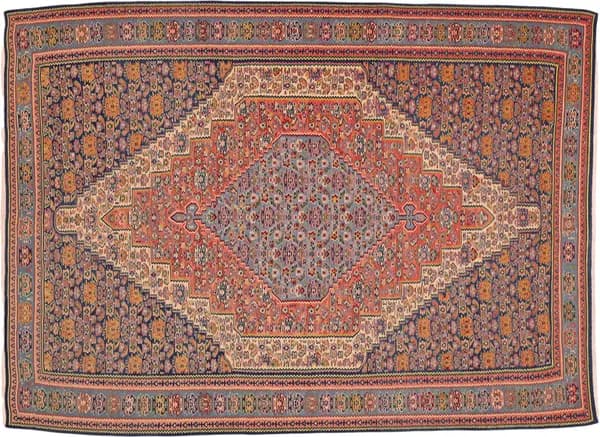
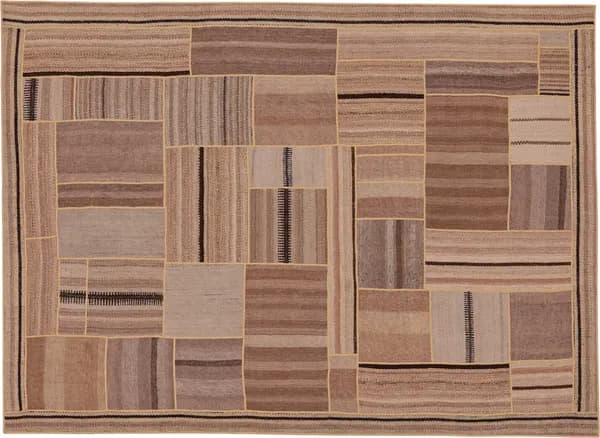
In a kilim the weft is passed through the warp, over and under, and the colour changes are the pattern. Nothing is added on top; the fabric is the design. Because the same weft shows on both faces, a kilim can be turned over and used the other way up.
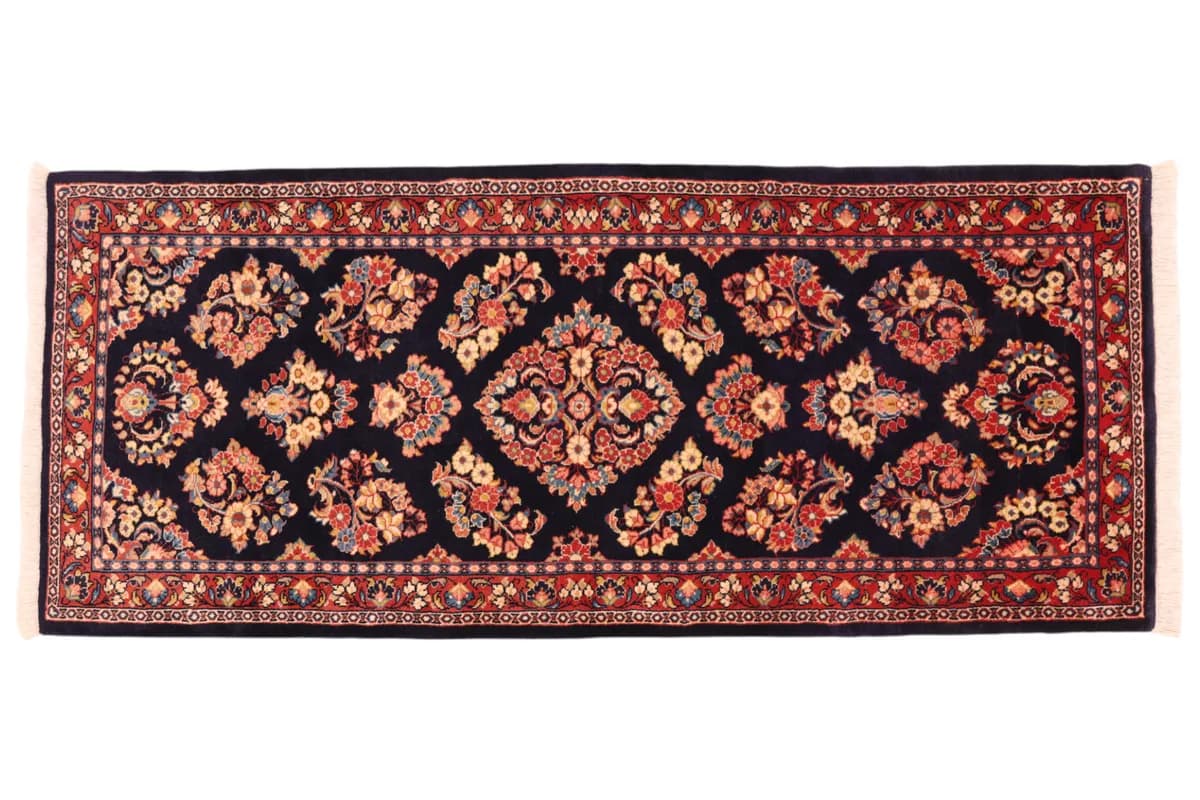
In a knotted rug the weaver ties a short length of wool around pairs of warp threads, row by row, and cuts it. Those cut ends stand up and form the pile. The pattern lives in the pile; the back shows the knots as a mirrored, flattened version. Turn it over and you have the underside of a structure, not a second face.
What that means in a room
Thickness is the practical difference you notice first. Three to five millimetres slide under a door that closes close to the floor and let chairs run; six to fifteen millimetres do not always. If you have a door that catches or a desk chair on castors, the kilim wins before any question of taste.
Underfoot the two feel entirely different. A kilim is firm and textile — you feel the floor through it. A knotted pile is soft and springy and insulates: warmer on a stone floor, and noticeably quieter in a room with hard surfaces.
Weight follows from the same fact. A kilim of four square metres can be picked up, shaken out and hung over a railing by one person. A knotted rug of the same size is a two-person job.
- Kilim — thin, firm, reversible, light, geometric.
- Knotted — thick, soft, single-faced, heavy, floral or geometric.
- A kilim fits under low doors and lets chairs run.
- A knotted pile insulates against cold floors and dampens sound.
- Turning a kilim over spreads the wear evenly.
How to tell them apart in thirty seconds
Run a hand across the surface. A knotted rug has a direction: one way is smooth, the other roughs up, because the cut pile lies over. A kilim feels identical either way — there is no pile to lie over.
Then turn a corner over. A kilim shows the same pattern on the back, mirrored, in the same colours. A knotted rug shows the knot bed: the design is legible but flattened, and the texture is completely different from the front.
Finally, lift it. At the same size a kilim weighs a fraction of a knotted rug. If you can pick it up with one hand, it is flatwoven.
Care
Vacuum a kilim along the weave and without a rotating brush; there is no pile to lift, and the brush only catches the surface.
Turn a kilim over once or twice a year. It is the one rug type where this genuinely doubles the usable life, because both faces wear.
For both types, blot spills at once with clear water and a light cloth, working from the outside in, and never rub. On a kilim a rubbed patch shows immediately, because there is no pile to hide it.
Kilim against knotted, side by side
The same room, the same size, two entirely different objects.
| Criterion | Kilim | Knotted |
|---|---|---|
| Structure | woven, no pile | knotted, with pile |
| Thickness | around 3–5 mm | around 6–15 mm |
| Usable both sides | yes | no |
| Design language | geometric, diamonds, zigzag | floral, medallion, figurative |
| Underfoot | firm, textile | soft, springy |
| Sound and warmth | little insulation | insulates |
| Handling | light, one person | heavy |
Common questions
Is a kilim a real Persian rug?
Yes. It is a different technique, not a lesser one. Flatweaving is as old as knotting and has its own tradition, its own regions and its own design language. What it is not is a cheap imitation of a knotted rug.
Which lasts longer?
A dense knotted rug takes more punishment in one spot, but a kilim can be turned over, which spreads the wear across two faces. In practice both last decades if they are turned and cleaned.
Can I use a kilim under a dining table?
Yes, and it is often the better choice there: chairs run over 3 to 5 mm instead of sinking into 15. Allow around 80 cm of clearance beyond the table edge so a chair does not tip over the edge when pushed back.
Why are kilim patterns always geometric?
Because the weft can only change colour where it turns, and it turns in straight steps. A curve has to be built out of those steps, which is why kilim drawing is diamonds, zigzags and stepped forms. A knotted pile can place a single knot anywhere and so can draw curves.
Is a kilim warm enough?
It insulates far less than a knotted pile — on a cold stone floor you will feel the difference. If warmth underfoot is the point, choose pile; if you want the floor to stay accessible and the room to stay light, choose flatweave.