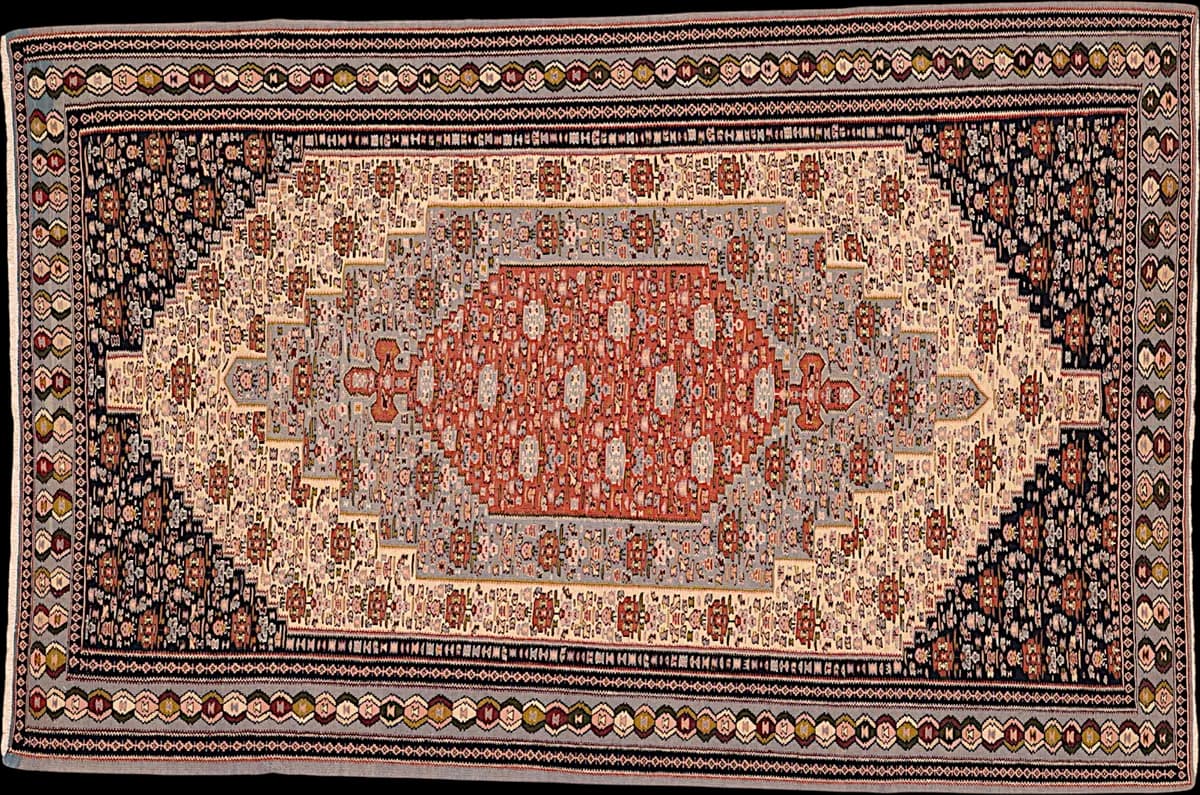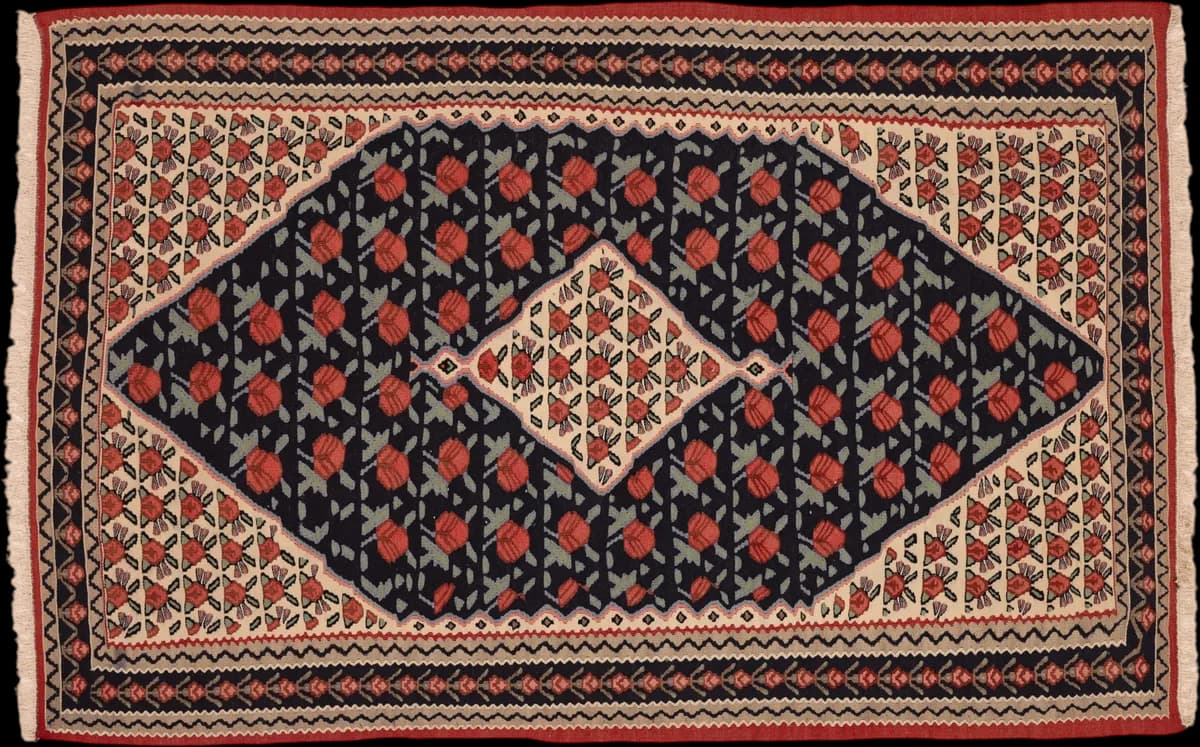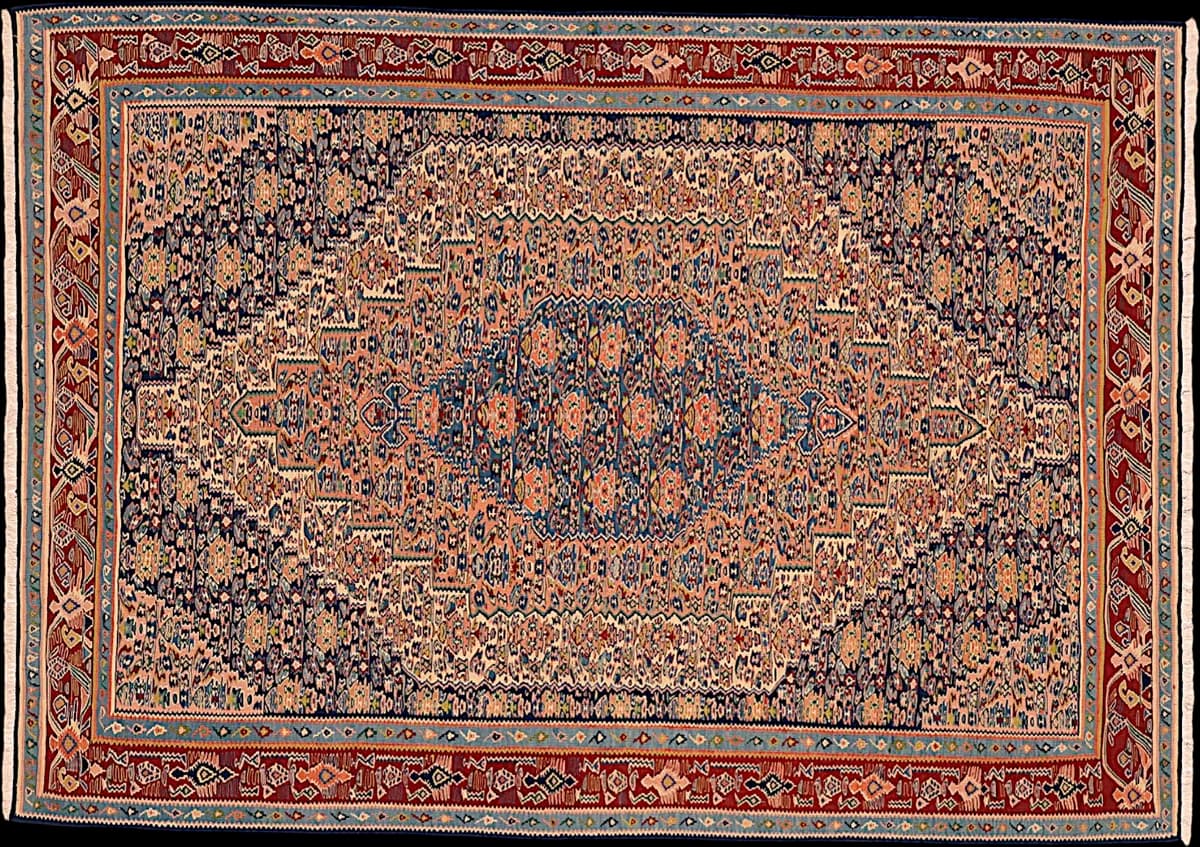
Kelim Senneh
280 × 200 cm
1.260 €


1.152 €
Incl. VAT
In Stock · Ready to Ship
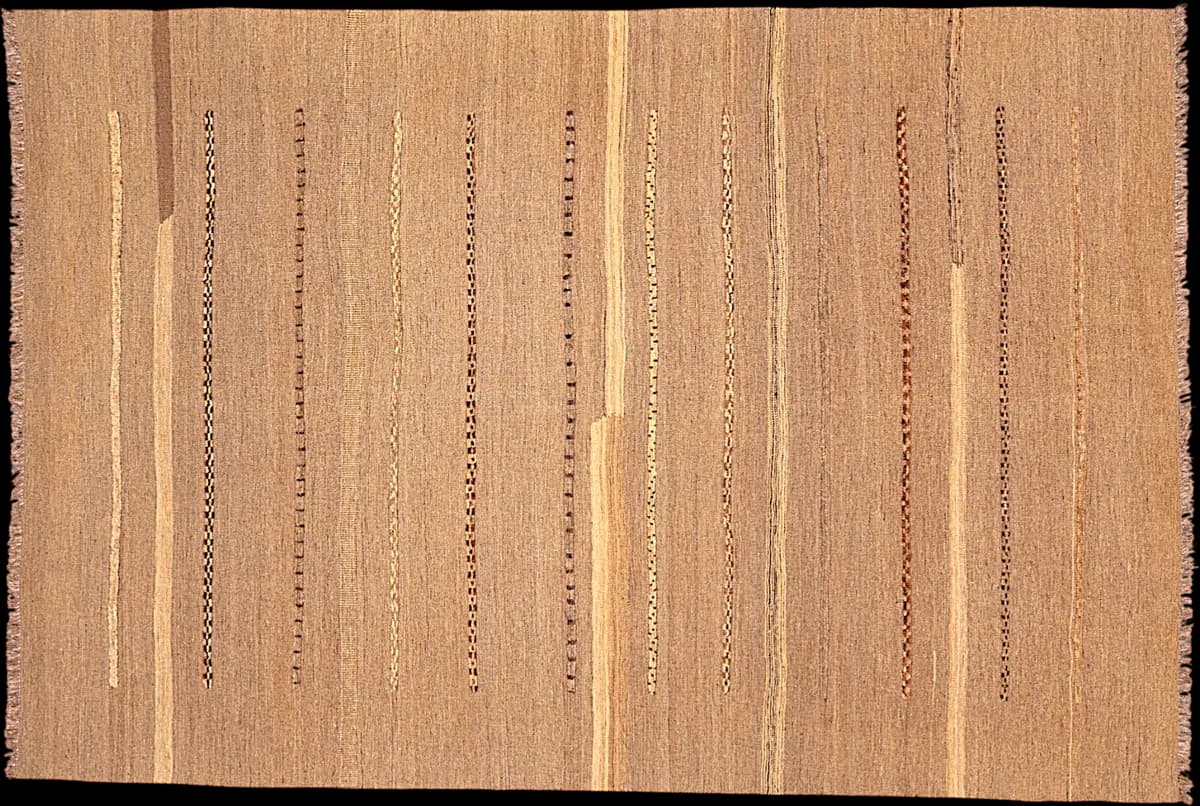
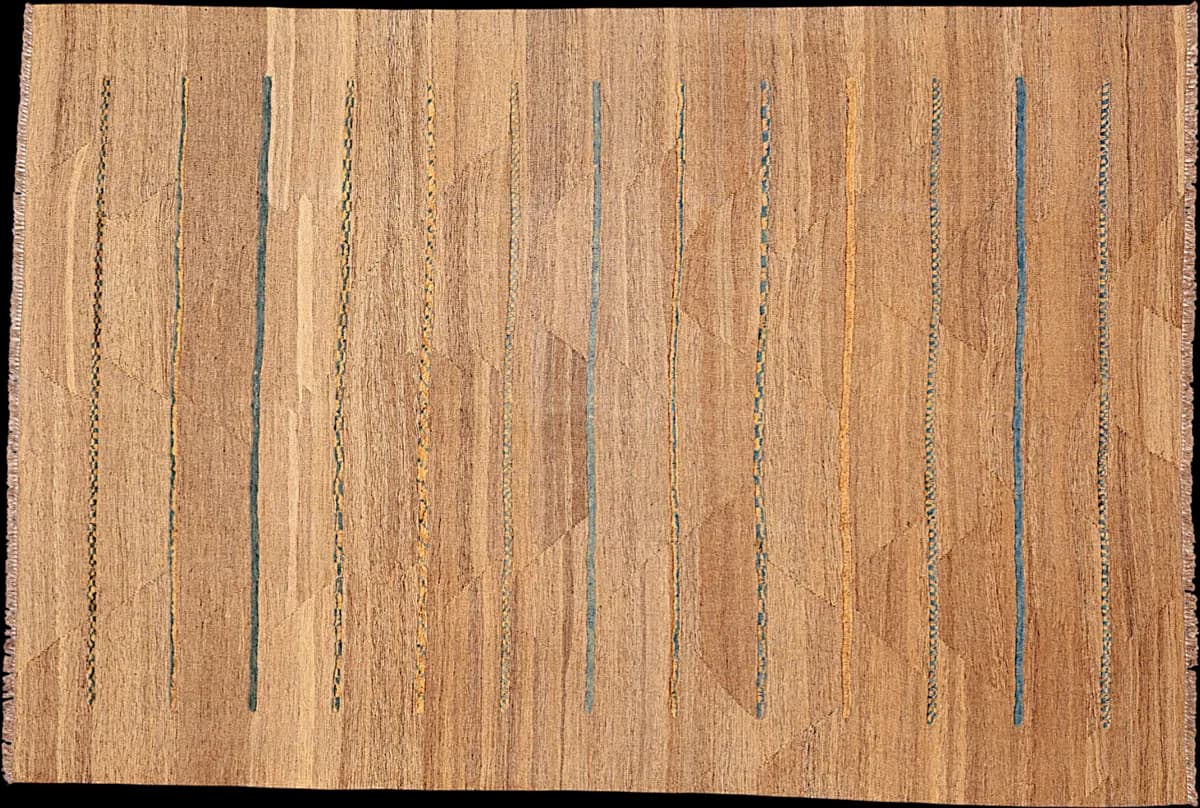
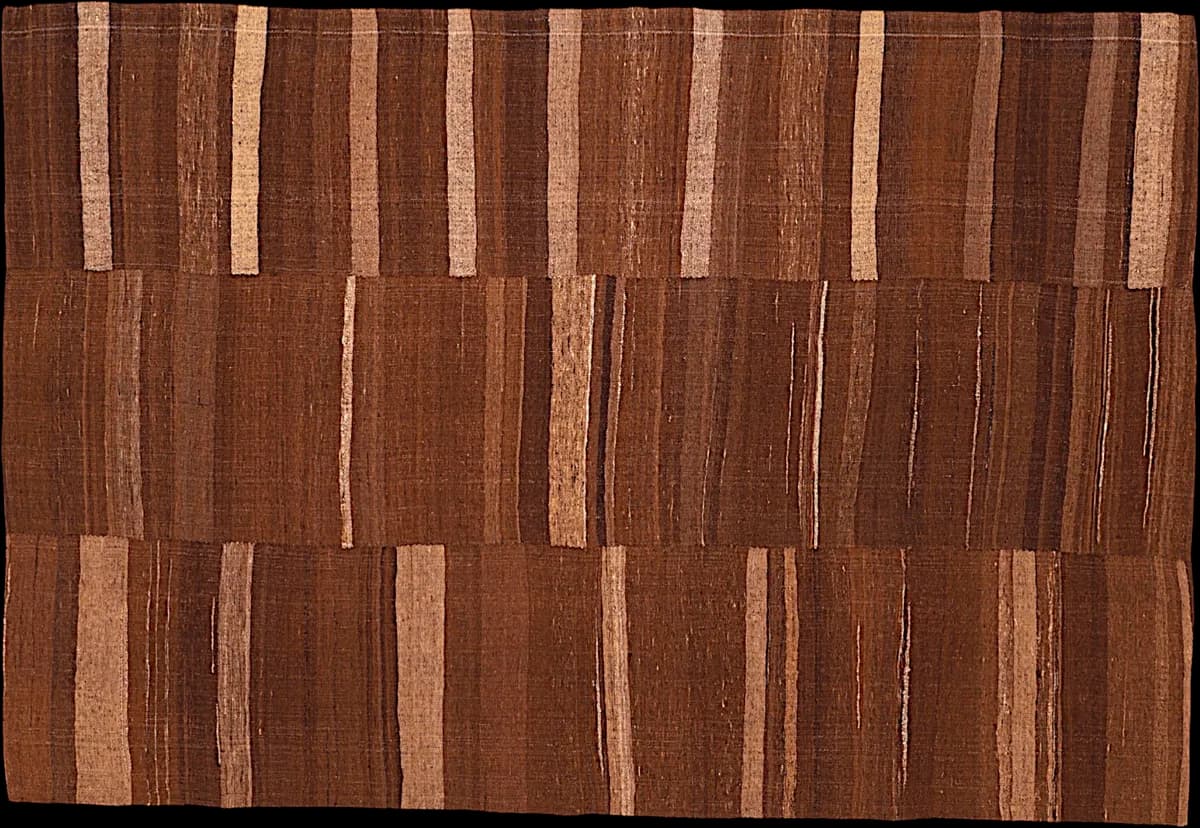
A Persian kelim, also written kilim, hand-woven rather than knotted, measuring 275 x 186 cm (9'0" x 6'1"), from the tribal weaving regions of Iran. Kelim is known for bold geometric pattern and a flat, reversible weave with both faces equally finished. This piece takes that same tradition and pares its colour right back.
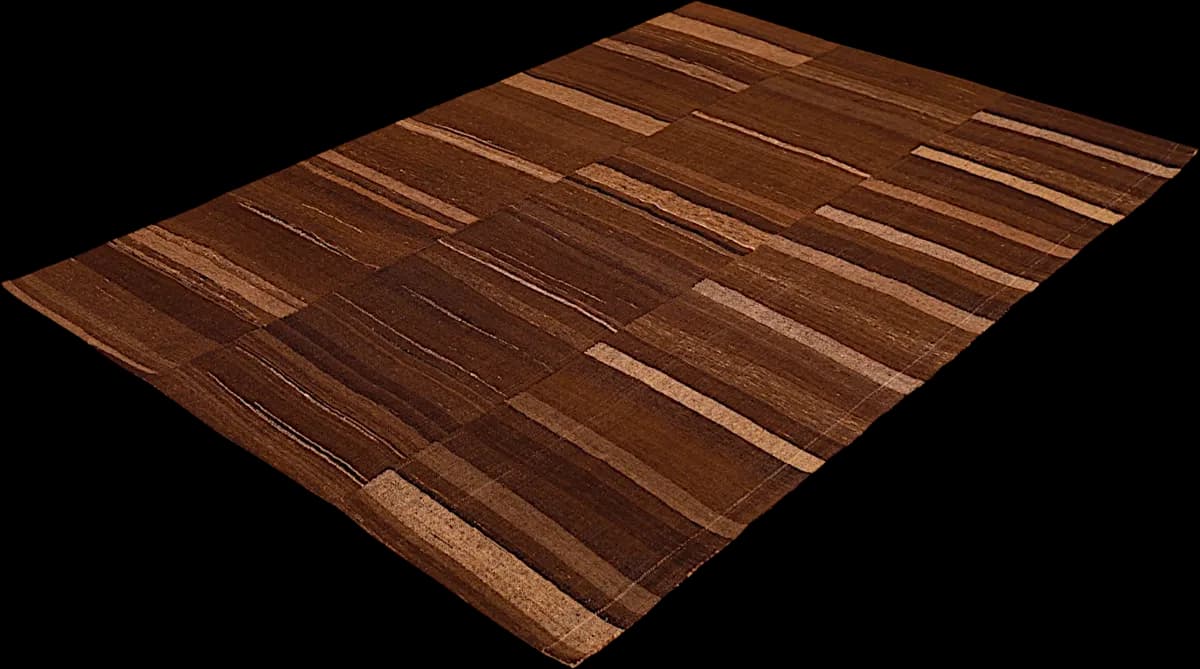
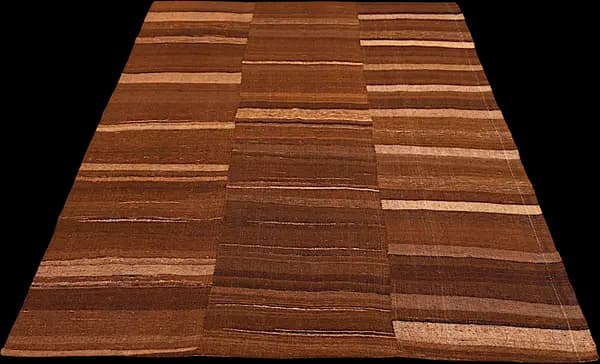
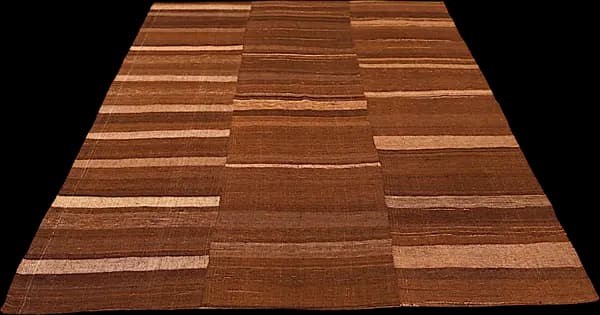
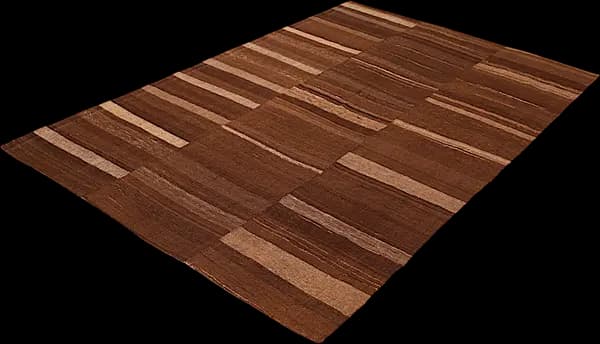
The field is a warm chocolate brown, crossed by vertical stripes in camel, tan and pale beige, with an occasional lighter cream line. The design sits in three horizontal panels, each with its own rhythm of stripe widths, so the rug reads as three related bands rather than one continuous field. There is no separate border — the stripes simply run to the edge, closed by a narrow plain brown selvage.
Kelim weaving is weft-faced: coloured wool is worked directly into the warp, so the pattern is the surface, with no pile to crush or shear. That flatness gives each stripe a crisp, slightly ribbed edge, the weave direction visible as fine striations through the brown and camel bands. Hand-spun wool throughout, the rug is pieced from three separate woven panels joined into one length, which is why the stripe rhythm shifts subtly from panel to panel rather than running as one unbroken pattern. At 4 mm the weave folds easily and lies flat without bulk.
In a living room or study, laid under a low table or along a seating group, the chocolate and camel tones settle rather than announce themselves, warming a pale floor and holding their own beside dark wood. Underfoot it is flat and light rather than deep, an easy rug for daily use, and being reversible it can simply be turned once one side has had its years. The stripes catch the light differently panel by panel, a quiet shift worth watching.
More on Kilims: origin, making and how to recognise a genuine piece
At 275 × 186 cm (5.12 m²) this is a large rug. It sits under a seating group with the front legs of sofa and chairs on it, or under a dining table for four. A table for six wants about 80 cm of clearance all round, and needs more.
No — this piece is hand-woven, not knotted. A flatweave has no pile: the pattern comes from warp and weft alone. That makes it thin, light and usable on both sides, and it is a technique in its own right rather than a simpler version of a knotted rug.
Vacuum regularly, ideally along the weave and without a rotating brush. A flatweave can be turned over, which spreads the wear — flip it once or twice a year. Blot spills at once with clear water and a light cloth, working inwards, and never rub.
We are in the Hamburg Speicherstadt. Come and see this rug in daylight, or write to us — a person answers.
Certificate included verifying origin, materials, and craftsmanship.
Ref: 356229