Kelim
296 × 199 cm
1.325 €





1.325 €
Incl. VAT
In Stock · Ready to Ship
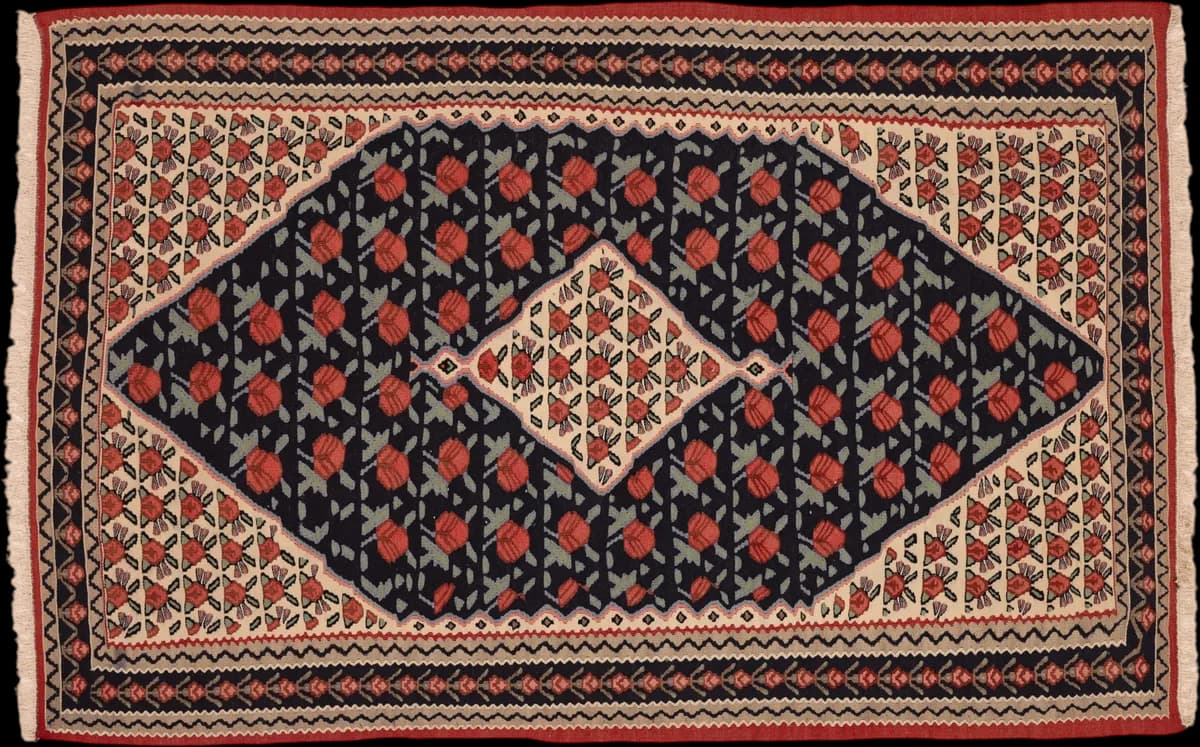
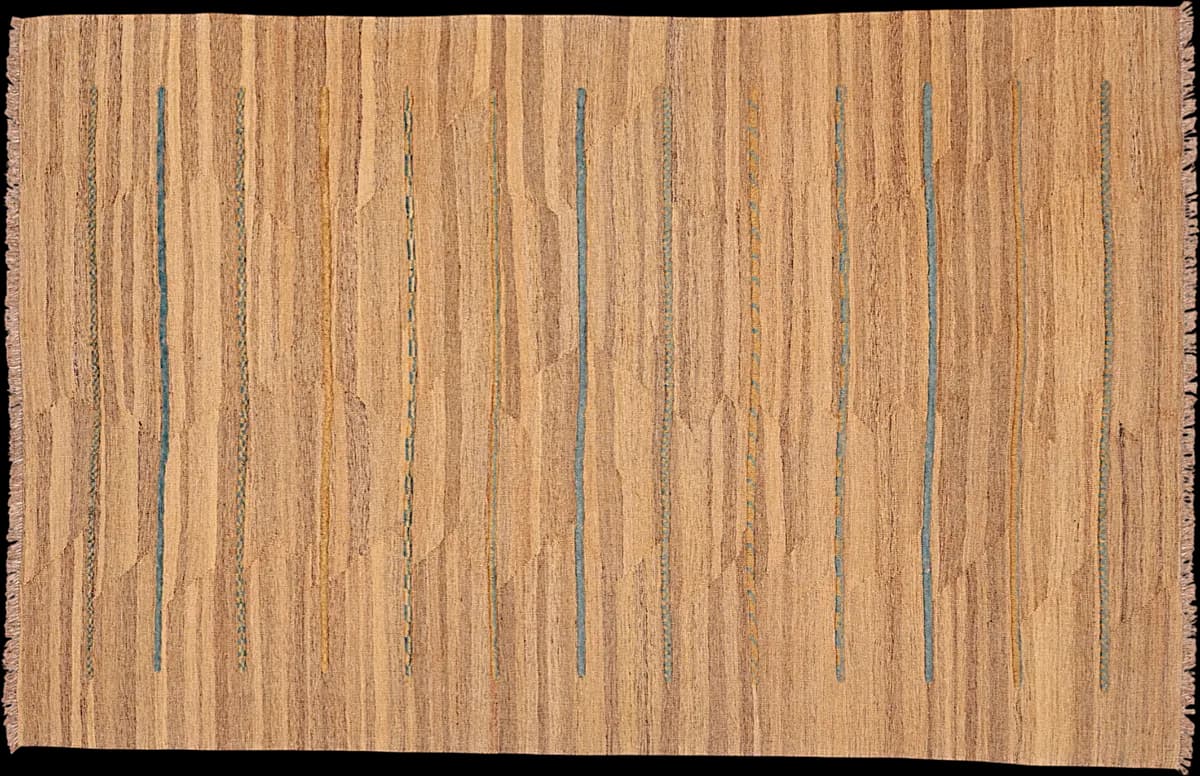
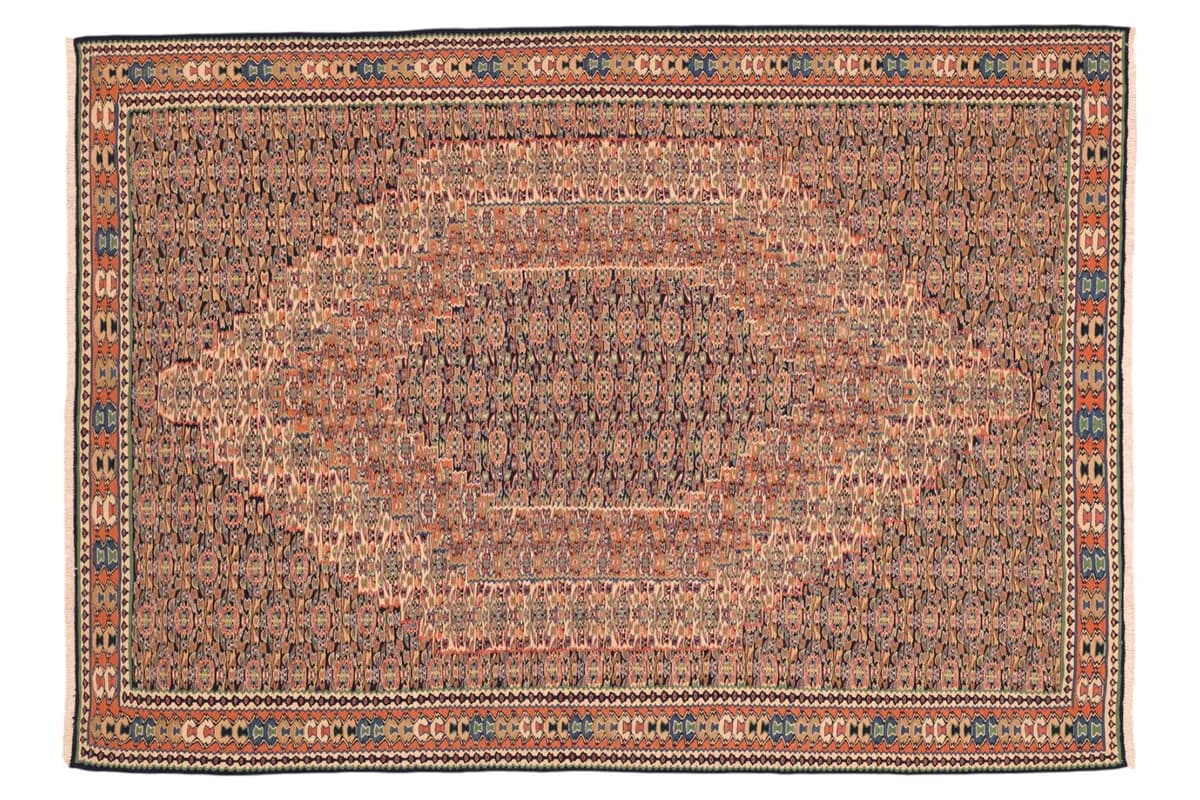
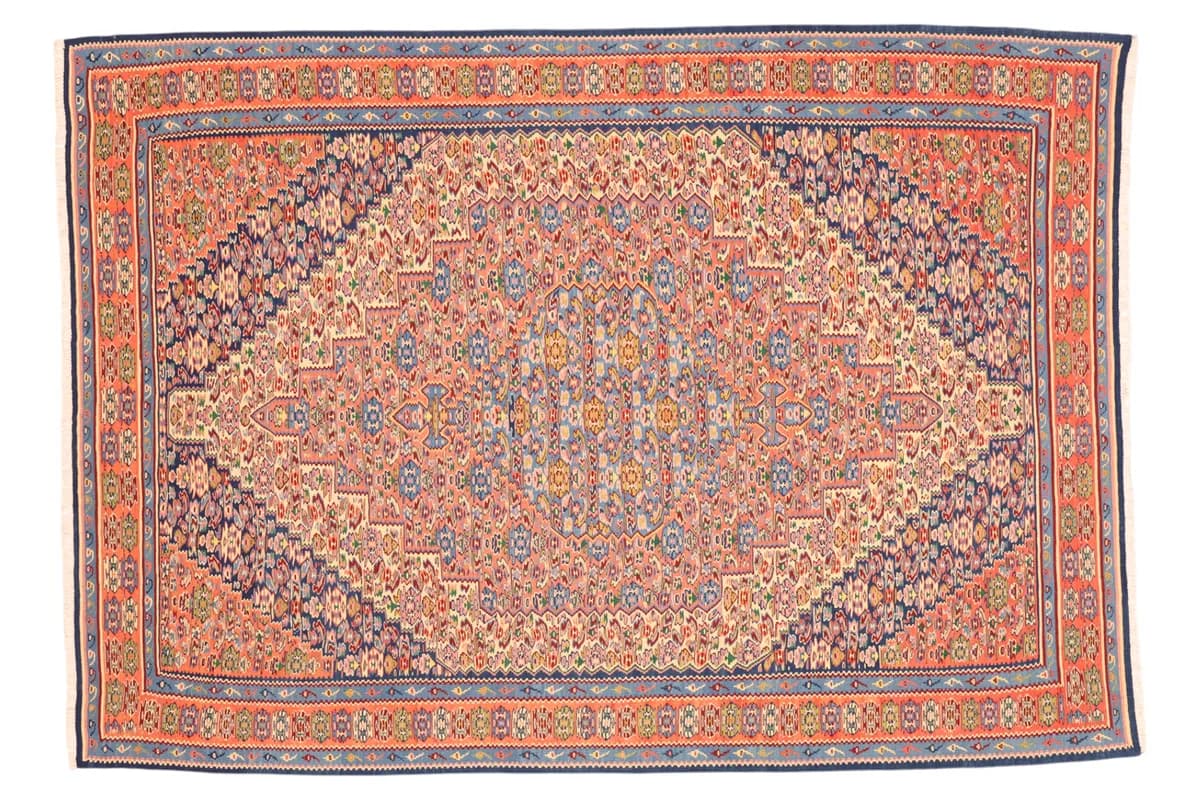
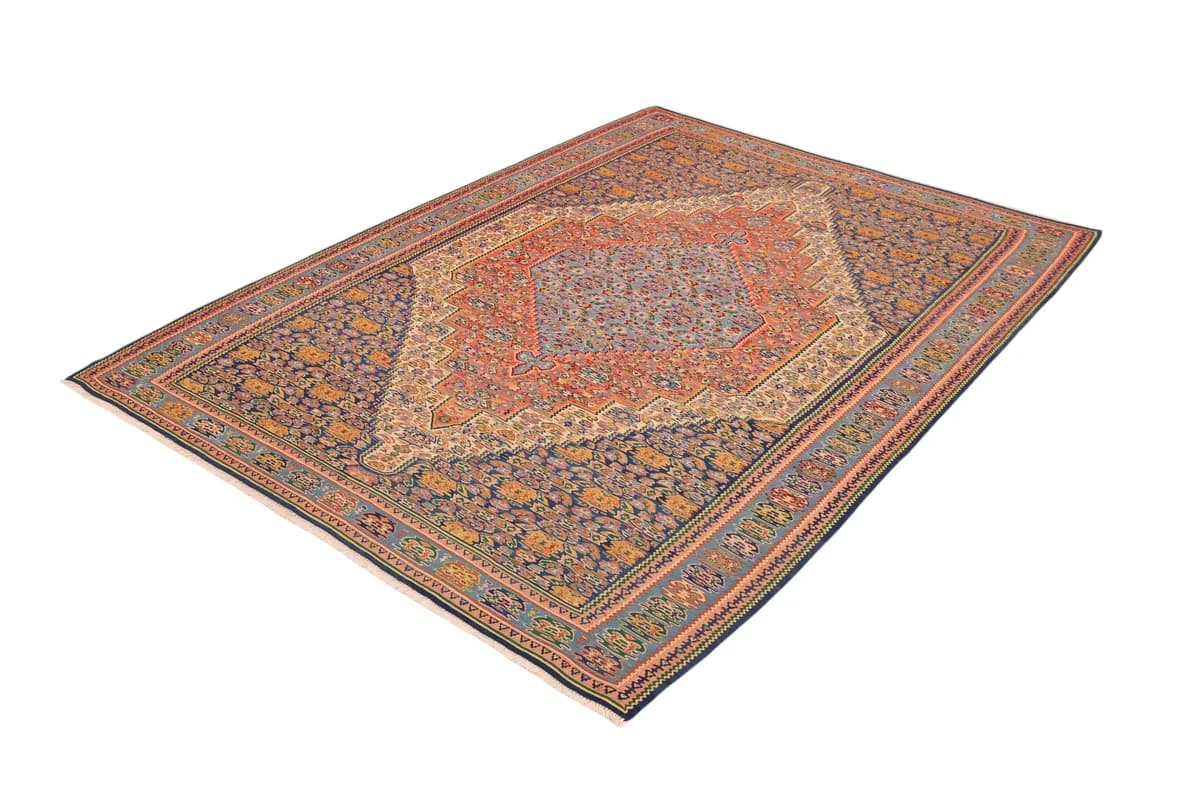
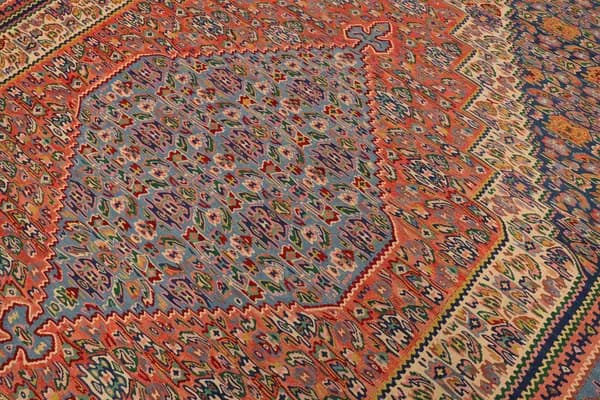
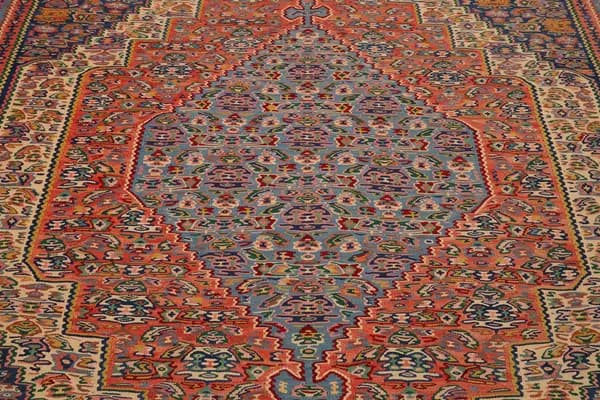
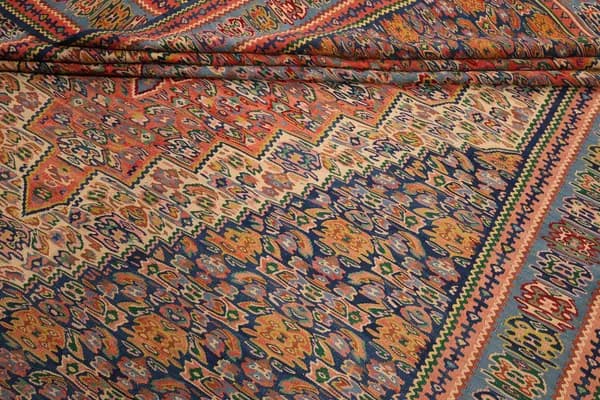
This is a kilim from Kordestan, in Iran's Kurdish northwest, 283 x 208 cm (9'3" x 6'10"). Kilims are flatwoven rather than knotted, the design built into the weave itself rather than added onto it, and kilims of this kind are prized for bold, clearly drawn geometry and for being finished equally on both faces. What is less usual is the pattern carried here: a full medallion, a device more often seen on knotted city rugs, worked into a weave meant to stay light.
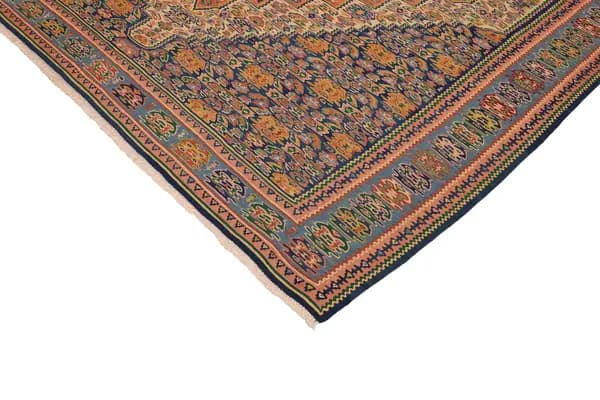
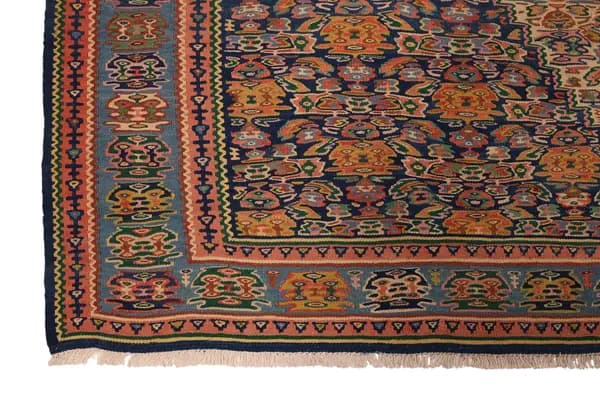
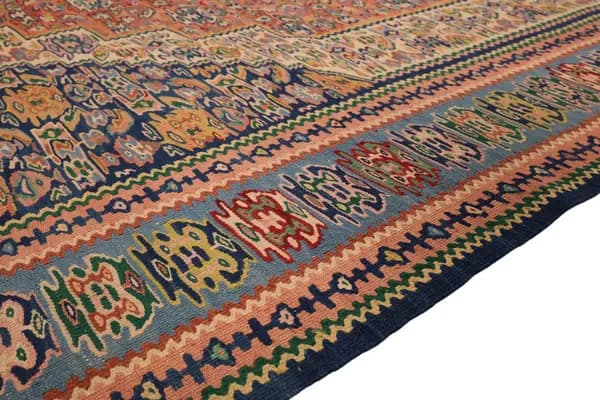
The first impression is of a soft, dove-blue-grey held against cream. That colour sits in a large stepped diamond medallion, its outline picked out in rust and salmon, floating on an open cream field. Around it the ground turns to navy, filled edge to edge with small mustard, olive and lavender floral sprigs, dense enough to read almost as pattern in its own right. Several narrow guard borders in ivory close the composition, keeping the medallion contained without crowding it.
The wool is handspun and the weave is set on a cotton warp, woven by hand rather than knotted, which is what gives the surface its slight ribbed relief and its flatness — at 4mm this is a thin, closely woven fabric rather than a pile rug. Because a kilim's pattern is built weft by weft rather than tied on top, the medallion and its floral ground appear with equal clarity on the reverse, which is also why kilims of this kind can be walked on for years and later turned to give a second, unworn face. That reversibility is a real doubling of working life, not a decorative claim.
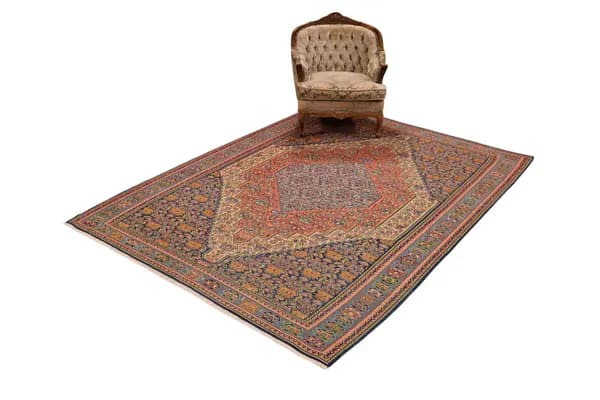
At this size the rug sits comfortably under a dining table or in front of a sofa, and its flatness is an advantage in either place: it lies true from the first day, takes chairs being pulled in and out without disturbance, and never fights for space with furniture legs. Against a pale floor the cream ground and dove-blue medallion keep the room open and even; the navy corners give it enough depth to hold its own near darker wood. New as this piece is, the weave is dense and firm underfoot, made for daily use rather than for standing to one side, and the small sprigs scattered through the navy ground are the sort of detail a room goes on revealing long after the medallion has been taken in at a glance.
More on Kilims: origin, making and how to recognise a genuine piece
At 283 × 208 cm (5.89 m²) this is a large rug. It sits under a seating group with the front legs of sofa and chairs on it, or under a dining table for four. A table for six wants about 80 cm of clearance all round, and needs more.
No — this piece is hand-woven, not knotted. A flatweave has no pile: the pattern comes from warp and weft alone. That makes it thin, light and usable on both sides, and it is a technique in its own right rather than a simpler version of a knotted rug.
Vacuum regularly, ideally along the weave and without a rotating brush. A flatweave can be turned over, which spreads the wear — flip it once or twice a year. Blot spills at once with clear water and a light cloth, working inwards, and never rub.
We are in the Hamburg Speicherstadt. Come and see this rug in daylight, or write to us — a person answers.
Certificate included verifying origin, materials, and craftsmanship.
Ref: 582024