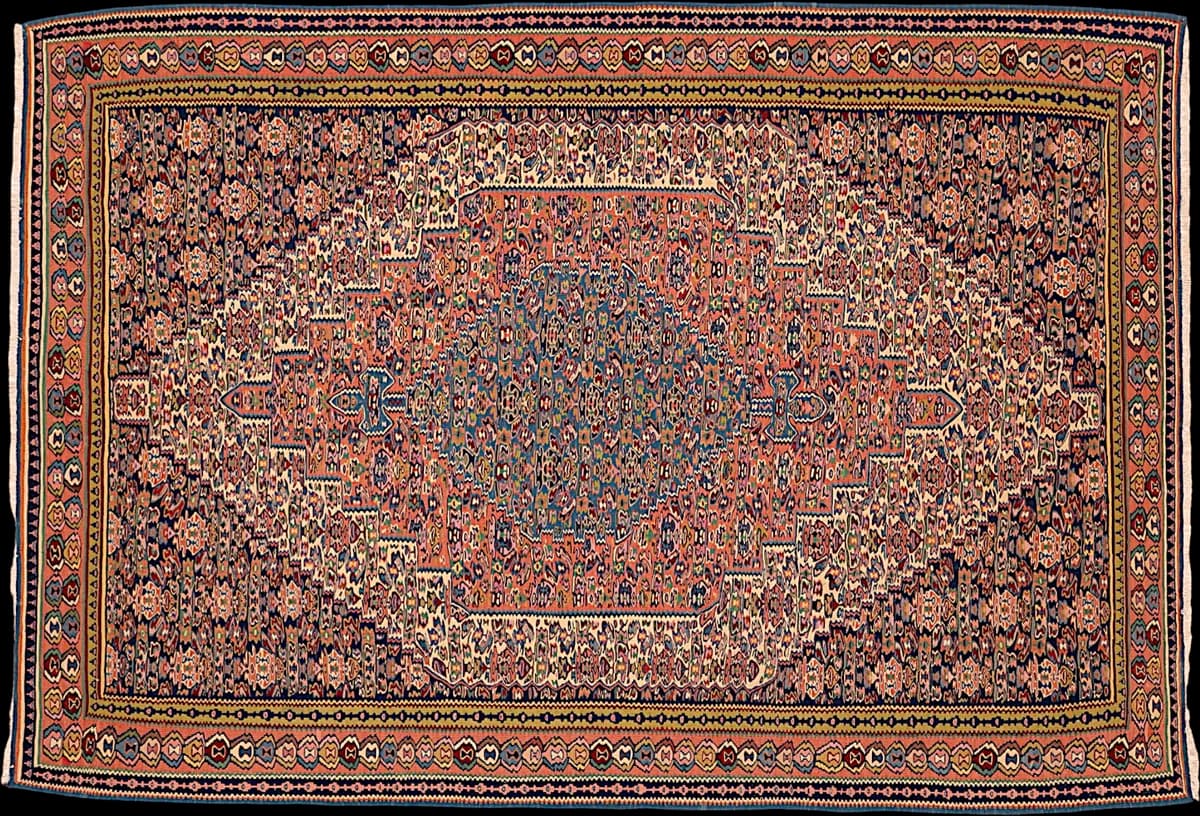
Kelim Senneh
307 × 206 cm
1.422 €
1.325 €
Incl. VAT
In Stock · Ready to Ship
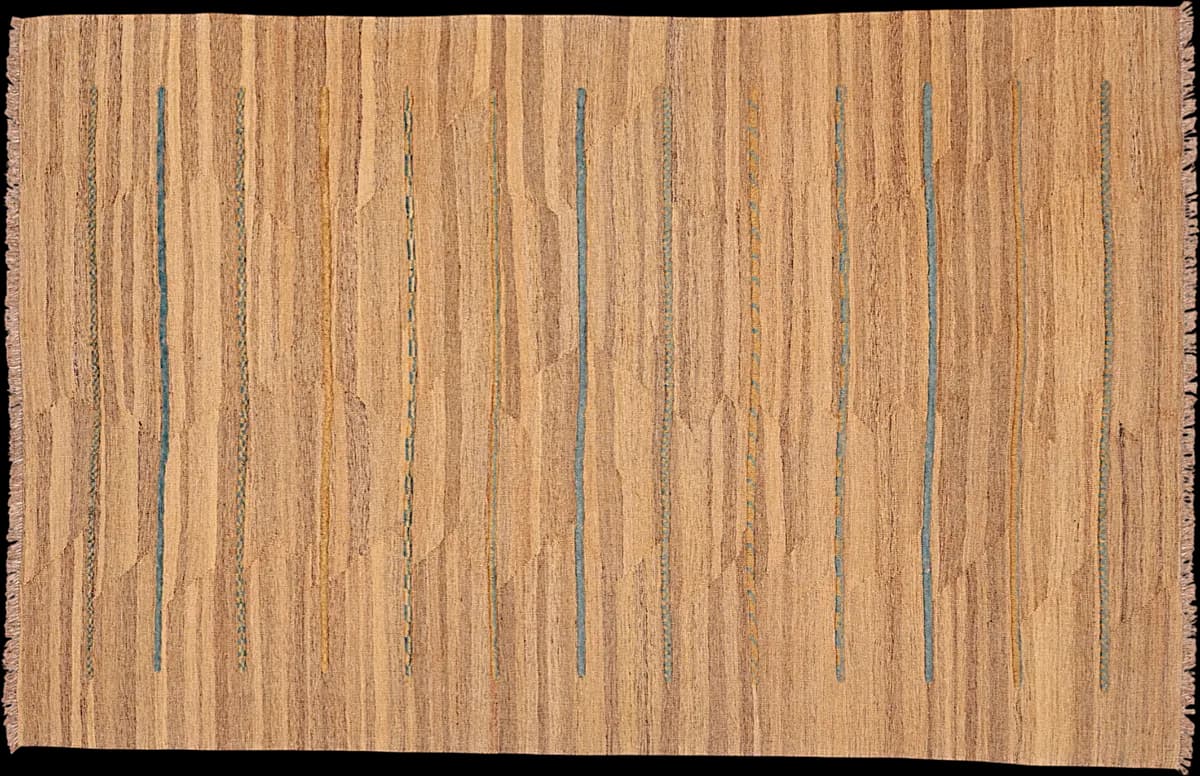
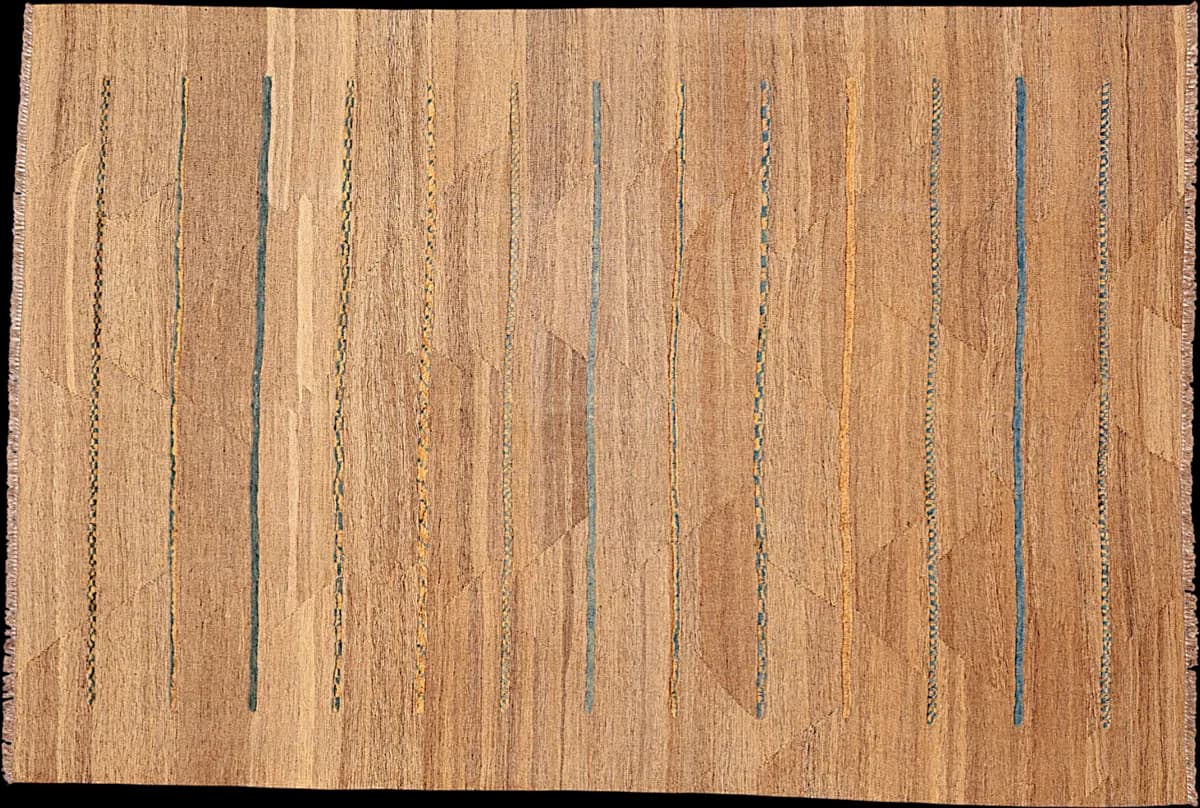
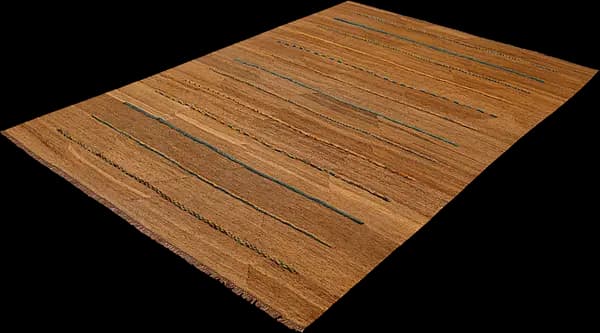
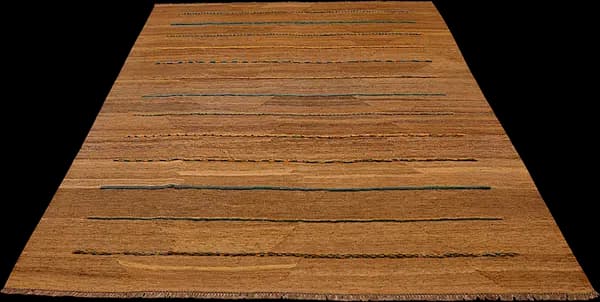
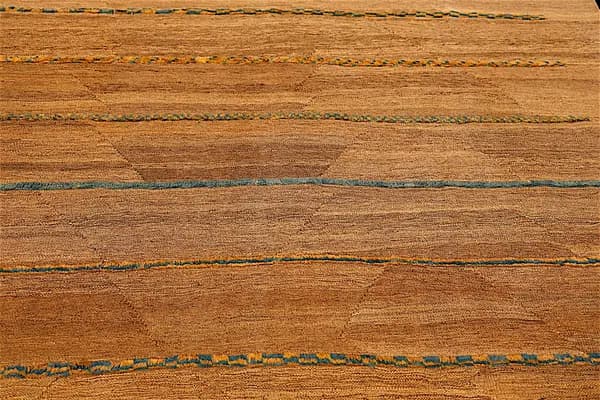
This is a Kilim, a flat-woven rug rather than a knotted one, measuring 296 x 199 cm (9'9" x 6'6"). The type comes from the tribal weaving regions of Persia, valued for a light, flexible hand and for pattern that reads equally well from either side. This particular piece is quieter than that reputation usually suggests.
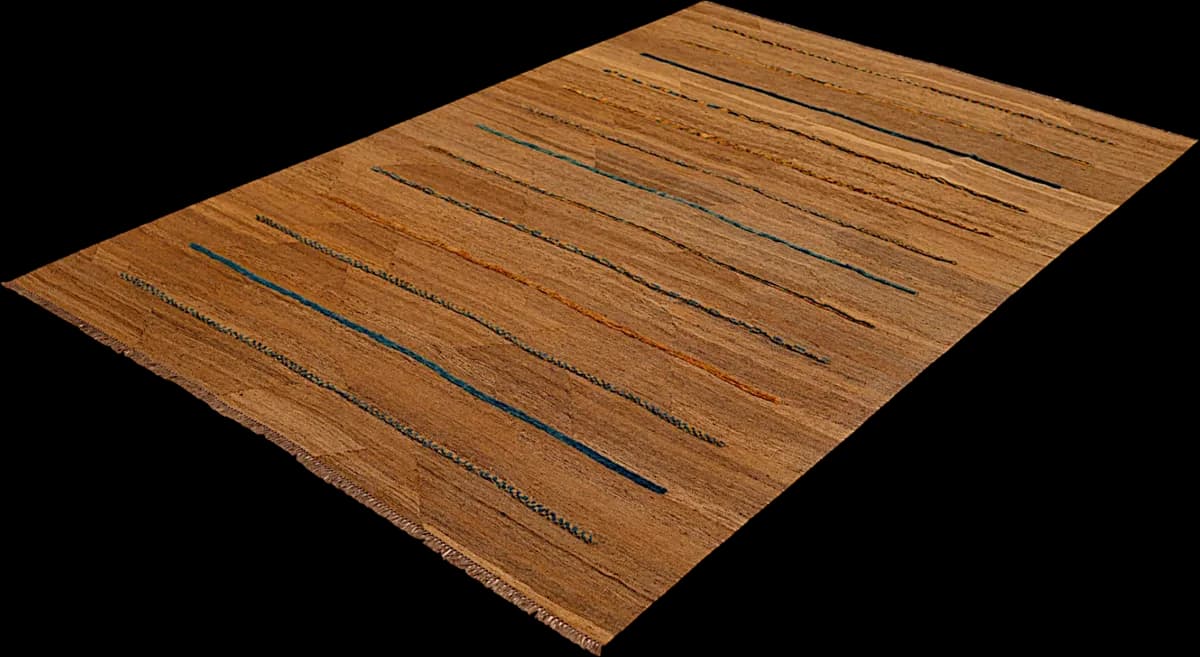
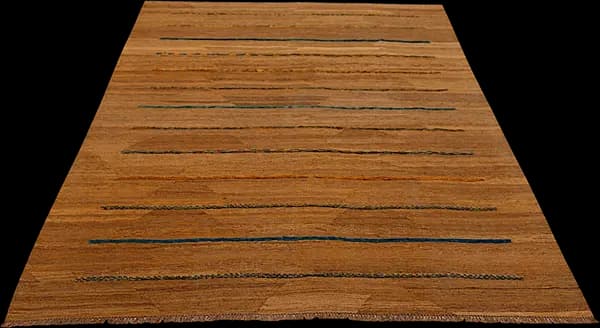
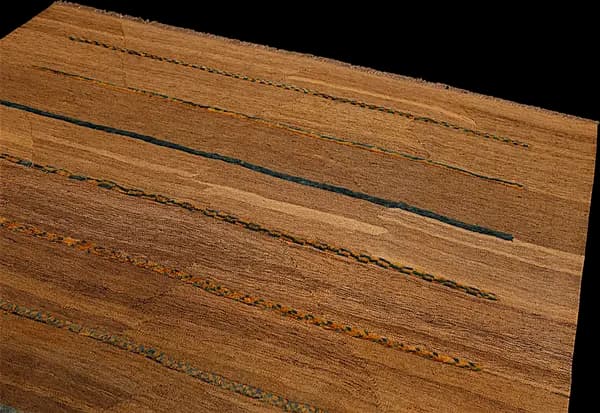
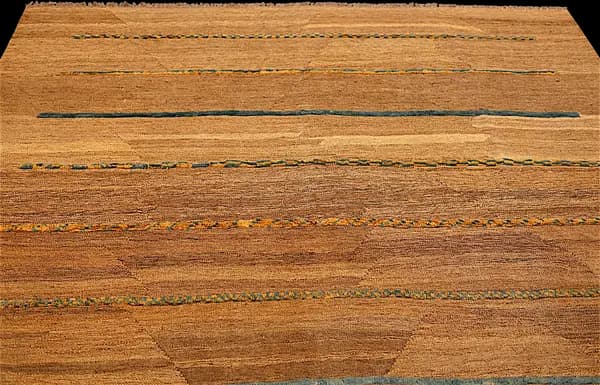
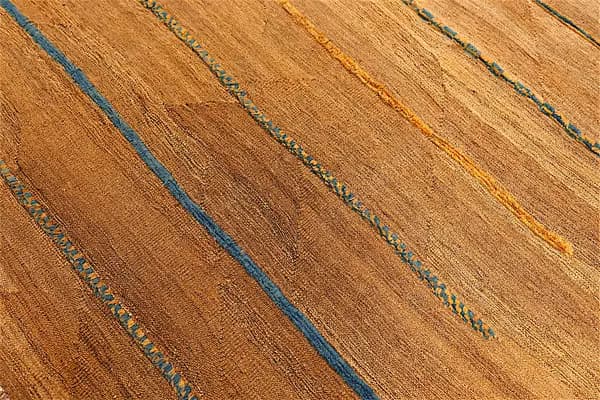
The ground is a warm, even camel, running uninterrupted to the edges with no separate border. Across it fall a dozen thin vertical stripes, teal-blue alternating with ochre, spaced with a slight irregularity that keeps the eye moving rather than settling into a grid, and a line or two of rust orange breaks the rhythm. Look closely and a faint, tone-on-tone diamond shape seems to surface beneath the stripes. Only the plain, undyed fringe marks where the pattern ends.
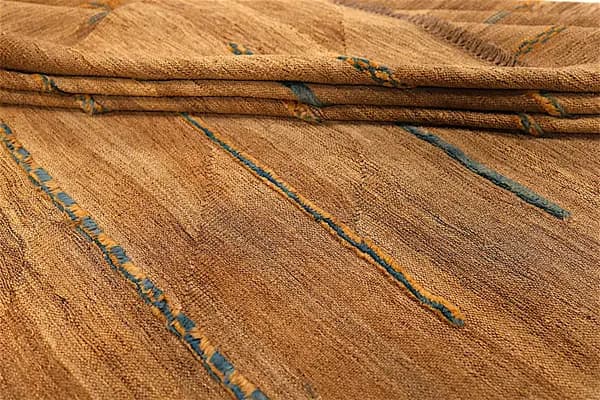
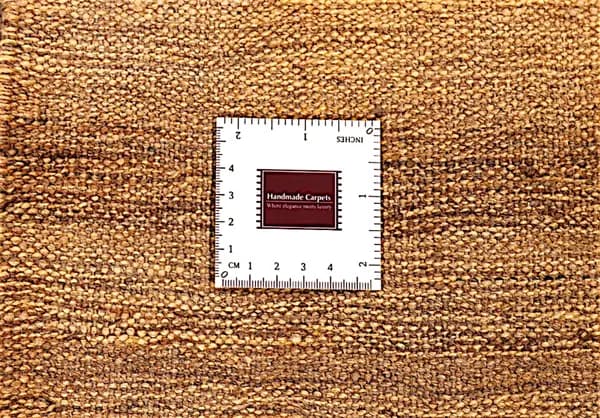
A kilim like this is built entirely in the weave: colour changes are carried by the weft threads, interlocked rather than knotted, which is why the stripes read as slightly corded ridges rather than painted lines. Both warp and weft are handspun wool, and the natural give in handspun yarn is what keeps the stripe widths from lining up with mechanical precision, each one settling a little differently across the loom. At four millimetres the weave stays thin and pliable.
At under three metres by two, this suits a living room or study, laid under a seating group or a desk. The camel warms a pale floor and holds its own against dark wood, while the teal and ochre stripes keep the eye lively without crowding the room. Underfoot it stays thin and flexible, easy to turn when one side has done its years of service, since both faces are equally finished. As daylight moves across it, the stripes catch the light through the day.
More on Kilims: origin, making and how to recognise a genuine piece
At 296 × 199 cm (5.89 m²) this is a large rug. It sits under a seating group with the front legs of sofa and chairs on it, or under a dining table for four. A table for six wants about 80 cm of clearance all round, and needs more.
No — this piece is hand-woven, not knotted. A flatweave has no pile: the pattern comes from warp and weft alone. That makes it thin, light and usable on both sides, and it is a technique in its own right rather than a simpler version of a knotted rug.
Vacuum regularly, ideally along the weave and without a rotating brush. A flatweave can be turned over, which spreads the wear — flip it once or twice a year. Blot spills at once with clear water and a light cloth, working inwards, and never rub.
We are in the Hamburg Speicherstadt. Come and see this rug in daylight, or write to us — a person answers.
Certificate included verifying origin, materials, and craftsmanship.
Ref: 601169