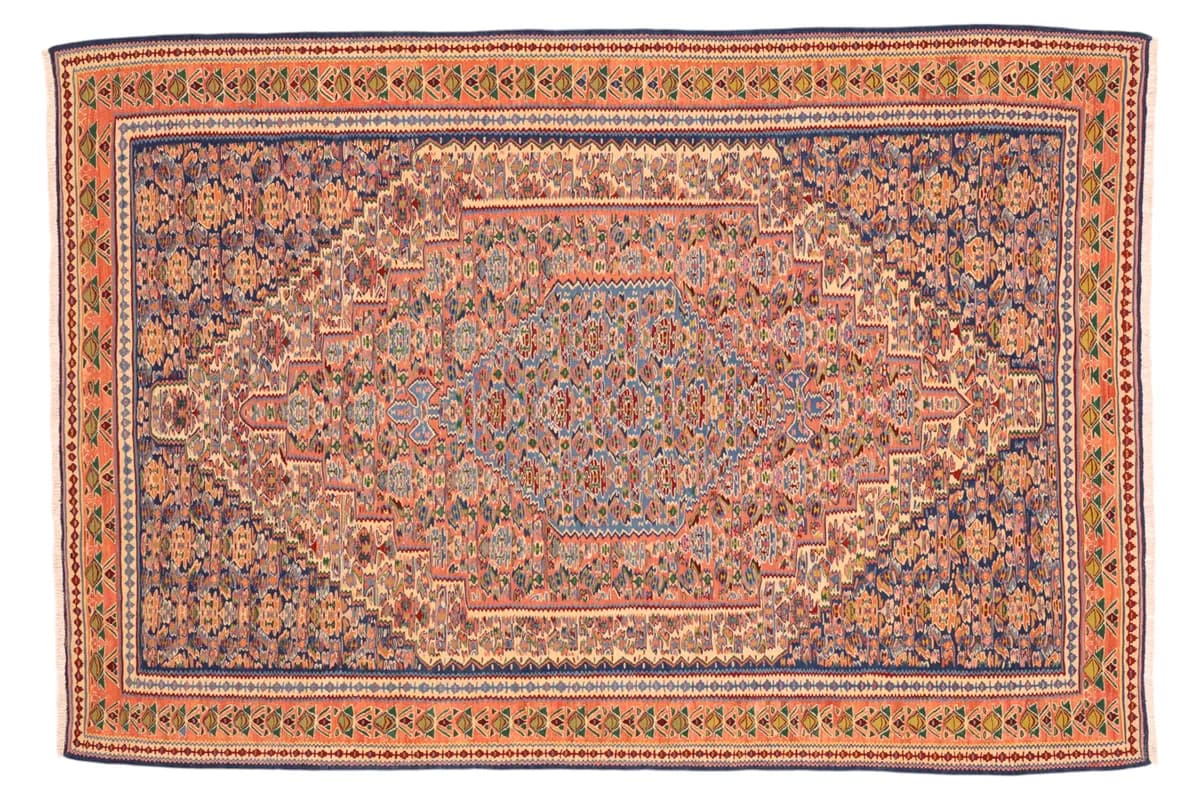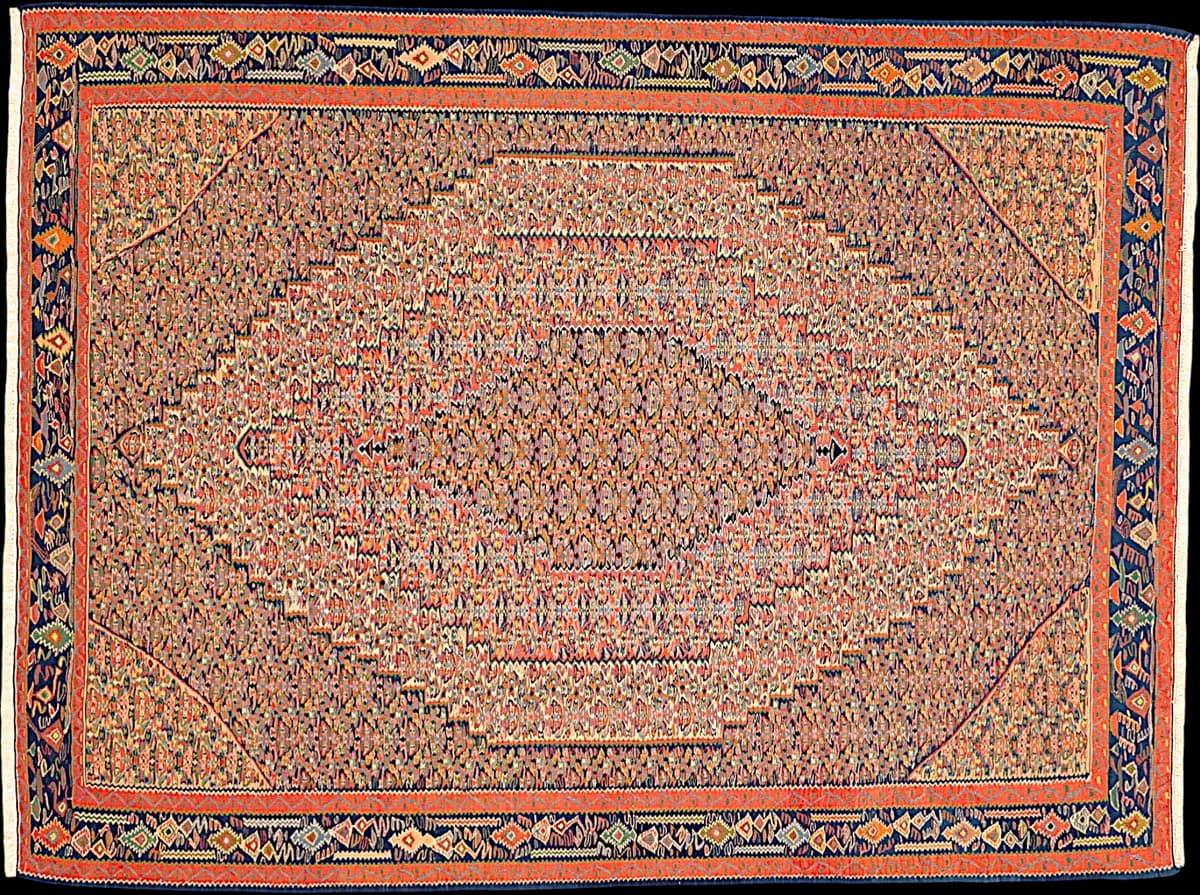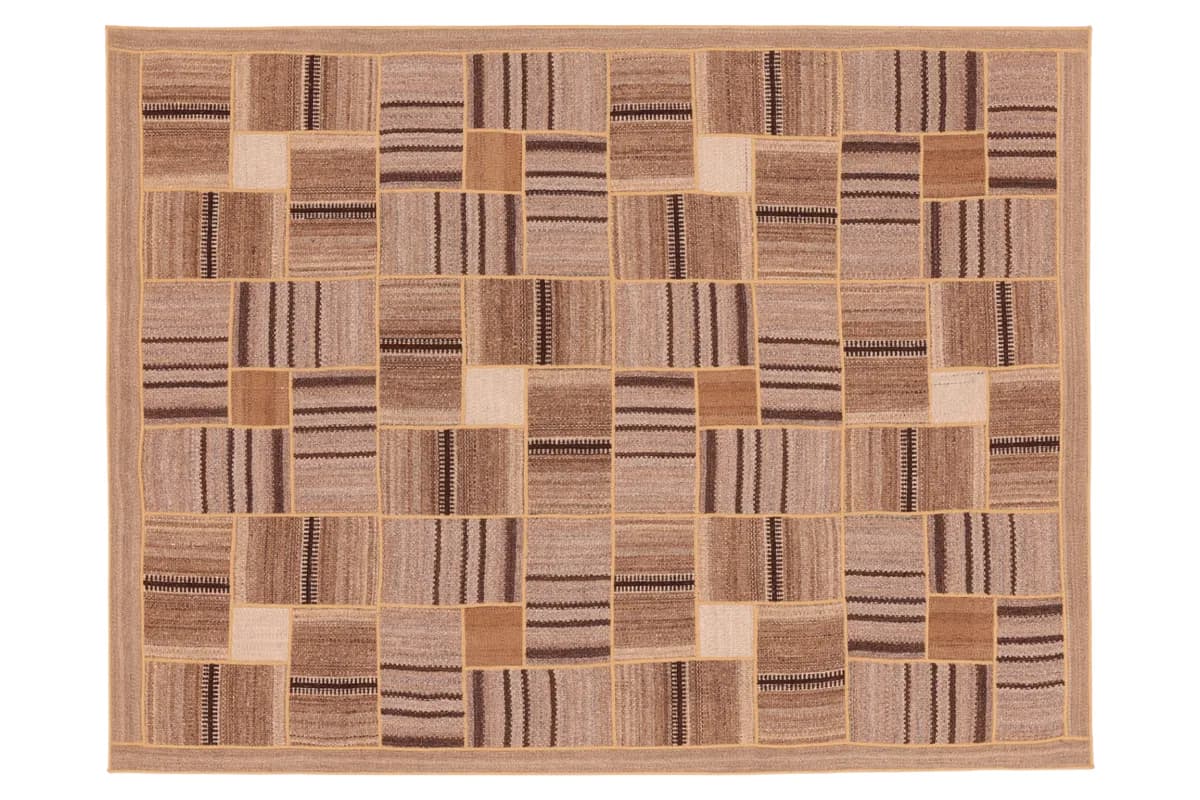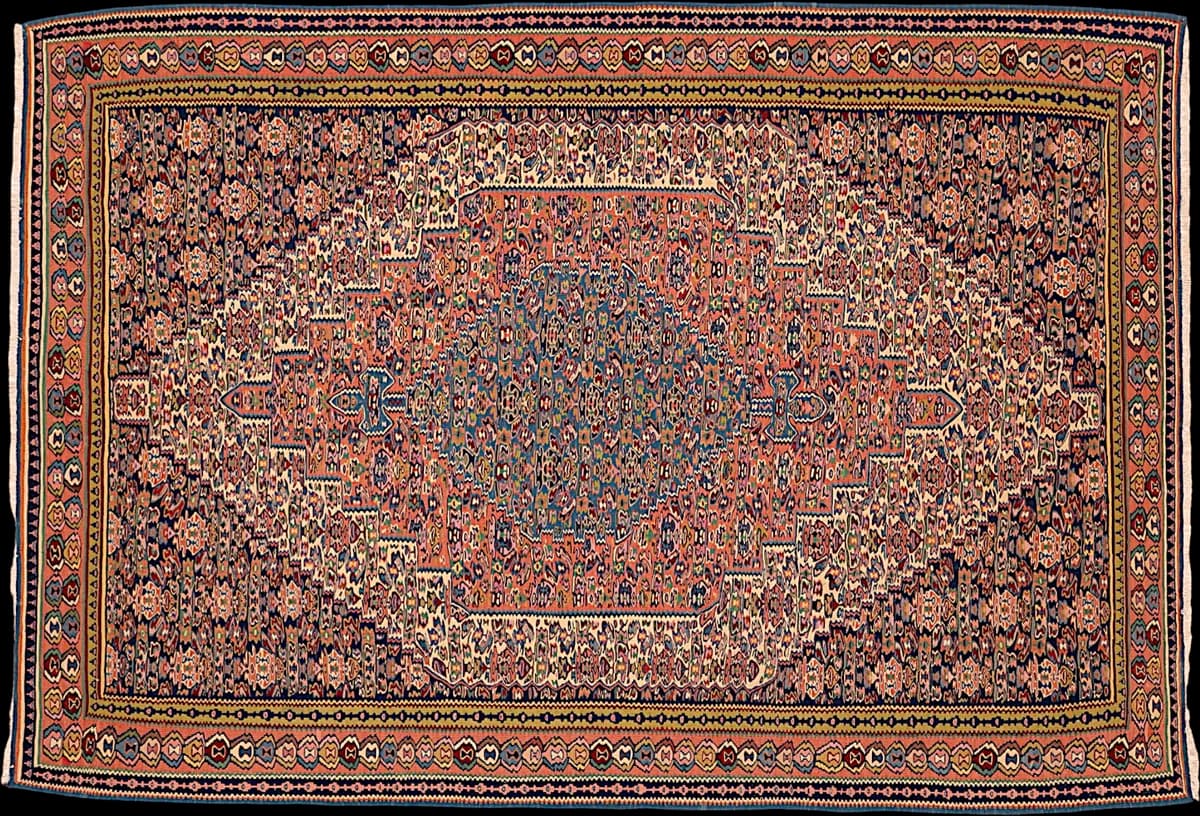
Kelim Senneh
299 × 207 cm
1.393 €





2.186 €
Incl. VAT
In Stock · Ready to Ship
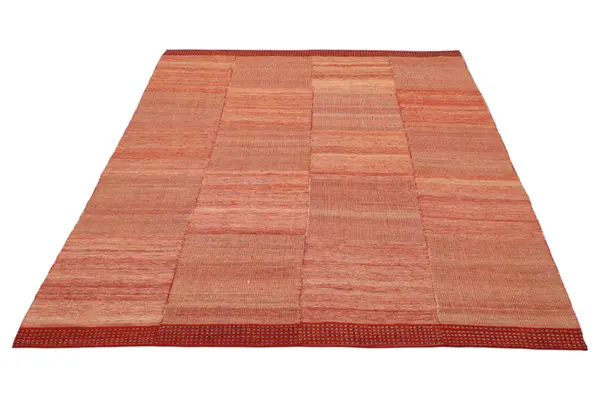
This is a kelim, also written kilim, a flatwoven rug from the tribal weaving regions of Iran, 290 x 201 cm (9'6" x 6'7"). Kelims are woven rather than knotted, known for bold geometric pattern and a surface equally readable from both sides. This piece takes the type quieter: no motif, just colour and structure.
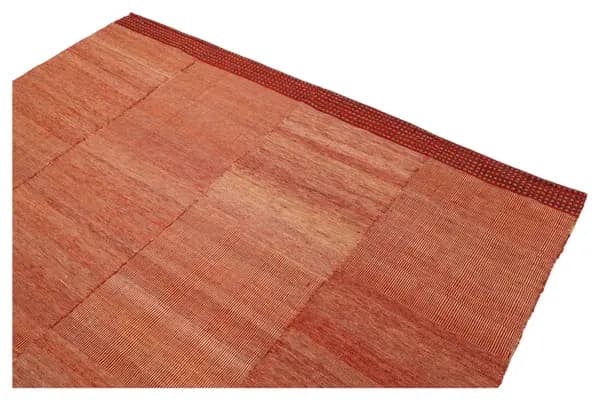
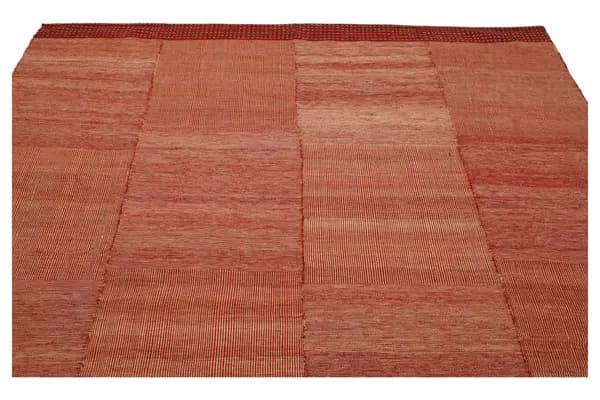
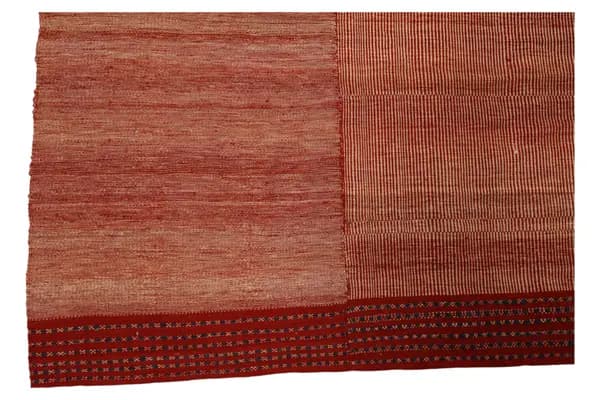
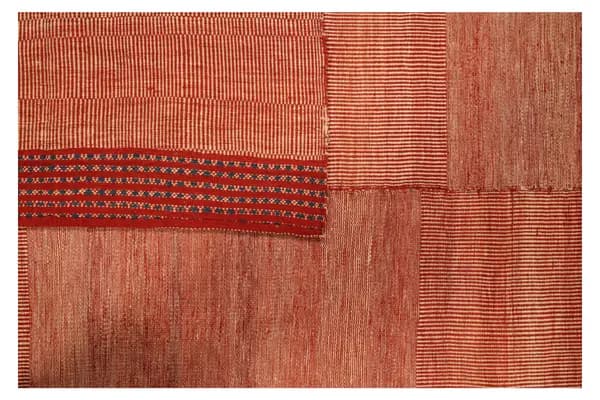
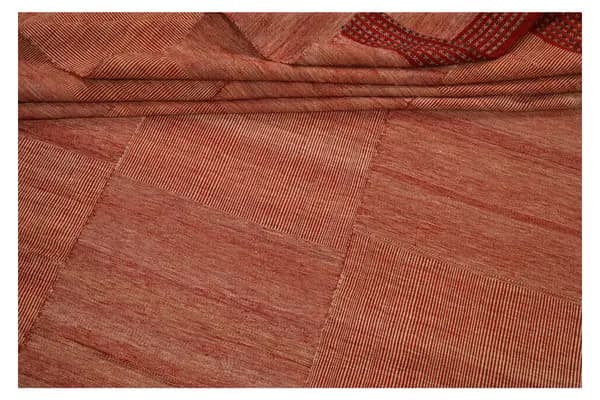
A warm, sun-washed terracotta dominates the field, its shade running toward salmon in places where the handspun wool catches the light differently. Rather than a single motif, the field is broken into large rectangular panels, each marked off by a subtle seam, so the plain ground reads almost like patchwork. Around this sits a narrow border in deep maroon, edged with a crisp checkerboard of navy and white that gives the quiet field its one sharp, graphic note.
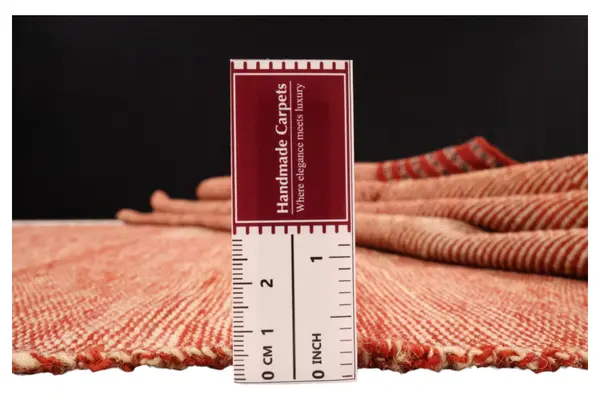
The rug is hand-woven and weft-faced, with a natural wool warp and a handspun wool weft only 4 mm thick — there is no knot density, since a kelim carries its pattern in the weave itself, not in knots. The slight unevenness of hand-spun yarn gives the terracotta ground its gentle striping, and weaving in separate panels, each closed with a seam, produces the patchwork structure across the field. With no pile to wear down, both faces stay equally crisp, doubling the rug's working life.
In a living room, laid under a sofa group, this warm terracotta holds its own against dark wood or pale floors alike, its panels reading as a soft, sun-baked patchwork rather than a busy pattern. Underfoot it stays flat and light, flexible enough for daily use. As daylight moves across the room, the handspun striping catches differently panel by panel, keeping the surface quietly alive.
More on Kilims: origin, making and how to recognise a genuine piece
At 290 × 201 cm (5.83 m²) this is a large rug. It sits under a seating group with the front legs of sofa and chairs on it, or under a dining table for four. A table for six wants about 80 cm of clearance all round, and needs more.
No — this piece is hand-woven, not knotted. A flatweave has no pile: the pattern comes from warp and weft alone. That makes it thin, light and usable on both sides, and it is a technique in its own right rather than a simpler version of a knotted rug.
Vacuum regularly, ideally along the weave and without a rotating brush. A flatweave can be turned over, which spreads the wear — flip it once or twice a year. Blot spills at once with clear water and a light cloth, working inwards, and never rub.
We are in the Hamburg Speicherstadt. Come and see this rug in daylight, or write to us — a person answers.
Certificate included verifying origin, materials, and craftsmanship.
Ref: 735424