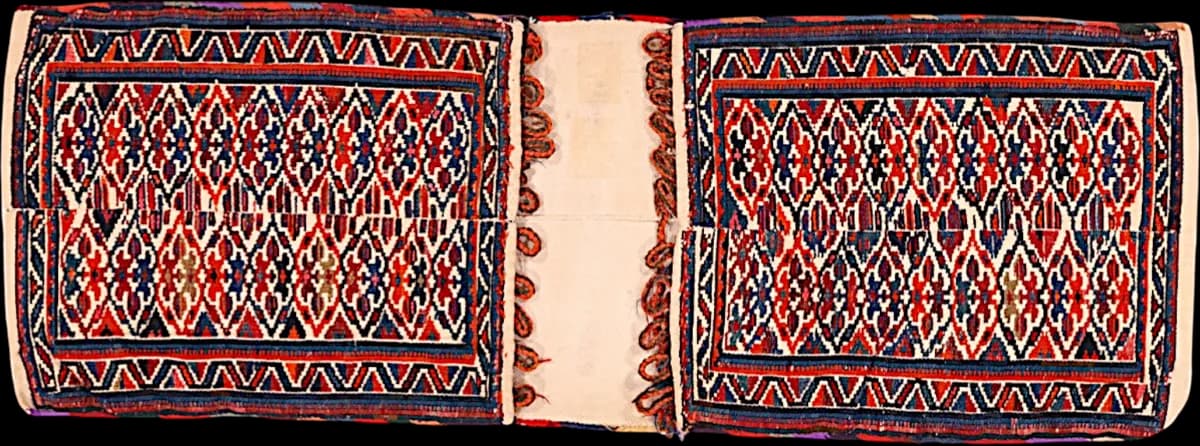
Kelim Khorjin
124 × 44 cm
289 €






675 €
Incl. VAT
In Stock · Ready to Ship
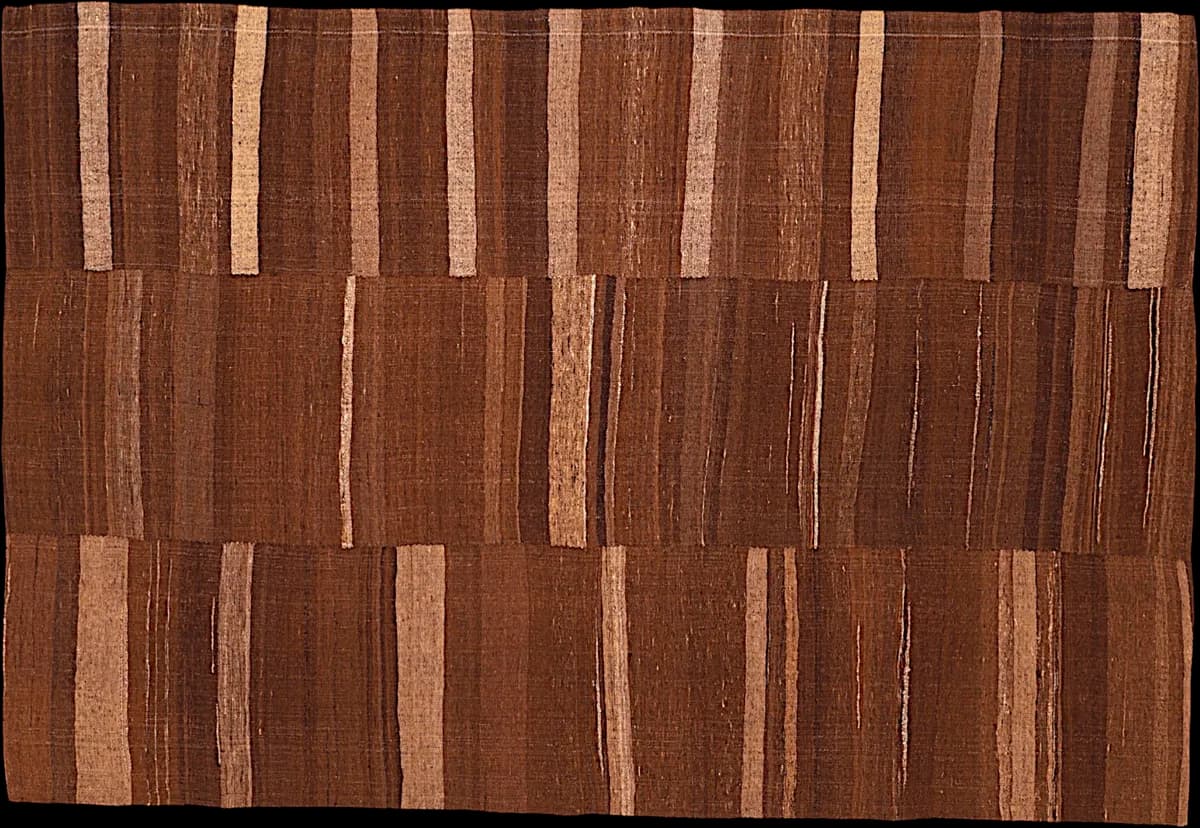
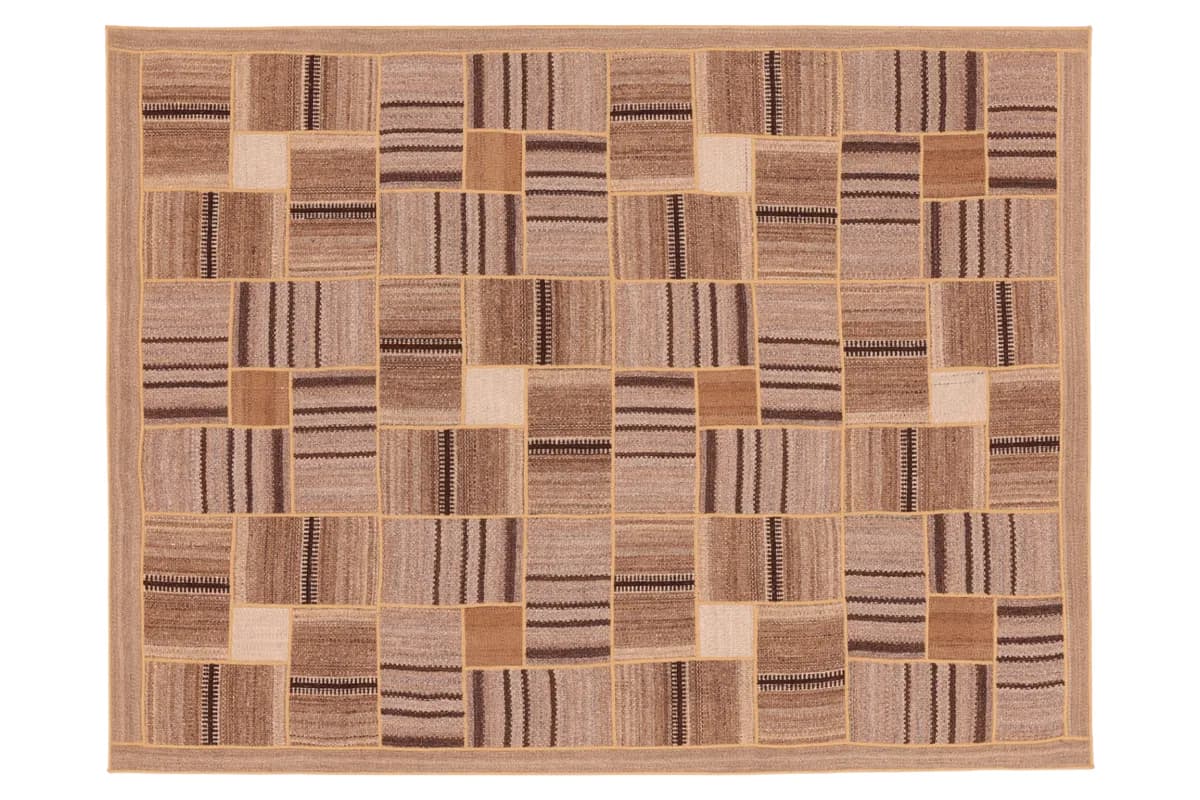
A kilim, the flatweave tradition woven across the tribal regions of Iran, measuring 196 x 150 cm (6'5" x 4'11"). Where knotted rugs are built stitch by stitch into a pile, a kilim is woven flat, giving it a light, supple hand and a pattern that reads with equal clarity from either side. Kilims are usually bold, sometimes loudly so. This one is not.
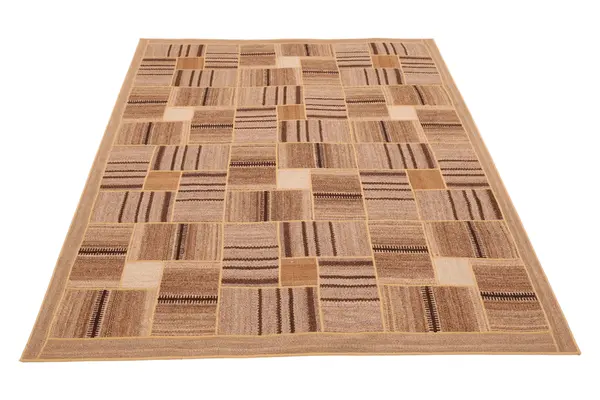
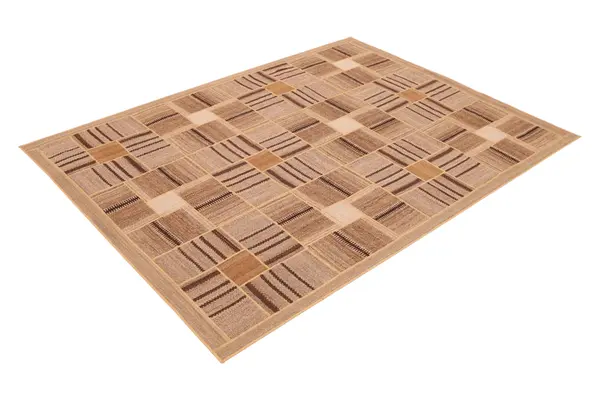
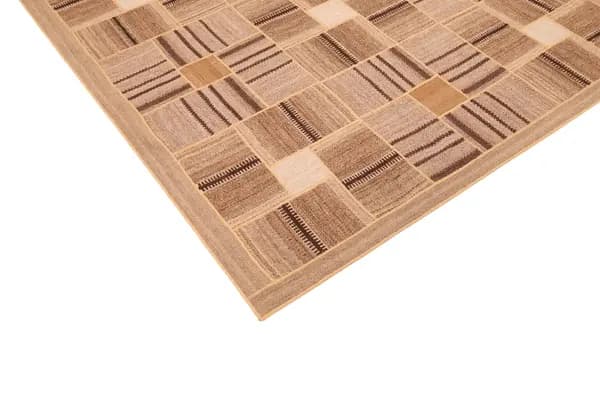
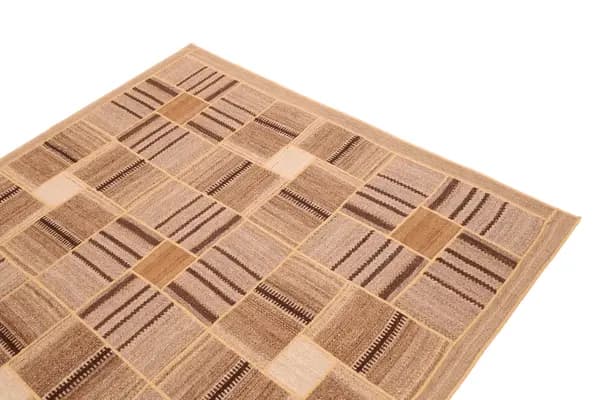
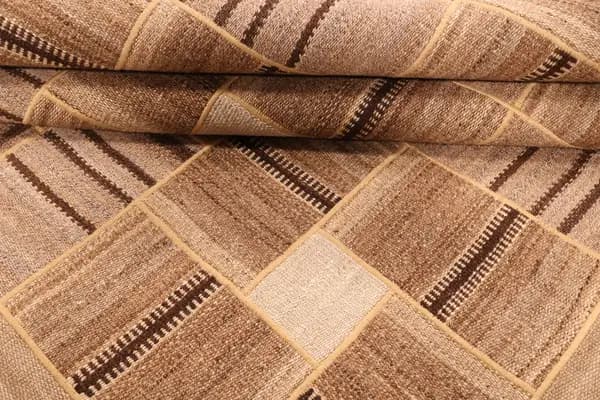
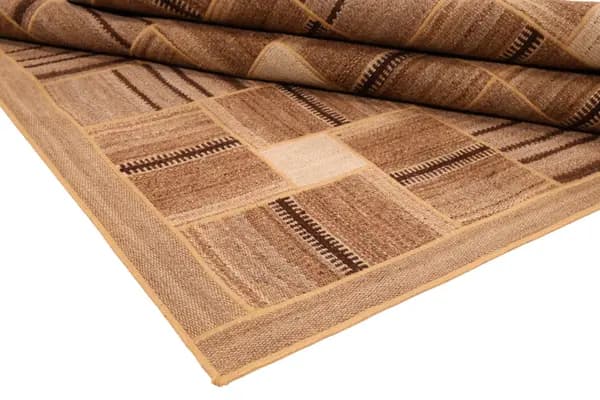
The first impression is a grid of small striped panels in sand and camel, each holding its own narrow run of brown, cream and tan. A few solid squares in ivory and honey-gold break the rhythm at irregular points across the field, and here and there a stripe turns a muted grey-blue before settling back into tan. It reads as patchwork, assembled rather than continuous, yet every panel draws from the same narrow palette, so the grid holds together instead of scattering. A thin mustard line separates the field from a plain camel border, the two colours close enough in tone that the edge is felt rather than announced.
Patchwork kilims are usually pieced from whatever offcuts and colours a workshop has to hand, which is why they tend toward clash. Here the weaver has kept every panel within one family of browns and tans, so the seams stay crisp without the colours fighting each other. The warp is natural wool and the weft hand-spun, worked flat rather than knotted, which is what gives the surface its visible ribbing and its 5 mm thinness. This is a young piece, made within the last two decades, and it wears that flat, weft-faced construction plainly rather than trying to disguise it.
At 196 x 150 cm this suits a smaller room outright: a study, a reading corner, the floor beside a bed. The camel and sand tones lift a pale floor without demanding attention, and the muted stripes give a busy desk or a cluttered shelf something calm to sit against. Underfoot it is flat and light rather than deep, easy to fold, easy to move, and reversible, so both faces earn their keep over the years. In low winter light the tan panels warm to honey; it is a rug that settles into a room rather than announcing itself in one.
More on Kilims: origin, making and how to recognise a genuine piece
At 196 × 150 cm (2.94 m²) this is a medium rug. It works in front of a sofa, in front of a bed or in a study. It is too small for a dining table — there you want about 80 cm of clearance so a chair does not tip over the edge when pushed back.
No — this piece is hand-woven, not knotted. A flatweave has no pile: the pattern comes from warp and weft alone. That makes it thin, light and usable on both sides, and it is a technique in its own right rather than a simpler version of a knotted rug.
Vacuum regularly, ideally along the weave and without a rotating brush. A flatweave can be turned over, which spreads the wear — flip it once or twice a year. Blot spills at once with clear water and a light cloth, working inwards, and never rub.
We are in the Hamburg Speicherstadt. Come and see this rug in daylight, or write to us — a person answers.
Certificate included verifying origin, materials, and craftsmanship.
Ref: 958494