Kelim
275 × 186 cm
1.152 €






1.346 €
Incl. VAT
In Stock · Ready to Ship
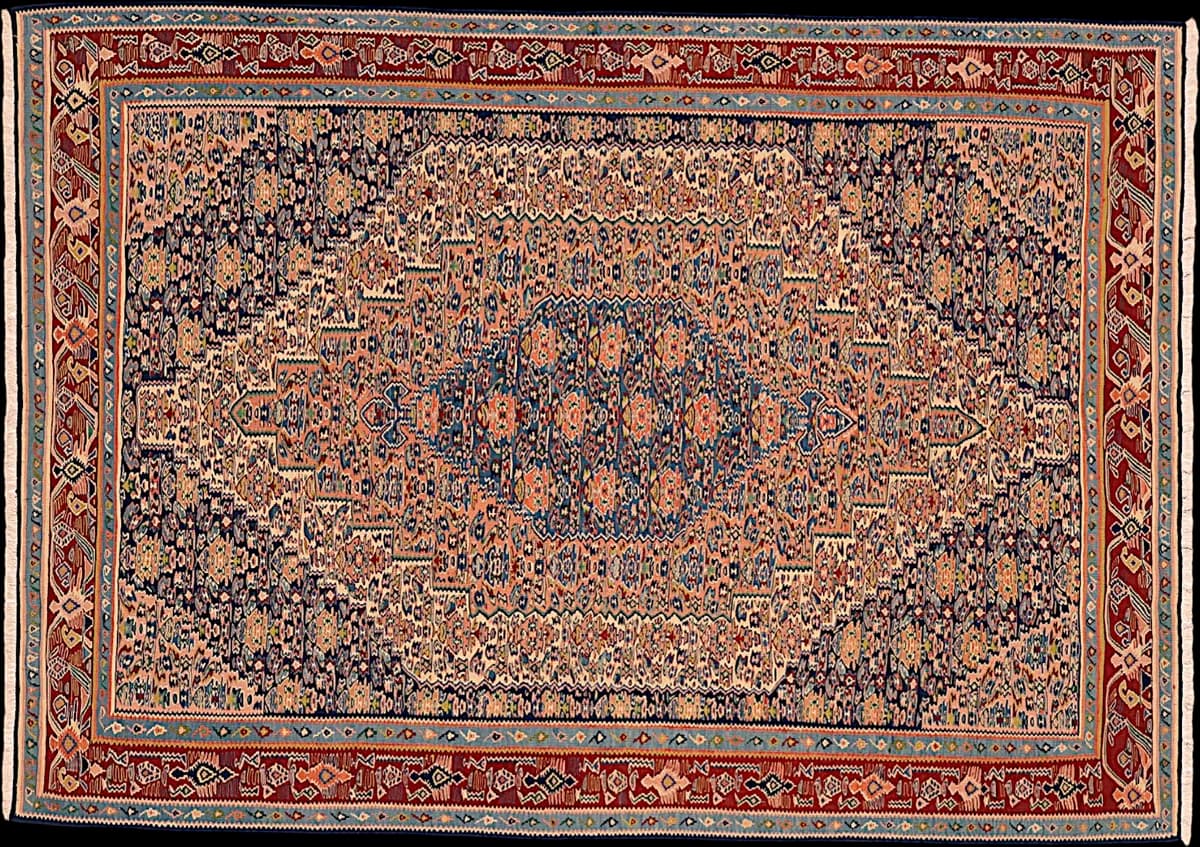
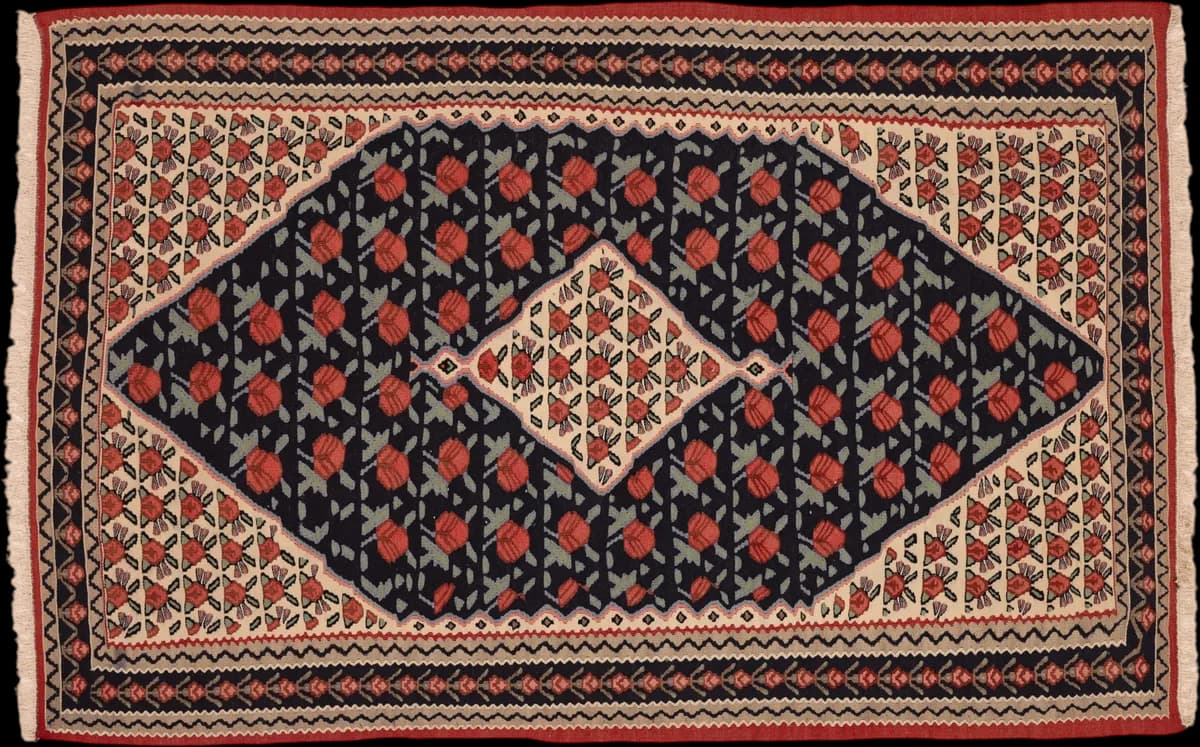
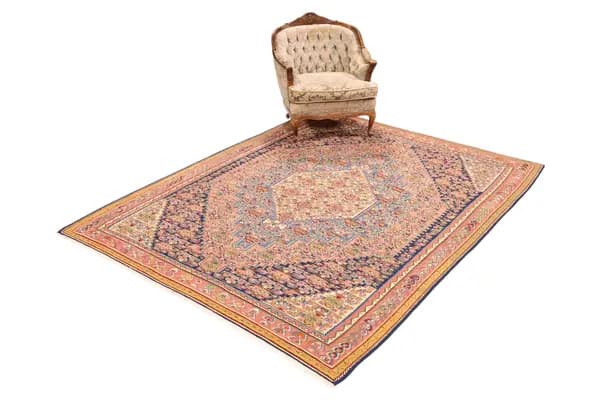
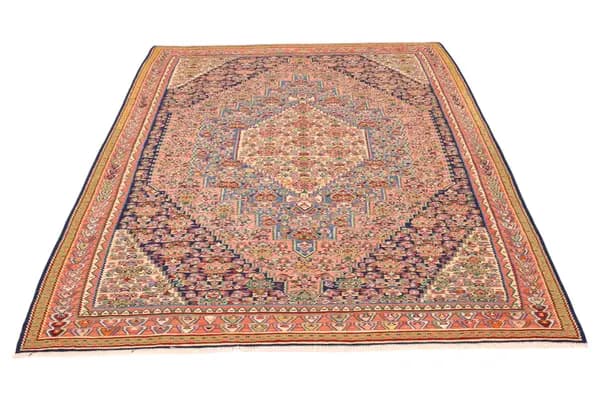
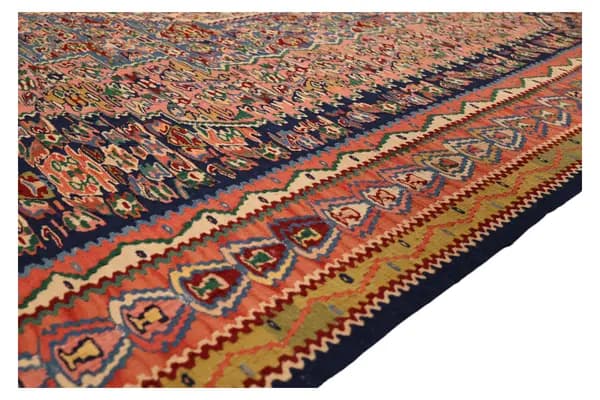
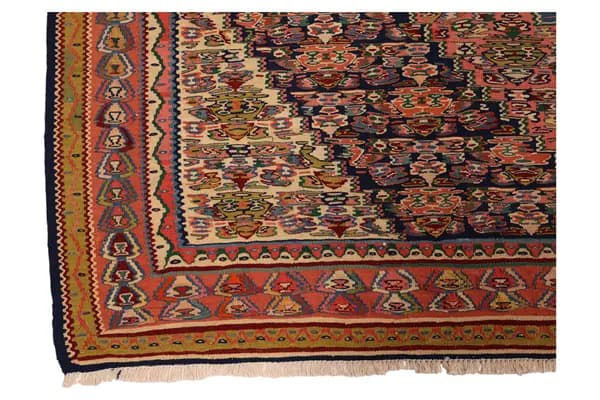
This is a kilim, also written kelim, from the Kurdish region of Kordestan in western Iran, a flatweave woven rather than knotted, reversible so both faces wear equally well. At 282 x 212 cm (9'3" x 6'11") it is a generous piece. Kilims from this region are usually read for bold, high-contrast geometry; this one carries something quieter, a medallion picked out in fine, layered detail.
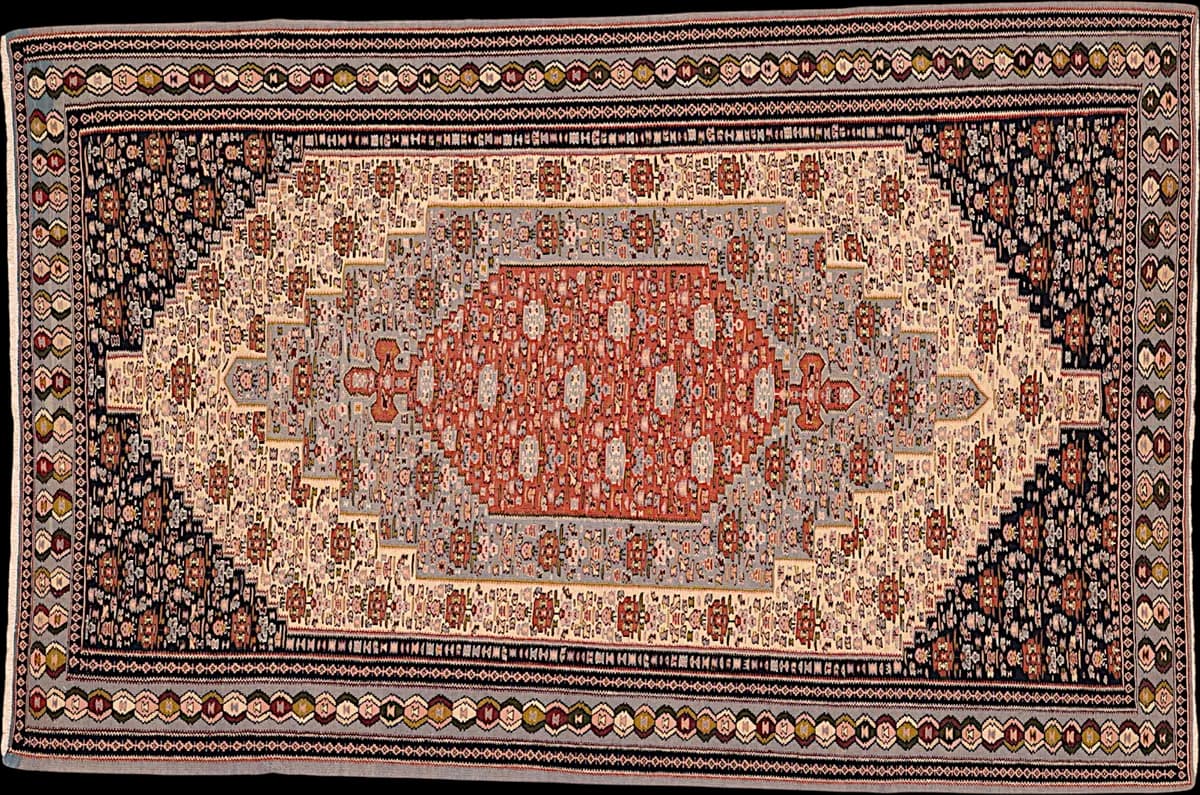
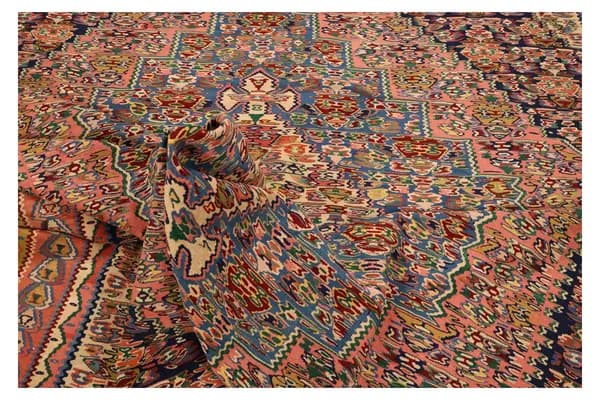
The field opens in a soft, dusty pink, over which a large stepped medallion floats in navy and cream, framed by spandrels in the same navy. Look again and the whole surface resolves into a fine scatter of small geometric shapes — rust-red, mustard-gold, sage green, steel-blue — filling medallion, spandrels, and field alike, rather than one dominant motif. Narrow bands in rust-red, cream, and olive-gold run a serrated diamond pattern around the edge, framing it all in a wide, contrasting border.
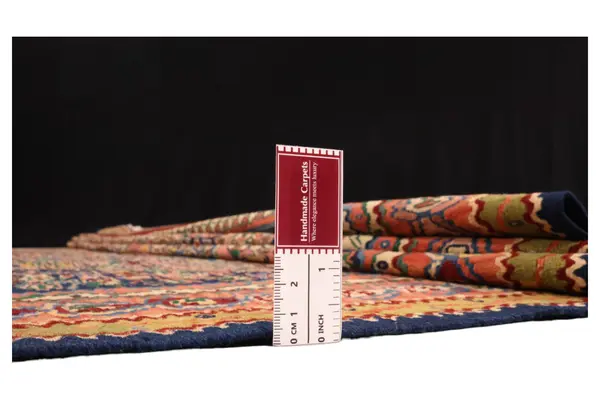
It is handwoven on a cotton warp, with a weft of hand-spun wool that carries the slight irregularity of a hand-turned spindle. Kilim technique interlocks the coloured wefts directly into the pattern, without knots or pile, which allows a design this fine — the stepped medallion, the small confetti motifs — to be drawn cleanly at only 4 mm of thickness. The result is flat, light, and equally at home on either side, with no pile to flatten and a surface as clear on the back as on the front.
At this size, the rug suits a living or dining room, laid under a low table or beside a sofa, its thinness sitting beneath furniture without bulk. The pink warms a pale floor without shouting, and the navy medallion holds its own against darker pieces nearby. Underfoot it is flat, firm, and made for daily use, reversible so a sun-faded side can be turned — the room refreshed in a moment.
More on Kilims: origin, making and how to recognise a genuine piece
At 282 × 212 cm (5.98 m²) this is a large rug. It sits under a seating group with the front legs of sofa and chairs on it, or under a dining table for four. A table for six wants about 80 cm of clearance all round, and needs more.
No — this piece is hand-woven, not knotted. A flatweave has no pile: the pattern comes from warp and weft alone. That makes it thin, light and usable on both sides, and it is a technique in its own right rather than a simpler version of a knotted rug.
Vacuum regularly, ideally along the weave and without a rotating brush. A flatweave can be turned over, which spreads the wear — flip it once or twice a year. Blot spills at once with clear water and a light cloth, working inwards, and never rub.
We are in the Hamburg Speicherstadt. Come and see this rug in daylight, or write to us — a person answers.
Certificate included verifying origin, materials, and craftsmanship.
Ref: 349332