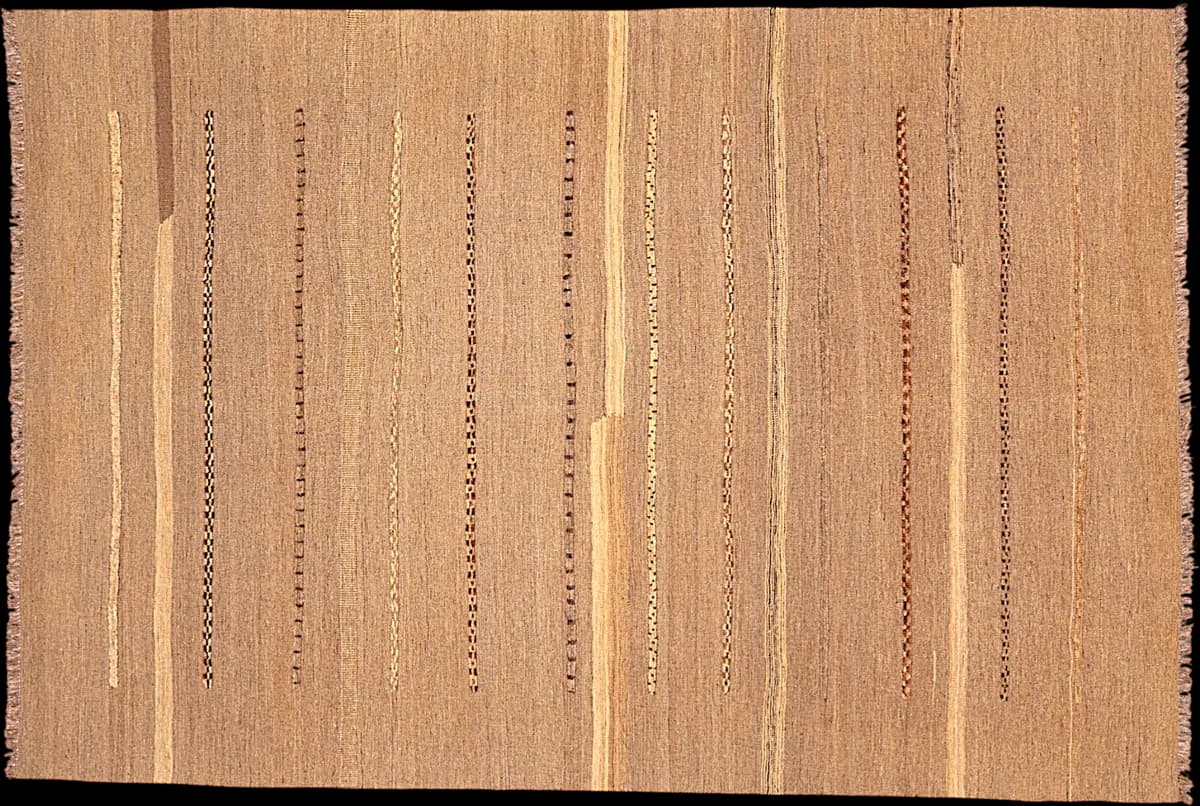
Kelim
298 × 200 cm
1.341 €
1.276 €
Incl. VAT
In Stock · Ready to Ship
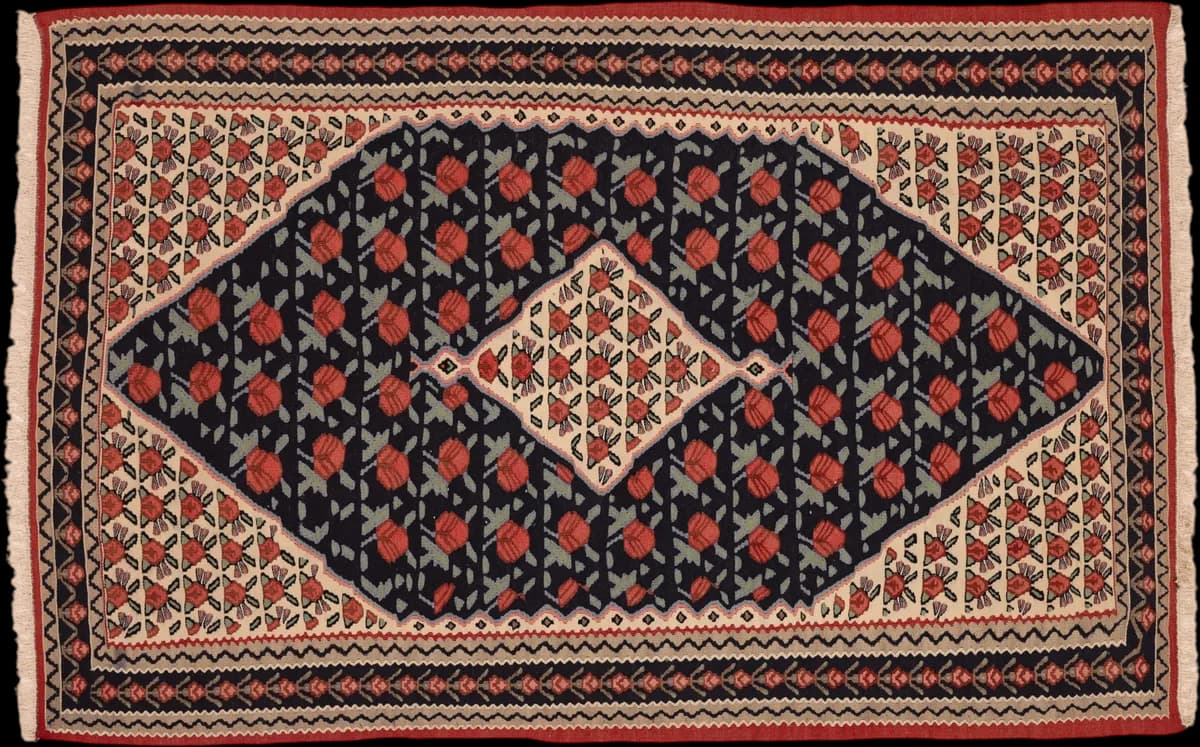
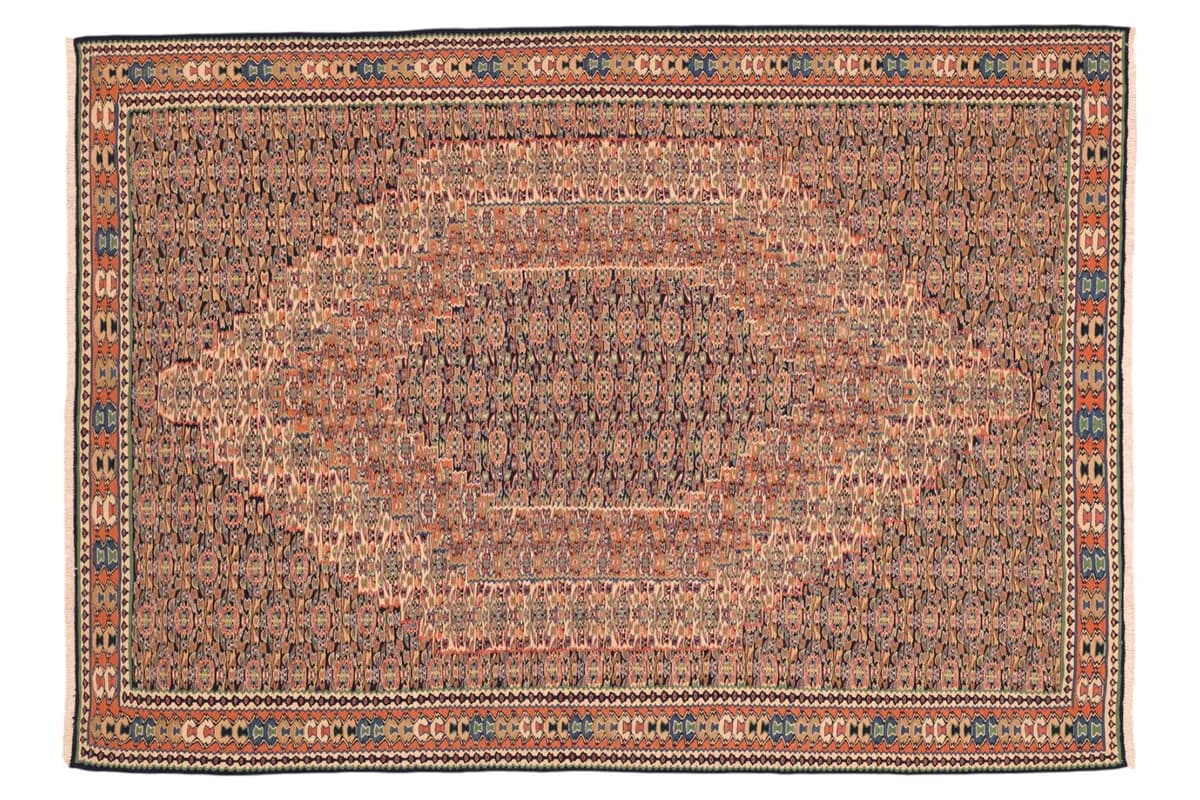
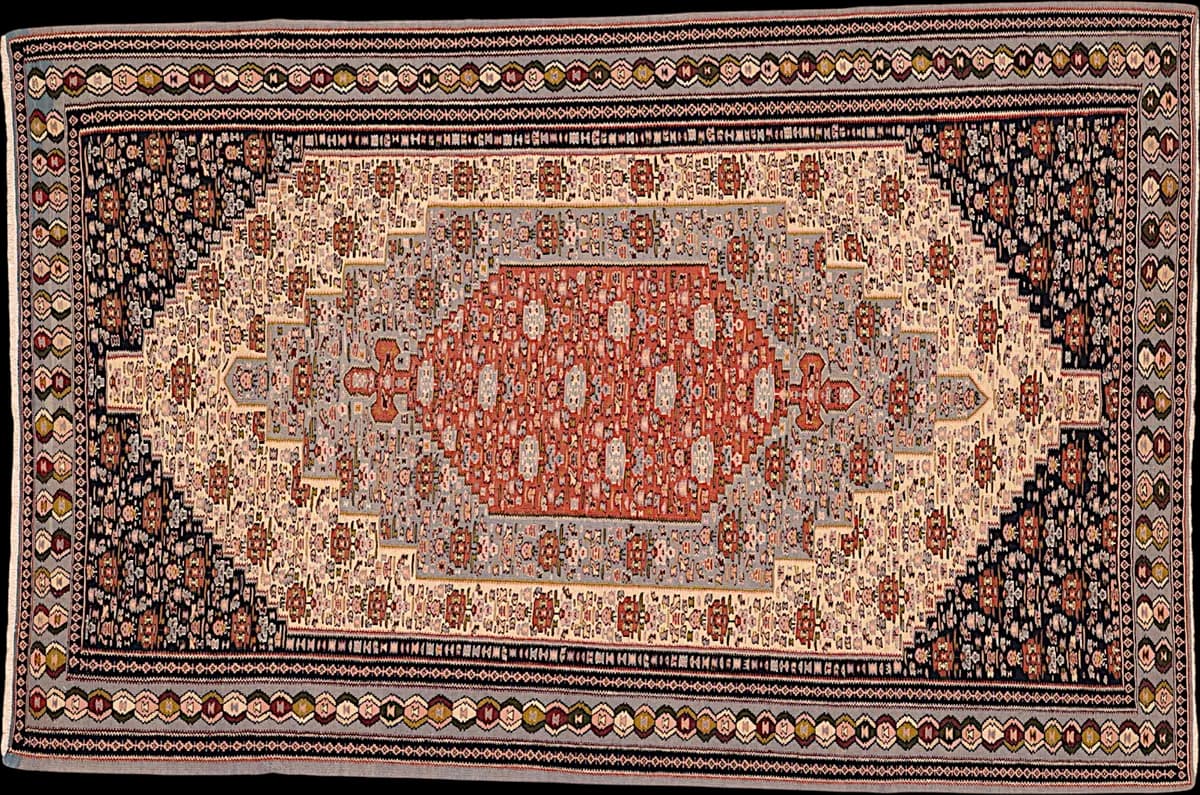
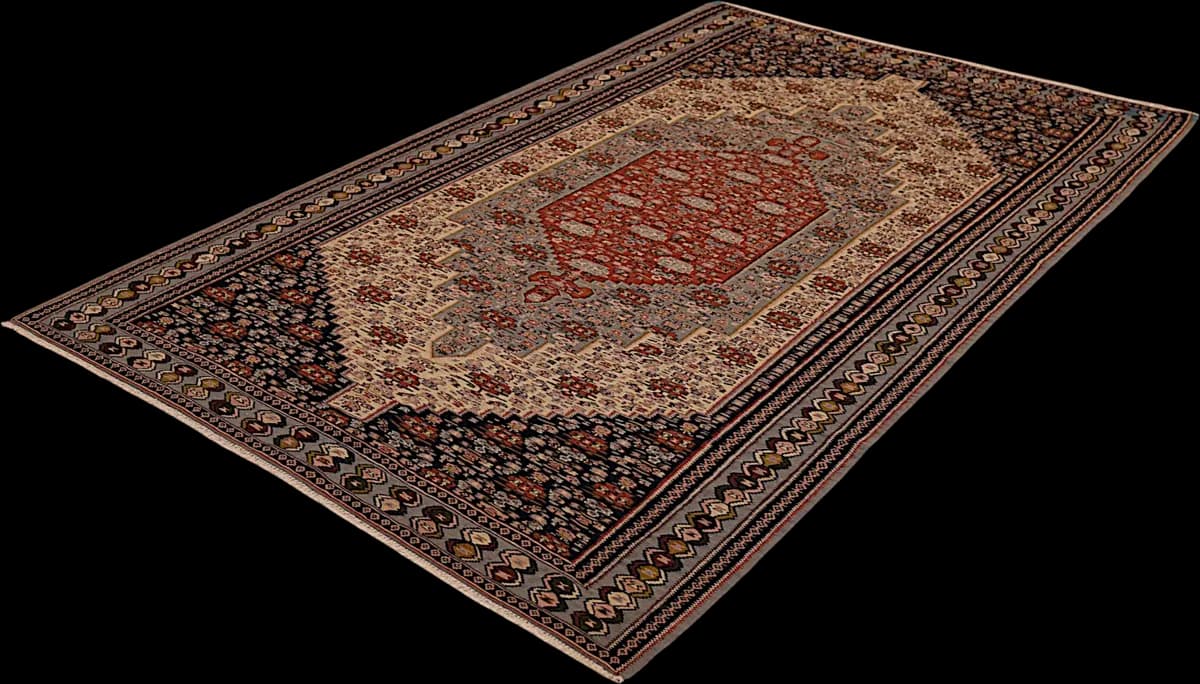
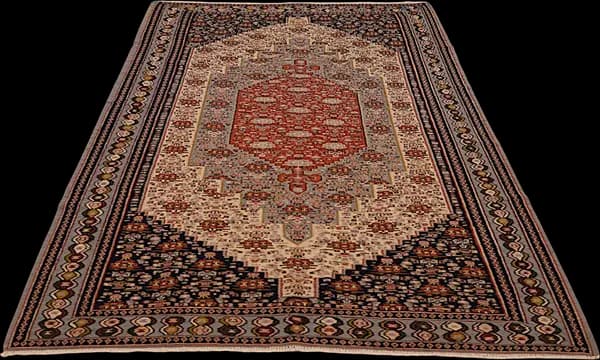
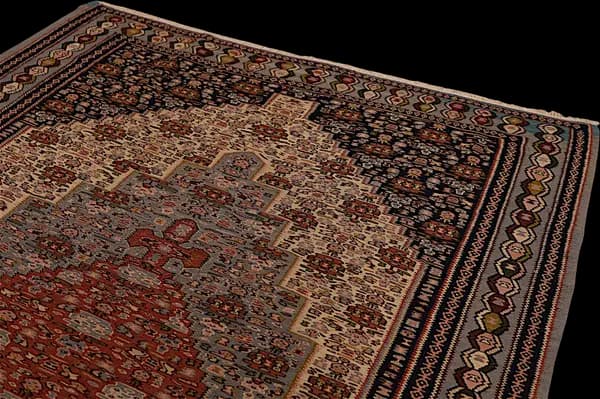
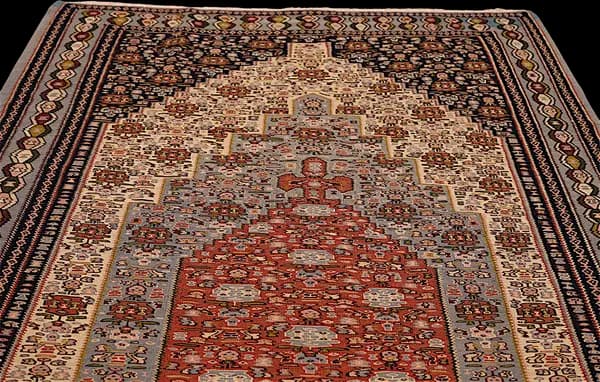
This is a kilim, a flatwoven rug from the Kurdish weaving tradition of Kordestan in western Iran, woven rather than knotted, at 294 x 193 cm (9'8" x 6'4"). Kilims from this region are known for bold geometric drawing and a light, flexible hand, finished as well on the back as on the front.
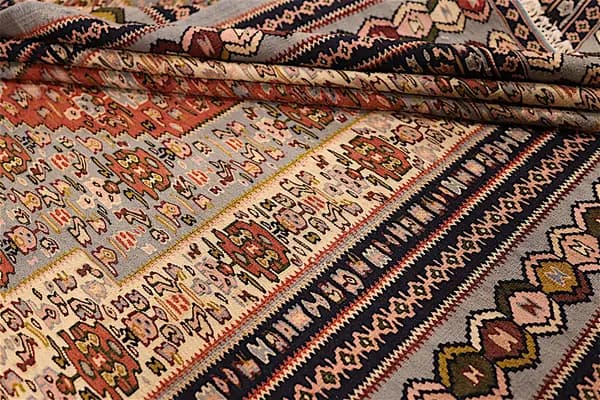
The first impression is a stepped diamond medallion in brick red and slate blue-grey, set squarely on an ivory field. Looking closer, it resolves into two diamonds nested one inside the other, an outer band of slate blue enclosing an inner one of brick red, so the whole shape reads almost like a target. Dense navy spandrels fill the corners, and a wide multi-banded border of navy, pink, olive and mustard diamonds and hooked motifs runs around the edge, close to a fifth of the rug's width.
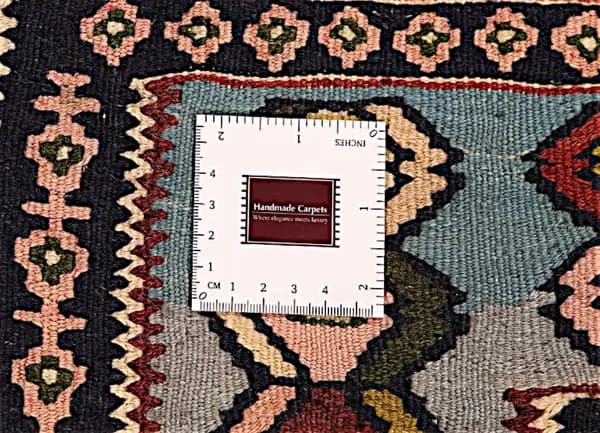
A kilim carries no pile; its pattern is built by weft threads packed down over a cotton warp, in horizontal steps rather than drawn curves. That is why this medallion comes out as a stepped diamond rather than a rounded one — the straight diagonal edges are the natural outcome of the weave, giving the design an unusually graphic clarity. The handspun wool sits close and flat at only 4 mm thick, and both faces are equally finished, so the rug can be turned as one side wears.
At this size the rug suits a living room or study, laid under a small seating group or a desk rather than a large dining table. The ivory ground lifts a room with dark wood or leather furniture, and the brick red and slate blue hold their own against it. Underfoot it is flat, firm and hard-wearing, made for daily footsteps, and the medallion keeps its graphic punch in any light.
More on Kilims: origin, making and how to recognise a genuine piece
At 294 × 193 cm (5.67 m²) this is a large rug. It sits under a seating group with the front legs of sofa and chairs on it, or under a dining table for four. A table for six wants about 80 cm of clearance all round, and needs more.
No — this piece is hand-woven, not knotted. A flatweave has no pile: the pattern comes from warp and weft alone. That makes it thin, light and usable on both sides, and it is a technique in its own right rather than a simpler version of a knotted rug.
Vacuum regularly, ideally along the weave and without a rotating brush. A flatweave can be turned over, which spreads the wear — flip it once or twice a year. Blot spills at once with clear water and a light cloth, working inwards, and never rub.
We are in the Hamburg Speicherstadt. Come and see this rug in daylight, or write to us — a person answers.
Certificate included verifying origin, materials, and craftsmanship.
Ref: 487531