Kelim Senneh
292 × 207 cm
1.359 €
1.242 €
Incl. VAT
In Stock · Ready to Ship
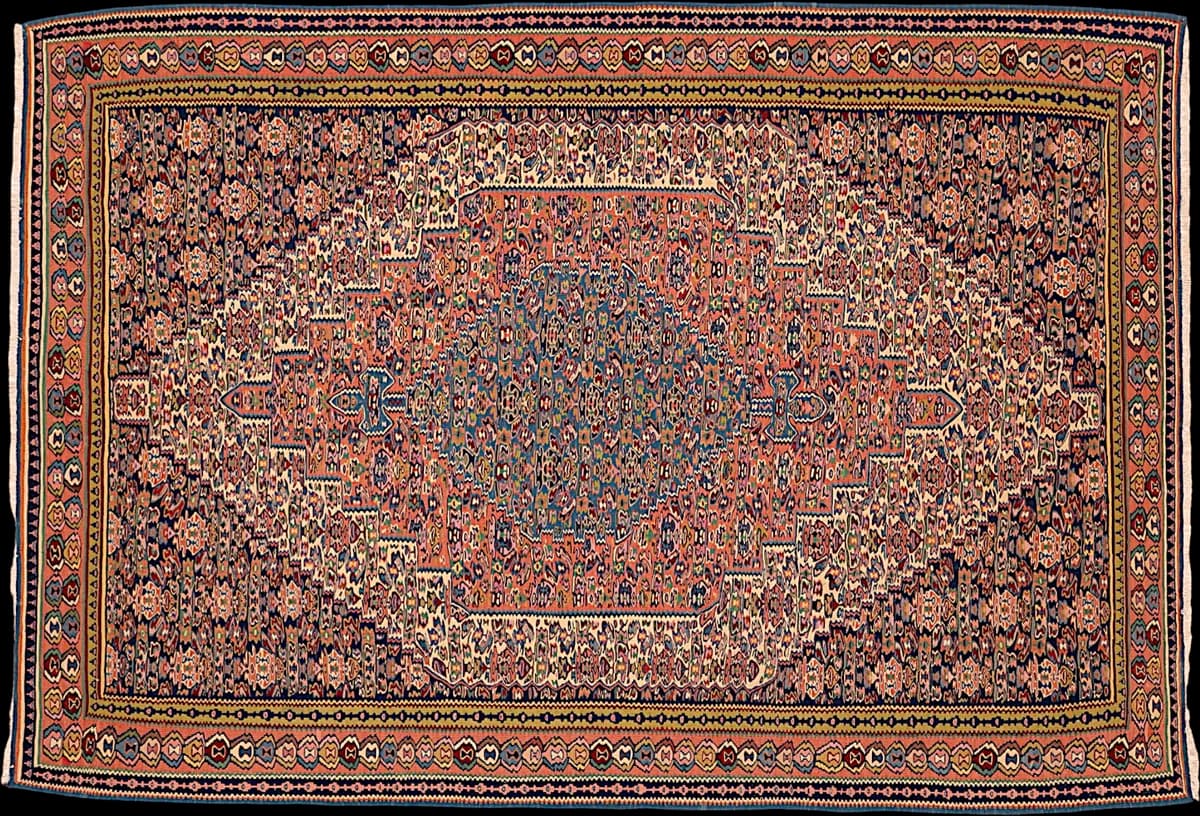
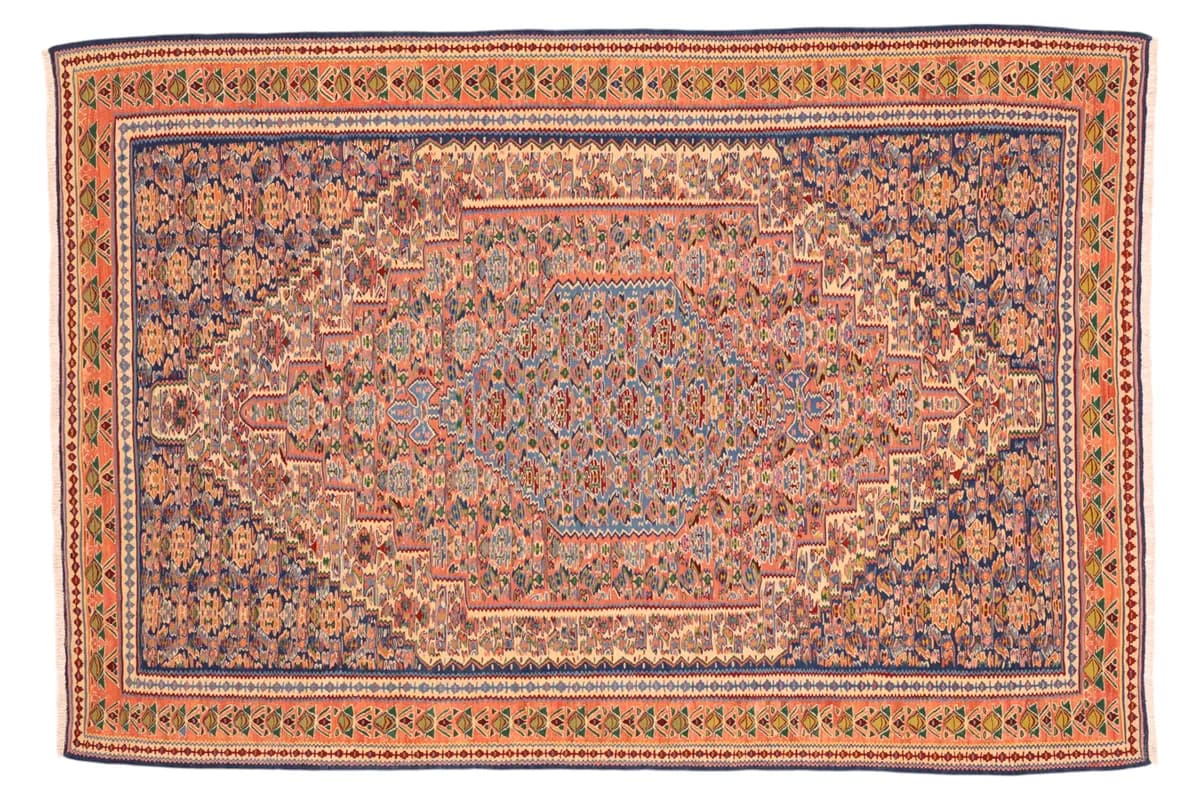
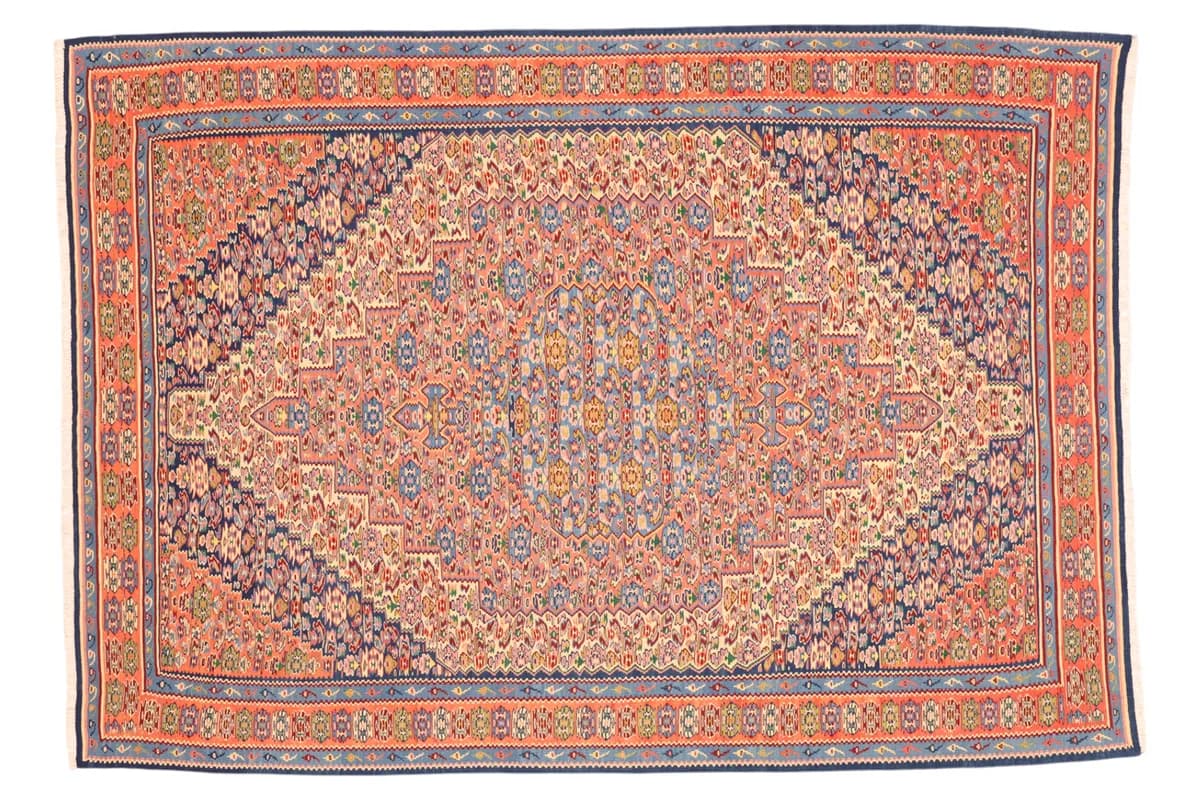
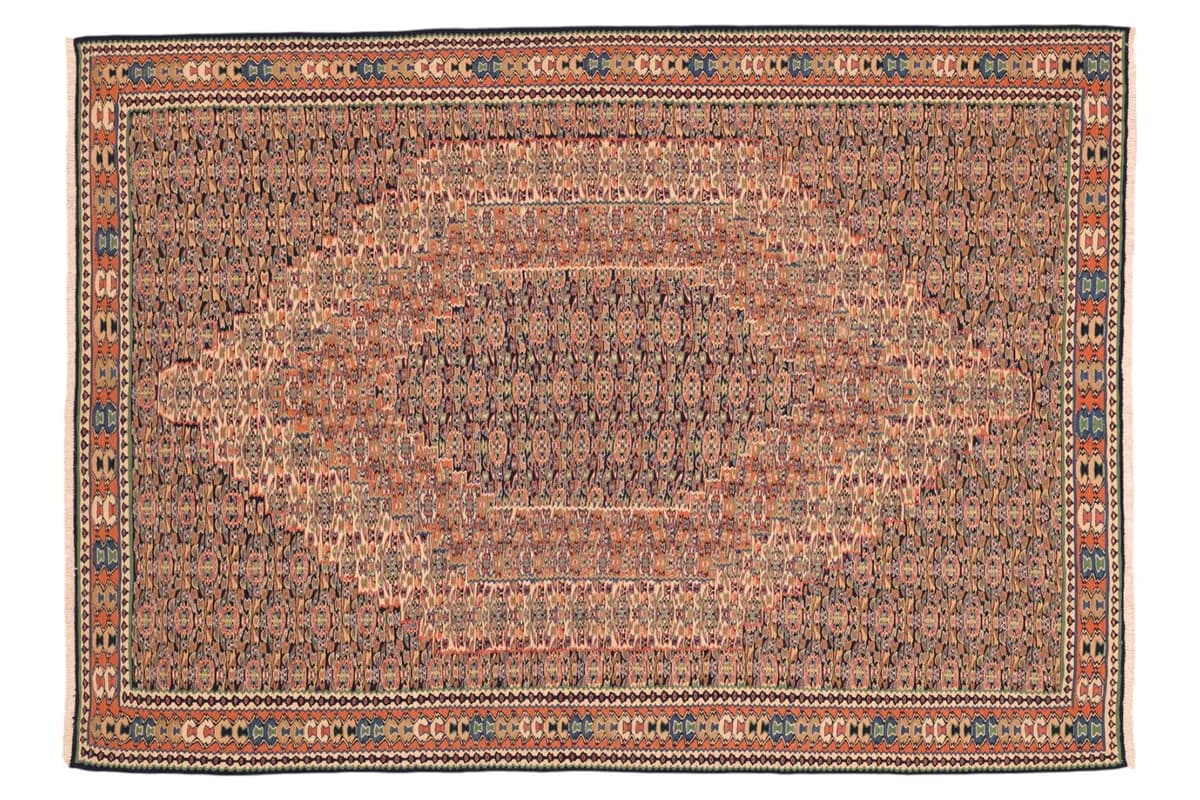
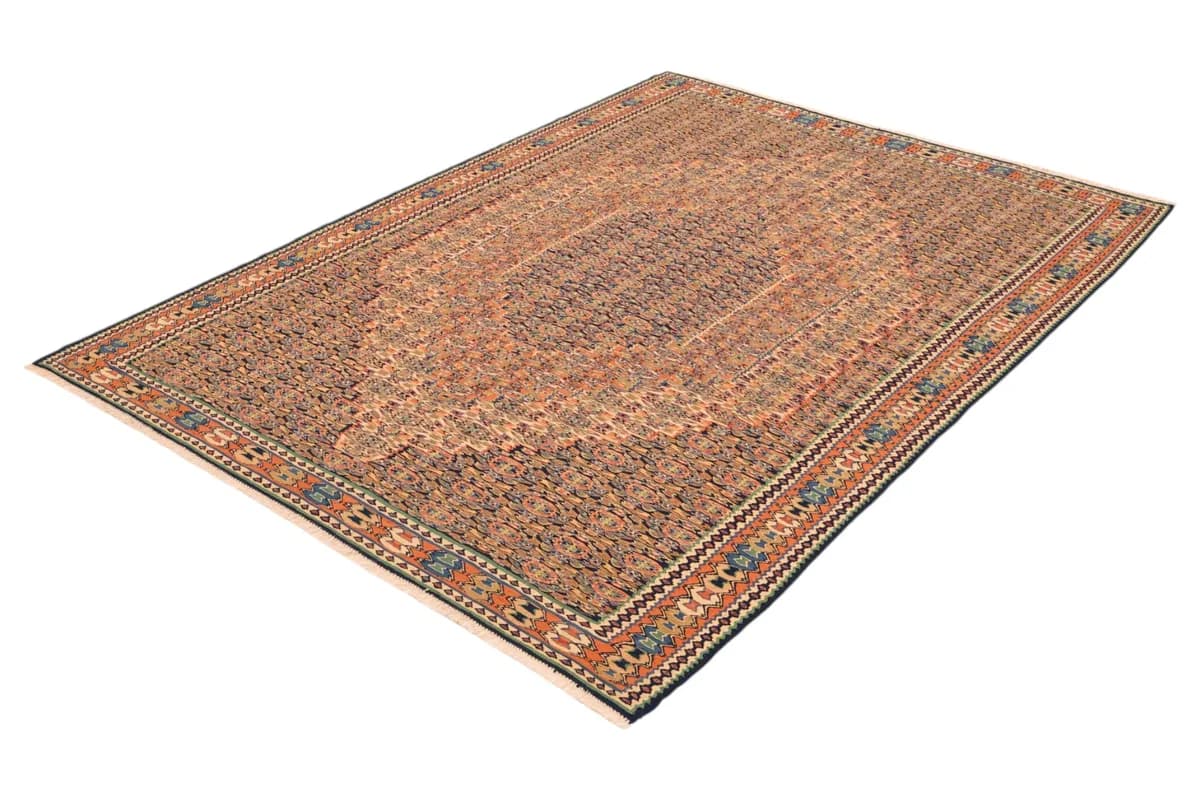
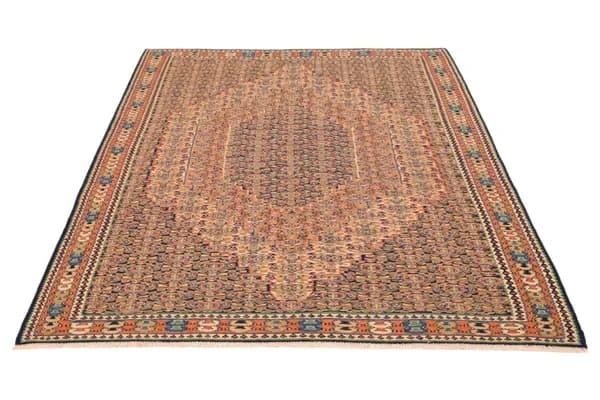
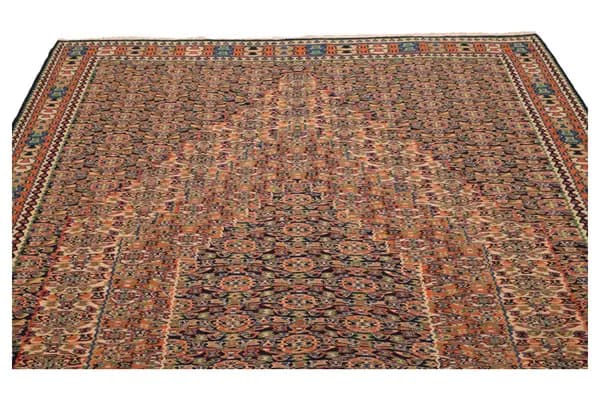
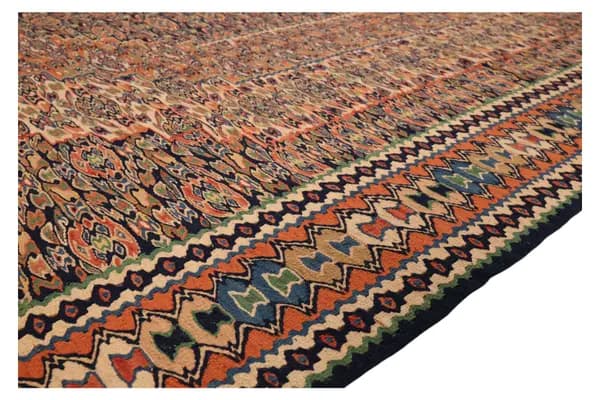
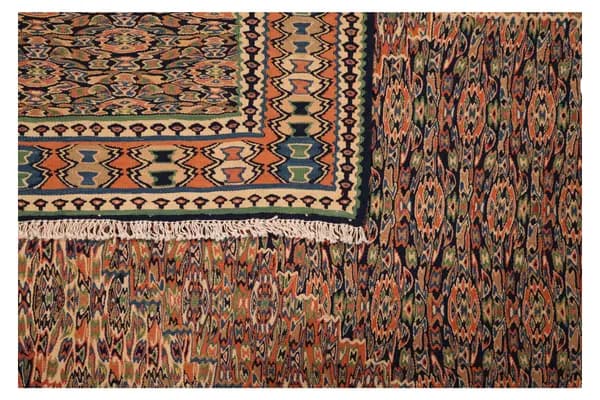
This is a kilim, also spelled kelim, a flatwoven rug from Kordestan in Kurdish western Iran, 279 x 198 cm (9'2" x 6'6"). Kilims are woven rather than knotted, valued for a light, flexible hand and for patterns bold enough to read from either side. This one carries a more classical design than most: a dense mahi field gathered beneath a medallion.
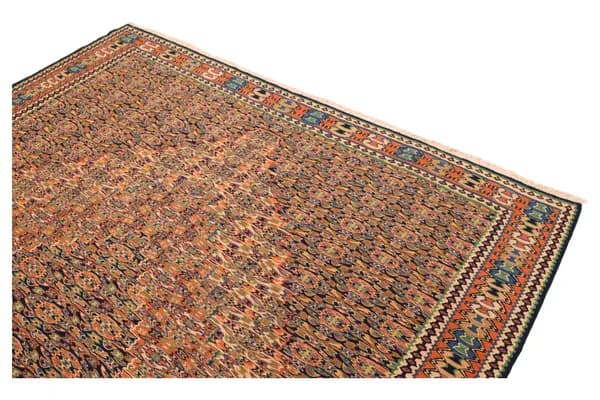
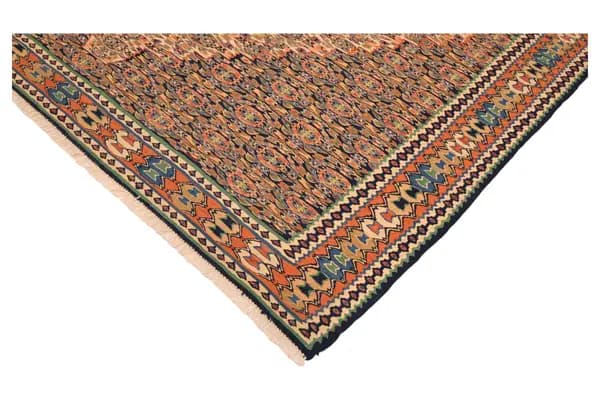
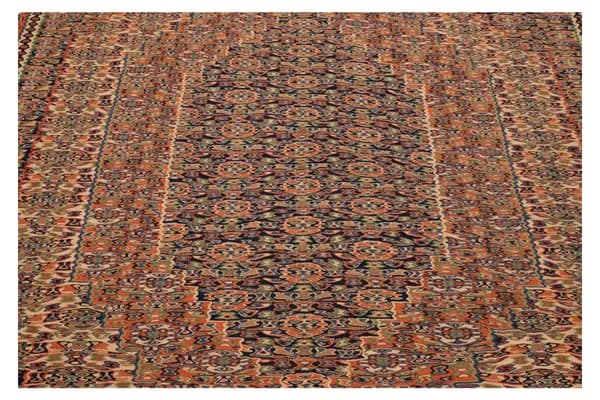
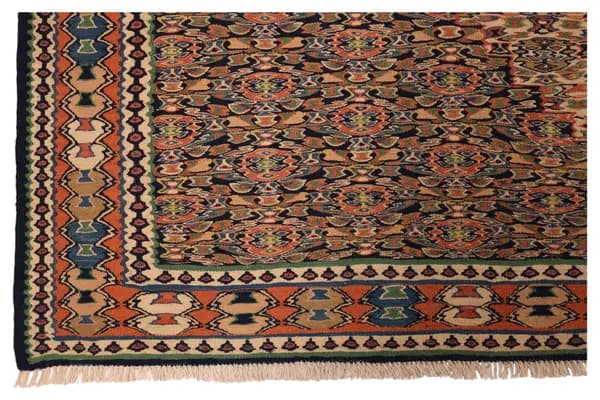
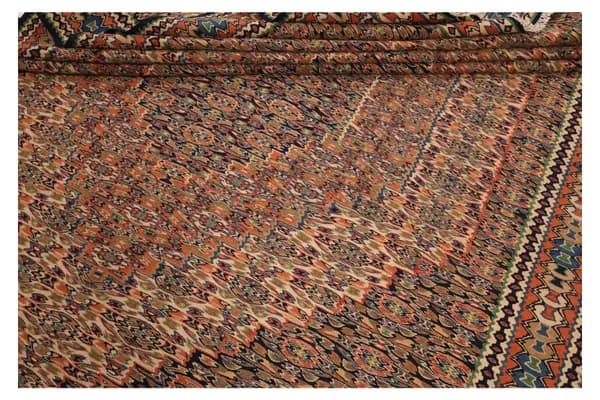
The field sits in a deep navy, almost anthracite, dense with the small repeating fish-and-rosette motifs of the mahi pattern. Over this ground a large stepped diamond appears, drawn only in a pale cream outline rather than filled in colour, so it reads less as a medallion than as a trace laid over the weave. A wide rust-orange border carries small hooked and stepped devices in blue, tan and cream, closed in by narrow reciprocal guard stripes that hold the dark field firmly in place.
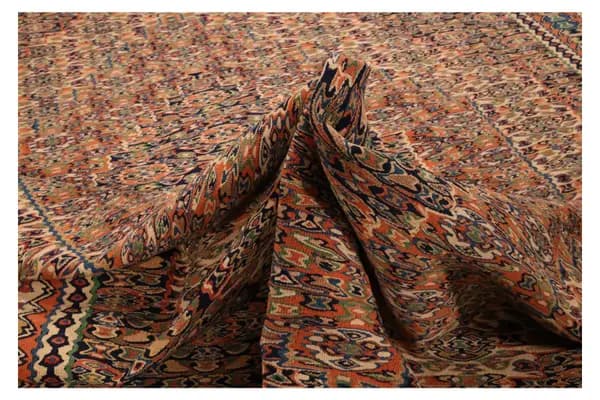
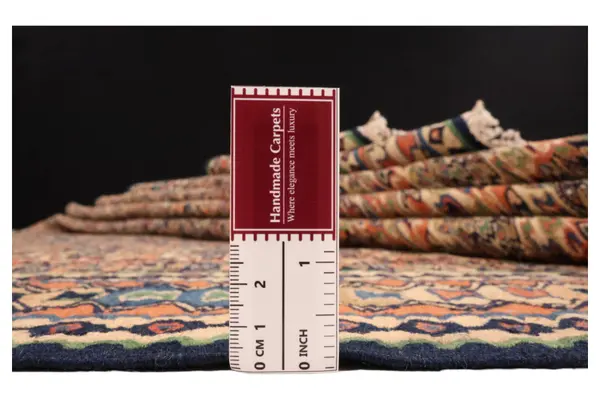
Woven, not knotted, on a cotton warp with hand-spun wool, the rug lies barely 4 mm thick. With no pile to build up, colour sits directly in the weave, keeping the mahi lattice tight and even. It explains the medallion: the weaver ran a single cream weft-line over the ground instead of filling a solid diamond, so the shape reads as an outline within the pattern. Made within the last two decades, the weave carries a young crispness, flat and firm on either face.
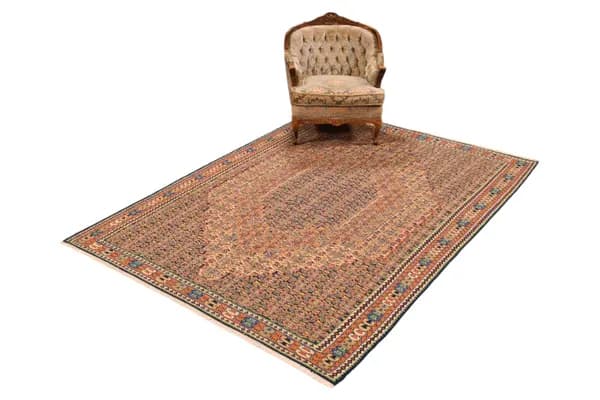
At 279 x 198 cm, this kilim suits a dining table or a seating group in a living room, its dark field a foil for pale floors and confident against dark wood. Flat and thin at 4 mm, it is light to lift, reversible, and built for daily use rather than for best. As light crosses it, the soft sheen catches the cream outline of the medallion, drifting in and out of the mahi ground.
More on Kilims: origin, making and how to recognise a genuine piece
At 279 × 198 cm (5.52 m²) this is a large rug. It sits under a seating group with the front legs of sofa and chairs on it, or under a dining table for four. A table for six wants about 80 cm of clearance all round, and needs more.
No — this piece is hand-woven, not knotted. A flatweave has no pile: the pattern comes from warp and weft alone. That makes it thin, light and usable on both sides, and it is a technique in its own right rather than a simpler version of a knotted rug.
Vacuum regularly, ideally along the weave and without a rotating brush. A flatweave can be turned over, which spreads the wear — flip it once or twice a year. Blot spills at once with clear water and a light cloth, working inwards, and never rub.
We are in the Hamburg Speicherstadt. Come and see this rug in daylight, or write to us — a person answers.
Certificate included verifying origin, materials, and craftsmanship.
Ref: 674535